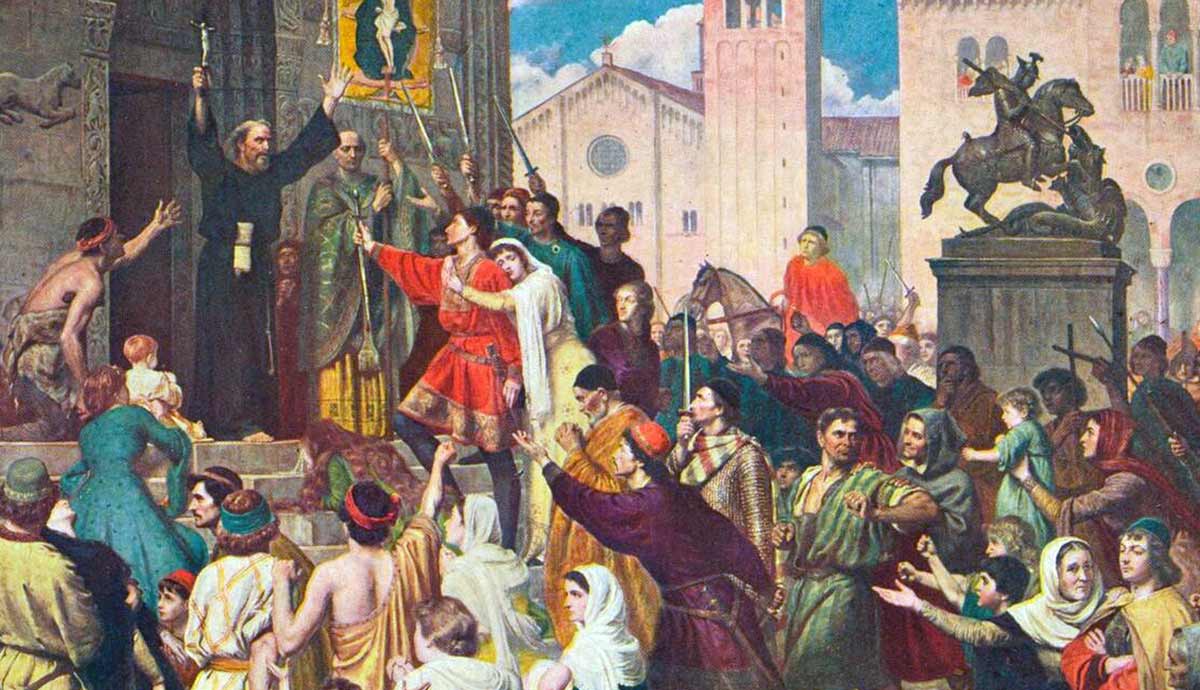
Calls for a Christian retaking of the Holy Land began in the 1090s with Pope Urban II. Jerusalem had fallen to the Muslims in 638. The Byzantine Empire proved unable to retake the Holy City. In 1095, the Byzantines asked for Western help against the Turks and to retake the Holy Land. The Pope, hoping to reunite the two Christian faiths, issued a call for soldiers. His simple appeal-forgiveness of sin and eternal glory-caused thousands to take up the cause.
By 1097 and on, Christian forces marched on the Holy Land, defeating Muslim forces. Large swathes of land fell to them, fueled by fervor and political desires. By June 1099, the largely successful Crusaders neared Jerusalem.
Toehold: The 1099 Siege of Jerusalem
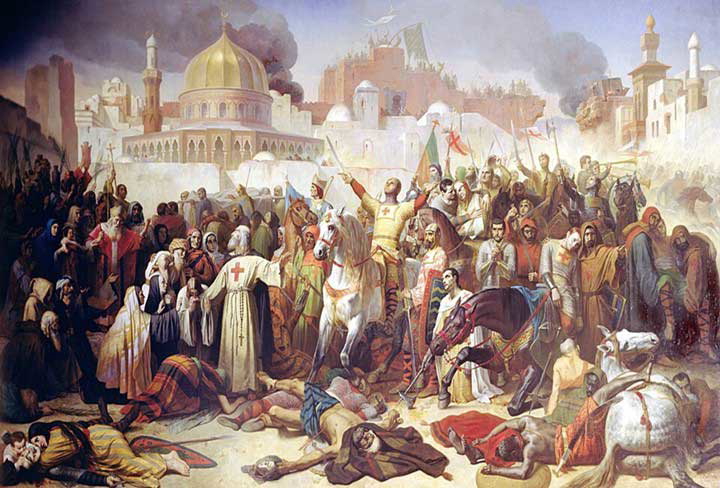
The First Crusade began in 1096 following the Pope’s call to arms. Over the next three years, the Crusaders battled the Muslims, sometimes with Byzantine help. Major cities in modern Turkey or Syria, like Acre and Nicaea, fell. And on June 7, 1099, the Crusader army began its siege.
The Crusaders, numbering over 13,000, fired by passion and zeal, invested the city. Their initial assault on June 13 failed due to low supplies and hastily built siege engines. By mid-June, the Crusaders’ situation deteriorated due to heat and shortages. Seeking inspiration, the Crusaders marched around the city barefoot, singing hymns.
In late June, reinforcements and supplies came via Genoese ships. Beginning on July 13, the Crusaders assaulted the city walls, breaking through on July 15. In the resulting massacre, estimates of up to 70,000 Muslims and Jews perished. However, now Jerusalem was Christian again.
Jerusalem’s recapture achieved the First Crusade’s goal. The Crusaders established the Kingdom of Jerusalem and elected Duke Godfrey of Bouillon. This victory and new kingdom immediately gave the West legitimacy and a toehold. Soon, several centuries of conflict would ensue.
A Turning Point: The 1187 Battle of Hattin
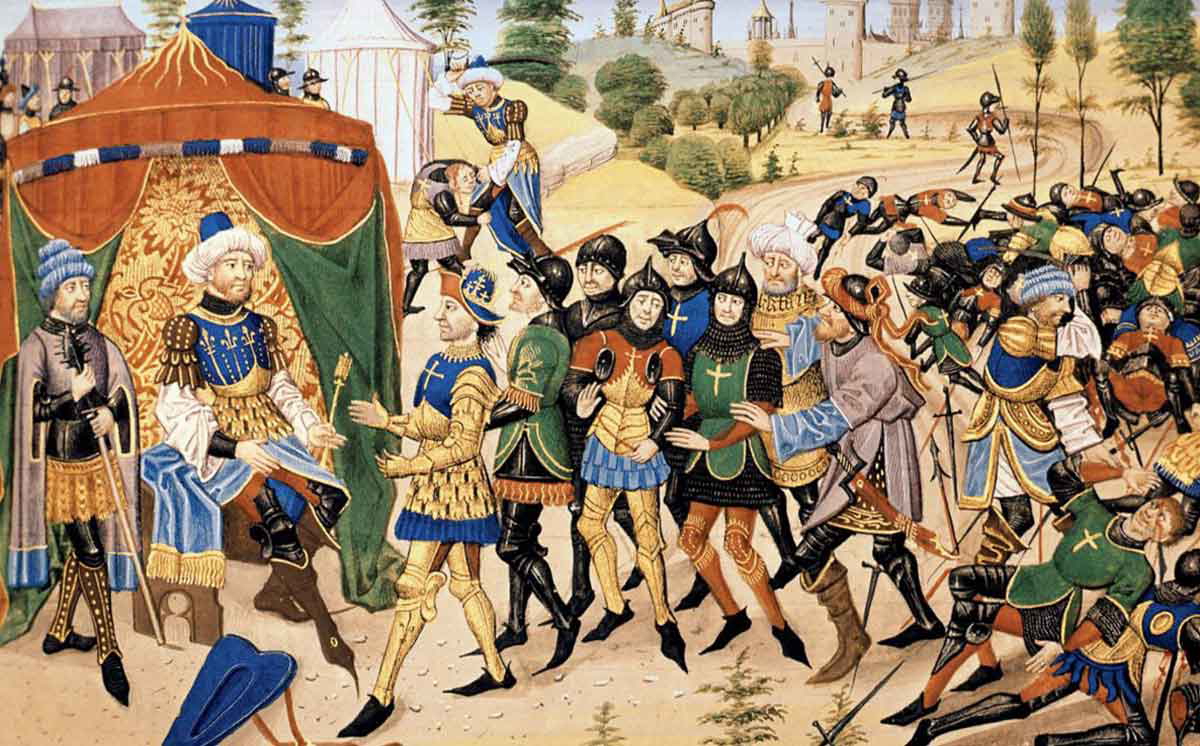
The late 12th century found the Crusader states established in the Holy Land. Though militarily strong, internal political problems roiled them. The Kingdom of Jerusalem, though the biggest, had difficulties with baronial power. The Crusaders’ main opponent was the Ayyubid Dynasty of Egypt, founded in 1171 by Islam’s greatest general, Salah al-Din Yusuf ibn Ayyub. Or simply, Saladin.
This pivotal battle stemmed from a broken truce. A French noble, Raymond of Chatillon, raided a caravan to Syria, angering Saladin. As a result, on July 2, 1187, Saladin besieged Tiberias, north of Jerusalem, hoping to lure out his enemies.
The Crusaders assembled their army, led by King Guy. Against most advice, the King marched across the open desert in summer’s high heat. Saladin’s army struck quickly, using his cavalry to harass and exhaust the Crusaders. At the Horns of Hattin (extinct volcanoes), the two sides fought.
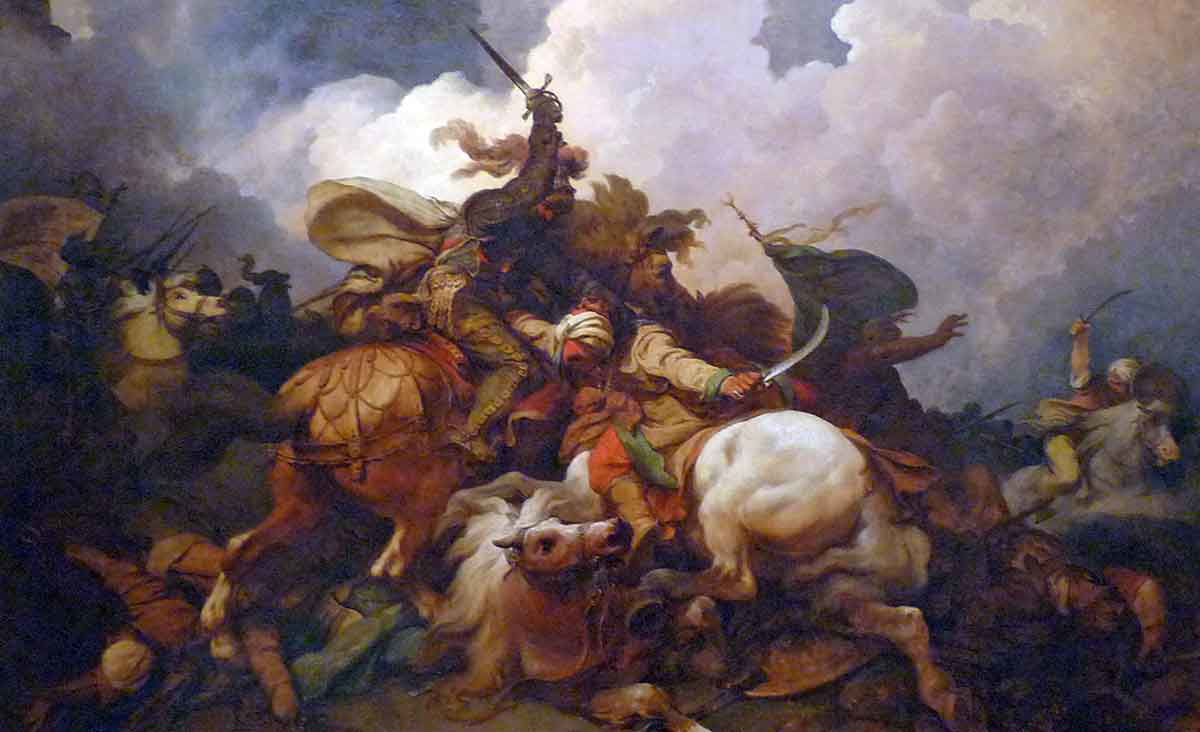
The Muslim army cut off and surrounded King Guy’s army on July 3. Now unable to reach water, the Crusaders tried a breakout. Continual cavalry charges met only frustration, stopped by Saladin’s disciplined forces. His archers continually rained arrows down, weakening the Christians. On July 4, they pressed against the hills, and the Crusaders broke. The Muslims captured Jerusalem’s King, the True Cross, and executed Raymond.
The Battle of Hattin marked the Crusades’ turning point. Only three Crusader states remained, with the Kingdom of Jerusalem significantly weakened. Saladin next rolled up Jerusalem in October 1187 and more, only leaving Antioch and Tripoli. These only survived with European help and the Third Crusade.
The Attempted Resurgence: The 1189 Siege of Acre

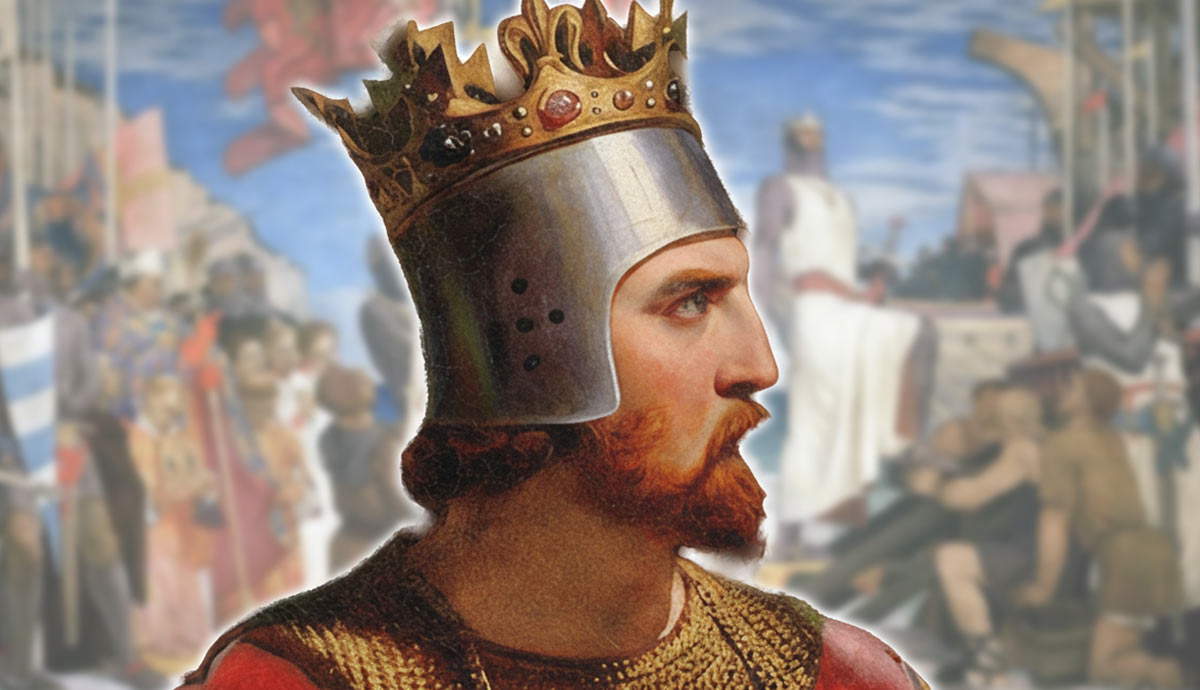
The West recoiled following the loss of Jerusalem. Soon, only Tyre (in modern Lebanon) remained a Christian Levant state. By October 1187, Pope Gregory VIII called for a Third Crusade, citing Jerusalem’s shocking loss. The West’s greatest rulers took up the call- England’s Richard I (Lionhearted), France’s Phillip II, and Holy Roman Emperor Frederick I.
Jerusalem’s King Guy made the Third Crusade’s first move, besieging the vital port city of Acre in August 1189. First local forces held the siege, strengthened by European reinforcements. But in a strange twist, Saladin’s stronger forces surrounded the Crusaders, creating a two-pronged siege that dragged on for two years. The siege’s final phase started in mid-1191 as the Third Crusade arrived. The massive European armies soon arrived, defeated Saladin, and attacked. Acre fell on July 12, 1191.
Victory at Acre boosted morale but proved hollow. Jerusalem was too far inland. Any attack would risk being cut off. Plus, the European rulers soon left for home. Acre only prolonged the Crusaders’ presence in the Holy Land. Acre fell again in 1291, this time to the Mamluks, ending the last Christian stronghold.