Summary
- Just as the Romans celebrated the dies natales of their gods, Christians celebrated the birth of Christ, borrowing the birthday of the popular god Sol Invictus.
- Christmas coincided with the Roman festival of Saturnalia, borrowing many of its customs.
- As Christianity spread, Christmas borrowed from Winter Solstice traditions from other converting pagan cultures, such as the Norse festival of Yule.
Christmas is a Christian holiday that celebrates the birth of Jesus Christ. But it is no coincidence that it falls around the same time as pre-existing holidays such as Hanukkah, celebrated by Jews from the 2nd century BCE onwards, and Yule, a winter festival celebrated by pagan Vikings. How did Christmas develop as a holiday, and where did some of our favorite Christmas traditions come from?
Was Christmas Based on a Pagan Holiday?

Christmas celebrates the birth of Jesus Christ, the son of God in the Christian faith, and is therefore a thoroughly Christian holiday. However, in Greco-Roman religion, it was common to celebrate the dies natalis of the gods, usually determined by the day their temple was dedicated. Celebrating the birth of Christ seems like a natural extension of that tradition.
There is evidence that Christians celebrated the birth of Christ as early as the 2nd century CE, but on different dates. The early Christian leaders didn’t seem to agree on his exact birthdate, though the story in the Bible suggests it couldn’t have been in December, and Mary and Joseph wouldn’t have been compelled to travel to Bethlehem at that time of year. It was only in the early 4th century CE, when Christianity was becoming the religion of the Roman Empire, that Christmas was established as a fixed, annual celebration on December 25th.
What Are the Origins of the Date for Christmas?
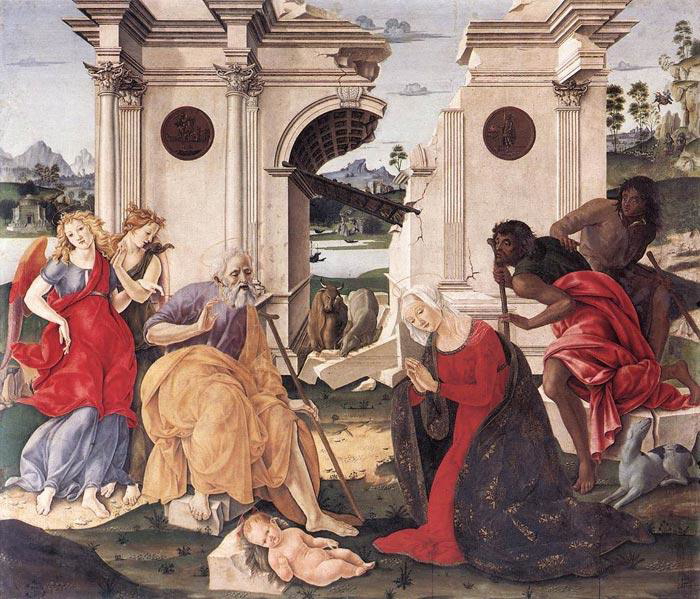
Evidence suggests that the Church leaders chose December 25th as a desirable date to celebrate the birthday of Christ, rather than based on any scriptural evidence that it was his birthday. It doesn’t seem likely to be a coincidence that this was also the dies natalis of Sol Invictus, who was elevated as the most important god in Rome by Aurelian in the second half of the third century CE. This seems to be a clear choice to align Christianity with existing imperial traditions.
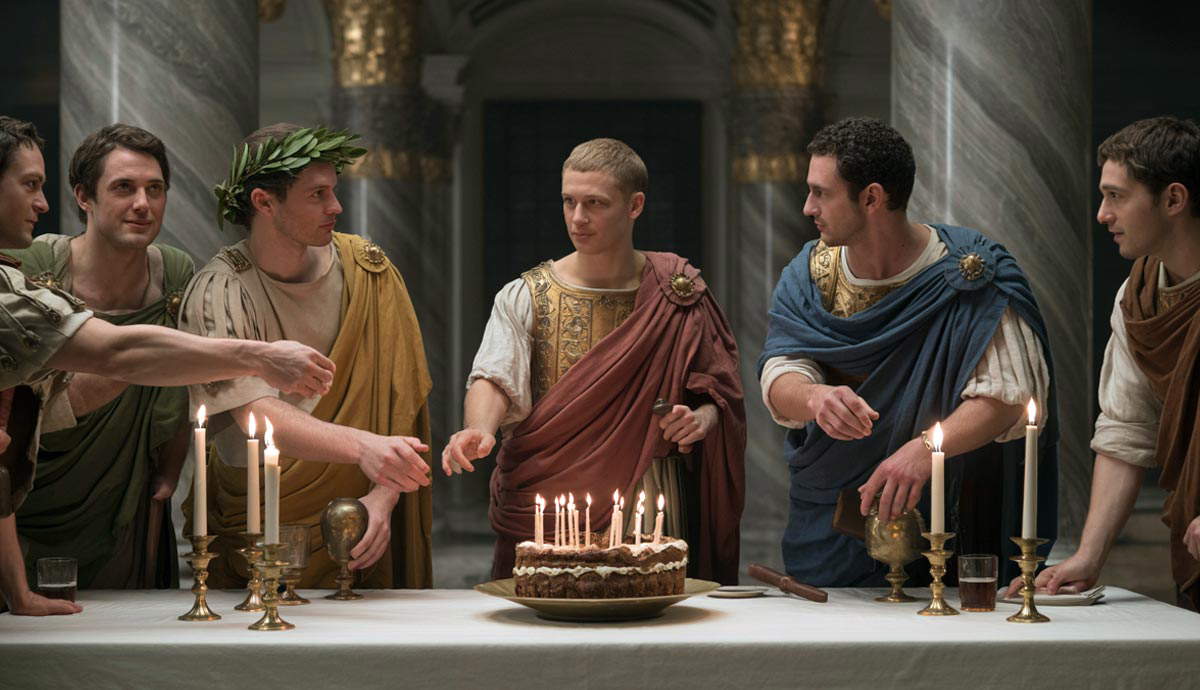
This also coincided with the Roman festival of Saturnalia, which ran from the 17th to the 23rd of December. Over time, some of the rituals associated with Saturnalia became associated with Christmas because of their proximity.
Where Did the Word “Christmas” Come From?
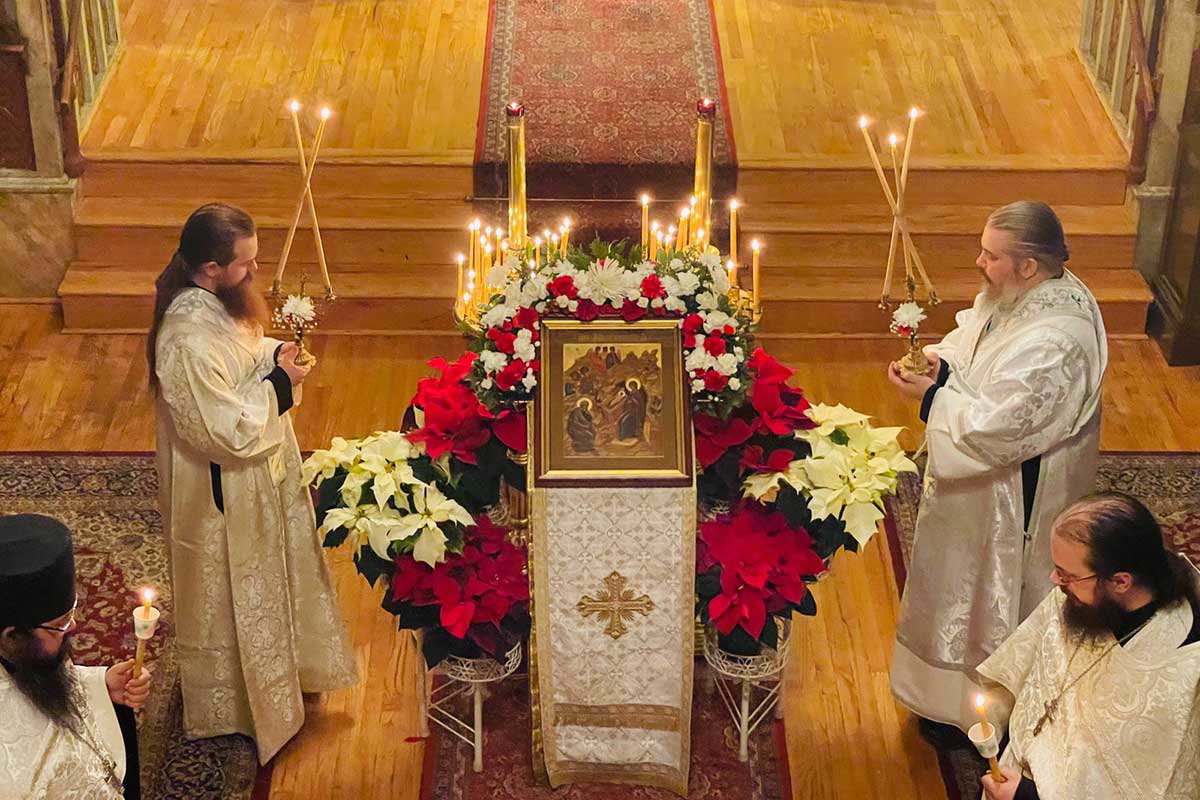
The word “Christmas” is derived from the combination of two words, “Cristes Maesse” or “Christ’s Mass.” Cristes comes from “Christos,” which is the Greek version of the Hebrew word Messiah. Mass is the central ritual in the Church involving the Eucharist.
The earliest usage of the term is from 1038 CE, in a book from Saxon England, though it was probably used before that. Before that time, it appears that the celebration on December 25th was known as the Feast of the Nativity, or the Feast of the Holy Birth.
Where Does the Tradition of Gift-Giving Come From?
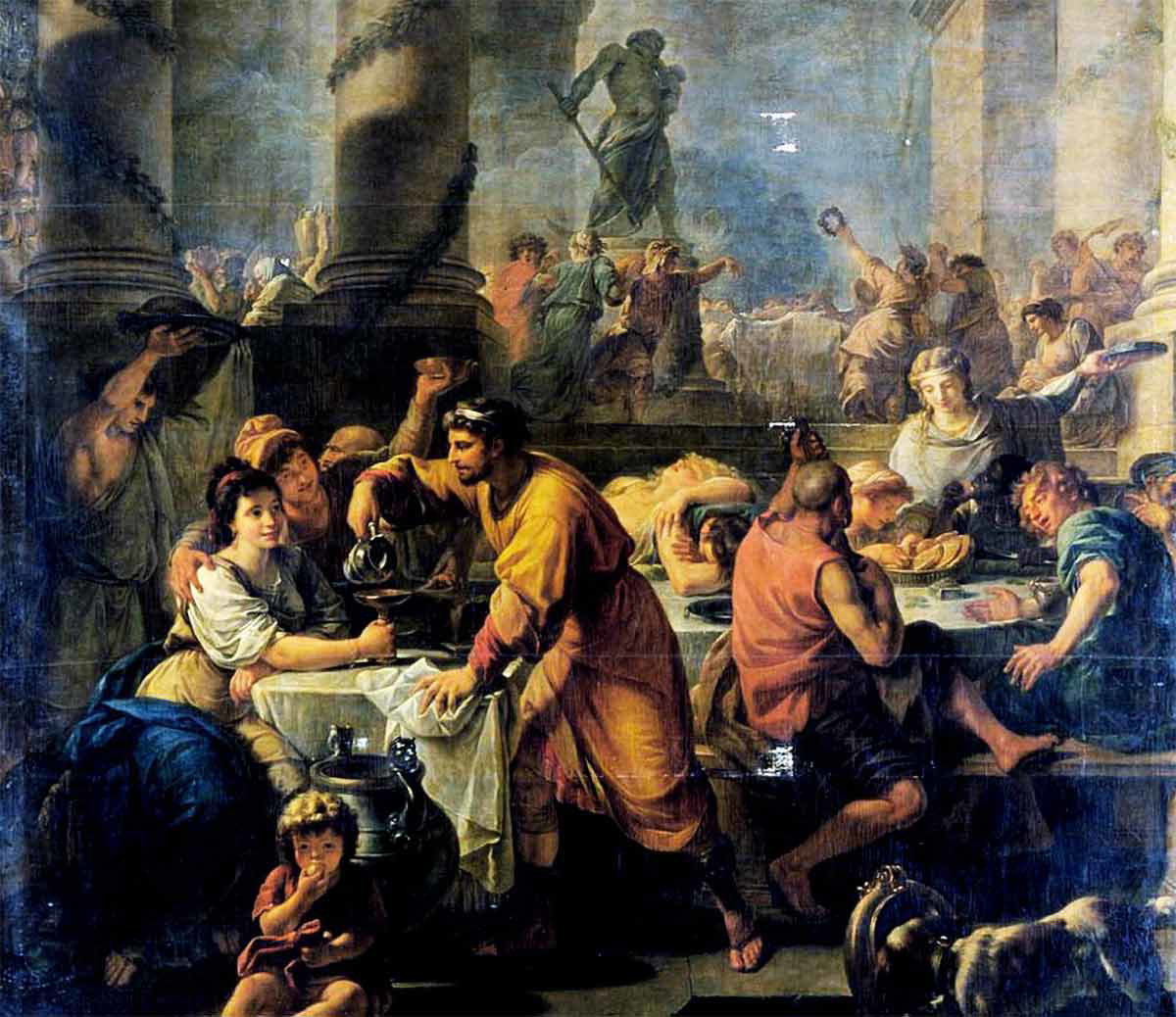
The Gospel of Matthew records the “magi, “or “wise men from the East,” brought gifts for a new king – gold, frankincense, and myrrh – to Jesus in Bethlehem. Nevertheless, the practice of exchanging gifts between loved ones was probably borrowed from Saturnalia.
Saturnalia was a festival in which social norms were turned on their heads. For example, masters might serve their slaves at dinner, and freedmen could treat their patrons with disrespect, in jest. The city was in celebration with decorations such as wreaths, candles, holly, and evergreen fir trees used to decorate the streets. Gift-giving was also common, usually small gifts such as figurines made from wax and pottery, candles, combs, and dice cups.
Both of these traditions may have fed into the legend of Saint Nicholas, who was known for performing miracles and acts of kindness, including bestowing gifts on those in need. This included gifting dowries to poor women. This made him the perfect candidate to become a popular figure among children. The focus on giving gifts principally to children and the poorer classes was fully established by the Medieval period.
Did Christmas Incorporate Local Customs?
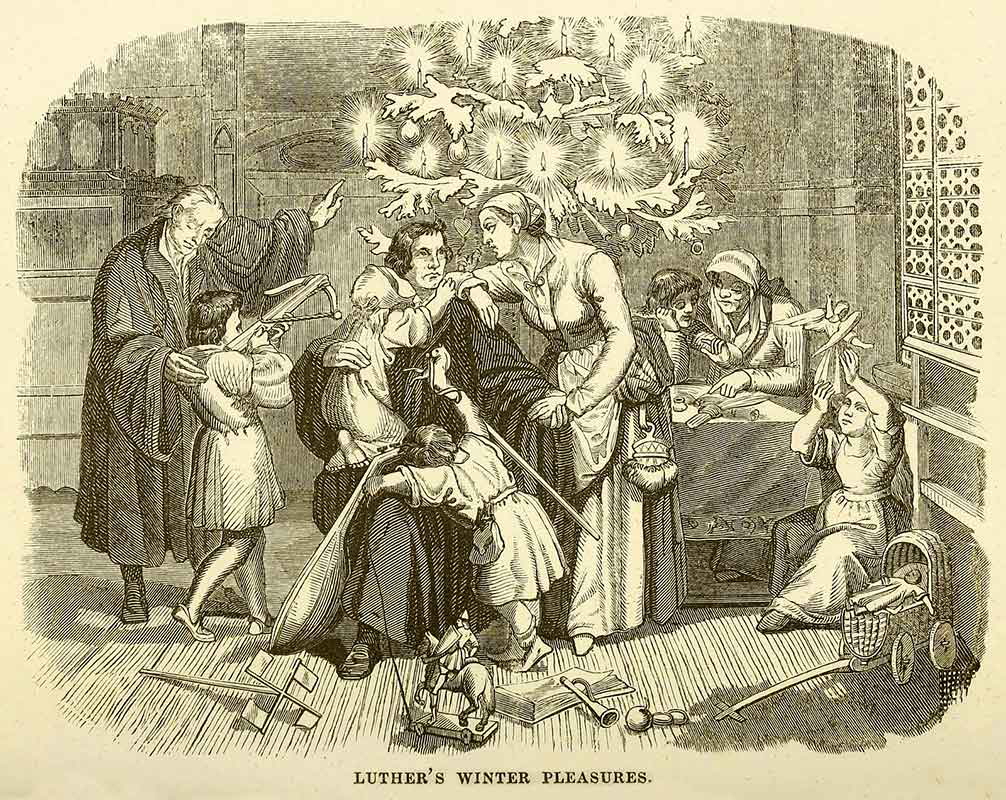
As Christianity spread, missionaries and new churches were faced with the challenge of convincing locals to turn away from folk beliefs held for hundreds, if not thousands, of years, and embrace new rituals. One way in which they did that was to incorporate local traditions into Christian practices.
How this worked can be seen in the case of the Vikings. According to the Saga of Hakon the Good, King Hakon I of Norway reportedly changed the date of their annual Yule festival to coincide with the 12 days of Christmas, deliberately aligning the two traditions. As the Norwegians were encouraged to celebrate Christmas, elements of Yule were naturally incorporated. They had traditions such as bringing evergreen trees into the home and burning a Yule log for the duration of the holiday. Children would leave their shoes by the fire at night and put out sugar cubes for the god Odin’s steed, which later led to leaving treats for Santa’s reindeer.
When Did the Modern Idea of Santa Claus Emerge?
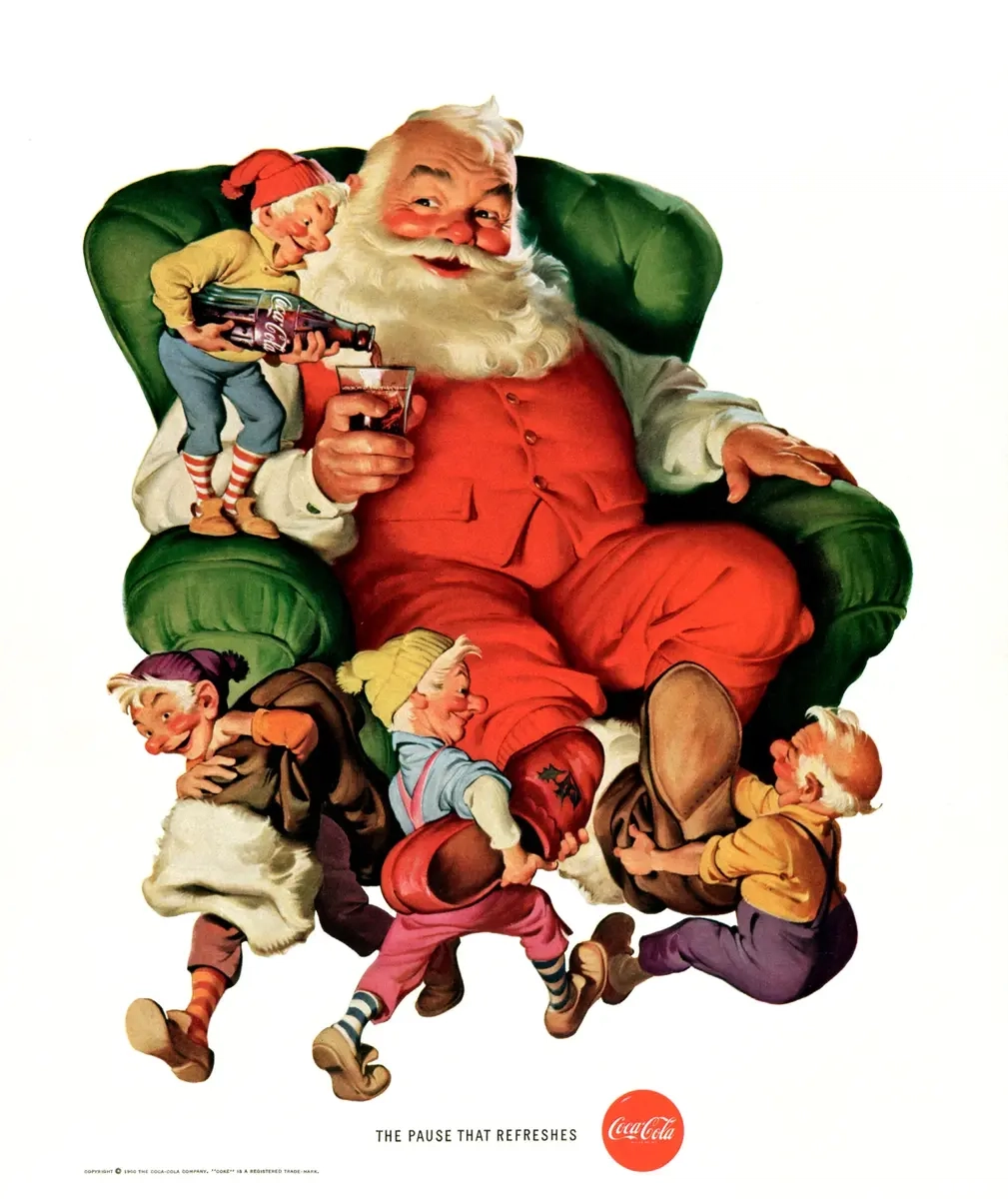
While the original idea of Santa Claus came from Saint Nicholas, Santa Claus is a thoroughly modern idea that emerged in the United States. Dutch settlers brought Sinterklass, their version of Saint Nicholas, with them to the New World in the 17th century. He quickly entered the broader public imagination with the American poem “A Visit from St Nicholas,” written in 1823 and describing aspects such as his sleigh pulled by flying reindeer.
His iconic red suit was introduced in the 1930s with advertising campaigns for Coca-Cola, which is why he wears Coca-Cola red. The image was then adopted by charities, such as the Salvation Army, which used volunteers dressed as Santa Claus to collect on the streets. The image quickly became cemented in the collective imagination.
What About the Darker Side of Christmas?
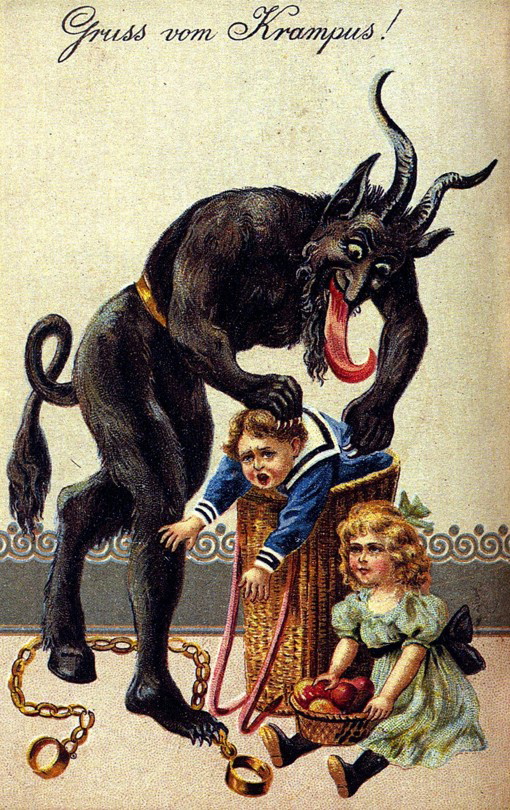
While Saint Nicholas is a benevolent figure incorporated into Christmas celebrations, darker figures are also associated with the holiday. Krampus has been associated with Christmas in the Alpine regions of northern Europe since at least the 16th century. He is a beastly figure with a furry black body and a deranged face, stopped with a pair of horns.
While Saint Nicholas traditionally visits and bestows gifts on December 6th, the Krampus comes on December 5th to punish misbehaving children. He gave birch sticks, but in the case of the worst-behaved, he could bundle them up in a sack, kidnap them, and take them away to be tortured.
The Krampus came from the pre-Christian tradition of the goddess Perchta, closely related to the Slavic figure Baba Yaga, and her children. She was a dual figure, a goddess of light who was the patroness of spinning, but also an elderly, “ugly Perchta,” who was considered the mother of beasts. She would assess the work of spinners and craftsmen. If they did their work well, she might leave a silver coin in their shoes. If it was not up to standard, she might cut open their belly, remove their stomach and guts, and stuff it again with straw and pebbles. He children would sometimes help her in this bloody work, and the Krampus seems to have developed from one of these children.