Summary
- Beyond Giza, Egypt has over 100 other pyramids, from towering structures to unfinished ruins.
- The Step Pyramid of Djoser at Saqqara is Egypt’s oldest, pioneering the iconic architectural form.
- Pharaoh Sneferu built multiple experimental pyramids, including the unique Bent Pyramid and the successful Red Pyramid.
- The Pyramid of Unas introduced sacred Pyramid Texts, inscriptions designed to guide the pharaoh’s spirit.
- Construction methods evolved, with some like the Lahun Pyramid using mudbrick cores instead of solid stone.
The three pyramids at Giza are iconic architectural landmarks that have come to define the land of Egypt. However, not everyone realizes that 118 pyramids are scattered across the country. While the remains of some are barely more than a few blocks, others rival the Great Pyramid of Khufu at Giza in their grandeur. Read on to discover ten of the most important Egyptian pyramids you may not know about.
| Name | Date | Location |
| Step Pyramid | Djoser 3rd dynasty 27th century BCE | Saqqara |
| Pyramid of Baka | Baka (?) Mid-4th dynasty 2613-2494 BCE | Zawyet el Aryan |
| Bent Pyramid | Sneferu 4th dynasty c. 2600 CE | Dashur |
| Pyramid of Djedefre | Djedefre 4th dynasty died c. 2558 CE | Abu Rawash |
| Neferefre’s Pyramid | Neferefre 5th dynasty 25th century BCE | Abusir |
| Lahun Pyramid | Senusret II 12th dynasty c. 1991-1802 BCE | Faiyum |
| Pyramid of Unas | Unas 5th dynasty 24th century BCE | Saqqara |
| Pyramid of Meidum | Huni 3rd dynasty c. 2163 BCE | Meidum
|
| Red Pyramid | Sneferu 4th dynasty c. 2600 CE | Dashur |
| Pyramid of Nyuserre | Nyuserre 5th dynasty mid-25th century BCE | Abusir |
10. Step-Pyramid of Djoser: Egypt’s First Pyramid
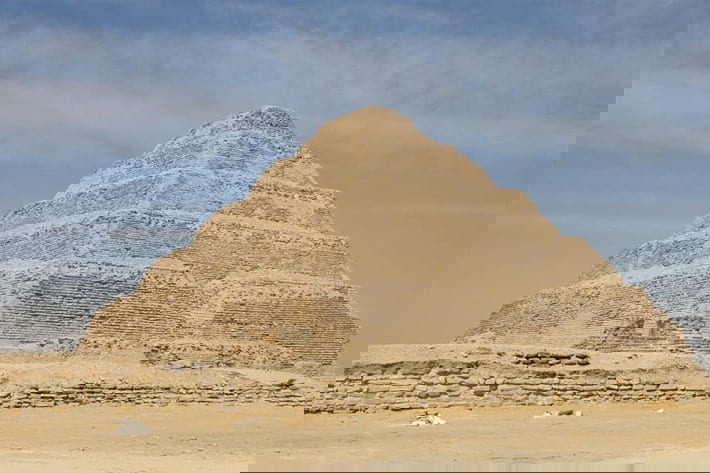
King Djoser was probably the founder of Egypt’s Third Dynasty, around 2690 BCE. This was around the time that Egypt was unified as a single kingdom. To celebrate his achievement and ensure his passage into the afterlife, Djoser commissioned his advisor Imhotep to build a huge stone monument. The architect designed and executed a step pyramid that still towers 60 meters over the sands of the desert.
The Egyptian Pyramid of Djoser consists of six levels of limestone terraces, stacked one on top of the other, each one smaller than the one below. These were inspired by mastabas, tombs used for rulers earlier in Egypt’s history. The pyramid was the central part of a huge funerary complex that was surrounded by a limestone wall, with only one entrance. Inside the Pyramid, a long and tight corridor leads to the tomb shaft, placed in the middle of the construction. Thirty meters down the shaft, the burial chamber housed the sarcophagus of Pharaoh Djoser.
9. Pyramid of Baka: The Unfinished Pyramid

Pyramids took decades to build, and not every king of the Old Kingdom could complete a pyramid during their lifetime. Most of the pyramids around Zawyet el-Aryan, near Giza, are unfinished. Only a narrow, stone-lined shaft and a staircase leading down into a chamber remain of the Baka Pyramid. Nevertheless, this has been a priceless find for the archaeologists trying to understand how these monuments were built. However, unfortunately, this pyramid currently sits in a restricted military zone, preventing further excavations.
While it is formally known as the Pyramid of Baka, a son of pharaoh Djedefre, it is unclear whether he was the original owner. It probably belongs to the mid-4th dynasty (2613-2494 BCE). An unusual oval-shaped vat was also found embedded in one of the stone blocks of the chamber floor. The vat was found sealed with traces of an unidentified substance inside.
8. Bent Pyramid of Sneferu: Architectural Experimentation
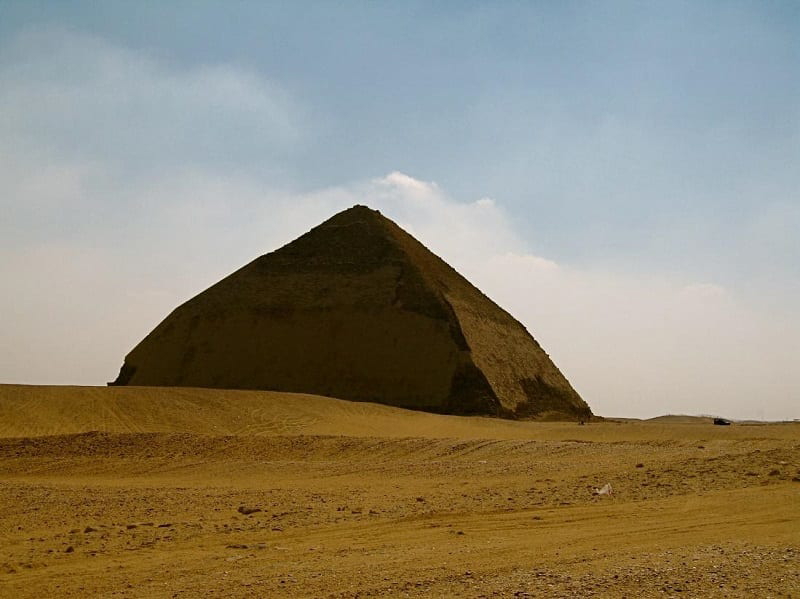
Pharaoh Sneferu, the founder of the 4th Dynasty, did not build just one pyramid, but at least three. He chose the flats of Dahshur for his experiments, the second of which is the construction known today as the Bent Pyramid. It receives this name because it rises from its base at an angle of 54 degrees. As the angle of the slope changes drastically around the middle of the pyramid, it gives it a tilted or bent-like appearance.
Several theories have tried to explain this. It has been proposed that architects miscalculated the viable angle of the pyramid slope and had to change the angle mid-construction. Others suggest that the original angle could have stood, and plans changed due to the failing health of the pharaoh and the need to complete the project more quickly. In any case, this is the first real smooth-sided Egyptian pyramid, and the quality of its construction is attested by its superb state of preservation.
7. Pyramid of Djedefre: The Ruined Pyramid
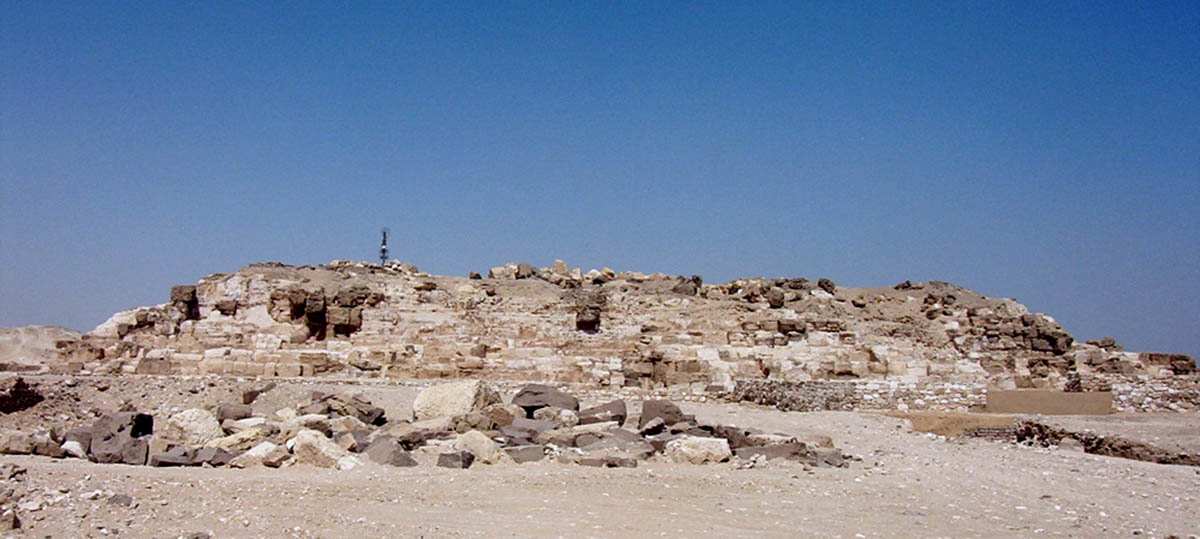
Djedefre was a son of Khufu, who built the Great Pyramid in Giza. Djedefre chose the plateau of Abu Rawash for his own funerary monument and instructed his architects to make it similar in size to that of Menkaure (also in Giza). The result was Egypt’s northernmost pyramid, known as the “lost pyramid,” because today it is a pile of rubble.
The reason for the collapse is unclear. Theories range from a construction error resulting in collapse, to being left unfinished during the pharaoh’s short reign, to the stones being removed and reused by the Romans. However, as demonstrated by Egyptologist Miroslav Verner, what probably happened was a centuries-long process of antiquities looting, stone robbing, and destruction that started no later than the New Kingdom.
6. Neferefre’s Pyramid: The Abandoned Pyramid
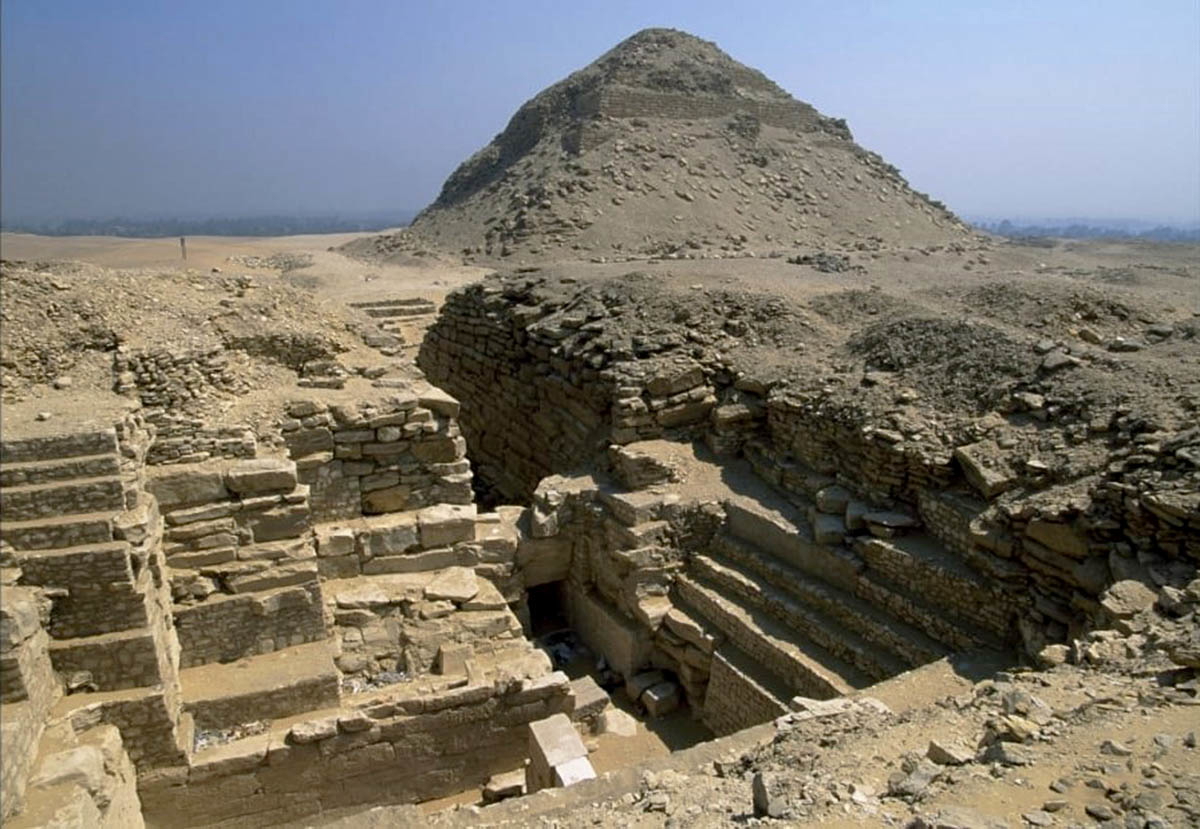
Abusir is located a short distance north of Saqqara, and it is the resting place of several 5th Dynasty rulers. There is also a sun temple and several mastaba tombs. While there were originally 14 Egyptian pyramids at this site, belonging to Userkaf (founder of the 5th Dynasty) and four other pharaohs, only four remain standing.
The abandoned pyramid at Abusir belonged to Neferefre, who died prematurely while work on his pyramid was still underway. His successor decided to finish it as a smaller mastaba. A mortuary temple was hastily built to house the mummified body of the king while builders finished the botched pyramid. The mummy of Neferefre was then transported to the abandoned pyramid by his younger brother, Nyuserre.
5. Lahun Pyramid: The Middle Kingdom Pyramid
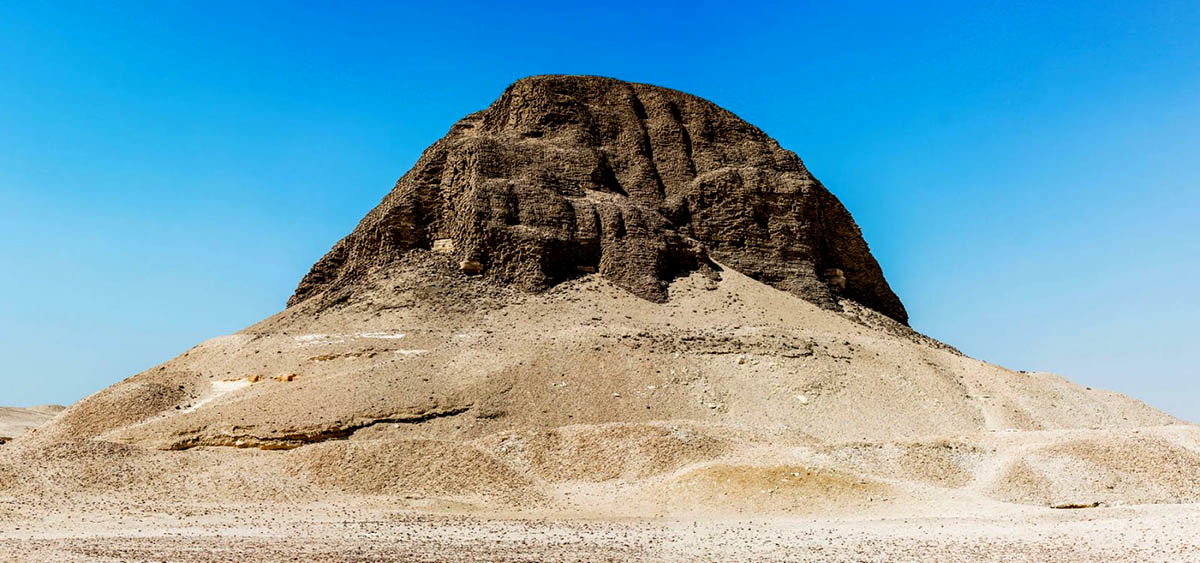
The Pyramid of Senusret II is unique on this list for several reasons. It was built during the Middle Kingdom, 1,000 years after the Old Kingdom pyramids. The Middle Kingdom of Egypt witnessed a revival of old traditions, including pyramid building, and Senusret II chose the secluded area known as el-Lahun to build his.
While most Egyptian pyramids were made of limestone, Senusret’s was made of mudbrick, accounting for its poor level of preservation. In antiquity, a small, black granite piece called a pyramidion topped the pyramid. Remnants of this piece were found by excavators in the 20th century. The pyramid of Senusret II was recently opened to visitors, after an extensive restoration process.
4. Pyramid of Unas: Rise of the Pyramid Texts
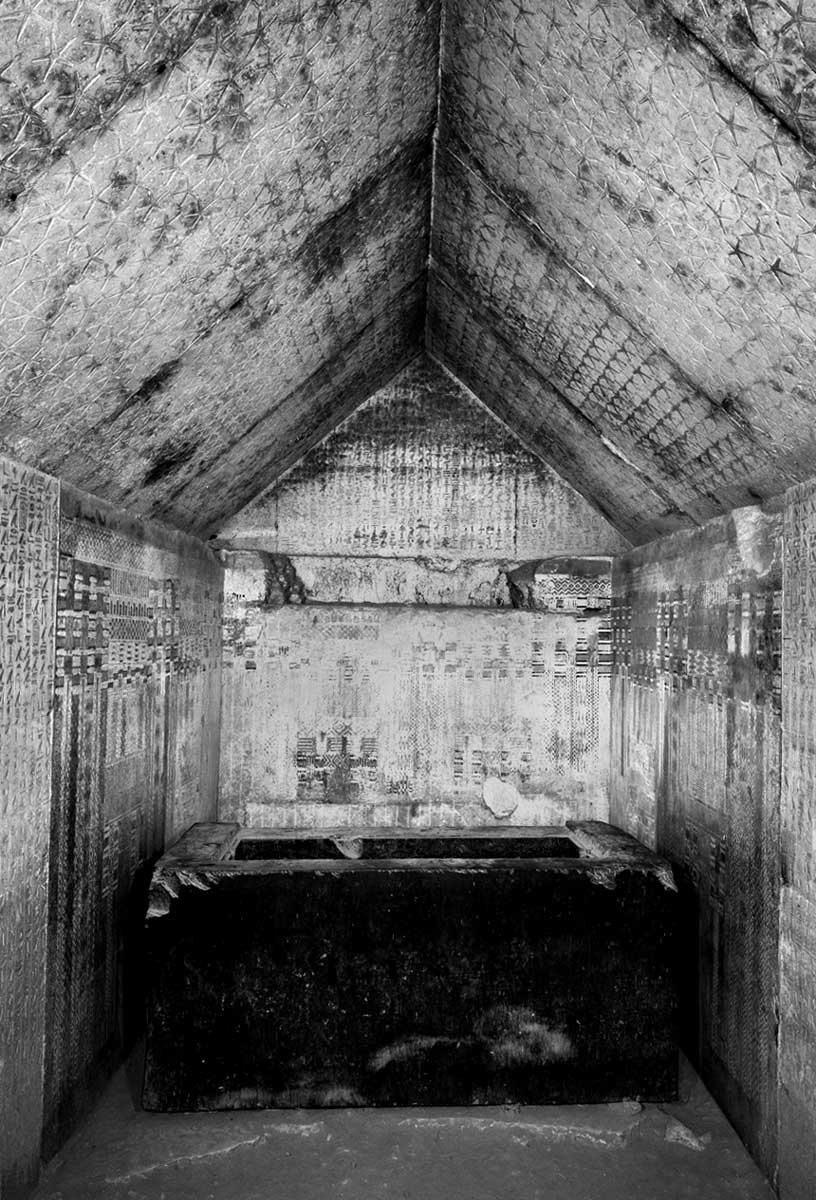
Unas was the last pharaoh of the 5th Dynasty (c. 2375-2345 BCE). He was also the first to have the so-called pyramid texts inscribed on the internal walls of his funerary monument. According to Egyptologists, the outside appearance of Unas’s pyramid is crude, following the lowering of construction standards by the late 5th Dynasty. But the inside boasts some of the most impressive hieroglyph writings ever made in an ancient Egyptian building.
The Egyptian pyramid texts are the earliest body of literature from Egypt and were designed to be read by a priest during rituals. Their purpose was to aid the deceased on their journey into the afterlife. The texts provided guidance for the Akh (spirit) of the deceased and ward off the most common threats to the deceased and to the tomb.
3. Pyramid of Meidum
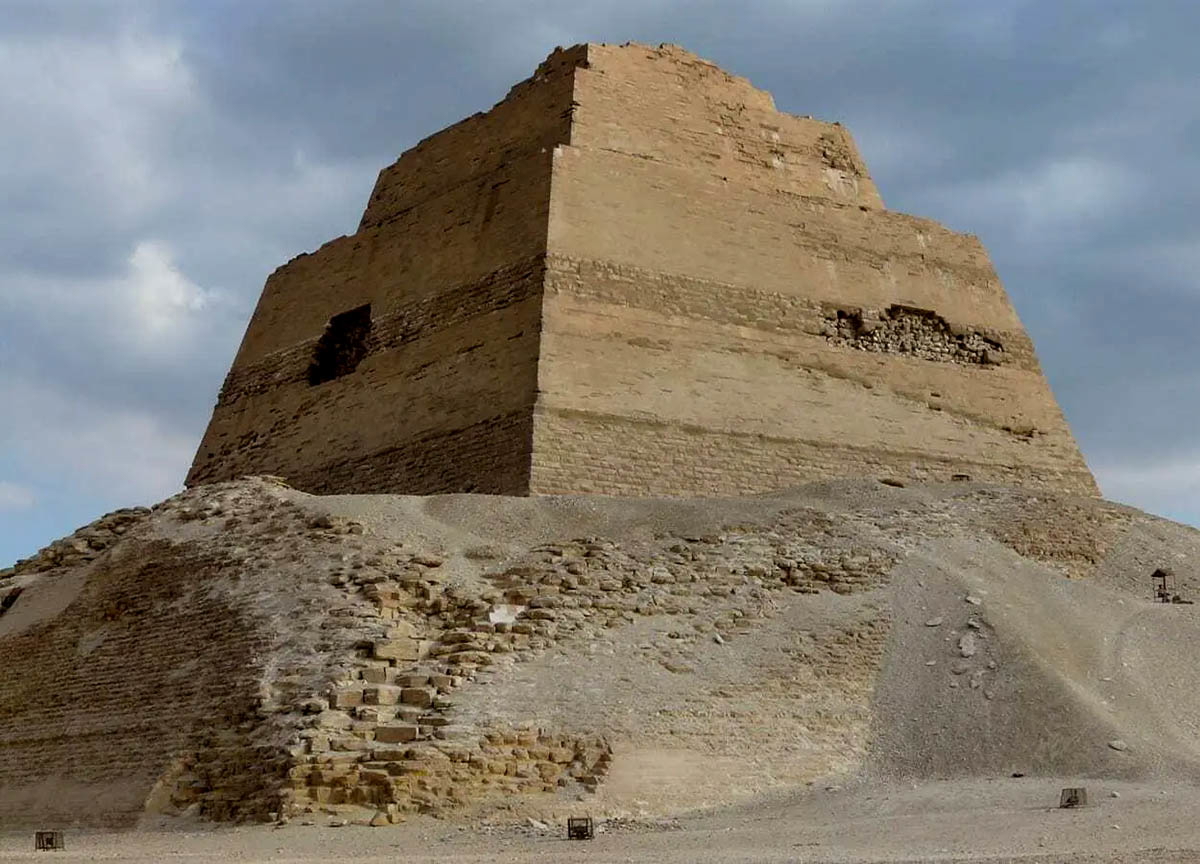
One of the earliest Egyptian pyramids in history, the Pyramid of Meidum was the first constructed with straight sides. Unfortunately, the outer limestone casing has collapsed, leaving the inner structure exposed. While this may not be the look its builders had in mind, it is priceless for Egyptologists who want to know exactly how pyramids were built.
The pyramid of Meidum consists of a mostly solid superstructure that conceals a long staircase that leads to a central burial chamber. Apparently, the staircase was never completed, as the walls are raw and there are wooden support beams still in place. It may have originally been devised for Pharaoh Huni of the 3rd Dynasty (c. 2673-2613 BCE), but was finished during the 4th Dynasty by Sneferu, the great pyramid builder. It stands within a large mastaba field, a hundred kilometers south of modern-day Cairo.
2. The Red Pyramid: Sneferu’s Crowning Achievement
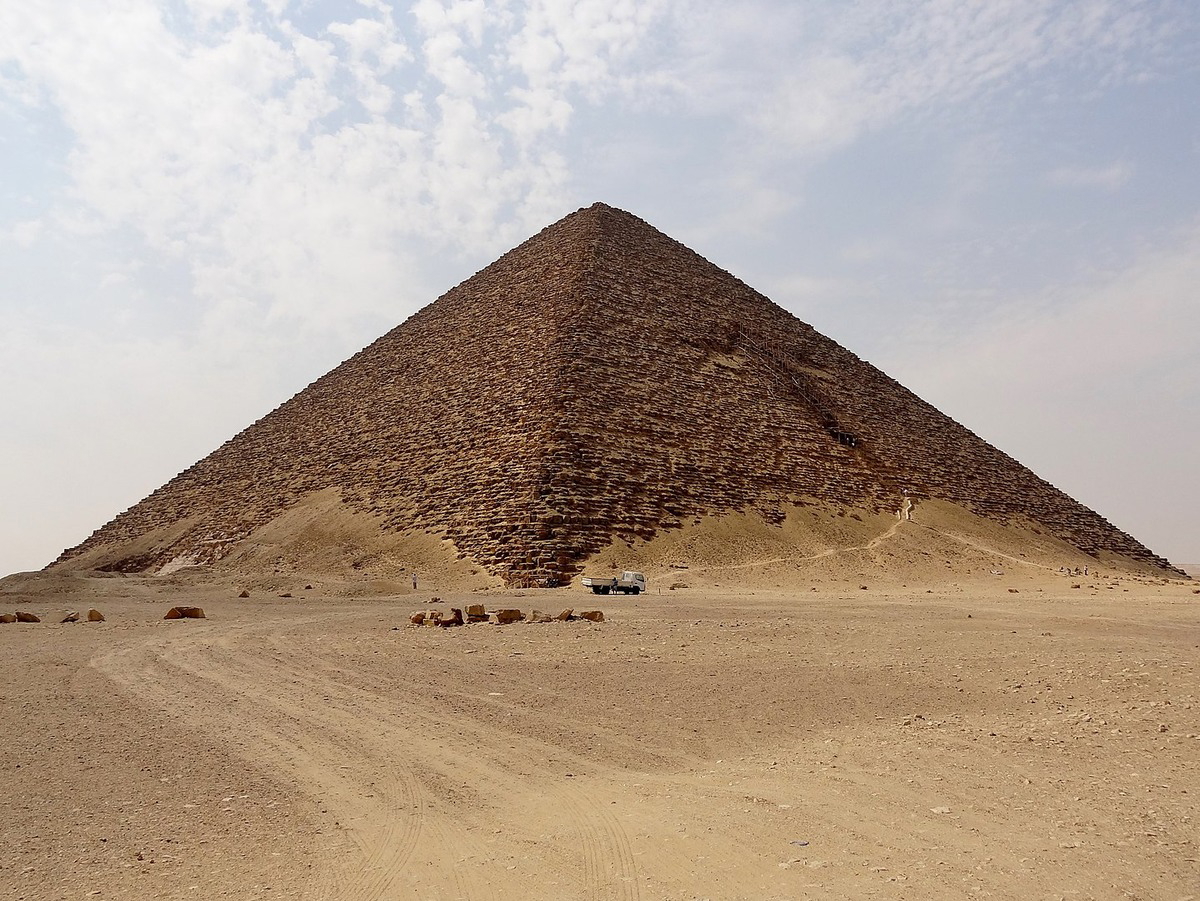
After a series of unsuccessful attempts, including the pyramid of Meidum discussed above, Sneferu’s first successful pyramid was constructed in Dahshur, a rocky site on the west bank of the Nile. It is known as the Red Pyramid due to the reddish hue of the outer limestone blocks. Its original name was, appropriately, “Snefru appears in glory,” constructed with a constant slope of 43° 22’ throughout.
Scientists believe that this pyramid was the final resting place of Sneferu himself, although this has not been confirmed by medical pathologists. The remains of a mummy were found inside the Red Pyramid in the 1950s, but a proper medical examination has still not been conducted. However, archaeological work on Dahshur is currently progressing rapidly, and excavations have recently yielded impressive discoveries, including the remains of a possible unknown pyramid.
1. Pyramid of Nyuserre: The Collapsing Pyramid

The Pyramid of Nyuserre was constructed for Nyuserre Ini, of the 5th Dynasty (c. 2445-2421 BCE). He was the youngest son of Neferirkare, whose unfinished pyramid he completed. He completed a series of monuments left unfinished by earlier pharaohs. After that, he began building his own funerary complex in Abusir.
There, he had a step-pyramid built and covered in limestone blocks to give it smooth sides. Unfortunately, thieves and the elements contributed to its present ruin. Exploration inside the pyramid has been halted due to the high risk of cave-ins, and the inner chambers may still hold priceless treasures and information on this crucial time in Egyptian history.