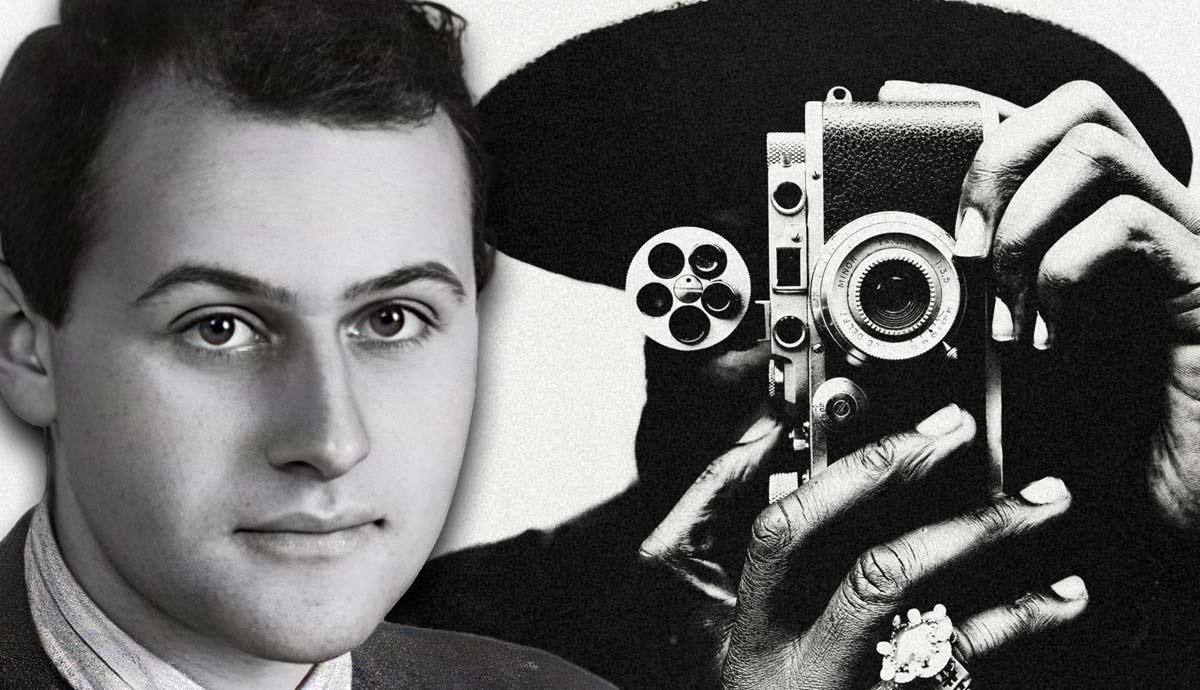
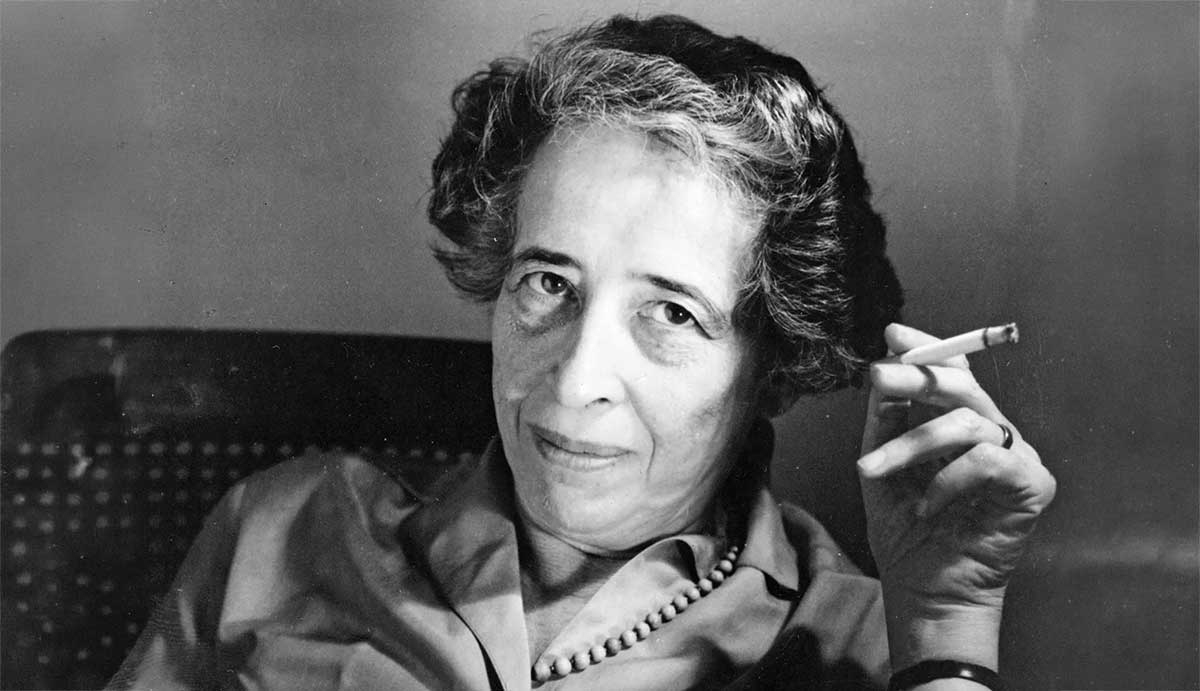
Hannah Arendt (1906-1975) was a prominent German political philosopher of Jewish origin and a 20th-century theorist. Her work spanned a wide range of topics, including politics, power, totalitarianism, human rights, and the nature of evil. Arendt’s intellectual contributions were shaped by her personal experiences as a Jewish refugee who fled Nazi Germany during World War II. She closely observed the rise of totalitarian regimes and the horrors of the Shoah/Holocaust, which profoundly influenced her thinking and writings. That’s how her most notable work, Eichmann in Jerusalem: A Report on the Banality of Evil, was created. In this book, she offers her controversial analysis of Adolf Eichmann’s trial, examining the bureaucratic nature of evil and the complicity of ordinary individuals in committing atrocities. What exactly does the “banality of evil” mean? Let’s find out.
1. Who Was Adolf Eichmann?
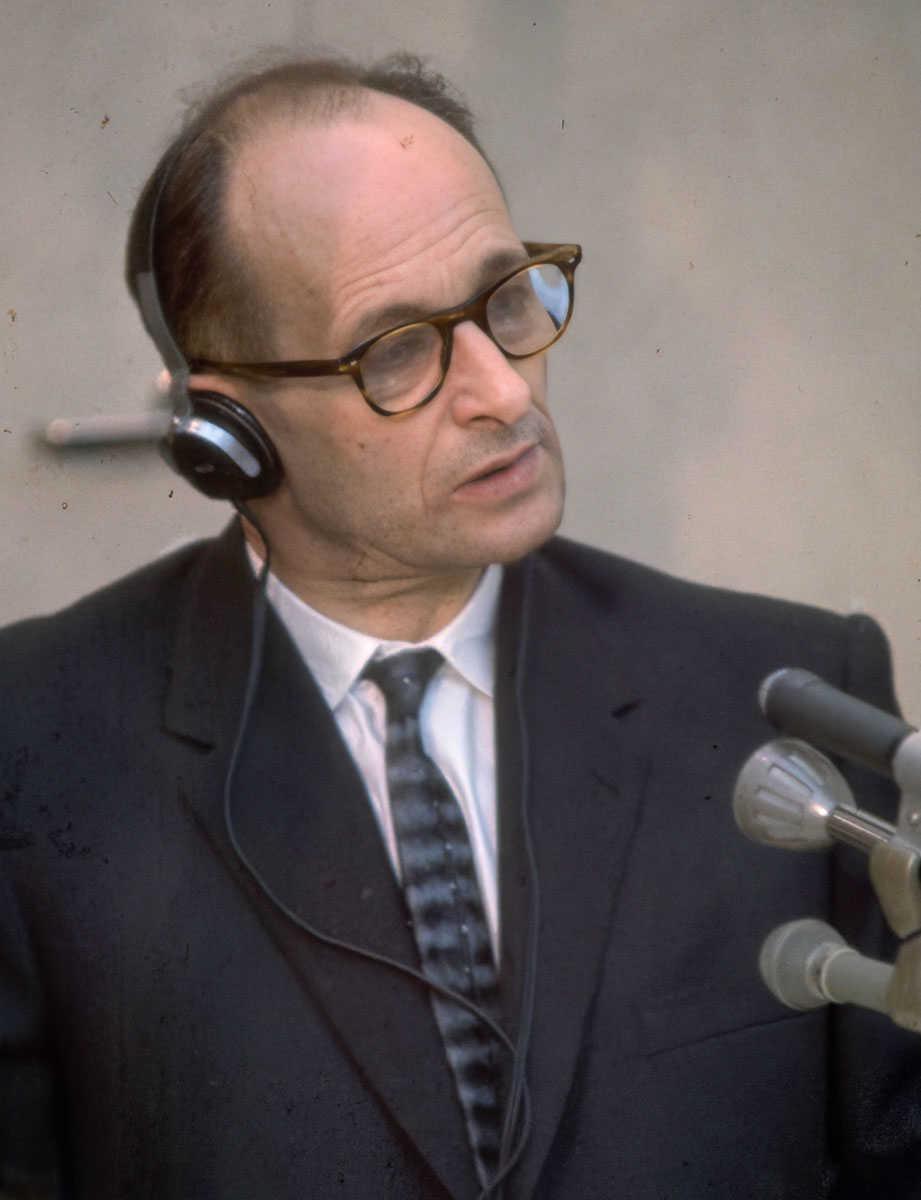
To fully grasp Arendt’s thesis about the banality of evil, one must first confront the man at its center: Adolf Eichmann. Adolf Eichmann was a high-ranking Nazi official who played a central role in orchestrating the Holocaust, the systematic persecution and murder of six million Jews during World War II. He joined the Nazi Party at a young age in the middle of 1930s, and became a member of the SS (Schutzstaffel), the paramilitary organization responsible for carrying out Hitler’s policies.
Eichmann was responsible for coordinating the deportation of Jews from various countries to concentration and extermination camps, where they were overworked and murdered. In other words, he played a crucial role in the Holocaust as a whole. After World War II, Eichmann escaped capture and went into hiding in Argentina under a false identity, where he lived for over a decade. However, he was eventually tracked down by the Israeli government in 1960. Eichmann was then abducted and brought to Israel to stand trial for his crimes. The trial, which took place in 1961 in Jerusalem, garnered international attention and served as a platform to expose the atrocities of the Holocaust. This is why Arendt’s book is titled Eichmann in Jerusalem.
Arendt did not merely describe the trial; she developed an original political philosophy based on it. Arendt begins the book with general observations on the defendant Adolf Eichmann’s personality and motives, and later presents her philosophical perspective and conclusions about the trial as a whole. Accordingly, we will follow the same narrative approach. Let’s see what Arendt had to say about Eichmann.
2. Eichmann Believes He Followed the Categorical Imperative
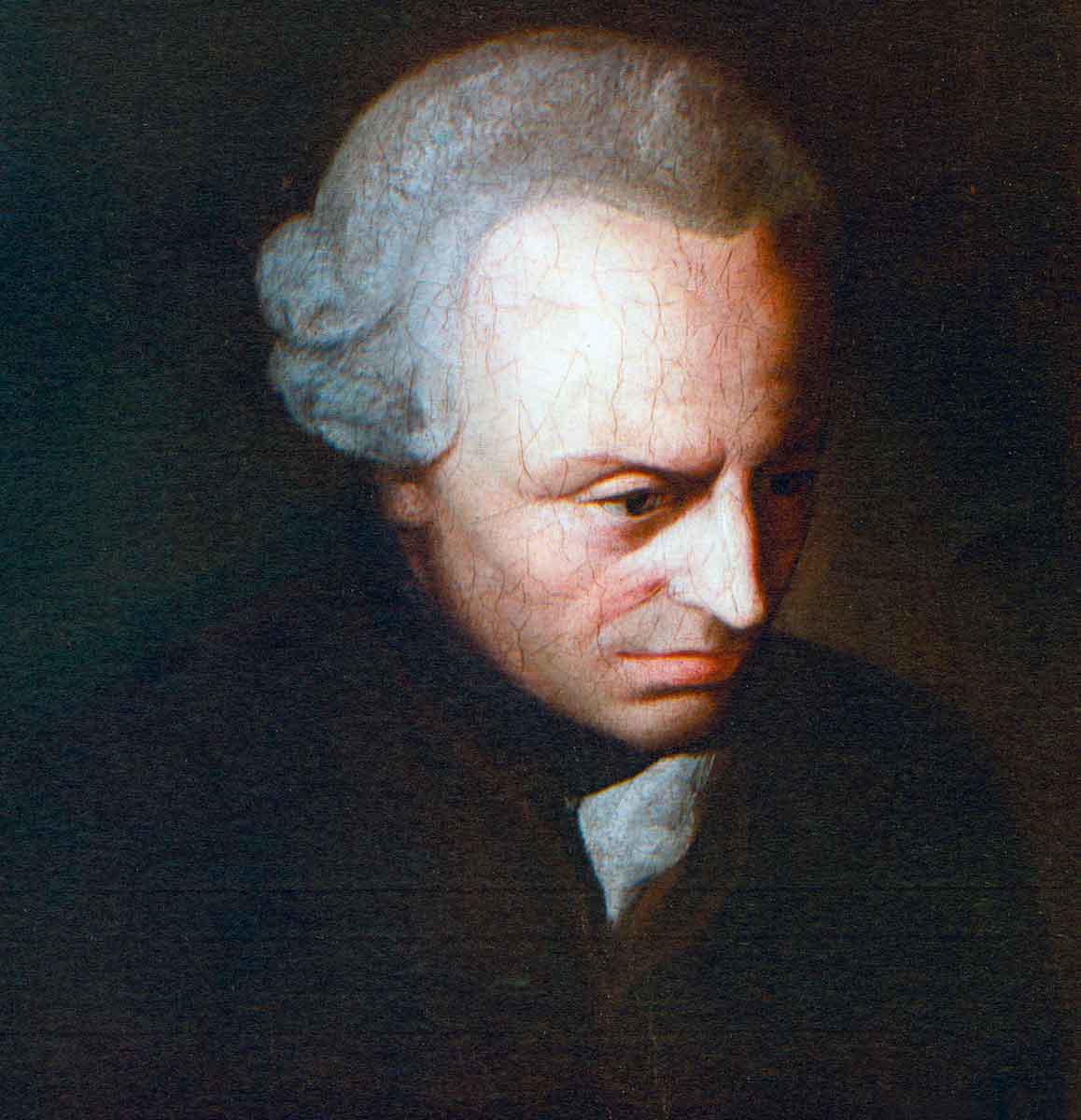
As is the case in any court hearing, Eichmann was first given the opportunity to speak for himself. In other words, he was given the chance to defend himself and prove that he is not guilty of the crimes for which he is being punished. In his speech, Eichmann states that he has always sought to follow Kant’s Categorical Imperative. The categorical imperative is an ethical principle, or moral rule, proposed by the German philosopher Immanuel Kant, that articulates how we should act if we aspire to be moral beings. This principle holds that we should “act only in accordance with that maxim through which you can at the same time will that it become a universal law.” So in a way, the principle is not only a moral guide for the individual to distinguish right from wrong, but a universal law that everyone should follow.
However, it is hardly the case that Eichmann simply followed a universal moral law. Arendt pointed out that Eichmann misunderstood Kant’s categorical imperative completely. She argued that Eichmann failed to recognize that the legislator of this universal moral law is morality itself, which is to say that it is we, ourselves. In Eichmann’s formulation of the categorical imperative, the legislator is Hitler, as Arendt noticed.
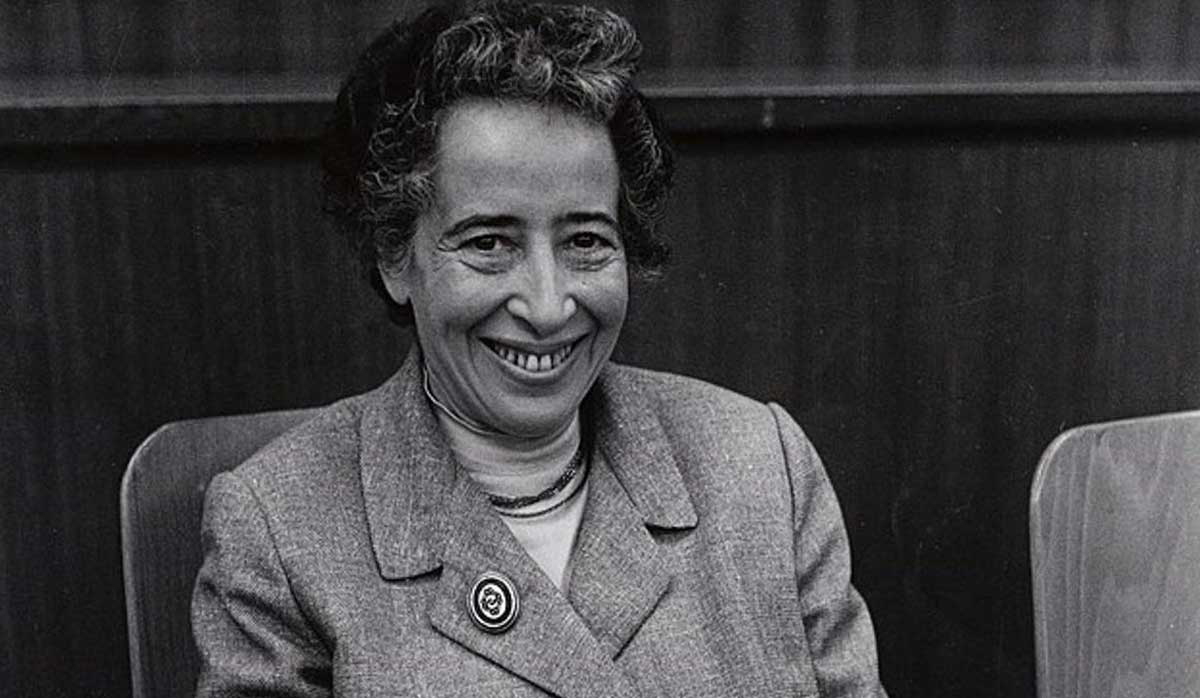
However, Eichmann maintained during the trial that his opinion of Hitler changed with the implementation of the Final Solution (the Nazi plan to exterminate European Jews). In consulting his own thoughts, he realized he was no longer the master of his actions. Yet, by that point, it was too late to alter his course.
Arendt remarked that Eichmann’s inability to think for himself is also evident in his speeches at the trial. He demonstrated his unrealistic worldview through the lack of communication skills outside official records, bureaucratic tone, and nazi clichés. Although Eichmann may have had anti-Semitic leanings, Arendt said that he did not display “the strong hatred of the Jews.” As it seemed, he personally had nothing against them. In fact, Eichmann had many friends who were fanatic anti-Semites, but he was not one of them. Thus, Arendt pointed out that his actions were not led by hatred and malice, but by blinded devotion to the regime and his need to belong somewhere, to be a part of something.
3. The Observations of Eichmann
Arendt noted that Eichmann is not particularly intelligent. He was not able to finish high school, like his siblings did. His father handed him his first job at his own mining company, and later he found his first stable job in sales through a family friend. Eichmann’s recollection was also shown to be inaccurate on multiple occasions during the trial. He demonstrated a poor memory: whenever the judge asked him questions, he could not recall the events or when they occurred. Instead, he could only reference moments significant only to him, which were important moments from his career, and not the direct events that he was being tried.
As Arendt remarked, Eichmann’s frequent self-contradictions revealed a fundamental inability to think from any perspective but his own. This cognitive void was so profound that, in Arendt’s view, he would have preferred the infamy of execution as a major war criminal over the indignity of living as a nobody.
During his pretrial detention, the Israeli government assigned six psychologists to examine Eichmann, and none of them found any signs of mental illness. One psychologist even claimed that his attitude towards other people, especially his family and friends, was highly desirable, while another expert said that the only unusual thing about Eichmann is that he is more “normal” than the average person. Additionally, a minister who regularly visited Eichmann after each hearing stated that Eichmann was “a man with very positive ideas.”
4. Arendt’s Conclusion on Eichmann
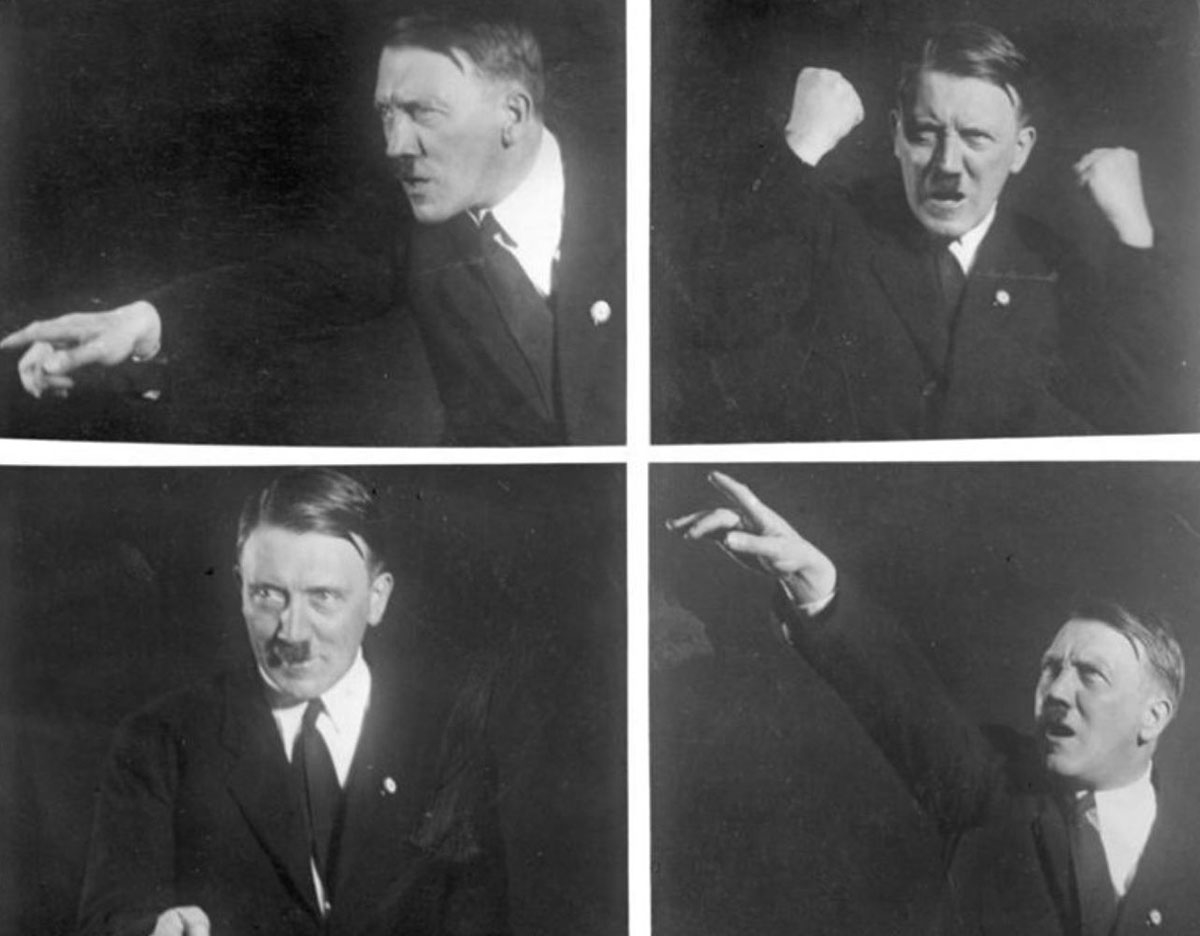
From these statements, many people have concluded that events such as the Holocaust can make even ordinary people commit horrific crimes with adequate and simple hints at conducive periods or places, but Arendt strongly disagreed with this interpretation. Instead, she insisted that moral choice remains present even under a regime of totalitarianism and that this choice has political consequences even when the one who is making the choice is politically powerless.
Arendt thus ended the book with the following statement:
“And just as you (Eichmann) supported and carried out a policy of not wanting to share the Earth with the Jewish people and the people of a number of other nations – as though you and your superiors had any right to determine who should and who should not inhibit the world – we find that no one, that is, no member of the human race, can be expected to want to share the Earth with you. This is the reason, and the only reason, you must hang.” (Arendt, Eichmann in Jerusalem: A Report on the Banality of Evil, 1963)
5. On the Legality of the Trial
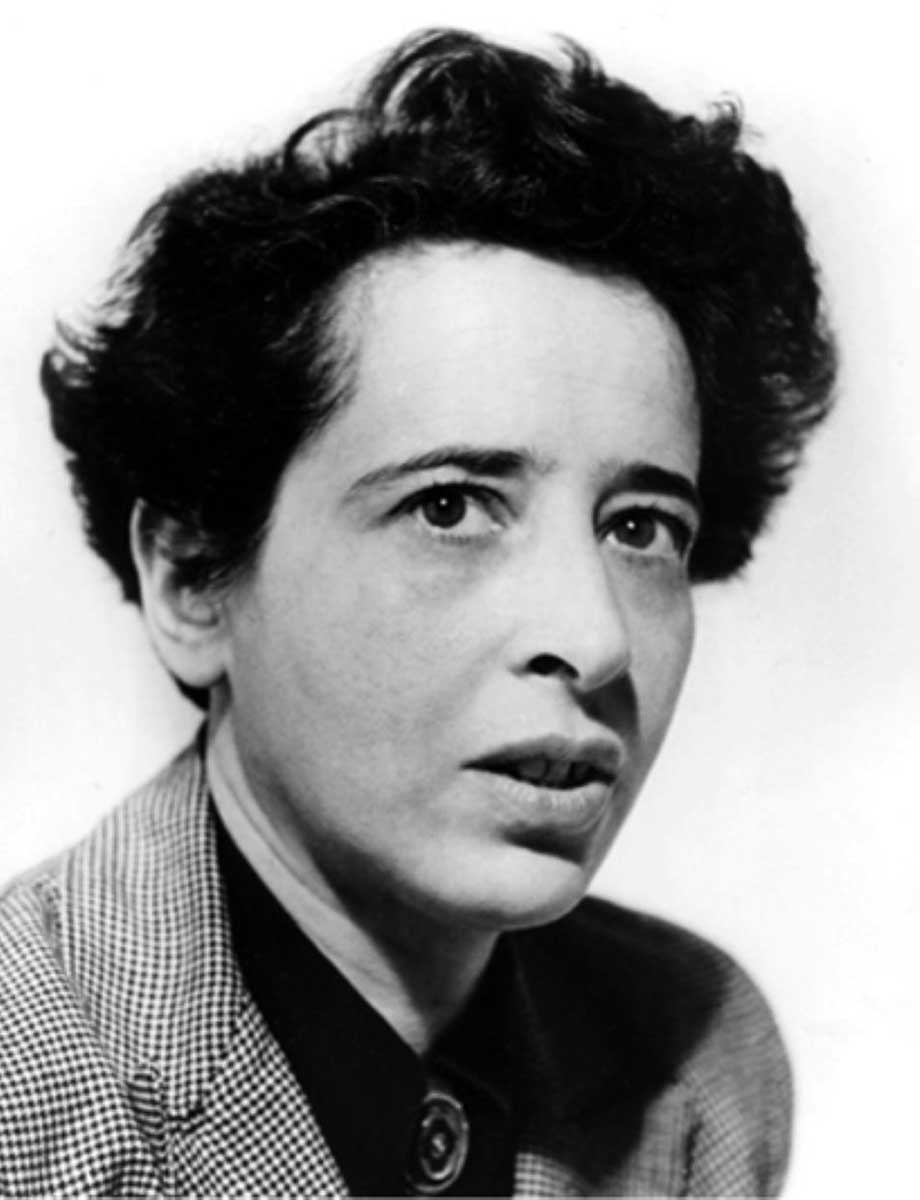
After discussing Eichmann, Arendt highlighted several aspects of the trial, its legality, and wider political context.
Arendt first mentioned that Eichmann’s abduction from Argentina was an illegal act of state, and that he was subsequently tried in Israel despite being accused of no crimes committed on Israeli soil. Israel signed the 1950 UN Genocide Convention, which rejected universal jurisdiction and required that defendants be tried “in the territory of which the act was committed” or by an international tribunal. The court in Jerusalem did not apply any of these options, as Arendt rightly remarked.
Second, she described the trial as a “show” organized by Prime Minister Ben-Gurion. She argued that Ben-Gurion intended to shift the trial’s focus away from Eichmann’s individual actions and toward the collective suffering of the Jewish people during the Holocaust.
However, she credited the presiding judge, Moshe Landau, because she said that he did his best not to turn the trial into a show. This was quite a difficult thing to do due to Ben-Gurion’s high position and the thousands of journalists who came to Jerusalem to witness and write about the trial.
She added that the trial was also staged in front of an audience, which further complicated the job of the judges. This was because Ben-Gurion had outlined the crimes before the trial started, in a number of articles that were designed to explain why Israel had kidnapped the accused. So, the whole trial reached a level of popularity that nobody wanted to miss.
6. How Did the Trial Go?
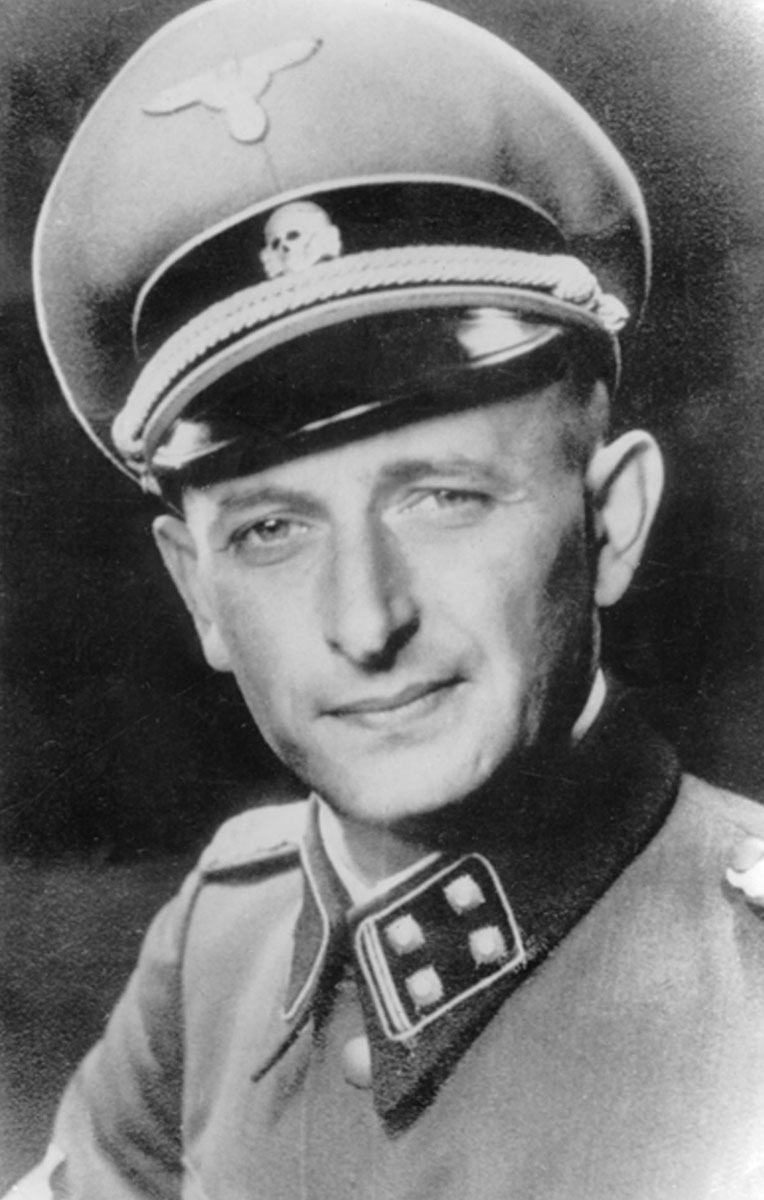
Furthermore, Arendt also claimed that many witnesses who were called to testify were not directly related to Eichmann’s actions but instead recounted their personal experiences during the Holocaust. This often diverted attention from the central issues at hand and made the whole trial chaotic, speculative, and therefore, null. This was exactly when the trial started to collapse and turned into a show, as the focus was put on the victims rather than the accused.
Arendt also remarked that Eichmann’s actions were not criminal under the German legislation. At that time, in the eyes of the Third Reich, he was an obedient citizen. In Arendt’s words, he was tried for a “crime in retrospect.”
In the trial, Eichmann stated loud and clear that he did not feel any guilt for the crimes that he had presumably committed. He also said that he did not feel any hatred towards Jews or towards those who condemn him. His attorney, Robert Servatius, said that Eichmann was simply doing his job: “He did his duty; he not only obeyed orders, but he also obeyed the law.” However, it’s important to mention here that although Arendt agreed with this statement, she still considered Eichmann’s crimes to be horrible and thought, like the majority of the people in the courtroom, that he should be hanged. This leads her to her famous concept, namely the banality of evil. Let’s finally see what Arendt means by that.
7. The Banality of Evil

Arendt introduced the concept of the “banality of evil” by the end of the book. As has been shown, Arendt argued that Eichmann, rather than being a monstrously evil figure, embodied a chillingly ordinary and bureaucratic mindset. She contended that his actions were not motivated by a deep-seated hatred or sadistic tendencies but rather by a combination of obliviousness, obedience to authority, and a desire to fulfill his assigned role within the Nazi regime.
Arendt’s explanation was that Eichmann was neither a fanatic nor a psychopath, but an extreme form of the ordinary person who relied on clichés in his defense rather than thinking for himself, and was motivated by personal professional advancement rather than ideology.
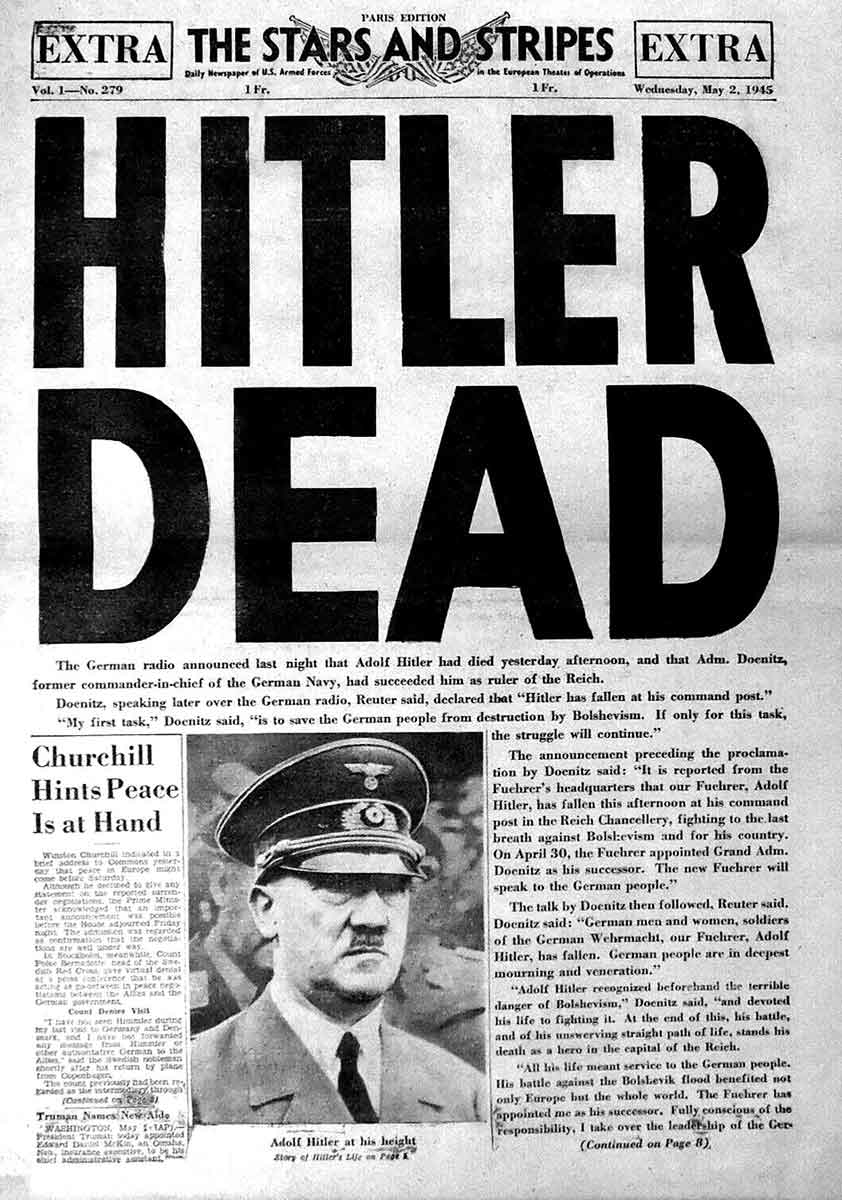
It has always been considered that individuals who commit crimes are inherently evil. If we were tasked with drawing an evil man, it would surely be a figure with sharp teeth and an imagination capable of the most horrible acts. This is an image deeply embedded in our culture. However, Arendt disapproved of this conception, arguing that even ordinary people can commit horrendous crimes. This is why she formulated the term “the banality of evil,” which suggests that evil manifests when people abdicate their moral responsibility and blindly conform to higher authorities, as Eichmann did.
The term “banal” itself suggests something ordinary or even ignorant, standing in stark contrast to the conventional image of a grand masterplan or a vile mission. In this sense, banality does not mean that Eichmann’s deeds were mundane, nor that there is a potential Eichmann in all of us; rather, it implies that he was driven by a kind of thoughtlessness that is unexceptional at its core.