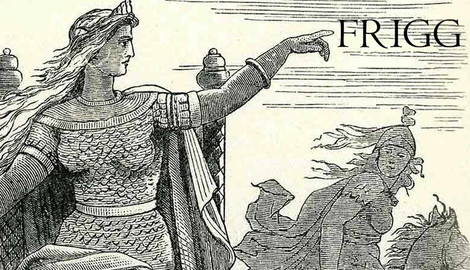
Many of the surviving sources describe Frigg, the wife of Odin the All-Father, as the most important Norse goddess. But despite this accepted position among the Aesir gods venerated by the Vikings, her role in Norse mythology and Viking religion is murky. As the wife of the divine king, she was principally associated with the household and matronly duties, including childbirth and motherhood, but she was also a confidant and advisor for her husband. Frigg stands out for being a powerful seeress who saw the fates of all men but never shared what she saw.
Frigg: The Beloved One
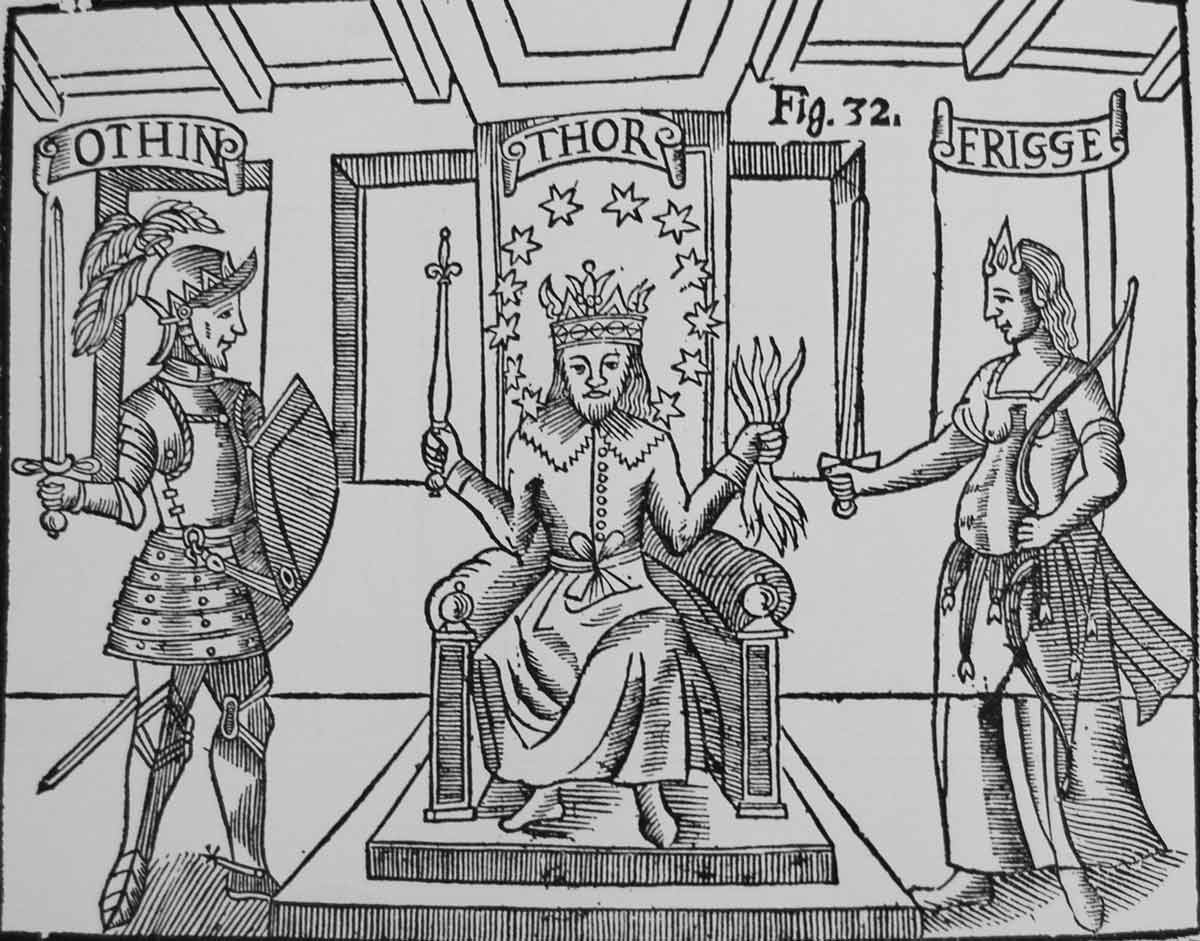
In Old Norse, the name “Frigg” can be interpreted as meaning “beloved one,” and this points to the most important characteristic of the goddess, as the wife of Odin, the chief Norse god.
But while she is Odin’s wife, Frigg is not the mother of most of Odin’s many children, almost all of whom he fathered on different giantesses. She is only explicitly referred to as the mother of Odin’s son Balder (Link to Article 6852 Balder), who was considered the kindest and most beautiful of the gods. She is never referred to as the mother of Odin’s most famous son, Thor, who was born from Jord, a giantess and personification of the earth.
But it is worth noting that Frigg is also referred to in several sources as the daughter of Fjorgyn, a masculine name that links back to the earth and is etymologically related to the name Jord. This suggests that in the Germanic religion that preceded the Norse religion, there may have been an association between Frigg and Jord, and in turn between Frigg and Thor. Nevertheless, it is telling that none of the kennings (poetic lines that replace proper nouns in Norse poetry) for Frigg relate her to Thor.
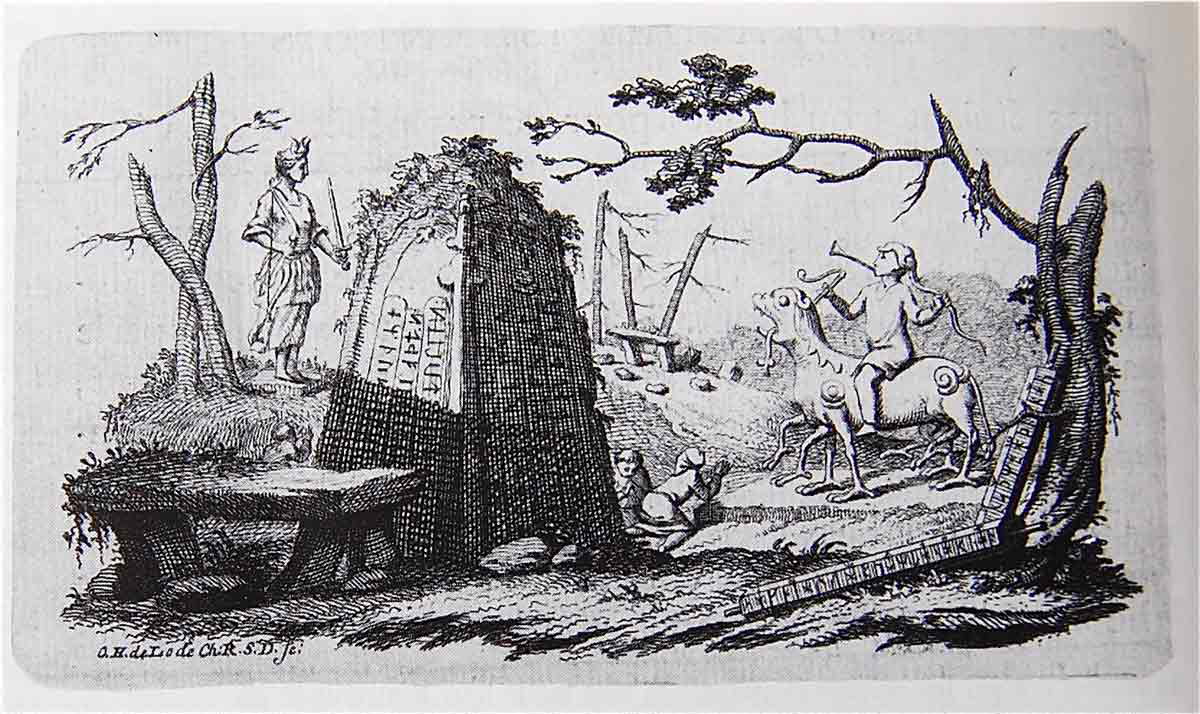
As the wife of Odin, Frigg had the honor and responsibility of serving mead to the guests of Odin’s Hall, Valaskalf. This is where he would have received other gods and the occasional giant. She did not serve mead in Odin’s Hall for fallen dead warriors, Valhalla (Link to Article 6851 Valhalla), where this function was filled by the Valkyries, divine shieldmaidens. Serving mead was not a servile role, but an important diplomatic role, since all negotiations were accompanied by the consumption of drink. There is evidence that the Vikings invoked the aid of Frigg for successful negotiations.
Nevertheless, in the Viking world, women were seen as the property of their husbands, and Frigg was no different. In the Ynglinga Saga, we receive a euhemerized history of the gods as they are made into legendary figures in Scandinavian history. It is said that King Odin, who was famous for his penchant for wandering, would leave his brothers Vili and Ve in charge of his affairs. These are the same brothers with whom the god Odin created Midgard in the Norse creation myth (Link to Article 7299 Norse Creation Myth). When he wandered for a particularly long time, they assumed Odin was not coming back, and split his property, sharing Frigg between them. Odin eventually returned and reclaimed his wife.
In the Lokasenna, a story in which the trickster giant Loki insults all the gods, he accuses Frigg of being lustful and having laid with both Vili and Ve.
Mistress of Fensalir
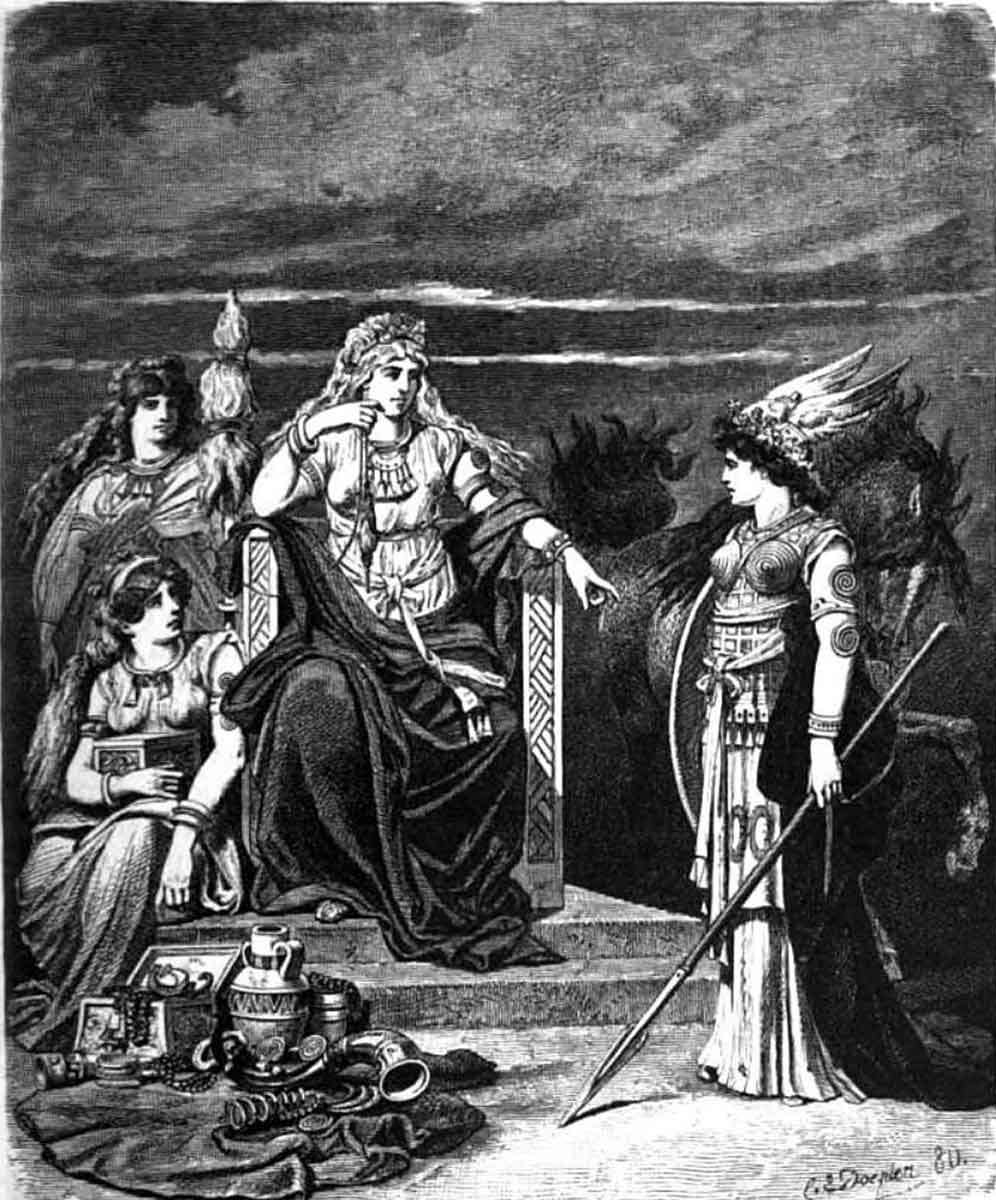
As well as serving mead in Odin’s Hall, Frigg had her own divine hall in Asgard, the realm of the Aesir gods, called Fensalir. The name of the hall suggests that it was in a boggy or swampy wetland. This could be significant since the Vikings believed that placing items in bogs was a way to transfer them to the gods.
Frigg is often described as spending time here, usually fulfilling domestic duties, such as spinning, as was appropriate for the matron of a household. One source suggests that she spun the clothing of all the gods from cloud sheep. Frigg’s main symbols were the spinning wheel, mistletoe, and silver. Silver was the main form of currency used by the Vikings, and it was often the matron of the family who managed household finances.
It was at Fensalir that Frigg spent time with her handmaidens, who also numbered among the gods. While she had many, Frigg’s most famous handmaiden, who may also have been her sister, was Fulla. She is described as caring for the ashen box that contains most of Frigg’s personal treasures and her footwear. She was Frigg’s favorite and knew all her secrets.
Her other handmaids included Gna, who was Frigg’s trusted messenger and often traveled across the nine worlds of the Norse cosmos on errands for Frigg. Her third maid was Hlin, whose name means protector, and often protected people on behalf of Frigg. This seems to have included Odin himself, who is sometimes referred to by the kenning “Hlin’s burden.”
Counselor of Odin
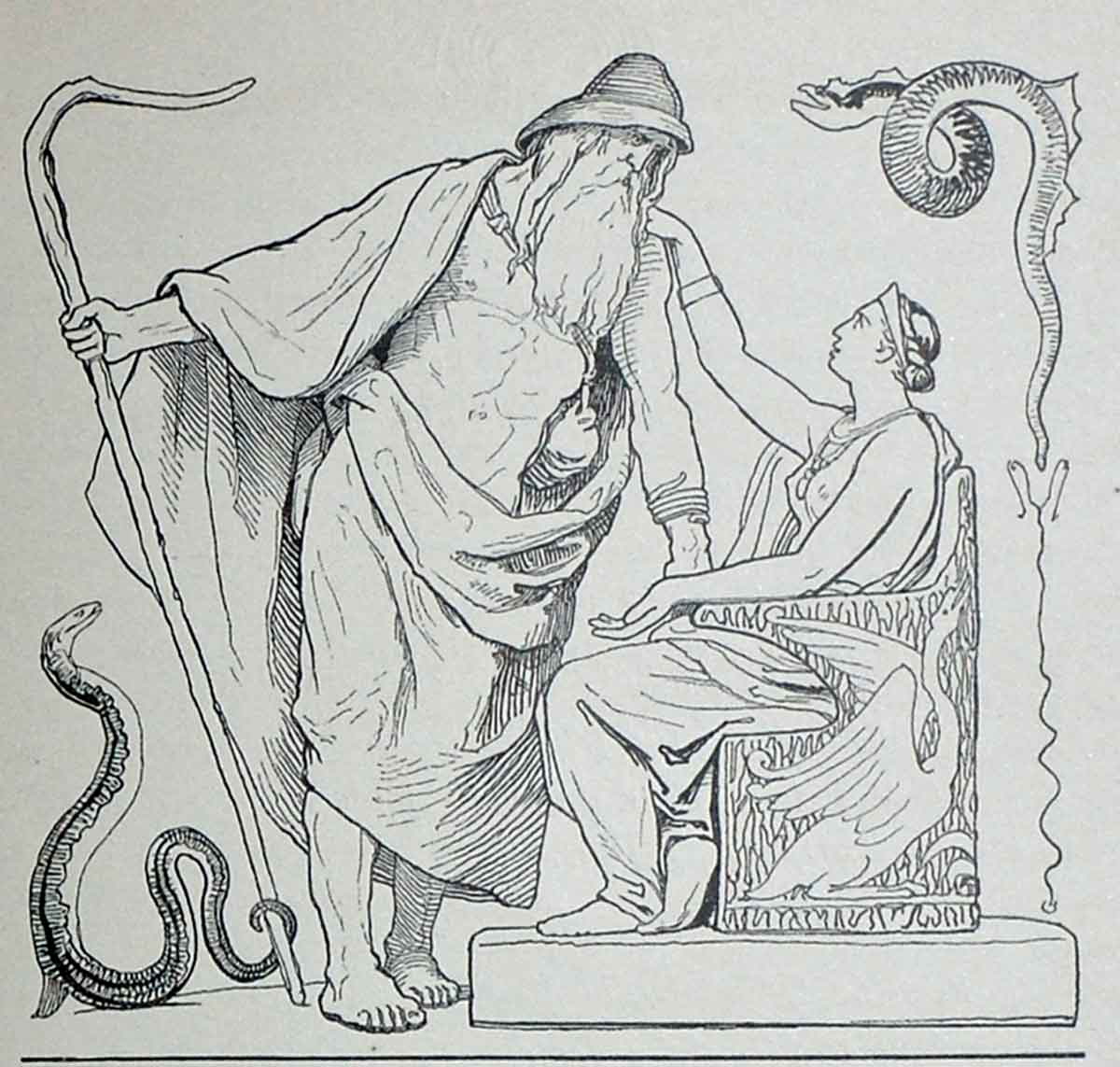
There is evidence that Frigg was sometimes invoked during childbirth to ease pain and ensure safe delivery. But her association with childbirth is left unclear by a story of a barren king and queen praying fervently for a child. Frigg intercedes with Odin to ensure they fall pregnant. But Odin’s attention may have been required in this circumstance because it was a royal baby with implications for power and succession.
What is clear from this story is that Frigg had the ear of Odin and could influence his actions and decisions. This is something she is seen doing in several stories.
In an old Germanic story dating to the 7th century, the Origo Gentis Langobardorum, two kingdoms are fighting, and one group, the Godan, appeals to Odin for success. He says that whichever side he sees first at dawn will be awarded victory. His wife, Frigg, favoring the other side, tells them to gather their women on a certain hill at dawn and tie their hair about their faces like beards. In the night, she turns her husband’s bed to face east and wakes him in the morning. His eyes fall on a group he calls “long beards” and grants them victory.
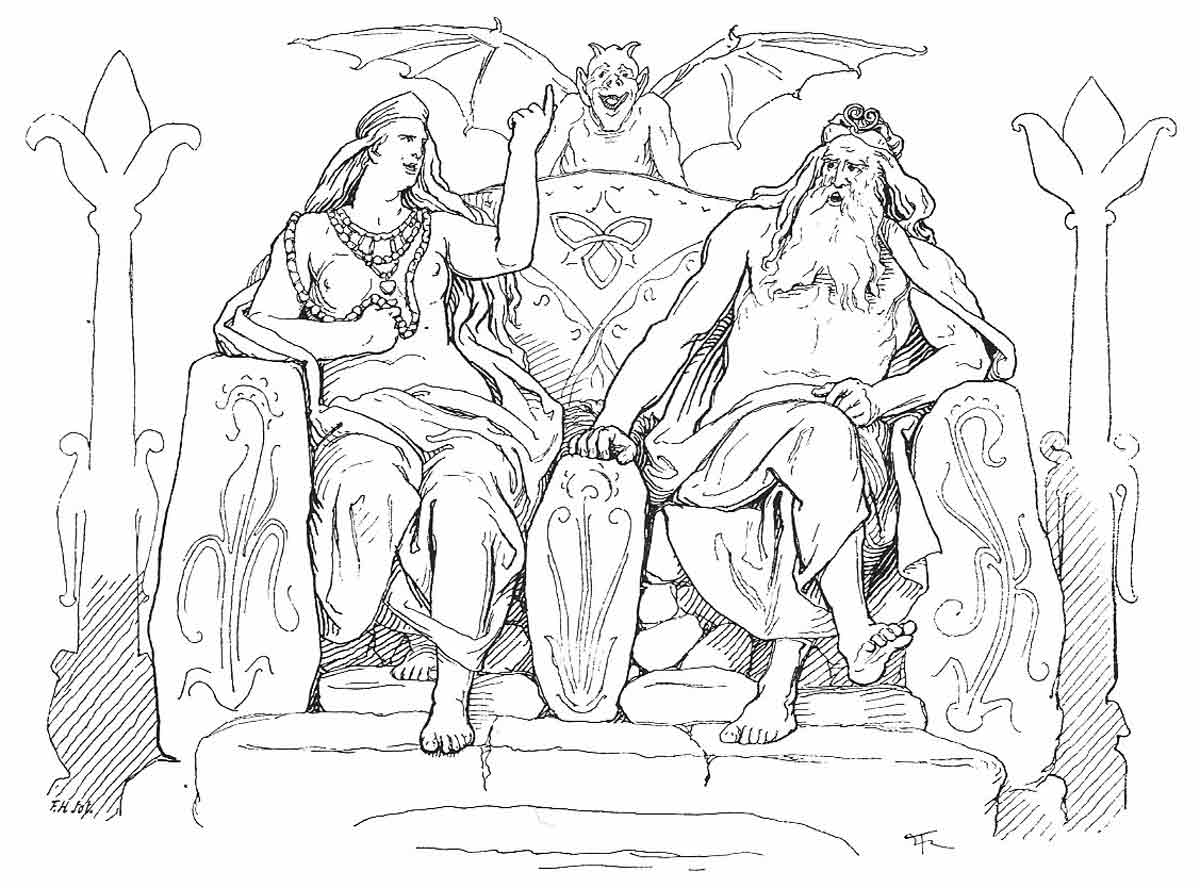
Frigg and Odin could also find themselves in conflict, such as in the story of Agnar and Geirroth. These were two young princes who got lost at sea on a fishing trip. They washed up on a deserted island where they met a couple, Frigg and Odin in disguise. Frigg took charge of the older brother and rightful heir Agnar, and Odin the younger brother Geirroth, and they both taught them many things.
After a year, they returned the boys to their boat and sent them home. But it seems that Odin taught Geirroth how to usurp his older brother’s rightful place. When the boys landed on home soil, Geirroth jumped out of the boat and cursed his brother Agnar, who sailed off again. As he returned home, Geirroth discovered that his father was dead and was named king.
Many years later, Odin and Frigg were observing activities in Geirroth’s kingdom from Odin’s throne Hlidskjalf. This throne allowed Odin to look out over all the cosmos, and Frigg was the only other person allowed to sit in the chair. Odin bragged that he had deified fate and made Geirroth into a powerful king, while Frigg’s protégé Agnar was off fathering children on a giantess in a cave like a savage. Frigg was unhappy with Odin’s deceit and pointed out that Geirroth was a brutal leader and did not respect the laws of hospitality. Determined to prove to Frigg that he had created a great king, Odin decided to visit the kingdom in disguise as a traveler called Grimnir.
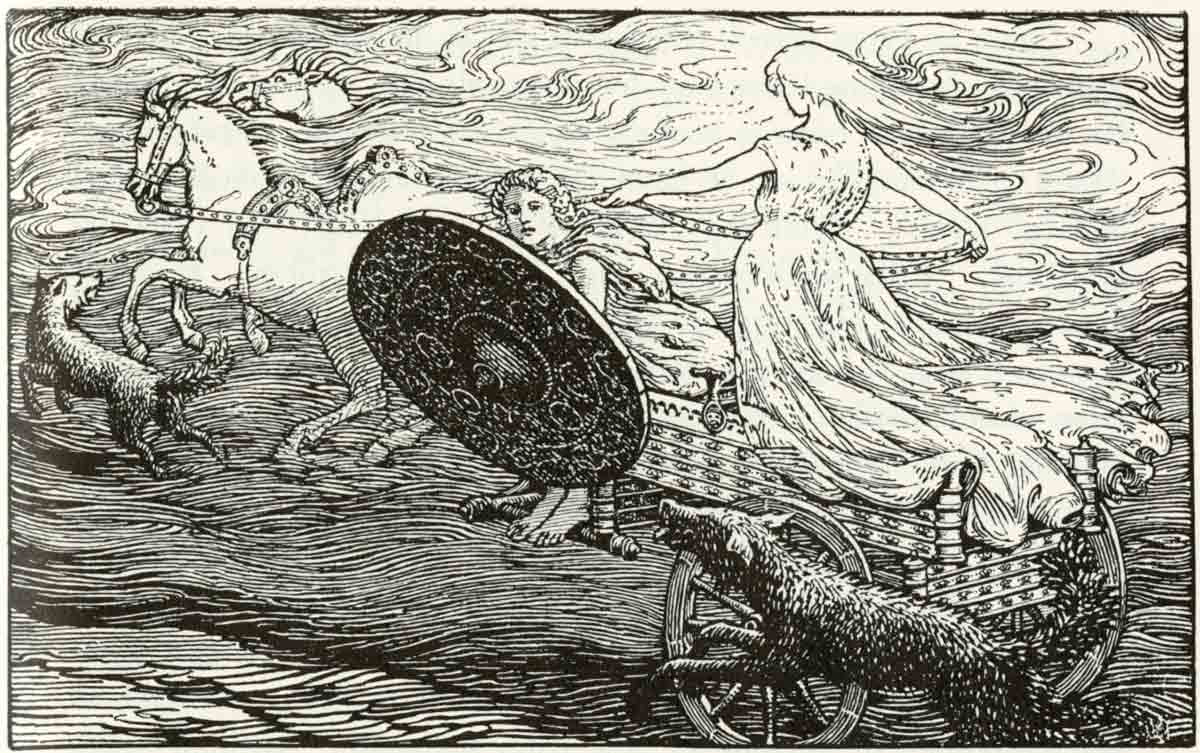
Also determined to be proven right, Frigg sent her handmaiden Fulla to warn King Geirroth that a sorcerer was traveling to his lands to curse him and that he would know him because no dogs would bark when he arrived. With this warning, Frigg was taking advantage of a well-known characteristic of the gods. As suspected, Geirroth was suspicious of Grimnir when he arrived, and when the traveler would not reveal his purpose there, he was thrown in chains between two fires, where he was kept for eight days without food or water.
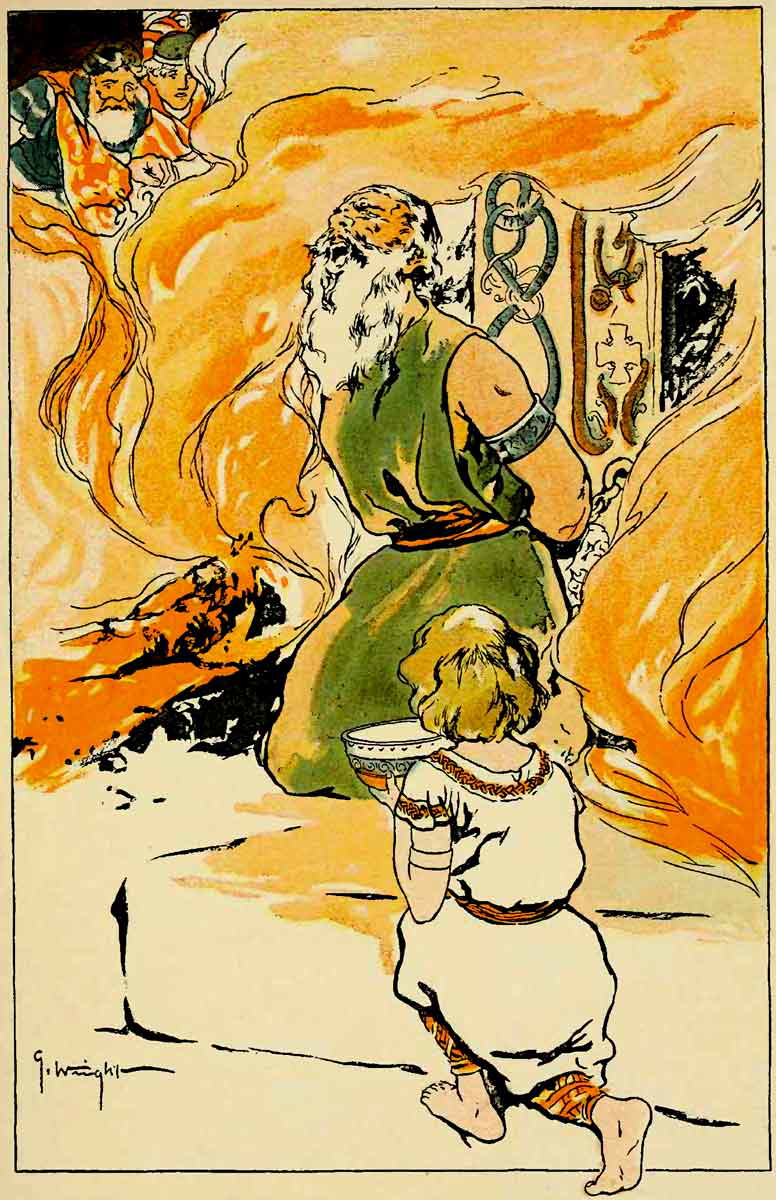
Eventually, Geirroth’s son, whom he had named Agnar after his brother, took pity on the prisoner and brought him some water. Odin rewarded him for his kindness by sharing many secrets about the gods. When Geirroth appeared, Odin revealed himself and cursed the king for his lack of hospitality. In fear, Geirroth drew his sword to challenge the man now revealed as Odin, but he slipped and fell on his own sword. His son Agnar was made king, and Frigg could tell her husband that destiny had been restored as Agnar was always destined to be the king.
Frigg may have been particularly concerned about the boys fulfilling their respective fates because she was a seeress. It is said that she saw the fates of all men but never told anyone what she saw, keeping the knowledge secret.
Protector of Balder
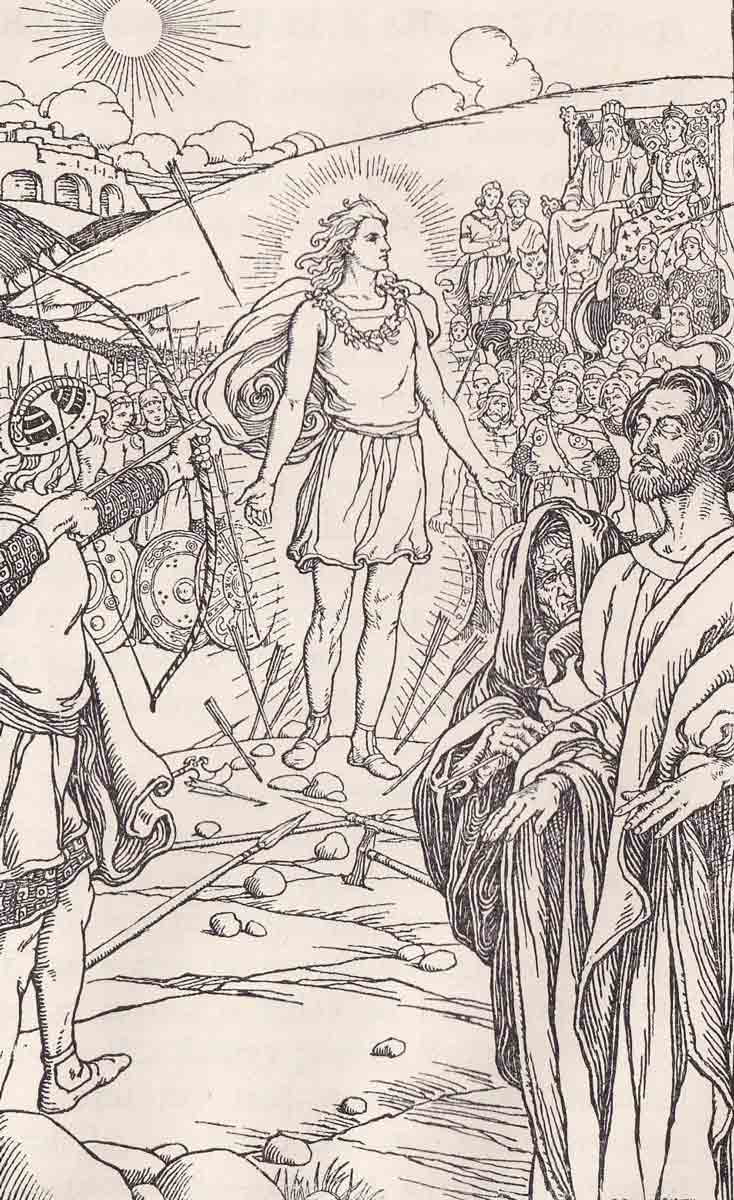
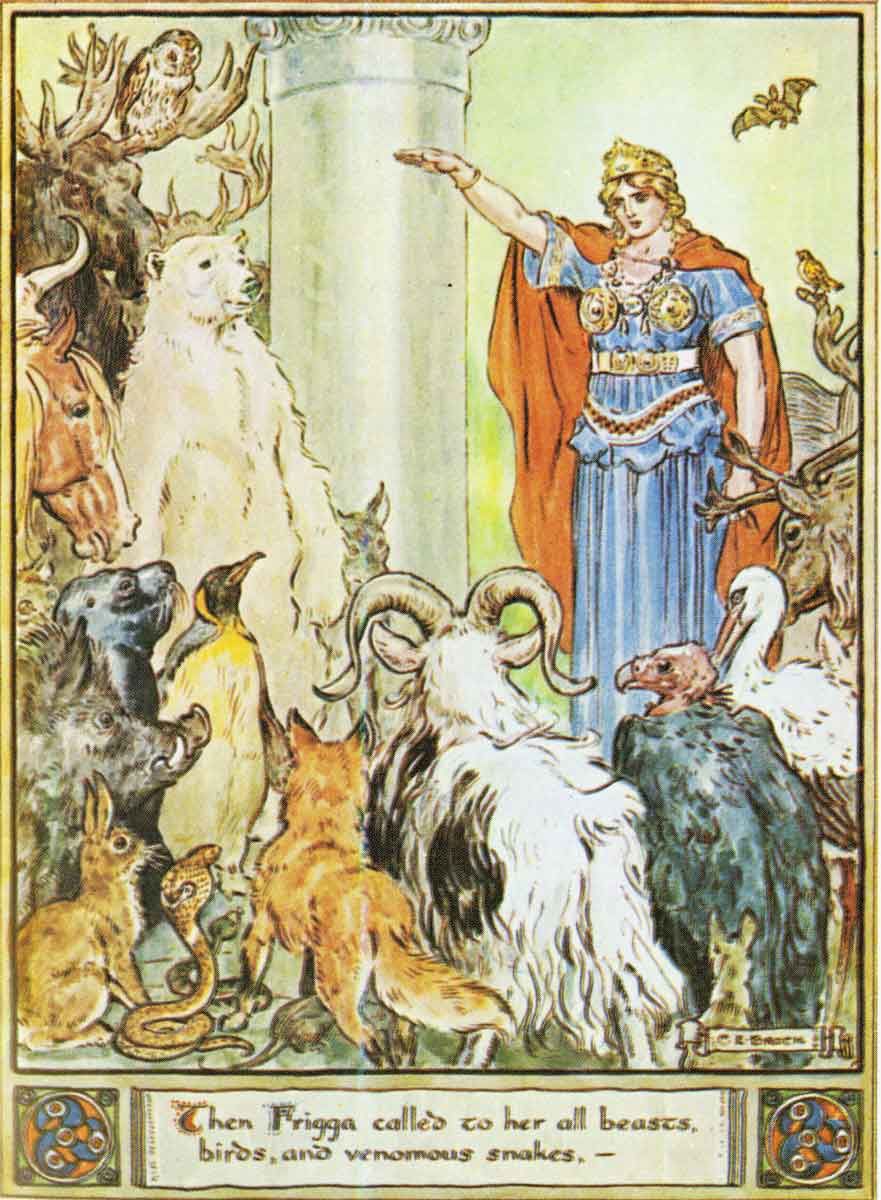
The most famous story about Frigg is that of the death of her son Balder. Balder reportedly had dreams about his own death, perhaps due to a clairvoyance that he inherited from his mother. Determined to protect her son, Frigg went around to all things in existence and secured promises from them that they would never hurt or be involved in hurting her son. This made Balder invincible, which entertained the gods, who would often play around by throwing objects at Balder and watching them bounce off harmlessly.
For reasons that aren’t made entirely clear, Loki was determined to learn if Balder had a weakness. He disguised himself as one of Frigg’s maids and got close to her, eventually gaining her confidence and asking her if she had really secured a promise from all things in existence. Frigg innocently admitted that she may have forgotten the humble mistletoe plant, but she wasn’t concerned about it.
Loki took advantage of this information and created a mistletoe dart. He then convinced Balder’s blind half-brother, Hodr, to throw the dart at Balder as part of the game. Thinking that Loki was helping him participate in the fun he was usually excluded from, Hodr threw the dart, and Balder was unexpectedly killed. Because Balder had not died in battle, Odin could not take him to Valhalla, and instead, he found himself in Helheim (Link to Article 7720 Helheim).
A distraught Frigg asked all the gods who would earn her love and favor and ride to Helheim to ransom her son from Hel. Another son of Odin, Hermodr, agreed. He tried to convince Hel that Balder was beloved by all and therefore should be returned. The giantess demanded that he prove it by getting all things in existence to weep for Balder. The gods were almost successful in this, but one witch, assumed to be Loki in disguise, refused to weep, so Balder was destined to stay in Helheim.
Odin is often called Frigg’s second sorrow, suggesting that as a seeress she has already foreseen his death at Ragnarök and is destined to mourn him. Like the other Norse goddesses, we don’t know what happens to Frigg at the end of days as only the fates of the male gods are recorded. Frigg’s first sorrow is Balder.
Frigg and Freyja
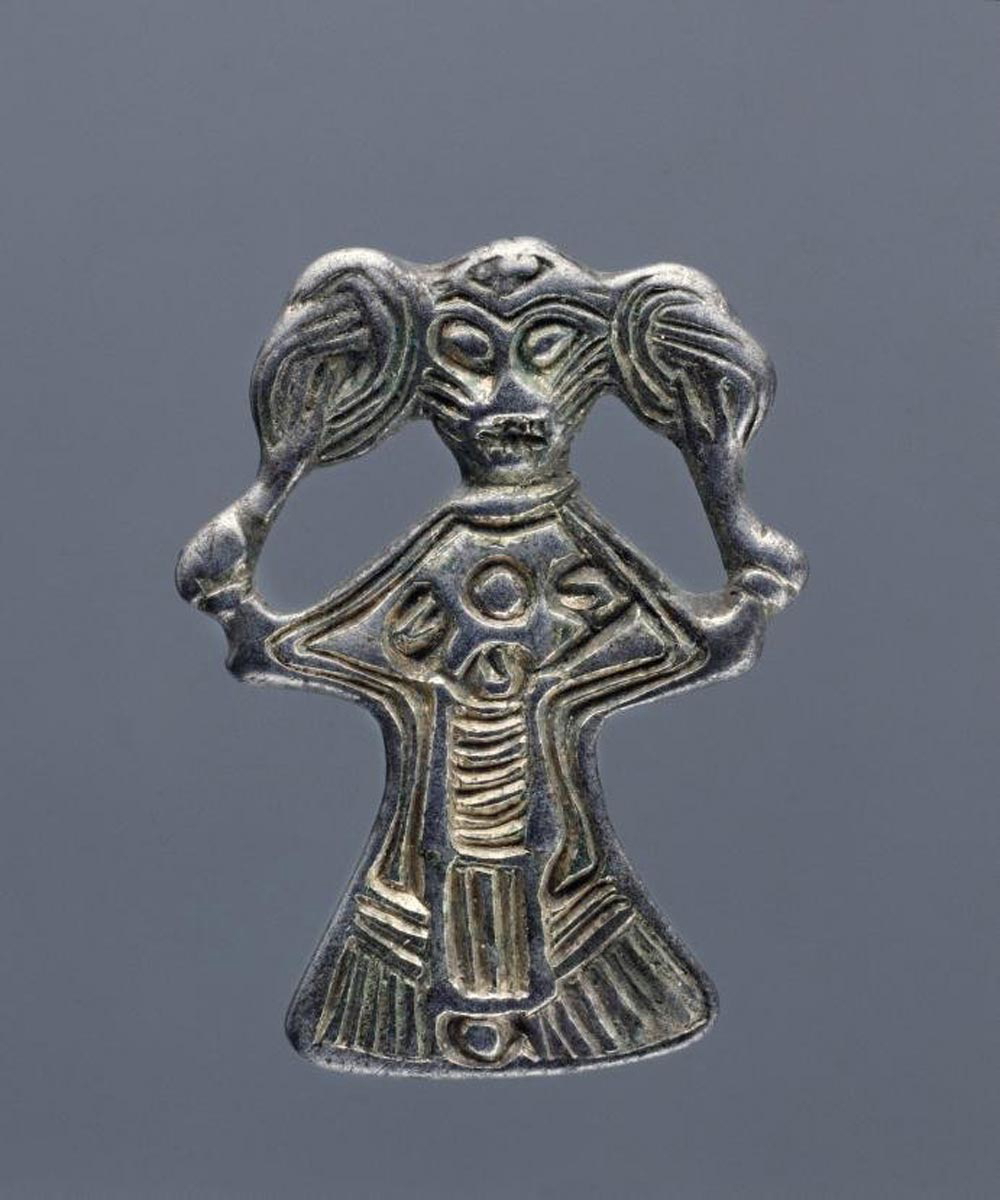
Considering how important Frigg was as a goddess, we know very little about her, and the evidence of her worship among the Vikings is sparse. This is especially striking when contrasted with the goddess Freyja, who seems to have been very popular and widely worshiped. This, combined with notable similarities between the two goddesses and the fact that while Frigg is present in older Germanic traditions while Freyja is not, has led to the suggestion that Frigg and Freyja were originally one goddess, but had become two distinct entities by the Viking Age.
One thing that is notable is that Freyja, the goddess of love and beauty, was a Vanir goddess, so she was from a race of gods separate from the Aesir led by Odin. These Vanir gods were more closely connected with nature and were also considered magic workers. They were particularly associated with Seidr magic, which Freyja taught to Odin when she came to live among the Aesir. Foresight and clairvoyance were associated with Seidr magic, but Freyja was never described as a seeress. In contrast, Frigg sees all destinies.
Similarly, when Freyja came to live among the Aesir, it is said that she married an obscure god named Odr. This made her sad because Odr would often go off wandering and abandon her. But it is Odin who is famous as the wanderer who often abandoned Asgard to walk the worlds in disguise. We see this in the story of Odin abandoning his kingdom and leaving it in the hands of his brothers Vili and Ve.
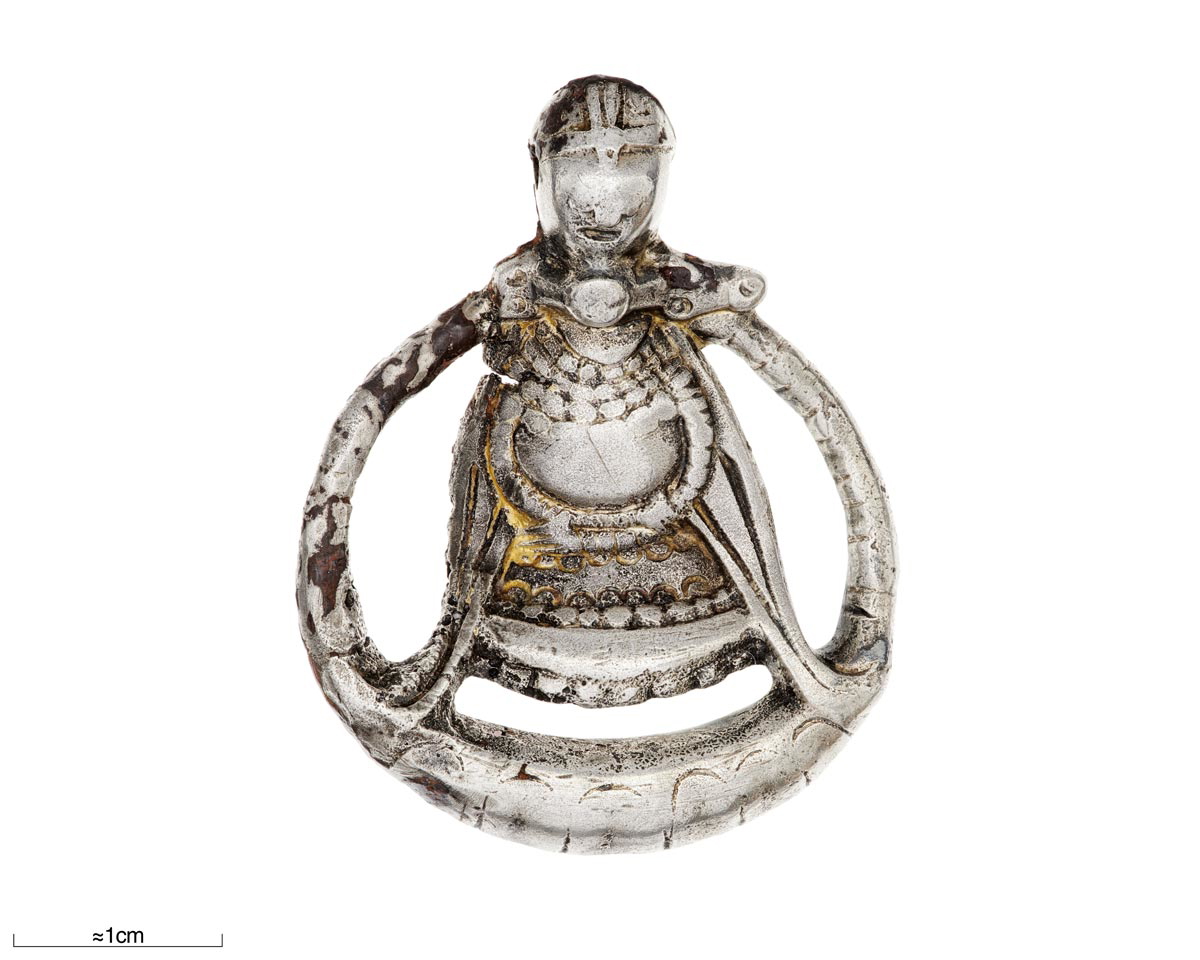
Moreover, Freyja seems to have shared responsibility for fallen warriors with Odin. While he chose brave fallen warriors to live in Valhalla, she chose brave warriors to dwell in her afterlife, Folkvangr, and the sources suggest she got the first pick. The sources here are quite confusing, with a clear overlap between their domains.
Based on this, it had been suggested that Freyja and Frigg were originally one goddess, a Vanir goddess, whose marriage to Odin allied the two tribes. But for some reason, over time, they were split into two different goddesses. This would also explain why we know so little about each goddess, as they are sharing parts of a single, older mythology.