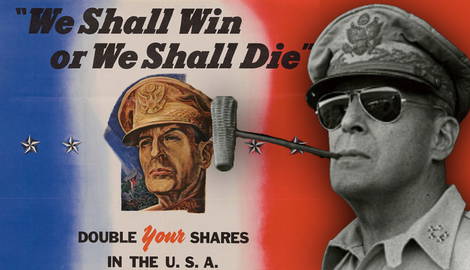
Douglas MacArthur was one of the most experienced military officers in United States history. After earning the rank of brigadier general during World War I, the Army legend went on to lead Allied forces in the Pacific during World War II and United Nations troops during the Korean War. Despite becoming a motivating figure in American popular culture and war-time propaganda, MacArthur’s eventual disdain for civilian leadership quickly ended his career, tainting his otherwise unmatched legacy. The life of one of America’s most controversial generals was anything but mundane.
Early Life and Military Career
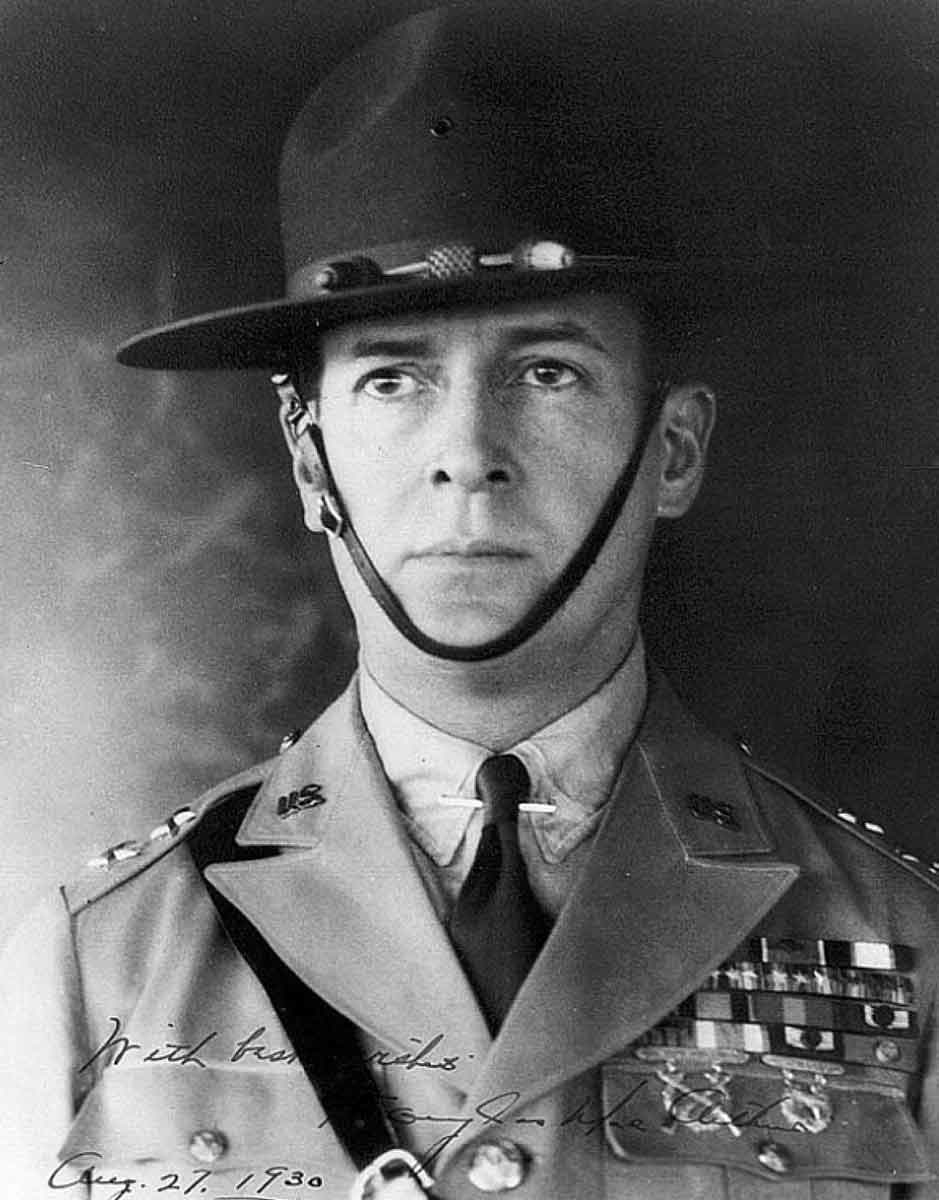
Born in Little Rock, Arkansas, in 1880, Douglas MacArthur seemed destined for military excellence from birth. Hailing from a decorated military family, MacArthur’s father was an Army general who served predominantly in Asia and earned a Congressional Medal of Honor during the American Civil War. MacArthur learned to shoot and ride horses before he could read or write, but this did not inhibit the future commander from being academically successful.
MacArthur graduated from the United States Military Academy at West Point as valedictorian of the class of 1903. Following his commission as a second lieutenant, MacArthur’s first official posting was in the Philippines, where he would find himself at war three decades later. MacArthur then traveled Japan to perform administrative duties for his father as a first lieutenant while observing the Russo-Japanese War. Most notably, MacArthur served as President Theodore Roosevelt’s personal aide-de-camp before serving on the General Staff in 1911. His experiences visiting prewar Asia would prove crucial during World War II.
In 1914, MacArthur got his first taste of action after diplomatic relations between the United States and Mexico reached a boiling point known as the Tampico Affair. During the resulting occupation of Veracruz in 1914, MacArthur led a daring reconnaissance mission as an intelligence officer. During the escapade, MacArthur fought off Mexican ambushes and identified viable supply line options, receiving a nomination for the Medal of Honor which he was not awarded.
World War I
In 1917, the United States declared war on Germany and entered the First World War. To bolster the strength of the Allied Powers during the war, President Woodrow Wilson activated the National Guard, and at the recommendation of MacArthur, constructed and mobilized a single National Guard unit with troops from various states to avoid regional bias. MacArthur served as chief of staff of the unit, the 42nd “Rainbow” Division with the rank of colonel.
By early 1918, MacArthur and his National Guard troops deployed to Europe as part of General Pershing’s American Expeditionary Force. They participated in both a French raid and independent assaults where he was awarded the Croix de Guerre. For his leadership during the campaign, MacArthur was also bestowed his first of seven Silver Stars and his first of two Distinguished Service Crosses for World War I exclusively. In the months following, MacArthur and the 42nd Division countered Germany’s Champagne-Marne Offensive and participated in the Battle of Saint-Mihiel by late summer.
During one of the final Allied assaults of the war, the Meuse-Argonne Offensive, MacArthur was wounded while making his way through the enemy’s defenses. Already an established figure, MacArthur’s heroism during World War I skyrocketed the officer into military stardom. By the war’s end, MacArthur was promoted to brigadier general and was assigned as the superintendent of West Point. While he would go on to serve in various roles in the 1920s and 1930s, MacArthur soon found himself in another world war despite retiring in 1937.
World War II: A Dire Situation in the Pacific
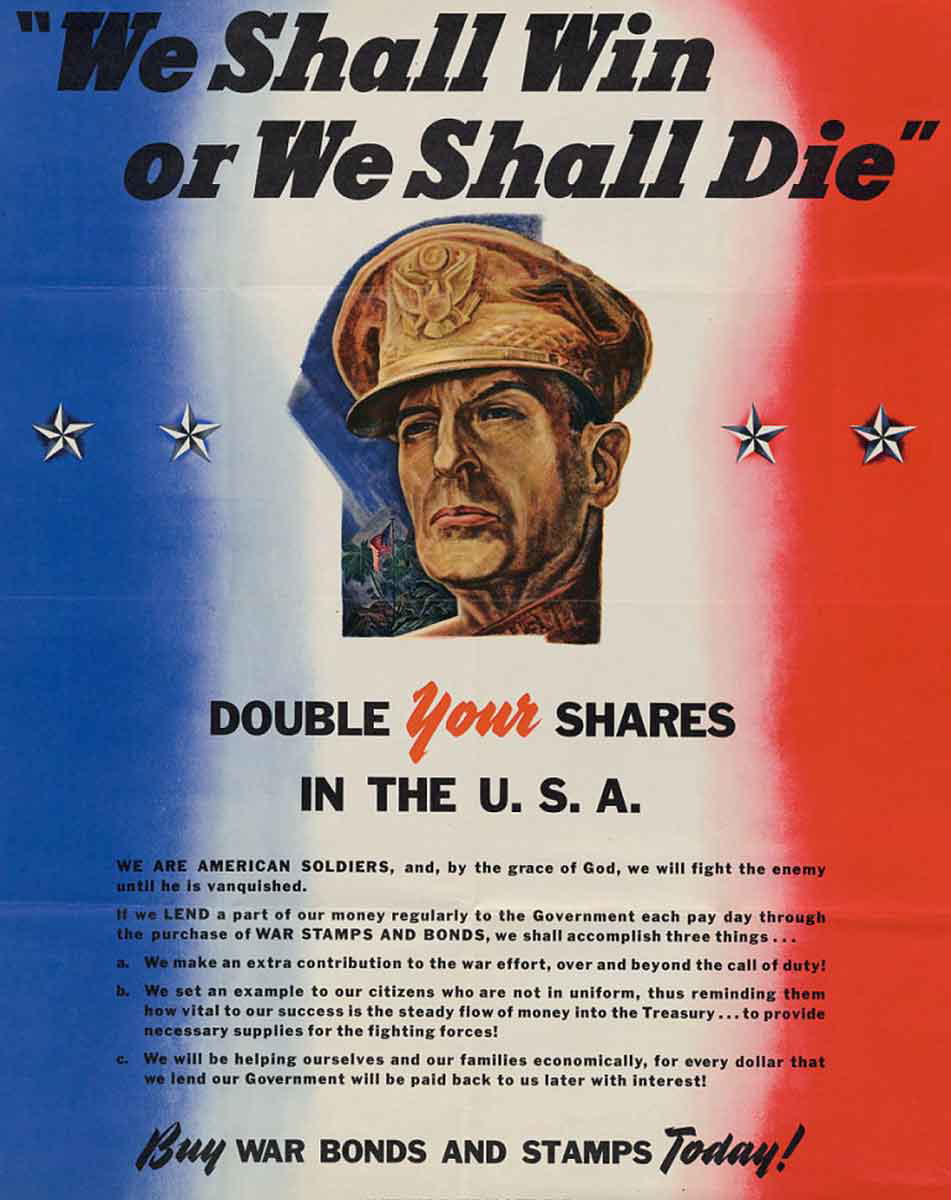
MacArthur’s presence was so influential in the Pacific Theater because the United States experienced enduring challenges and significant losses there. Not only did the Allied island-hopping campaign complicate effective troop movements over dispersed geography, but Japan’s speedy expansion led the Axis Power to successfully capture Guam, the Philippines, and Wake Island. Unforgiving weather, disease, and the enemy presence jeopardized supply routes from Australia and resulted in early setbacks in battle for the United States.
The attack on Pearl Harbor was a surprising initial blow to Pacific troops and sailors, and the early hardship quickly continued. After the fall of the Philippines in April, 1942, Filipino and American soldiers executed a 65-mile forced march to Camp O’Donnell, suffering physical assaults, starvation, disease, and exhaustion. As many as 18,000 troops died during the Bataan Death March, and many more perished in Japanese prison camps. Despite fleeing to Australia, MacArthur made a famous promise that he would return to the Philippines, enhancing his personal image and making him one of the faces of American war propaganda.
At sea, the Battles of Midway and the Coral Sea left thousands of troops dead, and the Navy lost one aircraft carrier, one destroyer, and nearly 150 aircraft. While momentum slowly shifted to the Allies on other fronts, the Army needed a brilliant and experienced combat leader to turn the tide in the Pacific. Alongside numerous leaders like Marine Corps legend Chesty Puller, General MacArthur deliberately worked to turn the tide of the war against the Japanese.
Returning to the Philippines
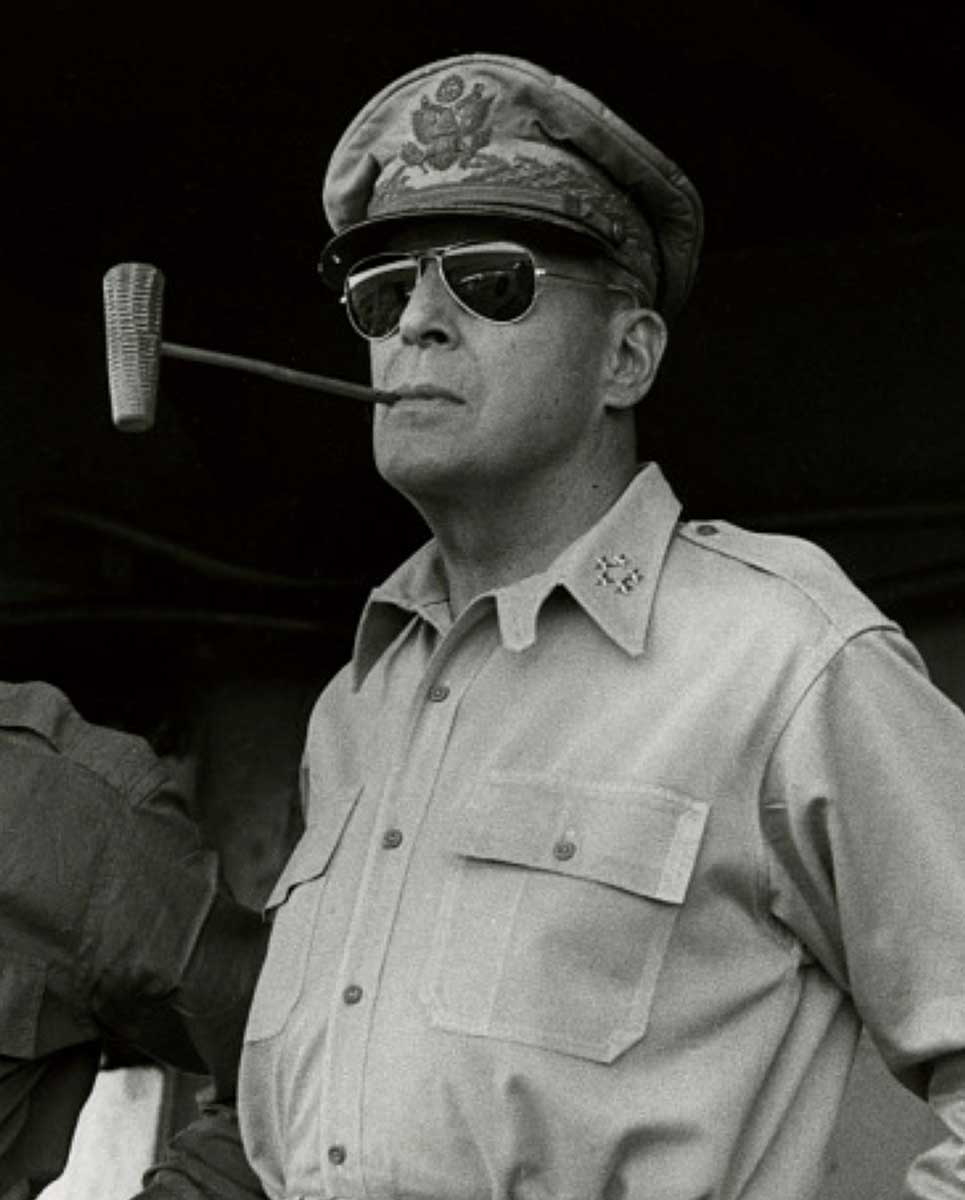
As Supreme Commander of the Southwest Pacific Area, MacArthur planned daring amphibious assaults and combined arms operations. During the New Guinea Campaign, MacArthur’s employment of aggressive tactics helped remove embedded Japanese defenses that blocked key supply routes from Australia. Losing just under 2,000 men compared to Japanese losses of 7,000, the Battle of Buna-Gona marked a key shift towards American victories in the Pacific.
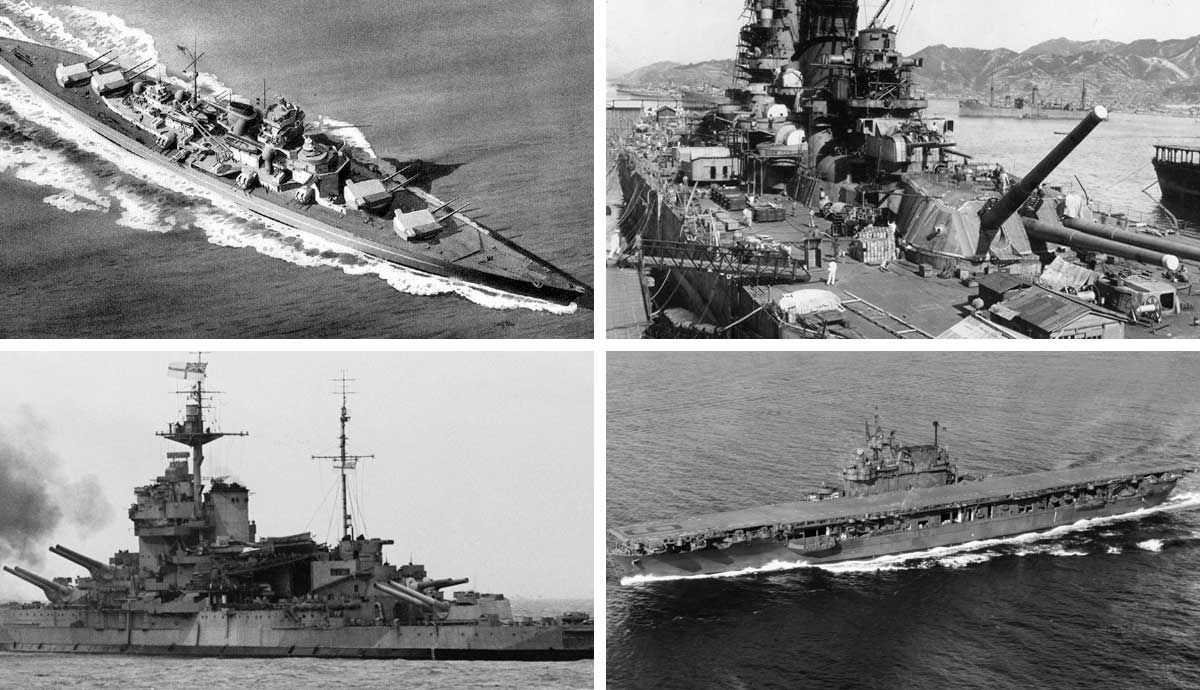
Two years later, MacArthur’s triumphant return to the Philippines was a decisive military and symbolic victory. Proclaiming his return upon landing at the beach in Palo, Leyte, MacArthur led the invasion with significant naval support. Just after arriving to the island nation, the US Navy wiped out crucial Japanese assets including four aircraft carriers, three battleships, ten cruisers, and 300 aircraft. During the Battle of Leyte Gulf, MacArthur’s strategic planning to isolate enemy troops and prevent efficient logistical coordination led the Allied Powers closer to approaching the Japanese in their homeland.
By 1945, MacArthur’s troops sustained some of the most influential victories of World War II in the Pacific. Success at the Battle of Luzon gave the Allies control of the largest island in the Philippines along with the region’s airstrips and ports. Shortly after, MacArthur seized Borneo, an oil hub that the Japanese military relied on to sustain their operations at land and sea. Despite these victories, the prospect of terrible bloodshed during an invasion of Japan’s main islands caused President Truman to authorize the deployment of two atomic bombs against the Japanese cities of Hiroshima and Nagasaki, prompting Japan to agree to an unconditional surrender on August 14, 1945.
Korean War Insubordination
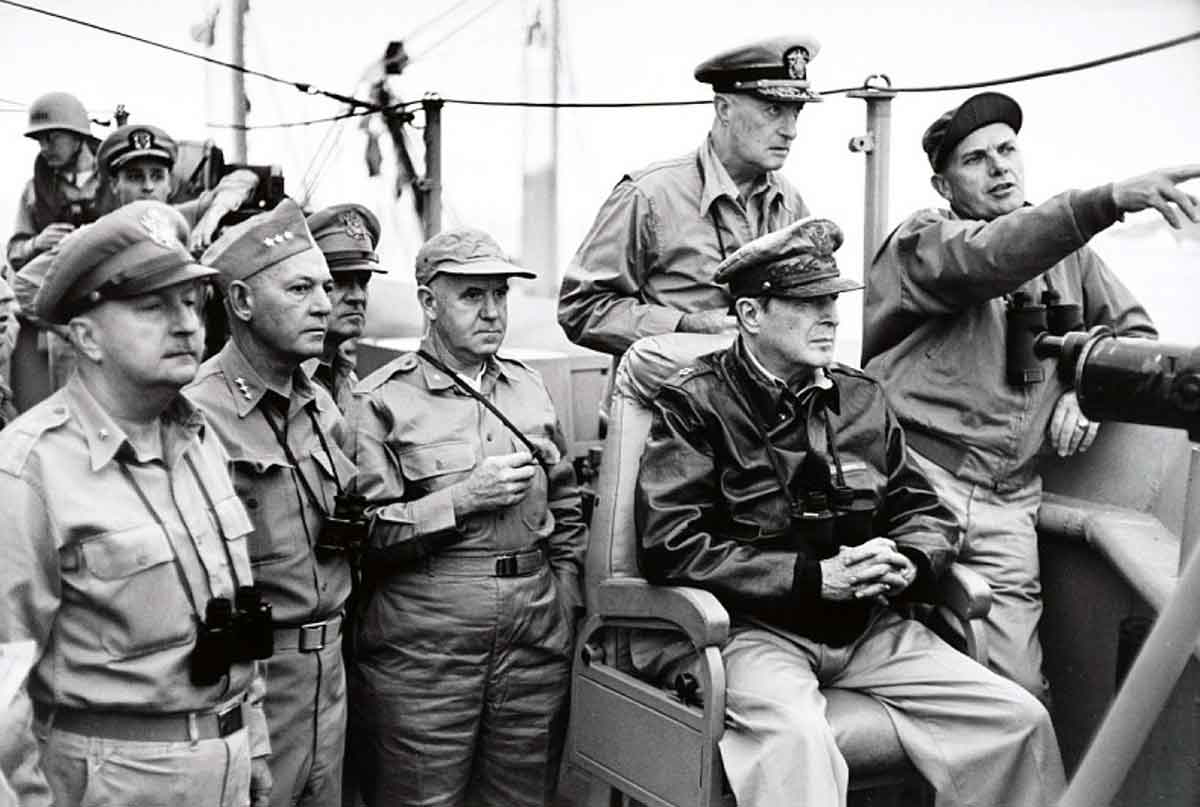
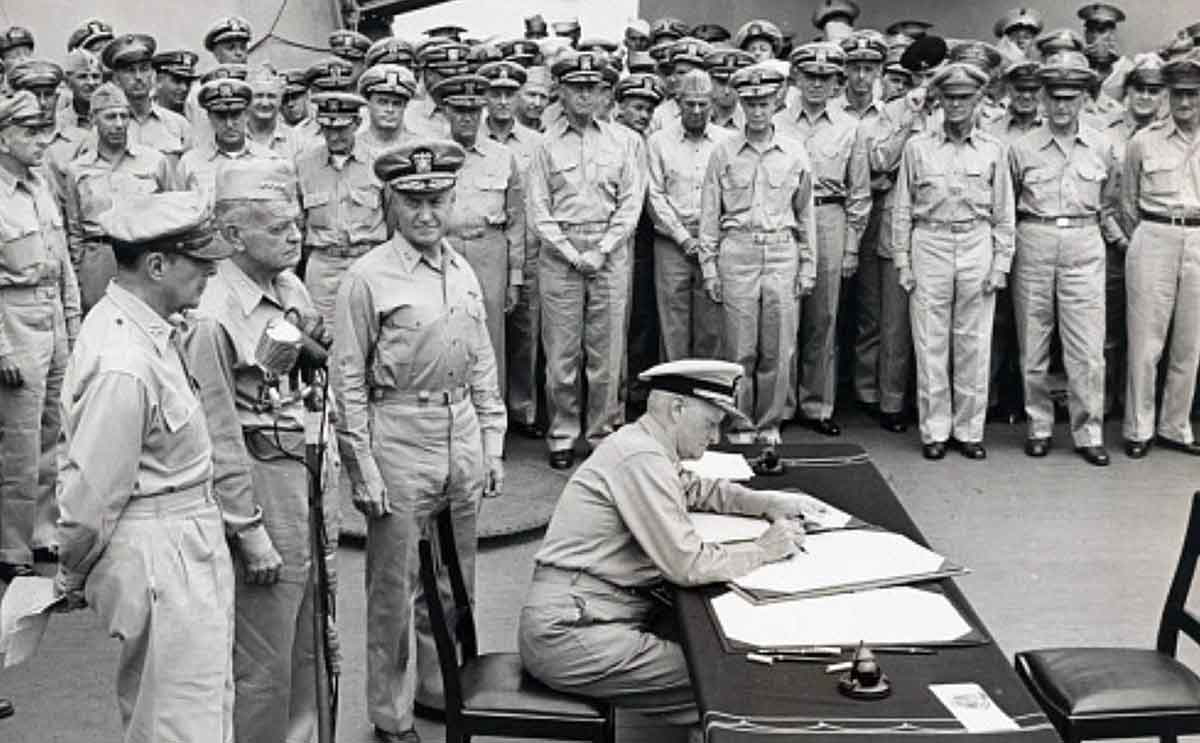
Having made a crucial contribution to the Allied victory in the Pacific, MacArthur was personally present for the formal surrender of Japanese forces aboard the USS Missouri on September 2, 1945. There was to be one more chapter to MacArthur’s distinguished military career after he was named Supreme Commander of United Nations Command after communist North Korea invaded South Korea in 1950. In this role, the esteemed general of two world wars notably spearheaded the 1950 amphibious assault at Inchon, allowing United Nations troops to take back Seoul and force North Korean soldiers across the 38th Parallel.
This success, however, was interrupted by clear insubordination. Against the wishes of President Truman, MacArthur led his troops further into North Korea, prompting increased Chinese intervention and escalating the Korean War. MacArthur, clouded by personal views favoring aggressive tactics, pressured Truman to invade China, and avoid peace negotiations. Truman dismissed MacArthur despite increasing public comments criticizing the president’s foreign policy decisions.
As a result of this consistent insubordination that risked another large-scale war for the United States less than five years after the deadliest conflict in human history, Truman relieved MacArthur of his command in 1951. While the outcome sparked public outcry and remains a controversial topic decades later, MacArthur’s dismissal demonstrated the principle of civilian control over the military in the United States. After four decades of combat service across the globe, MacArthur finally returned to a life of reflection, family, and public service.
Retirement and Legacy
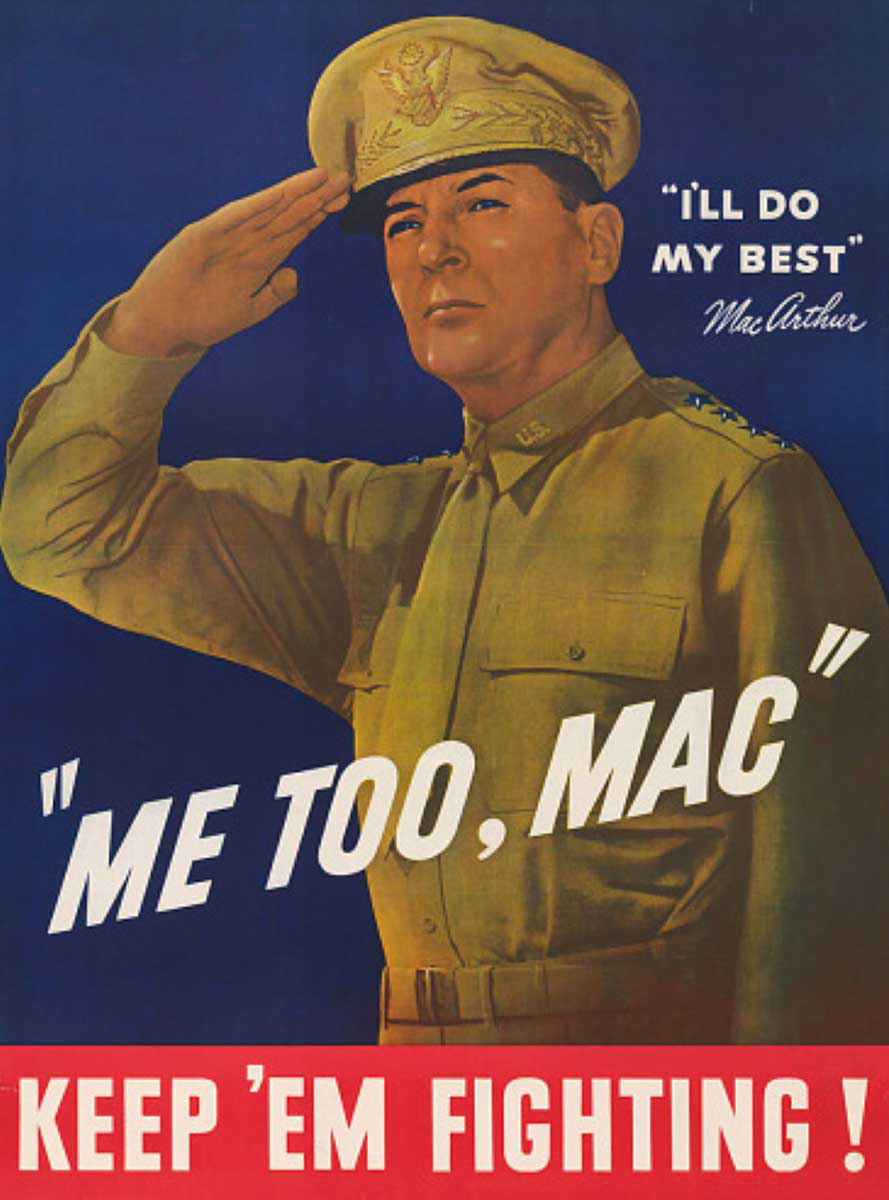
After his forced retirement, the ambitious MacArthur attempted to secure the Republican nomination for the presidency in 1952. While he was widely celebrated as a war hero, MacArthur’s political instincts were doubted by voters, and he lost out to Dwight D. Eisenhower, Supreme Allied Commander in Europe, who was duly elected. MacArthur spent his final years working on his memoirs and serving as an unofficial military advisor, warning president Kennedy and Johnson to avoid getting involved in Vietnam. The five-star general passed away on April 5, 1964, at Walter Reed Medical Center at the age of 84.
Despite fizzling out in the public eye, MacArthur is fondly remembered in American history for his wartime contributions to the country. Internationally, the war hero is warmly remembered for his attention to reconstructing postwar Japan, and MacArthur Landing Memorial National Park in Leyte remains a symbolic gesture to commemorate the general’s pledge to return to the Philippines. As a Medal of Honor recipient and a major American military figure of the 20th century, it is difficult to overstate MacArthur’s contribution to restoring freedom around the world.