Summary
- The Germanus of Arthurian legend is likely three different historical figures, not just one famous bishop.
- The historical Germanus of Auxerre died in 448, making his connection to later Arthurian figures impossible.
- A second Germanus, a disciple of St. Patrick, better fits the timeline for legends about King Vortigern.
- Arthur’s cousin Illtud was likely taught by Germain of Paris, a different 6th-century bishop.
- The legends conflated these men, creating a composite “Germanus” that spans over a century of history.
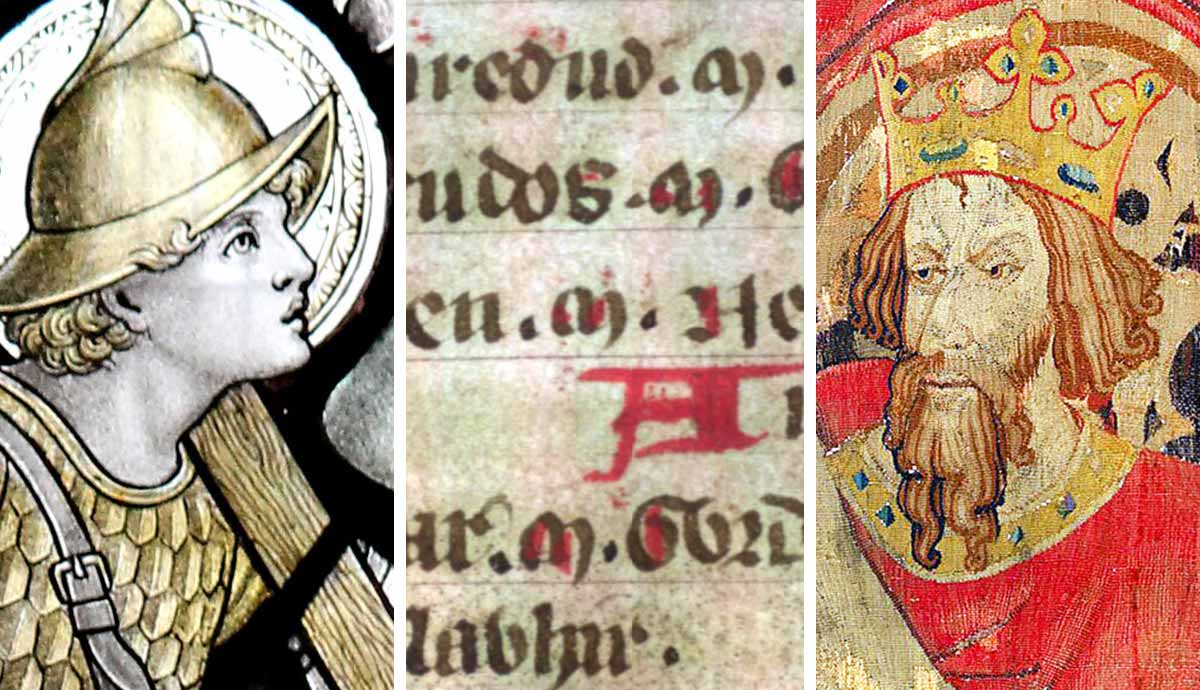
After the Romans were expelled from Britain at the start of the 5th century CE, Britain entered a kind of Dark Age that is not well documented. One of the few figures whom we know a little about from this period is a religious leader named Germanus of Auxerre. He was sent on a mission to Britain to deal with the spread of a doctrine called Pelagianism. His activities are described in a document known as the Vita Germani (The Life of Germanus), written by Constantius of Lyons in about 480. In at least one modern film based on the Arthurian legends, Germanus of Auxerre is made a contemporary of King Arthur, but can the historical figure be connected to the legendary king?
Who Was Germanus of Auxerre? Bishop from Arthurian Legend

Germanus of Auxerre really was a Gallic man born into one of Gaul’s noblest families. He studied eloquence and civil law as a youth and made a name for himself at the imperial court. This resulted in the emperor making him one of the six dukes of the Gallic province. However, he earned the ire of the local bishop Amator for hanging hunting trophies on a tree previously associated with pagan worship. Amator cut down the tree but then feared repercussions, so he sought permission to strip Germanus of his dukedom and force him into the clergy by performing tonsure – the ceremonial shaving of the head – on him against his will. Germanus was just as successful in the church as he was in politics, and he succeeded Amator as bishop.
In the year 429, bishops in Britain sent an appeal for help to deal with the spread of a doctrine called Pelagianism, which they viewed as heretical. Spread by the British monk Pelagius, the doctrine denies original sin, and therefore that man can achieve salvation through their own moral acts, and that it does not require the grace of God.
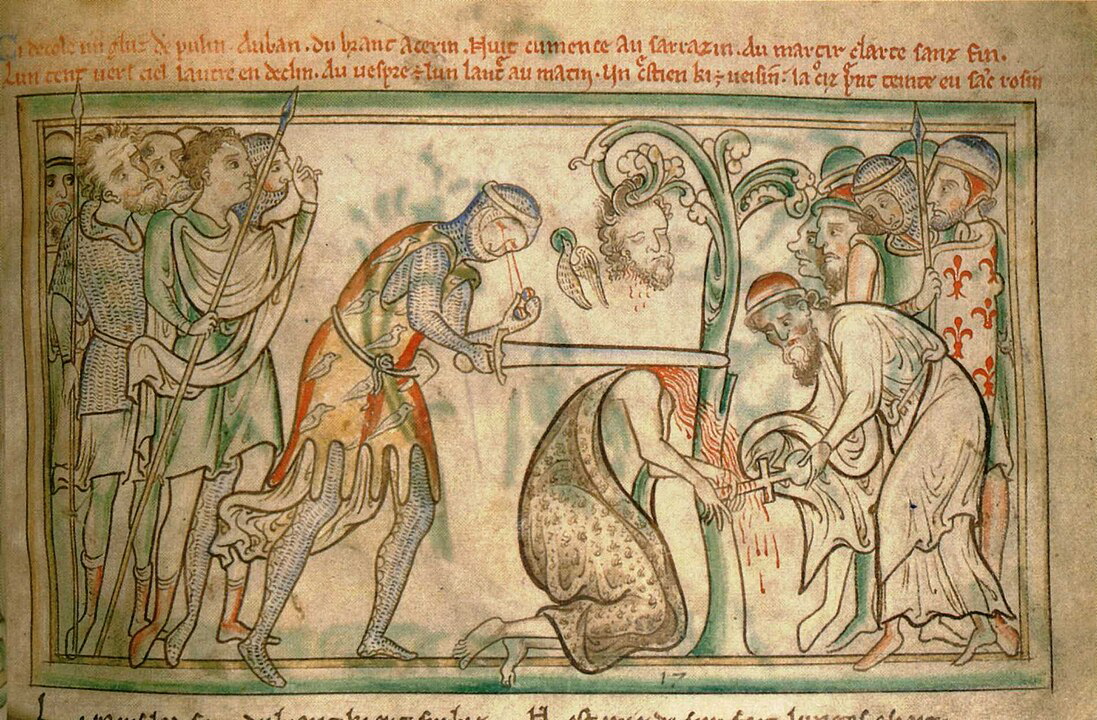
In response to their request, Pope Celestine sent Germanus and another bishop called Lupus to Britain. Allegedly, their mission was largely successful, with Germanus winning over the community with his superior eloquence. They also helped to lead the Britons in a successful battle against an army of Picts and Saxons. Germanus gave thanks for his victory at the grave of a holy person, where he claimed to have a dream in which the man revealed that he was Saint Alban and the details of his martyrdom. He had the account written down and engraved on the walls of the church site, where he also deposited some of the saint’s bones, establishing the Church of Saint Alban.
Germanus returned to Gaul shortly after this, but years later, Pelagianism began spreading again. Therefore, in about 447, he was sent back to Britain. This campaign was also apparently highly successful, stamping out this doctrine once and for all. He swiftly returned to Gaul again, finding his province in political turmoil, and then died in 448.
Germanus’ Connections to the Arthurian Legends

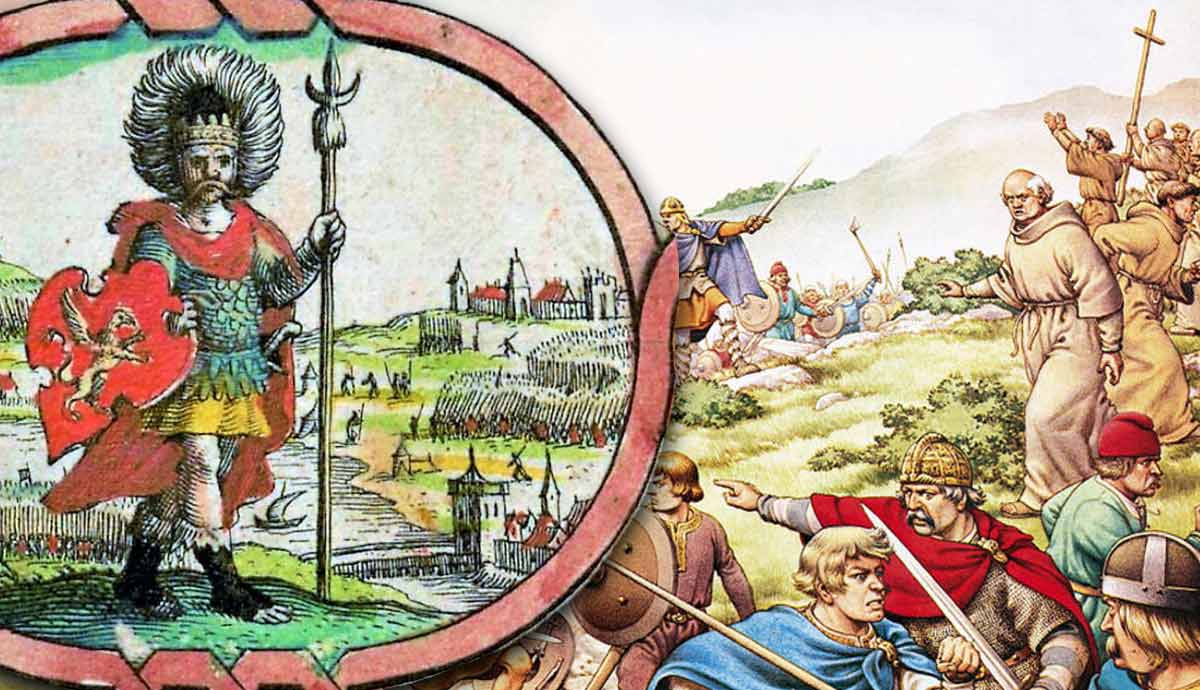
Germanus’ first appearance in the Arthurian legends comes from the Historia Brittonum, written in about 828. In this text, Germanus leads the rebellion against wicked King Vortigern, which results in Vortigern dying as his tower burns to the ground. However, the Anglo-Saxon Chronicle records that Vortigern was alive at least as late as 455, which is later than Germanus of Auxerre’s death date of 448.

Germanus is also connected to various “saints,” or prominent religious figures in early Dark Age British history. For example, one of the most prominent bishops of southeast Wales was Dubricius, allegedly bishop of Llandaff. He appears in the Arthurian legends as King Arthur’s chief bishop. The 12th-century Book of Llandaff claims that Dubricius had been appointed by Germanus. However, virtually all authorities place Dubricius’ birth no earlier than about 460.
The Life of St Illtud claims that Illtud, the supposed cousin of King Arthur, was a disciple of Germanus. Another alleged disciple of Germanus was Paulinus, a bishop who taught Teilo (a thoroughly mid-6th-century figure). Paulinus was also active at the Synod of Brefi, dated to c. 550 or 560.
The Impossible Chronology of Germanus and the Arthurian Legends

Clearly, it is not possible for Paulinus to have really been a disciple of Germanus of Auxerre, seeing as Germanus died in 448. Chronology also completely rules out Dubricius having really been his disciple. The chronology involving Vortigern is also impossible, assuming the entry in the Anglo-Saxon Chronicle mentioning Vortigern alive in 455 is accurate.
However, the connection to Illtud is sometimes accepted by modern authorities. Some of them state that Illtud was a 5th-century religious figure, and that he may have died right at the start of the 6th century. This, however, is in direct conflict with the earliest records concerning Illtud. The earliest record in which he appears is the Life of St Samson, which may have been written as early as the 7th or 8th century. This record shows that Samson lived beyond the death of a king of Brittany named Conomor, which occurred in 560. Meanwhile, it makes Samson and Illtud contemporaries, as does the later Life of St Illtud.

Another religious figure associated with the Arthurian legends who simply could not have genuinely been connected to Germanus of Auxerre is Brioc. He is said to have been sent to Germanus, along with Illtud, as a fellow pupil. As we have seen, Illtud lived in the 6th century, not the 5th. Interestingly, Brioc is also said to have been a contemporary of Samson, and he visited the Frankish king Childebert, who reigned between 511 and 558. Therefore, the evidence is clear that Brioc was a 6th-century religious figure, not a 5th-century religious figure. How, then, can he have been educated by Germanus, given that Germanus died in 448?
The reality of the era that gave rise to the Arthurian legends is that many people had the same names. Therefore, it could be that there was another prominent religious figure called Germanus at large at the time. Many scholars believe so, but is there any evidence to support this theory?
The Other 5th Century Germanus

Of course, the very fact that there are several records of “Germanus” that do not fit the chronology of Germanus of Auxerre is evidence that there was another person by that name. However, direct references to a distinct Germanus would be very helpful. As it happens, there are such references. For example, the late-12th-century writer Jocelyn of Furness wrote about Patrick, the famous preacher in Ireland. He wrote that Patrick had a disciple named Germanus. According to this record, Patrick set Germanus over the church that he had just established on the Isle of Man. Patrick himself had learned from Germanus of Auxerre, according to Muirchú, a writer in the 7th century. Therefore, this Germanus recorded as a disciple of Patrick is a different person.
The existence of this younger Germanus is supported by the writings of Óengus of Tallaght. He wrote that Patrick’s sister, Lupita, had several sons, one of whom was called MoGorman. The idea that this nephew of Patrick, named MoGorman, was also his disciple, recorded as “Germanus,” is perfectly plausible.
How Germanus of the Isle of Man Explains the Arthurian Legends
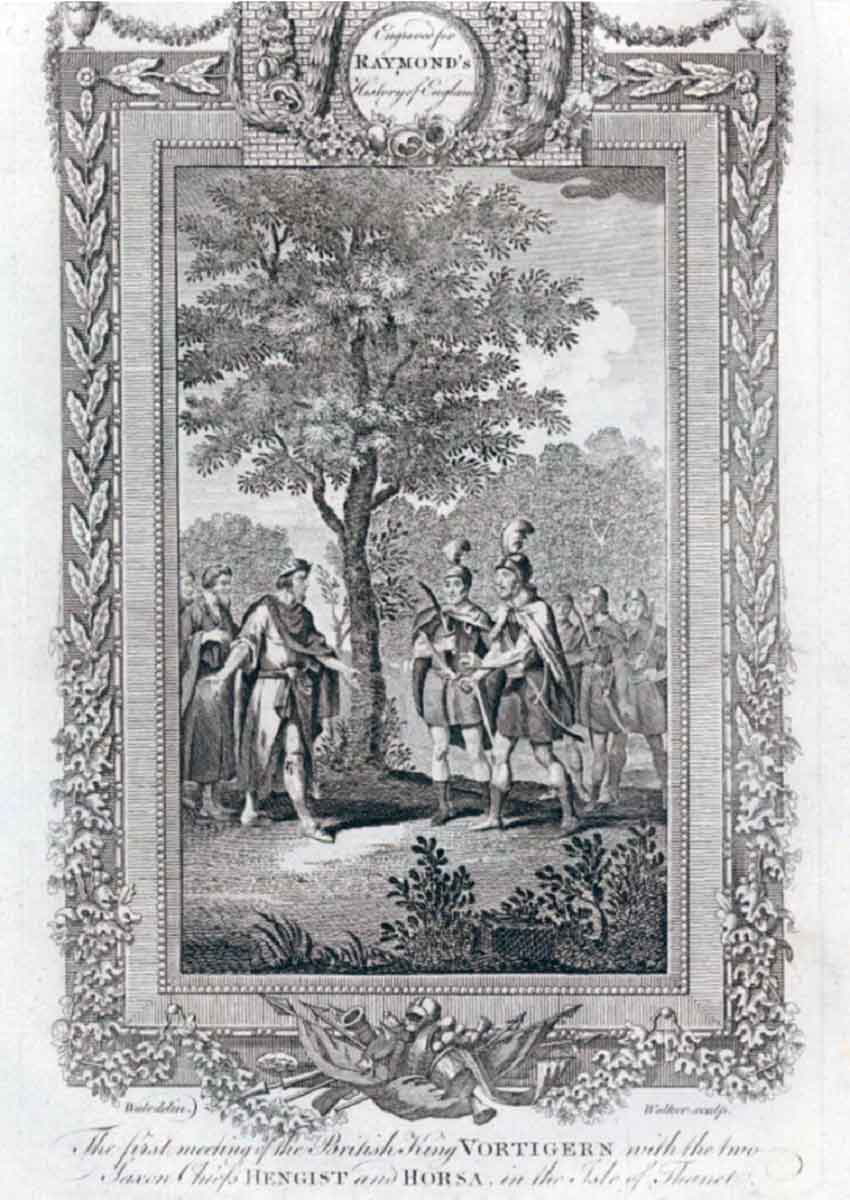
What we can see so far is that there was a prominent bishop of the Isle of Man named Germanus. He was the disciple and possibly the nephew of Patrick. Since Patrick was active in the mid-5th century, his disciple Germanus would logically have been active in the mid- to late-5th century. This fits perfectly with the Germanus who appears in the Historia Brittonum as a contemporary of Vortigern.
There is another piece of the puzzle from the Arthurian legends that this later Germanus may explain. In a medieval record called The Life of St Nennocha, we are told that Germanus was sent from Ireland by Patrick to King Brochanus of Britain. This king can only be King Brychan, a monarch mentioned in numerous medieval texts concerning Wales. He is mentioned in one 11th-century tale as an opponent of Arthur very early in his reign. Thus, we can see that the Germanus mentioned here as being sent to “Brochanus” must have lived close to the year 500. Given the chronology and the fact that he is recorded as being sent by Patrick, this Germanus is the disciple of Patrick, not Germanus of Auxerre.
The Historical Germanus of Paris

It is likely that the bishop of the Isle of Man was also the Germanus who ordained Dubricius, given that Dubricius was born in c. 460. However, this bishop of the Isle of Man cannot explain all the references to Germanus in the Arthurian legends. For example, even this disciple of Patrick surely lived too early to have been the teacher of Illtud. Nor could he have been the Germanus who taught Brioc, a thoroughly mid-6th-century figure.
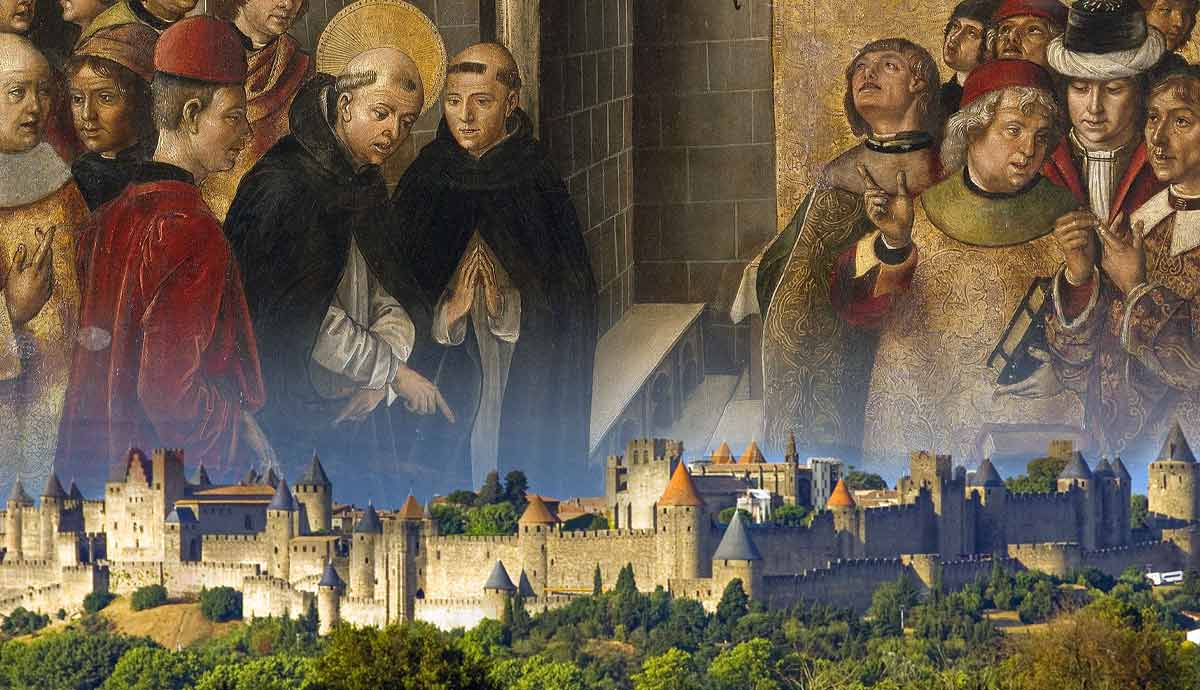
However, the record concerning Brioc provides an explanation. It says that Brioc was sent (along with Illtud) by his parents to be educated by Germanus in Paris. It does not say that he was sent to Auxerre. Significantly, it is known that there was a bishop of Paris by the name of Germanus (usually spelled “Germain” in modern sources) who lived in the 6th century. He was born just before the start of that century and died in 576. Therefore, this record about Brioc being sent to Paris to be educated by Germanus is a reference to this historical figure, not to the earlier Germanus of Auxerre.
Germanus in the Arthurian Legends
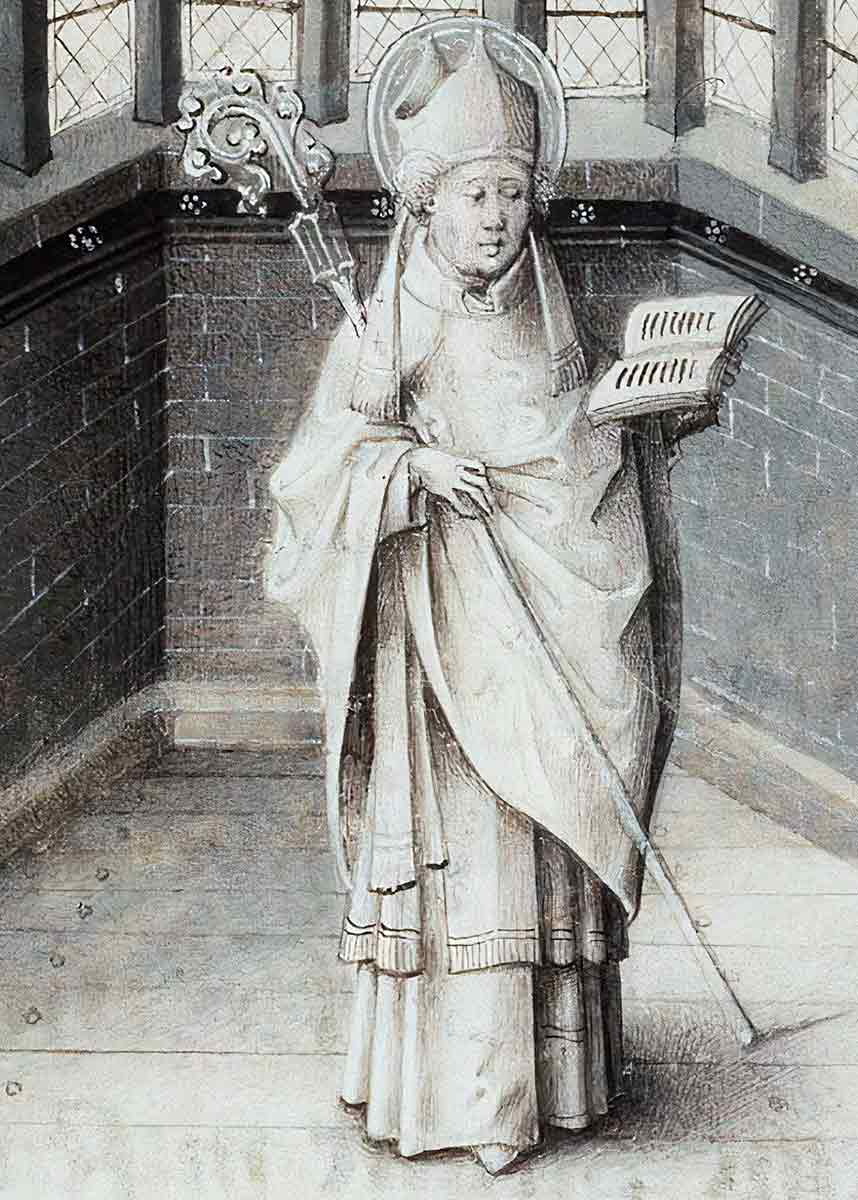
In summary, we can see that the various references to Germanus in texts related to the Arthurian legends are not all about the same person. A few of them refer to Germanus of Auxerre, the most famous person by that name, who came to Britain in the 440s to deal with Pelagianism. But they also refer to Germanus, a disciple of Patrick, who was a bishop of the Isle and Man is probably the Germanus who campaigned against Vortigern and ordained Arthur’s bishop Dubricius. Arthur’s cousin, Illtud, was then sent to study under another Germanus in Paris.