Americans first saw California as a goal, not quite a place. This Pacific locale offered a mild climate, economic or farming opportunities, plus escape from East Coast social pressures. For those initial starry-eyed settlers, California existed to be filled. Enthusiasm turned to astonishment to find Native tribes and an established Mexican culture.
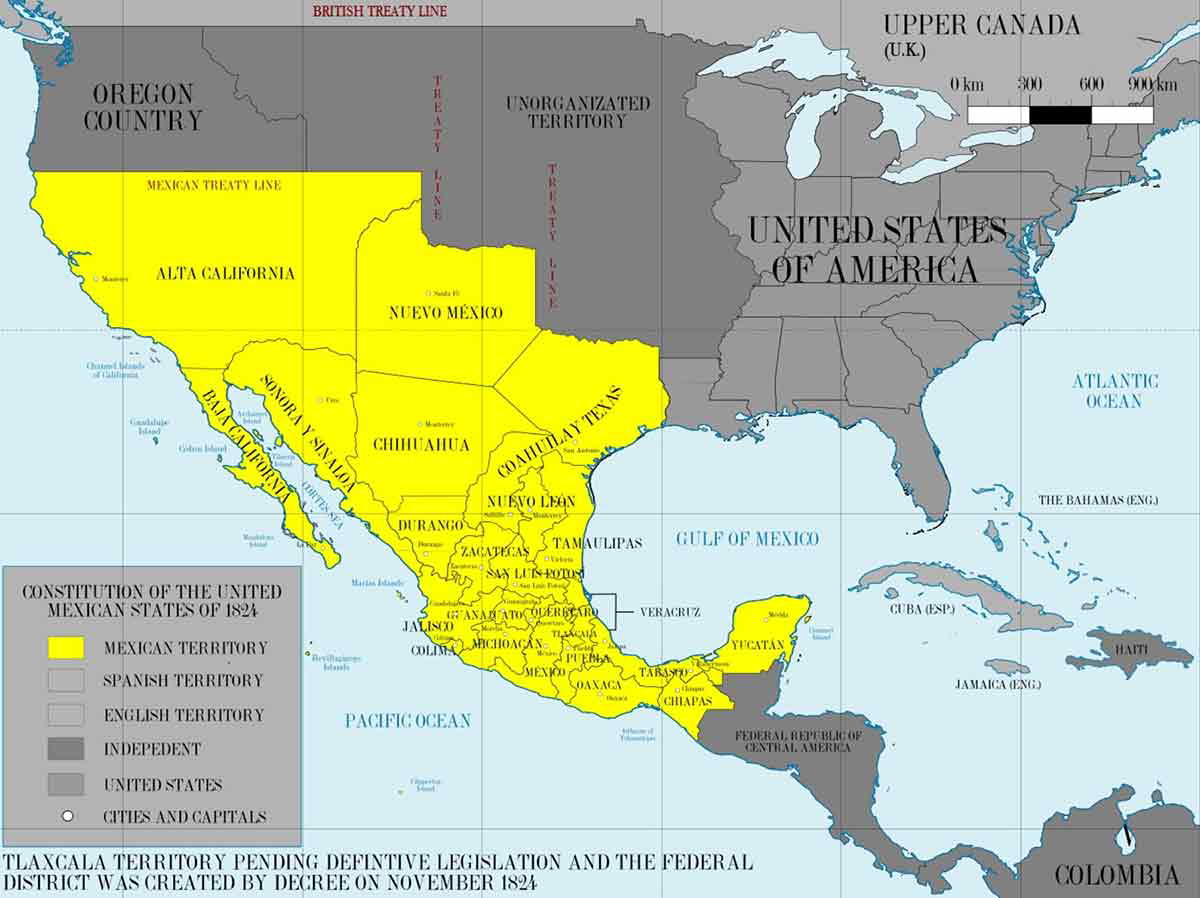
California’s pre-annexation state can be divided into three timeframes. First, the Indigenous phase, a Spanish colony, and finally a third Mexican province. Each shaped California to their needs, creating an imprint that the other inherited. Sadly, the Native tribes suffered greatly as time wore on.
A Little-Known Sophistication
Like the Eastern Woodlands, California boasted a dense and diverse Native population. Whether on the coast or inland, over 100 Native tribes inhabited California.
Before interactions with Europeans, the Native population numbered some 300,000. Tribes such as the Chumash, Pomo, and Maidu had their own distinct identities. Each had a distinct political structure, often with different languages, ecologies, and pantheons. Sufficient differences existed that more language families existed here than in Europe. The Native tribes based their nations around villages or similar-sized units. Leadership came through consensus or kinship—this same kinship connected villages, aided trade and communication. Spiritual beliefs, though very localized, emerged linked to the land and the surrounding ecology.
Ecologically, Native tribes practiced excellent land management. The tribes used minor, frequent controlled burns as their most effective practice. First, this reduced the available fuel for wildfires, encouraged the growth of critical food crops, and improved hunting territories. Over thousands of years, Native engineering created a managed environment that resulted in unparalleled biodiversity. Later European settlers were shocked by what they found-not a true, wild frontier.
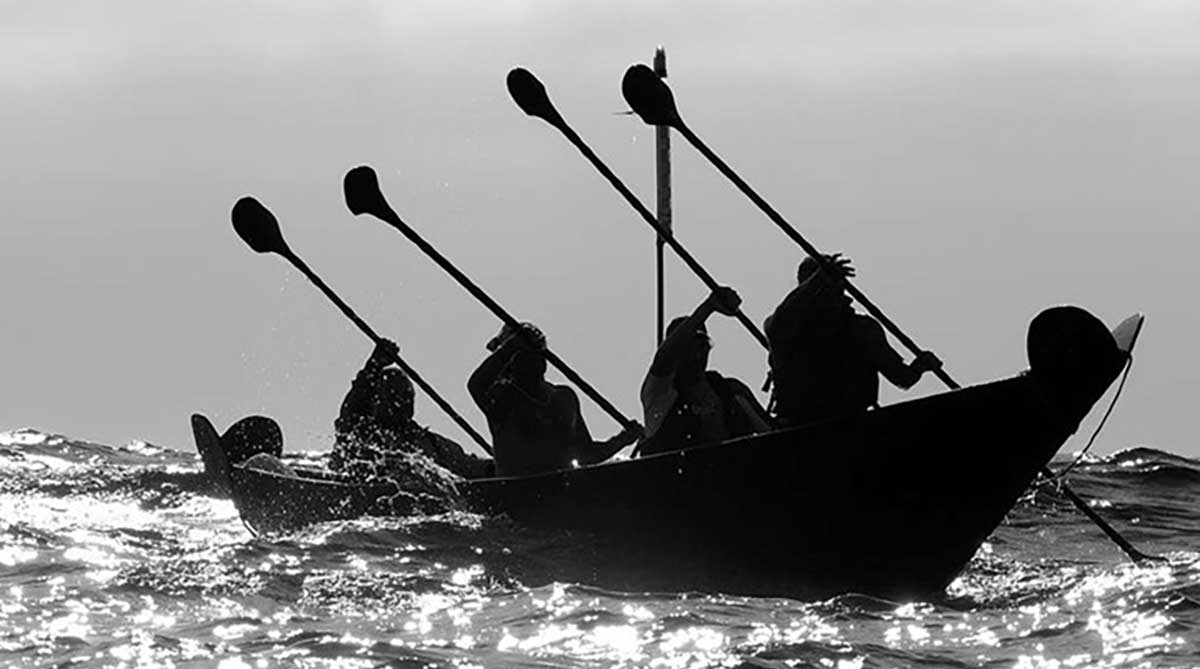
Economically, Native tribes built crisscrossing trade routes. These stitched together coastal, desert, and mountain communities. These routes utilized ridge-top trails, desert paths, river corridors, and redwood canoes for coastal trade. The main currency came from Olivella shell beads, made from a small snail.
The Time of the Spanish
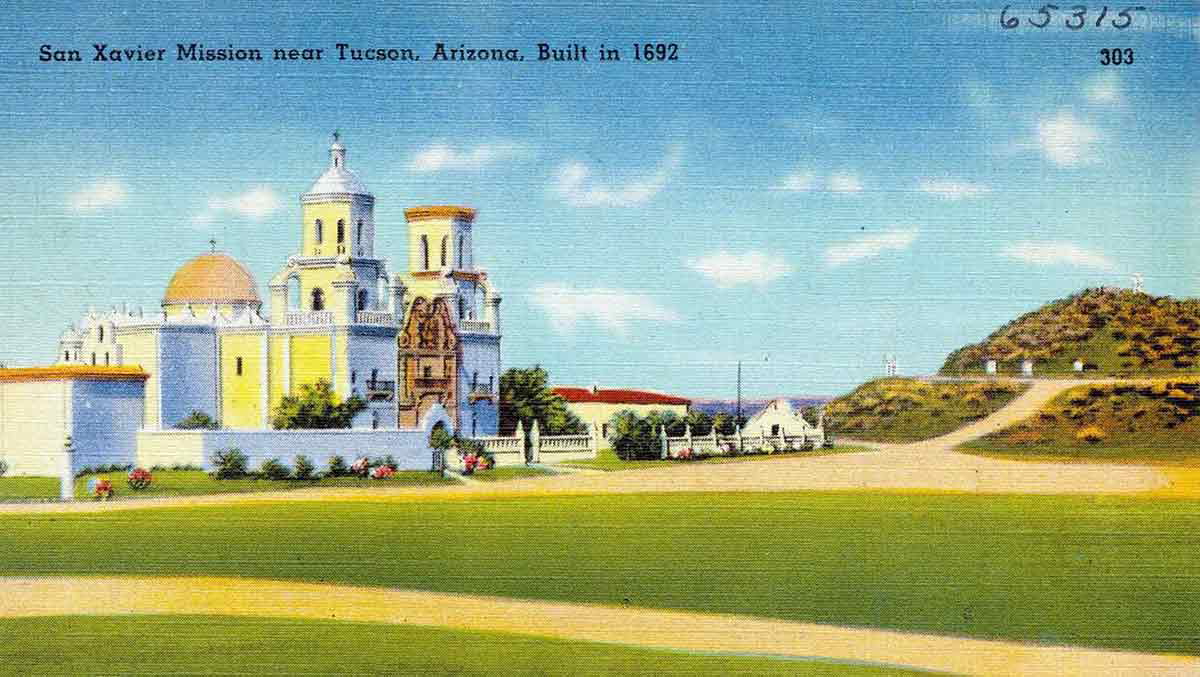
In 1769, Spain established its first permanent California settlements. Spanish priests, soldiers, and settlers founded the San Diego “presidio, or military fort. These marked California’s Spanish phase, which severely disrupted the Native tribes’ way of life. Spanish authorities built multiple pueblos (civilian towns), presidios, and Catholic missions. These came in response to British and Russian claims near the region. With settlements now along the coast, Spain added California to its international trade. The all-important Manila galleon soon paused at different ports to recover from its oceanic battering.
Spain created twenty-one evenly spaced settlements by 1823. Separated by a day’s journey, these allowed greater control. Each settlement type performed a different, though intertwined, function.
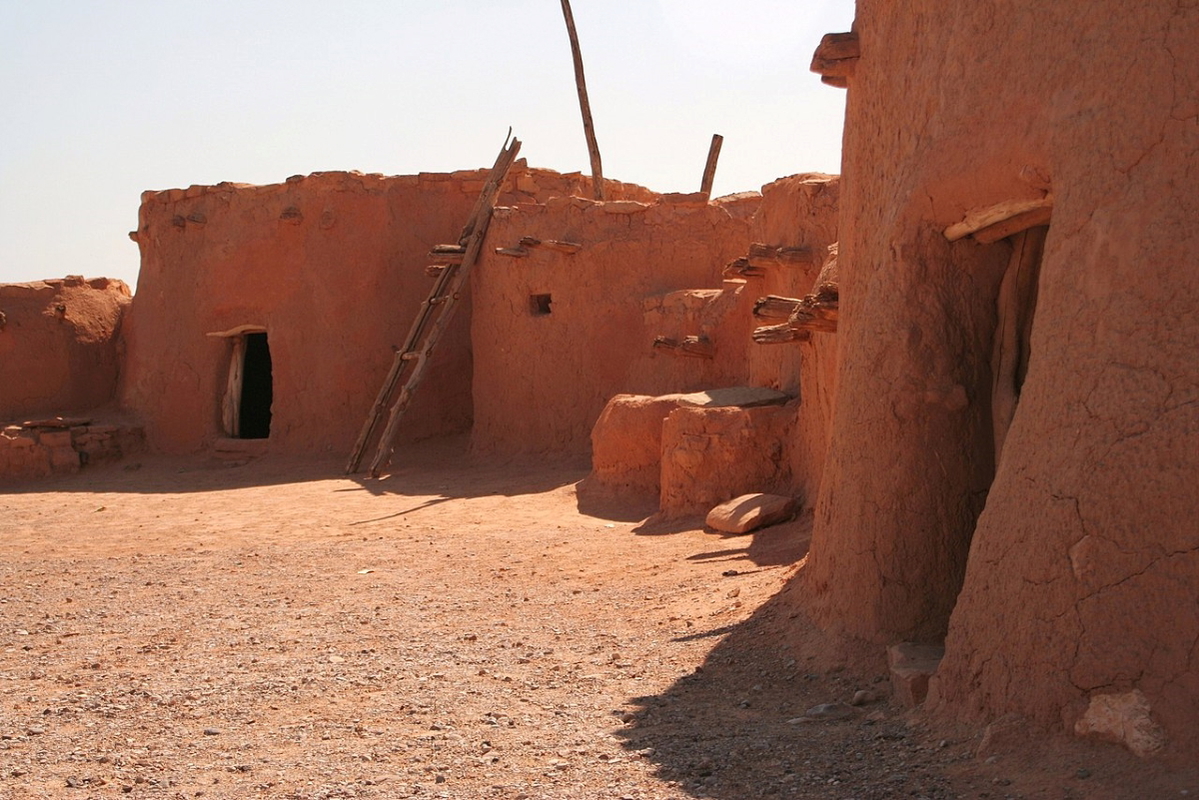
The missions aggressively sought the Native tribes. They forced conversions, involuntary labor, and cultural suppression. Unfortunately, this drastic change introduced a host of often fatal diseases. Their traditional lifestyle abruptly switched from subsistence to European farming methods. The presidios assisted by acting as buffers or by defending colonial interests.
The pueblos had one purpose: to attract settlers, which developed into permanent communities, like Los Angeles (c. 1781). They introduced European urban planning and new social customs. Spanish settlers introduced livestock and wheat farming, molding California to their benefit. These customs drastically altered the Native landscape, too. A lesser role came in the form of cultural melting pots; while intended for “Spanish” settlers, only about 10% originated from Spain or New Spain. The majority had Native or African heritage.
Mexican California’s Rancho Era
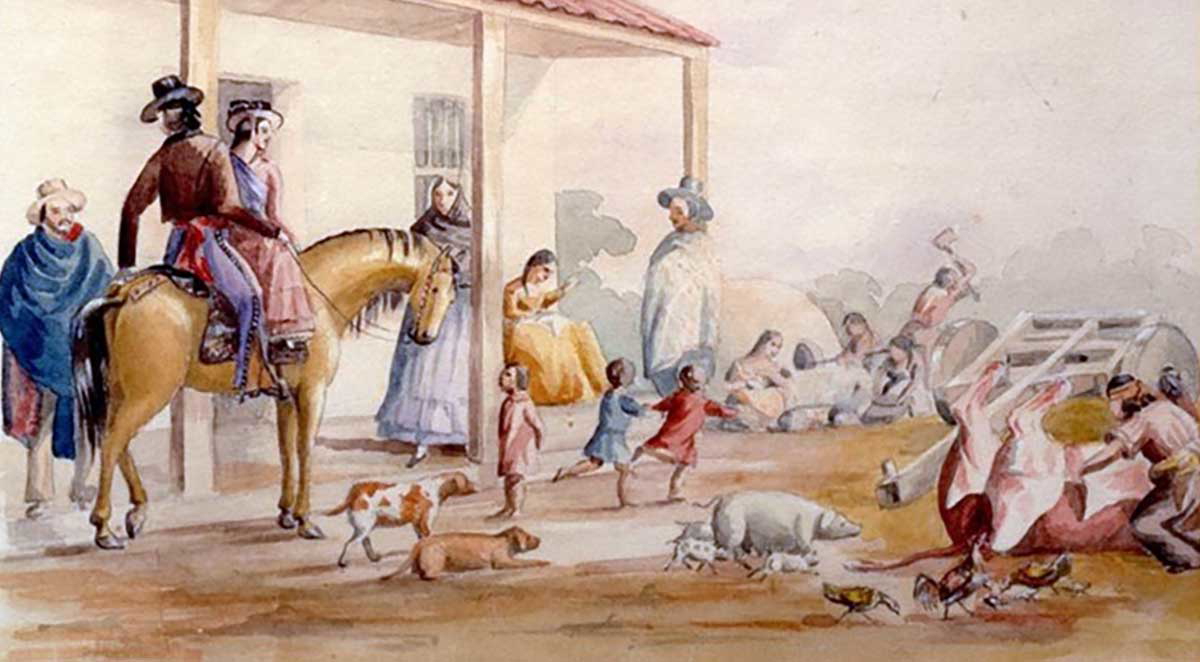
Mexico’s independence in 1821 meant further changes for the landscape and people. The Mexican government quickly disbanded the large missions. This Ranch Era would exist roughly from the 1830s through the 1850s. The now-available land got carved into vast ranches. Most went to leading Mexican families called Californios, a group of blended Mexican, Native, and Spanish cultures. Like any such group, they created a rich blend of language, architecture, and horsemanship.
Like the Spanish, the Californios altered the landscape for their needs. Besides cattle, they introduced additional farm crops like olives, citrus, and grapes, and established large orchards, all of which further degraded the land.
Politically, California remained a loosely governed province. Given the distance to Mexico City, the government kept a light hand, relying on the Californios to administer the province. The rancheros established ranch boundaries that are still used today.
Developed Not a Frontier
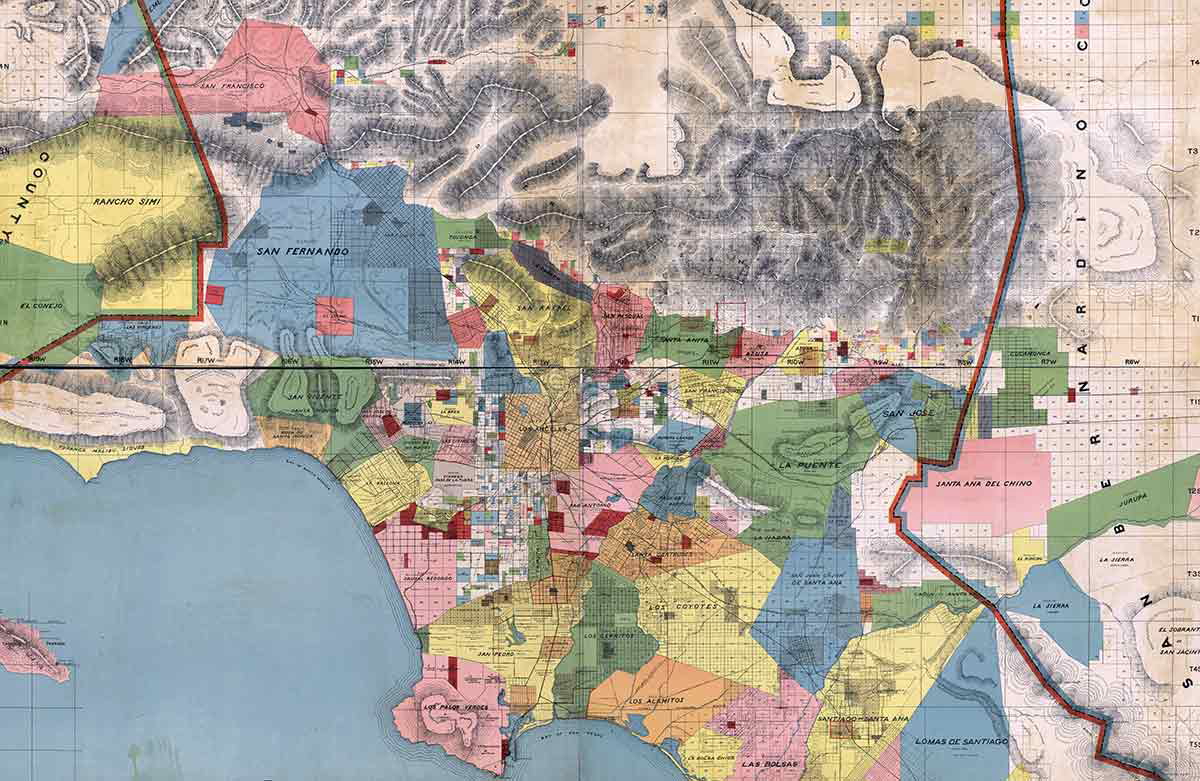
The 1849 Gold Rush made California world-famous almost overnight. Thousands flocked there, expecting more wilderness. Instead, a vibrant, dynamic culture awaited, inevitably leading to conflicts.