
Procrastination is an art. The more we practice it, the more skillfully we conjure the most creative task-evasion techniques. We delay tasks, trusting that the last-minute adrenaline rush will kick in at the right time—until it no longer does. Master procrastinators are caught in a vicious loop of continuous stress. Although they are often accused of laziness, their predicament is much more complicated than that.
What Is Procrastination?
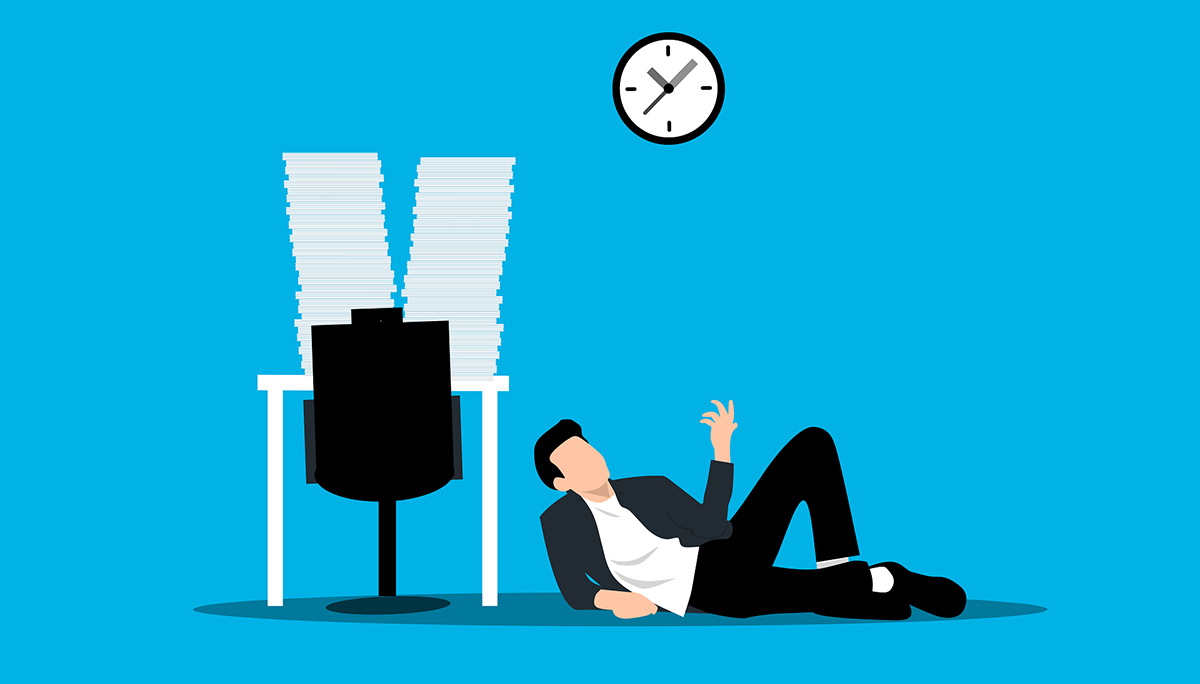
Procrastination is the act of deliberately deferring a task despite knowing the negative consequences of its delay. We’ve all been there in one way or another. We have a pressing task at hand that, for whatever reason, we don’t feel inclined to complete. Before we know it, we’ve already spent several hours in a scrolling spree. Or, even better, we’ve finally decided to attend to pending house chores or other tasks down the priority line of our to-do lists that would give us a sense of productivity.
We may travel to great lengths to justify why we’re doing everything but the task we’re supposed to be doing now. Sadly, no matter what we do, we are often haunted by the looming deadline of the given task, lurking in the background of all our other activities. The more time passes, the more we experience ever-increasing stress and anxiety. Can’t we just do it and get it over with? I’m afraid it’s not that simple.

Like any behavior, procrastination can range from an occasional occurrence to a chronic pattern. In an interview with APS, psychologist Joseph Ferrari explains that telling “the chronic procrastination to just do it would be like saying to a clinically depressed person, cheer up”. Numerous studies have shown the negative impact of procrastination on our mental health, yet most of the time we stand helpless against it.
We try to become better planners, self-disciplined, and sometimes recourse to self-hate to push ourselves to action. Nevertheless, the impulse to evade a task often overpowers all our efforts. “Why can’t I get myself to do what I need to do?” is the most frustrating question for a procrastinator. Unfortunately, we tend to find all sorts of negative answers that yield nothing but greater self-hate. The most common misconception is that procrastination results from laziness or deficient willpower. While there may not be a straightforward answer to why we procrastinate, research shows that such negative assumptions are rudimentary and misleading.
Is Procrastination a Biological Phenomenon?
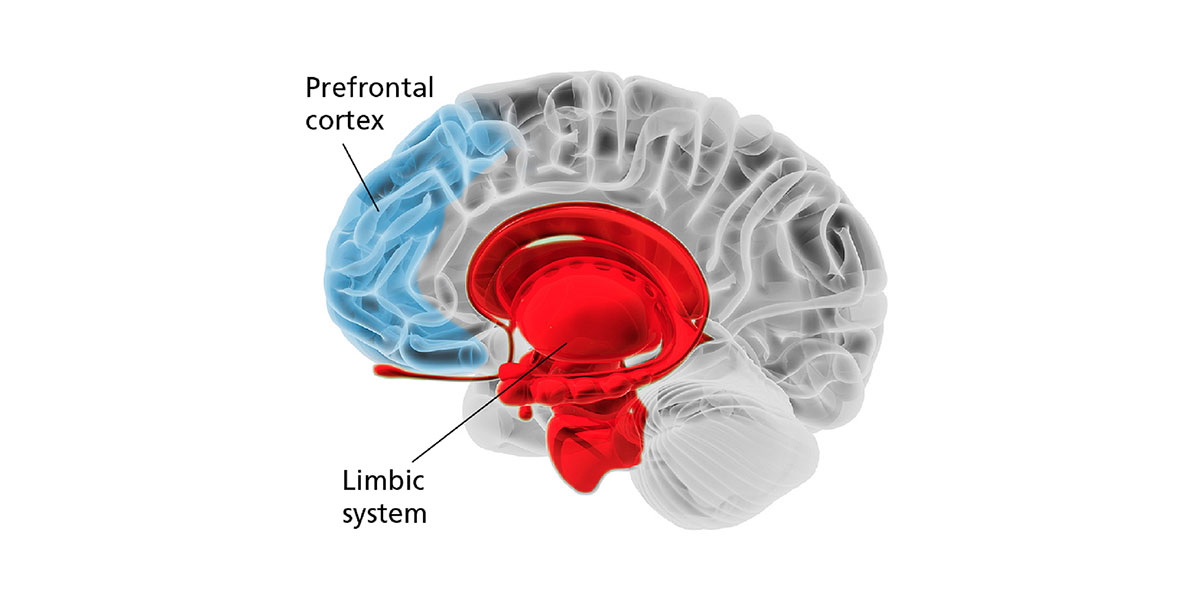
Procrastination is a biological phenomenon in so far as it corresponds to specific brain functions. We have two important regions in our brain: the limbic system and the prefrontal cortex. The limbic system, otherwise known as the emotional nervous system, is mainly responsible for emotional processing, memory, reward system, and fight or flight response.
Needless to say, it is the oldest and most dominant part of our brain, as its functions are essential to our survival. The prefrontal cortex, on the other hand, is responsible for impulse control, long-term planning, executive functioning, problem-solving, and rational thinking. Unlike the limbic system, the prefrontal cortex is a recent evolutionary development. From a biological perspective, procrastination is a battle between these two brain regions that the limbic system wins.
Why Does the Limbic System Override the Prefrontal Cortex?

The limbic system overrides the prefrontal cortex because it can weaken or impair its function. When faced with an unpleasant or stressful task, these two brain regions have a conflict of interest. Your prefrontal cortex perceives the long-term benefits of completing this task now and the negative consequences of its deferral. It is the part of your brain that knows better. Your limbic system, however, is more primitive and short-sighted.
Its objective is simple: avoid the source of the threat, signaled by the negative emotions, and flee from the tiger or, in this case, the task (it doesn’t differentiate). While your prefrontal cortex can work towards the future reward of completing the task, your limbic system seeks instant gratification and short-term relief.

To properly function, your prefrontal cortex requires far greater energy and conscious effort than your limbic system, which generally runs automatically. In the presence of overwhelming or strong emotions, your limbic system can easily override the better judgment of your prefrontal cortex as it is more energetically efficient. According to neuroscientist Amy Arnsten, “uncontrollable stress can cause a rapid and dramatic loss of prefrontal cognitive abilities, and more prolonged stress exposure causes architectural changes in prefrontal dendrites” (Arnsten, 2010).
In this case, it becomes neurobiologically impossible to “just do it”. Of course, reasons for overwhelming emotional arousal could vary from mild emotional dysregulation to severe trauma. While the biological mechanism behind procrastination can be the same, everyone has different psychological factors coming into play. That being said, our tendency to beat ourselves up for not doing what we’re supposed to do often further disempowers the prefrontal cortex by producing more negative emotions. The next time you procrastinate, don’t be too hard on yourself!