In the minds of most Christians, Judas Iscariot was a betrayer and a greedy apostle who sold his master for a measly sum. He was a controversial character, and scholars and bible skeptics alike note the inconsistencies surrounding the narratives about his death. During the early Christian era, an alternative narrative about Judas and his motives emerged among the Gnostics. With the discovery of some long-lost manuscripts, these views have resurfaced and reignited debate about the role of Judas in the events leading to Christ’s death.
The Bible Narrative About Judas
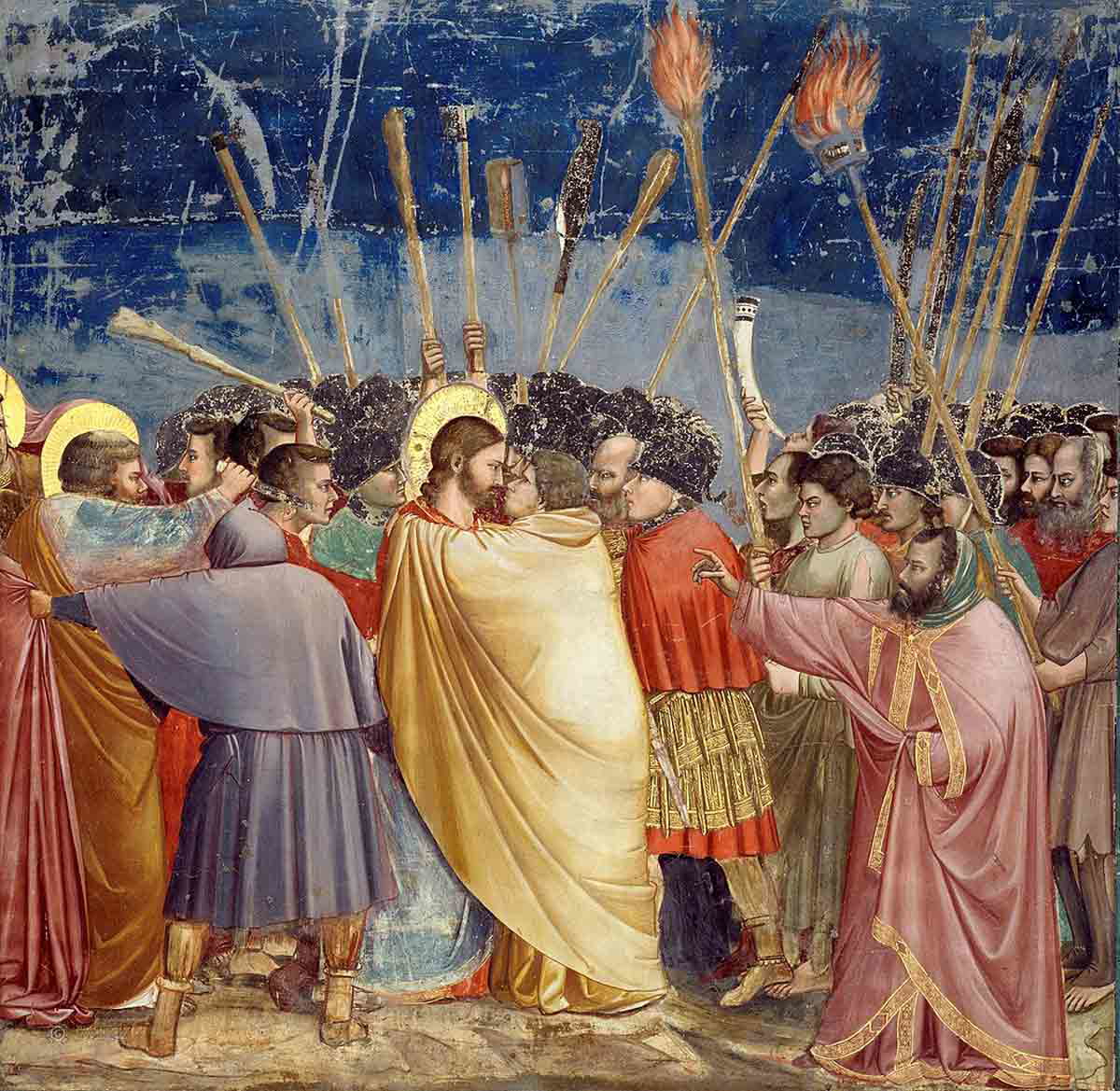
Judas became one of Jesus’s disciples early on in his ministry. Unlike many of the other disciples, the gospels are silent about the calling of this infamous disciple. John paints Judas as the disciple Jesus identified as a devil (John 6:70-71), suggesting that the disciple was predestined to betray his master.
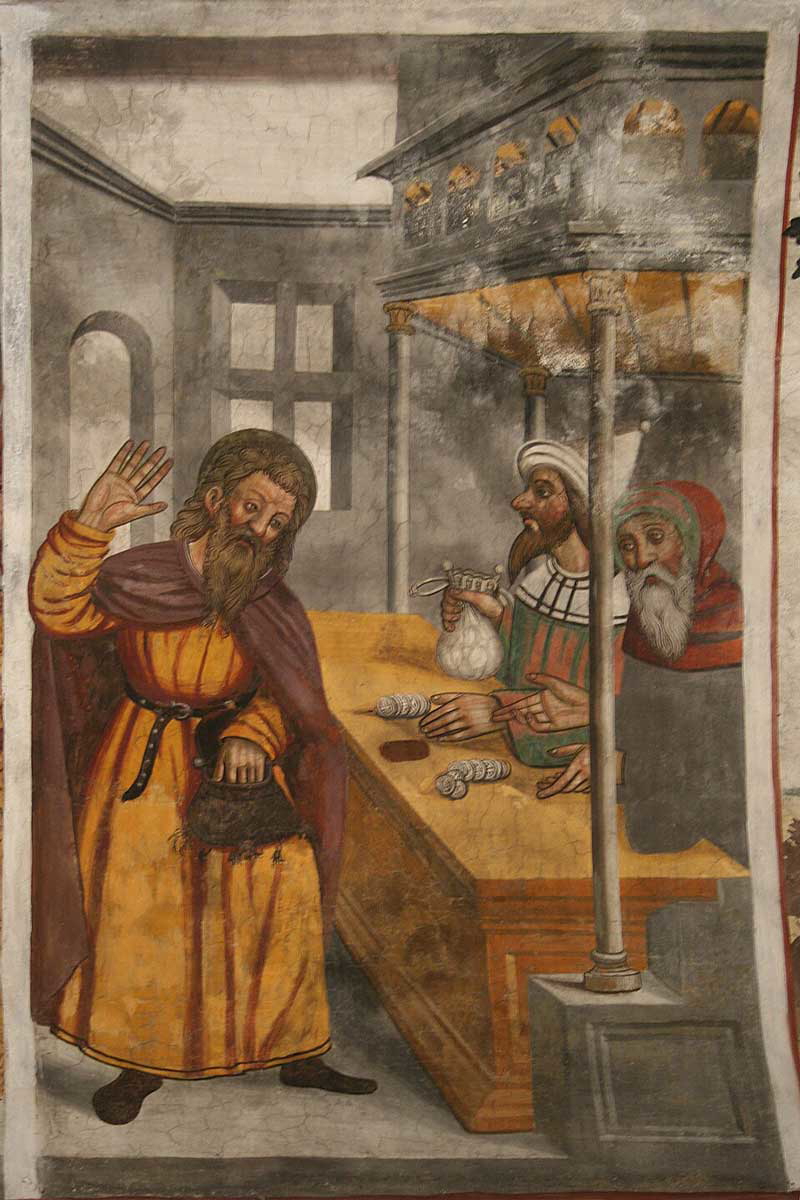
Judas was the treasurer among the disciples, holding the common purse. John suggested that Judas was greedy and mismanaged, and stole some of the money donated to Jesus’s ministry (John 12:4-6). The fact that Judas later betrayed Jesus for 30 pieces of silver, about four months’ wages at the time, supports the belief that greed motivated Judas.
Some scholars propose that “Iscariot” is not Judas’s surname but a distortion of the Latin term “Sicarius,” meaning “murderer” or “assassin,” suggesting Judas might have been linked to the Sicarii, a radical offshoot of the Zealots, which could have included disciples like Simon and James. However, there is no biblical evidence that supports this theory. It is clear, though, that Judas’s greed for money clouded his ability to see the wrongness of his betrayal of Jesus. The alternative view suggests that “Iscariot” derives from “Ish Kerioth,” which is “man from Kerioth,” in Hebrew, a southern village mentioned in Joshua 15:25.
Judas’s betrayal plays out dramatically in the gospels. Judas had already agreed to betray Jesus by the time the Last Supper took place (Mark 14:10-21). During the supper, Jesus revealed that one of the disciples would betray him. One after the other, the disciples asked if they were the one to betray him. Jesus said: “He who has dipped his hand in the dish with me will betray me” (Matthew 26:23). Then, when Judas asked: “Is it I, Rabbi?” Jesus replied: “You have said so.”
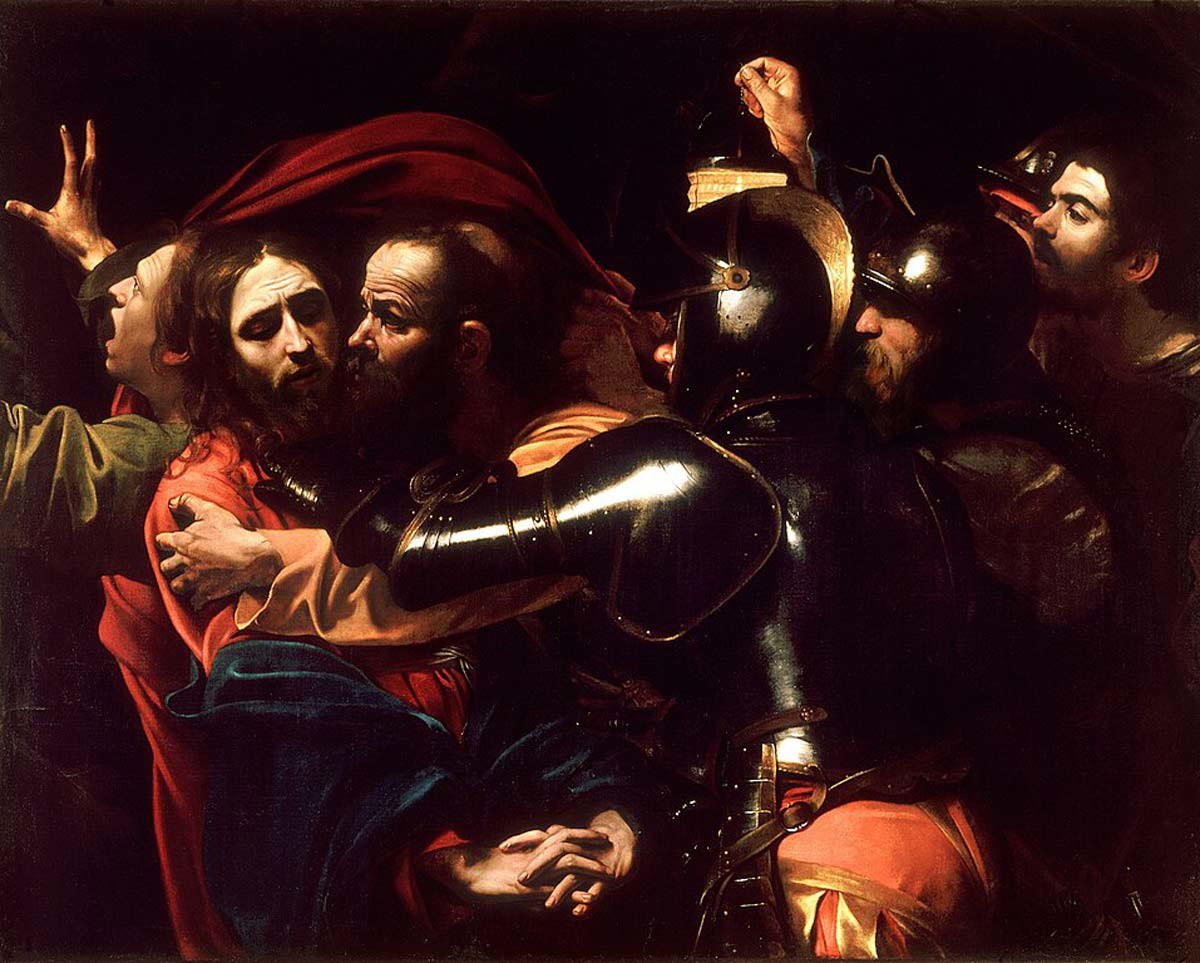
Each gospel portrays a slightly different rendition of events according to the memory and perspective of the author. According to John, Jesus said to Judas: “What you are going to do, do quickly” (John 13:27). Judas left the gathering shortly after receiving his portion of bread. Only John mentions Judas as the betrayer at the last supper.
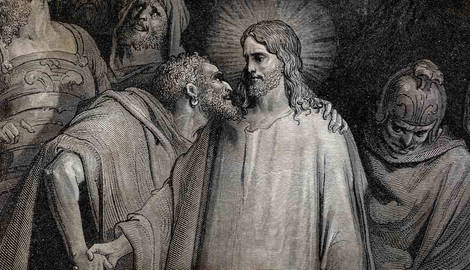
Judas appeared with the Roman soldiers later that evening and betrayed Jesus with a kiss, showing his treacherous nature. Only the synoptic gospels record Judas using a kiss to identify Jesus (Matthew 26:47-50, Mark 14:43-45, Luke 22:47-48). John’s gospel focuses on the authorities asking for verbal confirmation and Jesus answering: “I am he.”
Controversy About Judas’s Death
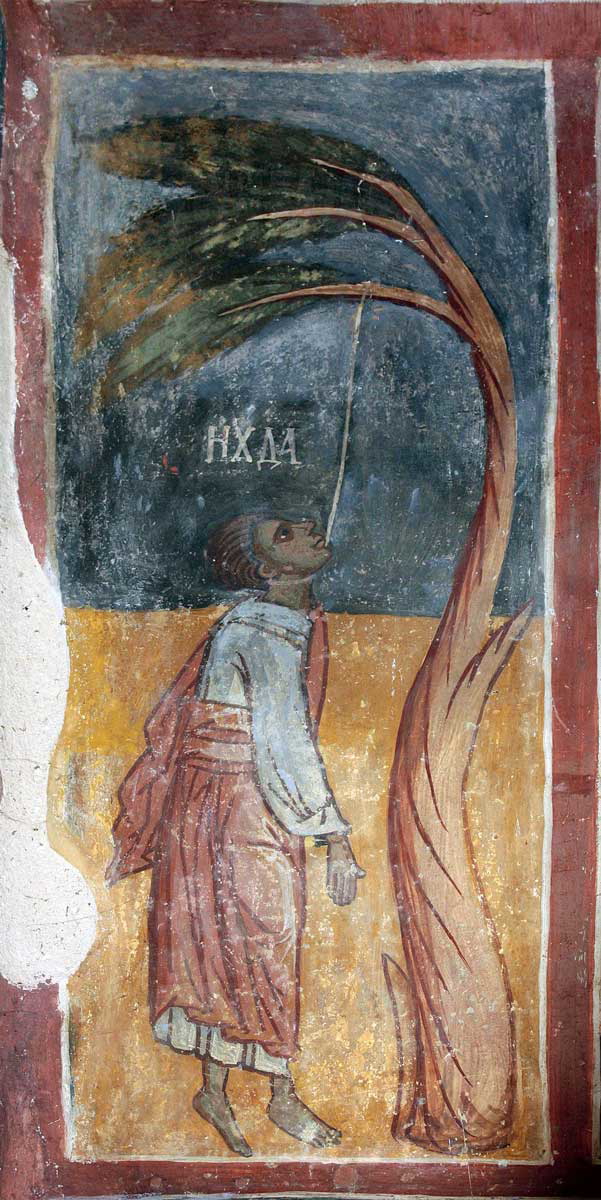
While Mark, Luke, and John are silent about Judas after the betrayal, Matthew and Acts provide two significantly different versions of events. Bible skeptics have pointed to this discrepancy as proof that the Bible is unreliable, but Bible scholars have argued that the versions are not mutually exclusive.
According to Matthew 27:3-10, Judas was remorseful of his betrayal and hung himself. He returned the 30 pieces of silver to the chief priest and elders, who would not accept the money into the treasury but instead bought a potter’s field with it. According to Acts 1:16-20, Judas fell over and burst open.
Some scholars have attempted to harmonize these renditions by suggesting that after Judas hanged himself, his body swelled up, and when the rope broke, he fell to the ground and his bloated corpse burst open. There is no textual proof that events occurred in that sequence; thus, the theory remains speculative. What these accounts have in common is the reference to a field of blood.
People called the field bought with the money Judas returned to the priests Akeldáma, which means “Field of Blood” after what Judas did became known (Acts 1:19). In Matthew’s account, he mentions that people gave the property the name Field of Blood because of the blood money used to purchase it (Matthew 27:6-8). It is reasonable to accept that Luke did not mention Judas’s death in his gospel because he knew he would mention it in his follow-up narrative to Theophilus.
The Extra-Biblical Narrative About Judas
No contemporary Jewish or Roman manuscript discovered thus far mentions Judas Iscariot, causing historians to remain ambivalent about ascribing a definitive character to him. The primary sources from that time are limited to the Bible. Scholar Bart Ehrman is convinced of the historicity of Judas Iscariot, precisely because of the varying attestations to the betrayal by this disciple in all four gospels.
Some later sources, however, provide a radically different perspective from that of the Gospels and Acts. Within the Codex Tchacos, discovered in the 1970s near El Minya, Egypt, was a Coptic version of the Gospel of Judas. It dates to the 3rd to early 4th century CE and provides a radically different version of events, highlighting Judas as a close confidant of Jesus. This document was not unknown to early Christians. Irenaeus, who was familiar with the Greek version, considered this gospel version “fictitious history,” which would explain why it was not preserved, nor did it gain traction among Christian communities.
According to the Gospel of Judas, which reflects Gnostic cosmology, Judas emerges as the enlightened disciple, the only one who grasped Jesus’s teachings. According to Gnostic cosmology, the physical world is flawed, created by an inferior deity (the Demiurge), while true salvation comes from secret knowledge (gnosis) that sets the spirit free. The document suggests Jesus imparted secret knowledge to Judas and instructed Judas to betray him. Judas was, according to this work, the only truly trusted disciple whom Jesus could task with what needed to be done to bring his ministry to its climax. It portrays Judas’s actions as obedience rather than treachery, inverting the biblical narrative.
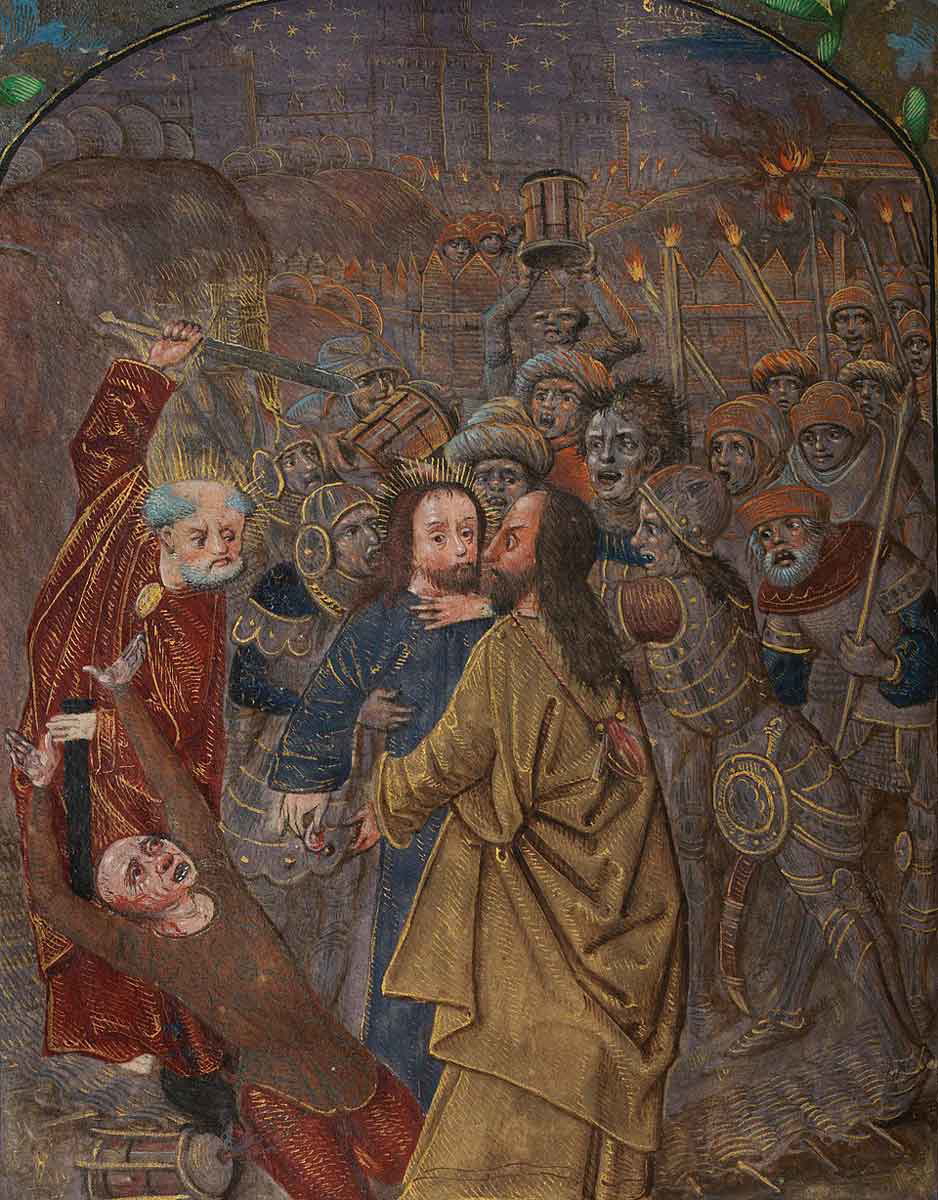
The medieval apocryphal Gospel of Barnabas shows strong Islamic influence. This work aligns with the Qumran tradition that states that Jesus did not die (Surah 4:157) but instead, God caused Judas to resemble Jesus so the disciple was crucified instead of the master, who ascended to Heaven unharmed. Thus, Judas was punished for his betrayal.
The Gospel of Nicodemus recounts that Satan entered Judas after the betrayal, causing his body to swell grotesquely. When he hung himself, the bloated body burst open, spilling his bowels and intestines.
Another bizarre telling of the events of Judas betraying Jesus comes from the Book of the Rooster (also known as the Ethiopic Book of the Cock), which dates to the 5th or 6th century CE. This work has Jesus visiting a Pharisee named Simon, whose wife prepared a rooster for dinner. Jesus revived the roasted rooster and gave it the ability to speak. Jesus tasked the rooster with spying on Judas and reporting back on the plot to betray him. The rooster promptly followed Judas to his home and observed his conspiracy with those associated with capturing Jesus. This version of events paints Judas as a villain who purposefully plotted to betray his master. There are several versions of the Book of the Rooster, and they differ significantly. Few are available in English.
Judas Iscariot: In Conclusion
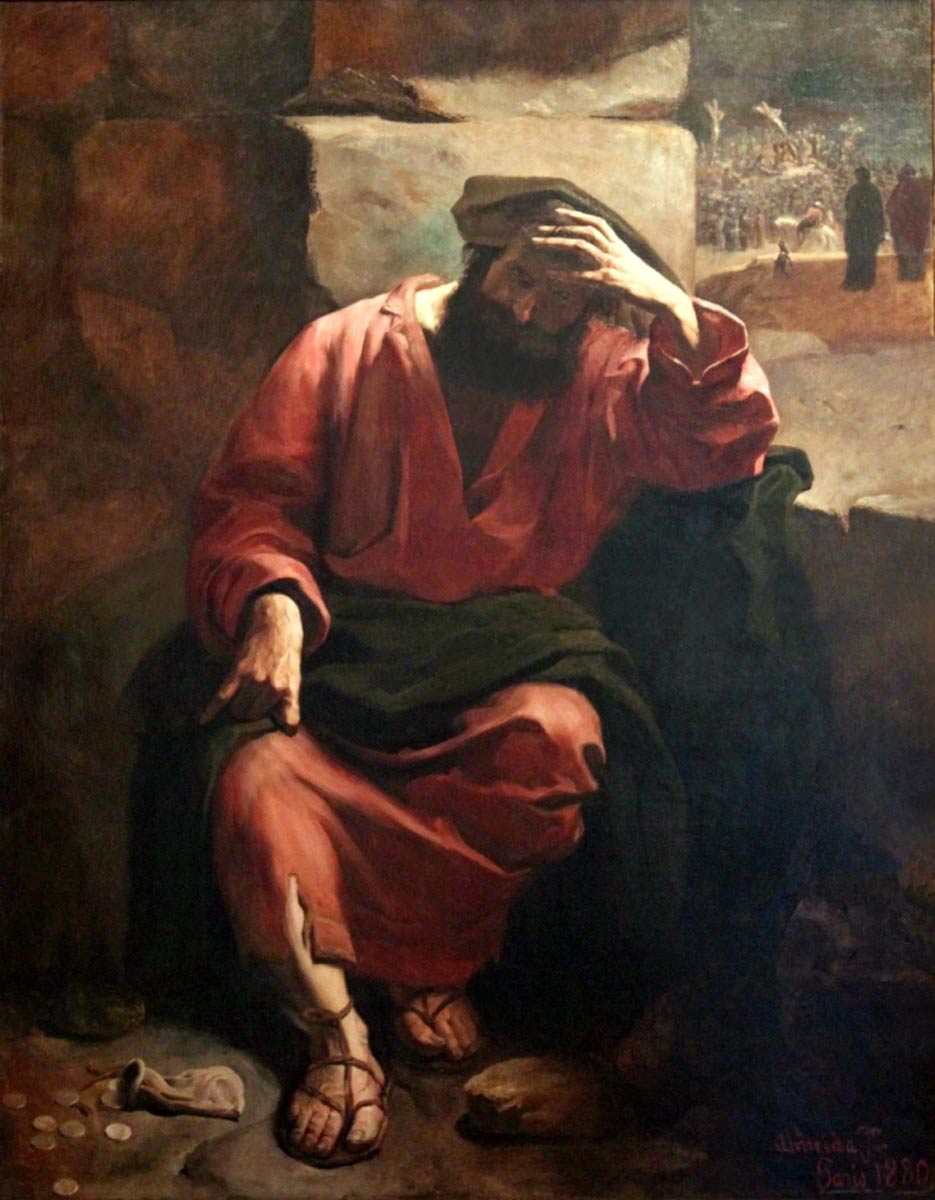
The Gospels depict Judas as a betrayer who was most likely motivated by greed. The four accounts have significant differences, which can be attributed to personal perspectives on events. Among the apocryphal books which date to later centuries, some portray Judas as a close confidant of Jesus and even the most trusted disciple. The Gnostic Gospel of Judas portrays Judas as obedient in betraying Jesus because his master instructed him to do so. This approach aligns with Gnostic cosmology. Some attempt to portray the Gospel of Judas as a new find, but it was known to early Church Fathers who rejected it as ahistorical.
Other apocryphal works, however, align with the biblical narrative that Judas was a conniving, greedy betrayer who purposefully plotted to betray Jesus. Some of these retellings include bizarre narratives, like roasted roosters reviving and reporting on Judas’s plot to betray his master.