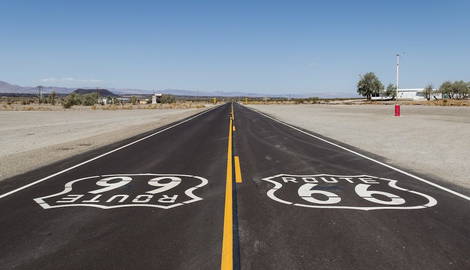
Since 1926, Route 66 has let travelers experience the United States of America one nostalgic roadside oddity at a time. What awaits along the Mother Road as it enters its second century?
America’s Route 66 Celebrates 100 Years in 2026
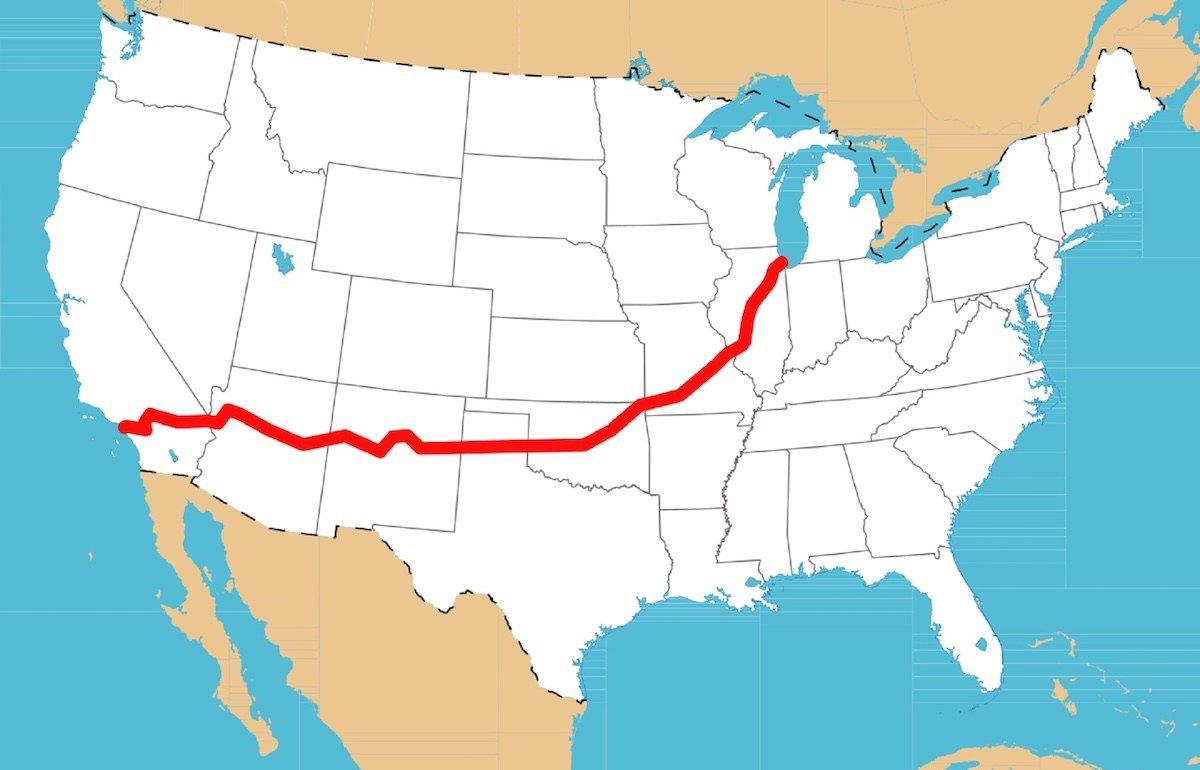
Route 66 was officially established on November 11, 1926. The highway linked small towns and cities across eight states, from Chicago, Illinois, to Los Angeles, California. It carried Dust Bowl migrants westward, fueled local economies, and inspired music, literature, and films.
The diners, gas stations, and neon lights that popped up along Route 66 created a distinctive roadside culture and aesthetic that we still celebrate 100 years later. These eight stops on Route 66 still offer American roadtrippers a tangible connection to the past.
| Stop | Location |
| Roy’s Motel & Café | 87520 National Trails Hwy, Amboy, CA 92304 |
| Shea’s Gas Station Museum | 2075 Peoria Road (Old Route 66), Springfield, IL 62702 |
| Nob Hill Neon Gateways | Central Avenue in Albuquerque, NM |
| U-Drop Inn | 101 E. 12th Street, Shamrock, Wheeler County, TX 79079 |
| Blue Whale of Catoosa | 2600 OK-66, Catoosa, OK 74015 |
| Rock Café | 114 W Main St, Stroud, OK 74079 |
| Rainbow Bridge | Rainbow Bridge, SE Beasley Rd, Baxter Springs, KS |
| Wigwam Motel No. 6 | 811 W Hopi Dr, Holbrook, AZ 86025 |
1. Roy’s Motel & Café, California
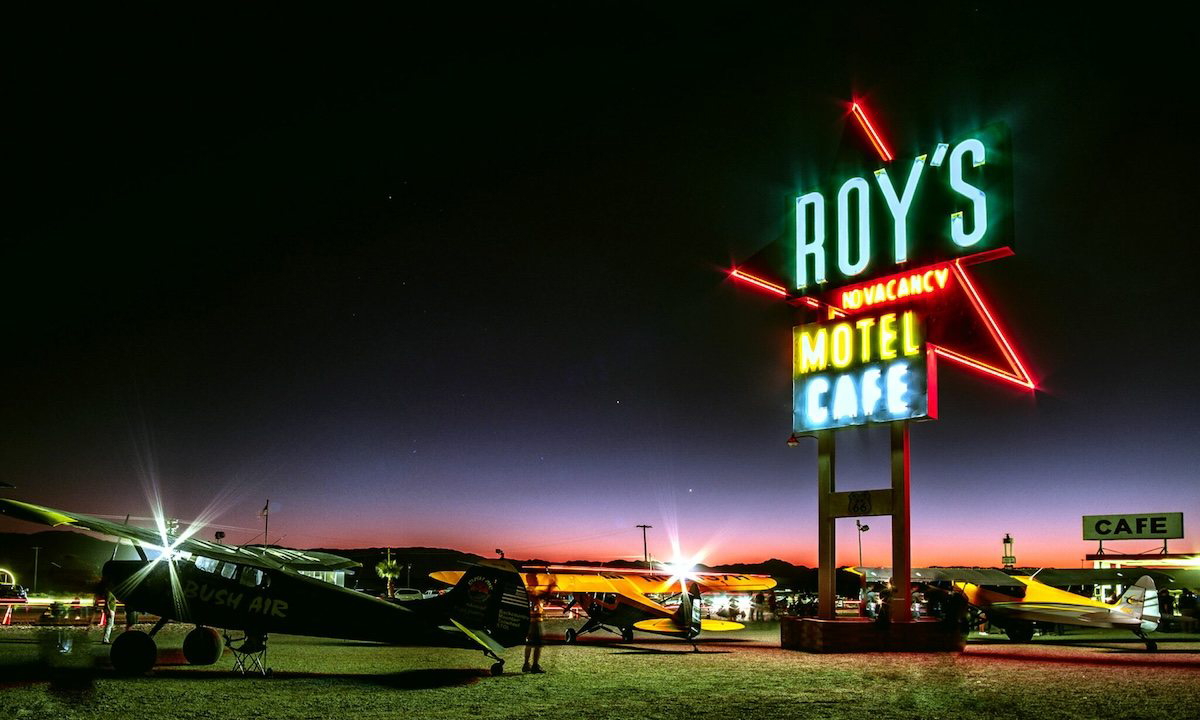
Roy’s Motel & Café in Amboy, California, was built in the 1950s. It is recognized for its massive Googie-style neon sign, mid-century architecture, and desolate Mojave Desert setting. The site includes angular motel rooms, a café, and gas pumps, providing lodging, food, and fuel for travelers crossing the desert.
2. Shea’s Gas Station Museum, Illinois
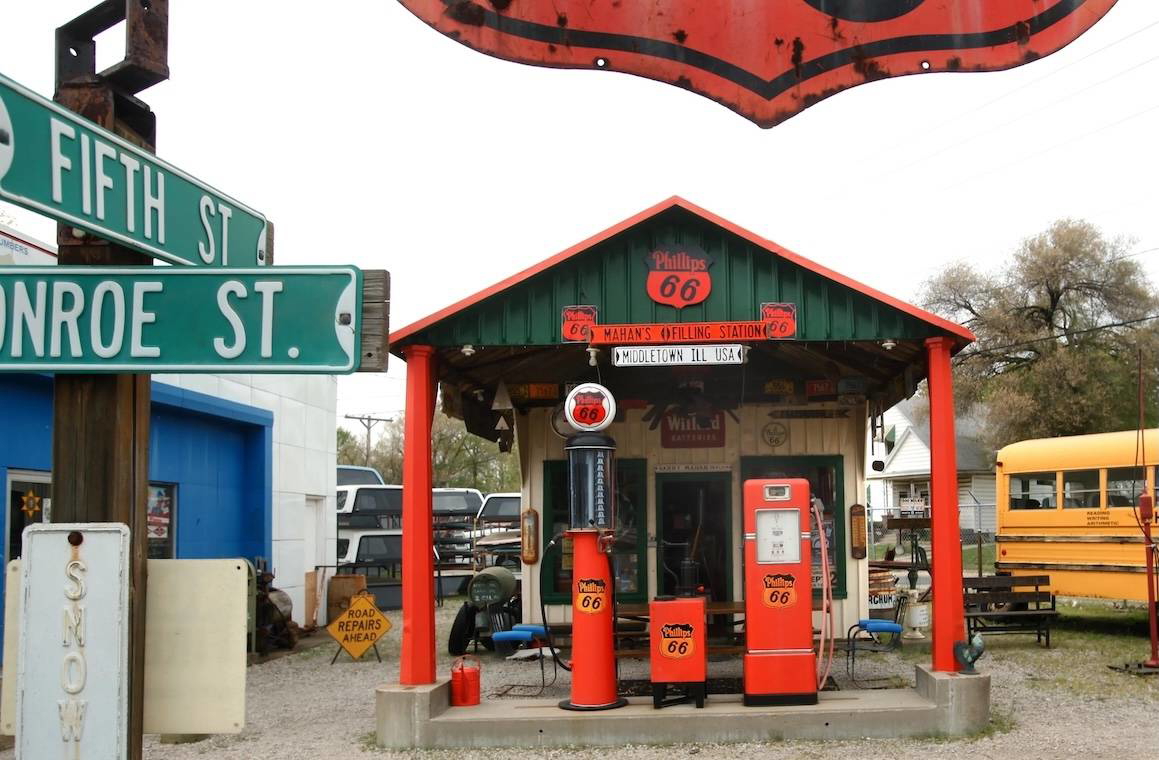
Shea’s Gas Station in Springfield, Illinois, operated from the 1940s through the 1980s. The station served both local customers and Route 66 travelers, providing fuel, maintenance, and a community hub. Today, it functions as a museum, preserving original features, including original gas pumps, service station tools, and signage.
3. Nob Hill Neon Gateways, New Mexico
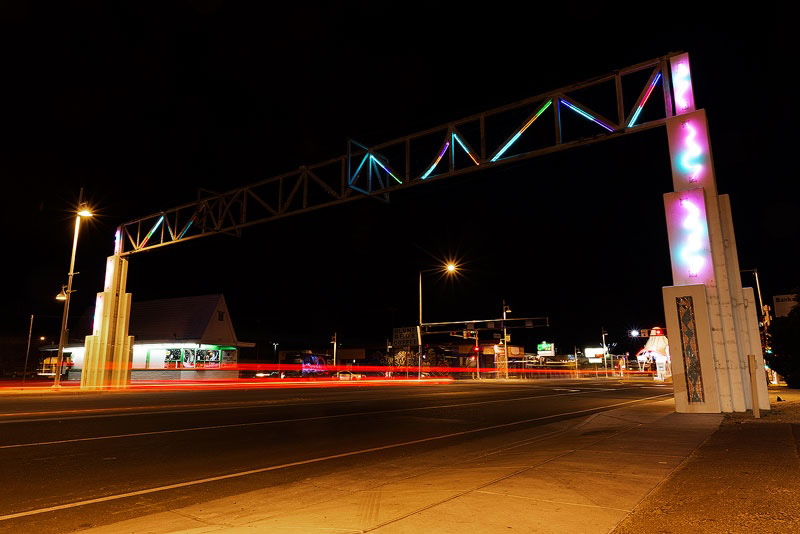
Albuquerque’s Nob Hill Neon Gateways, commissioned as a public art project in 1993, are twin neon arches that frame Central Avenue and mark Route 66’s path through the city. They are distinguished by their bright neon lighting, structural design, and urban placement, signaling the transition from highway to city street. The gates still serve as functional roadway markers.
4. U-Drop Inn, Texas
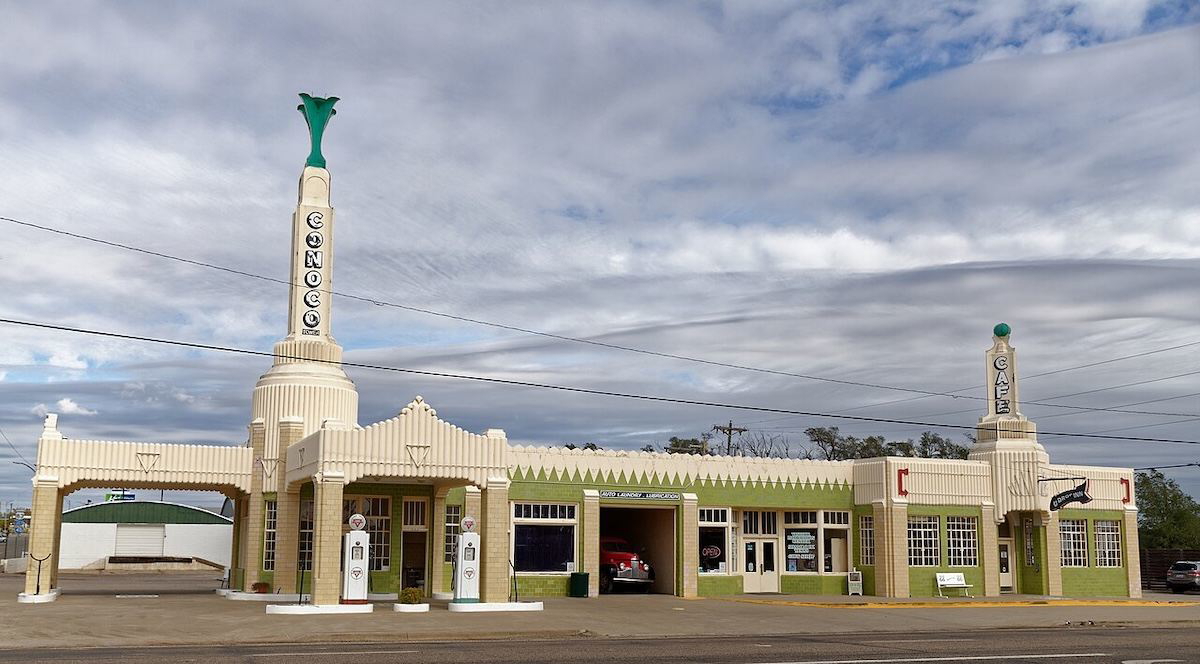
The U-Drop Inn in Shamrock, Texas, opened in 1936 as a café and gas station and is notable for its Art Deco facade, stepped tower, and curved canopy. The building served travelers and the local community for decades, offering food, fuel, and a place to rest. Today, it operates as a visitor center and museum while retaining original architectural details and signage.
5. Blue Whale of Catoosa, Oklahoma
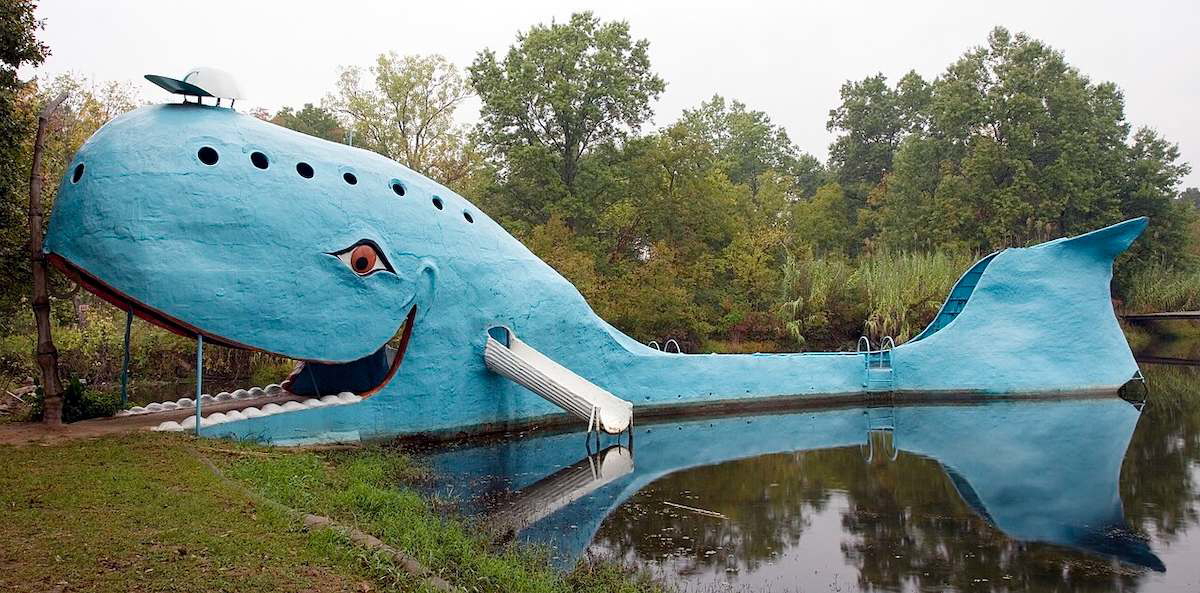
Constructed in 1972 as a public swimming attraction, the Blue Whale of Catoosa is an oversized concrete sculpture measuring roughly 80 feet long. Zoologist Hugh S. Davis created it as a surprise anniversary gift for his wife and a swimming hole for his grandchildren. Now, it is recognized as a beloved, whimsical folk-art landmark.
6. Rock Café, Oklahoma
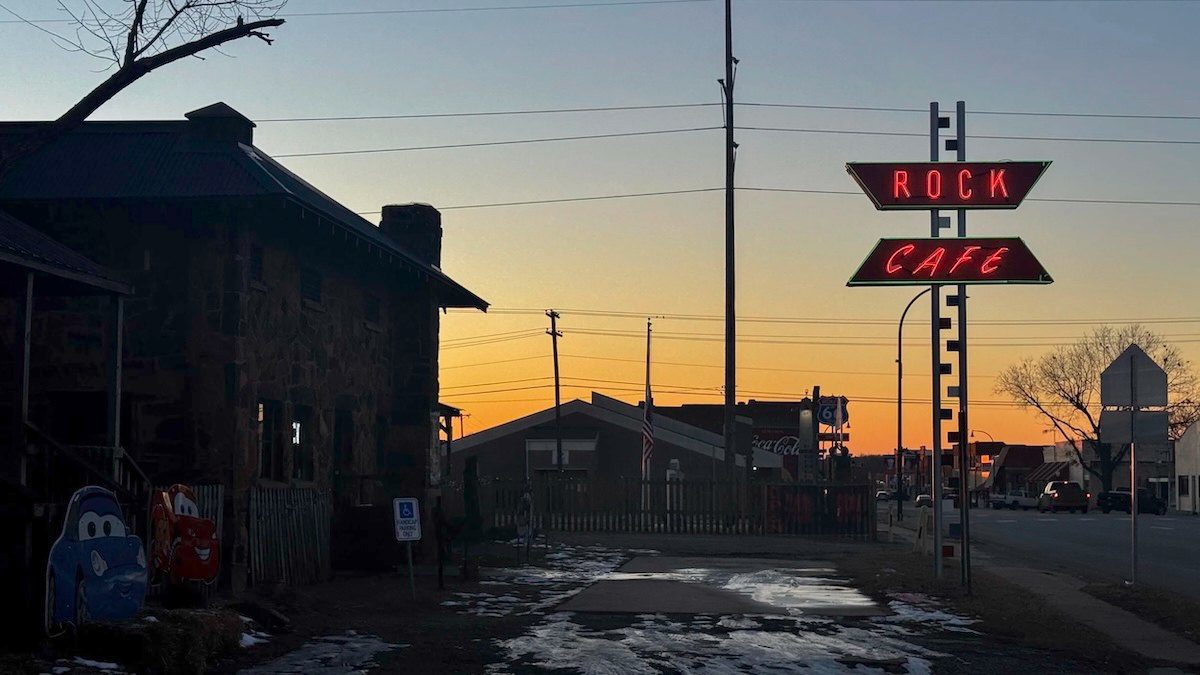
Built in 1939 in Stroud, Oklahoma, the Rock Café is constructed from locally quarried sandstone, rough-hewn on the exterior. The café served travelers and locals for decades, offering meals and a social stop along the highway. After surviving a 2008 fire, the original stonework and interior were restored, and the building continues to operate as a restaurant.
7. Rainbow Bridge, Kansas
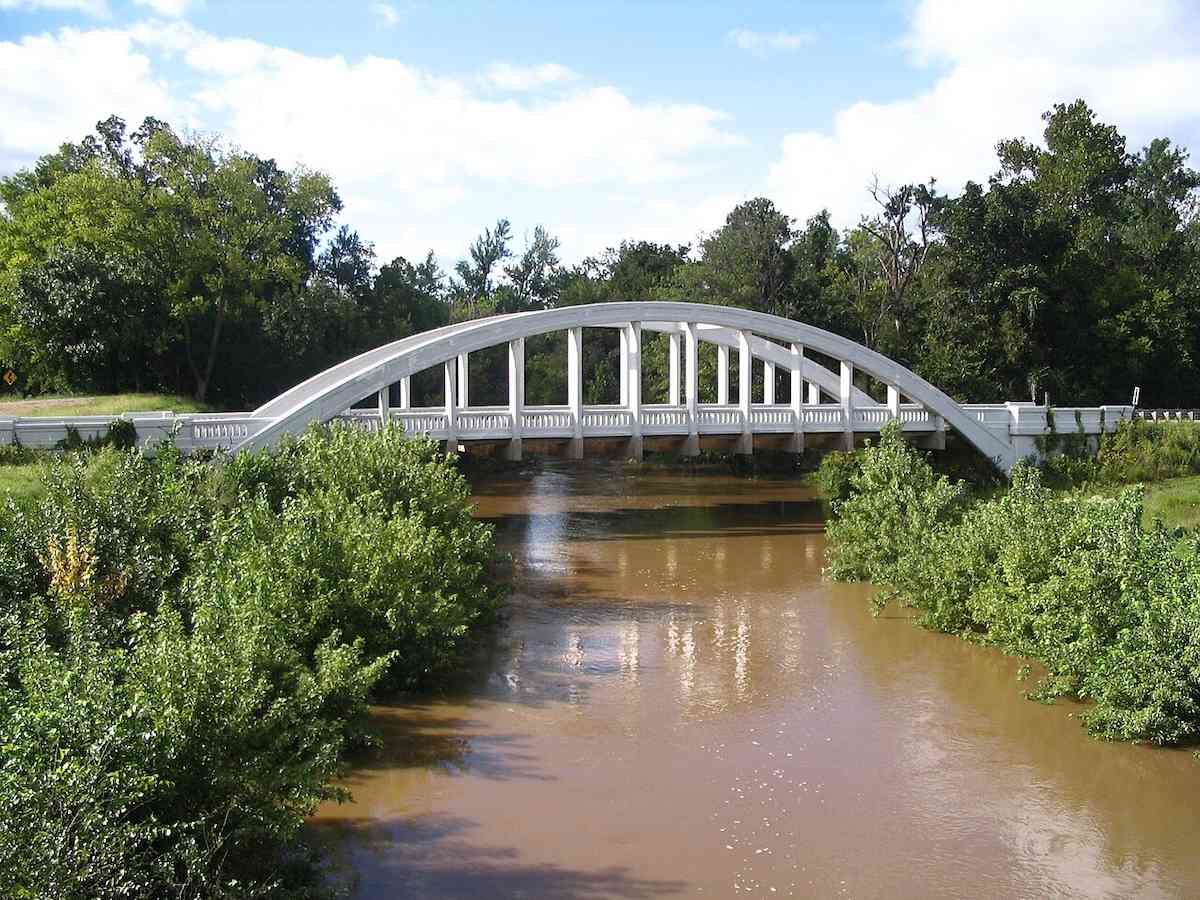
The Rainbow Bridge in Riverton, Kansas, dates back to 1923. It is notable for its graceful concrete arches, its small span over the Spring River, and its rarity. It is the last remaining bridge on Route 66 that uses the Marsh Arch concrete design.
8. Wigwam Motel No. 6, Arizona
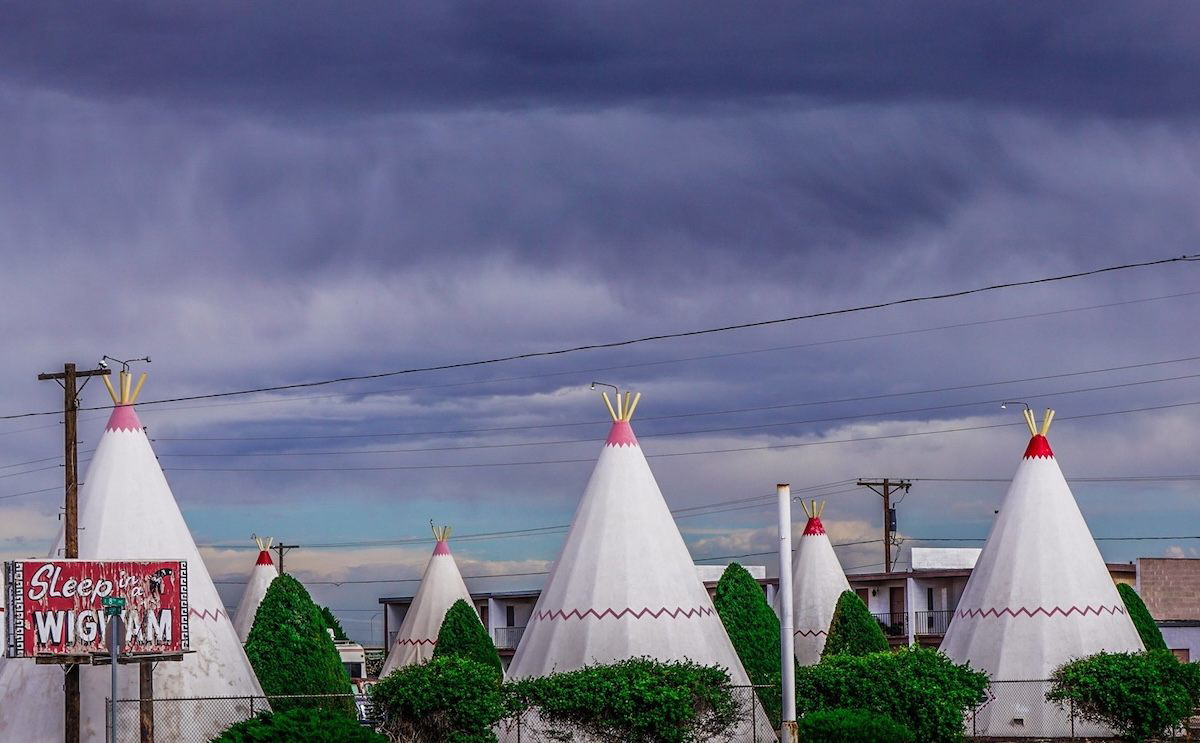
The Wigwam Motel in Holbrook, Arizona, opened in 1950. It is part of the Wigwam Villages chain of motels that first opened in the 1930s. The Arizona motel’s 15 concrete tipis—mistakenly called wigwams—feature original signage and mid-century design, and guests can still stay in the rooms today.