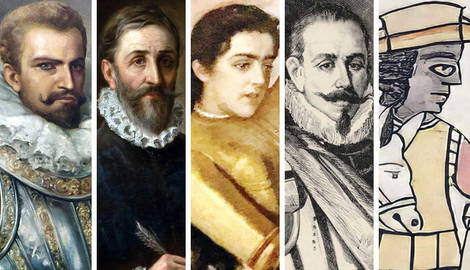
Several conquistadors became household names following the conquest of the “New World,” including Hernán Cortés, who conquered the Aztec Empire, and Francisco Pizarro, who toppled the Incas. Yet hundreds of soldier-explorers descended on the American continent in the 16th century, “discovering” new lands, founding cities and changing history, for better or worse. Here are five other conquistadors who embarked on adventures in the Americas and their claims to fame, or infamy.
Gonzalo Jiménez de Quesada: “Discovered” the Muisca Culture
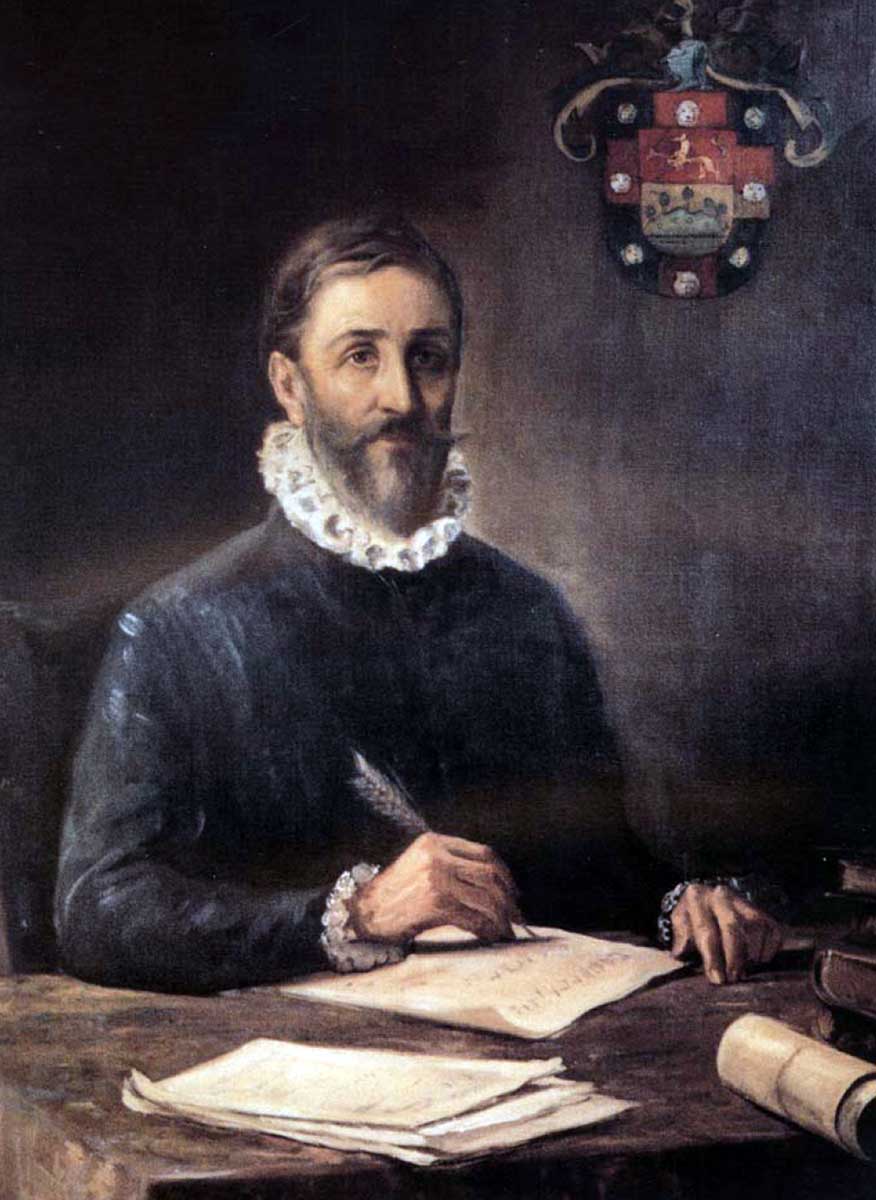
Born in Cordoba around 1506, Gonzalo Jiménez de Quesada was the oldest of six children. His family moved to Granada during his childhood, after which he moved again to Salamanca to study law. After returning to Granada to practice, he embarked on a trip to the “New World” with the newly named governor of Santa Marta, then a small coastal settlement in northern South America, Pedro Fernández de Lugo. Quesada was appointed “justicia mayor” of the expedition, charged with administering justice, and the group set sail in 1535.
Upon arrival, Quesada was tasked with exploring the interior of the region, a mission many had failed before him due to the rough terrain, climate, disease-carrying mosquitos and Indigenous attacks. Though many of his men died or abandoned the mission, in 1537, his expedition was the first to encounter the Muisca culture. Holding its leaders captive to determine the source of their gold, de Quesada and his fellow conquistadors ultimately killed the Muisca rulers and within 100 years, the culture was nearly wiped out by violence and disease.
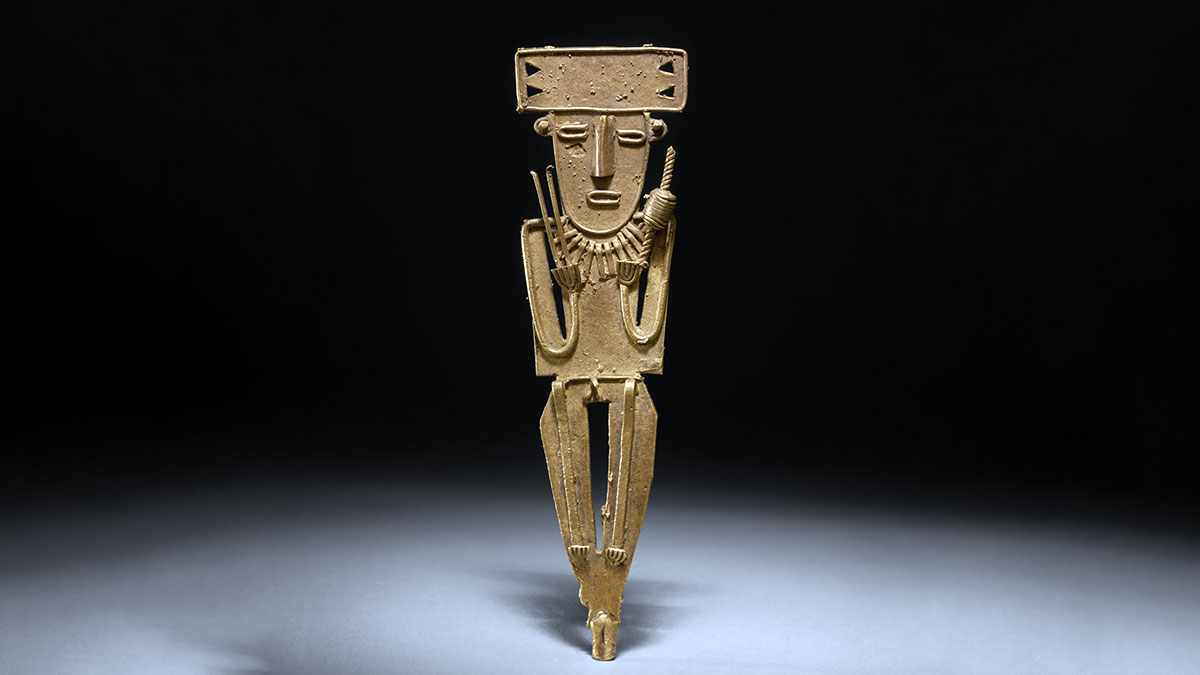
Eager to claim governorship of the highland territories he had “discovered,” which he disputed with two other conquistadors, Quesada made plans to return to Spain to stake his claim. Prior to leaving, however, he determined it necessary to establish a settlement to further his claim, and in 1538, founded the city of Nuestra Señora de la Esperanza (Our Lady of Hope) in what was once the Muisca village of Bacatá. By 1540 the town was officially recognized by the Crown and its name changed to Santa Fe (Holy Faith).
Quesada was not awarded governorship of the lands he explored, but the city he founded rapidly grew in importance, becoming the capital of the New Kingdom of Granada, then of the Viceroyalty of New Granada, a Spanish colony that encompassed present-day Colombia, Ecuador and Venezuela. During the wars of Independence, Simón Bolívar renamed Santa Fe “Bogotá,” approximating its original name in honor of the Muisca. It remains the capital of Colombia today.
Inés de Suárez: Conquistadora
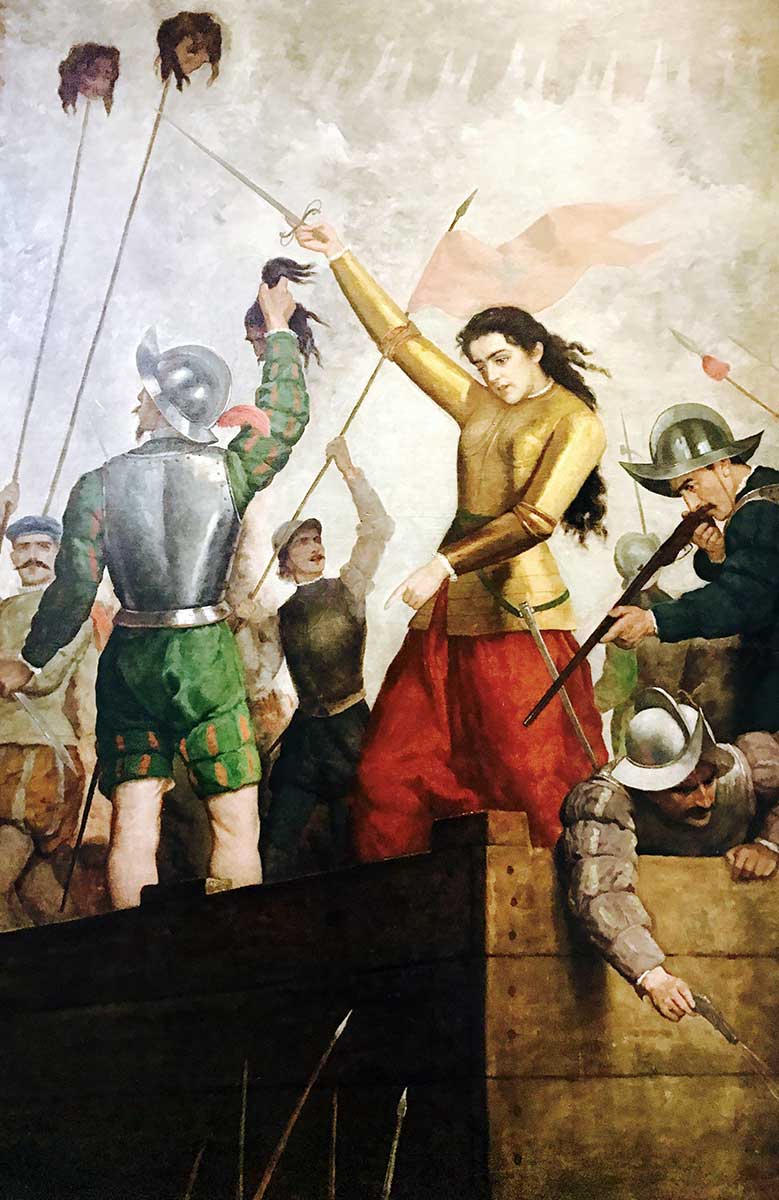
Though few women traveled to the “New World” on the earliest voyages of conquest, and those who did have largely been forgotten, Inés de Suárez beat the odds: the first European woman to set foot in present day Chile, she made it into the history books, though she remains largely unknown outside the country she helped found.
Suárez was born in 1507, though little of her early life is known. She married an adventurer who left soon after for the Americas and in approximately 1537 she went after him. Discovering that he had died, she decided to settle in the New World and was granted an encomienda in Cusco as the widow of a Spanish soldier.
During this period, she began an affair with another conquistador and joined his expedition to Chile, the only woman. In addition to acting as nurse and cook for the men, ferreting out conspiracies against their leader and even finding water to sustain the expedition in the desert, Suárez took an active role in fighting off an attack on Santiago by the Mapuche. Although later scholars questioned the veracity of this story, as it appears in none of Santiago’s official records, according to witnesses, she personally killed the Indigenous chieftains the Spanish were holding hostage, tossing their heads over the wall to scare off the attackers.
After her affair with the married conquistador came to an end, she embarked on a second marriage with still another conquistador, Rodrigo de Quiroga, who would go on to become Chile’s second governor. She remained in Chile for the rest of her life, dedicating herself to religious pursuits and outliving all the conquistadors she traveled with. Famed Chilean author Isabel Allende recounted a fictionalized version of Inés de Suárez’s life in her novel Inés del alma mía (Inés of My Soul).
Pedro de Valdivia: First Governor of Chile
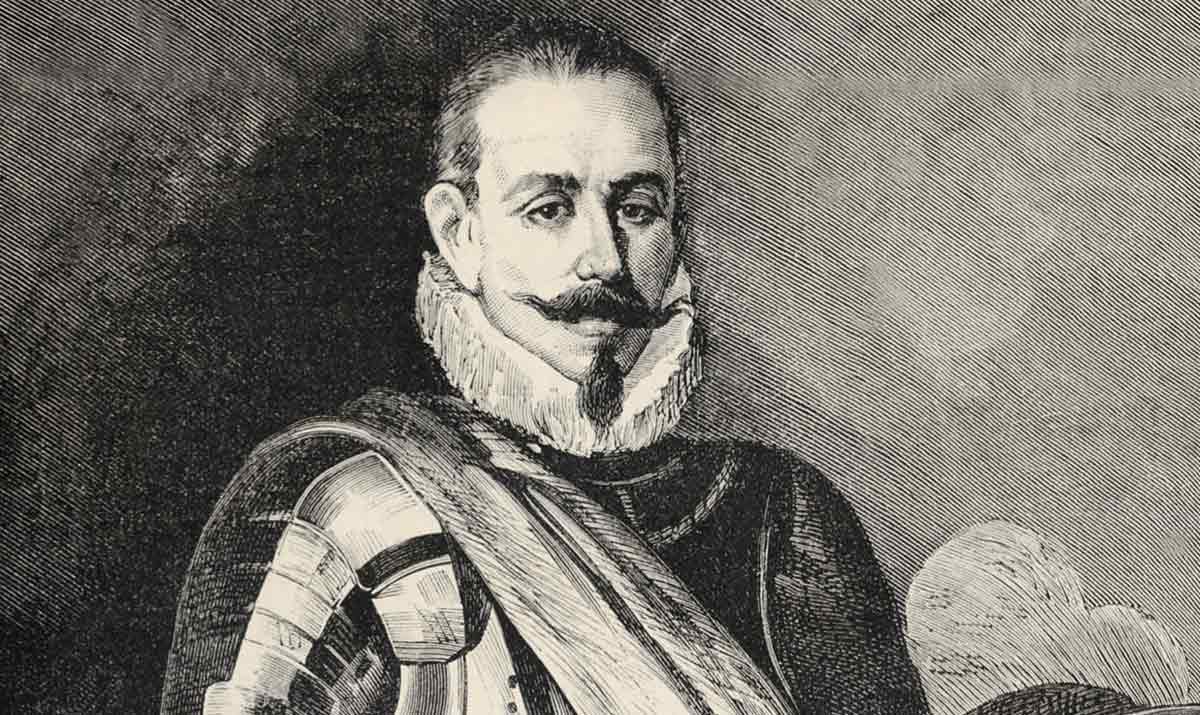
Inés de Suárez’s famed paramour was none other than Pedro de Valdivia, conqueror of Mapuche territory and Chile’s first governor. Born into a prominent family in Extremadura in 1500, Valdivia began his military career at age 20, fighting in Italy and achieving the rank of captain before traveling to the Americas. Beginning with expeditions in Venezuela and Santo Domingo, by 1536 he had traveled to Peru, where he became Francisco Pizarro’s righthand man.
In 1540, Pizarro granted Valdivia’s request to explore and conquer present-day Chile and appointed him Lieutenant Governor of these new lands. Setting out with his men and Inés de Suárez, and facing numerous challenges along the way, most notably his partner, Pedro Sánchez de la Hoz, trying to murder him, Valdivia crossed the Atacama desert. After 11 months, the expedition finally reached the fertile Mapocho river valley, where the new capital Santiago de la Nueva Extremadura was established.
Though initially Valdivia’s expedition tried to maintain cordial relations with the region’s Indigenous inhabitants, previous explorers had already mistreated these populations, which remained suspicious of the Spaniards and launched frequent attacks to retain their land. Though Inés de Suárez reportedly repelled one such attack on the capital, it was not before the town itself was largely destroyed. The Spaniards, in turn, continued marching southward to conquer additional lands and to enslave Indigenous peoples to work the mines under the encomienda system.
In the midst of this conquering and colonizing, Valdivia was accused and brought to trial for a number of charges, including public immorality for his affair with Suárez. In exchange for being released and finally awarded the long-sought-after title of governor, he agreed to end the affair and bring his real wife to Chile. She didn’t arrive until after the conquistador’s death. The Spanish continued to battle the Mapuche in southern Chile and Valdivia was killed in the 1553 uprising, the Arauco War.
Pedro de Alvarado: Brutal Conquistador of Central America
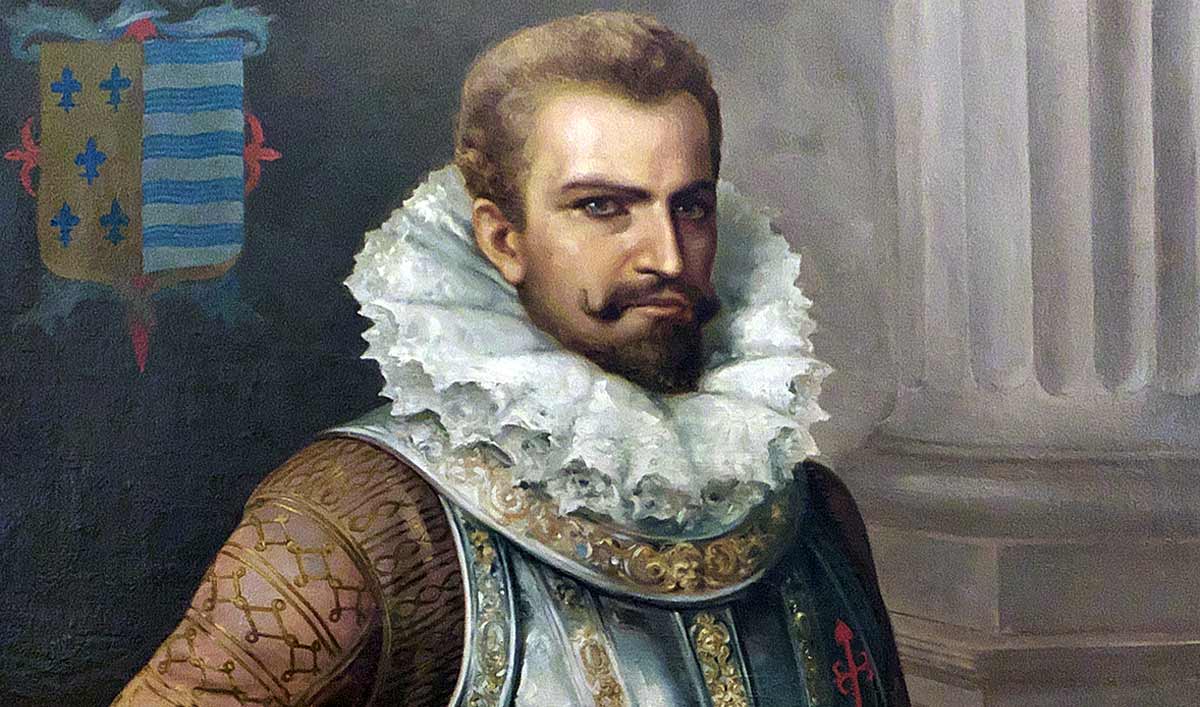
Lists of the most infamous conquistadors, noted for their brutality, are usually topped by Cortés and Pizarro, but Pedro de Alvarado is usually found high on such lists as well. Born around 1485 in Extremadura, he traveled to the Americas in his early 20s and became friends with Cortés on Hispaniola. Before his reputation for cruelty began to grow, the most notable thing about him was his appearance: blond haired and blue eyed, he stood out among both the Spanish and the Indigenous.
Alvarado joined Cortés for the conquest of the Aztec Empire and gained infamy for his unprovoked attack on unarmed nobility and priests celebrating the Feast of Toxcatl. The ill-conceived attack ultimately led the Aztecs to force the Spanish out of Tenochtitlan, nearly annihilating Spanish forces on the Noche Triste.
Despite his hasty attack nearly costing the Spanish Tenochtitlan, Cortés still chose Alvarado to lead the conquest of what is today Central America. Accompanied by hundreds of men, horses, and Indigenous allies, he first conquered the K’iche, then allied with the Kaqchikel to defeat smaller cultures in the region before turning on them as well. Not content with betraying his Indigenous allies, Alvarado managed to turn Cortés against him as well. After promising to marry Cortés’s cousin, he broke his word and married a woman with better connections to the royal court, effectively ending his friendship with Cortés.
Though he was named governor of Guatemala and later Honduras, Alvarado had little interest in or skill for governing and continued his life of adventure and conquest until being crushed to death by a horse during a battle in Mexico in 1541.
Juan Garrido: The African Conquistador
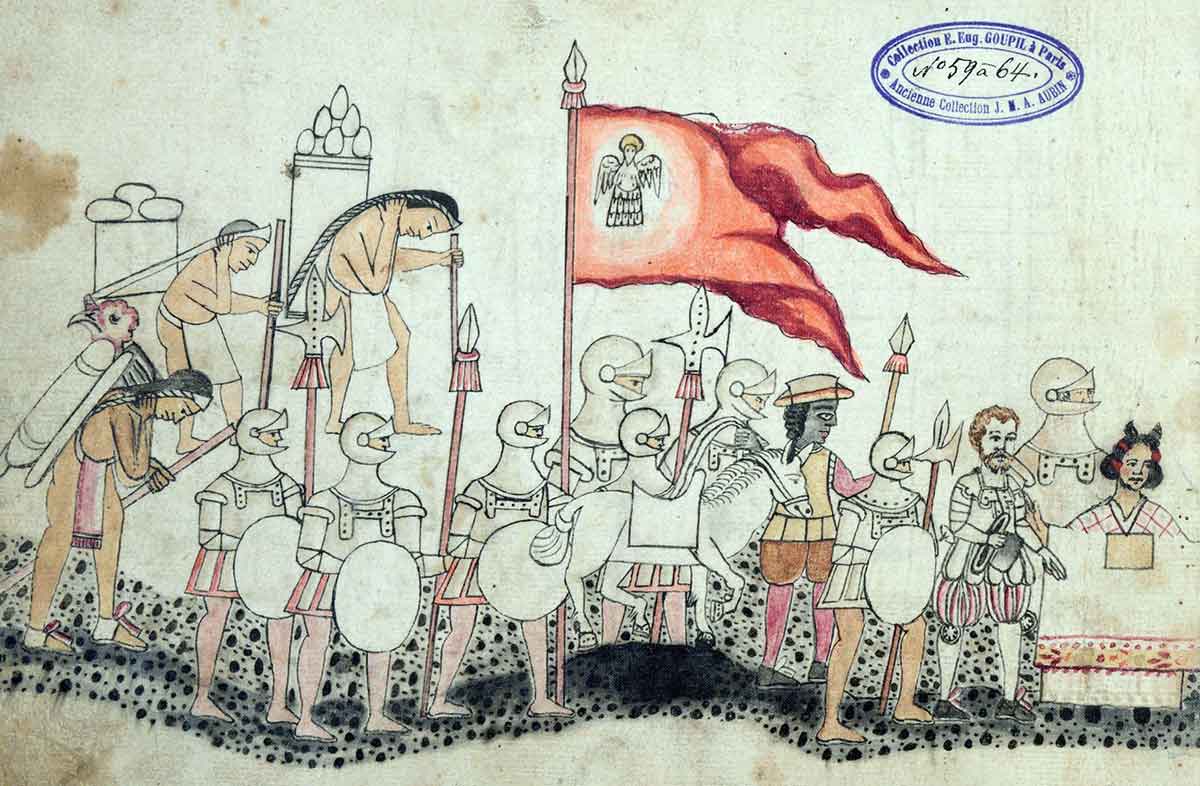
By the early 16th century, the Spanish were already importing African slaves to the “New World” to work in mines and on encomiendas, and many enslaved Africans and Black servants fought along their conquistador masters, particularly after 1510. Juan Garrido’s history had a slightly different trajectory from other Africans who found themselves in the Spanish colonies. Garrido, arguably the most well-known Black conquistador, who took part in several significant expeditions, was a free man, though whether he was born free or was at some point enslaved and then freed is unclear. Historian Matthew Restall argues that Garrido, born in the 1480s in West Africa, was likely sold into slavery in Portugal and later gained his freedom, either while still in Europe or while serving a Spanish conquistador named Pedro Garrido in the Caribbean.
By 1503 Garrido was on his way to the West Indies with the Spanish, one of the earliest known African conquistadors. After first landing in Hispaniola, he later joined Juan Ponce de Leon’s expeditions, fighting the Indigenous in Puerto Rico and Cuba and “discovering” Florida. By 1519 he found himself a part of Hernan Cortés’s expedition into what is today central Mexico. Garrido participated in the siege of Tenochtitlan and built a chapel to commemorate Spanish losses after the Noche Triste; today the Church of San Hipólito on Mexico City’s Paseo de la Reforma occupies the same site.
Garrido remained in Mexico for the rest of his life. He was granted a plot of land and claimed in a letter to the king to be the first settler to try growing wheat in the “New World.” He also participated in several additional expeditions in the region and served in various roles in Mexico City, including doorman and town crier. He died there in the late 1540s, leaving behind a wife and children.