The appearance of stone tools in the archaeological record is often treated as the moment “we” arrived. They offer a clear boundary between “clever humans” and the animals around us. But what if that assumption is wrong? A recent archaeological find at Lomekwi in Kenya suggests that the first stone tools weren’t made by humans at all, but by small-brained, long-extinct hominins who lived more than three million years ago. Who exactly were these mysterious toolmakers, and how does the discovery of their creations change the story of our evolution?
The Discovery That Changed Everything
It is July 2011, near the western shore of Lake Turkana in Kenya. An old SUV is bumping along a dusty road. Archaeologist Sonia Harmand is driving, while her husband, paleontologist Jason Lewis, is serving as navigator in the passenger seat. With their two colleagues in the back, they are on a field expedition to look for ancient stone tools.
So far, they haven’t found much, but they are now on their way to a potential new dig site that, rumour has it, might contain some of the world’s oldest stone tools.
However, before they can get there, Lewis, who has been struggling with the confusing paper map of the area, accidentally tells Harmand to take a wrong turn, and she ends up driving the SUV onto a dry riverbed.
But Lewis’ mistake turns out to be a stroke of luck when Harmand notices the interesting stratigraphy around them and decides to hop out and look around.

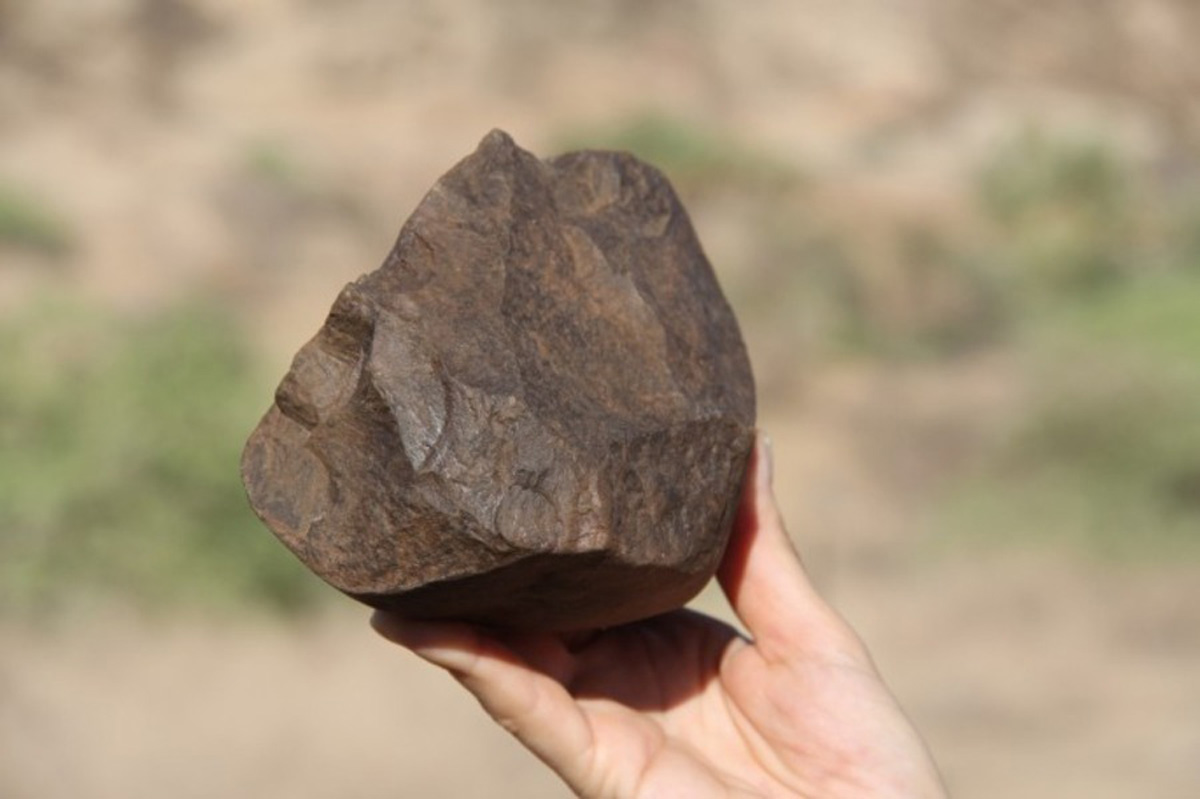
The team spent several hours combing the old riverbed, a site now called Lomekwi 3, and eventually found a series of strange stones protruding out of the sediment. Each one of these pieces of stone has marks cut into it, which Harmand knows are clear signs that they had been knapped. In other words, these were not just funny-shaped rocks; they had been deliberately shaped by humans. They were stone tools.
Subsequent excavations unearthed 149 stone artifacts. This is an unexpectedly large number, considering Harmand and the team stumbled across Lomekwi 3 entirely by accident.
But the sheer quantity of tools wasn’t the only surprising thing Lomekwi had in store. Dating of the minerals and sediments suggested that the tools were at least 3.3 million years old. Before this, the oldest known stone tools on record belonged to the Oldowan industry, which began to appear in the archaeological record around 2.9 million years ago
So, Lomekwi 3 might have been an accidental discovery, but that wrong turn resulted in one of the most important stone tool discoveries ever made.
A Shift In Perspective

For decades, paleoanthropologists believed that toolmaking was a defining feature of the genus Homo, to which we belong. After all, the name of the earliest member of our genus is Homo habilis, which literally means “handy man.”
It’s a not-so-subtle nod to the assumption that this species was the first to purposefully craft and use tools. If that were true, technology and the genus Homo would have evolved together, mirroring each other’s rise.
Before we knew about the Lomekwian tools, the oldest stone tools on record were indeed made by Homo habilis. At least, that’s our best guess of who made them. Without access to a time machine, it’s impossible to know for sure.
These tools are known today as the Oldowan Industry. They are found in East Africa and date to around 2.6 to 1.7 million years ago, coinciding with the time and location of Homo habilis.
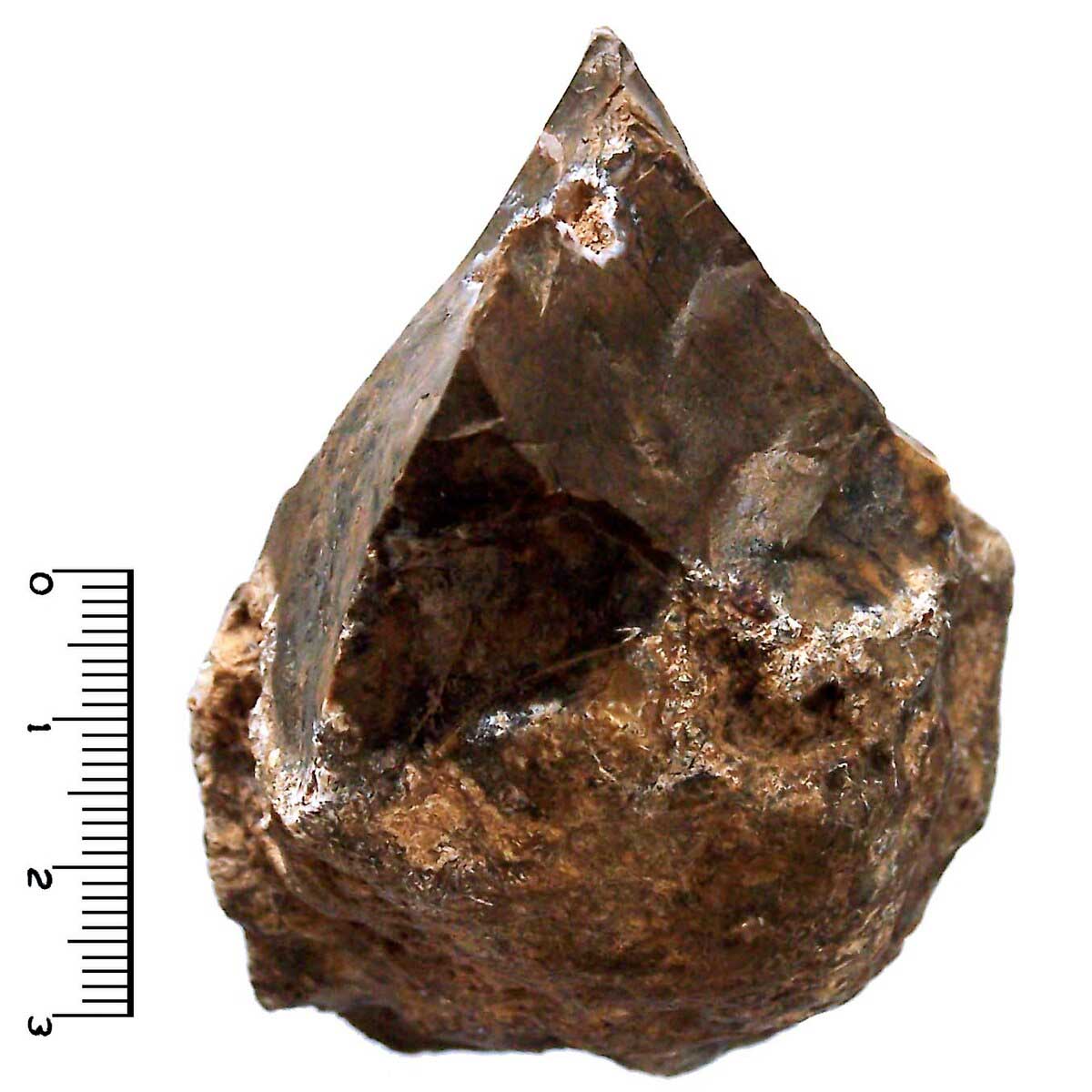
H. habilis was, in many ways, the first hominin to look recognizably human in both its body and behavior. It had a larger brain, a rounder skull, and a less ape-like face. Its hands and wrists also show features consistent with a strong precision grip and skilled manipulation, making it likely better suited than its predecessors to hold, control, and systematically shape stone tools.
At the same time, its teeth and jaws were somewhat reduced relative to its more robust ancestors, suggesting a diet in which cutting, pounding, and processing food with tools may have started to matter more than simply having massive chewing and biting hardware.
It makes sense, then, that H. habilis made some of the earliest stone tools. But now we know that it was another species, one that existed many hundreds of thousands of years before Homo, that created the true oldest stone tools ever found.
At 3.3 million years old, the Lomekwian tools predate the existence of Homo habilis by nearly a million years. Whoever made them was not one of “us,” at least not yet. This forces us to consider an intriguing question: If it wasn’t Homo habilis who made the first stone tools, who was it?
A Closer Look At the Tools
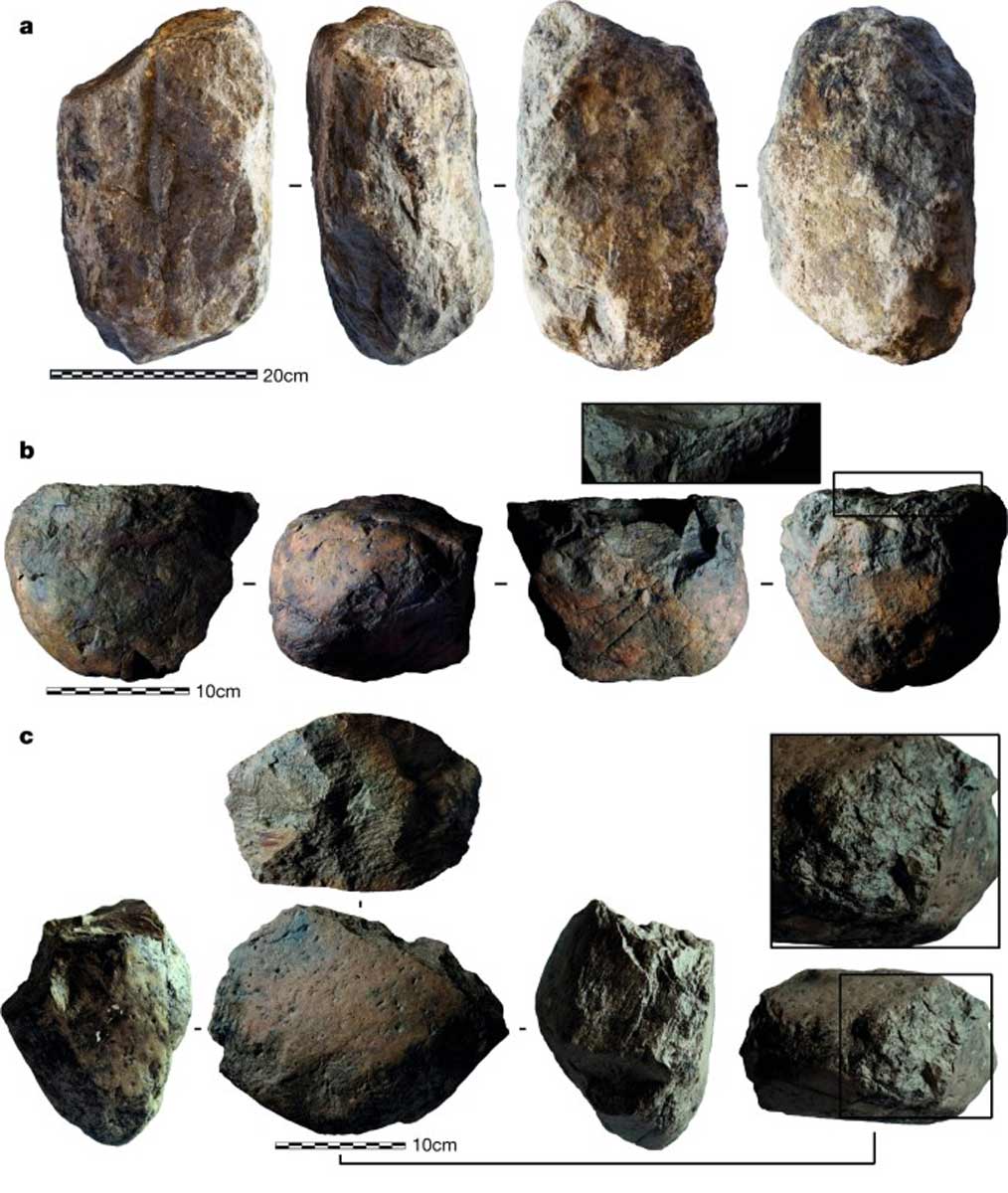
Before we consider the evidence for who actually made the Lomekwian tools, we need to understand a few things about the tools themselves. Namely, what did they look like and what were they used for?
Compared to tools from the later Oldowan industry, the tools found at Lomekwi 3 might appear somewhat primitive. Most are very large, with some weighing several pounds. Harmand and Lewis’ team classified them into three main types: cores, flakes, and percussors.
Cores are the parent stones from which the flakes are struck. They tend to be big pieces of stone with only a few flake scars, rather than the intensive reshaping you would see in later stone tool industries.
Lomekwian tool makers likely placed the core on the ground or another stable surface, then hit it with another stone to detach large pieces. This is called “passive hammering,” and it would have created a sharp edge.
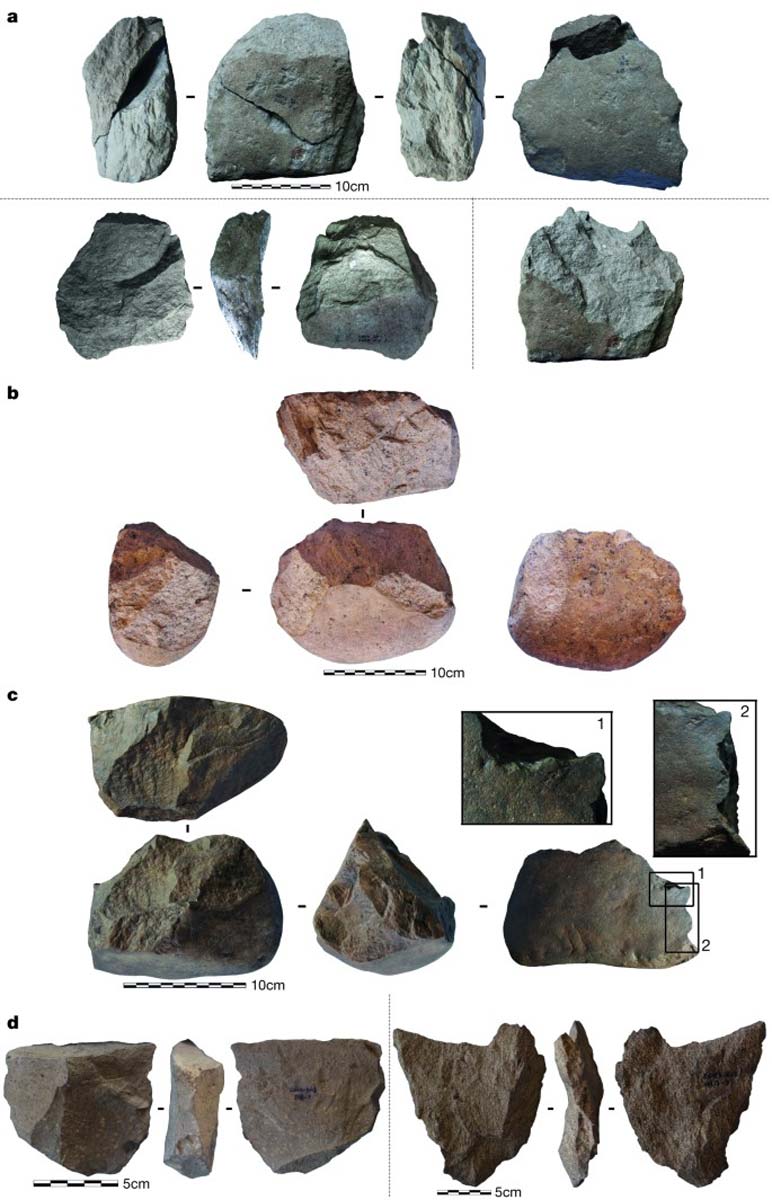
From here, the core itself could have become a tool used for heavy-duty activities like pounding and smashing. In other cases, when the toolmaker wanted a more precise cutting tool, they would use a stone flake removed from the core. Even when crudely produced, a fresh flake has at least one razor-like edge that can cut meat, scrape tissue from bone, slice plant stems, or open tough skins and tubers.
Lomekwian flakes are large and come in irregular shapes with thick cross-sections. This suggests that they were less standardised than later stone tool industries. The makers of the Lomekwian tools were probably focused solely on functionality, rather than concerning themselves with symmetry or aesthetics like later toolmaking humans. If a stone flake could be used to cut something, it was probably good enough for them.
So, what did the toolmakers use to hit the stone cores and remove the flakes? That’s where percussors come in. These are dense cobbles that fit comfortably in the hand. We can see evidence of battering damage on them, clear evidence that they were used as hammerstones or other things, like cracking open nuts.
What Were the Tools Used For?

Direct evidence of what the Lomekwian tools were used for is hard to come by, but experimental archaeology provides some useful hints. By making replicas of the Lomekwian tools, archaeologists have been able to prove that they can easily cut through plant material, crack open nuts, and even smash open bones to get at the marrow inside.
In an ecosystem rich in both vegetation and opportunities for hunting and scavenging, such abilities would have offered tool-wielding hominins an impressive survival advantage.
Interestingly, the marks on the Lomekwian tools suggest that their makers understood that specific angles of impact produced predictable results. This hints at the presence of something researchers call “operational intelligence” in the brains of whoever made the tools.
To create a tool, even a very simple one, the toolmaker needs to keep their goal in mind, whether that be something along the lines of “I want a sharp edge” or “I want something that can crack open this nut.”
That goal then has to be broken into steps: choose a suitable stone, place it on a stable surface, strike it from the right direction, and adjust the force of each blow. It might sound simple to us, considering just how many incredibly complex tools we use in our daily lives, but the Lomekwian tool users still needed to make use of plans, feedback, and a basic sense that actions in the present could shape materials for use in the near future.
This is why the Lomekwian tools are so important. They are not just broken rocks; they are physical traces of ancient minds at work. Whoever made them understood how to harness cause and effect in the material world, and how to turn raw stone into something new and useful.
Once we recognize that, we can see that these tools imply that the hominins who made them must have been more similar to us, modern humans, in the way their brains worked than their more primitive ancestors.
Now we finally come to the question of who exactly these pioneering toolmakers were. Which species of hominin, more than three million years ago, could have created the oldest stone tools ever found?
Who Were the Toolmakers?

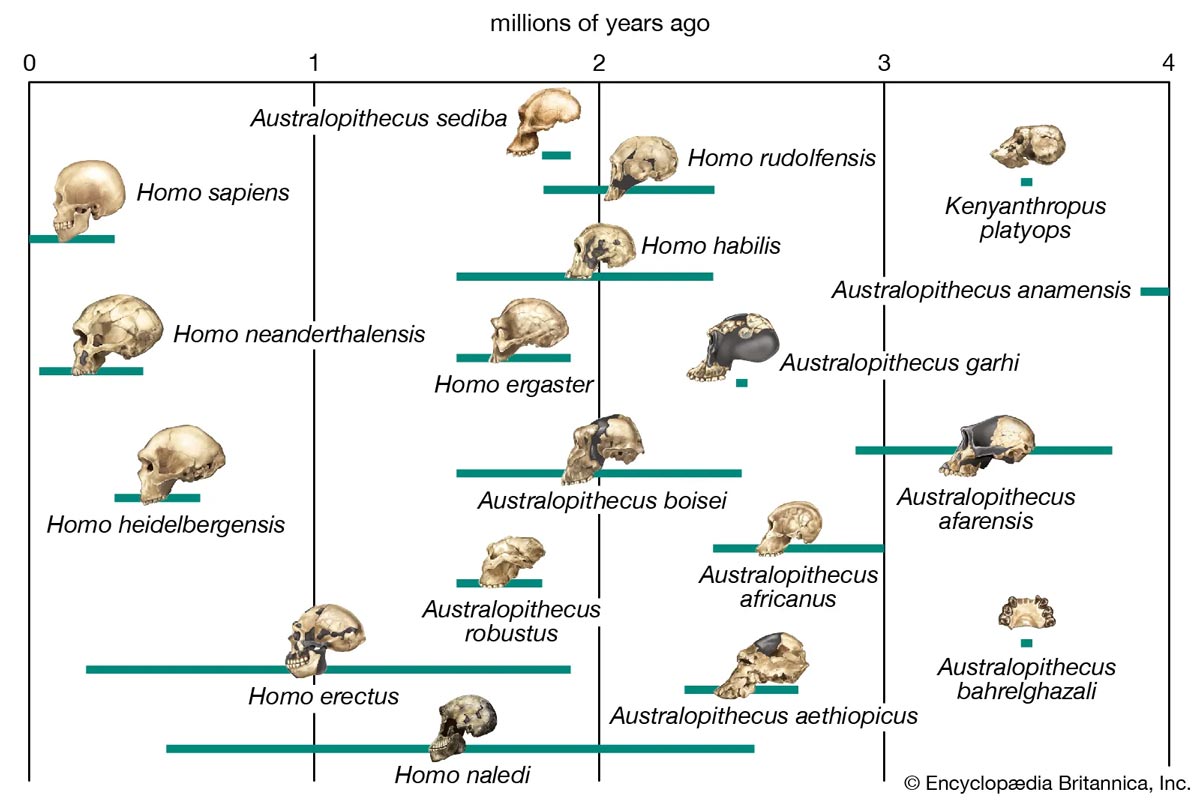
Lomekwi 3 is located in Kenya, East Africa. This part of the world is a melting pot of different hominin, or ancient human, fossils. In Kenya, 3.3 million years ago, you would have found Kenyanthropus platyops, a little-known species whose evolutionary relationships with other hominins are still up for debate.
Meanwhile, to the north and south, in what is now Ethiopia and Tanzania, scientists have uncovered the fossils of a more famous species: Australopithecus afarensis, best represented by Lucy, a remarkably complete fossil skeleton from around 3.2 million years ago.
Lucy’s species, A. afarensis, has not yet been found in Kenya, but its existence in neighboring East African countries suggests that A. afarensis populations were fairly widespread around the region. Perhaps it’s only a matter of time before they are found in Kenya, too.
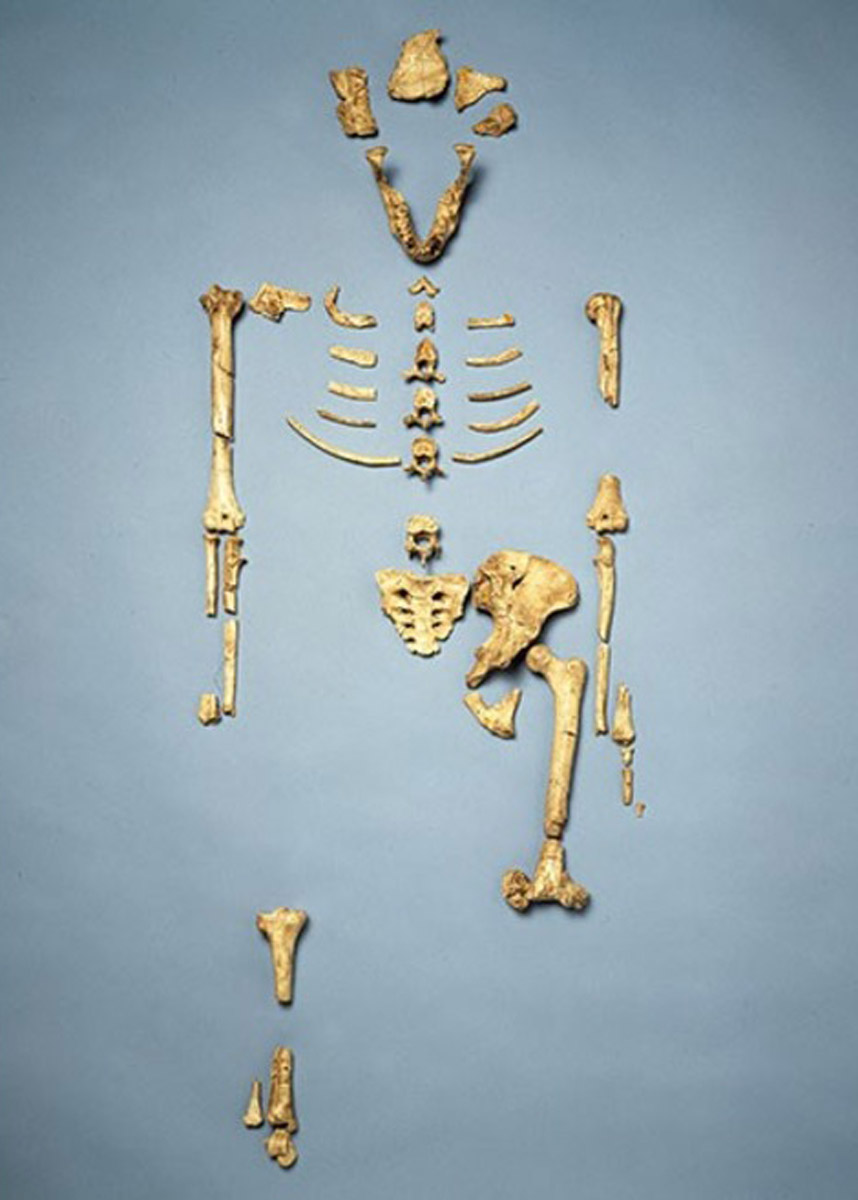
That gives us a prime candidate for who made the Lomekwian tools. But there were plenty of other hominins living on the African continent around 3 million years ago, and that broader context matters when we try to imagine who our toolmakers might have been.
Also present in East Africa, for example, was Paranthropus aethiopicus. This species is usually dated to around 2.7 to 2.5 million years ago, which makes it a little too young for the Lomekwian tools, but that does not necessarily rule it out completely as a candidate.
Our picture of this species is based on only a handful of fossils, so we have almost no idea how far back in time its lineage really stretches. It’s a bit of a long shot, but it’s entirely possible that P. aethiopicus, or an earlier, closely related species, was already present in East Africa when the Lomekwian tools were being made.
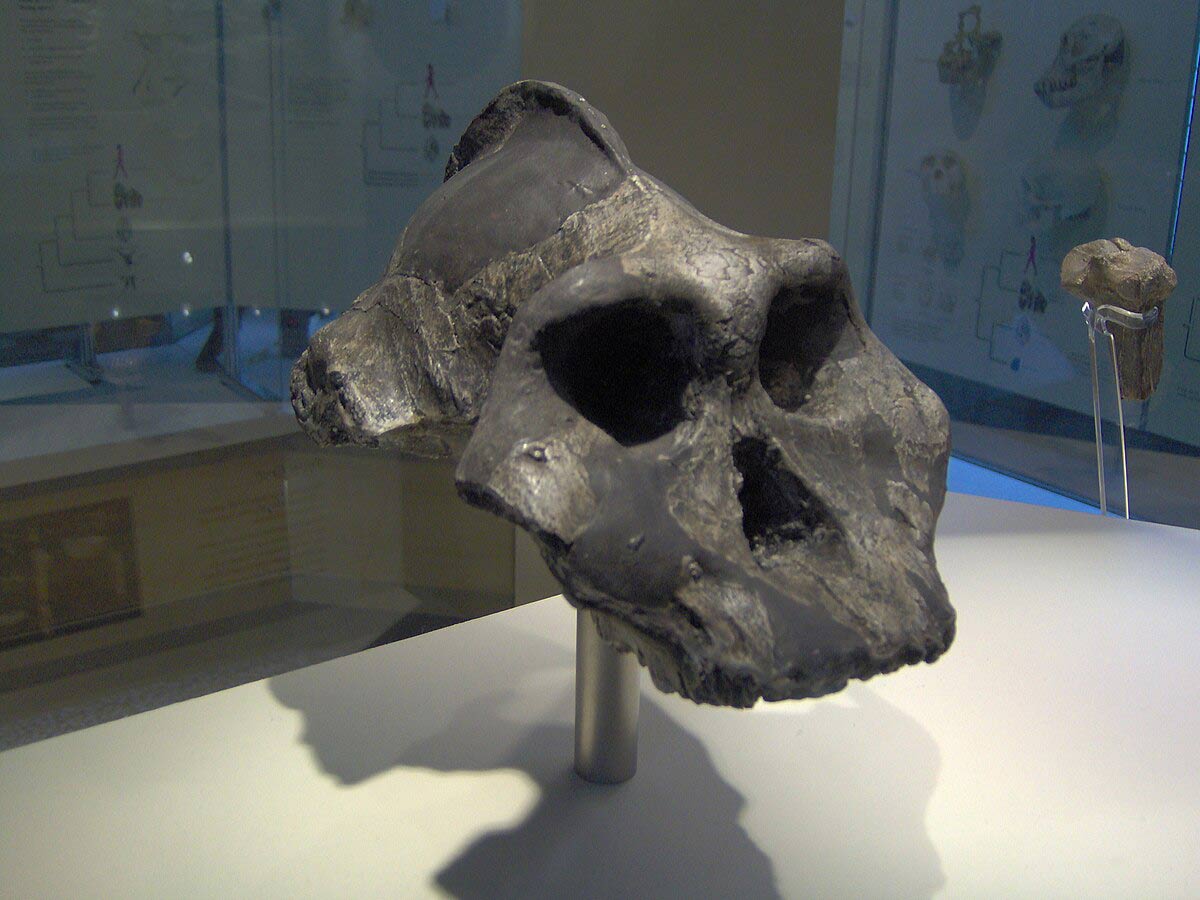
If that were the case, then species like Paranthropus cannot be excluded as potential toolmakers, even if most researchers don’t consider them prime candidates.
The safest bet is that the Lomekwian tools were made by an Australopith, rather than Paranthropus. Around 3.3 million years ago, A. afarensis and Kenyanthropus platyops fit both the time and the general geography, and both show signs of habitual bipedalism and fairly human-like hands. In other words, they had bodies that could plausibly wield and control heavy stone hammers.
However, many paleoanthropologists are cautious about pinning the tools on any single named species. The fossil record from the time of the Lomekwian is patchy, and new finds have a habit of complicating previously tidy explanations. There may well have been additional, as-yet-unknown hominin species in the region at that time, sharing the landscape with Kenyanthropus and Australopithecus and leaving behind only tiny fragments of their lives that have yet to be discovered.
For now, the most honest answer is that the Lomekwian toolmakers were almost certainly not members of Homo, but some kind of australopith-like hominin living in East Africa around 3.3 million years ago. They probably walked upright, had hands capable of a firm precision grip, and possessed enough “operational intelligence” to understand that hitting one stone with another could create a new kind of edge.
The exact species of the toolmakers might remain unknown for years, but the Lomekwian industry tells us something far more important: the origins of technology run deeper in our family tree than the genus Homo itself.
Embracing the Unknown
Uncertainties are the norm in researching human evolution. Almost everything we know about our distant ancestors and evolutionary relatives comes from a scattering of teeth, fragmented bones, and bits of stone that were preserved by chance.
Whole species can rise, thrive, and vanish without leaving more than a few bits and pieces for us to find. That means that the list of hominins we work with today is almost certainly incomplete, and the ages of each species and their place in the human evolutionary tree are best guesses based on the evidence we happen to have.
The Lomekwian sits right in the middle of this foggy zone, and reminds us that a neat timeline is pretty much impossible in human evolution. But that’s all part of why studying the past is so interesting. It’s full of intriguing gaps, unknowns, and possibilities just waiting to be uncovered.