The Minoans were a rich and relatively advanced sea-faring nation who primarily lived on Bronze Age Crete. They had colonies on several of the Aegean Islands and even parts of the continent, such as in Anatolia. Their apparently sudden and mysterious disappearance has been the source of debate for many decades. One popular theory connects their downfall to the eruption of the volcano on Thera, also known as Santorini. This supposedly weakened the Minoans so much that the Mycenaean Greeks attacked and conquered them. What does the evidence really show?
Why Is the Minoan Disappearance a Mystery?
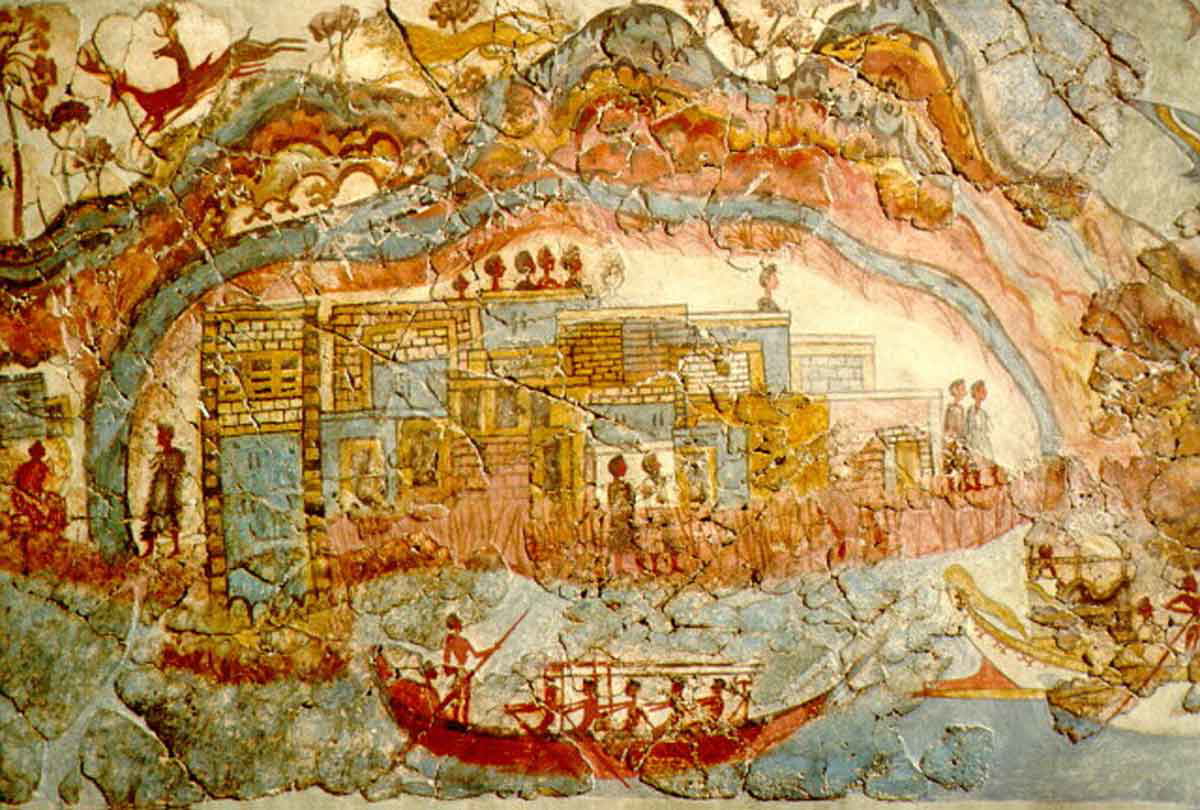
Why are historians fascinated about the disappearance of the Minoans? Aside from being a rich and advanced civilization, they were spread out over a substantial area, inhabiting Crete, several other islands, and parts of the nearby mainland. Yet, by the end of the Late Bronze Age (c. 1550-1150 BCE), they all but disappeared from history.
All across the island of Crete, in c. 1450 BCE, important settlements were destroyed. Did a major civil war occur, causing the collapse of their society? Or, rather, did they get invaded by an outside nation, such as the Mycenaean Greeks? If so, what led to this invasion and subjugation of the Minoans? These questions have confounded archaeologists ever since they first came to appreciate the existence of the Bronze Age Minoan civilization.
The Minoan Eruption
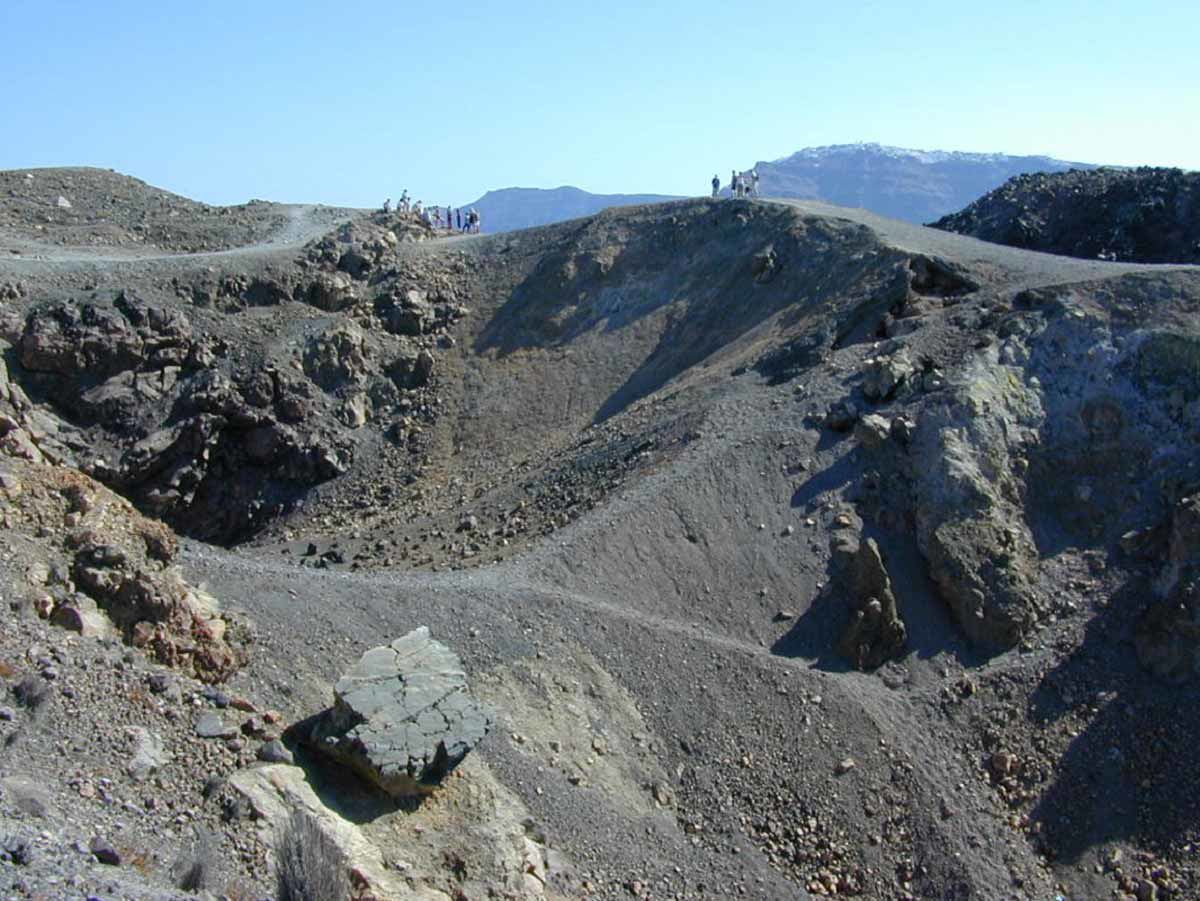
During the 1960s, investigations on and around the island of Santorini helped to reveal the true scale of what is known as the Minoan eruption. This eruption brought a cataclysmic end to the Minoan settlement on that island. It is now recognized as one of the largest volcanic eruptions in recorded history. It was initially dated to approximately 1500 BCE, which nearly corresponds to the time in which the Mycenaeans appear to have invaded Greece.
This very quickly led to the theory that the Minoan eruption is what caused the downfall and disappearance of the broader Minoans civilization. Logically, a massive volcanic eruption on an island in the Aegean Sea would have caused massive tsunamis. Research has shown that a tsunami did indeed strike the northern coast of Crete. This, according to the theory, must have significantly weakened, even crippled, the home of the Minoans. The Mycenaeans then evidently took advantage of that, using it as an opportunity to invade and conquer the island of Crete.
Problems With the Eruption Theory
One of the major problems with this explanation is that it ostensibly relies on the Minoan eruption being closely followed by the Mycenaean conquest of Greece. The latter, if we accept that such an attack really did occur, is firmly dated to c. 1450 BCE on the basis of the destruction layers found on Crete. On the other hand, the Minoan eruption has been dated to the 17th century BCE by many modern studies, primarily those using ice core dating techniques. These techniques involve examining ice core samples from the Bronze Age and looking for traces of a major volcanic eruption in the general era. This enables scientists to more precisely pinpoint the date of the Minoan eruption.
This suggests that there was an enormous length of time between the Minoan eruption and the Mycenaean conquest of Crete. Hence, it would appear that the two events cannot have been connected. In other words, scientific evidence appeared to disprove this explanation for the disappearance of the Minoans.
When Did the Minoan Eruption Occur?
However, despite the accepted 17th century BCE date for the Minoan eruption continuing to be popular, it is not actually supported by the most recent studies. As a matter of fact, the most recent studies place the eruption decidedly within the 16th century BCE. One of these studies by Şahoğlu et al (2021) places the eruption in 1565-1501 BCE with a probability of 76.1%. In a study from the following year, Manning placed it in 1609-1560 with a probability of 95.4%. Finally, Pearson et al (2023) placed it either between 1610-1510 or 1602-1502 BCE, with a probability of 95.4%.
Archaeological evidence, consistent with this, firmly associates the Minoan eruption with the very start of the New Kingdom of Egypt. This is generally dated by historians to c. 1550 BCE. Therefore, the weight of evidence firmly supports a 16th century BCE date for the Minoan eruption. Does this place the eruption close enough to the apparent Mycenaean conquest of the Minoans to potentially connect the two events?
Minoans vs Mycenaeans
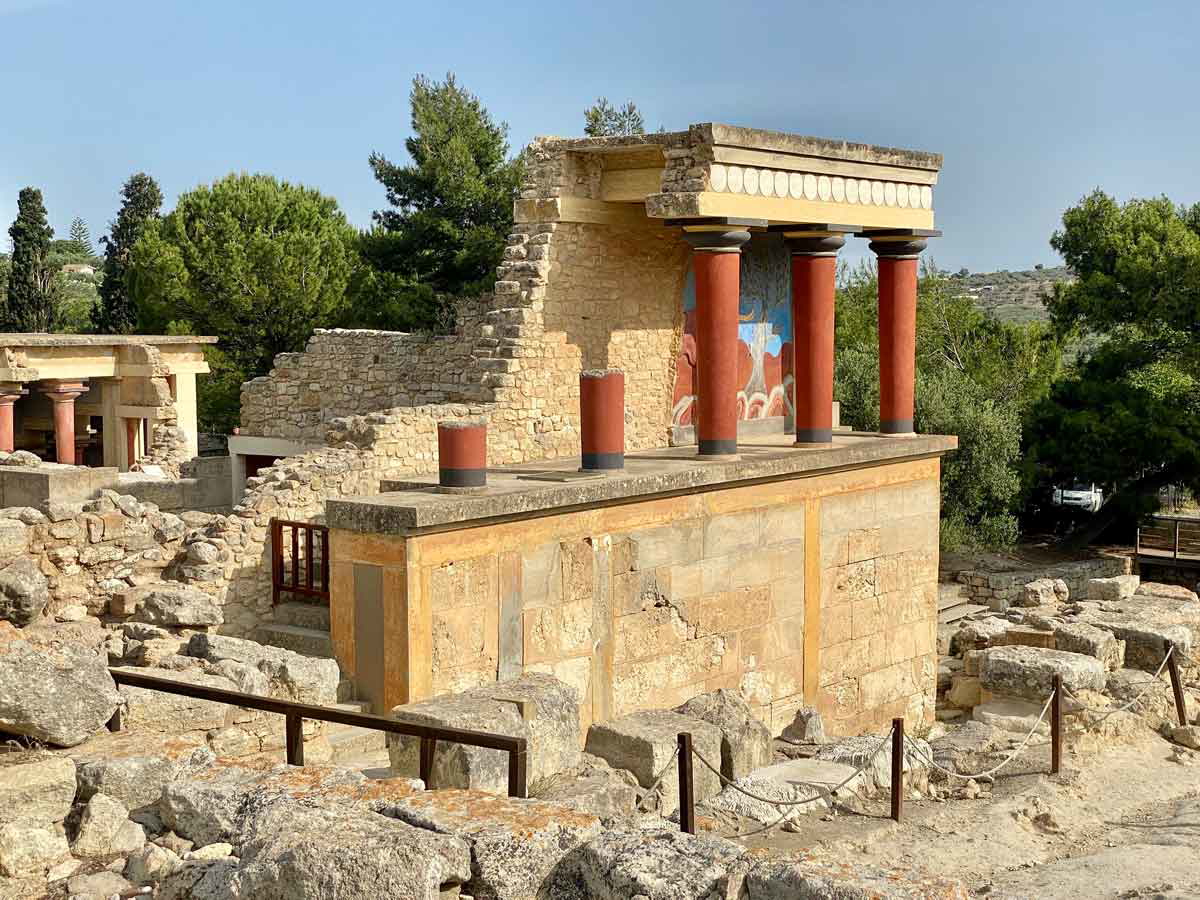
Although the more recent dating evidence definitely places the Minoan eruption in the 16th century BCE, this is still problematic for the issue of the disappearance of the Minoans. Even if we were to put the eruption right at the end of that century, that would still leave about 50 years between that event and the apparent Mycenaean invasion of Crete. Critics point out that this would be akin to saying that a natural disaster in 1950 could have led to the downfall of a nation in 2000.
When put like this, such a scenario does seem very unlikely. However, when analyzing the mysterious disappearance of the Minoans, we need to take into account all the facts. As it happens, archaeology shows that the destruction events on Crete in c. 1450 BCE did not happen suddenly. Rather, they appear to be the climax of a long sequence of events going right back to the beginning of the Late Bronze Age.
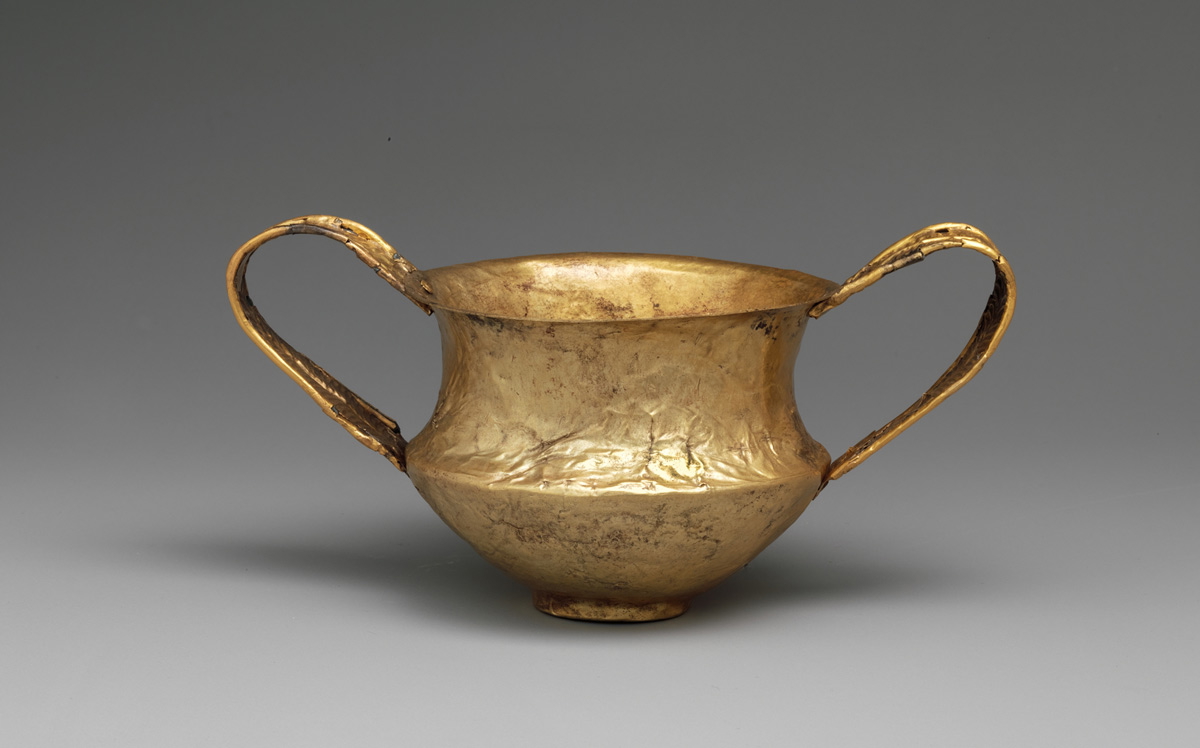
On an archaeological basis, the eruption of Thera came right at the start of the Late Bronze Age, assigned in a more localised chronology to the end of Late Minoan IA. This corresponds to the start of the New Kingdom of Egypt, marked by the accession of King Ahmose I. What archaeology also shows is that the Minoan settlement on Kythera, an island just next to southern Greece, was destroyed shortly after that, in Late Minoan IB. Unlike the destruction layers on Crete in c. 1450 BCE, this occurred very soon after the Minoan eruption. Purely on a geographical basis, the Mycenaean Greeks are the most obvious candidates for the attackers. Did the apparent Mycenaean attack against the Minoan settlement on their doorstep really have nothing to do with the devastating eruption and consequent tsunami that the Minoans had just faced? This seems unlikely.
After or at about the same time as the attack on Kythera, we find evidence that other Minoan settlements in the Aegean Sea began preparing for potential attacks. The settlements on Rhodes and Milos, for example, constructed defensive walls.
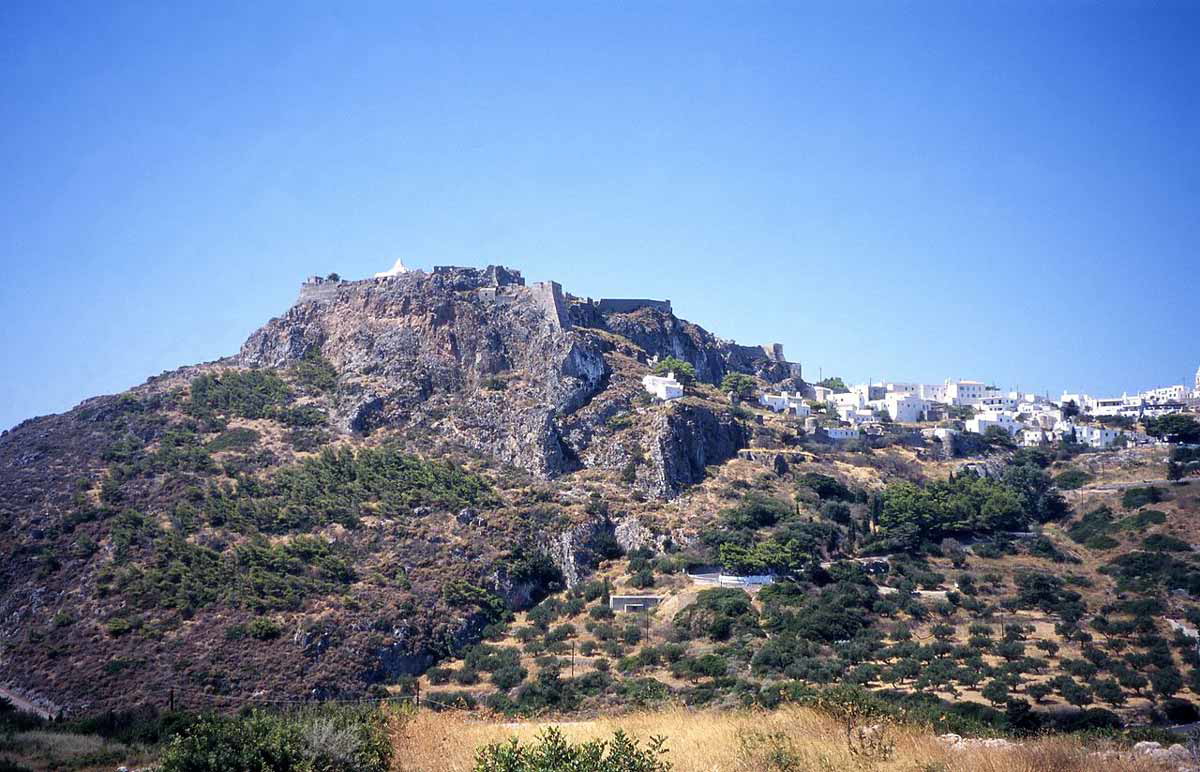
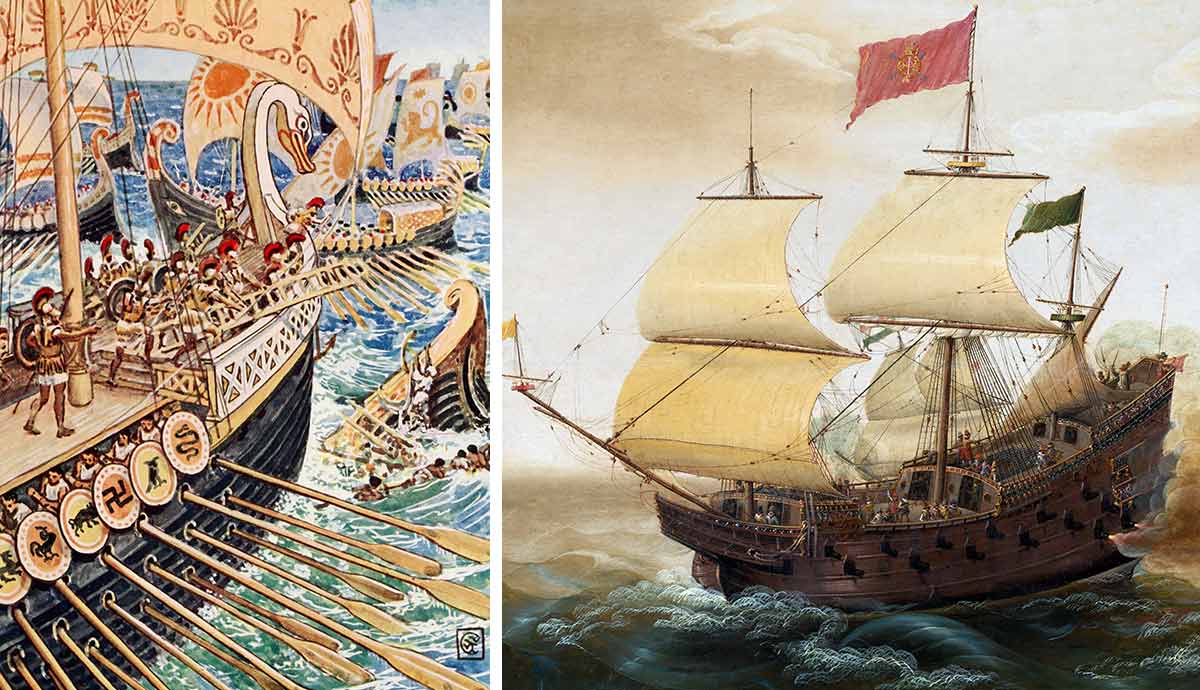
Over the course of the first part of the Late Bronze Age, we see a very clear trend among the Minoans. They engaged in construction projects that seemed specifically designed to prepare for war. As well as constructing defensive walls and towers at many of their settlements, they dug new wells and converted living areas into storage areas. What explains this sudden change in behavior? This evidence suggests that the Mycenaean Greeks did start to attack the Minoans immediately after the eruption of Thera. Evidently most of these attacks were at sea, hence why there is no direct archaeological evidence of most of them, the attack against Kythera being a rare exception.
The evidence from Minoan behavior strongly indicates that conflict became common with the Mycenaeans very soon after the Minoan eruption. Notably, the settlement of Kythera was attacked for a second time in c. 1450 BCE. This was the same time as when all the major administrative sites on Crete were destroyed.
Unravelling the Minoan Mystery
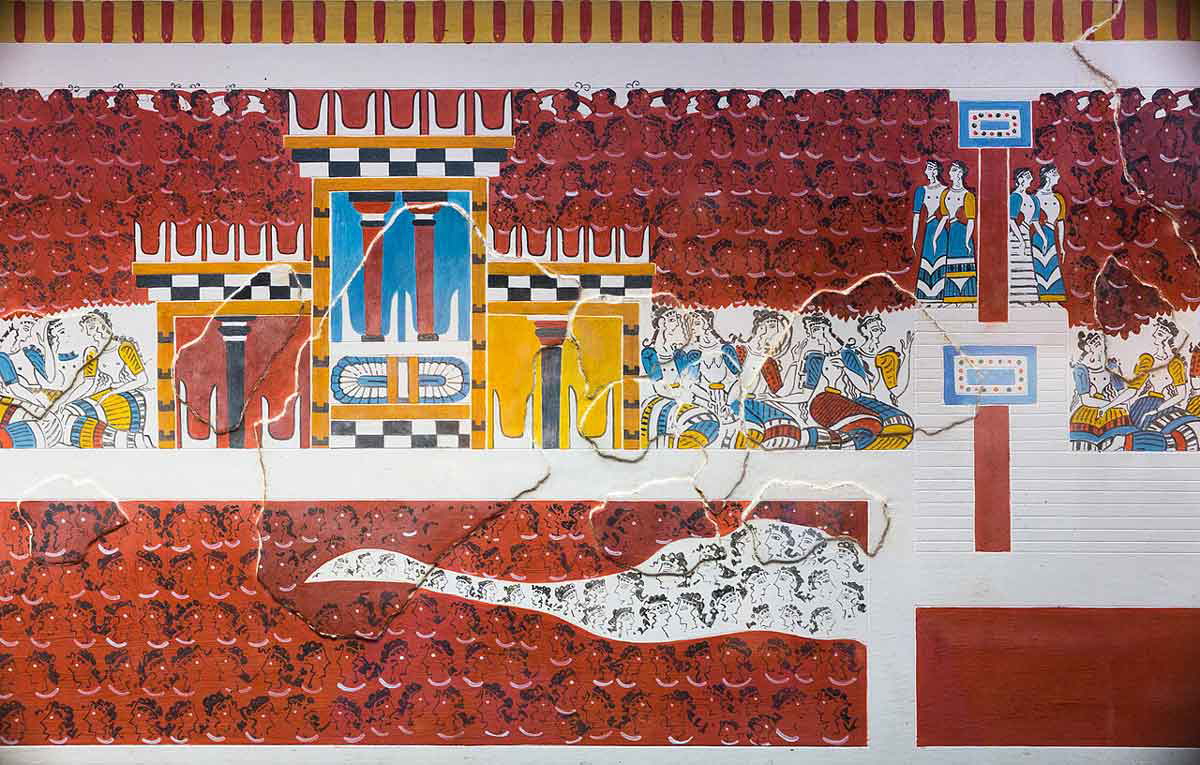
The evidence from archaeology strongly suggests that the Mycenaean Greeks really did invade and conquer Minoan Crete in c. 1450 BCE. This explains why all the major administrative centres on Crete were destroyed at that time. These destruction layers are immediately followed by the appearance of Linear B, the script of the Mycenean Greeks, on Crete, along with Mycenaean material culture. These events were the culmination of what appears to have been a trend of conflict shortly following the Minoan eruption. This theory is borne out by the evidence of the destruction of the Minoan settlement on Kythera soon after the Minoan eruption, accompanied by a sudden pivot towards warfare preparations across the Minoan world.
Everything indicates that the eruption of the island of Thera, which was certainly a 16th century BCE event, emboldened the Mycenaean Greeks to attack the Minoans. This ultimately led to the downfall and eventual disappearance of the Minoans when the Mycenaeans finally invaded and conquered Crete itself.