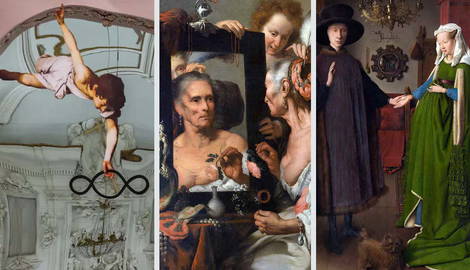
In human culture throughout centuries, mirrors, both natural and man-made, transformed from rare and precious objects into something ubiquitous and unsurprising. Still, a mirror retained its deep symbolism as a portal into other worlds or an instrument of obsessive self-reflection. Read on to learn more about the use of mirrors and reflections in art history from the Renaissance to contemporary art.
1. Jan van Eyck: The Most Famous Use of Mirrors in the History of Art
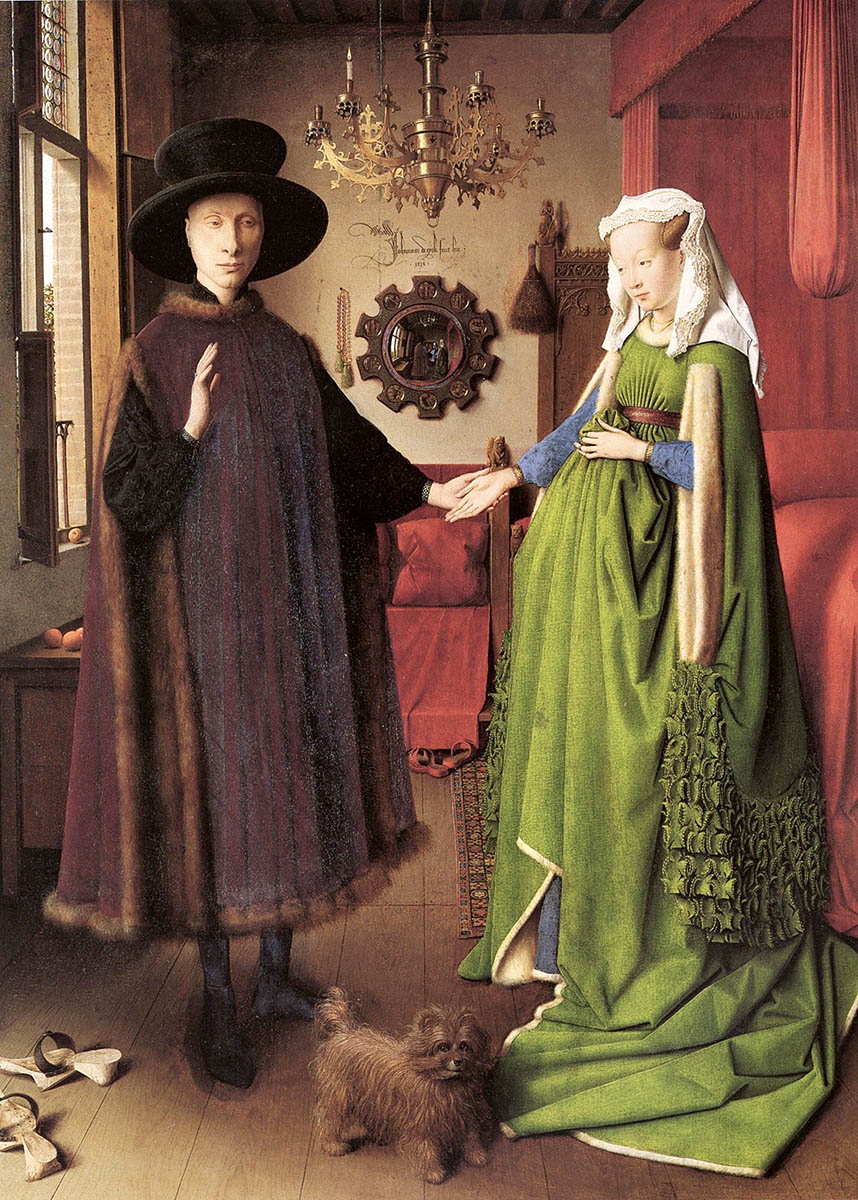
The famous Early Renaissance masterpiece by Jan van Eyck needs no introduction. It is familiar to many despite remaining one of the most mysterious works in art history, with many questions left unanswered. One of the most famous elements of the painting is a small mirror that hangs directly between the couple who are supposedly getting married. In the mirror, one could see a figure standing in front of the two. According to some art historians, the figure in the mirror is a documented witness to the marriage vows and possibly, the artist himself. According to the norms of van Eyck’s time, marriages could be arranged outside the church in the form of exchanged vows, but required witnesses to be considered legal.
2. Clara Peeters’ Hidden Self-Portraits
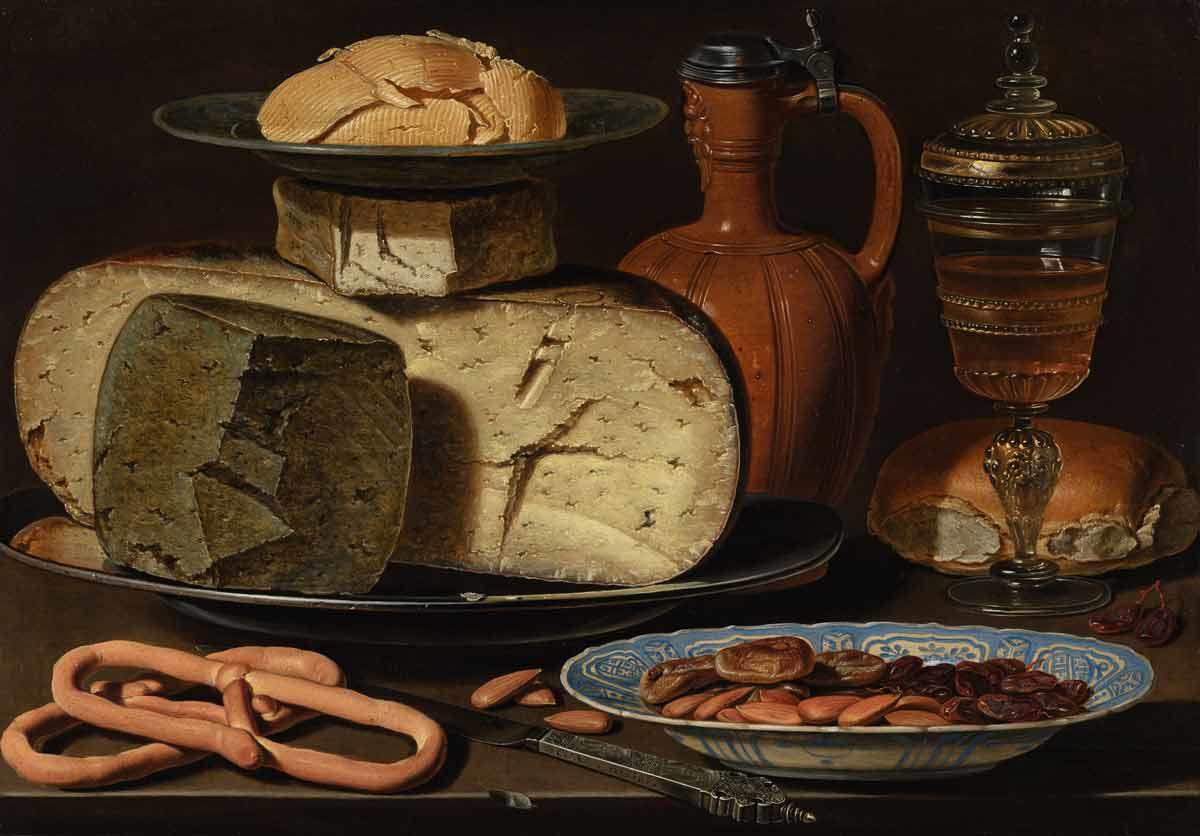
The life of the famous Flemish painter Clara Peeters is difficult to uncover. Despite being one of the most skilled and famous artists of her day and age, she almost faded into obscurity after the early 1620s. Some art historians suggest that Peeters, as was expected of a woman of her time, got married and abandoned her artistic career at the request of her husband. This, unfortunately, was not an uncommon practice for women who were only allowed to create art in their parents’ households.
Although the public consensus did not generally approve of women painting professionally, still life painting, with its homely connotations, was seen as a rare, tolerable option for them. Apart from the unique realism and expressive qualities of her works, Clara Peeters’ still lifes had a unique feature that was rarely noticed at first glance. Many of her compositions included a tiny self-portrait: a reflection in a table knife or a metal lid of a water jug. Most likely, this was a conscious artistic effort that included the artist in the scene, proclaiming her status as a painter. Peeters’ hidden self-portraits are unconventional because most Northern still life paintings did not feature humans directly, though they strongly suggested human presence behind the scenes.
3. Vanitas Paintings
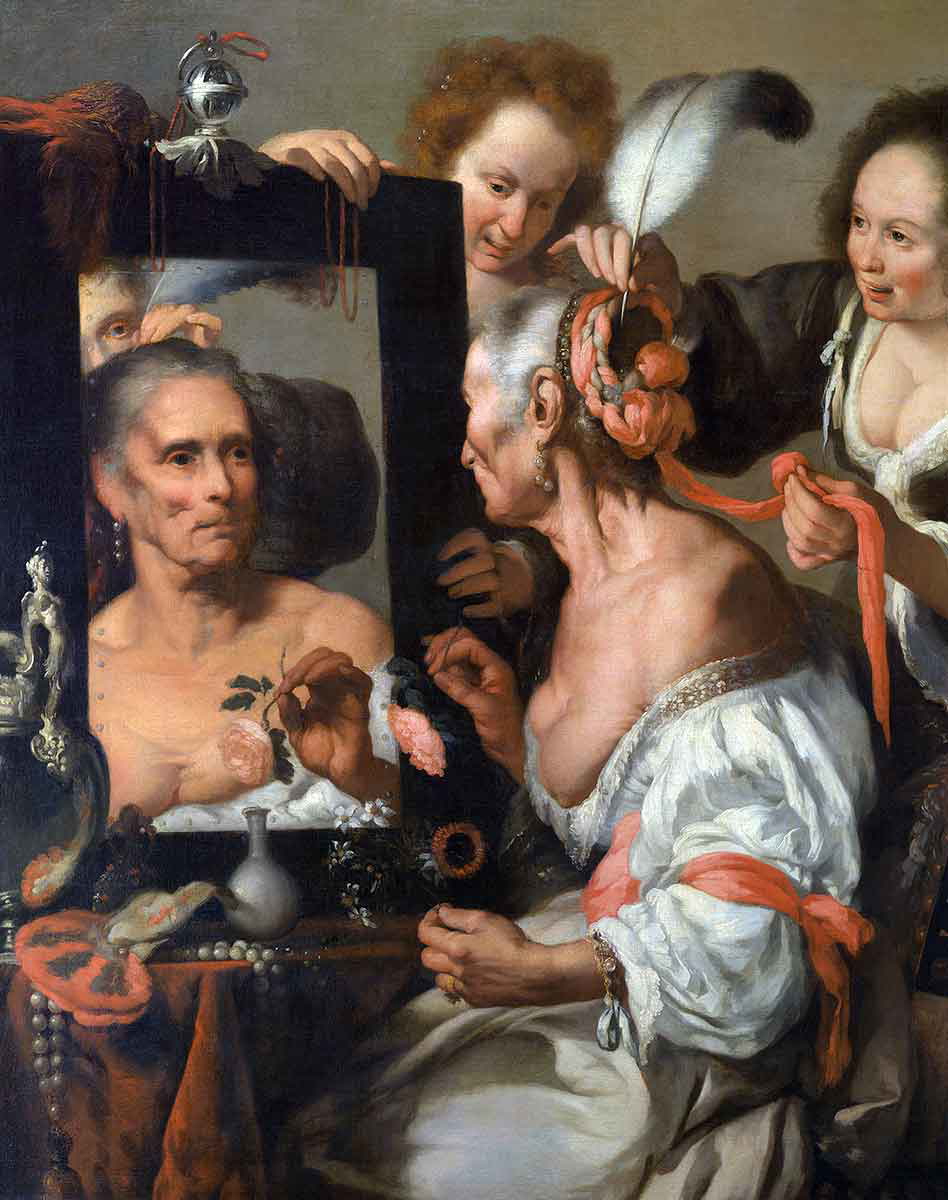
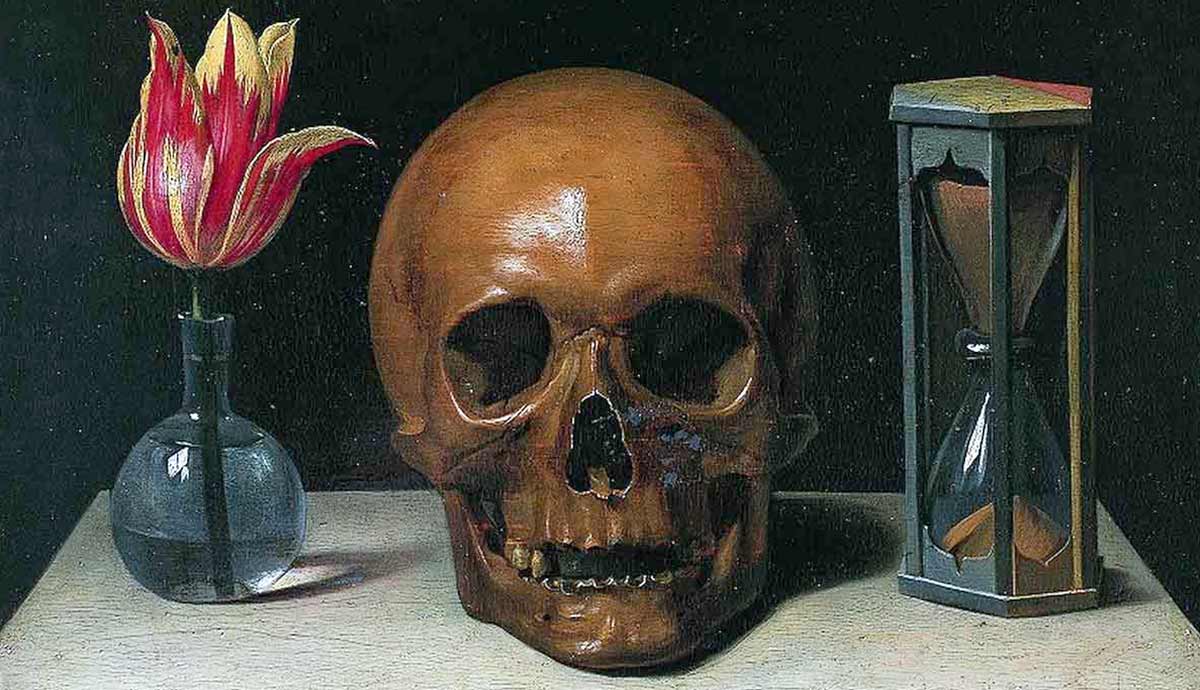
In the Baroque era, mirrors became frequent guests in the vanitas genre of painting that illustrated the impermanence of life and the superficiality of life’s pleasures. A mirror was an expensive object available only for the select few, and thus was a symbol of a spoiled and indulgent person who spent too much time worrying about their earthly body rather than their immortal soul. In most cases, vanitas paintings were still-lifes that incorporated overripe fruits, wavering flowers, skulls, and expensive jewelry, apart from mirrors.
However, a specific type of semi-comical painting represented old women, deliberately painted ugly and ridiculous, who desperately tried to make themselves look younger. Crouched next to mirrors, they were seen ordering their servants to apply more blush and powder and adorn them with more pearls. Nonetheless, their efforts are futile, as mirrors still ruthlessly show them the same aging faces.
4. Diego Velázquez: Mirrors Expanding Space
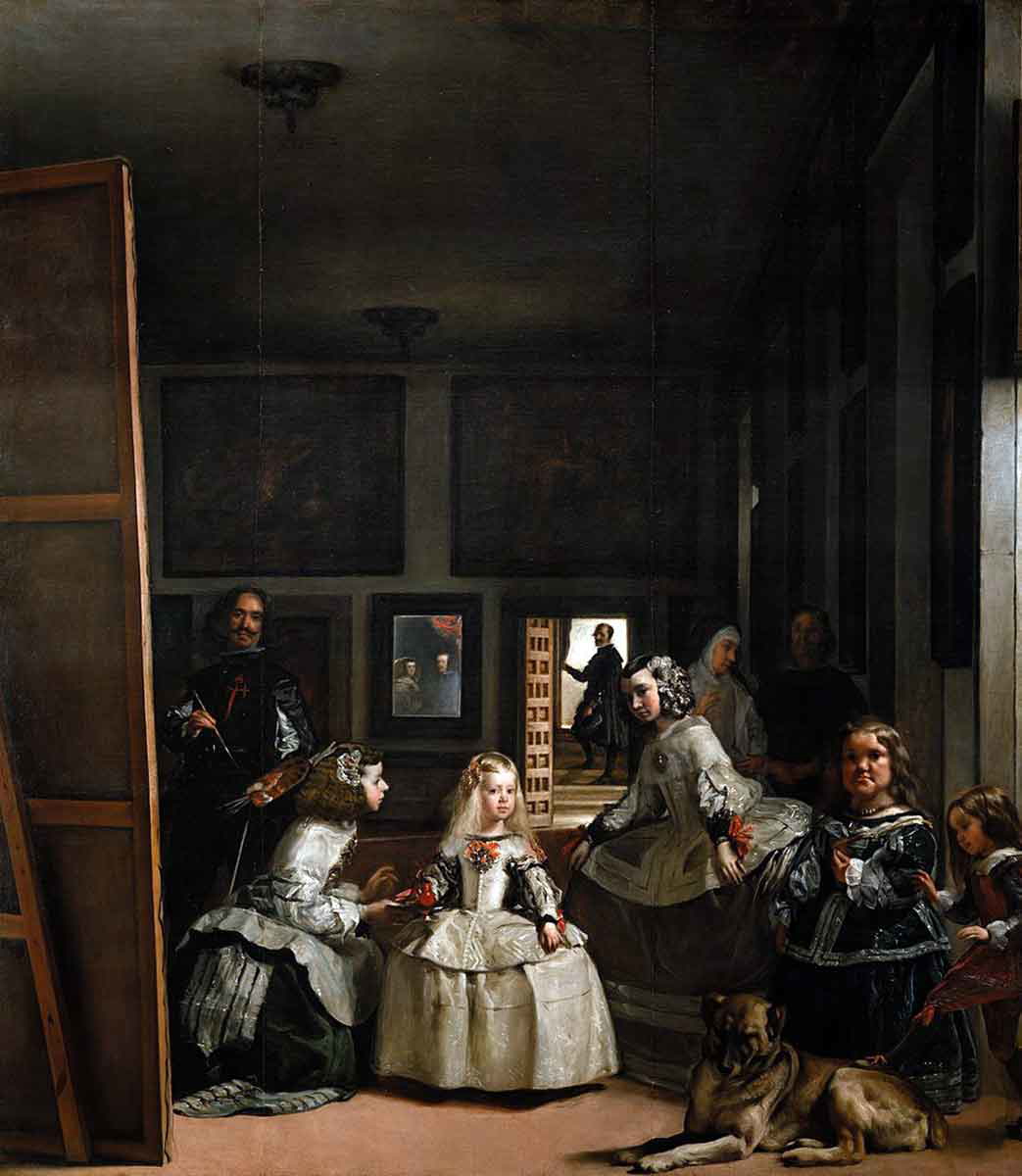
Diego Velázquez’s famous painting Las Meninas is a wonderful example of unconventional composition construction that would be impossible without incorporating a mirror. The use of mirrors allowed artists to expand the painted space and include angles that otherwise would not be possible in the composition. Velázquez painted the King and Queen of Spain, their daughter surrounded by maids and bodyguards, and himself, working on the portrait of the royal couple. To avoid crowding the scene, he painted it from the perspective of his models. The King and Queen are both in the painting, and observing it, as they are seen not in the main pictorial space, but in the reflection of a mirror hanging on a wall. The artist, as well as their young daughter, are looking at them attentively.
5. Edouard Manet’s Barwoman
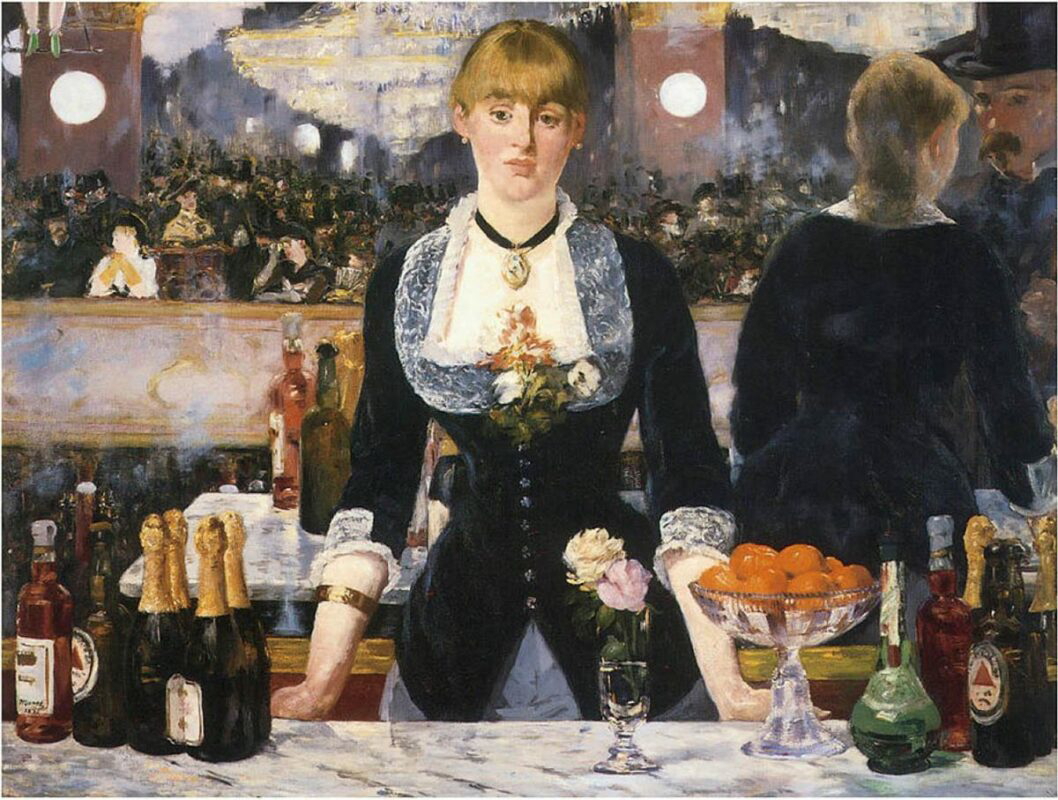
Another famous mirror from art history can be found in one of the most celebrated works by Edouard Manet, A Bar at the Folies-Bergere. A crowd of cabaret guests can be seen in a mirror behind a tired and somewhat indifferent barmaid. Manet’s models were a barwoman named Suzon and his friend, the painter Henri Dupray. Initially, the motive of a conversation between a guest and a barmaid was central to the scene. However, Manet later changed the composition, introducing a sudden dissonance between the mirror reflection and perceived reality. The difference between an engaged gesture of the woman in the mirror and her distant look in the foreground suggests a familiar piercing sense of loneliness amid a loud celebratory crowd.
6. Michelangelo Pistoletto’s Mirror Paintings
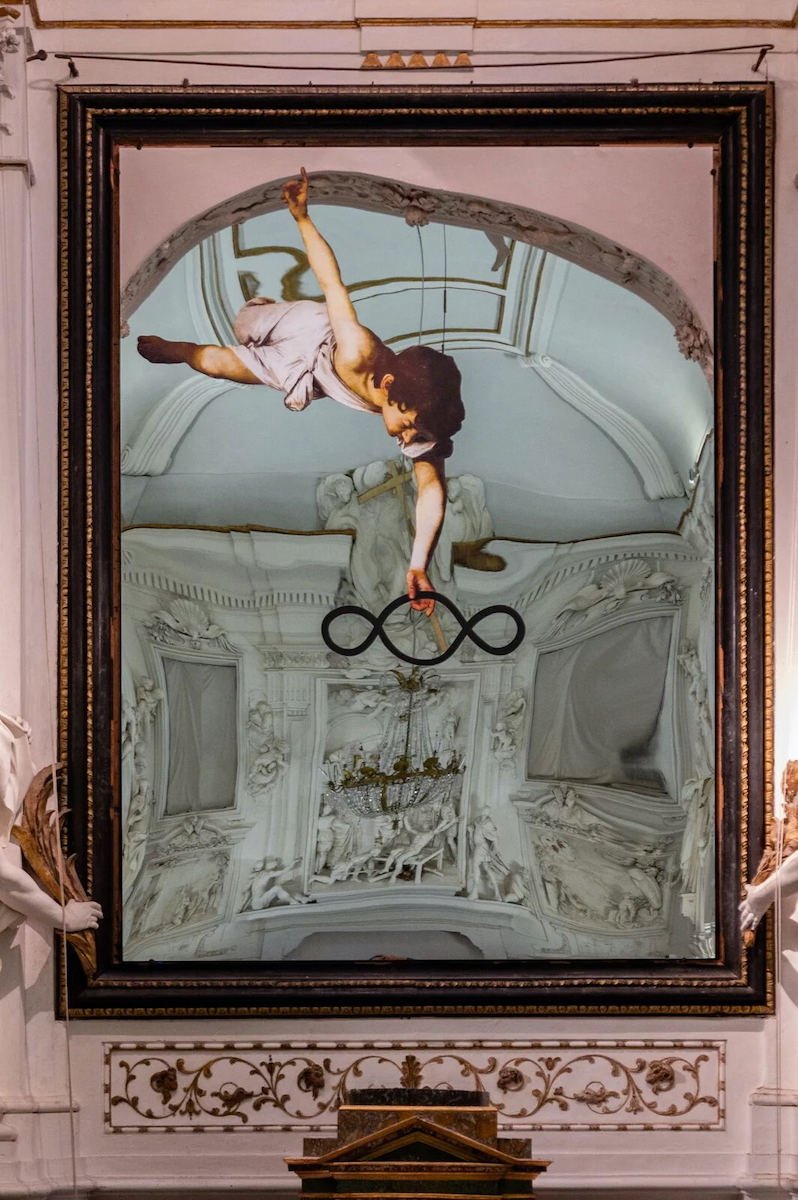
If previously we discussed artists who painted mirrored surfaces, Michelangelo Pistoletto is the one who paints on actual mirrors, making their reflective properties part of his works. Pistoletto is best known as one of the leading artists of the Arte Povera, an Italian art movement that relied on the use of simple, cheap, and readily available materials.
In the 1960s, Pistoletto began painting on mirrors, exploring the relationship between photographic and painted images. Their reflective surfaces made the work interactive, including the viewers in the scenes unfolding, and giving them an illusion of choice. In 2024, Pistoletto used his technique to pay homage to a stolen painting by Caravaggio, reproducing part of it on a mirror.
7. Yayoi Kusama’s Infinity Rooms
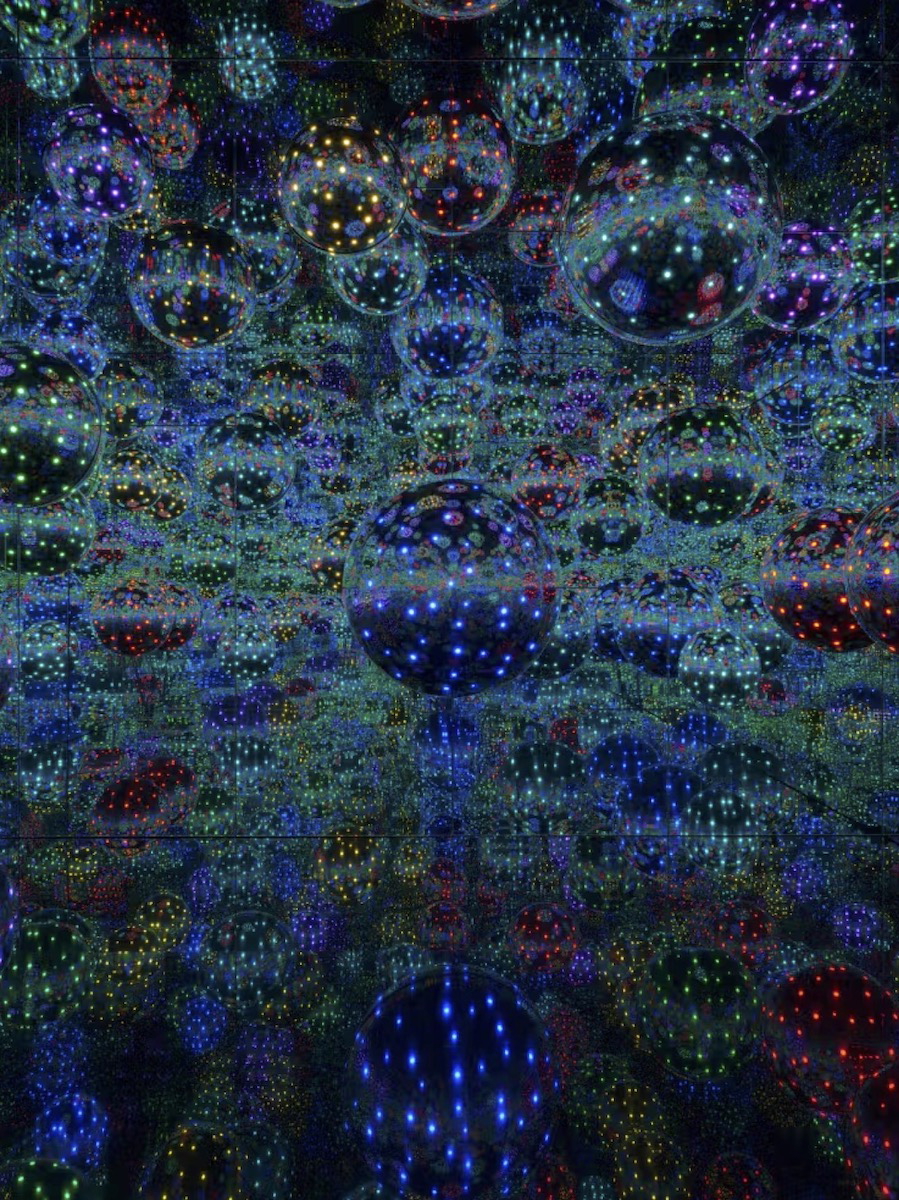
Yayoi Kusama is a complex artist who works within her own creative vision, barely aligning with any fixed category or movement. As a child, she created countless small drawings and paintings, attempting to cover the entire space around her with images, transforming them into an environment. In her adult artistic career, she turned this concept into her Infinity Rooms—spaces with mirrored walls covered in painted images, sculptures, and installations. Kusama’s rooms offer an immersive experience that exists outside the traditional expectations of a work of art and artistically transformed environments.
The use of mirrors in Kusama’s brightly colored rooms is a spatial trick that aims to question the viewers’ perception of environments. Reflecting one another, mirrors create a sense of infinite space that constantly reproduces itself, with patterns and forms exiting the boundaries intended for them, filling all space available like gas.
8. Jeff Koons and Mirrors in Art
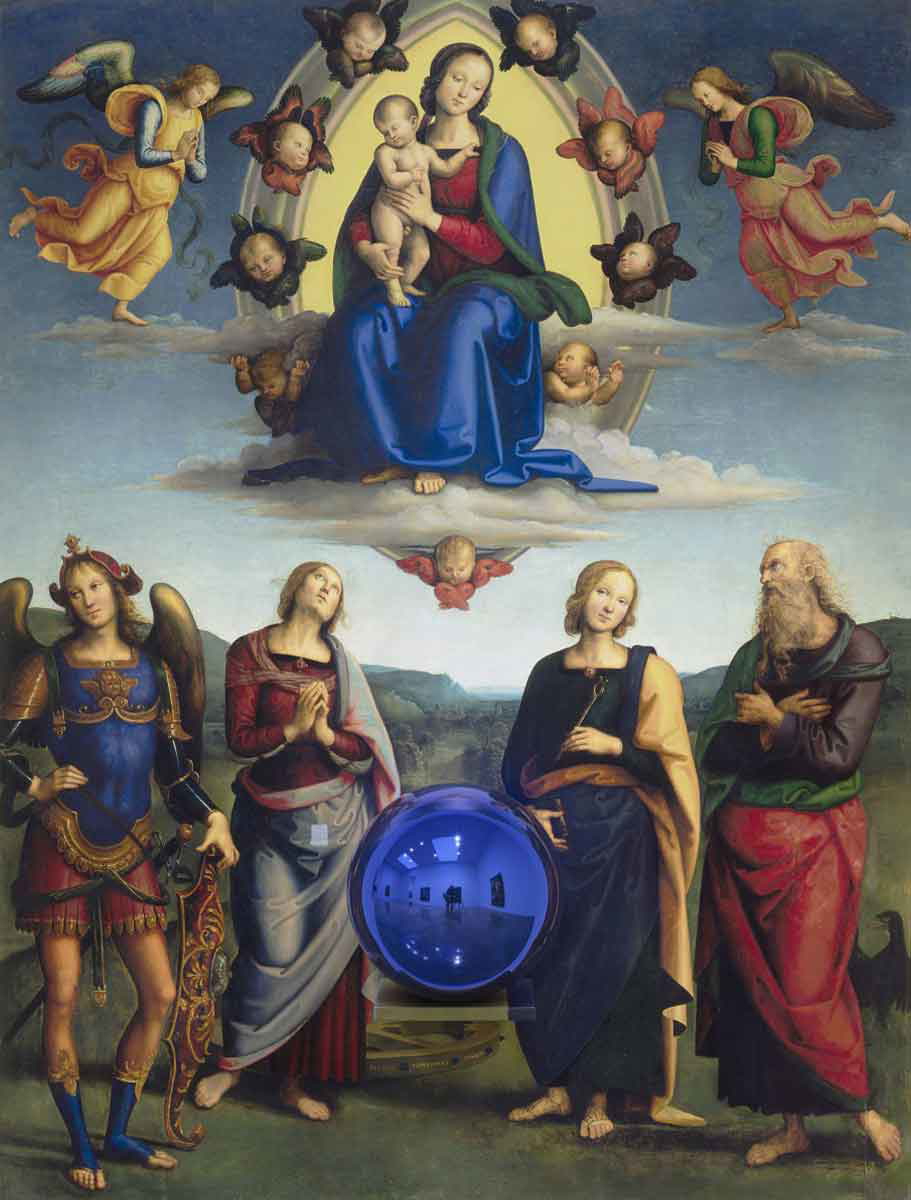
One of the most famous yet controversial contemporary artists, Jeff Koons, is known for using reflective materials for his various sculptures of balloon animals. In the 2010s, Koons launched his Gazing Ball project, a series of reflective glass balls mounted in front of copies of famous paintings, such as Perugino’s Madonna, Manet’s Luncheon on the Grass, Mona Lisa, and many more.
Koons’s goal was to imitate an eye gazing at paintings, and thus attract more attention to the works on display. He also insisted that the reflections include the viewers in the work, making their experiences more personal. However, his effort left most viewers and critics unimpressed, even leading to some accusations of exploiting and devaluing art of a much higher caliber than his own.