Human beings are permanently changeable and ever-evolving creatures, or at least we should try to be as such. We achieve the best results whenever we look at ourselves through critical lenses, identifying what and how we could do better. Therefore, the only way for us to reach our full potential is through self-improvement, and, in that matter, there is a lot to be learned from Plato. In the most prominent works of Platonism, we can find clear guidelines on how to pursue happiness and success.
The Essential Concepts of Plato’s Philosophy
At the very core of Plato’s philosophy, we have a few essential pillars that are established in the two works that are going to be explored in this article: Phaedo and The Republic. These pillars are the immortality of the soul, the Theory of Forms, the concept of Good, and the importance of philosophy. Through an understanding of these pillars and their interconnections, we can better comprehend Platonism and its explicit message of self-improvement. Before we dive deeper into the aforementioned exploration of the books, let’s summarize and briefly define these important concepts.
The immortality of the soul, as defined in Phaedo, is central to Plato’s philosophy and paves the way for the later Theory of Forms. According to the philosopher, the soul exists separately from the body. It is an eternal and indestructible thing through which we are able to understand the world. This understanding derives from the fact that our souls would have been in contact with the perfect and primordial forms of every object, physical or not, before incarnating into a body. Therefore, knowledge is acquired through our contact with objects and the subsequent recognition, or remembrance, of aspects of their ideal counterparts that our souls already know.
The ideal counterparts of everything that exists in the material world are the forms. These forms are perfect, immutable, and universal, and every physical object that we encounter is an imperfect copy of one of these perfect forms. Take, for example, a chair; there are many different chairs that differ from one another in various aspects; however, they are all recognizable as chairs because they all fit into the same concept, the same ideal, the same form. Plato utilizes the famous Allegory of the Cave.
At the pinnacle of this metaphysical realm of perfect forms is the concept of Good. Plato’s philosophy claims that Good is the source of all knowledge, a beacon of light that illuminates objects so we can see them. The Good illuminates the intelligible world, allowing the mind to comprehend the material world as well as grasp abstract things such as truth, justice, and virtue. It unifies metaphysics, epistemology, and ethics, allowing people to live a just and virtuous life. In that sense, as good and intelligence are intertwined, so are evil and ignorance.
If evil and ignorance are inextricably linked, the only way to avoid evil is by seeking knowledge, which means that philosophy is essential for a person to achieve a meaningful life. Philosophy, as a manner of attaining knowledge, is, by consequence, a manner of pursuing Good. It cultivates virtue, wisdom, and moral discernment in individuals, teaching their souls to govern their emotions and appetites through reason, thereby distancing them from bodily distractions and fleeting pleasures, and guiding them toward the proximity of knowledge and, consequently, the Good. With all of these core fundamentals established, it is possible to delve deeper into Plato’s philosophy and analyse two of his most important works, Phaedo and The Republic, in order to learn more about self-improvement.
“Phaedo” and How to Deal With Life and Death
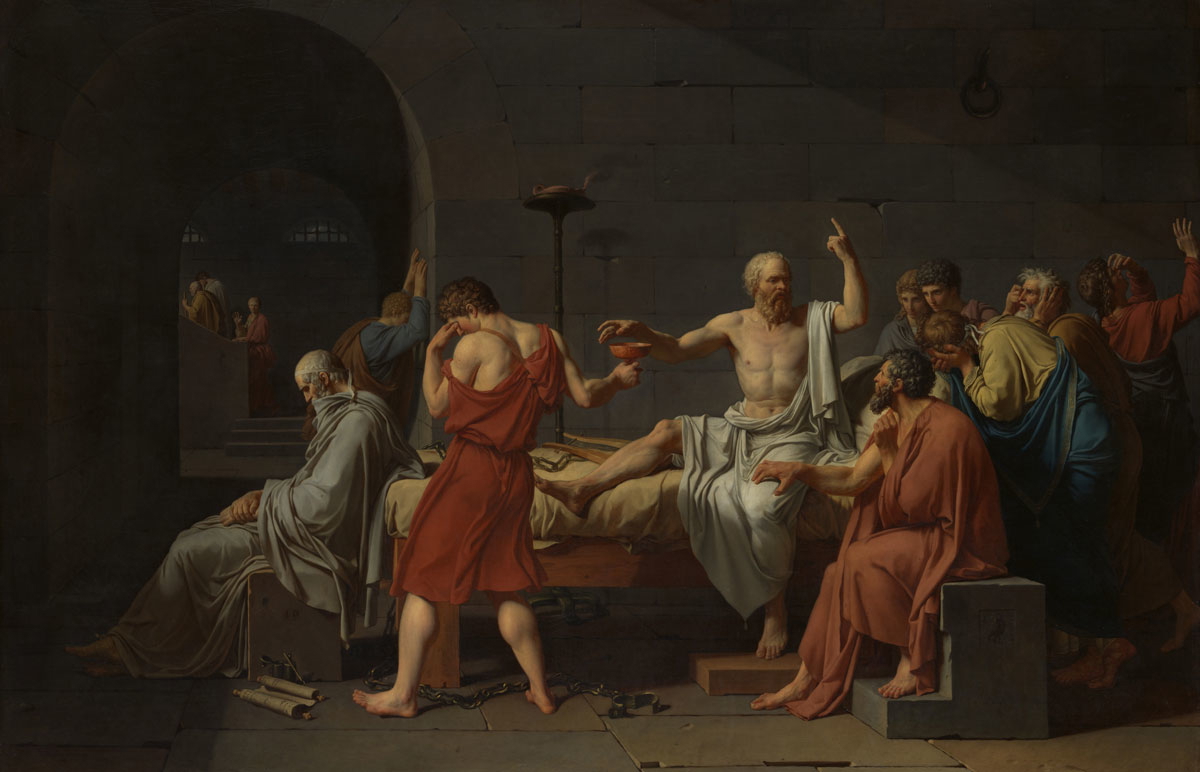
Phaedo is the story of Socrates’ last moments, as he awaits execution in Athens, told through the perspective of one of his students. The dialogue describes the final hours of Socrates, during which he remained calm and focused, discussing the nature of the soul and its immortality with the other philosophers present. The philosopher reflects on the meaning of life in the face of death. Socrates presents several arguments for the immortality of the soul, each grounded in metaphysical reasoning and observation of life.
The first is the Argument of Opposites. Socrates observes that many things come to be from their opposites: waking from sleeping, growing from shrinking, and death from life. Through this observation, he concludes that life and death are naturally cyclical: as death arises from life, so must life arise from death. Therefore, the soul must remain after the death of the body in order to guarantee this transitional cycle between the two.
Next, Socrates offers the Argument of Recollection. As we have previously established, it suggests that learning is a process of recollecting knowledge that the soul already possesses. It points out that humans are able to recognize and imagine perfect forms of concepts such as beauty and justice, yet we never encounter perfect samples of these in the material world. If we only experience things that are approximate to these concepts, yet we are able to think about their abstract, perfect forms, then these thoughts must derive from an existence prior to the material one. In summary, the soul must have acquired this knowledge before birth and carried it on.
Then the philosopher presents the Argument of Affinity, which distinguishes between things that are closer to the material world and therefore perishable, such as physical objects, and things that belong to the immaterial world and are imperishable, like concepts and abstractions. The body belongs to the first, while the soul clearly belongs to the latter. This means that the soul must also be imperishable and indestructible, much like concepts and abstractions.
Lastly, Socrates argues that the soul is essentially alive, meaning that life is a necessary aspect of its definition. Just as fire cannot be cold, the soul cannot be dead. This reinforces the idea that the soul is immortal and independent from the body. What this ultimately means is that we should not fear death, as it is a mere detachment from our material vessels and a return to the intangible realm.
But what can we learn about self-improvement from Phaedo? First of all, if we are essentially our immortal souls inside a material vessel, our highest priorities should be aimed towards nurturing the soul, not satisfying the immediate needs of the body. Now, this doesn’t mean, by any matter, an ascetic rejection of the body, but the necessity of a clear sense of priority in our lives.

Humans are made from a substance that comes from the realm of intangible and intelligible things, and, therefore, we must exercise our intelligence to the utmost, not allowing ourselves to be distracted by materialism, fear of death, or fleeting pleasures, as these are related only to the temporary vessel that is the body. However, there are physical activities that should be practiced, such as sports and physical conditioning, for they allow us to better understand our physical vessels, involving some level of study and mastery of particular areas of knowledge.
Moreover, while a weak body constantly interferes with mental activity due to its constant pains, chemical imbalances, and the necessities of treatments and medications, a strong body causes much fewer disturbances to the mind, as it is a firm stronghold that requires less maintenance. People tend to believe that following a daily routine of physical exercise and a healthy diet is too time-consuming; however, when compared to the amount of time that would be otherwise spent lying sick, aching, hungover, stuck in long lines at doctors’ offices, or even bedridden in hospitals, it is very clear which is the better alternative. This is also due to the fact that some bodily activities are connected to the soul, promoting well-being, while others are related solely to bodily pleasures, causing severe side effects.
“The Republic”: Chasing Perfect Ideals
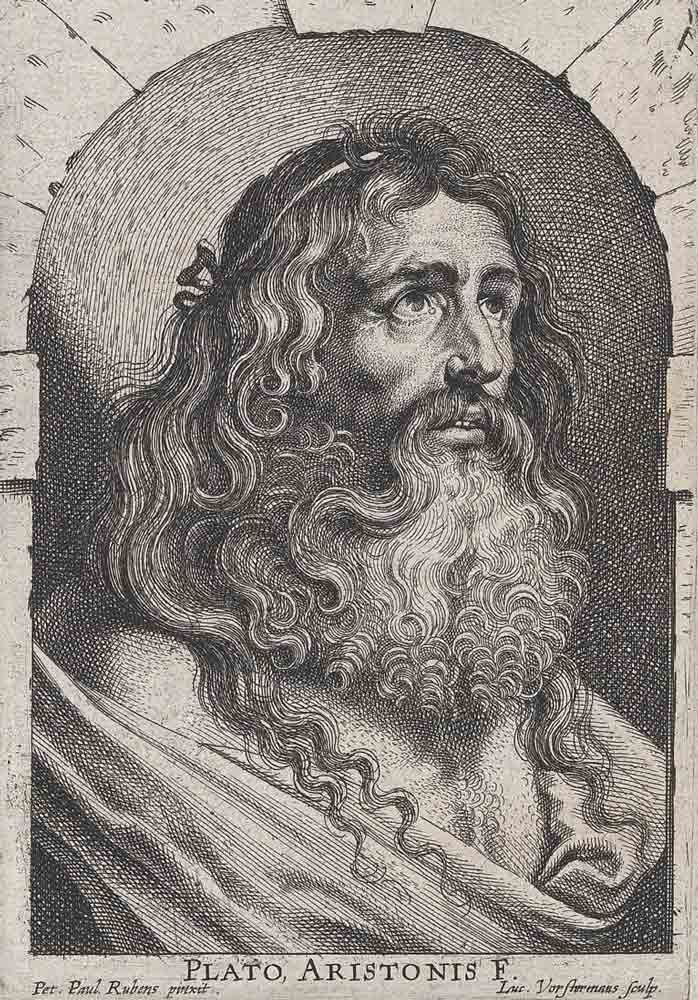
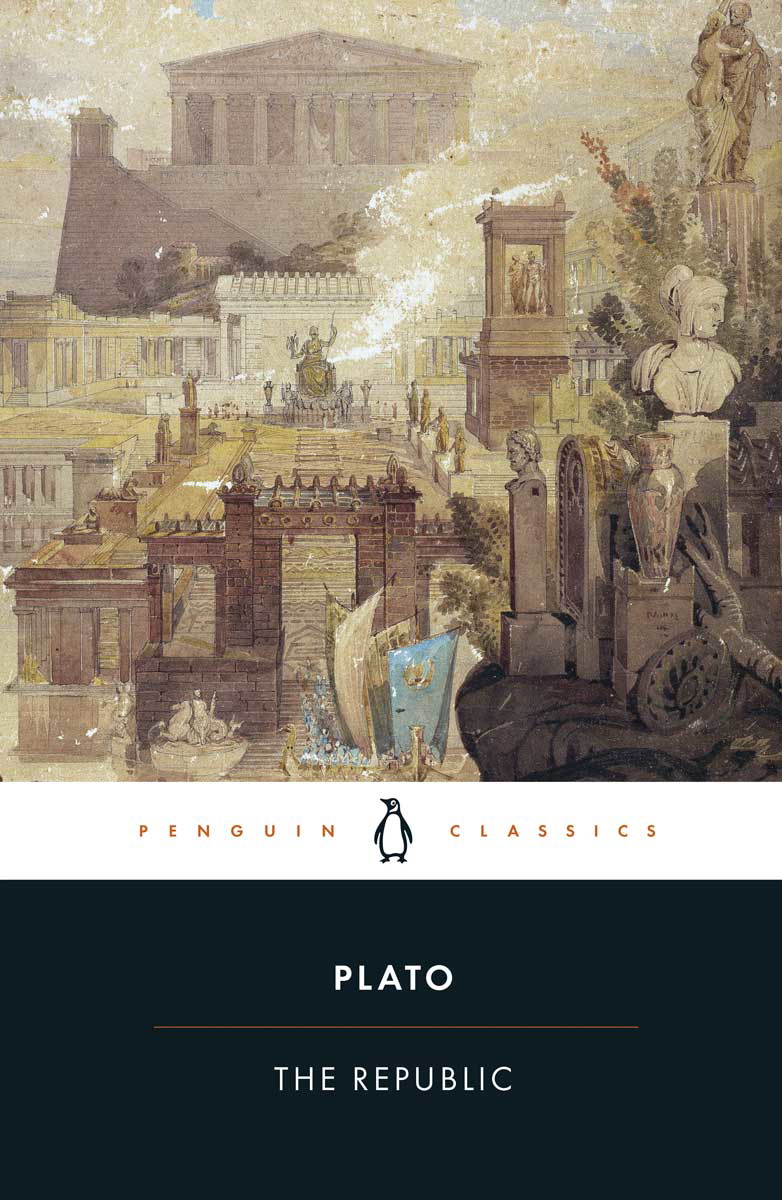
The Republic is one of the most influential works in Greek Philosophy, and, much like Phaedo, is written as a Socratic dialogue. It explores justice, politics, and expands on the subject of the nature of the human soul, presenting us with the guidelines on how to become just individuals and, by consequence, build a just society.
At the heart of The Republic lies Plato’s Theory of Forms, which, as we have previously established, is a metaphysical framework asserting that the material world is composed of imperfect copies of perfect forms or ideals. Knowledge of the forms, especially the form of the Good, is essential for every person, particularly people in positions of leadership, such as politicians, because it allows them to guide others wisely. The form of Good illuminates all other forms, much like the sun allows us to see through its light. Without Good, we can only guide ourselves through unreliable opinions, while through Good we are able to obtain true knowledge.
This concept is further illustrated by Plato through the Allegory of the Cave. People in a cave see only shadows on the wall, as objects pass by the cave’s entrance, yet they cannot see the outside, mistaking illusion for reality. To these people, the shadows are the real objects, for they are all that they know. A person who seeks knowledge, namely a philosopher, is like a prisoner who escapes the cave, seeking to perceive the true world outside. These individuals have the responsibility of guiding others into the light.
Later in the dialogue, Socrates discusses education and the acquisition of knowledge, emphasizing dialectic as the highest form of intellectual inquiry. It is through collective questioning and reasoning that individuals cultivate the wisdom necessary to lead a fulfilling life. In that sense, philosophy is not merely theoretical; it is inseparable from practical life and the pursuit of justice, happiness, and success.
In summary, Plato’s philosophy presents a profound vision of human society and morality in this work. Through its deep discussions, The Republic remains a timeless exploration of what it means to live well, both individually and collectively.
Platonism in Our Everyday Lives
The four pillars of Platonism presented in this article serve as a framework for living a better life through the pursuit of self-improvement. The material world will never reach perfection, meaning there is always room for further potential improvements. There is no peak or prime; we are inherently able to continuously get better and better in every aspect.
In order to do this, we must occupy ourselves with matters of true relevance, those that are important not only to the body but also to the soul, seeking to always come closer to ideal concepts. Furthermore, this pursuit must be undertaken both individually and collectively. True knowledge is shared knowledge, and people who have attained wisdom have the responsibility to guide others as well. Dialectic is the most efficient path to knowledge, meaning that a society of intelligent people is one that better enables individuals to further improve themselves.
Plato tells us that, even on the brink of death, Socrates remained the same. His philosophical inquiries and quest for knowledge were not disturbed by the impending end of his life. Yet, how many times have people stopped themselves from doing something because of the somber anticipation of the end? We should live with no regard to the looming threat of death, as our souls will go on, and fear no dead ends in whatever we do in our lives, for the road towards perfection is ultimately endless. Yet, following that road is what moves us towards true happiness and success.