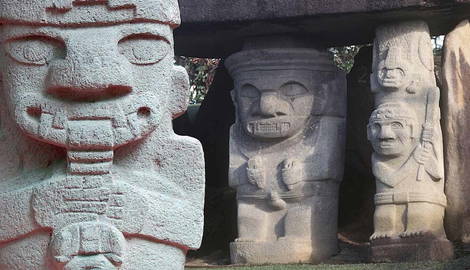
San Agustín is an archaeological park in the region of Huila, southern Colombia. It is known as a major complex of megalithic sculptures in pre-Hispanic America. The archaeological park conserves the lithic remains of one of the most mysterious pre-Columbian cultures in the country, whose origins and disappearance remain shrouded in mystery.
What Do We Know About the San Agustín Culture?
The archaeological complex of San Agustín is considered the world’s biggest necropolis. The temples and sculptures correspond to various local communities that shared social structures and systems of beliefs. Starting in the 18th century, archaeological research has been unfolding the story of the site and the San Agustín culture.
The people of the San Agustín culture settled on the macizo Colombiano, a mountain cluster that marks the end of the Andes Cordillera and splits into three smaller mountain ranges to the north, shaping Colombia’s topography. The culture takes its name from the village of San Agustin, an urban settlement close to where the archaeological remains were found.
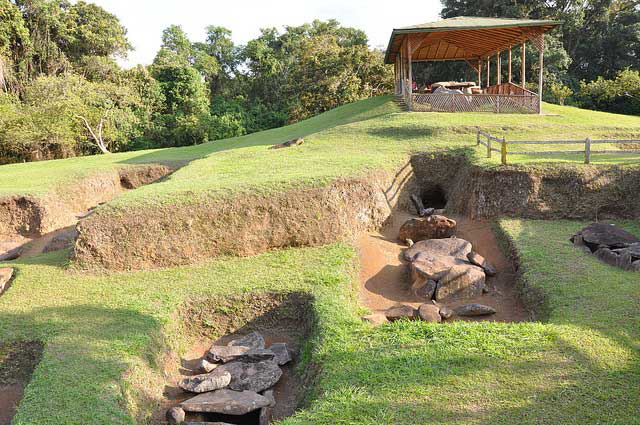
Archaeological evidence linked to San Agustín has been found in over 300 archaeological sites across a 3,000 square meter area (Duque, 2017). The lithic elements are spread over a geographical area bounded by the Chocoan rainforest to the west, the Andean Cordillera to the south, and the Amazonian rainforest to the east. Primary sites include Mesitas, where the oldest tombs were found, and La Estación, the most important architectural structure (Duque, 2017). Other important sites include the Alto de los Ídolos, the Alto de las Piedras, El Purutal, La Pelota, and La Chaquira.
The last is a big rock carved in situ facing a valley and exhibiting three faces pointing towards different directions: a jaguar to the east, a human face looking north, and a female entity looking south (Palomo, 2023). The location of nearby rock deposits suggests that this community had sophisticated knowledge of techniques for moving heavy loads over uneven terrain.
Rediscovery of San Agustín
What is peculiar about this culture is that it vanished from the historical record among local inhabitants. They knew about the monolithic rests but could not identify the makers or purposes (Duque, 2017). Ritual elements, residential units, mortuary temples, and tombs caught the attention of explorers during the Conquest of the Americas. This led to pillaging, even after the region was declared a site of national interest.
In the 18th century, the first person to record San Agustín’s lithic industry was the Spanish Franciscan priest Juan de Santa Gertrudis, who arrived on the continent in 1755. This was the period when Spanish colonial power settled in what was known as the Viceroyalty of Nueva Granada. Juan de Santa Gertrudis published his “discoveries” in an essay called Maravillas de la Naturaleza (Marvels of Nature). Later, Francisco José de Caldas in 1797 and Agustín Codazzi in the mid-19th century made considerable contributions to the illustration of the archaeological site. Colombian researchers took the lead in the 19th and 20th centuries (Palomo, 2023).
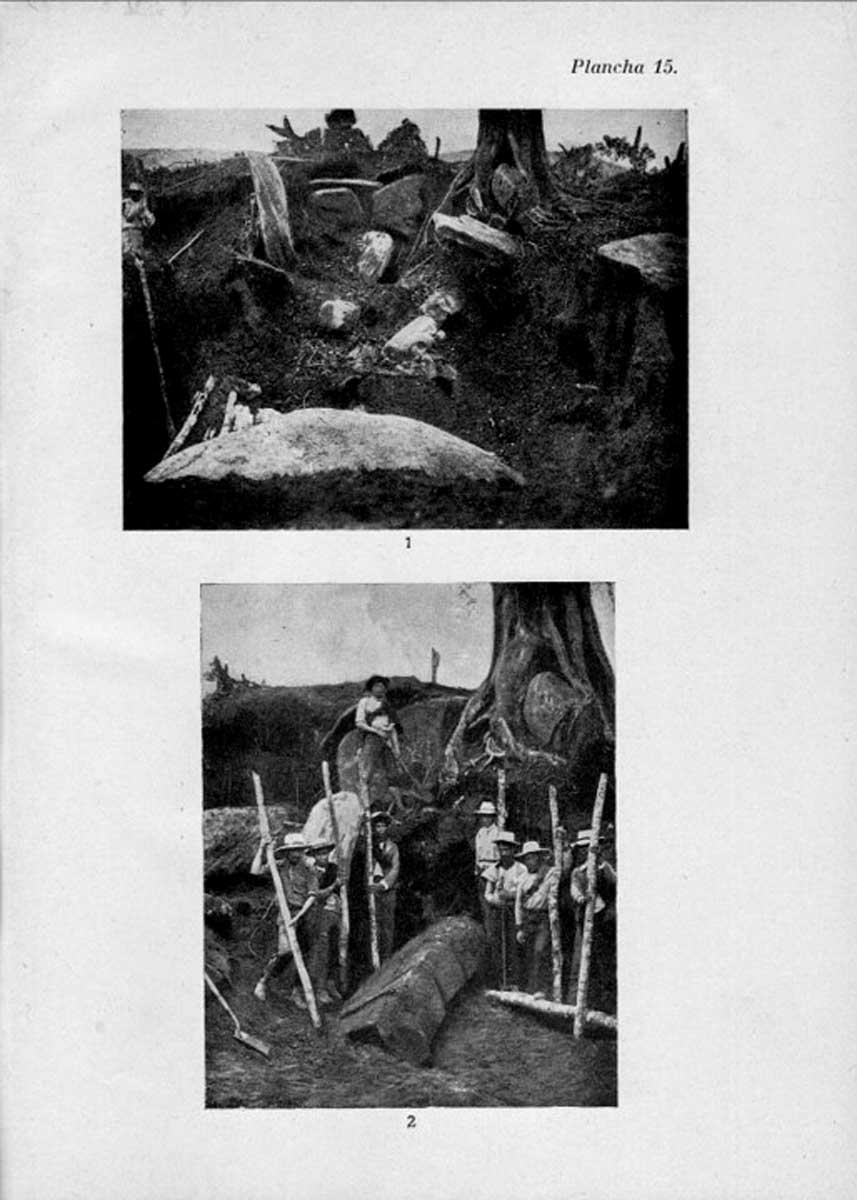
German archaeologist Konrad Theodor Preuss was the first scientist to research the archaeological sites. He arrived in the Colombian city of Barranquilla in 1913 and traveled down the River Magdalena until he reached the region where the sculptures were covered by soil and vegetation. Fascinated by his discoveries, he illegally packed 21 statues and sent them to Europe, now retained by the Ethnological Museum in Berlin (Silva, 2016). There is an active campaign for repatriating these sculptures.
Constant looting led the state to buy land and properties and declare the zone an archaeologically protected region in 1941 (Duque, 2017). In 1993, the park was declared a national monument, and in 1995, it was included in UNESCO’s World Heritage List.
Where Did the San Agustín Community Come From?
Colombian archaeological research proposes a timeline that dates the start of the San Agustín culture to between 1000 BCE and the 1st century BCE (Duque, 2017). However, more recent research proposes earlier origins as far back as 3000 BCE (González, 2013). The monolithic monuments and lithic temples are believed to have been built during what is called the Classical Regional Period, dated to between 100 and 900 CE (Duque, 2017). It is believed to have been a gathering of different social settlements that shared common social structures and beliefs with origins in the Amazon Jungle (González, 2013).
It is still unknown why, at the time of the Conquest of Colombia, the monuments were abandoned despite the continued occupation of the area by pre-Hispanic Colombian cultures. The lithic temples and residencies were believed to have been abandoned around 1530, only a few decades after Christopher Columbus inaugurated the colonial era in the Americas. Because the monuments are smaller than those of other more well-known pre-Hispanic cultures, such as the Inca (Tahuantisuyo), Maya-Mexica, or Aztec, it is believed that nature rapidly covered most of the rocks, hiding them from explorers and inhabitants alike.
Houses & Mortuary Buildings
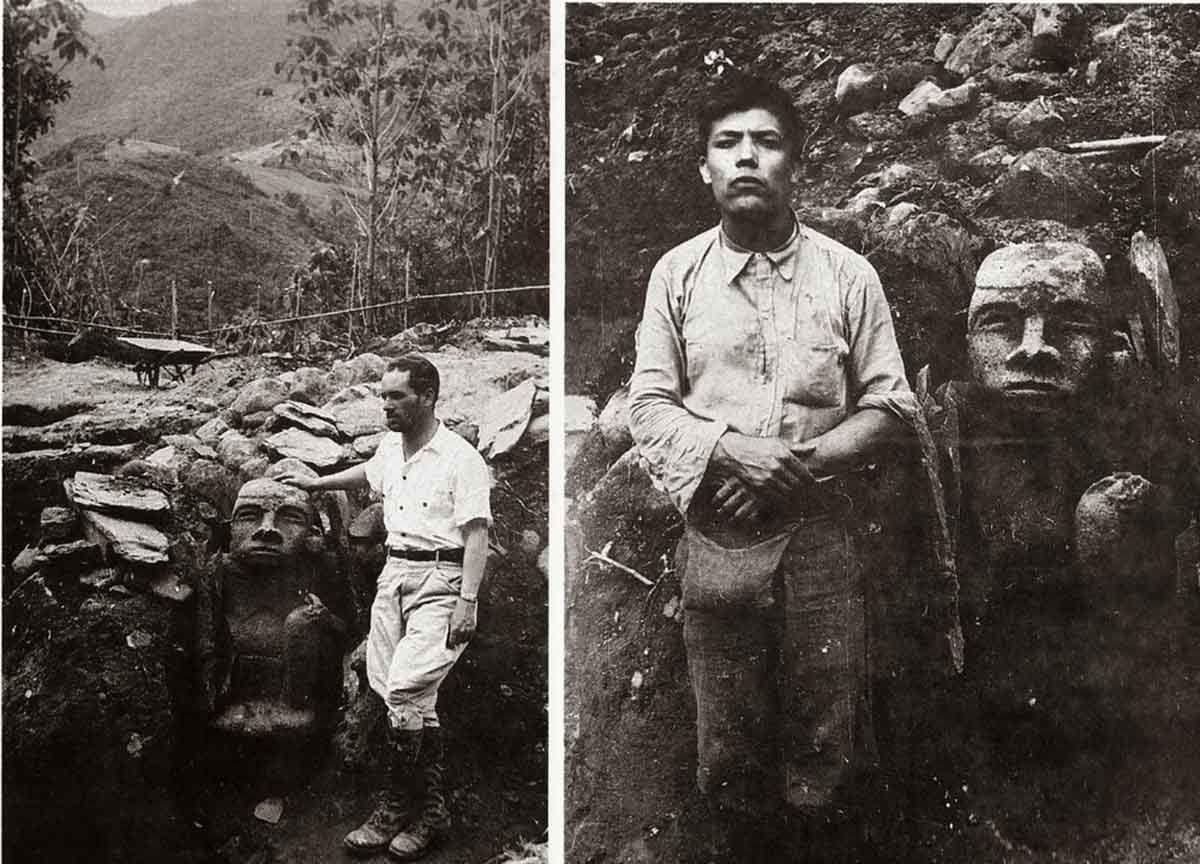
The San Agustín houses are believed to have been built with wooden pillars stuck on a circular platform. The walls were made of bahareque, an ancient building material found in many communities in the Americas, consisting of a mixture of mud and hay intercalated with wooden sticks. The roofs consisted of conical structures made of hay. The residential units sometimes also appear to have had mortuary functions. They were found scattered around the territory and not in urban clusters.
Local archaeology suggests that mortuary temples served as places for commemorating the deaths of individuals believed to have a special connection with spiritual forces (Jáuregui, 2022). This suggests that there was a hierarchical social structure linked to cosmological entities represented in the ceremonial sculptures.
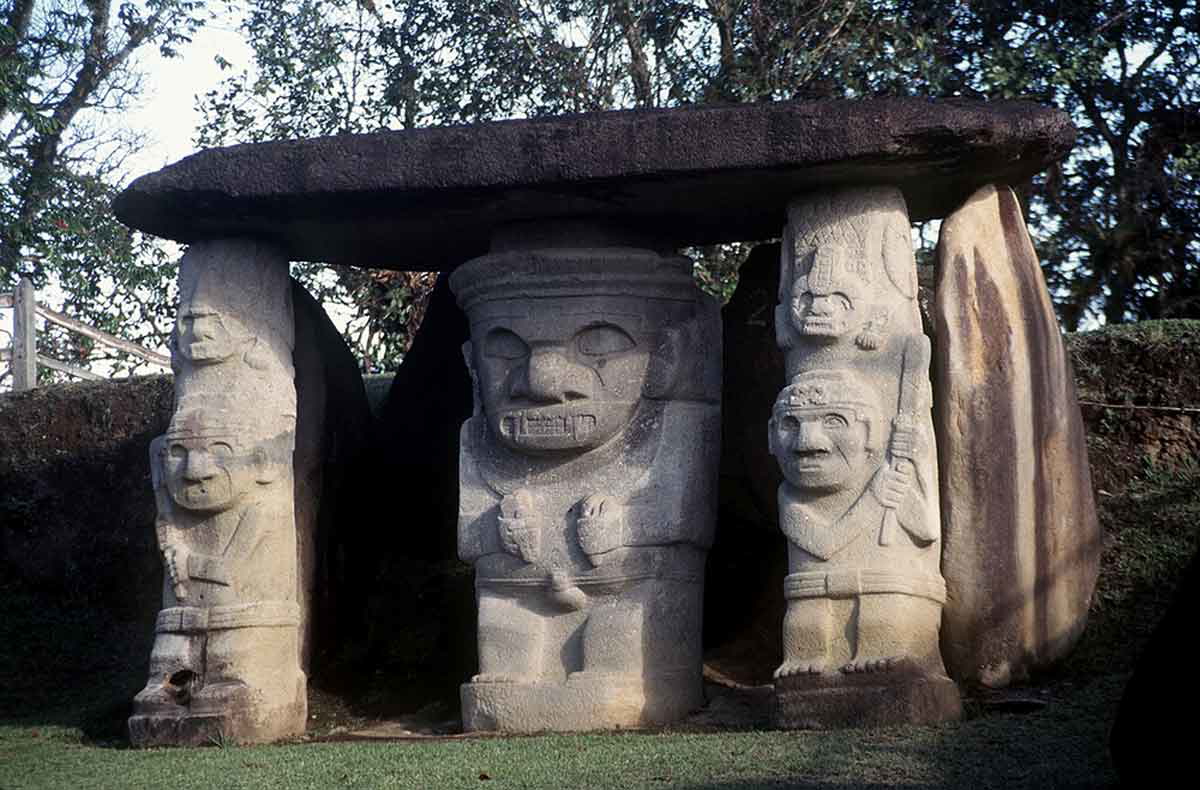
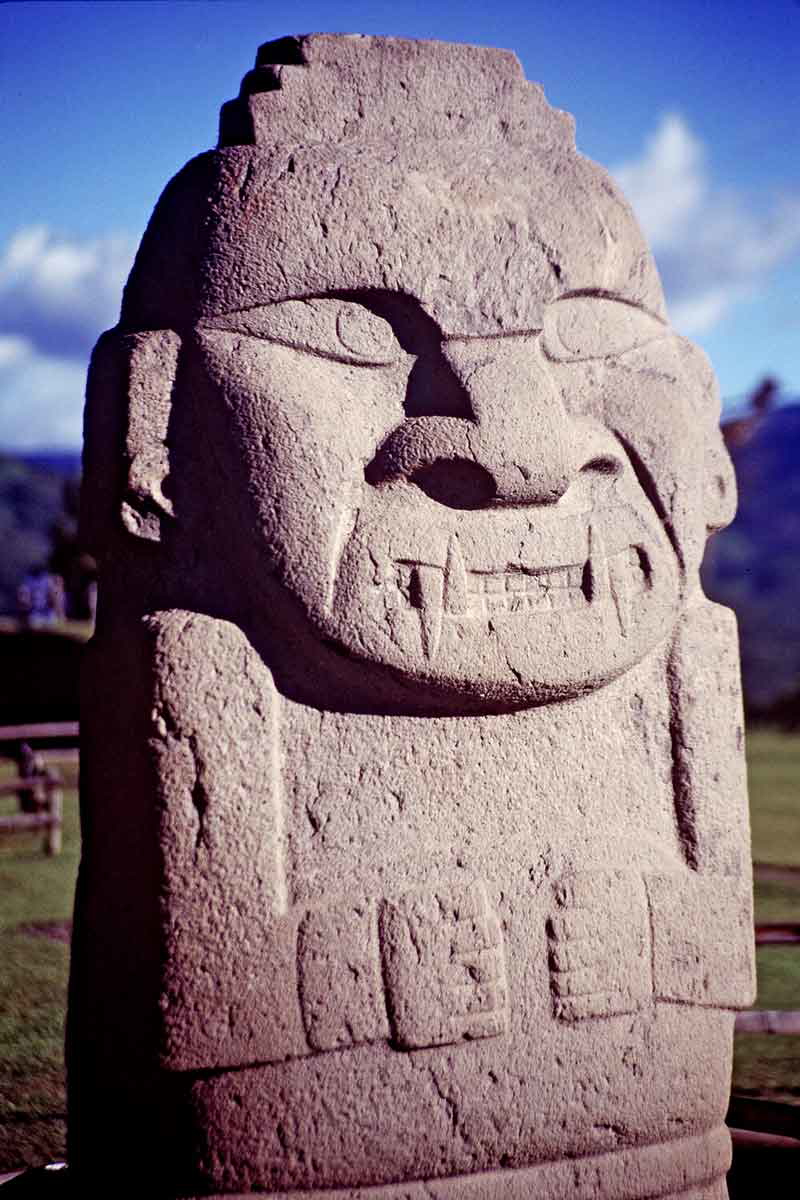
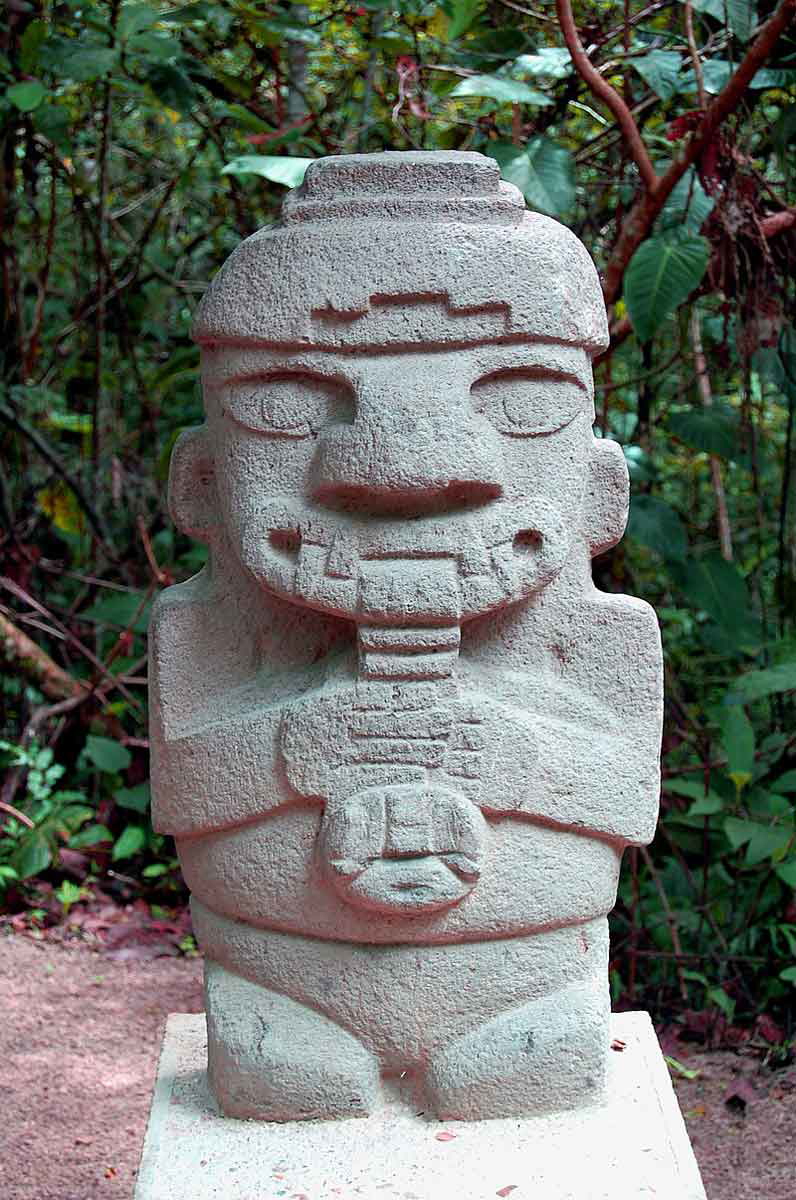
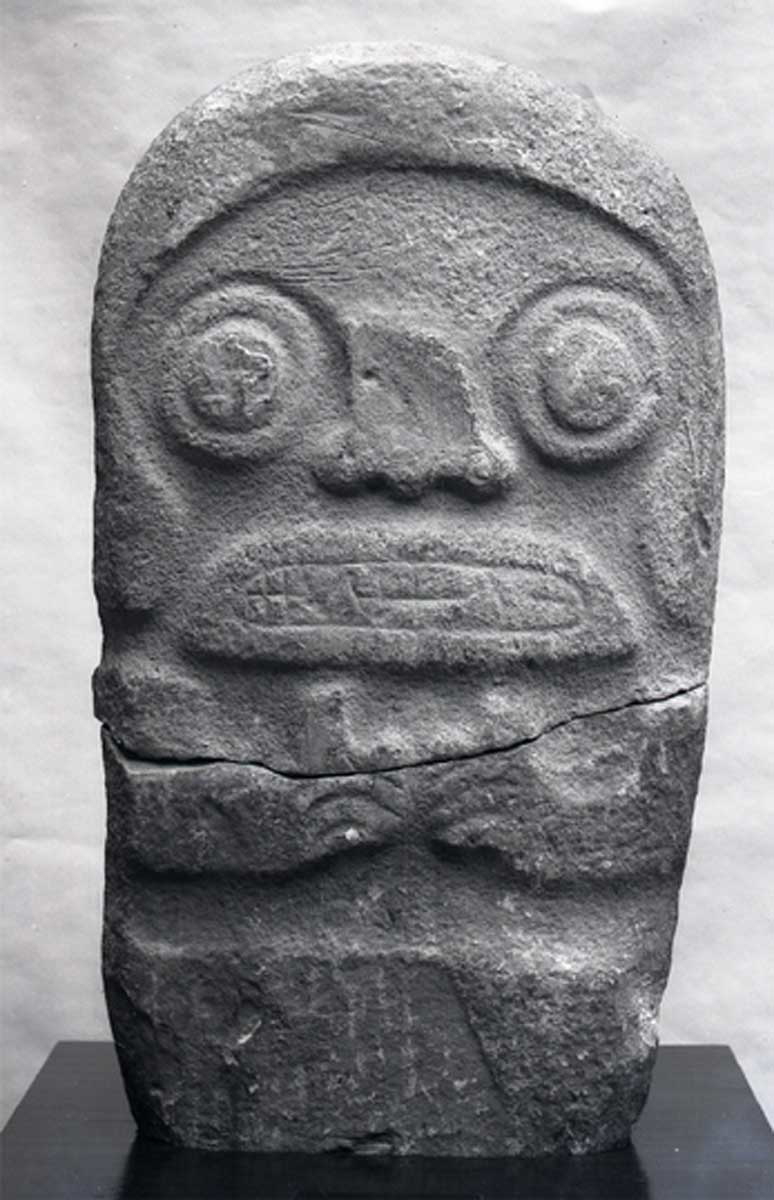
Although the meaning of all lithic representations remains unknown, most were monumental representations of mythical zoomorphic and anthropomorphic figures. The monuments are characterized by detailed carved features and the use of color and pigments. Many statues represent life and death, the forces of nature, felines, reptiles, and mythical ancestry (Arango, 2010).
Some design motifs include a squared mouth with prominent fangs related to the myth of the Jaguar found in other Amazonian indigenous communities. The depiction of the dual eagle-snake is also found among other pre-Hispanic civilizations (Arango, 2010).
Artistic Styles
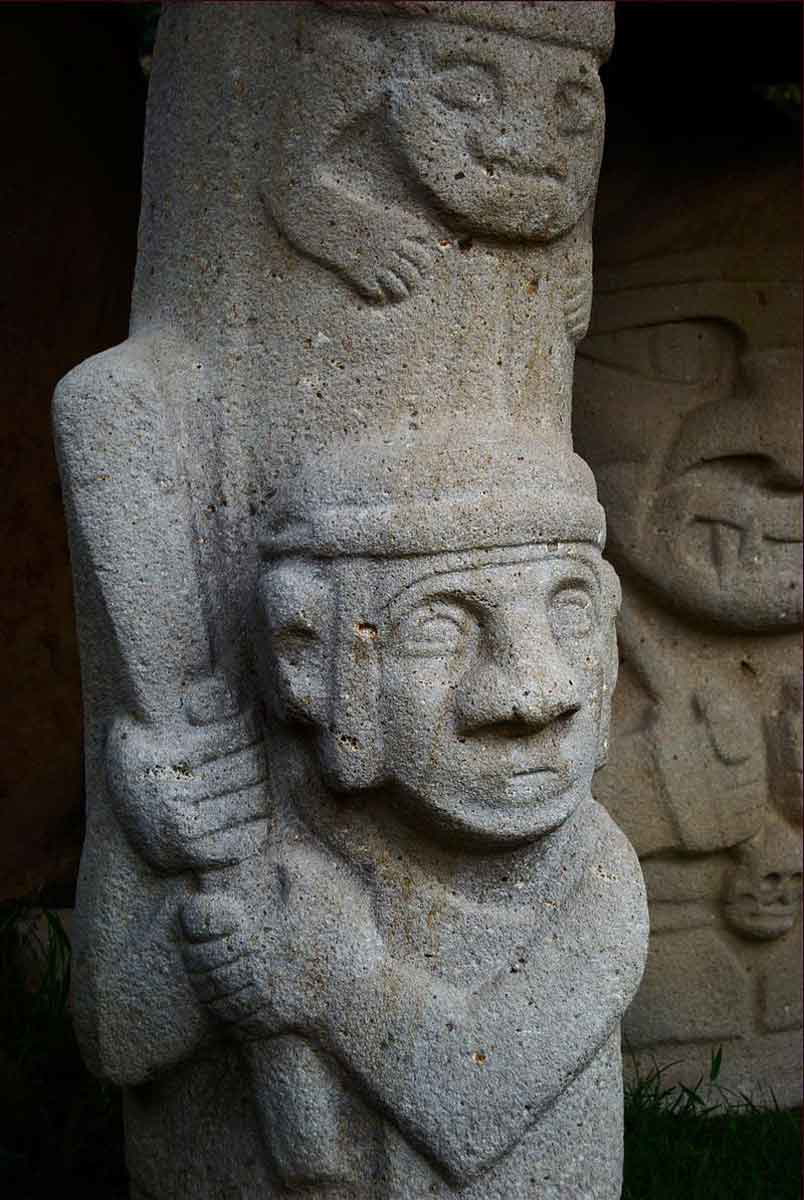
Other features include small facial details such as soft smiles and wrist accessories. Most of the statues show the articulation of animal forms and a basic human figure, reflecting a different approach to Western civilization. Instead of conceiving nature from the perspective of culture, these images represent a zoomorphic vision conceived from the perception of nature (Velandia, 1999).
One of the most beautiful sites is the fountain of Lavapatas, a series of channels carved in the stone where a small river runs down the hill. This site and its carved figures are believed to have been used for ritual and ceremonial purification rites (Duque, 2017). The architectural constructions have also revealed the community’s deep knowledge of astronomy, yearly cycles, and astral alignments.
The Current State of the San Agustín
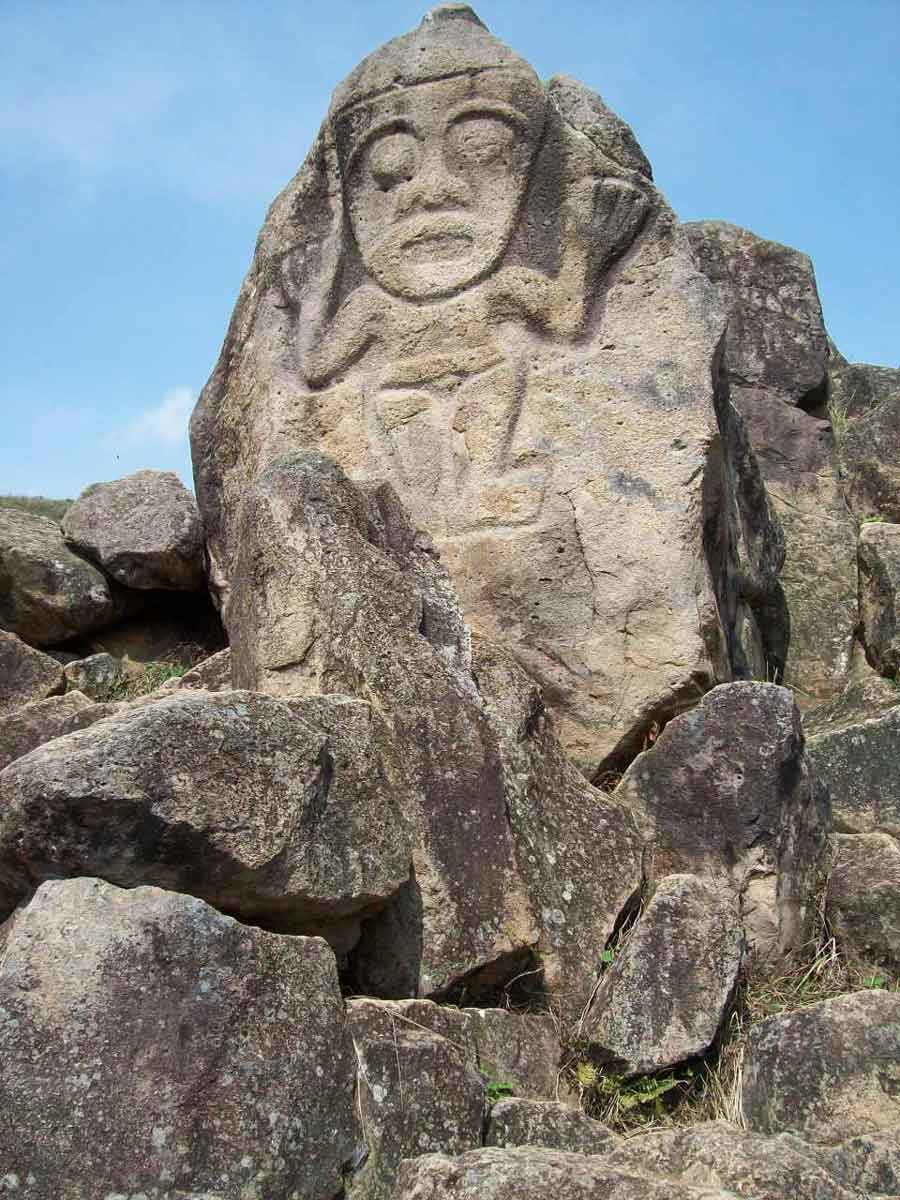
Exploration of the archaeological site of San Agustín kick-started the development of Colombian archaeology as a formal discipline. It raises questions about the still unknown origins of pre-Hispanic cultures, whose routes of migration and adaptive processes are subject to research. As with many other archaeological sites explored by foreigners, much of San Agustin’s material culture is held overseas, and the battle for its return continues.
Bibliography
Arango, T. (2010) Cultura Megalítica de San Agustín. Universidad Distrital Francisco José de Caldas, Museo del Oro del Banco de la República.
Duque, J. P. (2017). San Agustín. Banco de República, Columbia.
González, V. (2013). ¿Qué sabemos de San Agustín? Boletín de Historia y Antigüedades – Enero.
Jáuregui, D. (2022). ¿Qué tan antiguas son las estatuas de San Agustín? San Columbia.
Palomo, A. (2023). San Agustín, una visita a la misteriosa “biblioteca en piedra” más importante de América Latina. Senal Columbia.
Silva, V. (2016). Preuss, el alemán que descubrió San Agustín y se robó 21 estatuas. Las 2 Orillas.
Velandia, C. (1999). The Archaeological Culture of San Agustín. Towards a new interpretation. Archeology in Latin America. Routledge, London.