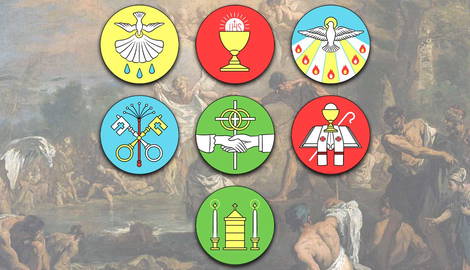
Sacraments are not the same in all churches. In the Catholic tradition, there are seven sacraments: baptism, confirmation, Eucharist, reconciliation, anointing of the sick, marriage, and holy orders. Catholics believe God gives his divine life (called grace) to every person receiving the sacrament in a real and effective way. “Sacrament” comes from the Latin word sacramentum and refers to an oath of allegiance in the Roman military context. Still, in Christianity, it means “something sacred and mysterious,” highlighting the significance of each in the life of the believer. Let’s consider each sacrament briefly.
1. Baptism
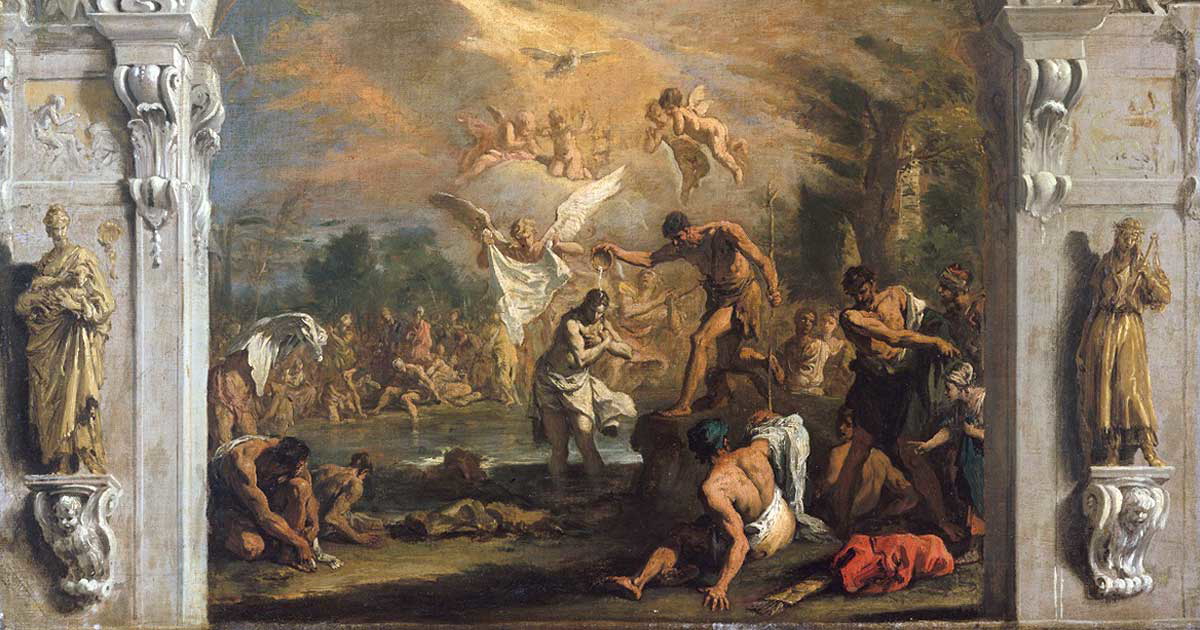
Baptism is the initiation into the Christian community, cleansing Original Sin, and marking the start of a life in Christ. The word derives from the Greek term baptízō (βαπτίζω), which means “to immerse,” “to dip,” or “to submerge,” and refers to immersing a new believer into the water as a sign of purification by dying to the old life and resurrecting with Christ into a new spiritual life. The person performing the baptism, who is usually, but not necessarily, a priest, typically says, “I baptize you in the name of the Father, and of the Son, and of the Holy Spirit” as he acts. Baptism follows the instruction by Jesus in Matthew 28:19: “Go therefore and make disciples of all nations, baptizing them in the name of the Father and of the Son and of the Holy Spirit.”
The Catholic Church practices infant baptism. There is no explicit record of infant baptism from the 1st to 3rd century CE, but the bible does refer to the baptism of households, which may or may not have included infants. Records show that the early Christian Church baptized new believers by full immersion in rivers or baths.
By the 3rd century CE, Church Fathers like Origen and Cyprian of Carthage explicitly supported infant baptism. Practicality may have played a partial role in the change. In the 4th and 5th centuries, the theology of Original Sin necessitated baptism for salvation.
Infant baptism entails pouring or sprinkling water on the head of an infant. If a person joins the Catholic faith as an adult, they undergo catechesis before being baptized.
2. Confirmation
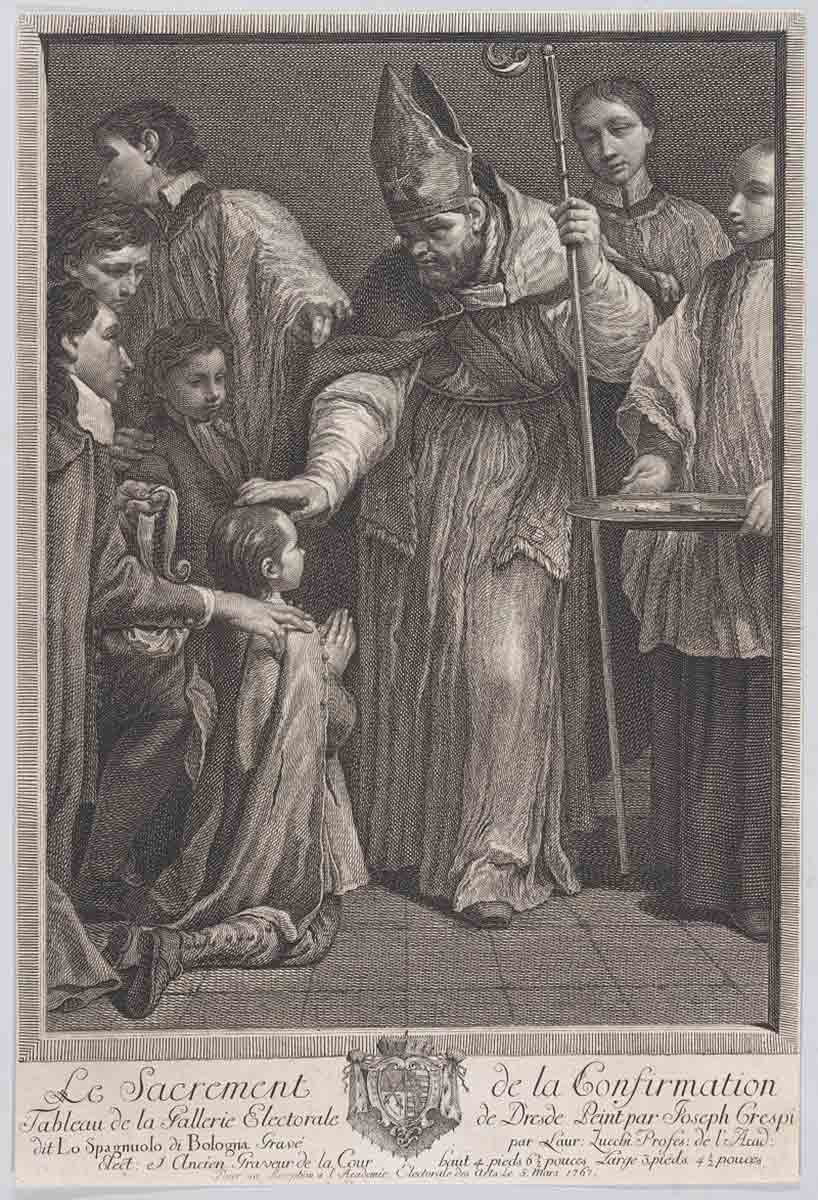
Initially, confirmation was part of baptism, but in the 5th century, it became a separate rite. During confirmation, a priest anoints the forehead of a recipient with oil, symbolizing the Holy Spirit and signifying the sealing of the Spirit, who empowers the believer to witness his or her faith boldly. It intends to highlight a deepening commitment to a lifestyle that expresses faith. The sacrament of confirmation also involves the laying on of hands and prayer, as described in Acts 8:14-17 and Acts 19:5-6 among others.
In the 20th century, the age of confirmation shifted from infancy to adolescence to emphasize personal commitment. Today, catechetical preparation precedes the rite. Vatican II, a major ecumenical council of the Roman Catholic Church, held from 1962 to 1965 in Vatican City, emphasized the role of confirmation in mission and evangelization.
3. Eucharist
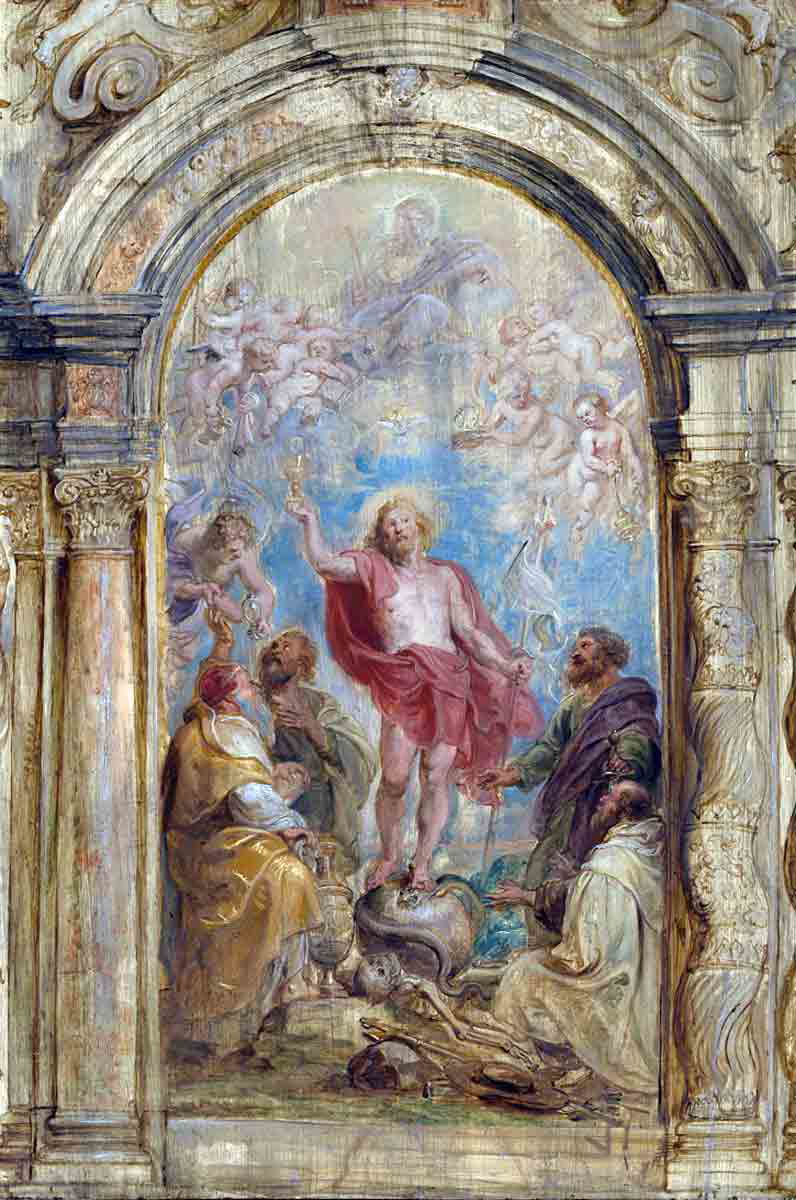
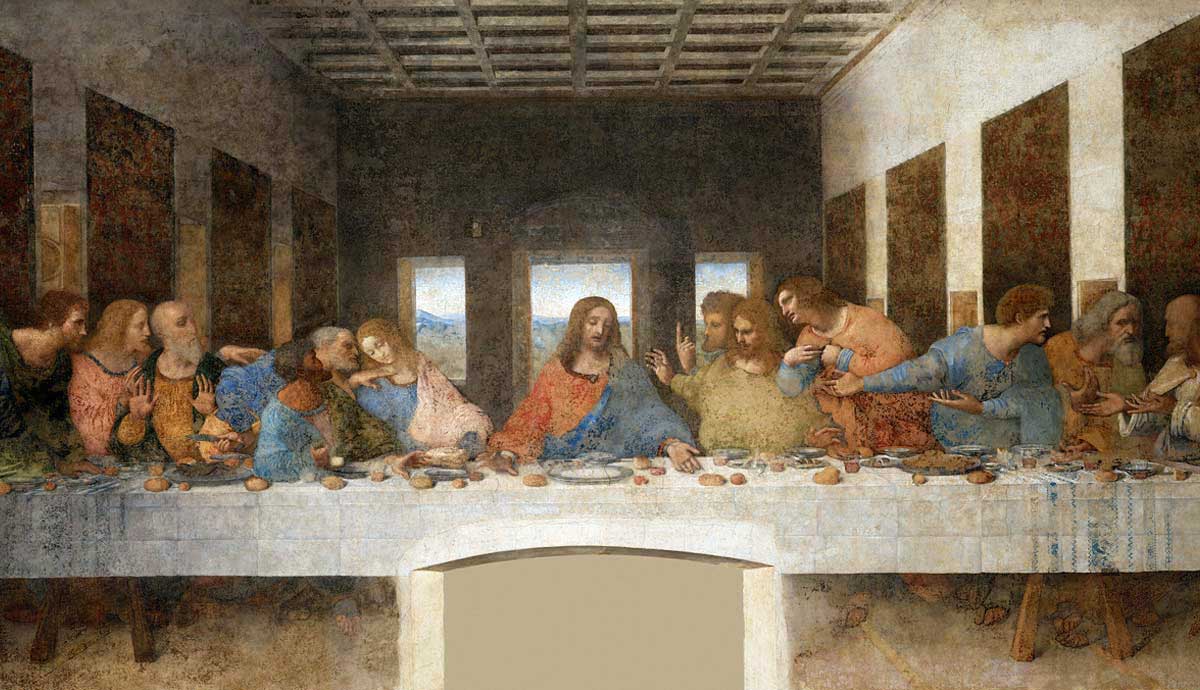
The Eucharist and holy communion refer to the same sacrament. The term Eucharist derives from the Greek word eucharistia, meaning “thanksgiving,” and refers to the entire sacrament, especially the consecration of the bread and wine. In the Catholic tradition, the bread and wine become the body and blood of Christ, a doctrine called Transubstantiation. Holy Communion refers to receiving the consecrated elements. Catholics believe Jesus instituted the sacrament in Matthew 26:26-28:
“Now as they were eating, Jesus took bread, and after blessing it, broke it and gave it to the disciples, and said, ‘Take, eat; this is my body.’ And he took a cup, and when he had given thanks, he gave it to them, saying, ‘Drink of it, all of you, for this is my blood of the covenant, which is poured out for many for the forgiveness of sins.’”
During Mass, the priest consecrates the bread and wine, which they believe become the real presence of God instead of being just a symbol of Christ. It is the sacrifice of Christ on the cross. In early Christianity, believers shared holy communion in house churches, but during the Medieval Period, the Church formalized its use. The Fourth Lateran Council in 1215 defined the doctrine of transubstantiation, teaching that the bread and wine literally become the body and blood of Christ.
Before Vatican II, laypeople typically received only the bread during the Eucharist. After Vatican II, it became more common to present both the bread and the wine. It also saw the Mass translated into the local vernacular rather than presented in Latin like before.
4. Reconciliation
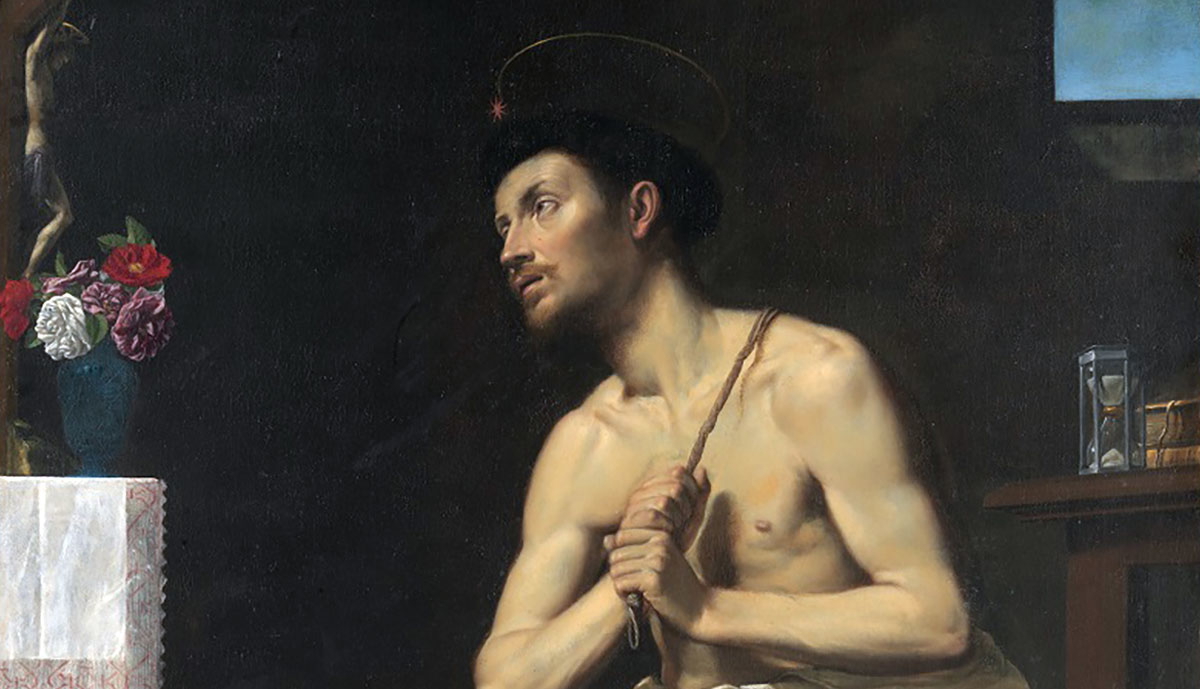
Catholics often refer to reconciliation as penance. Penance offers forgiveness for sins committed after Baptism. It restores the sinner’s relationship with God and the Church. During penance, the believer confesses sins and shows contrition to a priest who can give absolution and perform penance.
Penance can be prayers, acts of charity, or whatever action the priests deem appropriate for the sins committed. Confession symbolizes humility and repentance, while absolution represents God’s mercy and reconciliation. The doctrine is supported by James 5:16: “Therefore, confess your sins to one another and pray for one another, that you may be healed. The prayer of a righteous person has great power as it is working,” and John 20:23: “If you forgive anyone his sins, they are forgiven; if you do not forgive them, they are not forgiven.”
In early Christianity, penance was public, often occurring only once for severe sins due to the theological perspectives of the day. By the 7th century, Irish monks instituted repeated, private confession. The practice spread throughout Catholicism.
The Fourth Lateran Council of 1215 mandated annual confession. After Vatican II, the focus of the rite shifted to healing, and the Church introduced communal penance services. Individual penance, however, remains standard practice.
5. Anointing of the Sick
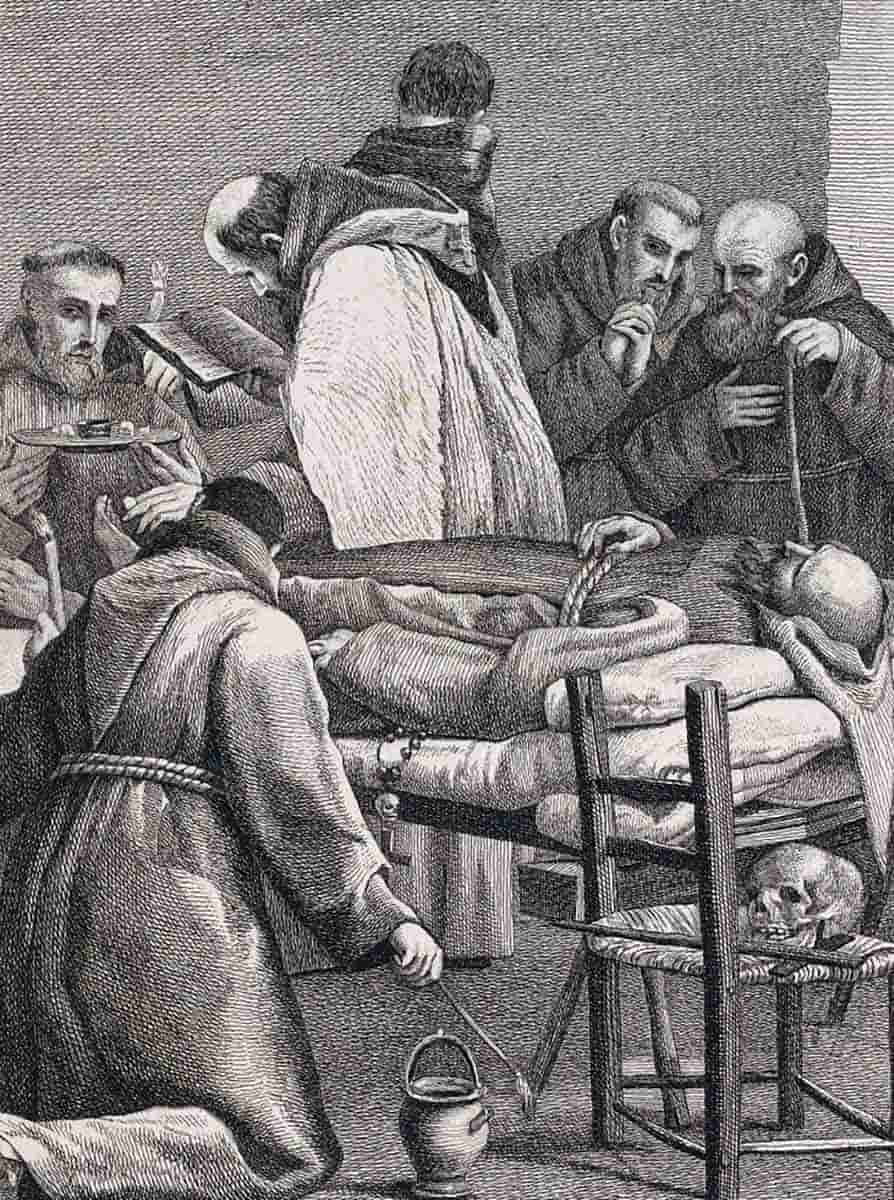
The sacrament of anointing the sick provides spiritual and sometimes physical healing for those who are seriously ill or close to death. During this rite, a priest anoints the suffering individual with oil, symbolizing the presence and healing power of the Holy Spirit. It draws from James 5:13-15: “Is anyone among you suffering? Let him pray. Is anyone cheerful? Let him sing praise. Is anyone among you sick? Let him call for the elders of the church, and let them pray over him, anointing him with oil in the name of the Lord. And the prayer of faith will save the one who is sick, and the Lord will raise him up. And if he has committed sins, he will be forgiven.”
Anointing of the sick used to be called Extreme Unction. It is part of the set of sacraments referred to as Last Rites, which include reconciliation and viaticum, which is communion for the dying. In early Christianity, anointing the sick with oil for healing was widely used, but the practice narrowed by the Medieval Period to almost exclusively be a sacrament for the dying.
Catholics believe this sacrament ties the suffering of the afflicted person with that of Christ, which provides grace and strength to the sick or dying. It could also serve as a redemptive offering in the Catholic tradition.
6. Marriage
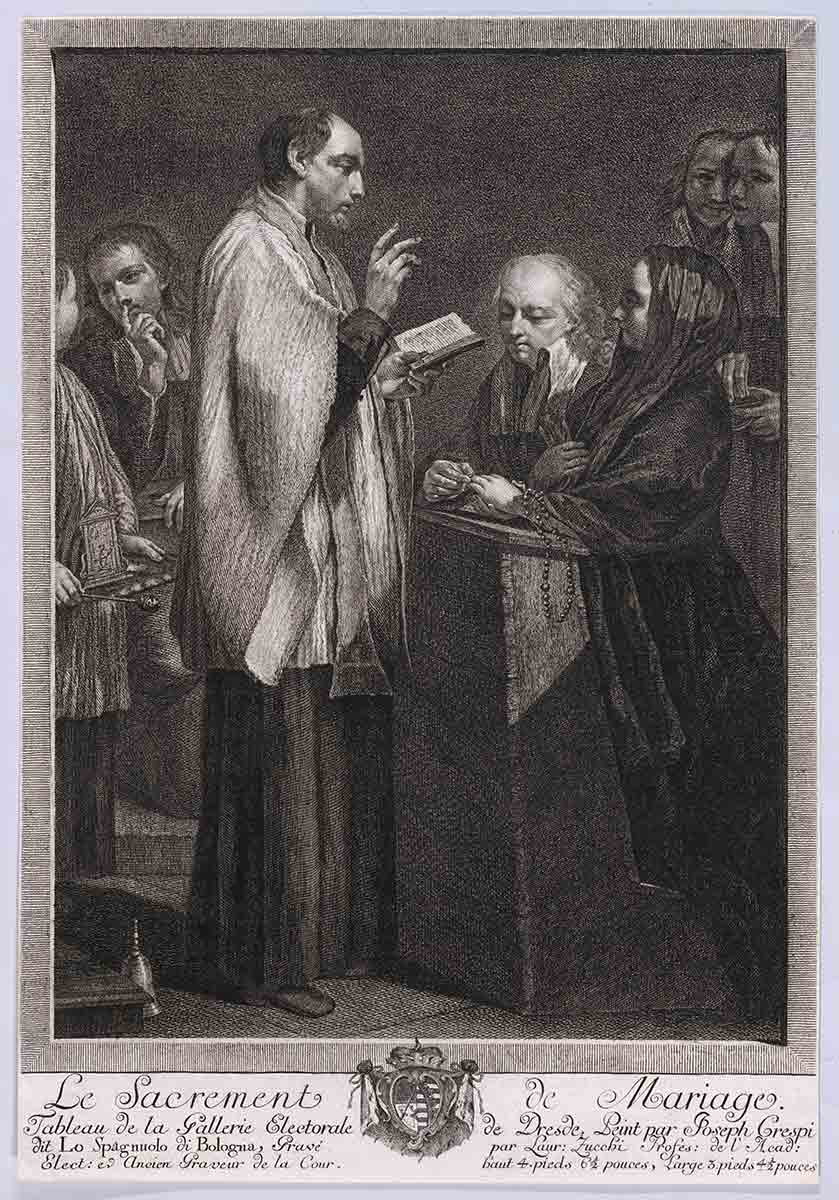
In the Catholic tradition, marriage is a sacrament instituted by God in Genesis 2:18-24, where a man and woman are bound together in a covenant of love, fidelity, and openness to life. The New Testament confirms the inseparable bond in Matthew 19:4-6. The sacrament of marriage offers grace to fulfill the marriage vows and to create a safe environment to have children and raise them in faith.
In the early Church, marriage was a domestic affair, blessed by the community but not always formalized liturgically. Some Roman customs were adopted, emphasizing consent and fidelity. It was not until the 12th century that the Catholic Church recognized marriage as a sacrament under Church Law. The Council of Trent in the 16th century standardized marriage rites, and Vatican II emphasized marriage as a partnership of equals.
7. Holy Orders
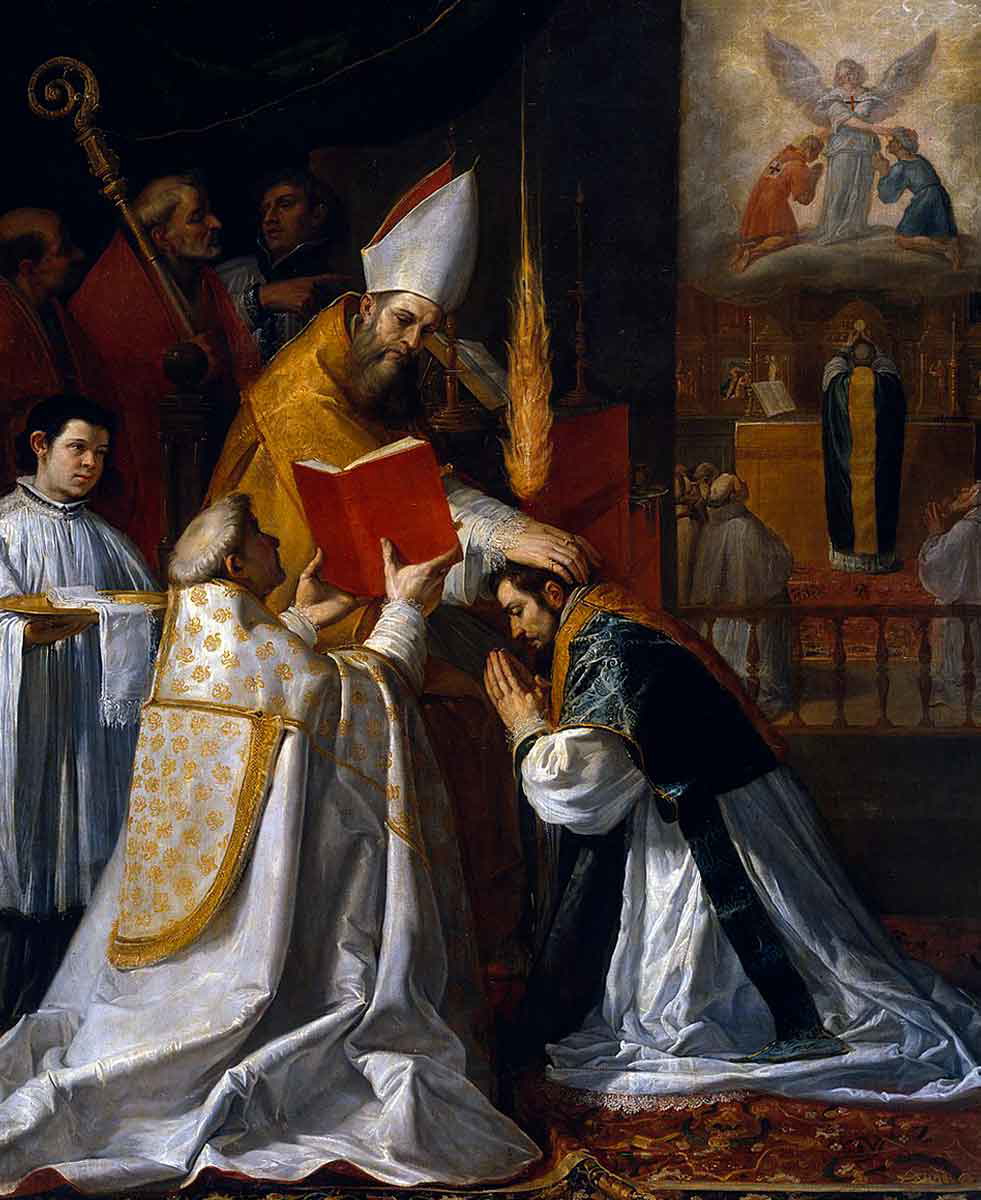
Holy Orders is the sacrament of ordaining persons to offices like deacons, priests, or bishops to serve the Catholic Church. It authorizes the ordained to teach, sanctify, and govern to varying degrees and empowers the clergy to act in persona Christi (in the person of Christ). Various New Testament passages serve as a foundation for this sacrament, like Mark 3:13-19 and John 20:21-23.
In the early Church, ministry was fluid, but by the 3rd century, a set hierarchy of deacons, priests, and bishops had formed, with ordination rites. At that time, celibacy was encouraged but not mandated. The institution recognized Holy Orders as a sacrament at the Second Lateran Council in 1139 CE, where attendees mandated priestly celibacy. Vatican II restored the permanent diaconate, allowing married men to serve.
Today, the Catholic Church still excludes women from ordination. The motivation is that Jesus only appointed men as his twelve apostles, and Paul instructed Timothy that eldership is limited to men.
In Protestantism, most denominations recognize baptism and communion as sacraments. They do not follow the sevenfold sacramental system that developed in the Catholic tradition.