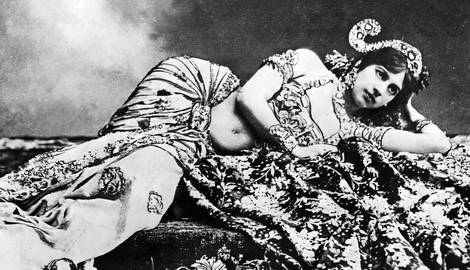
Sensual dancer, spy in World War I, or just an innocent scapegoat? Mata Hari is a woman of intrigue whose many facets continue to fascinate the public. But who was the real Mata Hari, and how did she end up being accused of espionage? We track her complicated life story.
Mata Hari’s Early Years
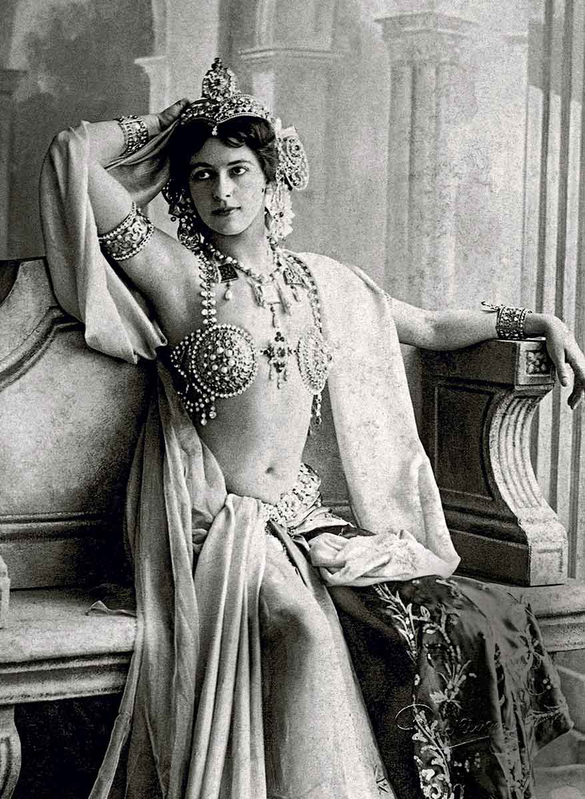
Mata Hari was born Margaretha Zelle on August 7, 1876 in Leeuwarden, the Netherlands. Her father was a well-to-do hatter for most of her childhood. Her life seemed like a typical Dutch childhood. When she was a teenager, the family turned on hard times and her father lost the family money. Her parents would also later divorce, with her mother dying in 1891 when she was around 15, after which time she was shipped off to live with relatives.
Four years later Zelle met and married Captain Rudolph MacLeod, who was an officer in the Dutch army. Sadly, their marriage was not a happy one. It was fraught with issues, including abuse from her husband who was not faithful. They had two children, Norman-John and Louise. Yearning to have a life of her own is what would eventually drive her to transform her into a dancer with a stage name that would make her famous.
Hari eventually moved to Paris, France in 1905 to become a dancer of Asian-inspired movements. She adopted the stage name Mata Hari, or “eye of the day” in Malay, and became famous enough to tour across Europe and Asia. She created a myth that she had been trained in these dances by a priestess and she was actually born in India.
Life as a Spy in World War I
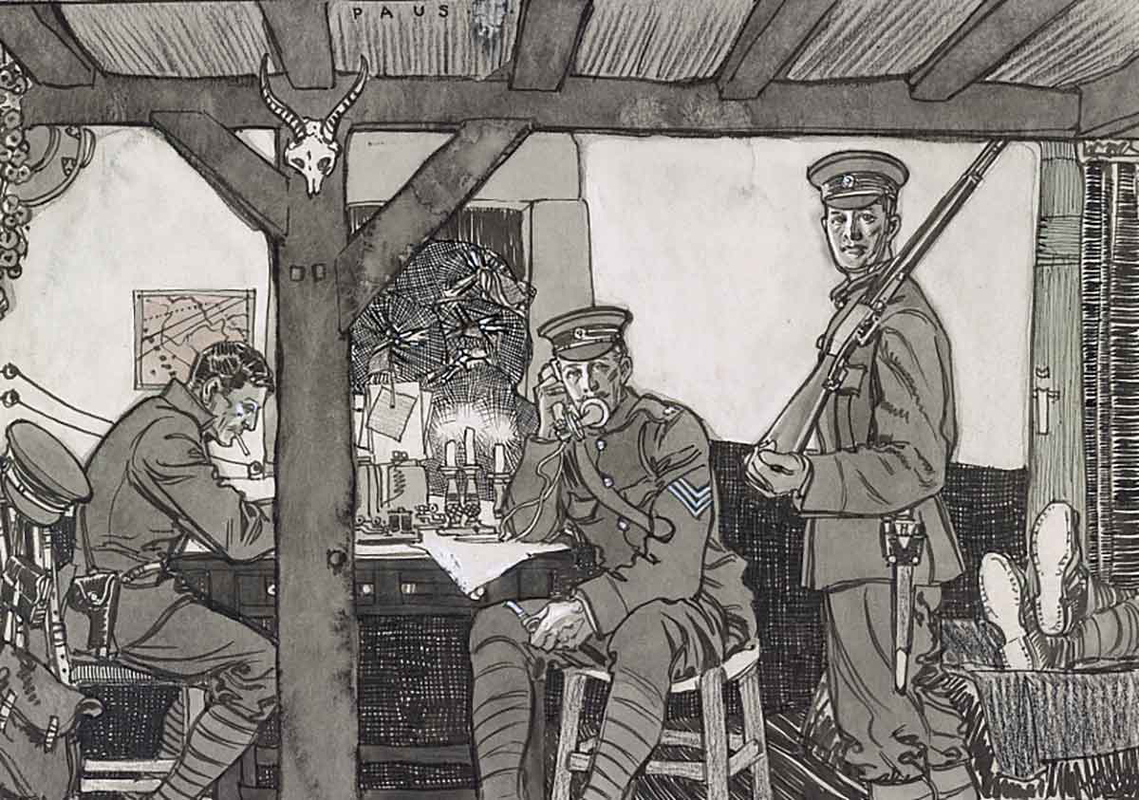
While some of the most popular spy vs spy stories in the United States involve Russia and the Cold War, spies have been around for many years. Espionage was essential in wartime. The need to discover what was going on the other side was planning, if there would be a chance at winning the war. World War I was unique in that, unlike the old form of spying of individuals observing and ferreting out information – which was still utilized – spying through planes with aerial cameras started in this time period.
While movies and books like James Bond show spies with fancy tech gadgets, suave attire and an attitude where they don’t care if they are found out, real spying is a lot less glamorous and usually involves getting close to people to find out information and passing it on to the appropriate parties, while trying to be as inconspicuous as possible. By 1917, over 1000 estimated spies worked in various countries involved in the war.
Besides Zelle, some other famous spies during World War I include Fritz Joubert Duquesne, a South African who led a German spy ring and British spy Sidney Reilly.
Mata Hari and Espionage
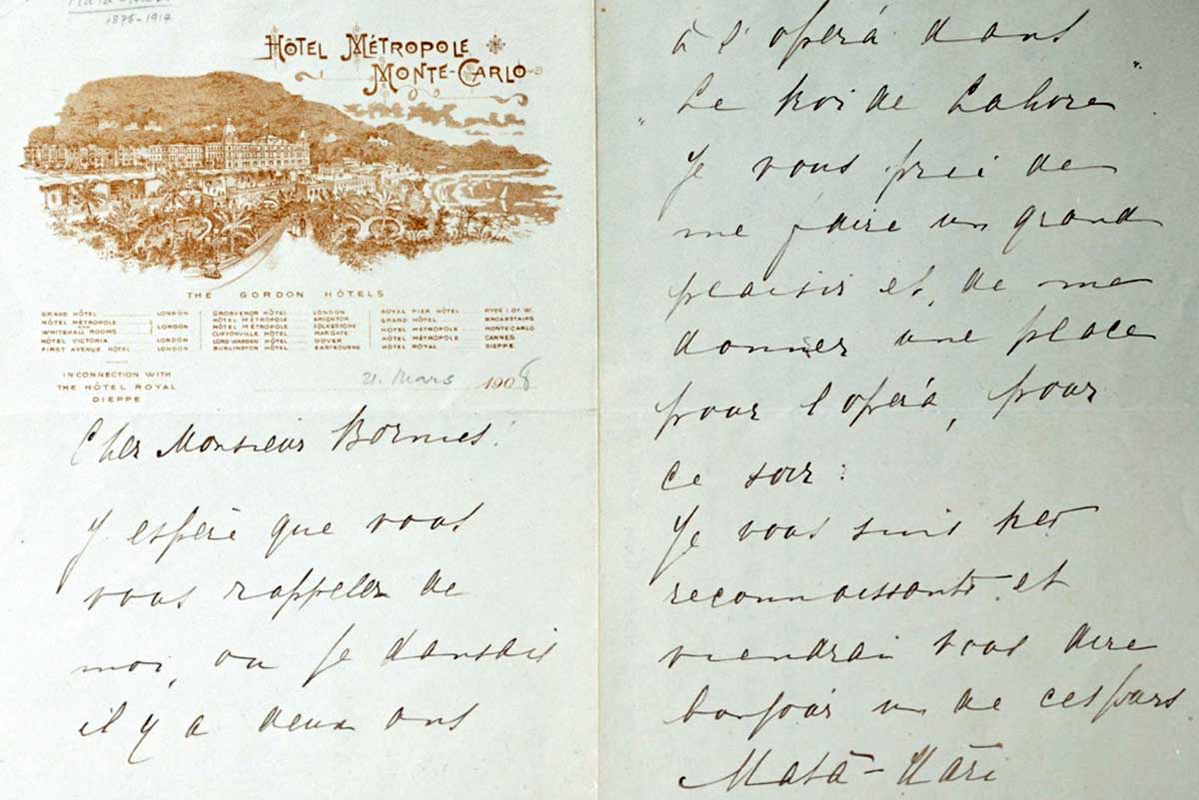
Mata Hari would have been an excellent candidate for espionage. The Netherlands didn’t officially join World War I. Since it was neutral, Zelle could go through the borders of different countries without raising any red flags.
She had apparently been approached by Germany in 1915. Her role as a courtesan and dancer, and her fame, gained her access to military elites and high up individuals. This was crucial for gaining information. She used her charm to listen in on private discussions from high up individuals who didn’t always maintain their guard around her. Whether it was her profession or the fact that she was female is unclear. How much actual information she was able to get outside of more basic knowledge of the war or movements of officers is also unclear.
Mata Hari’s Arrest, Trial, and Execution
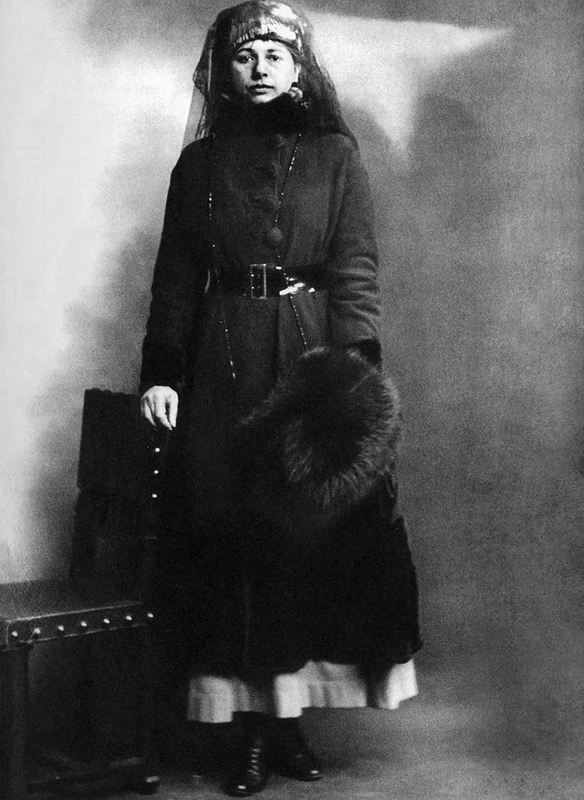
Working as a spy for the French led Mata Hari to have six names, including an assumed double agent for Germany. The death of the agent led them to believe that she had given the names to Germany. She was arrested in Paris at the Hotel Elysee Palace on February 13, 1917. She was tried on July 24 of that year, accused of causing the deaths of thousands of soldiers through her work with Germany. Due to her fame, the trial of “Mata Hari” was a media sensation. According to the St. Louis Post-Dispatch, on August 12, 1917, it had a headline stating that, “[Mata Hari] has left a trail of romance and tragedy unequaled in lurid fiction—From Burma to Paris she drew men to death and disgrace.”
Zelle died on October 15, 1917 by a French firing squad. Even at the time some viewed Mata Hari as a tragic victim of war and circumstance. Some wondered if she deserved such a cruel fate because of her spy work, which was all too common during the war. It certainly calls into question the ways in which women in history have suffered.
Mata Hari’s Lasting Legacy and Image as a Femme Fatale

Zelle’s infamous reputation lasted long past her execution. Even her stage name, “Mata Hari”, is now synonymous with a femme fatale or female spy. Her story has been immortalized in books, films, television shows, and other forms of modern media, including documentaries that talk about her life, and historical fiction.
The interesting part of Mata Hari’s story is how much of it is actually true. The trial was largely built on circumstantial evidence and the need to have a reason the war was going badly. According to the press, the climate of acceptable forms of entertainment in France had changed during the war, making her an outsider with her risqué dance styles. Historian Wesley War said that, “They needed a scapegoat, and she was a notable target for scapegoating.”
So, was she a femme fatale, a dangerous seductress who preyed on men in order to gain access to information, or was she as American historians Norman Polmer and Thomas Allen say, merely a victim of men, duped to be a pawn in a larger game? The questions remain unanswered.