
Latin’s first official use in law started in 529 CE. Byzantine Emperor Justinian commissioned the codification of the Empire’s laws. Called the Corpus Juris Civilis, this work combined centuries of Roman law, jurisprudence, and imperial declarations. This work would serve as the basis for civil law across medieval Europe. As time went on, Roman law and, thus, Latin would be melded into English common law. Latin became the scholarly lingua franca among medieval universities.
A Canonical View

The Catholic Church swapped from Greek to Latin in the 4th century. This official switch made Latin the language of theology, administration, and law. As the canon law, papal decrees, and documents switched to Latin, a secular spillover eventually followed. In medieval Europe, church and state often overlapped. So, monarchs and leaders followed suit, drafting laws in Latin matching the Church’s authority.
Latin in the New World

With the discovery and subsequent conquest of the New World, European powers brought their legal systems along. Their colonial administrations implemented Roman law. Yet each differed while retaining Latin terminology, structure, and procedures. In Spanish- and Portuguese-colonial territories, the laws remained codified, retaining canon and medieval practices. Use of Latin terminology remained constant.
France’s colonial laws stayed systematic with concise articles. Latin concepts were used but translated into French for accessibility. Latin was a scholarly or an elite language after all. Great Britain’s American colonies inherited the common law. This law system used precedent, or past cases, to decide new cases. While English was the common law’s language, Latin persisted in legal maxims and technical terms, such as habeas corpus and mens rea.
The Immutability and Precision

Though officially a “dead” language, this oddly plays to Latin’s advantage. Unlike modern languages, Latin won’t change into dialects, slang, or regional expressions-evolution is constant. As a dead language, nothing is absorbed or diluted.
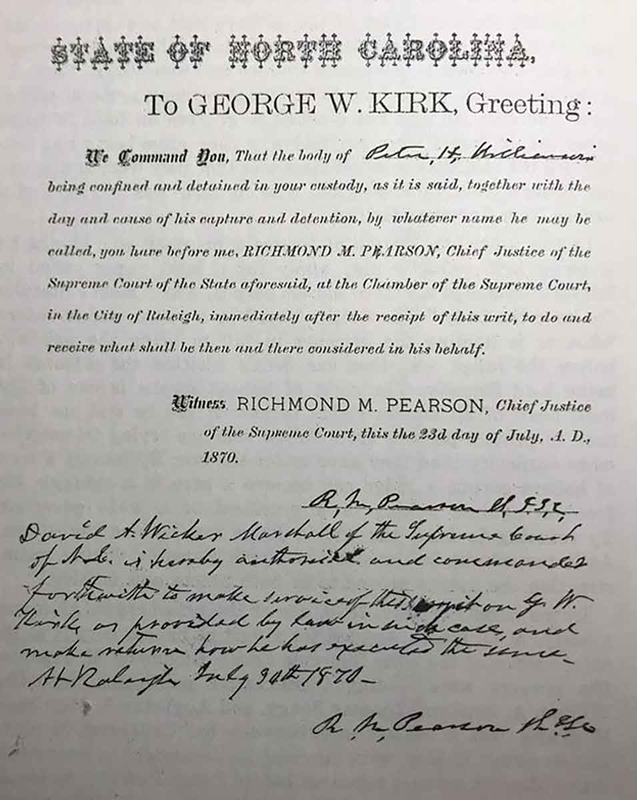
With no changes, vocabulary and terminology remain constant. A Latin word used decades or even centuries ago means the same. For example, habeas corpus, Latin for “you shall have the body,” has the same legal meaning as when England’s 1215 Magna Carta first recognized it. With no linguistic drifting, Latin’s legal terms are immune.
Latin’s dominance in legislation also stemmed from its clarity and conciseness. Over time, Latin’s stability prevented vagueness. Latin offers only a static interpretation, which can be crucial in legal matters. A good sample is trust. The legal definition is a fiduciary relationship in which one party holds property for another. The everyday meaning is ‘confidence’ or ‘reliance’. Two meanings can confuse.
Besides Latin’s non-ambiguity, Rome’s linguistic legacy condenses complex ideas into easier terms. Good instances are res judicata and the well-known habeas corpus. The former, meaning a matter already judged, boils down to two words: preventing retrials. The latter, or you shall have the body, uses two words to define protection against unlawful detention.
A Professional Distinction and Authority

A certain exclusivity helped Latin maintain its legislative grip. As a non-daily language, Latin behaves as an almost proprietary language. Proficient speakers are either in the legal trade (or clergy!). As with doctors, those with knowledge of Latin indicate a trained professional.
Finally, Latin’s symbolic clout conveys the weight of legal concern. When used in a legal context, a Latin term such as prima facie, meaning “at first sight,” conveys seriousness and formality. One can understand the “gravitas” of the situation. Latin adds permanence.
A Foothold in Education

Traditionally, obtaining a law degree has required studying Latin. Students memorize Latin maxims, such as ignorantia juris non excusat, meaning that ignorance of the law is no excuse. In plain speak, the maxim means a person cannot claim innocence by being unaware of the law. Latin study is typically encouraged too for comprehending complicated terminology.
During their studies, law students will find Latin maxims in lectures, judicial opinions, and casebooks. These are used in class, and courts often quote them to reinforce precedents. The constant use of Latin at school and later in their careers only reinforces Latin’s dominance in legislation.
Latin’s firm grasp on legislation is not by accident. This is the result of different paths. Latin’s exactness as an immutable dead language means no change. Thus, a lawyer in Toronto, Washington, and London will understand the same terminology.
Law students are also introduced to Latin early in their education, which ensures continued use. With all that, Latin’s rule will only continue.