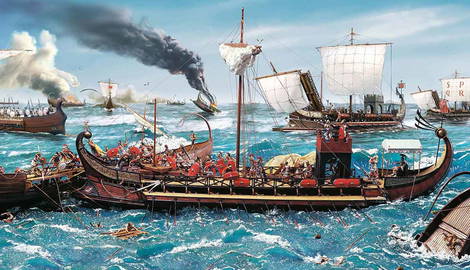
Imperial Rome won its empire on the back of its disciplined legions. But Rome’s power depended on maritime success nearly as much. A professional, well-equipped navy enabled fast communication, troop movements, and supply deliveries. Imperial fleets helped make the Mediterranean a Roman lake, despite a fluctuating but always persistent pirate problem.
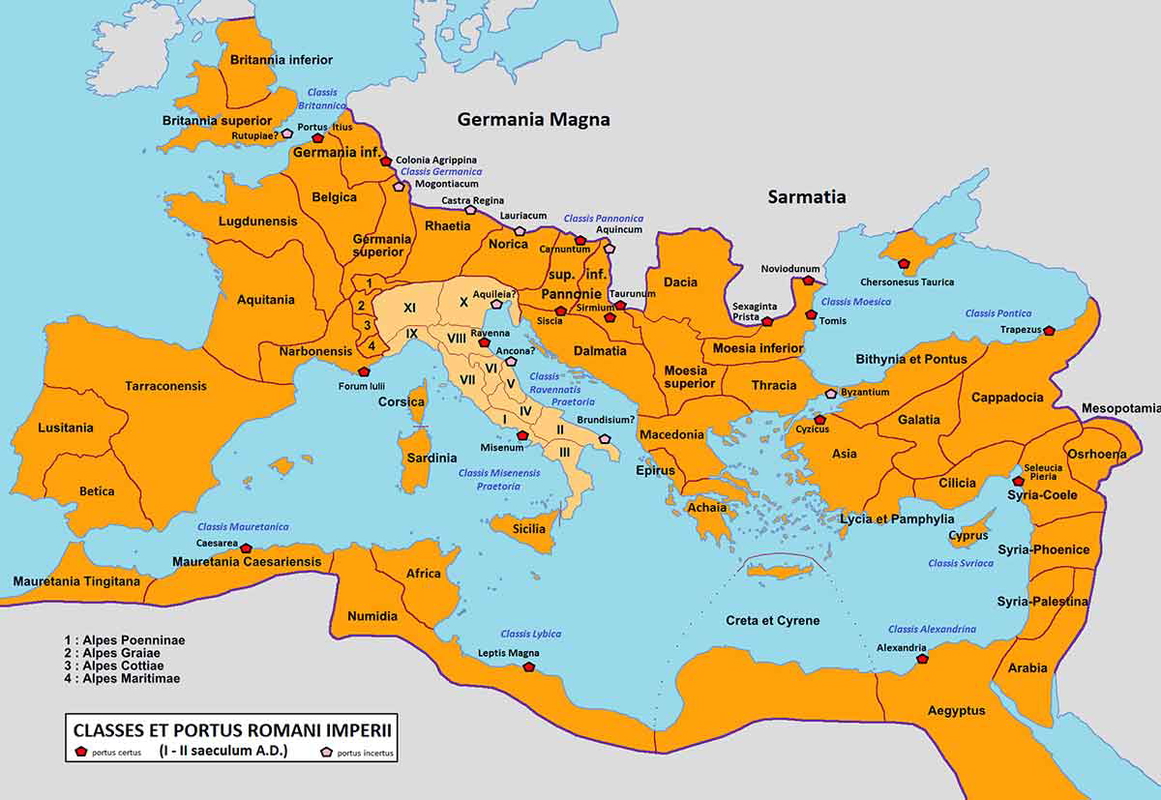
Rome created two primary fleets: the Classis Misenenis (near Naples) and Classis Ravennatis (near Ravenna). The former’s jurisdiction was the Western Mediterranean, while the latter covered the Eastern half. Additionally, Rome created four provincial fleets, patrolling major rivers (the Danube and Rhine) and far-flung regions like the Black Sea.
The navy’s primary role was to keep sea lanes open, pirate-free, and grain supplies secure. This last role became critically important as Rome imported all its grain.
Rise of the Navy
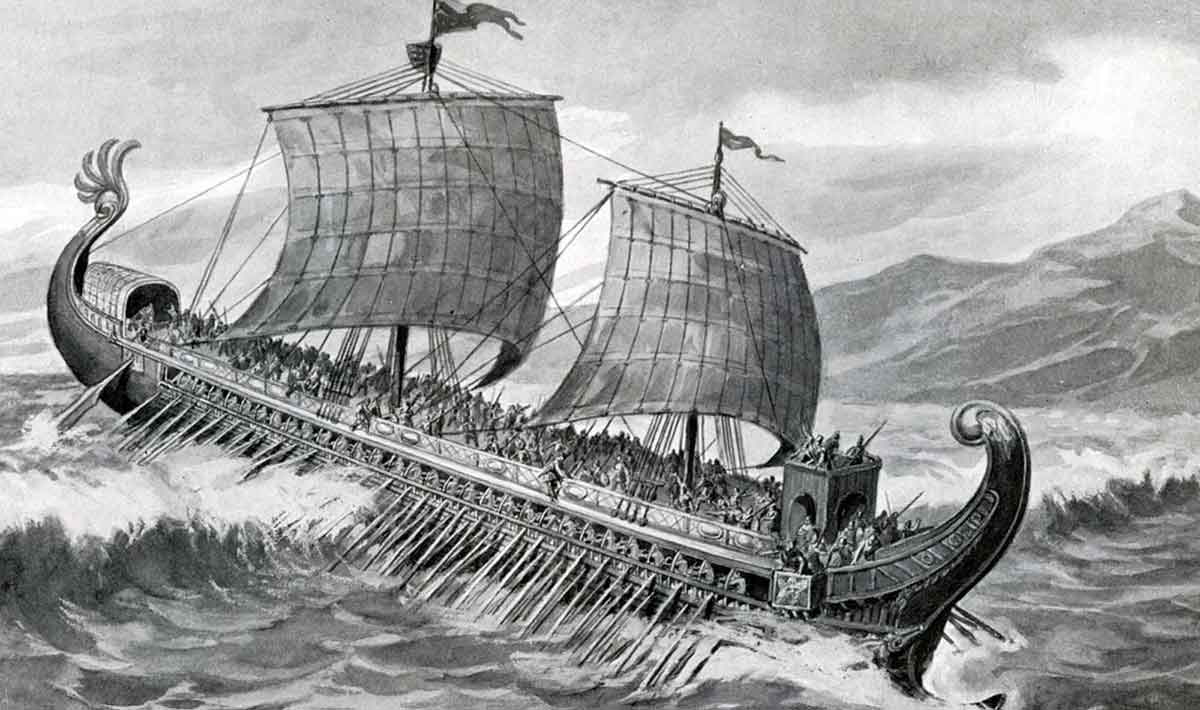
Rome’s Imperial Navy resulted from the Punic Wars, a bitterly fought campaign against Carthage, the Phoenician merchant city-state. From 264 to 146 BCE, they battled. Initially, only Carthage had a powerful, professional navy. The early Romans, still expanding, battled Carthage over Sicily.
To fight the Carthaginians, Roman adaptability kicked in with a dose of luck. During a minor skirmish in the Straits of Messina, a Carthaginian quinquereme ran aground. The Romans copied the design, building up a rough, workable fleet. They also trained thousands of sailors, embarked thousands of soldiers, and went to war.
At the Battle of Mylae in 260 BCE, the Romans defeated the Carthaginians. The Romans introduced the corvus, a boarding bridge. Used in close quarters, this clever device allowed soldiers to swarm the other ship. This new navy would defeat Carthage’s navy two more times by 241 BCE. This secured the Mediterranean, making Rome a naval superpower. Rome’s fleets later helped destroy Carthage. However, not until 31 BCE that Emperor Augustus created a professional Imperial navy as a permanent institution.
Imperial Fleets, Ships, and Roles
Rome established the first naval bases at Ravenna and Naples. As Rome’s reach lengthened, the government founded more, six in total. These provincial fleets included Britannia (English Channel), Germania (Rhine and North Sea), Alexandrina (Cairo), and Syriaca (Syria). Imperial fleets utilized different vessel types, built for speed, carrying capacity, or endurance. Unlike medieval sailing ships, muscle-powered oars drove typical Classical vessels. Ship types included:
Liburnae: A nimble, two-tiered galley ideal for scouting or piracy patrols. This became the navy’s workhorse plus cheaper to build.
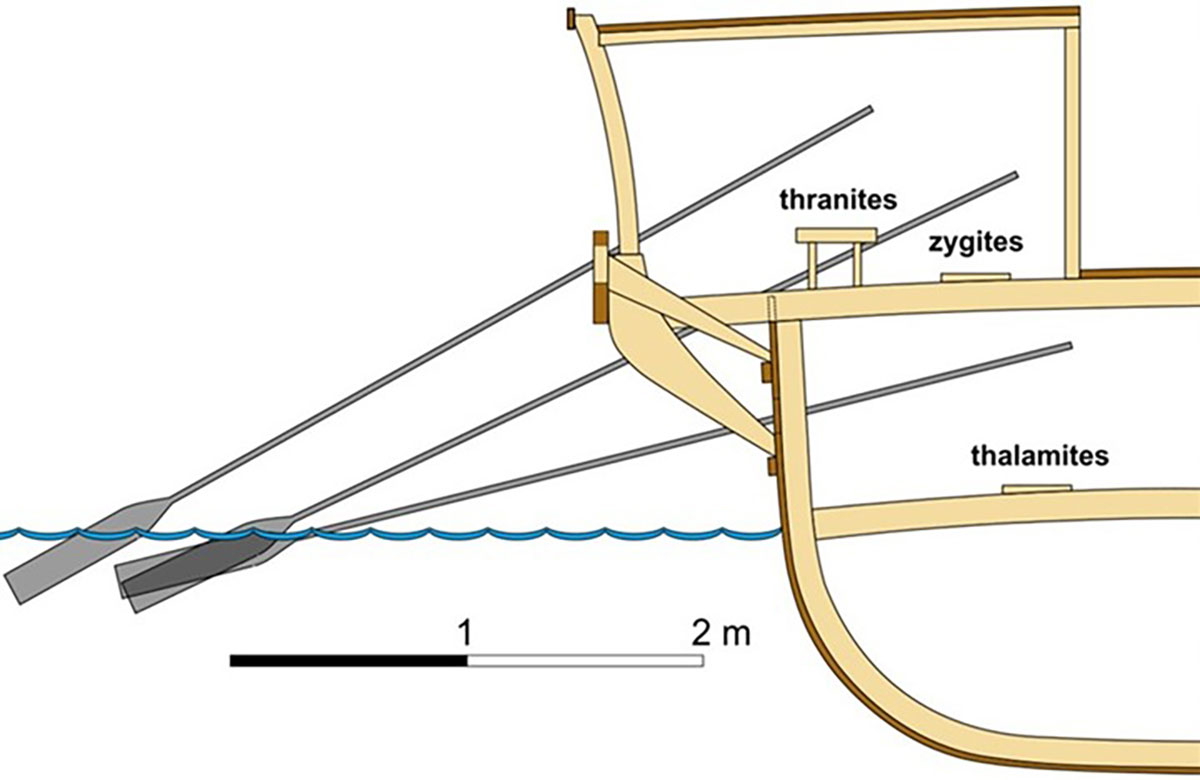
Triremes: Bigger warships with three or more banks of oars. Big ships like this proved ideal for rare fleet actions. They became less common as the Mediterranean became a Roman pond.
Navis Oneraria: Meaning “cargo ship” in Latin, these large merchant cargo ships carried Imperial Rome’s cargo. Built for endurance, these single-sail vessels transported all goods, though Egyptian grain was a critical cargo.
The Imperial Navy, like today’s blue-water navies, had multiple missions, such as convoy escorts, continual piracy patrols, and river control. Like the legions, the navy functioned as the Imperial backbone.
Homes for The Fleet
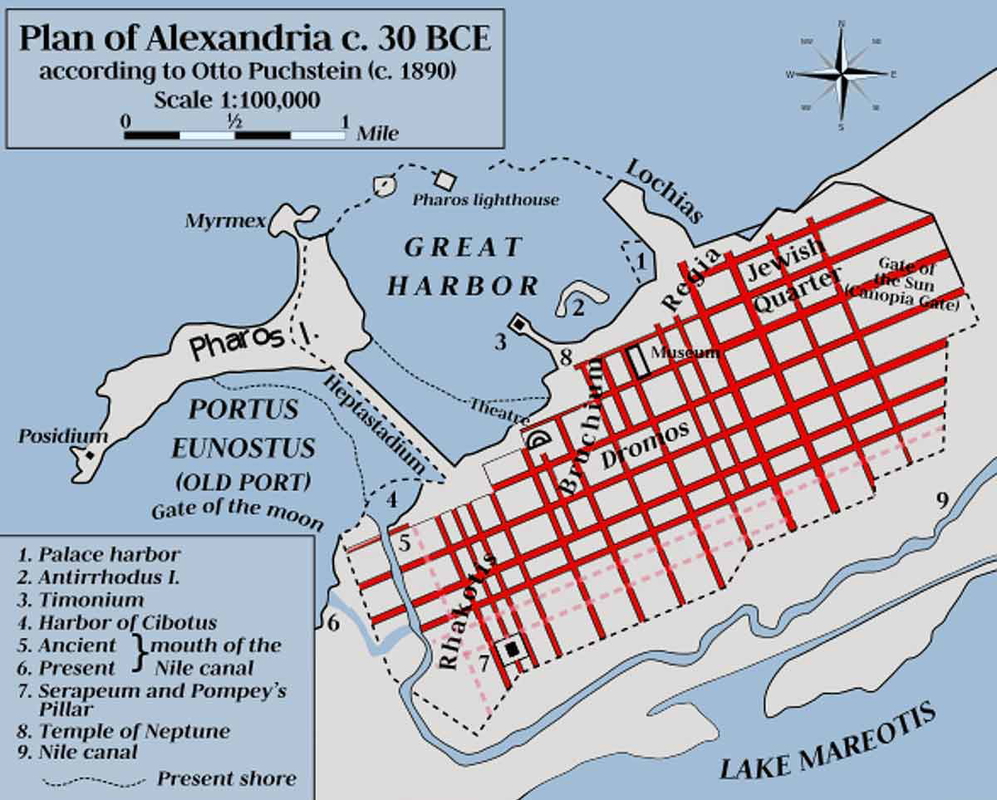
Given the Empire’s breadth, it required a network of maritime installations. Like any massive Roman effort, they demonstrated their skills in constructing infrastructure. With such grand installations, the Roman fleets could operate year-round.
Roman engineers tried to use natural harbors wherever possible. But they built ports protected by massive breakwaters if needed. The engineers constructed these using clever pozzolana-hydraulic concrete, which hardened underwater. This let Rome build durable, safe harbors almost anywhere. Besides breakwaters, the Romans built lighthouses, curved moles, and dredged channels that allowed fleets to anchor safely, regardless of the weather.
Man-made harbors allowed for control; several took on a strategic role. Portus, near Rome, was an immense artificial harbor. It contained hexagonal bases, connecting canals with the Tiber River, and storage facilities. The bases offered navalia (shipyards) to refit or build vessels, barracks, and workshops to maintain the regional fleets.
To provide further support and increase their reach, Rome built signal towers, coastal forts, and watch stations. These meant rapid communication. Engineers also dug canals, connecting inland naval bases to the sea.
Imperial Navy Maritime Strategy and Logistics
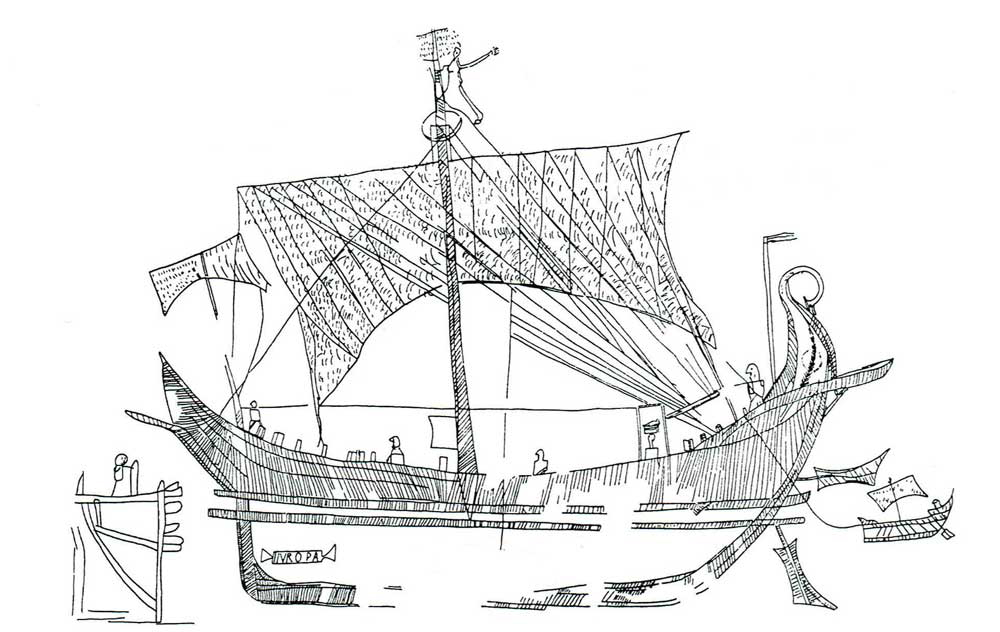
While the Imperial Navy took on many tasks, protecting grain convoys became a crucial priority. North African and Egyptian grain fed Rome. Officials organized convoys around seasonal patterns, often escorted through dangerous areas. Also, the fleet enabled quick troop deployments, diplomacy, and the protection of trade. Rome’s Imperial Fleet is a lesser-known bit of Roman history. Yet its role was crucial to Imperial success.