Yunnan, located in Southwestern China, is home to around 47.2 million people. The province borders several Chinese provinces, as well as Tibet, Myanmar, Laos, and Vietnam. There are eight autonomous prefectures in Yunnan and it is China’s most ethnically diverse province, with members of 25 separate ethnic groups living there. Yunnan is known for its snow-capped mountains, rich biodiversity, tropical rainforests, and unique cuisine. The region’s cuisine is noted for its use of mushrooms, flowers, algae, ferns, and even insects.
1. A UNESCO World Heritage Town: Lijiang

Lijiang is a city in northwest Yunnan with an area of roughly 8,193 square miles. The city’s population of around 1.3 million is small by Chinese standards. Lijiang is one of the most popular tourist destinations in Yunnan and with good reason. The Lijiang Old Town, a UNESCO World Heritage Site, is the main attraction in the city. The Old Town features historical architecture in a number of different styles, along with a sophisticated ancient water supply system. Lijiang is also home to 22 ethnic minorities.
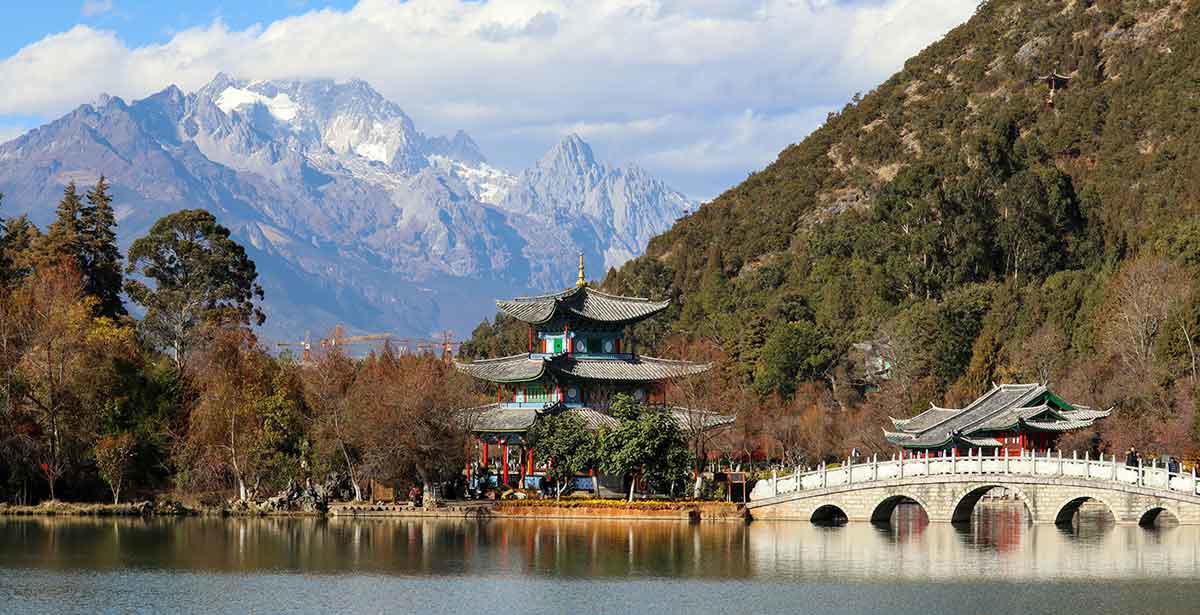
Near Lijiang, there are also several impressive natural attractions. One such attraction is the Jade Dragon Snow Mountain, known locally as Yulong Xueshan. This area is comprised of a mountain range in the Yulong Naxi Autonomous County of Lijiang, with the highest peak reaching 18,360 feet above sea level. Visitors wishing to see the mountain can catch a bus from Lijiang Old Town, and the mountain is equipped with a cable car for those who want to go to the top.
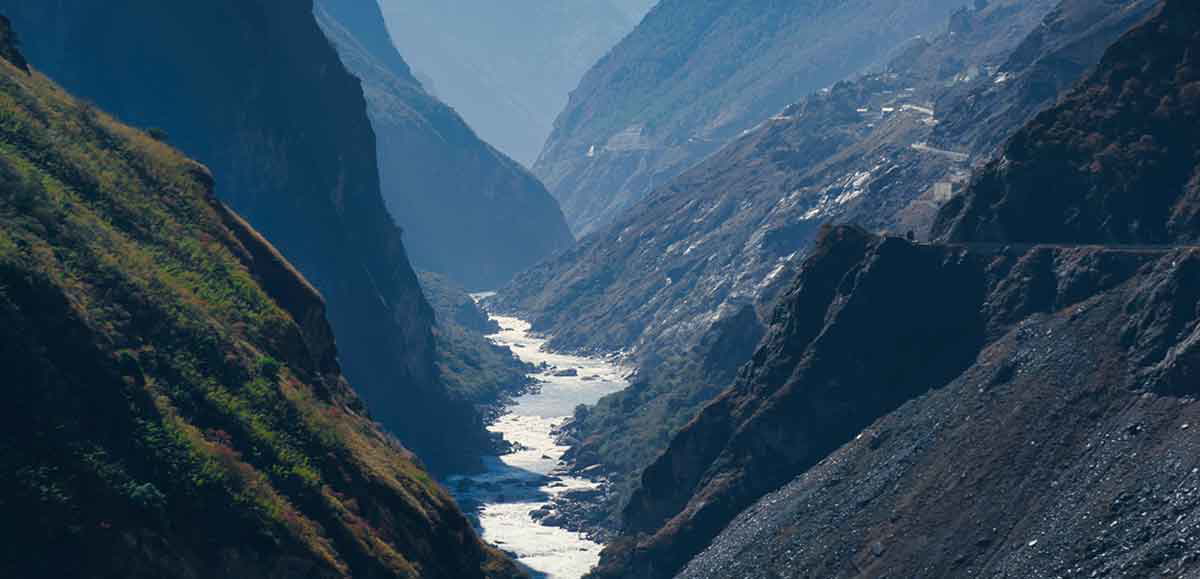
Another popular attraction is the Tiger Leaping Gorge, a canyon on the Jinsha River, which is around 37 miles north of Lijiang. The gorge is within the Three Parallel Rivers of Yunnan Protected Areas UNESCO World Heritage Site and has a maximum depth of around 12,434 feet from river to mountain peak. It is said that the name originated from the story of a tiger who was being hunted and jumped across the narrowest part of the river with the help of a rock in the middle.
2. Dali: The Charming Town of Three Pagodas

Though there is a newer Dali City, the Dali that draws in visitors is Dali Town in northwest Yunnan. Dali was located in an important position historically, situated on trade routes that went between China, Tibet, Myanmar, and the rest of Southeast Asia. The area was first settled by the Bai ethnic group roughly 3,000 years ago and went on to become the capital of the Nanzhao Kingdom in the 8th century.
Dali Old Town covers an area of nearly one square mile and is surrounded by ancient city walls. It has become a popular tourist attraction due to its well-preserved architecture and charming atmosphere. The most popular sites in Dali for visitors include the Three Pagodas, the ancient city gates, the Cang Mountain Range, the Demi-Gods and Semi-Devils movie set that was constructed in the early 2000s, and the Dali Museum.
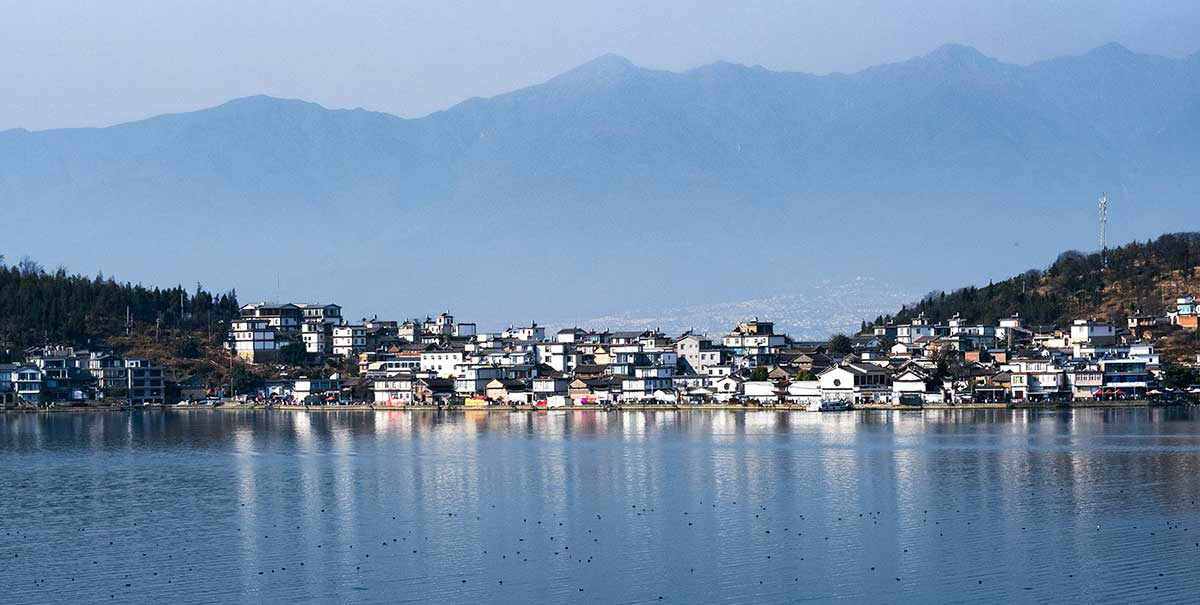
The Three Pagodas are perhaps the most famous attraction in Dali, after the Old Town. This site is what it sounds like—three pagodas arranged in the shape of a triangle. These pagodas date back to the Nazhao Kingdom and were constructed in the 9th and 10th centuries. They are each made of brick covered with white mud and are considered a symbol of Dali. Visitors to Dali can also visit Erhai Lake, which is surrounded by small villages populated by members of the Bai ethnic group.
3. The Real-Life Shangri-La

Shangri-La is in Yunnan’s Tibetan area, in the northwest of the province. The city, known in Chinese as Xianggelila, was originally called Zhongdian. However, to promote interest and tourism, it was renamed in 2001 after the fictional land from James Hilton’s 1933 novel Lost Horizon. Shangri-La is the capital of the Diqing Tibetan Autonomous Prefecture, and the town sits at an elevation of nearly 10,000 feet. Alongside the Tibetans that call Shangri-La home are members of the Naxi ethnic group.
Shangri-La made the news in January 2014 when a massive fire broke out in the Dukezong area, a Tibetan neighborhood. Roughly 2,600 people were displaced, and 242 homes and shops were destroyed. This accounted for around 50% of the area of Shangri-La’s 1,000-year-old Old Town. Reconstruction began immediately, and despite the extent of the destruction, most tourist attractions were not damaged.
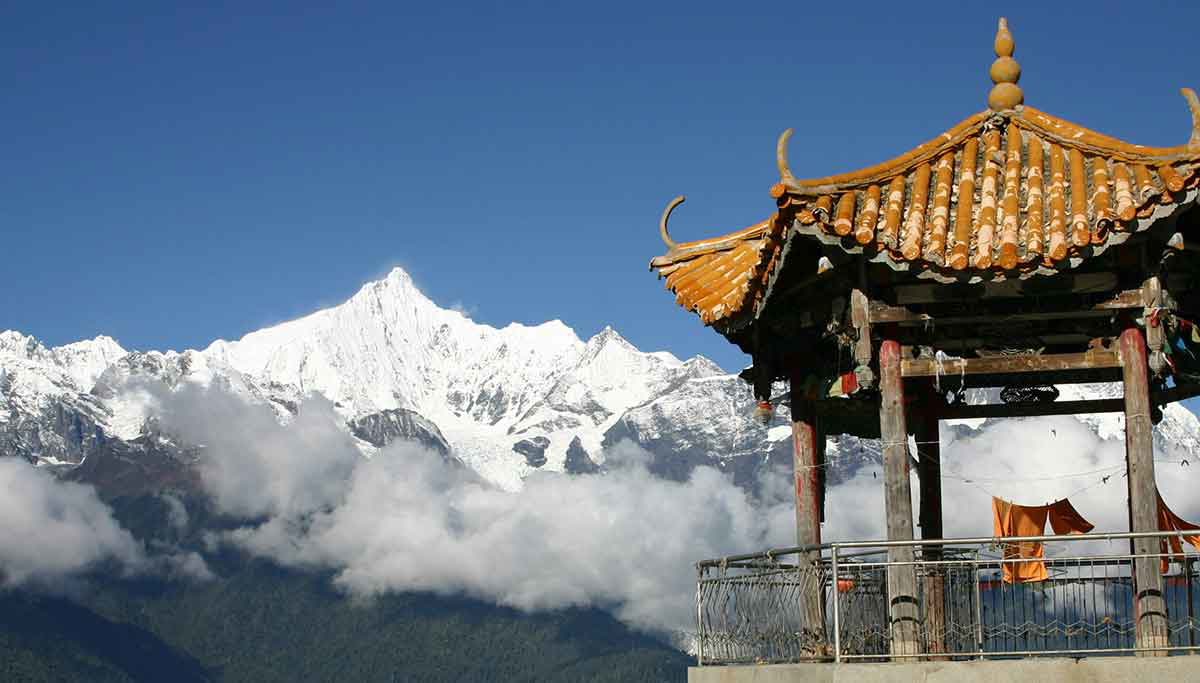
Despite being a bit remote, Shangri-La is popular with tourists, particularly during summer, as the elevation ensures it remains relatively cool. Those who wish to see Shangri-La have several transportation options—the city has its own airport and train station. There are also frequent buses departing from other cities in Yunnan, and many visitors to Shangri-La travel on to Lhasa, either by plane or car.
When visiting, don’t miss the Old Town, Ganden Sumtseling Monastery, Tortoise Hill and the Golden Prayer Wheel, Napahai Nature Reserve, Pudacuo National Park, and the nearby town of Yubeng. Visitors may also visit Tacheng’s Snub-Nosed Monkey Park. There are only 2-3,000 of these monkeys left, and this park is the only place to see them in the wild.
4. The Spring City: Kunming
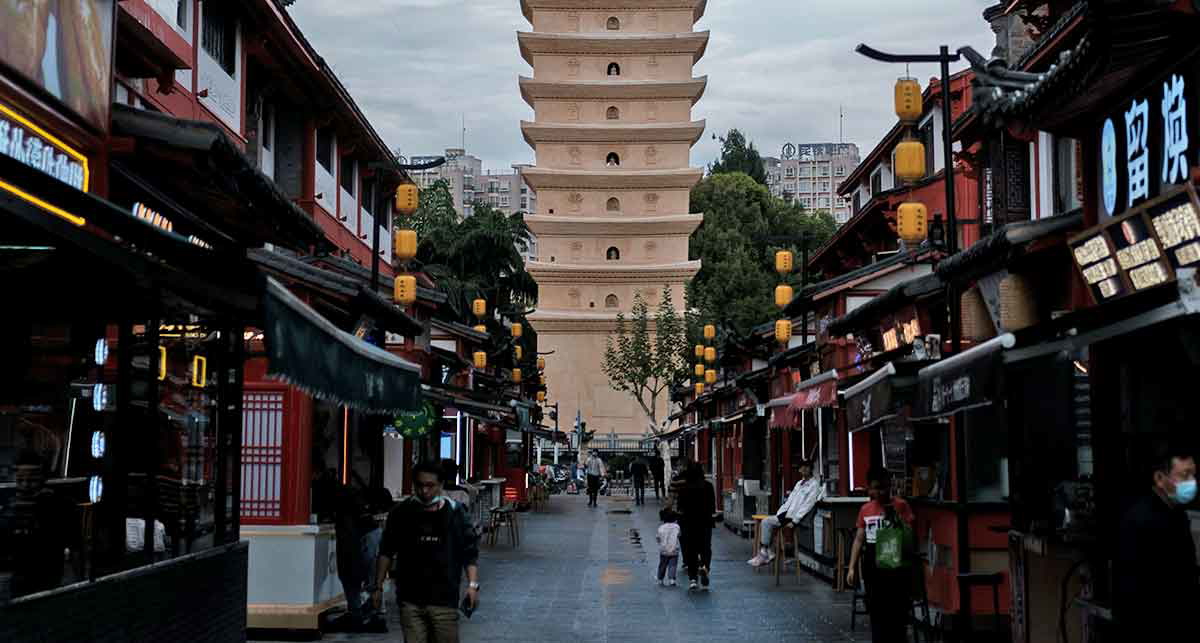
Kunming is Yunnan’s capital and largest city, with a population of nearly 8.5 million. The city features a previously walled old city center, along with residential, commercial, and university areas. It is one of the top cities in the world for scientific research and education, with numerous universities and an astronomical observatory. Kunming’s economic importance comes from its location near China’s borders with Myanmar, Laos, and Vietnam.
Historically, Kunming sat along a caravan route that went from China into Southeast Asia, India, and Tibet. The area’s earliest settlements date back to Neolithic times. There was an influx of people to the area during the Second Sino-Japanese War, as many fled the north and eastern coastal parts of China. Many enterprises and even universities were moved to the area from other parts of China. Kunming remained a walled city until 1952 when the city government had hundreds of people tear it down to make way for a road. In recent decades, the city has been built up into a thriving metropolis.

Kunming is famous for its mild climate, earning it the nickname “Spring City.” Visitors can visit the recently renovated Old Town, which has ancient temples, restaurants, alleys, and traditional shops.
Green Lake Park, in the city center, is particularly beautiful in spring when the flowers are in bloom. The Stone Forest is a popular site near Kunming which features towering karst rock formations. The Western Hills are a series of scenic hills on the western edge of Kunming that hold temples and other attractions, along with views of the city.
The Golden Temple, a Buddhist temple on Mingfeng Mountain, is famous for its architecture and gold leaf decorations. A little further from Kunming is Luoping, an area famous for its bright yellow rapeseed flower fields.
5. The Otherworldly Honghe Hani Rice Terraces
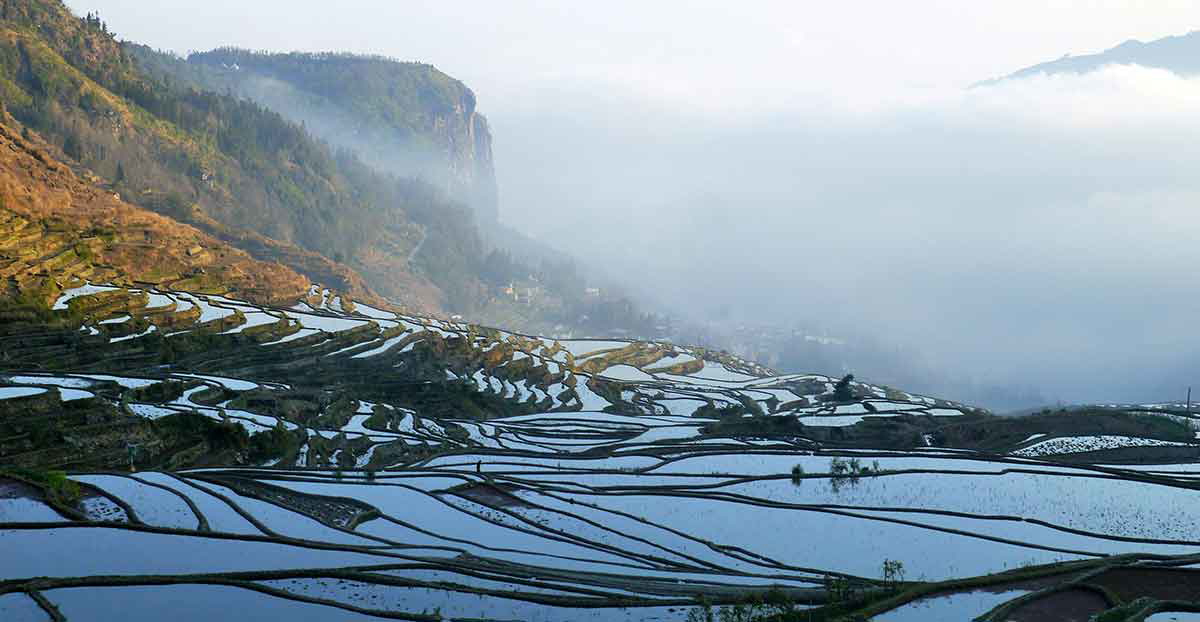
The Honghe Hani Rice Terraces are located in Southwestern Yunnan and stretch across four counties: Yuanyang, Honghe, Luchun, and Jinpin (with the majority in Yuanyang County) and cover 1,000,000 acres. Due to their excellent construction and importance to the local Hani people, the terraces were listed as a UNESCO World Heritage Site in 2013.
The terraces were constructed due to the region’s mountainous terrain and high annual rainfall. The terrace systems are complex, with artificial aquifers made of sandstone and irrigation channels developed to distribute water. Rice production is an important part of the local Hani culture and calendar, and this ethnic group has operated these terraces for over 1,300 years. The terraces incorporate villages, forests, and water supply, which is part of the reason they have been in use for so long. The mountaintops have forests, which are key for capturing the water that drains to the fields below. Drains and canals divert the water into the individual terraces.

The Honghe Hani Rice Terraces are less visited than other rice terraces in China because they are harder to reach. Yuanyang County does not have an airport, though one is now under construction. Currently, visitors can reach the area by train, long-distance bus, or car. Within Yuanyang County, transportation is limited to taxis or local buses. It is also important to consider when to visit the rice terraces, with travel recommended between November and April. The paddies are harvested in autumn and then filled with water. In April, the rice transplanting takes place, and in summer, the rice plants grow tall.
6. Xishuangbanna: A Piece of Southeast Asia

Xishuangbanna is a remote autonomous prefecture in the south of Yunnan, bordering the southeast Asian countries of Laos and Myanmar (Burma). The area is home to several ethnic groups, including the Shan (of Burmese origin), Dai, and Tai (of Thai origin).
Historically, the Chinese, Burmese, and Lanna dynasties all contended for this land, and it passed hands many times over the years. At one point, the region was jointly ruled by Burmese and Chinese representatives. In 1886, Xishuangbanna became part of the British Raj when the British Empire occupied Upper Burma (1886), and in 1892, it came under the control of the Qing Dynasty of China.
Xishuangbanna is often considered the “Thailand of China,” as it differs aesthetically from the rest of the country. It has a tropical climate and is biodiverse. For instance, China’s last remaining Asian elephants are in Xishuangbanna, now living in a reserve.
The capital of the area, Jinghong, has its own airport, but the number of connecting cities is relatively limited. Visitors can also access Xishuangbanna by bus or train from within Yunnan or nearby provinces. A railway was constructed in the 2010s that connects Xishuangbanna with the Laotian capital of Vientiane, and travel from Thailand is also possible. The rainy season in Xishuangbanna is from May to August, but travel between September and April is comfortable.
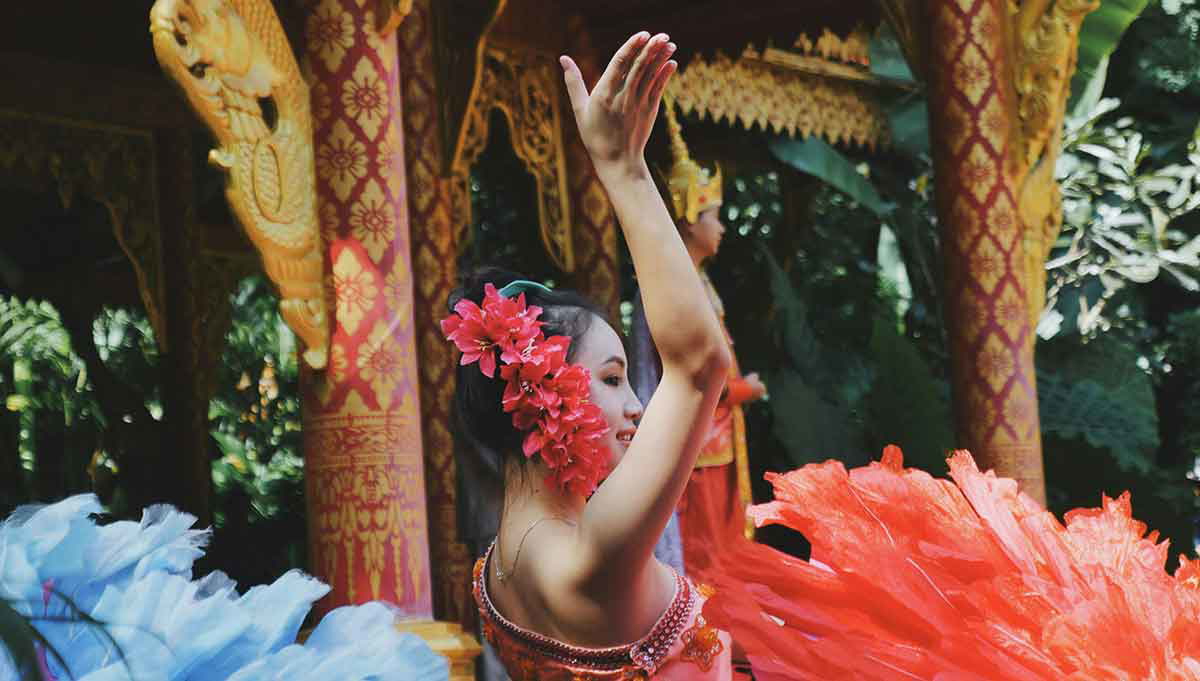
The most popular attractions for visitors in Xishuangbanna include the Manfeilong Pagodas, the Menglun Tropical Botanical Garden, Gaozhuang Night Market, the Primitive Forest Park, Manting Park, the Jinghong Pagoda, and the Jingzhen Pavilion. The 1,400-year-old Manchunman Temple is another popular site that attracts Buddhists from Thailand, Myanmar, Laos, and Sri Lanka. Visitors who are concerned about animal welfare are advised to skip the Wild Elephant Park.