For more than two centuries, Christmas poetry has shaped the way we imagine the season: snow-covered houses, candlelit windows, and quiet moments of devotion. Many of the poems we now consider quintessential were first written in the 1800s, an era that created many of the modern festivities we practice today. Christmas poems appeared in Victorian English newspapers, on Christmas cards, and in letters, ensuring the lines have endured. They return each year like familiar friends, welcoming in the festive season.
1. A Visit From St. Nicholas (1823) by Clement-Clarke Moore
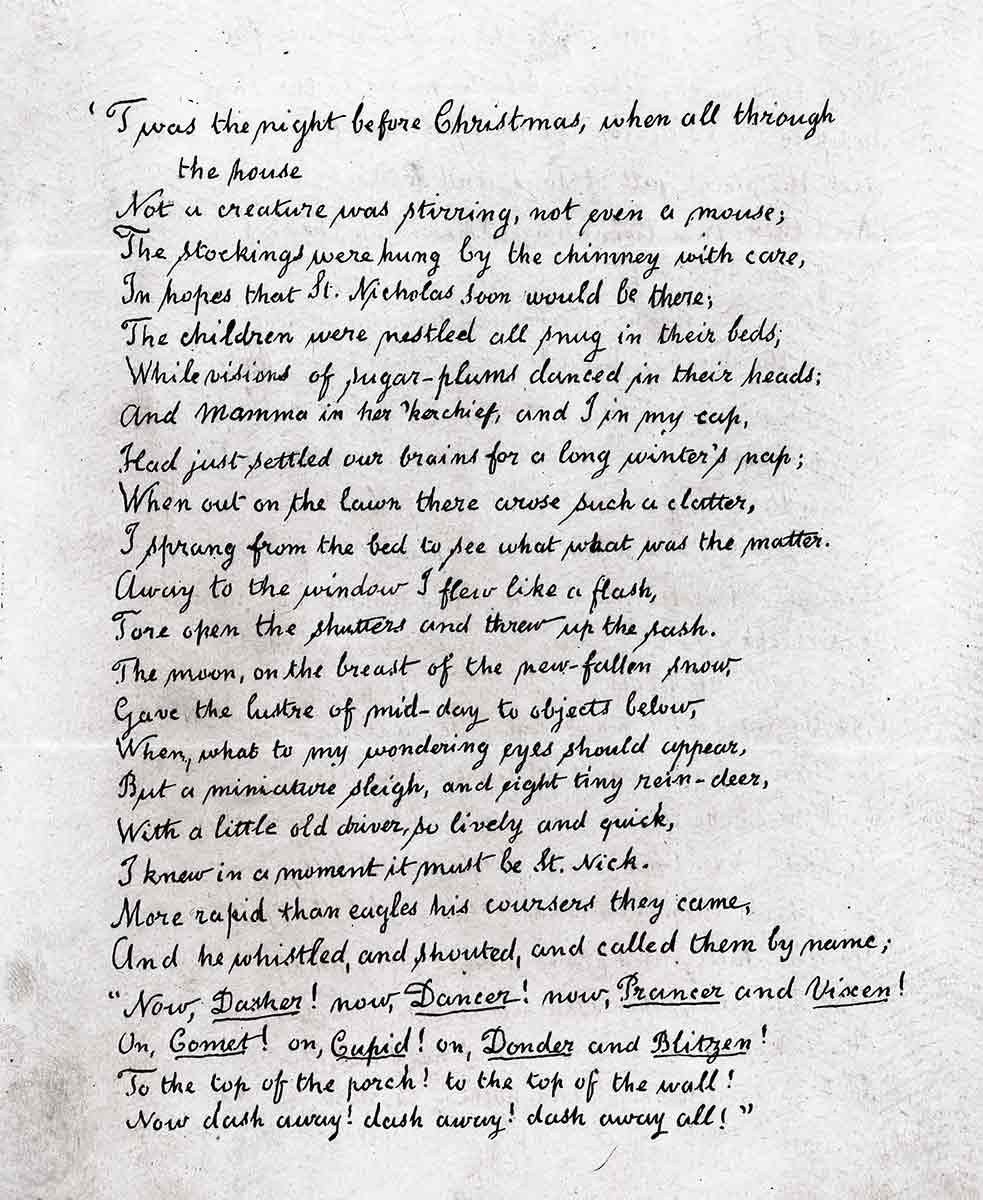
Perhaps one of the most famous festive poems in the world, Clement-Clarke Moore’s 1823 poem is more often known by its first line, “‘Twas the Night Before Christmas”:
“’Twas the night before Christmas, when all through the house
Not a creature was stirring, not even a mouse;
The stockings were hung by the chimney with care,
In hopes that St. Nicholas soon would be there;”
The beloved poem details Santa Claus’s visit to a house on a magical Christmas Eve. Moore details the sleigh, the gifts in stockings, and even names eight of Santa’s reindeer (Dasher, Dancer, Prancer, Vixen, Comet, Cupid, Donner, and Blitzen).
The visual description of Santa’s appearance established many modern “Father Christmas” traditions. He is a “jolly old elf”:
“His eyes—how they twinkled! his dimples, how merry!
His cheeks were like roses, his nose like a cherry!”
The poem was published anonymously on December 23, 1823, in a local New York newspaper. It wasn’t until 1844 that Clarke claimed authorship.
In the two centuries since its publication, the poem has taken on a life far beyond its modest beginnings. Reprinted in countless editions, adapted for readings, films, and festive broadcasts, and quoted every December in homes around the world, it remains a defining part of the holiday season.
Moore’s verses helped shape the modern mythology of Christmas, and their continued popularity ensures that his vision of Santa continues to delight readers, listeners, and dreamers year after year.
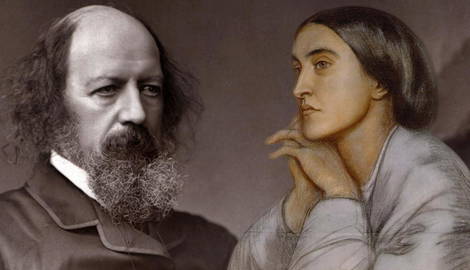
2. Ring Out, Wild Bells (1850) by Alfred Lord Tennyson
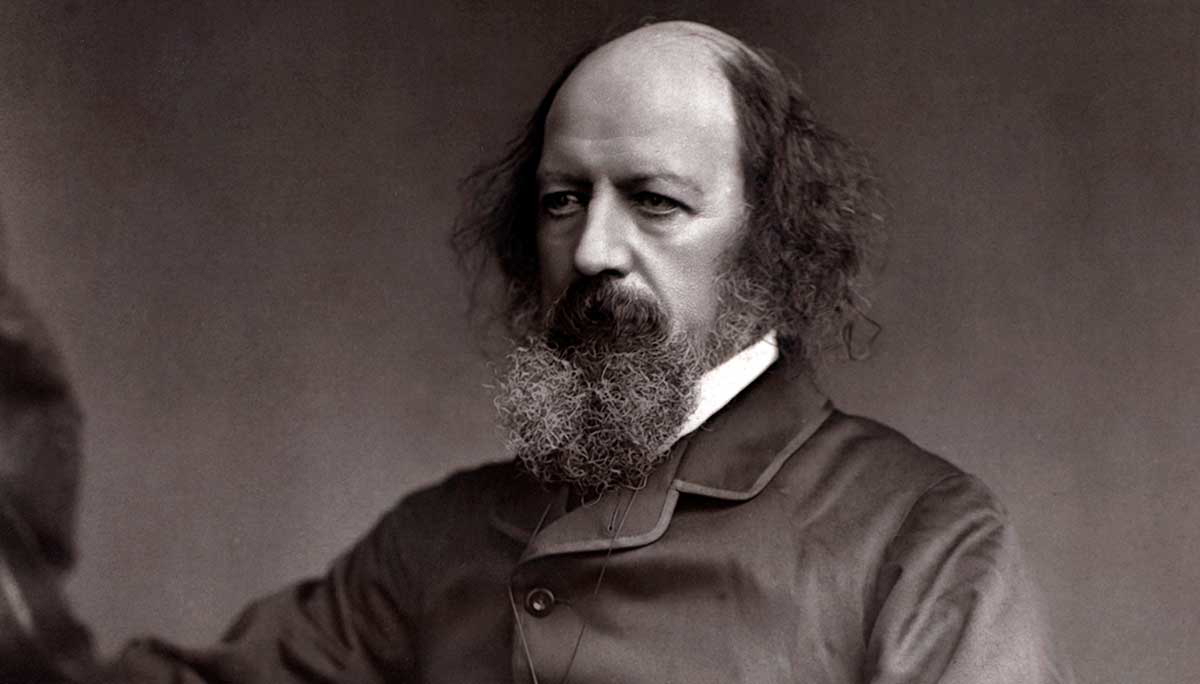
Ring Out, Wild Bells is often presented as an intact poem around Christmastime, but is in fact an excerpt from the much longer poem, In Memoriam. The full text is an ode to a lost friend, and details Tennyson’s grief and wavering faith.
The excerpt is treasured for its stark expression of sadness and melancholy amid a season of supposed devotion and harmony. The bells that Tennyson hears ringing out to celebrate the coming of the New Year remind him of the sufferings of the previous year, rather than the potential of the one to come:
“The year is dying in the night;
Ring out, wild bells, and let him die.
Ring out the old, ring in the new,
Ring, happy bells, across the snow:
The year is going, let him go;
Ring out the false, ring in the true.”
The sentiment is one of hope, however. The New Year offers a blank canvas, into which one can extend a “kindlier hand.” Ultimately, Tennyson sets his sights on God and decides that faith is a hope worth harboring.
More than two centuries after its publication, the poem remains relevant because it speaks to a universal emotional rhythm: the need to acknowledge sorrow even as we move toward hope. Each New Year invites reflection on what must be released and what might be renewed, and the poem gives language to the dichotomy of such melancholic optimism, as though every time the bells ring in a new year, it is a reminder that even the darkest year gives way to light.
3. The Three Kings (1874) by Henry Wadsworth Longfellow
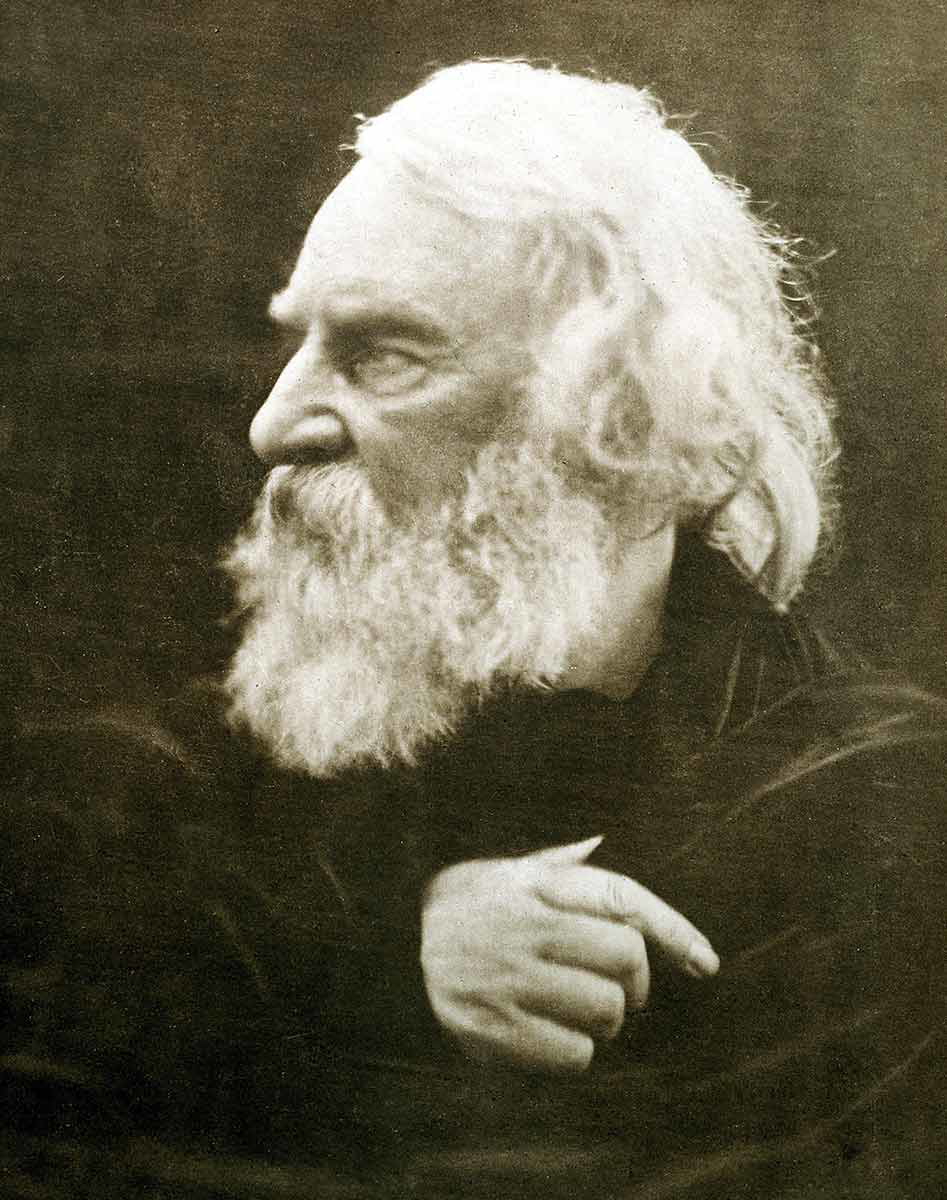
Henry Wadsworth Longfellow’s The Three Kings is a retelling of the Biblical story of the Magi. The Wise Men travel from the East, guided by a bright star, to visit the newborn Jesus in Bethlehem.
Longfellow details their travels, encounters with King Herod, and their chosen gifts of gold, frankincense, and myrrh. The descriptive lines are rich in colorful visuals:
“Three caskets they bore on their saddle-bows,
Three caskets of gold with golden keys;
Their robes were of crimson silk with rows
Of bells and pomegranates and furbelows,
Their turbans like blossoming almond-trees.”
While the poem is grounded in biblical narration, Longfellow also meditates on Mary’s feelings once the Kings arrive in Bethlehem, and her earnest concern for her son’s future:
“And the mother wondered and bowed her head,
And sat as still as a statue of stone;
Her heart was troubled yet comforted,
Remembering what the Angel had said
Of an endless reign and of David’s throne.”
The Kings also express trepidation when they leave the stable, with a nod to the threat that awaits:
“Then the Kings rode out of the city gate,
With a clatter of hoofs in proud array;
But they went not back to Herod the Great,
For they knew his malice and feared his hate,
And returned to their homes by another way.”
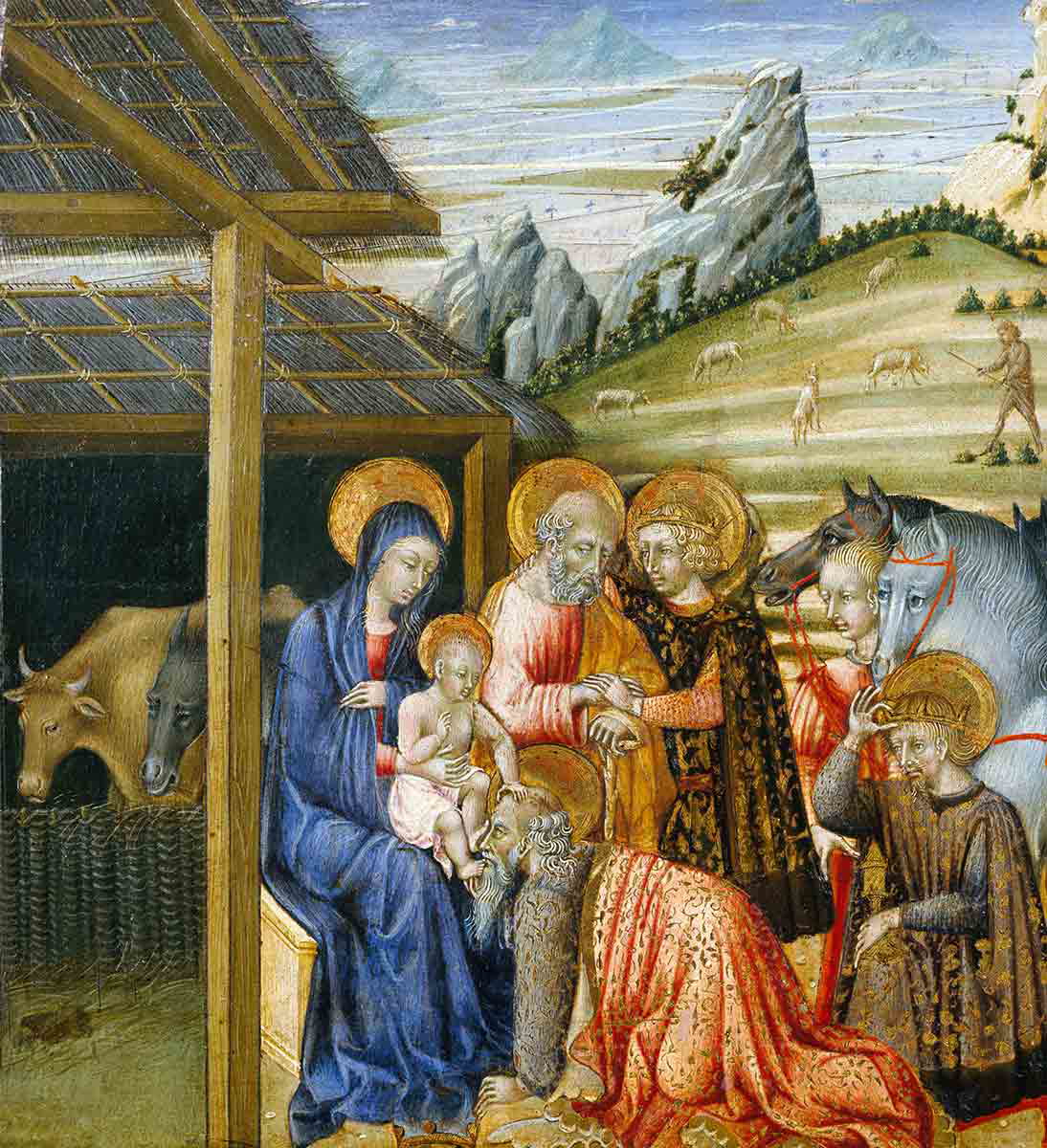
Longfellow’s choice to linger on these emotional undercurrents gives the narrative a contemplative depth that distinguishes it from more straightforward retellings of the Nativity. He invites readers to recognize the Magi not only as symbolic figures bearing prophetic gifts, but as thoughtful men moved by wonder and faith.
Longfellow expands on the Gospel’s account by creating these richly imaginative interior lives for the Magi, and thus builds on the original Christmas story. In doing so, he transforms the most familiar biblical episode into a more immediate meditation on devotion and the very human anxieties that lie beneath the story’s reverent surface.
4. In the Bleak Midwinter (1872) by Christina Rossetti
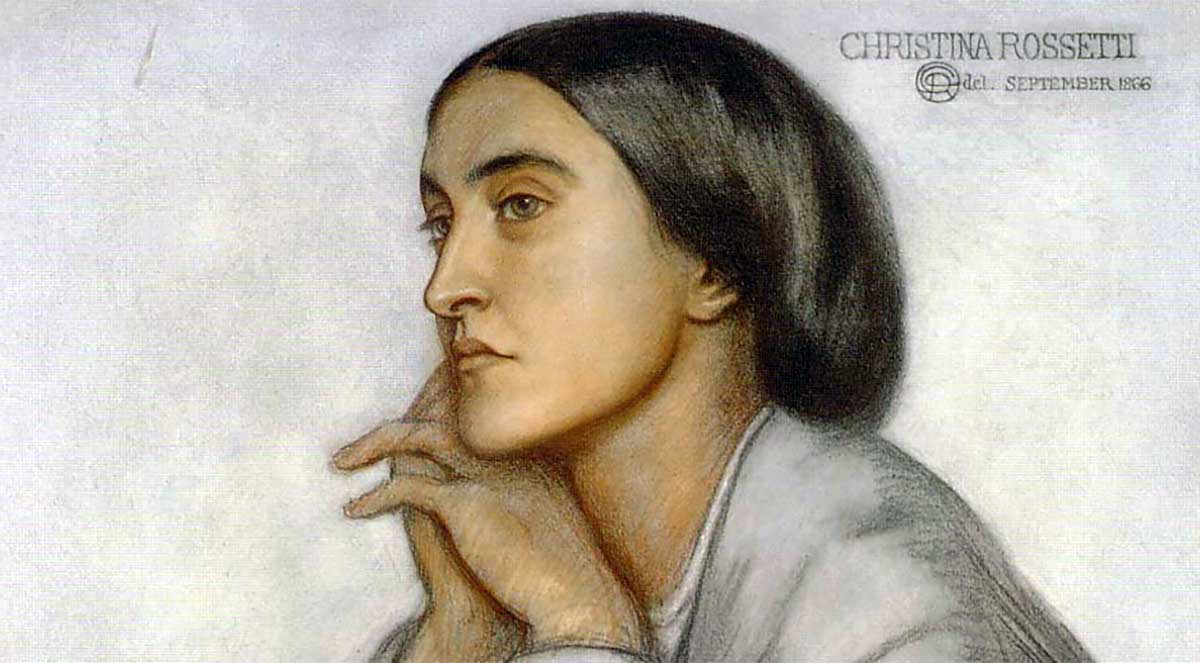
Christina Rossetti’s In the Bleak Midwinter is the most tender of Christmas poems. Rossetti describes the humble Nativity, contrasting the divine with the essential. Written in 1872, the poem opens with the haunting image of a world where “snow had fallen, snow on snow,” which Rossetti uses to connect the Nativity to a familiar English winter, setting the divine against a rural landscape of stillness and austerity—a common trope in Victorian writing.
An unknown narrator uses simple language to reflect on humility and humanity, culminating in the quietly disarming question:
“What can I give Him, poor as I am?
If I were a shepherd, I would bring a lamb;
If I were a Wise Man, I would do my part;”
The answer?
“Yet what I can I give Him: give my heart.”
Rather than grand gifts of material value, the speaker focuses on that which everyone is free to offer.
In the Bleak Midwinter has become a Christmas piece that resurfaces every year, whether in carol services, festive concerts, or winter anthologies. Set to music most famously by Gustav Holst in 1906, Rossetti’s quiet poem has grown into a classic carol in its own right, performed and loved around the world.
5. Love Came Down at Christmas (1885) by Christina Rossetti
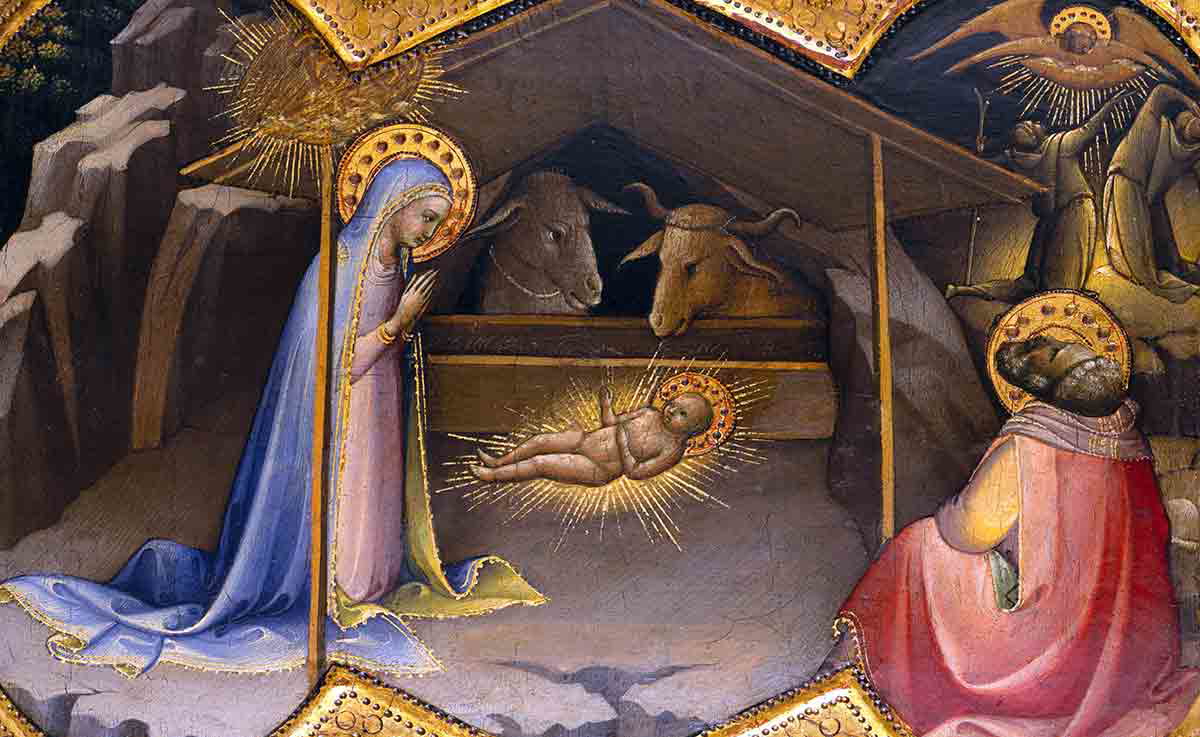
Christina Rossetti appears twice on this list, and for good reason. Few poets capture the emotional core of Christmas as clearly as she does, and Love Came Down at Christmas is another example of her ability to distill the season into something quietly profound. First published in 1885, the poem moves away from snowy landscapes and Nativity detail and instead focuses on a single idea: the incarnation as an act of love. Its opening line, “Love came down at Christmas,” sets the tone for a poem that is more devotional lyric than storytelling, a reflection on the virtues that anchor the season.
But what makes the poem so enduring is its simplicity. Rossetti builds a whole theology of Christmas from just a few recurring words (“love,” “star,” “angel”), creating a lulling rhythm that has helped the poem slip easily into hymnal arrangements:
“Love came down at Christmas,
Love all lovely, Love divine;
Love was born at Christmas;
star and angels gave the sign.”
Similarly to In the Bleak Midwinter, it has been set to music many times, each version emphasizing its gentle, almost childlike sincerity. Together, the two poems show Rossetti’s extraordinary range; one rooted in the starkness of winter, the other luminous with tenderness. Both, in their different ways, have become fixtures of the Christmas imagination.
A popular arrangement of Love Came Down at Christmas came in 2002 by John Rutter, the British composer celebrated for his modern choral carols. His take on the piece introduced the poem to new audiences, turning its quiet message of love into a staple of modern festive music.
These festive poems remind us why so much of our Christmas imagination was shaped in the 1800s, when writers distilled winter wonder and devotion into verses that still delight today.