
The Genesis account of Abraham, the receiver of God’s promises, who God asked to sacrifice his long-awaited son, Isaac, can be hard to understand. This article will explore who Abraham was in the Bible and why it was necessary for him to be willing to sacrifice Isaac. The focus will be on surrender as a key element of faith. Furthermore, some imagery from the sacrifice will be linked to broader themes in scripture, like the altar and the ram that God provided to be offered in Isaac’s place.
Who Are Abraham and Isaac in the Old Testament?
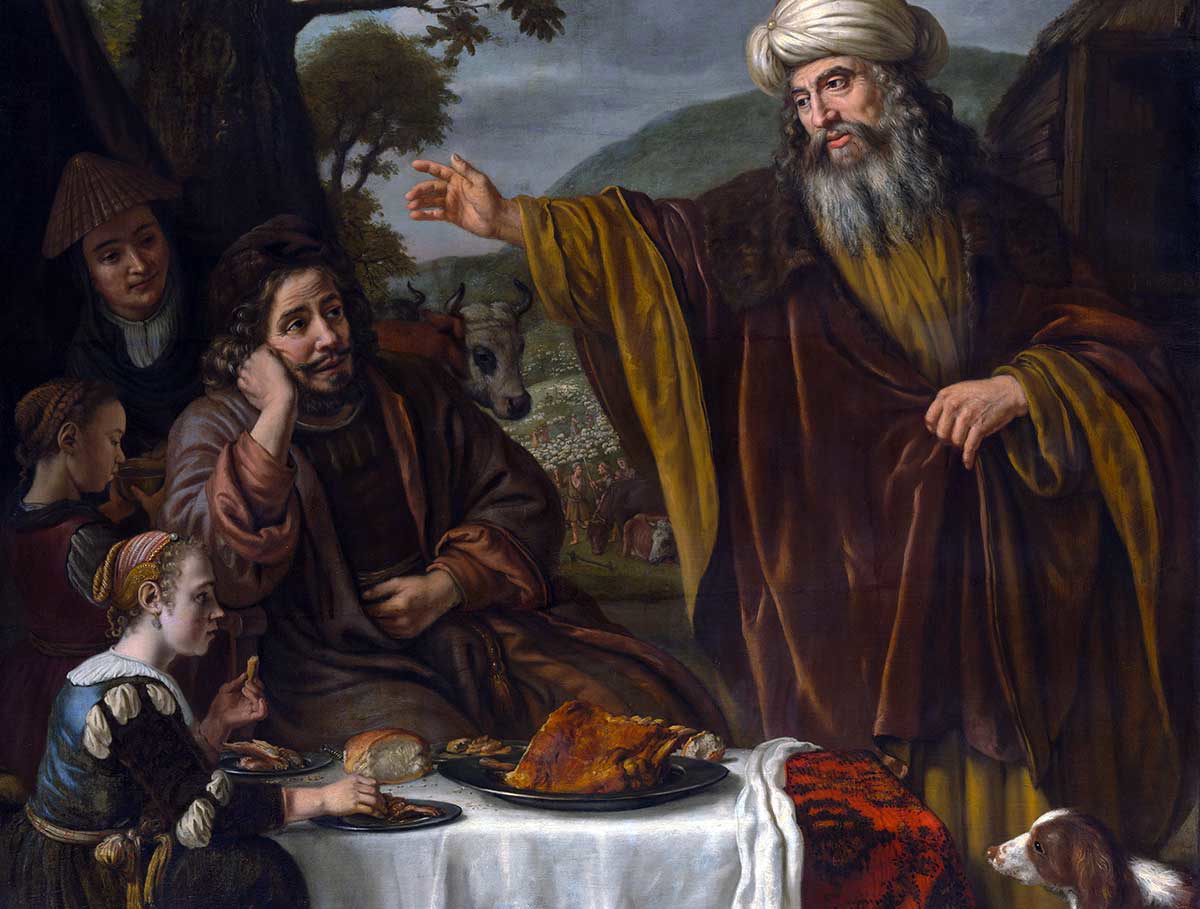
Abraham is the Old Testament patriarch and “Father” of the Israelites, God’s people. He was born 20 generations after Adam and signifies a turning point in the narrative of scripture. When this key figure is introduced in Genesis 11, his name is Abram, and he is a Gentile. But, for some strange reason, God calls him and promises to make him the leader of a great nation—God’s very own nation.
Genesis 15:5 “[The Lord] took him outside and said, ‘Look up at the sky and count the stars—if indeed you can count them.’ Then he said to him, ‘So shall your offspring be.’”
Abram and his wife, Sarai, were unable to conceive—a detail that filled Abram with a lot of doubt about God’s promises. How could he be the father of many if he could not even have one child of his own? The couple’s heartbreak about infertility made it hard for them to trust in the promises of God.
Yet, as Abram and Sarai got to know God better, they started trusting Him more and more. One day, three angels disguised as humans visited the couple. Genesis 18:9-12 tells the story:
“‘Where is your wife Sarah?’ they asked. ‘There, in the tent,’ he said. Then one of them said, ‘I will surely return to you about this time next year, and Sarah your wife will have a son.’ Now Sarah was listening at the entrance to the tent, which was behind him. Abraham and Sarah were already very old, and Sarah was past the age of childbearing. So Sarah laughed to herself as she thought, ‘After I am worn out and my lord is old, will I now have this pleasure?’”
However, it happened as the Lord promised, and they named the baby boy Isaac, meaning “he laughs.” It was a great joy for Abraham and Sarah to finally receive a son!
The Sacrifice of Isaac
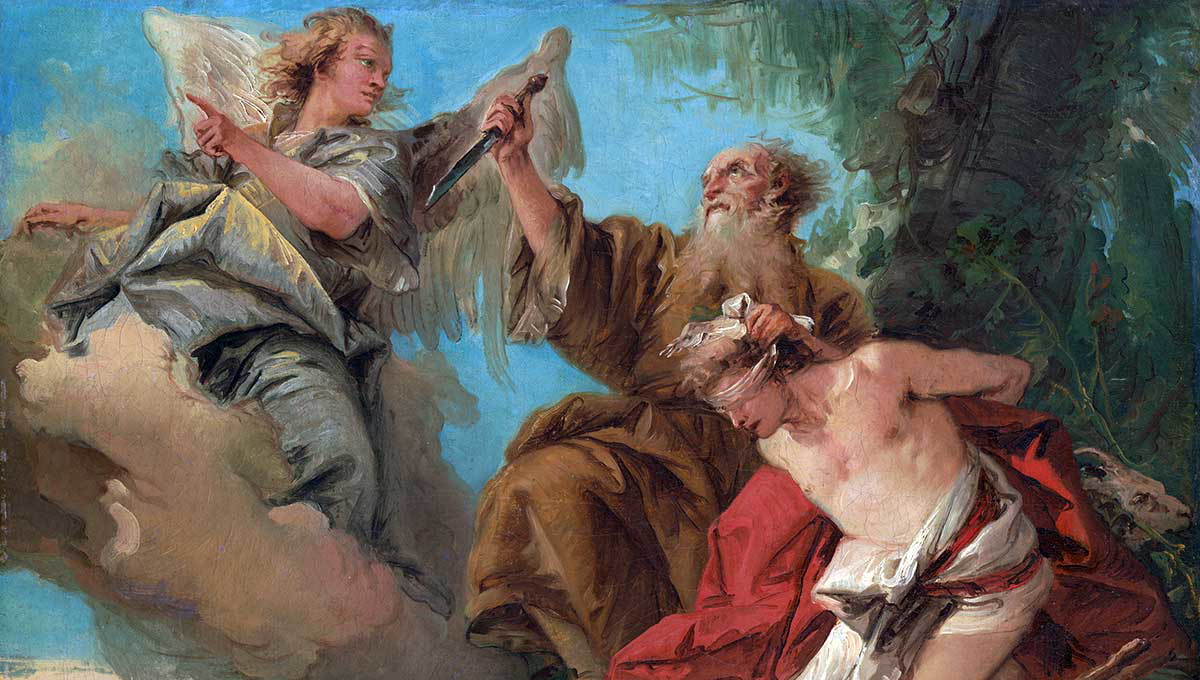
Knowing how Abraham and his wife longed for a son and that God’s promises literally depended on the life of the son makes what happened next all the more astonishing. Genesis 22 begins with these verses: “Some time later God tested Abraham. He said to him, ‘Abraham! Take your son, your only son, whom you love—Isaac—and go to the region of Moriah. Sacrifice him there as a burnt offering on a mountain I will show you.’” (vv. 1-2)
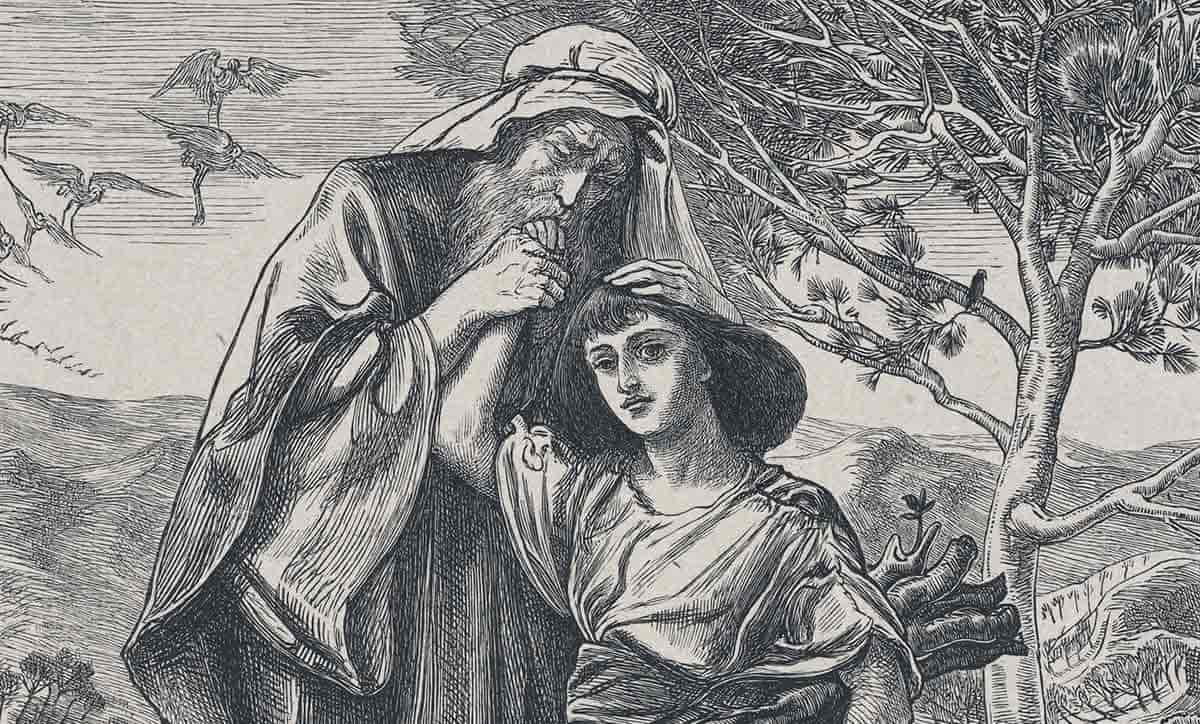
Abraham got up early the next morning and loaded his donkey with some firewood. He also took two servants and his son, and then they departed to the place God mentioned. Upon their arrival, Abraham told the servants to stay behind while he and Isaac would walk up the mountain to worship the Lord.
Walking up the mountain in silence, Isaac eventually turned to his father and asked: “The fire and wood are here, but where is the lamb for the burnt offering?” (v.7) Abraham calmly answered, “God himself will provide the lamb for the burnt offering, my son” (v.8) and the two of them went on together.
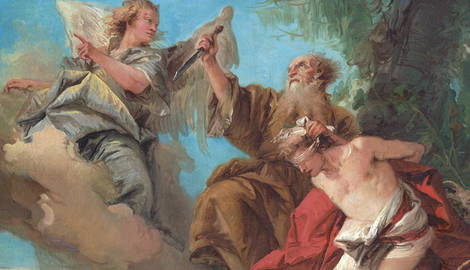
Reaching the spot where the offering needed to take place, Abraham built an altar to God. Then he bound Isaac’s limbs together like they did for animal offerings, and he laid him on the altar… It was only when Abraham picked up the knife to slay his own son that a voice called out from heaven:
“‘Abraham! Do not lay a hand on the boy. Now I know that you fear God, because you have not withheld from me your son, your only son’” (vv. 11-12). When Abraham looked up, there was a ram caught in a bush by its horns, and he sacrificed it instead.
Story of Surrender: Interpreting Isaac’s Offering in Scripture
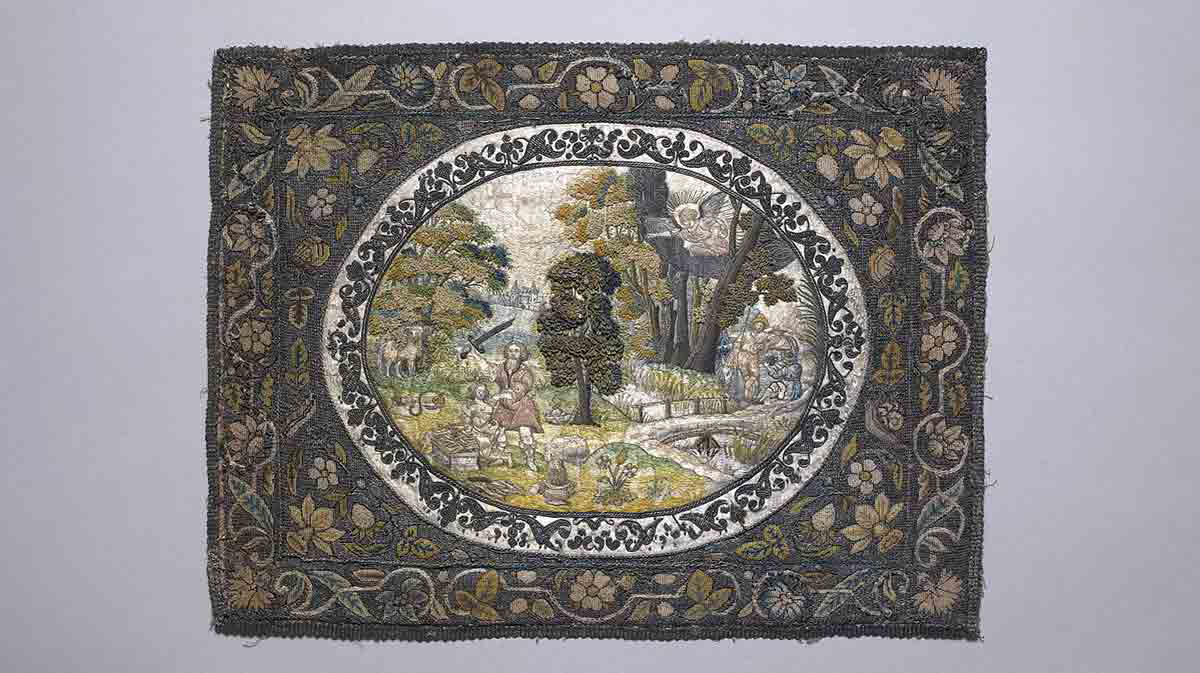
Abraham’s role in this story has received the most attention—nobody talks about how traumatizing this must have been for Isaac (a topic for another day). But, surprisingly, Abraham is not seen as vicious or evil for almost committing a child sacrifice and murder. He is praised as a hero for his great act of surrendering to God. This is because of what happened next in Genesis 22:
First, Abraham named the place “The Lord Will Provide,” because God provided a ram for the sacrifice and had mercy on Isaac. Secondly, the angel of the Lord spoke to Abraham from heaven for a second time and said:
“‘I swear by myself, declares the Lord, that because you have done this and have not withheld your son, your only son, I will surely bless you and make your descendants as numerous as the stars in the sky and as the sand on the seashore. Your descendants will take possession of the cities of their enemies, and through your offspring all nations on earth will be blessed, because you have obeyed me’” (vv. 16-18).
The focus in this situation is on obedience. Abraham did not consider his son his own because he understood that he was a gift from God. Therefore, Abraham was obedient to God and surrendered his son, Isaac, on the altar. Abraham was learning about God’s character and what kind of god he was. While many of the other gods of the time required child sacrifices, Yahweh provided an alternative sacrifice at the right time.
Why Surrender Matters in the Bible
The story of Abraham and Isaac is a story about surrender. Surrender is a key element of many faiths. Merriam-Webster Dictionary defines surrender as “the action of yielding one’s person or giving up the possession of something, especially into the power of another.” Various religions start with an act of surrender and letting go of control, placing that trust rather in a higher being or the Universe.
In the rest of the Bible, Abraham is seen as a hero for his total surrender to God when he placed Isaac on the altar. James 2:21-22 says, “Was not our father Abraham considered righteous for what he did when he offered his son Isaac on the altar? You see that his faith and his actions were working together, and his faith was made complete by what he did” (vv. 21-22).
In Hebrews 11, the Heroes of Faith are listed, and Abraham receives more attention than anyone else. Abraham’s radical act of relinquishing his son and obedience to God’s request is an example of what it really means to follow God.
The word “lord” describes this well. While many Christians pray and call God “Lord,” few recognize that this means giving over lordship (ownership) of oneself to him. It is essentially like saying “Master” or “King,” a kind of surrender that Abraham understood very well.
Imagery Found in the Offering of Isaac
There are many elements in the account of Abraham offering Isaac that carry significance in the broader scope of scripture. Consider the altar, for instance. Since the days when humankind was banished from God’s presence and the Garden of Eden, they had been making offerings to God (think of Cain and Abel’s offerings in Genesis 4). An altar is associated with laying something valuable down, instead of using it for one’s own selfish benefit. Abraham’s was a burnt offering, signifying complete devotion to God. In modern Christianity, the symbolism of an altar continues. Followers of Christ are commanded by scripture to “lay their lives down” as Jesus did (John 15:13).
The ram that God provided as an alternative to Isaac is another meaningful element of Abraham’s offering. Some scholars have noted that this ram might be a parallel to or a prophecy about Jesus Christ. Christ’s act of sacrificing himself for the sins of humankind is often described in similar language; He is the spotless lamb (John 1:29, Revelation 5:13, 1 Peter 1:19).
When we focus on Abraham, a third element becomes evident: that of a father who sacrifices his own son. This imagery is often used to describe the relationship between God and Jesus, the Son of God. The message of the Gospel is one about a loving father who sent his own son to die for the sins of humankind (John 3:16).
Much more could be said about the offering of Abraham and Isaac, but for the purpose of this article, we can end on this note: Abraham performed the ultimate act of surrender by being willing to sacrifice his own son on the altar, an action that echoes throughout the rest of the Bible.