This beautiful historical city withstood the incursions of English privateers, Castilian galleons, and intense seismic activity, which almost destroyed it on more than one occasion. The city is unlike any other in the archipelago. The colorful historical landmarks and the old town architecture reflect the city’s magnificent past. In this article, you can learn all about Angra do Heroismo’s history.
Unravelling Angra’s Past…
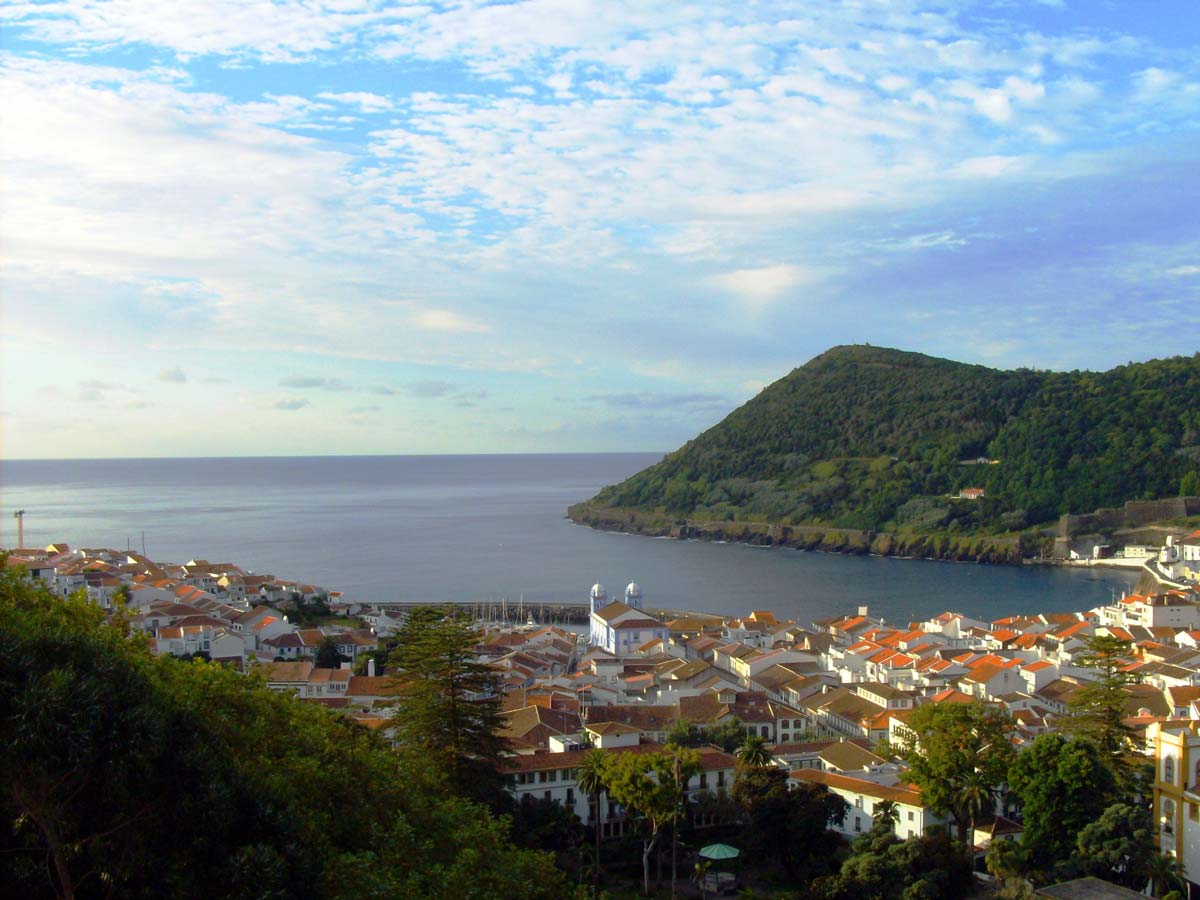
Between 1420 and 1430, the Portuguese were the first sailors to set foot in Terceira. They chose a natural bay (the so-called “angra”) that was protected from the winds and deep enough to allow large ships to anchor. The first houses were built on winding streets on the hills surrounding the Angra. At the top, Castelo dos Moinhos was built to protect the residents and watch over the bay.
Over the years, Angra became a crucial stopover for ships sailing between Europe, Africa, and India. Because of that, Angra grew and was elevated to village status in 1478. A few decades later, in 1500, Pedro Álvares Cabral discovered Brazil, which helped boost the role of Angra as a mandatory stop for ships traveling across the Atlantic.
In 1534, Angra became the first city in the Azores islands. In the same year, Pope Paul III chose Angra as the seat of the Diocese of Angra, which had jurisdiction over the archipelago.
Between 1580 and 1640, Portugal was under the rule of the Spanish crown. As a result, both Portuguese caravels and Spanish galleons filled with riches from the New World would stop Angra from doing business and restocking before departing to Lisbon and Seville. The increasing number of ships harbored in Angra contributed to the construction of Forte de São João and Forte de São João Batista, two important military facilities focused on controlling access to the bay.
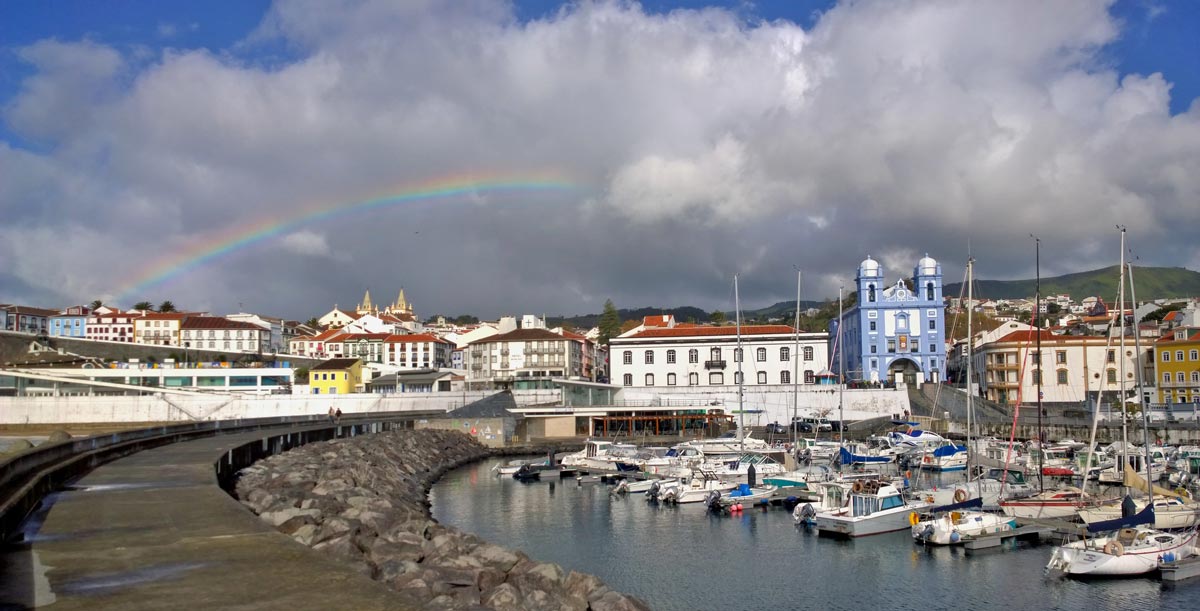
In the 17th century, Angra became the Azores’ provincial capital, the seat of the General Government, and the General-Captains’ residence until 1832.
In the 19th century, Angra was the center of liberal ideals in Portugal and became the kingdom’s capital for a brief period. At Angra, during the Portuguese Civil War, King Pedro IV of Portugal reorganized the Portuguese army, abolished several taxes, extinguished all religious orders, and promulgated freedom of education in the country.
Queen Maria II changed the city’s name to Angra do Heroísmo as a tribute to the population’s heroism during the Portuguese Civil War. In 1831, after the constitutionalist administrative reforms, Angra do Heroísmo was the first municipality to be elected.
The historic center of Angra do Heroísmo has been classified as a UNESCO World Heritage Site since 1983.
9 Landmarks in Angra do Heroísmo You Must Visit
| Landmark | Type | Key Highlights |
| Sé de Angra | Cathedral | The largest and most important religious monument in the Azores; features an 18th-century silver high altar. |
| Misericórdia Church | Church | Famous for its white and celestial blue façade; formerly housed the first hospital in the Azores. |
| São Francisco Church & Convent | Museum/Church | One of the largest churches in the Azores; currently home to the Angra do Heroísmo Museum. |
| São Gonçalo Convent & Church | Convent | The city’s largest and oldest convent; features impressive Baroque wood carvings and tile panels. |
| Paços do Concelho | Town Hall | A 19th-century building built from scratch; contains beautiful stained-glass windows and Arraiolos tapestries. |
| Palácio dos Capitães-Generais | Palace | A former Jesuit college turned royal residence; currently an official residence for the President of the Azores. |
| Alto da Memória | Monument | An obelisk built in the 19th century to honor King Pedro IV; offers a panoramic view of the coastline and city. |
| São Sebastião Fort | Fortress | The first fortress built in Angra (16th century); designed to protect Pipas harbor. |
| São João Baptista Fort | Fortress | One of the largest and most impregnable fortresses in Portuguese territory; built during Spanish rule. |
1. Sé de Angra
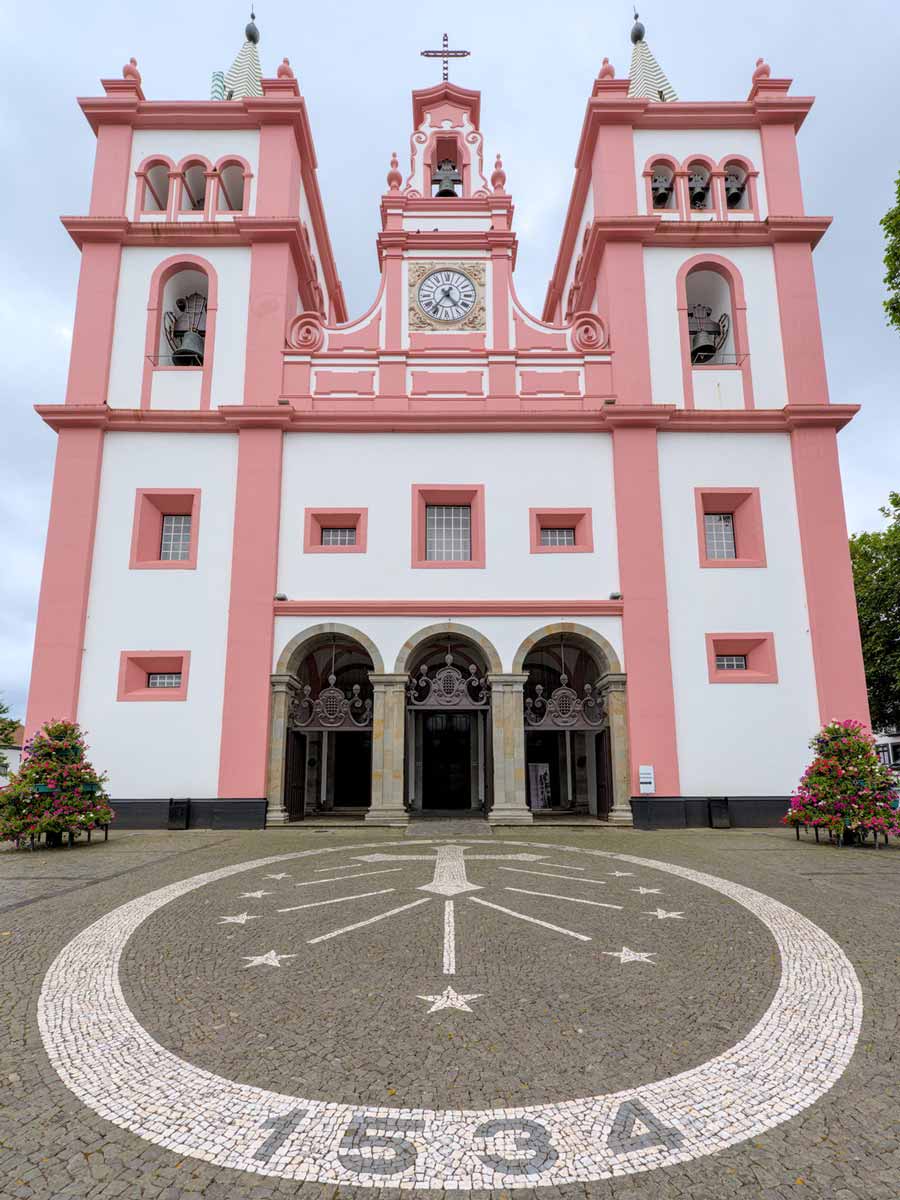
Located in the historical city center classified by UNESCO, Sé de Angra is the largest and most important religious monument in the Azores islands.
The building you see today was built over the São Salvador church, a small building whose remains you can admire at the high altar, under the chapel.
Construction works at Sé de Angra began in 1570 and followed the designs of the architect Luís Gonçalves. Its goal was to accommodate the seat of the Bishopric of Angra since the original church was considered too small for such a significant role. The cathedral’s construction extended for almost half a century and was briefly interrupted during the 1580 Succession Crisis.
The main façade includes a galilee, a high pediment with a clock (placed in 1782), a belfry, and two side bell towers, with the corbels covered in blue and white tiles. Inside, the chancel stands out with a circular apse and stone vault supported by Ionic columns. While visiting Sé de Angra, take some time to admire the high altar 18th century carved silver frontal and the polychrome tiles. In the side chapels, you can observe the image of Nossa Senhora dos Anjos and Nossa Senhora da Conceição, both dating from the 17th century.
Although Sé de Angra endured several natural disasters, the most significant were the 1980 earthquake and the 1983 fire. During these catastrophes, most of the Baroque decorations and its vast artifact collections were lost.
2. Misericórdia Church
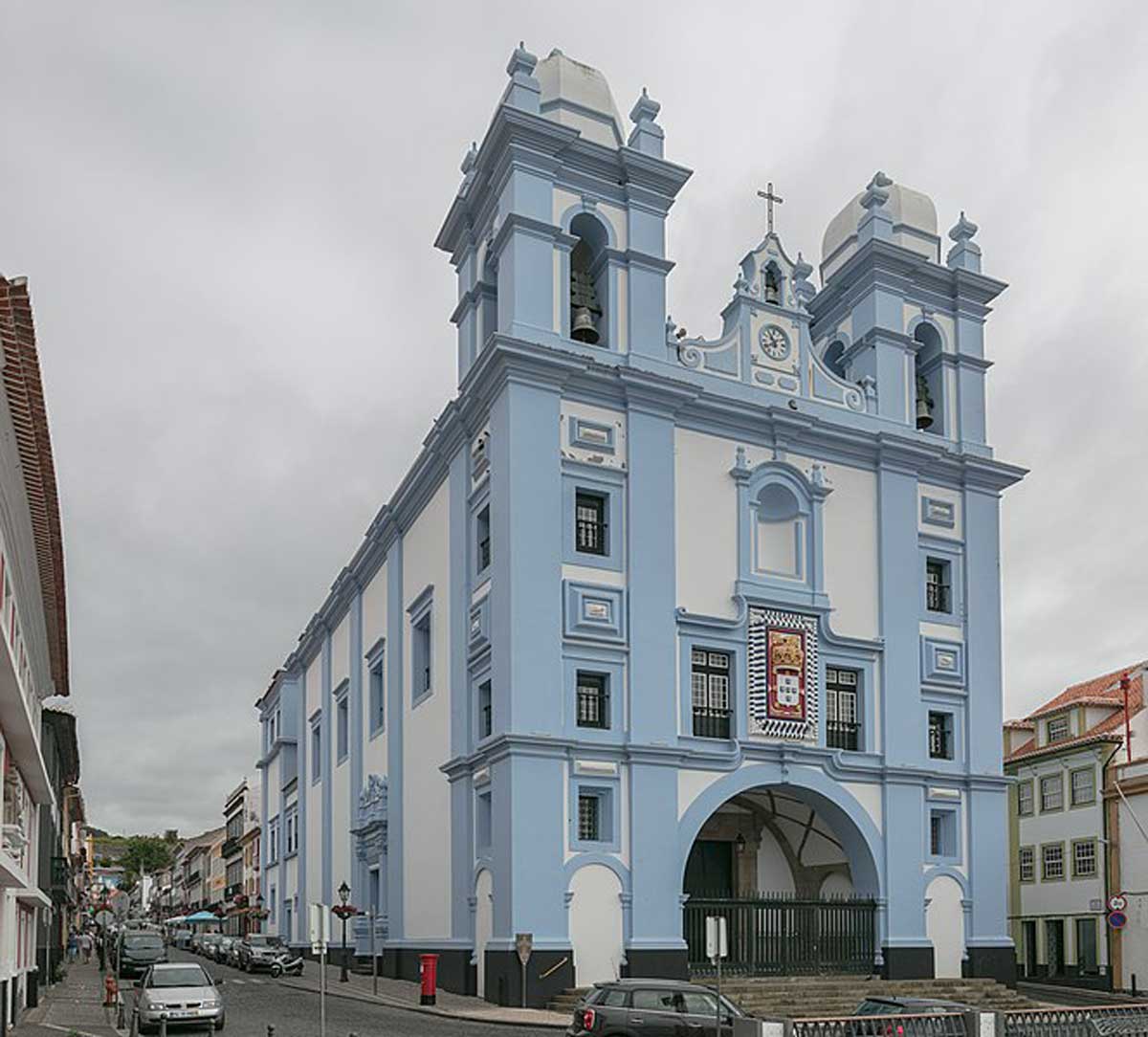
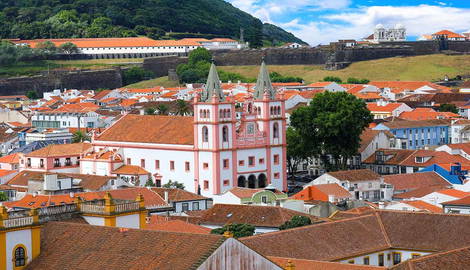
Igreja da Misericórdia is one of the most iconic landmarks in Angra due to its white and celestial blue façade.
The church, designed by Manuel d’Andrade, was built over a 15th-century church dedicated to the Holy Spirit. The foundation stone was laid in 1728 and construction works extended for the following 20 years. It was home to the Carmelite Order and housed the first hospital in the Azores islands. Today, this beautiful landmark belongs to Angra do Heroísmo’s Santa Casa da Misericórdia.
After the earthquake of 1980, this church was one of the least affected in Angra. At the time, all the religious art from the island was deposited here, while the other churches were rebuilt. As a result, Igreja da Misericórdia was the last to be reconstructed.
Igreja da Misericórdia shows a rectangular floor plan with two towers flanking the façade, each topped by a stone lantern tower. Above the portico, you can observe the Royal Arms, surmounted by a niche in the middle of the pediment, a clock, and a small bell supporting an iron cross. The pediment is flanked by two small quadrangular bell towers. The single-nave plan shows a wide chancel, six side chapels, and a gallery with balconies overlooking the inside of the church.
Igreja da Misericórdia is a National Monument and is part of the historical city center of Angra do Heroísmo, which is classified as a UNESCO World Heritage Site.
3. São Francisco Church and Convent
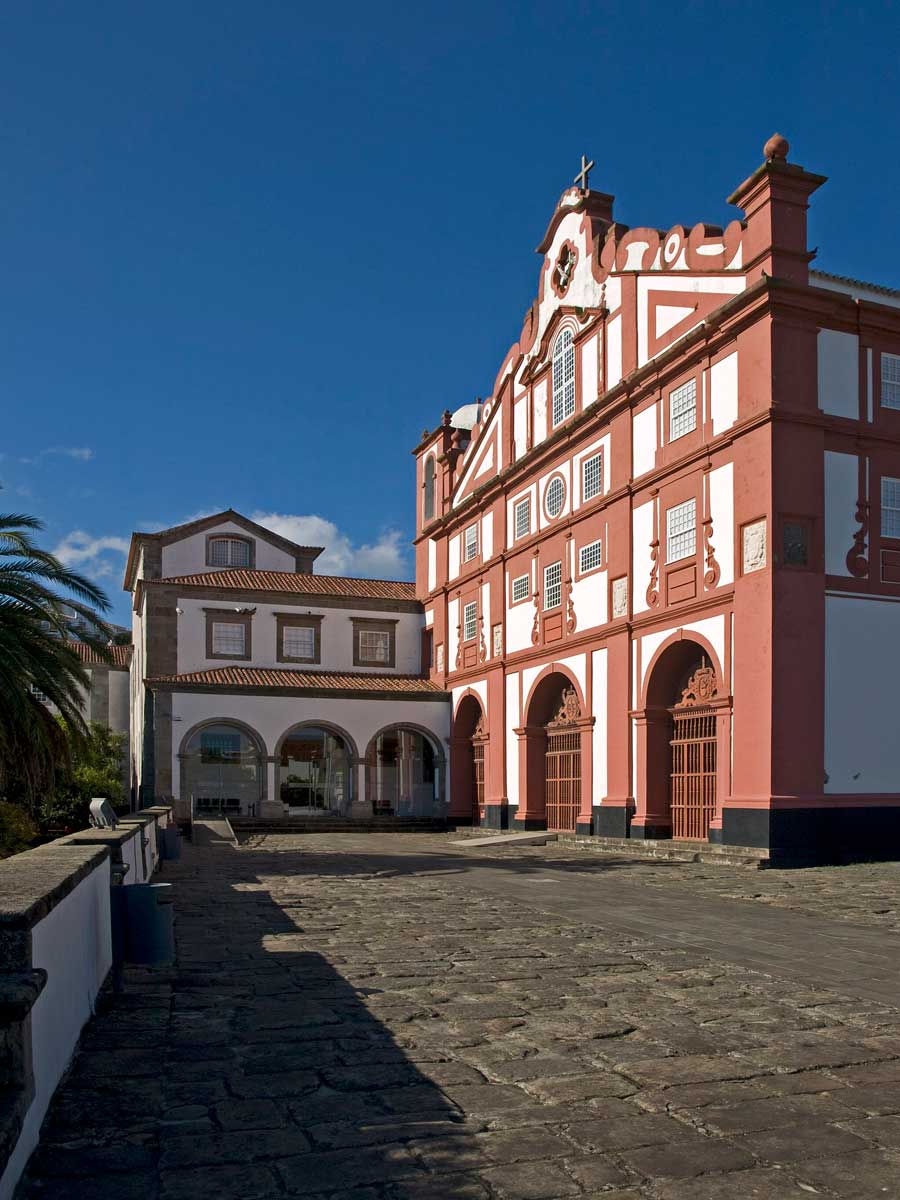
The convent and Church of São Francisco is one of the largest churches in the Azores islands.
The first Franciscan monks arrived in Terceira Island in 1456. Shortly after, they built a convent and a hermitage. However, these buildings were demolished and a new church was built.
The convent’s construction works began in 1663 and three years later it was time to start building the church. In 1672, both buildings were complete. Dom Frei Lourenço de Castro, Angra’s Bishop at the time, blessed the Convent and church of São Francisco after a procession that included the island’s civil, military, and ecclesiastical authorities.
With the extinction of religious orders in 1834, the convent and church facilities housed Liceu de Angra do Heroísmo, a public school created from the teaching reform. Today, the Convent and Church of São Francisco are home to the Angra do Heroísmo Museum.
4. São Gonçalo Convent and Church
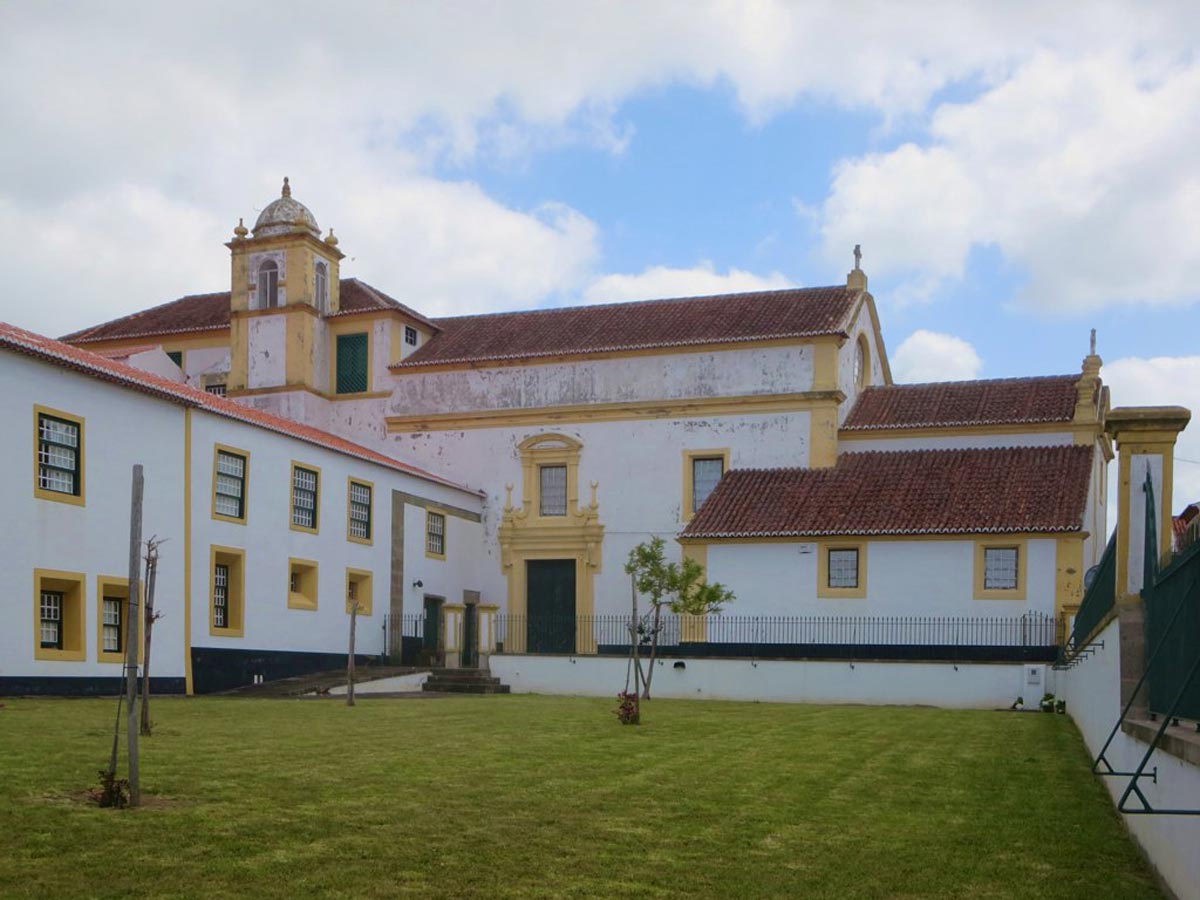
Located at Angra’s historical city center, Convento de São Gonçalo is the largest and oldest convent in the city.
In 1542, Pope Paul III authorized the construction of a new convent that would be home to the first Poor Clares nuns in the Azores islands. During the 16th and 17th centuries, the increasing number of nuns led to the expansion of the original facilities, which included the construction of a new church.
When the first monasteries closed, following the extinction of the military orders, the Convento de São Gonçalo was the only one open. As a result, it sheltered nuns from other convents on Terceira Island.
By the end of the 19th century, the convent’s cloister was severely damaged by an earthquake. Hence, the Tuscan columns with connubial arches had to be replaced by pilasters.
This building complex comprises one cloister dated from the original construction in the 16th century. A second cloister was added in the 17th century and includes cells, kitchens, and refectories on the upper floor and the original ovens and various outbuildings on the ground floor.
The single-nave church presents two superimposed choirs separated from each other by an oval railing. Around them, you can admire Baroque wood carvings, large tile panels, and oil paintings on canvas from the 17th to the 18th century. The Baroque elements contrast with the Rococo altarpiece of the high altar.
5. Paços do Concelho
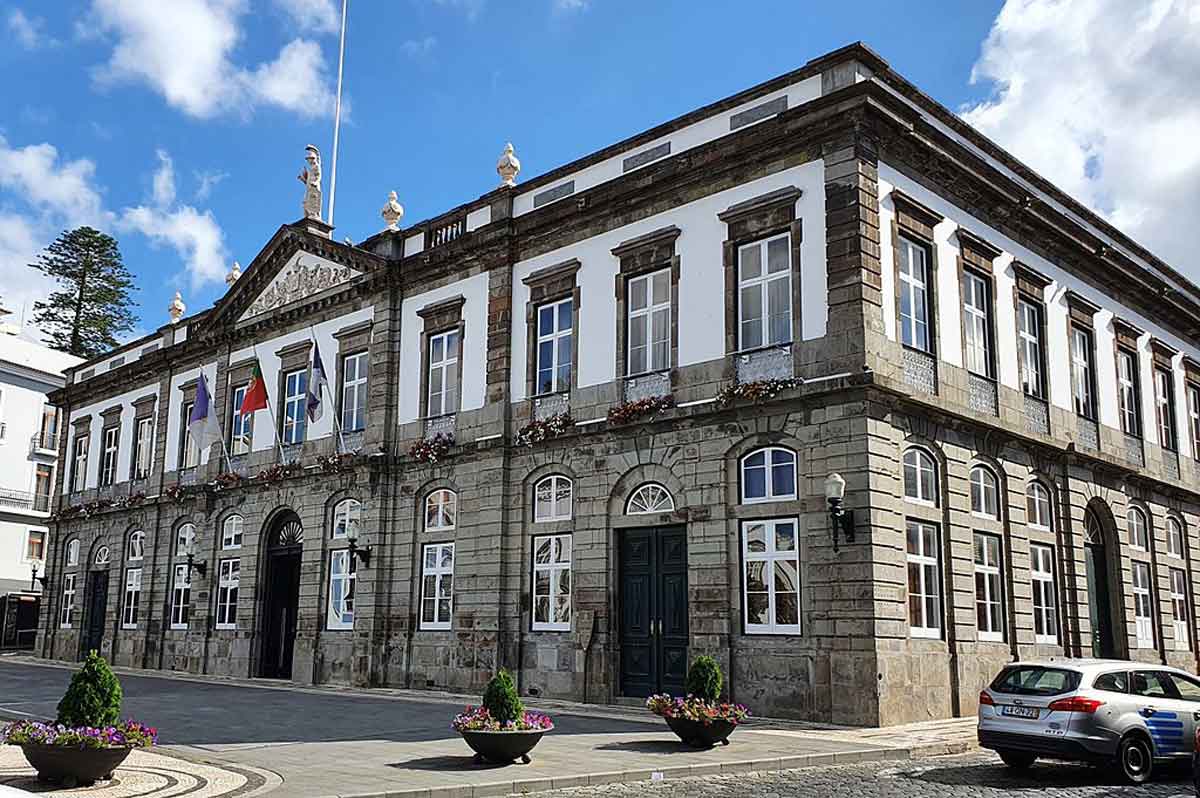
Paços do Concelho is a unique example of a town hall built from scratch in Portuguese territory.
This 19th-century building was the third to house Angra do Heroísmo City Council. In fact, it was built over the original 15th-century town hall.
Paços do Concelho shows a simple rectangular floor plan and sober regular lines with a similar window design on all the façades. The façades have two floors sectioned by pilasters with the same modeling and ending in a full platband.
Inside, you can see a central vestibule for distributing space, from which the stairs to the main floor develop, with converging arms and a lower section. At the top of the staircase, you can admire the bust of Prince Henry the Navigator and beautiful stained-glass windows. On the upper floor are traditional Arraiolos tapestries and jacaranda furniture pieces with engraved wood carvings.
6. Palácio dos Capitães-Generais
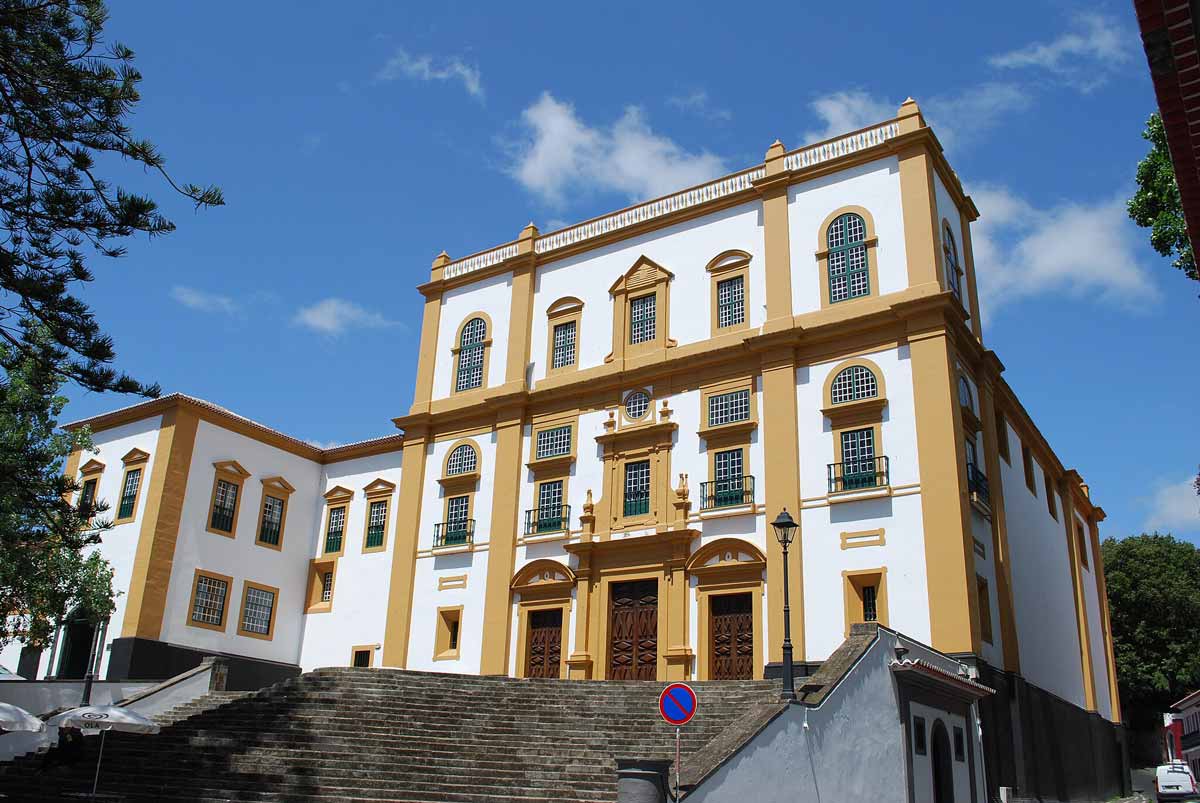
Palácio dos Capitães-Generais is an iconic landmark at Angra’s historic city center that reflects the city’s economic power in the 16th century.
In 1572, King Sebastião ordered the construction of a new convent and college for Jesuits to educate, instruct, and catechize the population. However, its construction began almost 40 years later. The building complex was only occupied in 1620. This Jesuit college was an important education center in the Azores, especially for teaching Latin, philosophy, theology, and scholasticism.
In 1760, the Jesuits were expelled from Terceira Island. A few years later, the Marquês de Pombal established a new administrative, civil, and judicial organization in the Azores Islands. As a result, these services were centralized in Angra, and the Captain-General (Capitão-General, in Portuguese) was the most powerful figure on the island. Over time, the old convent and college were gradually transformed into a palatial residence.
During the Portuguese Civil War, this palace housed the Junta Provisória. Later, during Queen Maria II’s reign, it housed the regency government of the Kingdom of Portugal. In 1832 and 1901, Palácio dos Capitães-Generais served as a royal residence for King Pedro IV, King Carlos I, and Queen Amelia.
In 1971, during the Atlantic Summit, the palace welcomed Georges Pompidou and Richard Nixon, whom Marcelo Caetano had invited over for dinner. Today, Palácio dos Capitães-Generais is one of the official residences of the President of the Regional Government of the Azores.
While visiting this magnificent landmark, you will notice a combination of Mannerist and Baroque influences. The palace presents a rectangular floor plan with two floors surrounding a courtyard. The single-nave church is dedicated to Saint Inácio de Loyola. Inside, you can observe an impressive art collection from the 18th and 19th centuries, which includes Chinese porcelain, furniture, and oil paintings.
7. Alto da Memória
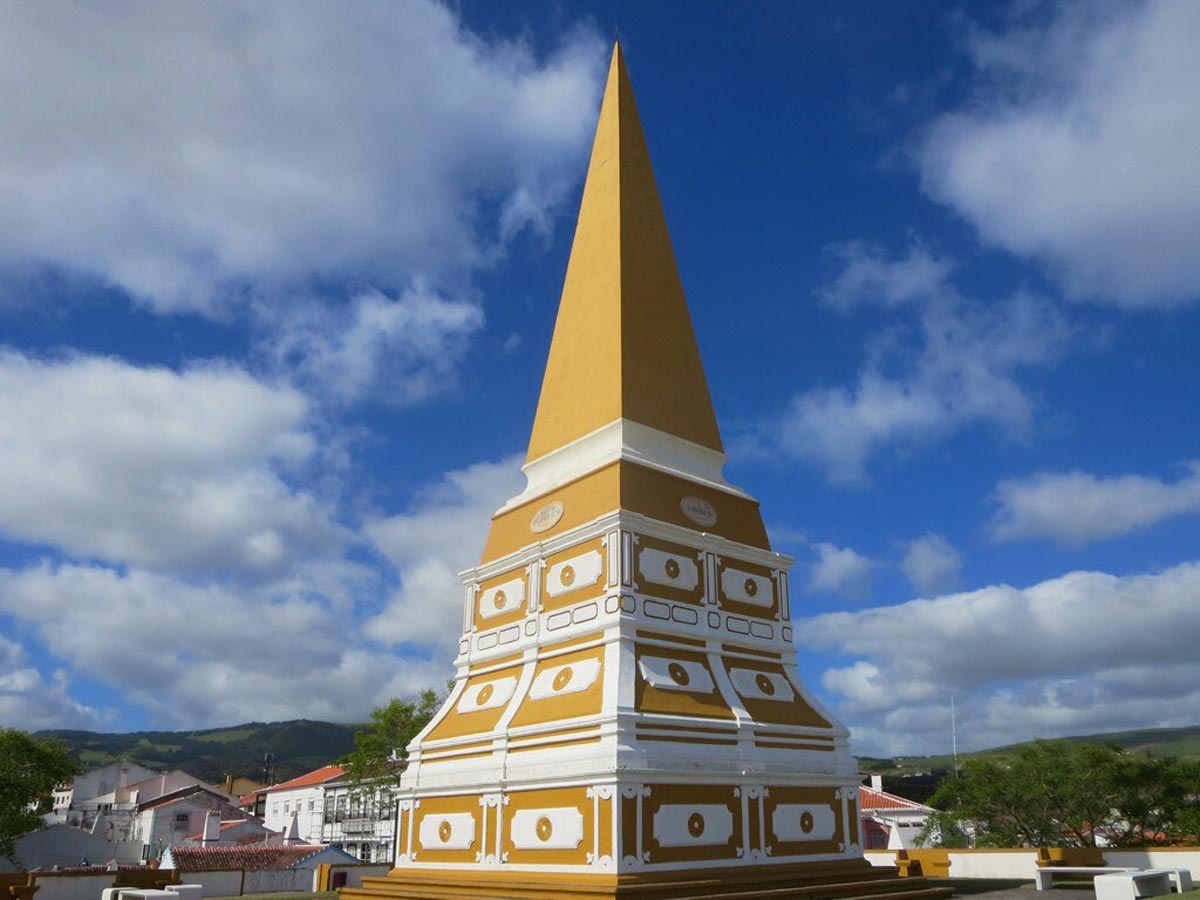
Alto da Memória is a commemorative monument in Angra’s historic city center with a mesmerizing view over the coastline. Here, you can admire Angra’s Bay, Forte de São Sebastião, Fortaleza de São João Batista, and Monte Brasil.
This massive landmark was built in the 19th century to celebrate the arrival of King Pedro IV on Terceira Island during the Portuguese Civil War. It was built over Castelo dos Moinhos, a 15th-century fortress, the first of its kind on the island.
The obelisk, which shows evident Masonic symbolism, was built between 1845 and 1856. The first stone laid at the construction site was retrieved from the city’s quayside. Popular belief states this was the stone the king first stepped on when he landed in Terceira in 1832. The remaining stones used in the obelisk came from Castelo dos Moinhos.
8. São Sebastião Fort
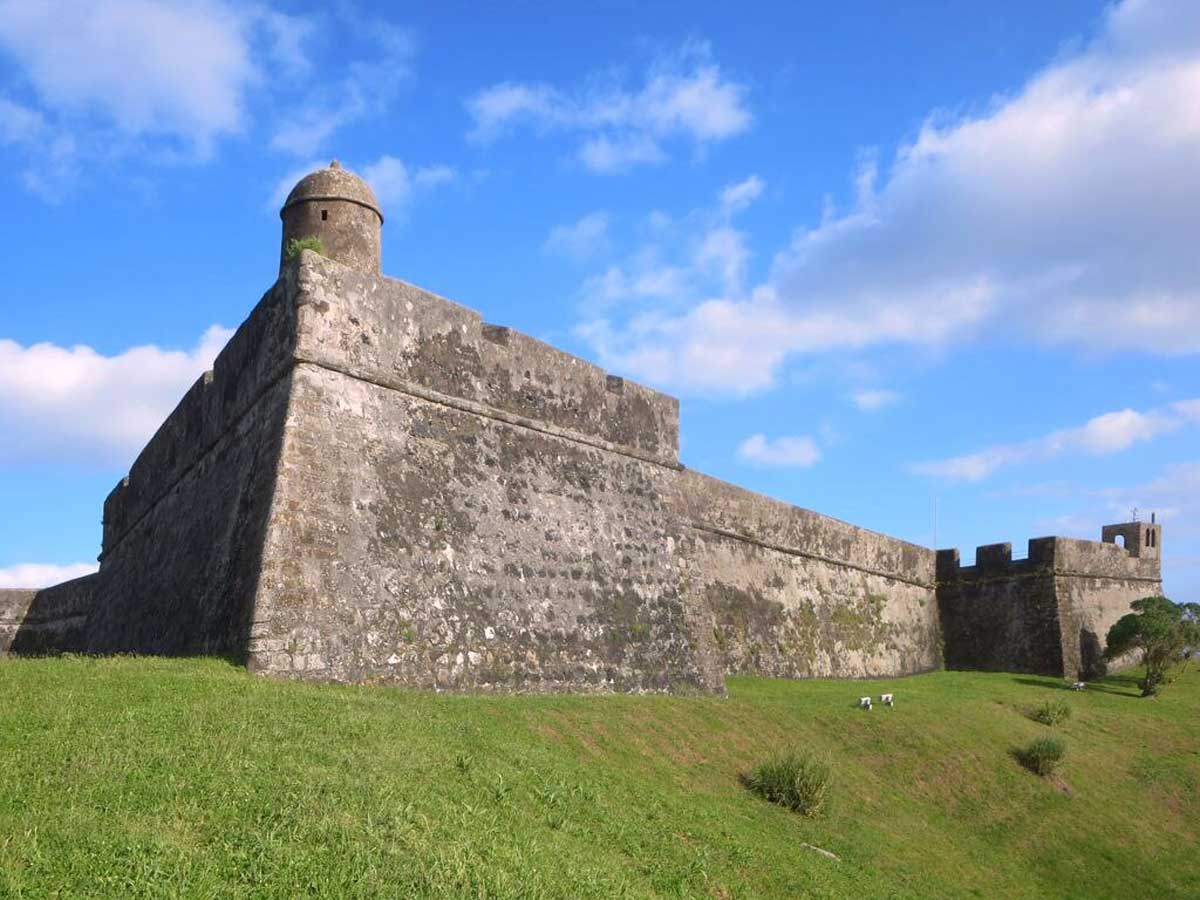
São Sebastião Fort was the first fortress built in Angra do Heroísmo.
Built in the 16th century, this fortress was intended to protect the coastline and defend Pipas harbor. At the time, this was the most important harbor in Terceira Island since it was here that ships from India and Brazil stopped on their way to Portugal.
Architect Tomaz Benedito de Pesaro designed the Italian-styled fortress, which was finished under the rule of King Sebastião. The fortress was built to adapt to the land morphology. It shows a bastion layout with an irregular pentagonal plan and narrowing curtain walls.
Inside the fortress is the old governor’s house and a cistern with a capacity of 33,000 liters of drinking water.
9. São João Baptista Fort
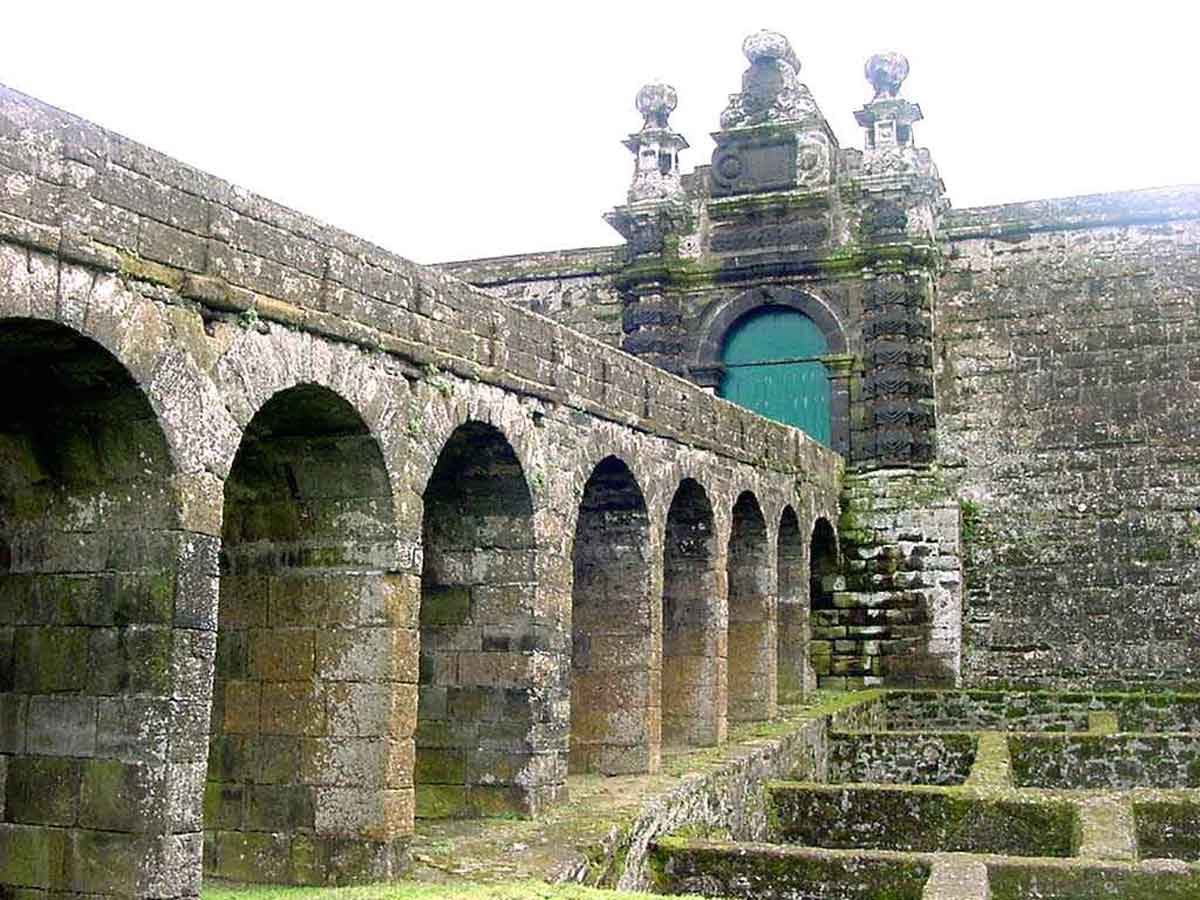
Forte de São João Baptista was also known as Monte Brasil fortress due to its location. It crossed fire with Forte de São Sebastião to protect Angra’s Bay, Pipas Harbor, and armadas from India and the American continent.
It was built between 1593 and 1636 under the rule of King Filipe I of Portugal (and II of Spain). Giovanni Casale, Tibúrcio Spanochi, and Anton Colla were the team behind the fortress designs. The result is one of the largest and most impregnable fortresses in Portuguese territory.
After the Restoration of Independence in 1640, the fortress was renamed Fortaleza de São João Baptista as a tribute to the Portuguese King João IV. It is one of the largest fortresses built by the Spanish in their conquests of the 16th and 17th centuries.
In the fortress, you can visit the Governors’ Palace, the Capela de Santa Catarina de Sena, and the Igreja de São João Baptista.