Pressure for change in political leadership can come from the outside or from inside the government itself. But what happens when the president wants to be king? Autogolpe is the term used when would-be autocrats are democratically elected and then swiftly move to undermine their own governments and consolidate power. Less blatant and usually less bloody than a traditional coup d’état, autogolpes have a higher success rate—and can be just as hard to overcome.
The Coup: A Time-Honored Tradition
As long as there have been leaders, there have been people dissatisfied with their leadership and various methods employed to bring that leadership to a swift end. Whether the people rise up or an assassin steps in, unpopular leaders usually don’t remain leaders for very long.
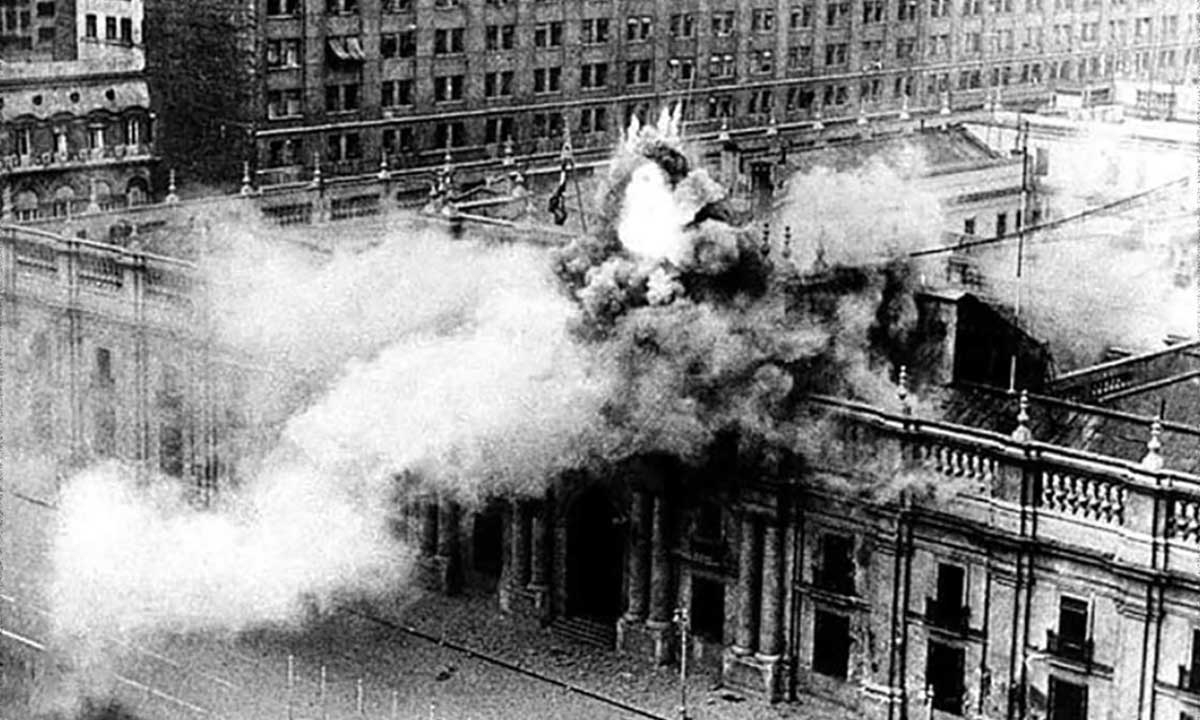
However, the pressure for a change in government often comes not from the outside—rebellion—but from within. A coup is generally defined as an attack on the state—or more specifically, “the illegal removal of a leader by force or threat of force by those within the government.” Given the brute strength of the military, it is quite often at the head of such attacks on the state, like the overthrow of Argentina’s Juan Perón in 1955 or Salvador Allende in Chile in 1973. Military coups are the most recognizable type of overthrow—particularly in the modern era, where palace coups are by and large no longer relevant.
As democracy has become the preferred form of government, and especially with the advent of global news media, ousting leaders—popular or unpopular—outside the confines of the electoral process has become more challenging. An outright coup, especially one broadcast around the world, would usually bring widespread condemnation and perhaps international pressure or the loss of much-needed foreign loans.
But that doesn’t mean coups have disappeared; they’ve just adapted. Instead of the military overthrowing the president, presidents have just started overthrowing themselves.
The New Coup: Autogolpe
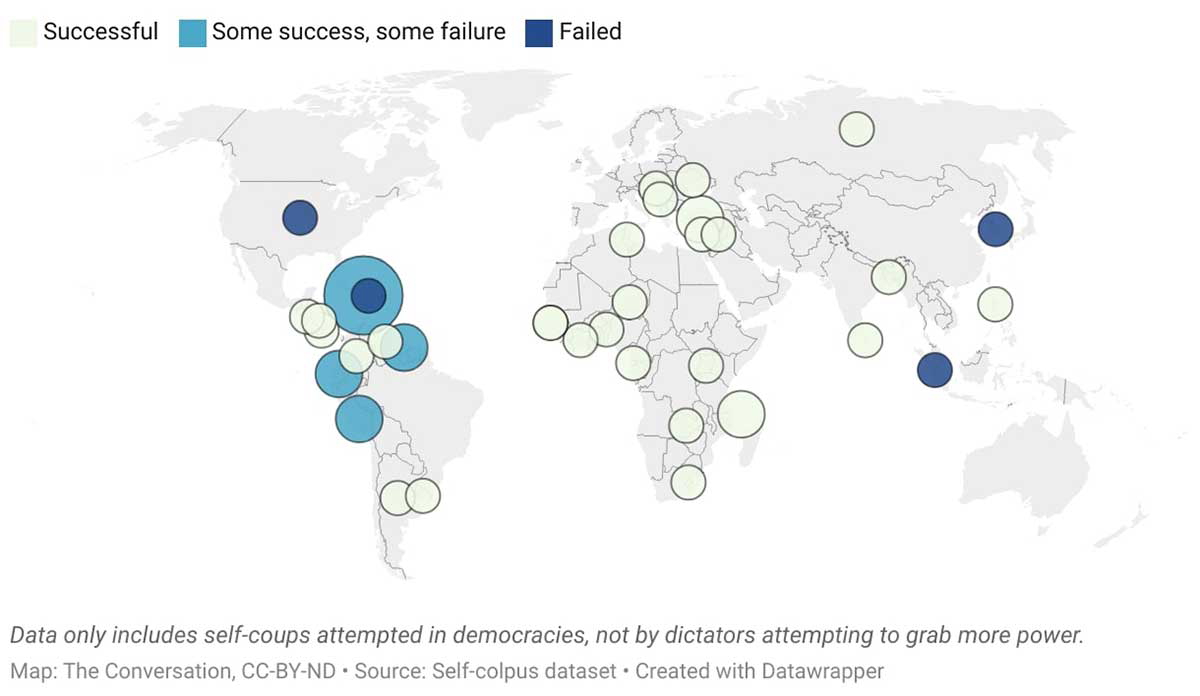
Autogolpe, Spanish for “self-coup,” is, as the name implies, a coup against oneself, and there have been at least eleven attempted or successful autogolpes in the Americas alone since WWII. Essentially, the leader in question, who has come to power legitimately, overthrows himself* as president to instead take up a new, illegitimate, and all-powerful leadership position unconstrained by the other elements of his own government apparatus intended to provide checks and balances on the executive.
As political scientist Maxwell Cameron explains, “Presidents implement autogolpes in order to pursue policies that would be impeded by a vigorous legislature, independent courts, and watchful citizens.” Those policies vary by regime, but one common cause is the president’s desire to continue in power after losing an election or completing his allotted number of terms.
Unlike the slower consolidation of powers that often marks a leader’s shift from president to autocrat (à la Daniel Ortega in Nicaragua), the hallmark of the autogolpe has long been the rapid dismantling of the other branches of government and the wholesale purge of government employees who are not loyal to the president himself.
The legislative and judicial branches are (ostensibly temporarily) dissolved, and the constitution is suspended. Without them, the president rules by decree, usually until he can set up loyal governing bodies to present the outward appearance of democracy while vesting most, if not all, of the state’s power in the executive.
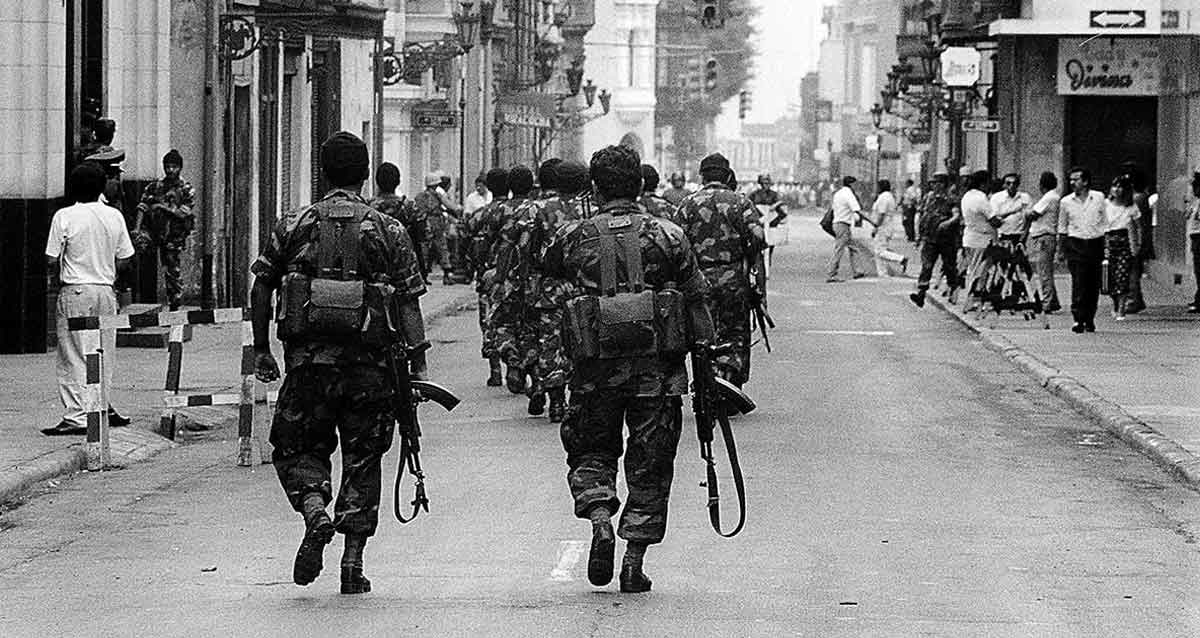
In addition, the outright dissolution of governing bodies may not be necessary for the modern autogolpe; some scholars contend that actively undermining the legislature, judiciary, and constitution, to the point where they are rendered powerless, might also qualify. For example, political scientist David Pion-Berlin and his co-authors define the autogolpe more broadly to include events in which “a nation’s chief executive, in order to hold onto, consolidate or expand power, coercively interferes with or shuts down another branch or branches of government.”
It’s important to highlight that the populace does not necessarily have to condemn the autocrat in order for his actions to be considered a self-coup—though that is often the result. There have been instances where citizens have initially supported the president’s actions in the face of an intransigent or incompetent government—including what is widely considered the “first” autogolpe.
*Author’s note: There are no recorded autogolpes or attempted autogolpes by women.
The First Autogolpe?
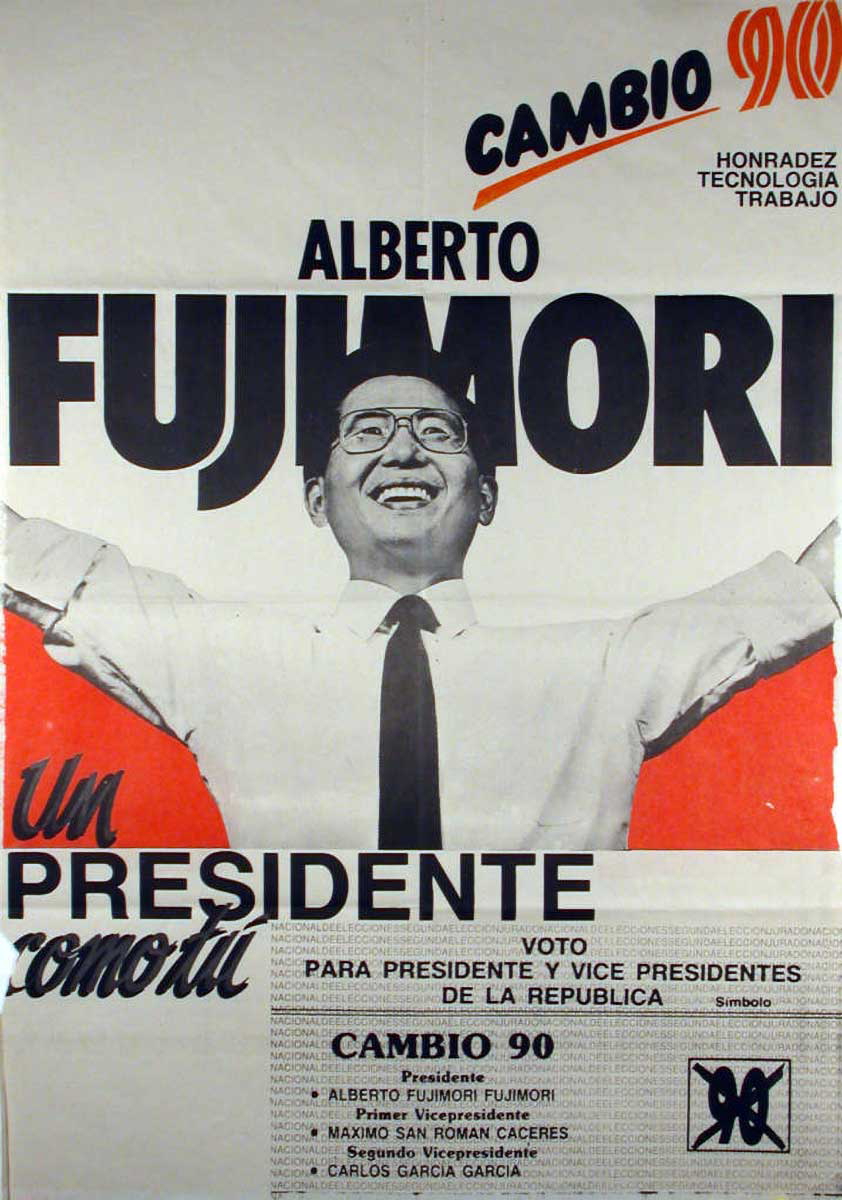
While no doubt similar forms of government overthrow preceded it, the quintessential autogolpe, the lens through which most contemporary autogolpes are seen, remains Alberto Fujimori’s 1992 overthrow of his own legitimate government in Peru.
On April 5, 1992, Fujimori, elected as an “outsider” candidate two years earlier, suspended the country’s constitution, closed its congress and dismissed senior judges. While Fujimori had won the presidency, his party’s minimal representation in congress and faltering political alliances made enacting his agenda nearly impossible. So, he gave up.
Instead of continuing to work within the confines of the democratic process, he instituted emergency measures designed to root out alleged corruption in the judiciary and reshape the legislature. Media outlets were placed under military control, and several prominent opposition officials were placed under house arrest. All branches of the military signed a communiqué supporting the new Government of Emergency and National Reconstruction.
Though Fujimori claimed he was not trying to destroy the country’s democracy but make it more efficient and effective, it was under considerable international pressure, including from the Organization of American States, that he agreed to call for new elections. Finally scheduled for November 1992, the opposition was divided over whether or not to participate. The new congress that was ultimately elected gave Fujimori a majority and then drafted a new constitution, which barely passed by referendum in 1993.
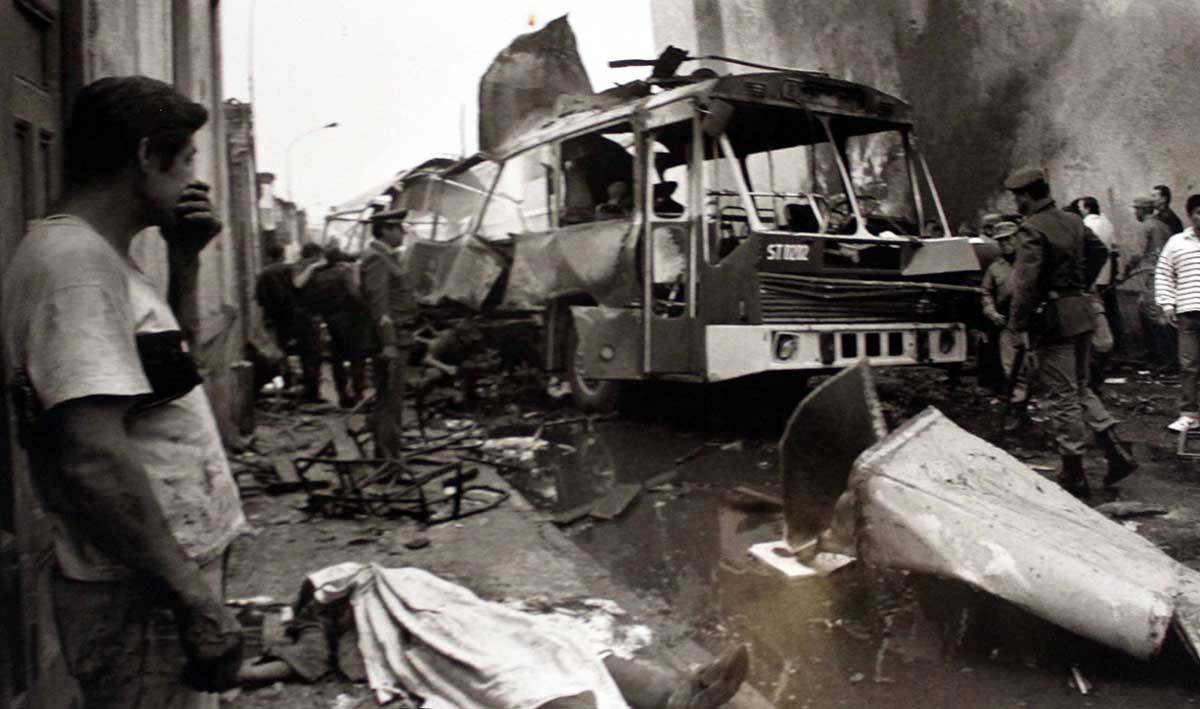
Yet Peruvians largely supported Fujimori’s anti-democratic actions, due in part to the country’s inability to address the Shining Path insurgency movement and his support for a stronger military response to the guerrillas. In fact, Fujimori was reelected in 1995.
The “first” autogolpe was an undeniable success—though it’s worth noting that Fujimori, after claiming victory in highly irregular elections in 2000, resigned, then fled the country amid bribery and human rights scandals. He was ultimately arrested and was only released on humanitarian grounds that saved him from dying in prison.
Keys to Success: Launching a Winning Autogolpe
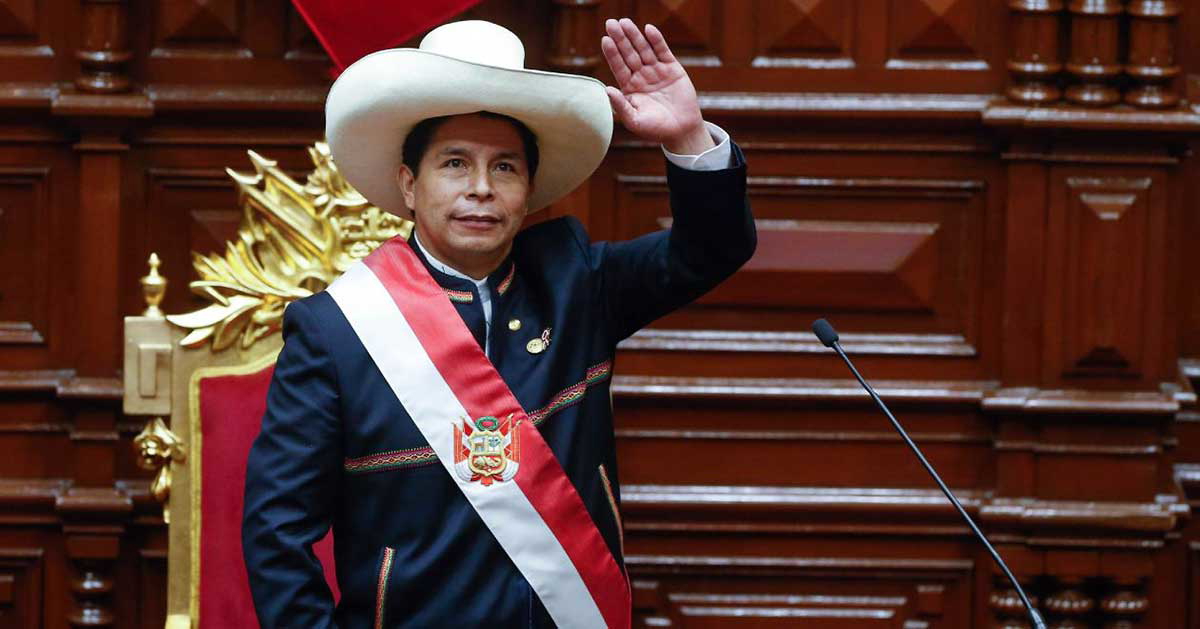
Though anyone launching a coup must have some reason to believe they will succeed, according to political scientist John J. Chin, while about half of traditional coup attempts fail, four out of five attempted autogolpes succeed. Why are autogolpes more successful than “regular” coups and what leads to their success?
Conditions prior to the launching of a self-coup play an important role. Countries with a long history of democracy are less likely to fall victim to an autogolpe, while those that haven’t built up sufficient popular belief in the value of democracy over other forms of government may be more susceptible. In Latin America, with a history of caudillismo, or strong-man rule, following independence from Spain, autocracy has a much longer tradition than democratic rule.
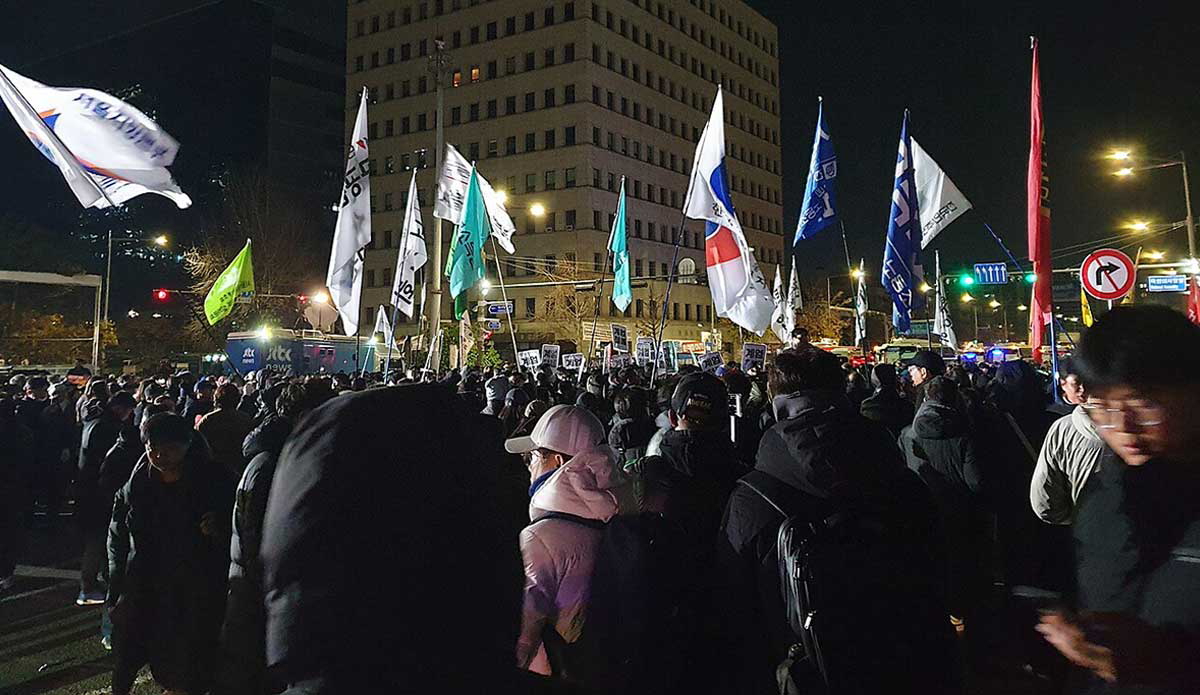
Military support is essential for a successful autogolpe; the leader must ensure that the country’s armed forces are loyal to him personally. The implicit threat of repressive action against ousted officials or the civilian populace is necessary to ensure that the autogolpe proceeds apace. The dangers of attempting an autogolpe without it can be seen in two recent failed self-coups: Peru in 2022 and South Korea in 2024. Both presidents ended up in jail when military support for their power grabs failed to materialize, and they were instead held to account.
The leader’s ability to control the narrative surrounding his illegal actions is also paramount; a successful self-coup will usually see press freedoms being curtailed or national media being co-opted by the new regime. Having an identifiable threat, like Fujimori with the Shining Path, may help to convince people, at least in the short term, that extraordinary measures must be taken. However, over the long term, a return to the trappings of democracy is generally necessary to appease both internal and external observers.
The Challenges of Fighting Autogolpes
By nullifying the state apparatus that people have traditionally relied on to, however clumsily, represent their interests while simultaneously retaining power over the state’s military forces, the autogolpe leaves the citizenry few avenues to protest, let alone fight back. People cannot appeal to legislators when there’s no legislature; lawsuits can’t be brought to courts that no longer exist. Further, with the regime silencing or taking over national media, comprehension of what’s actually happening may be limited, decreasing the likelihood of mass movements like general strikes.
Even less inspiring, self-coup failures historically have largely been the result of the leaders themselves overestimating their support with the military or party elites, not because of anything the citizenry has done or is able to do to stop them.
There is some evidence that international pressure, as it does with traditional coups, can undermine self-coups specifically by causing the president’s internal support to dry up—if the military or his political supporters believe international action is imminent, they may flinch.
Political scientist Alexander Noyes argues that “international supporters of democracy must step up and provide more robust and consistent responses to executive coup attempts.” Mass demonstrations may also put sufficient pressure on the president’s supporters but run the risk of being suppressed by the military.
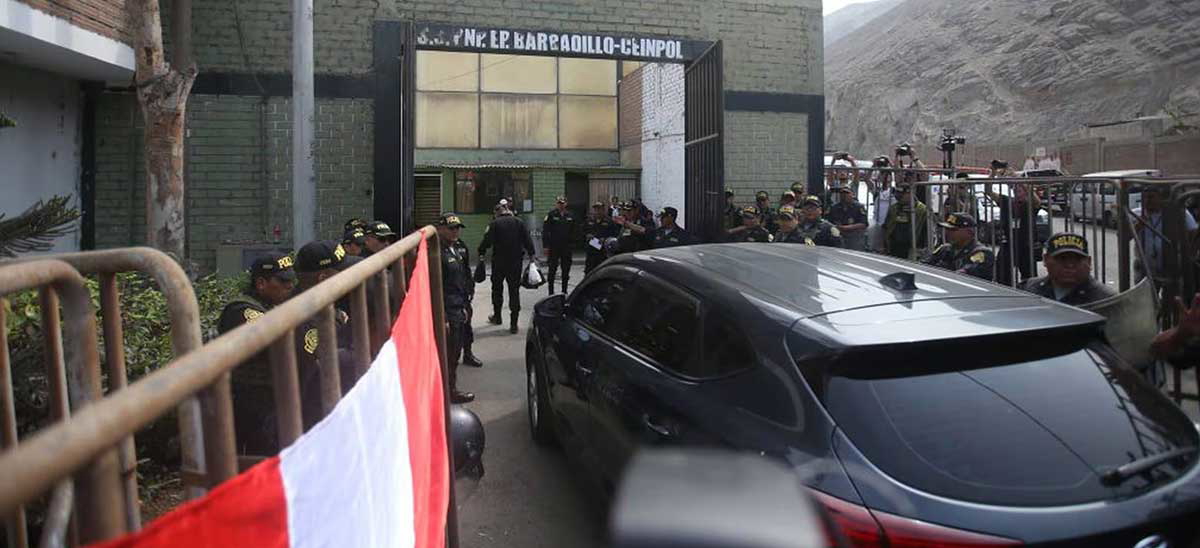
Some scholars argue that disincentivizing autogolpes—for example, the adoption of clear prosecution standards for leaders attempting a self-coup—may play a role in preventing them. The fact that nearly all of Peru’s living former presidents are currently in prison or under house arrest, at least three of them having attempted autogolpes, may serve as a cautionary tale—potential jail time does not always dissuade presidential shenanigans.
Overall, evidence suggests that “high media accuracy, low partisanship, and citizen support for democracy typically promote democratic survival,” and therefore are keys to both preventing and undermining autogolpes. However, in a world of rising populism, these elements are increasingly absent.