The Battle of Lepanto was one of the fiercest clashes of the 16th century, where a rare alliance of European powers confronted the dominant Ottoman fleet. The Holy League’s victory ended Ottoman naval supremacy in the Mediterranean and shattered the myth of their maritime invincibility. It was also the last major battle fought primarily by galleys; in its aftermath, the galleon and other sailing warships rose to prominence. Lepanto marked both a decisive strategic moment and a shift toward the emerging Age of Sail.
Prelude to the Battle
In the 1500s, the Ottoman Empire was regarded by many in Christian Europe as an implacable and expanding threat. Despite suffering occasional setbacks on land and sea, the Ottomans were a formidable military power, especially when contrasted with the disunity and rivalries that plagued Christian states. The only factor preventing their complete dominance was that the empire was also engaged in a long-standing struggle with its eastern rival, the Safavid Empire in Persia.
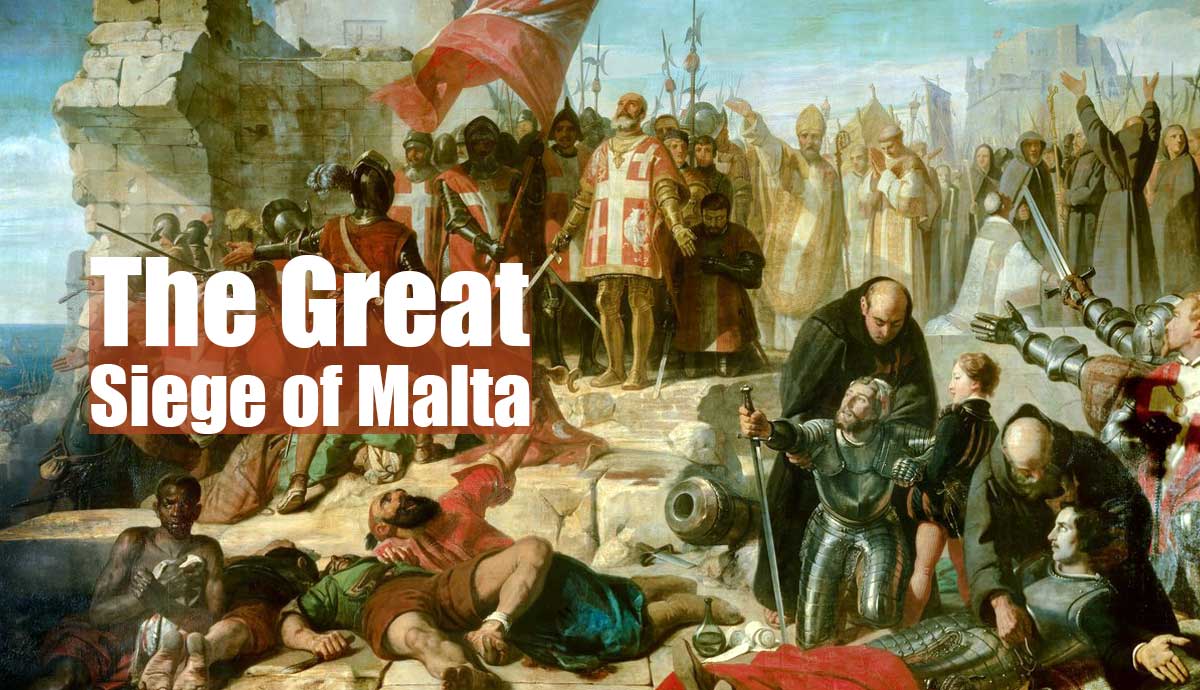
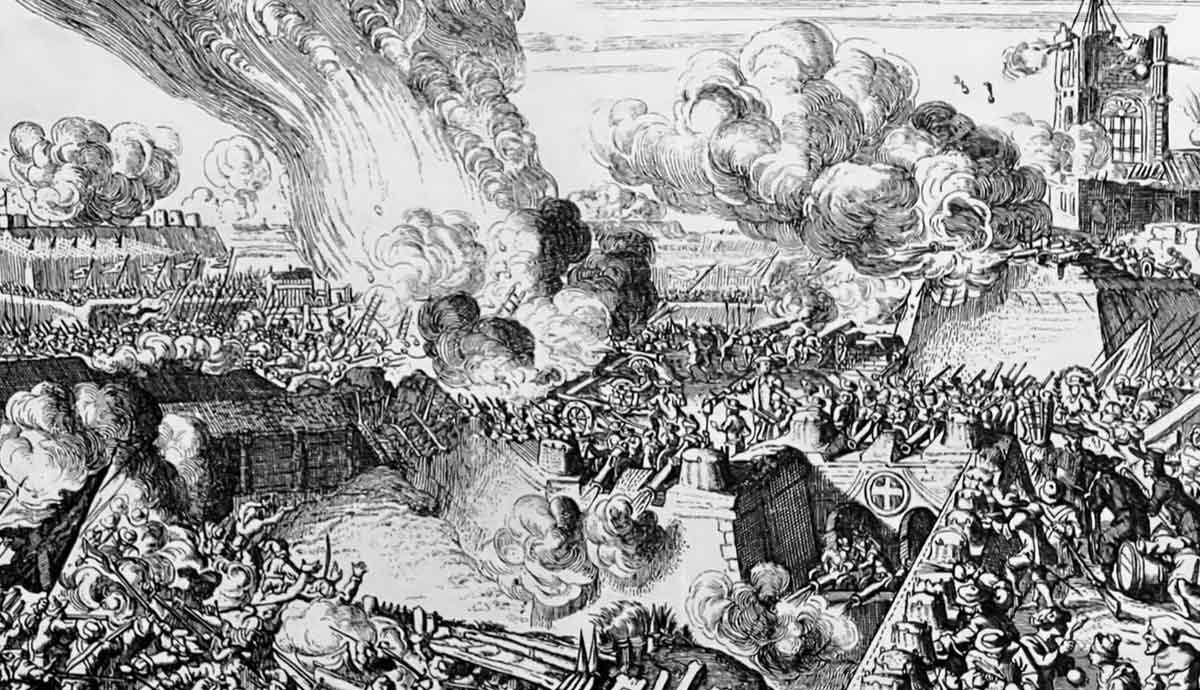
The successful Christian defence during the Siege of Malta in 1565 proved that the Ottomans could be halted, but it was only a temporary reprieve. When Sultan Selim II succeeded his father, Suleiman the Magnificent, in 1566, Mediterranean observers expected a renewed Ottoman push westward. Venice, one of the main naval powers capable of resisting Ottoman ambitions, was particularly vulnerable after a fire in its Great Arsenal in 1569, devastated its shipbuilding capability. The following year, Ottoman forces launched an invasion of Cyprus, capturing key towns and besieging others with their customary efficiency.
Faced with overwhelming pressure, the Venetians sought assistance from other Christian powers. Their appeal coincided with the ambitions of Pope Pius V, who had long advocated a united Christian response to Ottoman expansion. The combination of Venetian desperation and papal ambitions would lay the groundwork for the formation of the Holy League, the coalition that would confront the Ottomans at Lepanto.
Formation of the Holy League
The Holy League was a broad Catholic alliance formed in 1571 under the leadership of Pope Pius V, intended to challenge Ottoman dominance in the eastern Mediterranean. Its core members were the Spanish Empire, the Republic of Venice, and the Papal States, supported by the Republic of Genoa, the Duchies of Savoy, Tuscany, and Urbino, the Knights of Malta, and several minor Italian powers. It was an unusual coalition, bringing together states with long-standing rivalries and conflicting political priorities.
Several major Christian powers remained conspicuously absent. France refused to join, maintaining its long-standing diplomatic partnership with the Ottomans as a counterbalance to Spanish power. Portugal, though a formidable naval state, was overstretched by commitments in Morocco, the Red Sea, the Indian Ocean, and Southeast Asia. The Holy Roman Empire, embroiled in internal disputes and frontier conflicts, opted for neutrality rather than engage in another costly Mediterranean campaign.
Even amongst those who did join, unity was fragile. While all agreed on the need to oppose the Ottomans, the League’s members frequently quarrelled over military command, strategy, and the division of costs and spoils. It was an achievement of exceptional diplomatic skill that Pius V managed to hold the coalition together long enough to field a combined fleet at sea. Venice and Spain provided the bulk of the ships, money, and manpower, but contributions arrived from across Italy and beyond. In the end, the League’s victory at Lepanto would stand as its first, and effectively, its last great triumph before dissolving after the Pope’s death.
Opposing Forces
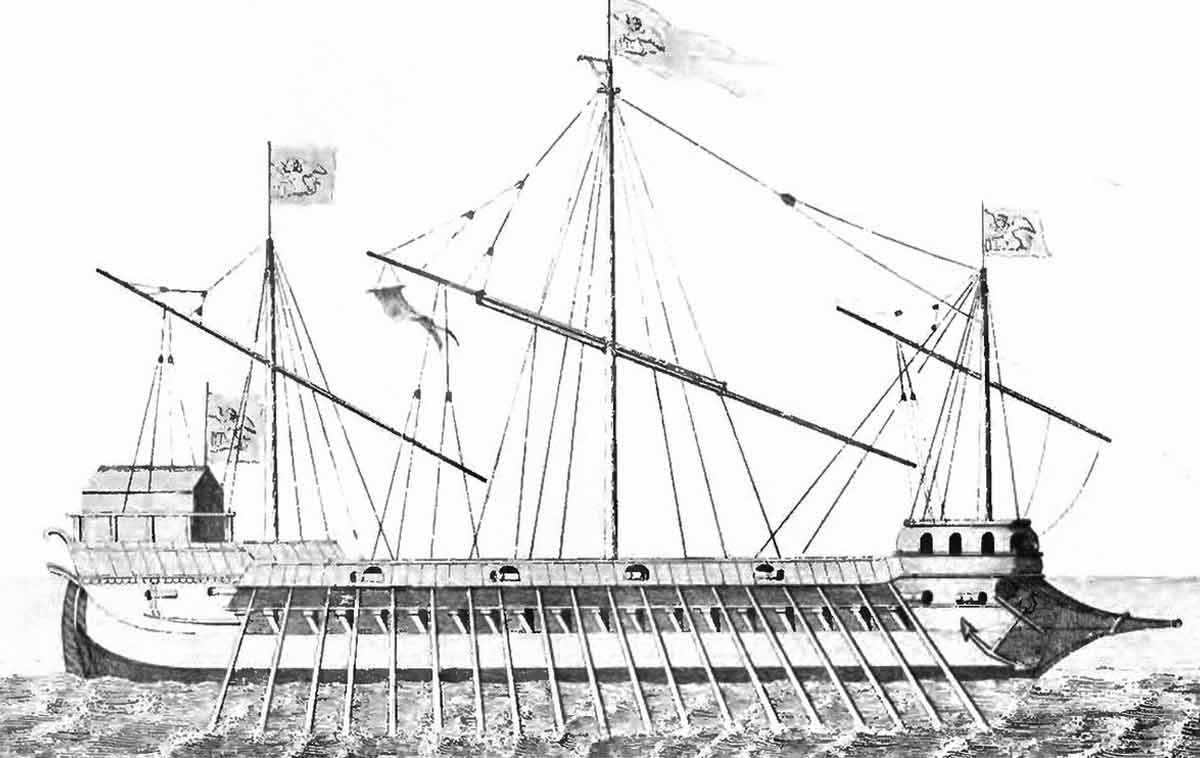
The Holy League assembled one of the largest Christian fleets of the 16th century. Venice contributed the single greatest contingent, supplying 109 galleys and six heavy galleasses, vast floating artillery platforms that would play a decisive role in the battle. Spain added 49 galleys, while Genoa sent 27. Smaller but still vital contributions came from the Papal States (seven galleys), the Knights of Malta (three), Savoy (three), Tuscany (five), and several privately owned vessels. In total, the Christian fleet comprised 206 galleys and six galleasses, manned by around 30,000 soldiers and 40,000 sailors, including Miguel de Cervantes, the future author of Don Quixote. The fleet was commanded by Don John of Austria, the half-brother of King Philip II of Spain.
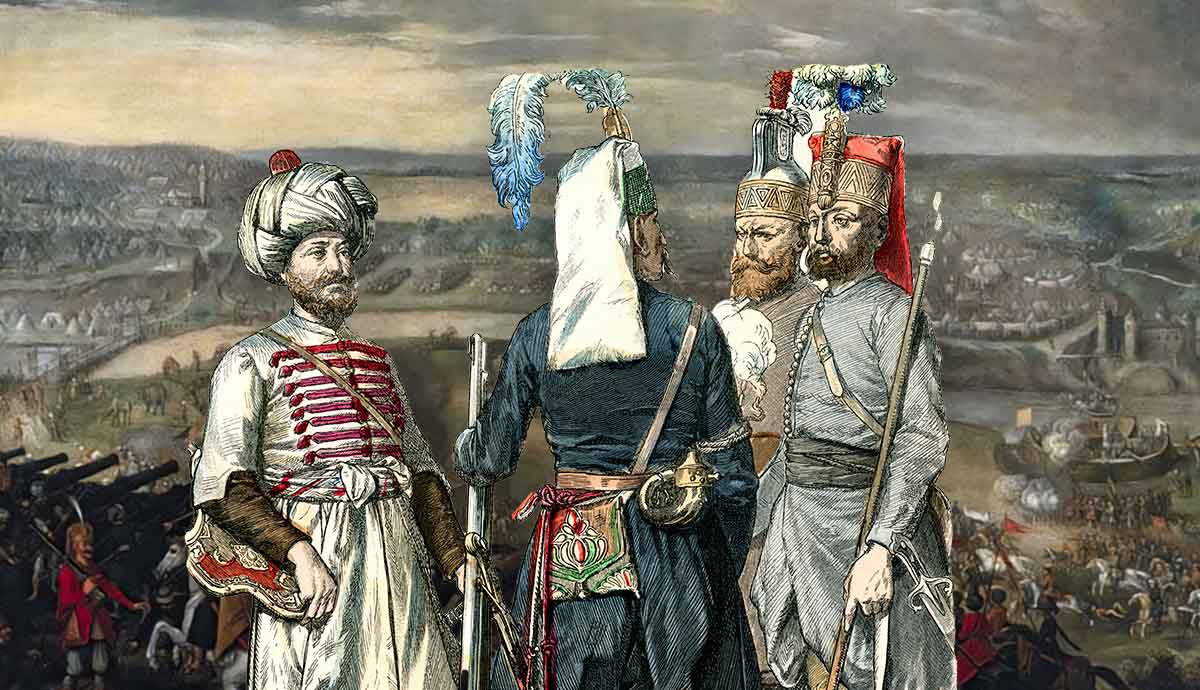
The Ottoman fleet was equally formidable, drawing on both the imperial navy and experienced Barbary corsair squadrons. Their force consisted of 222 galleys, 56 galliots, and numerous lighter craft. The ships were crewed by roughly 13,000 sailors, supported by 37,000 slave oarsmen, and carried approximately 25,000 soldiers as marines. Many of these troops were skilled archers, including the Ottoman admiral Ali Pasha.
Overall, the two sides were closely matched, each with distinct strengths. The Ottomans possessed highly trained seamen and superb archers, while the Holy League relied on large numbers of professional soldiers and superior firepower from its arquebusiers and galleasses. Both fleets used slaves and convicts as oarsmen, though a higher proportion of the League’s rowers, especially amongst the Venetians, were free citizens. This difference in morale and endurance would prove critical. Within both camps, some commanders feared the risks of a fleet action of such scale, but advocates for battle ultimately prevailed.
The Battle Begins
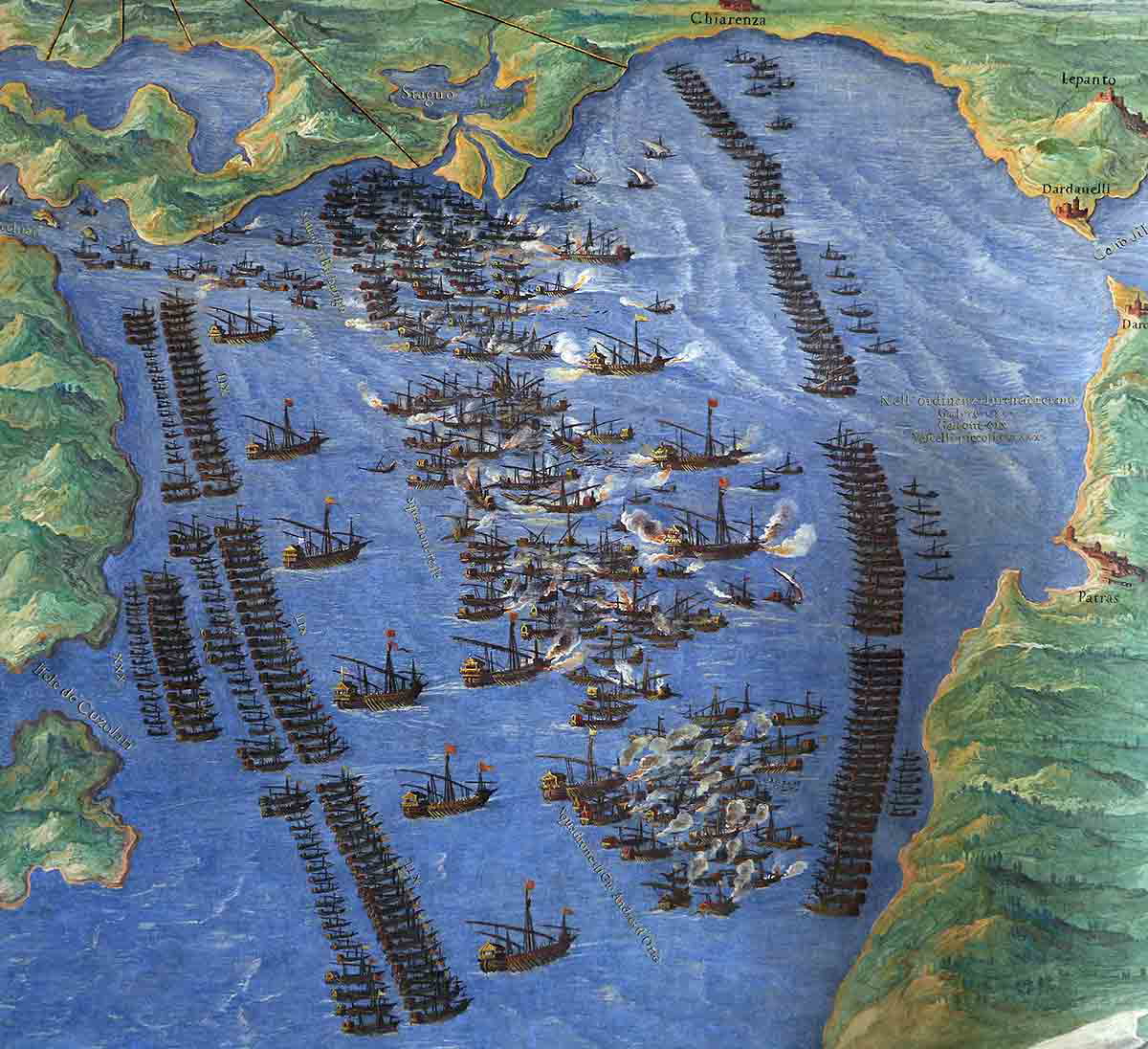
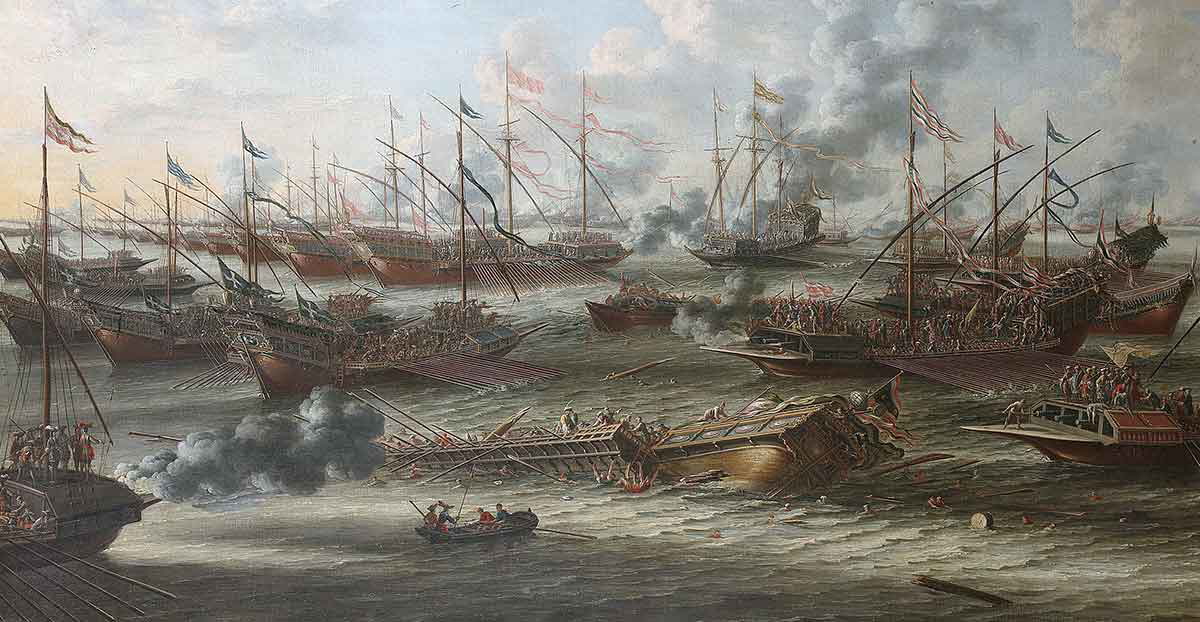
The battle opened in the Gulf of Patras in western Greece, where the Ottoman fleet advanced in a wide crescent formation. Opposing them, the Holy League arrayed its fleet in three divisions positioned behind the six massive Venetian galleasses, which had been packed with cannon and arquebusiers and anchored slightly ahead of the line. As the Turks approached to the thunder of drums and battle cries meant to intimidate their foes, the Christian crews prepared for brutal close combat. Grease was smeared on the rails to hinder boarders, nets were hung to trap attackers, and in a remarkable move, chained slaves and prisoners were unshackled and armed with the promise of freedom if they fought bravely.
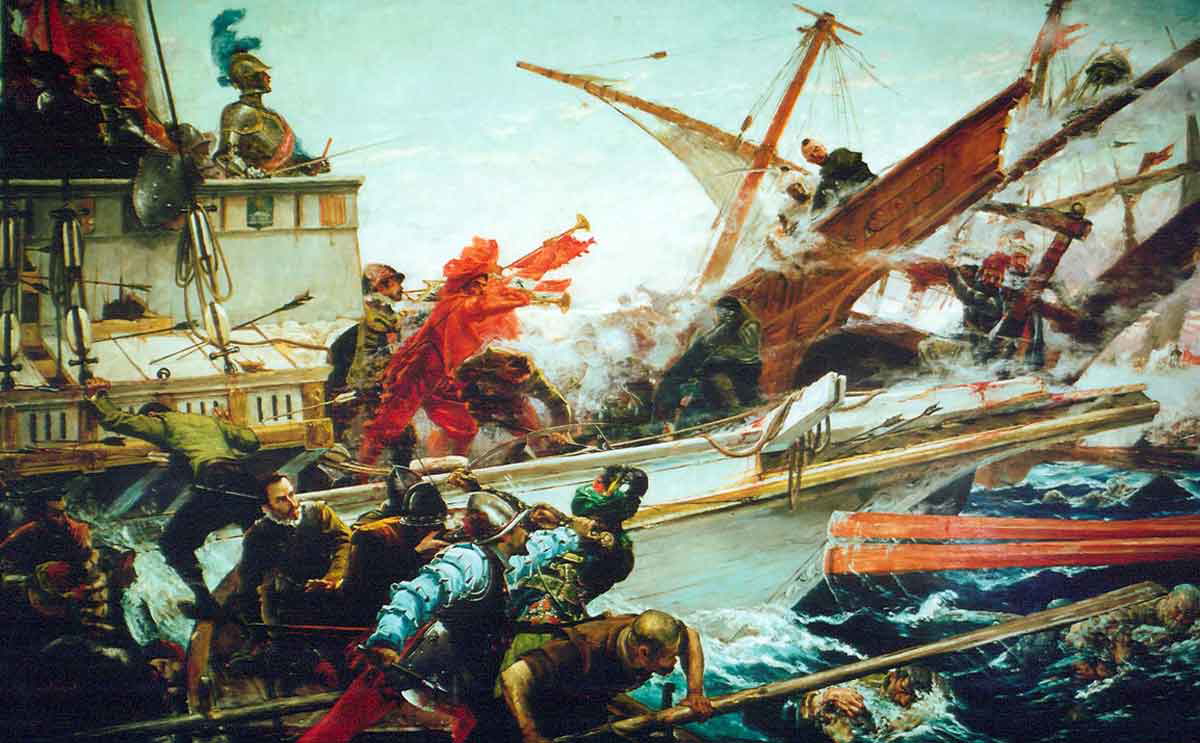
The opening phase of the battle belonged to the galleasses. Their devastating broadsides shattered the cohesion of the Ottoman advance, sinking seven galleys outright and crippling many more before they could close the distance. Any vessel that attempted to pass the floating fortresses was torn apart by cannon fire or swept by volleys of arquebus shot. Soon, along the full length of the line, Christian and Ottoman galleys collided. Ships grappled together as archers and arquebusiers traded fire before infantry surged over the gunwales in savage boarding actions.
At several points, the fighting became so dense that the sea was covered by a near-continuous mass of interlocked ships, turning the battle into a vast, chaotic platform of melee combat. On the League’s left wing, a bloody stalemate ensued; on the right, the Ottomans gained an early advantage. But the decisive struggle unfolded at the center, where the flagship squadrons and admirals of both fleets clashed head on.
Turning Point and Collapse
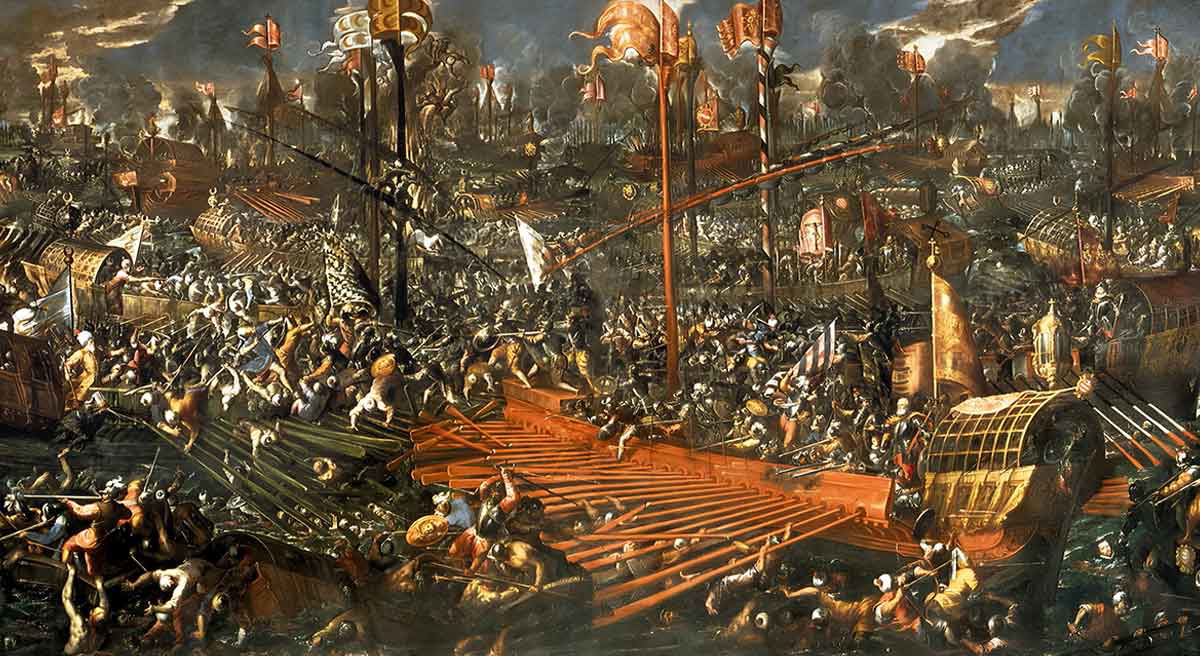
For hours the fighting raged, with neither side able to claim a clear advantage. Gradually, however, the momentum shifted toward the Holy League. The Ottomans were hampered by their reliance on chained oarsmen, who could not manoeuvre or support the crew when the battle turned to close combat. By contrast, Christian ships benefited from free oarsmen who could fight, reload weapons, or reinforce boarding parties. On every Ottoman ship captured by the League, slaves were unchained and armed, providing a steady stream of reinforcements to the Christian boarding forces.
In the center, the decisive clash unfolded between the flagship squadrons. Ali Pasha drove the Ottoman flagship Sultana directly at Don John of Austria’s La Real, and fierce boarding actions raged back and forth. Janissaries initially gained ground, only to be driven back by Spanish and Italian infantry. After multiple assaults on both sides, a final Christian push broke onto Sultana’s deck, overwhelming her defenders. Ali Pasha was killed fighting, and his severed head raised on a pike. Even still, many Ottoman ships fought on.
The one significant Ottoman success occurred on their left, where the experienced corsair commander Ochiali exploited a gap in the Christian line. He overwhelmed the Hospitaller flagship, captured its banner, and escaped with around 30 ships. Despite this local victory, the wider battle was a catastrophic Ottoman defeat: more than 200 Turkish ships were sunk or taken, up to 25,000 Ottoman soldiers were killed, and thousands more were captured. The Holy League lost about 8,000 men, and although nearly every ship was damaged, only a handful were sunk. They had also rescued over 12,000 galley slaves.
Aftermath and Legacy of Lepanto
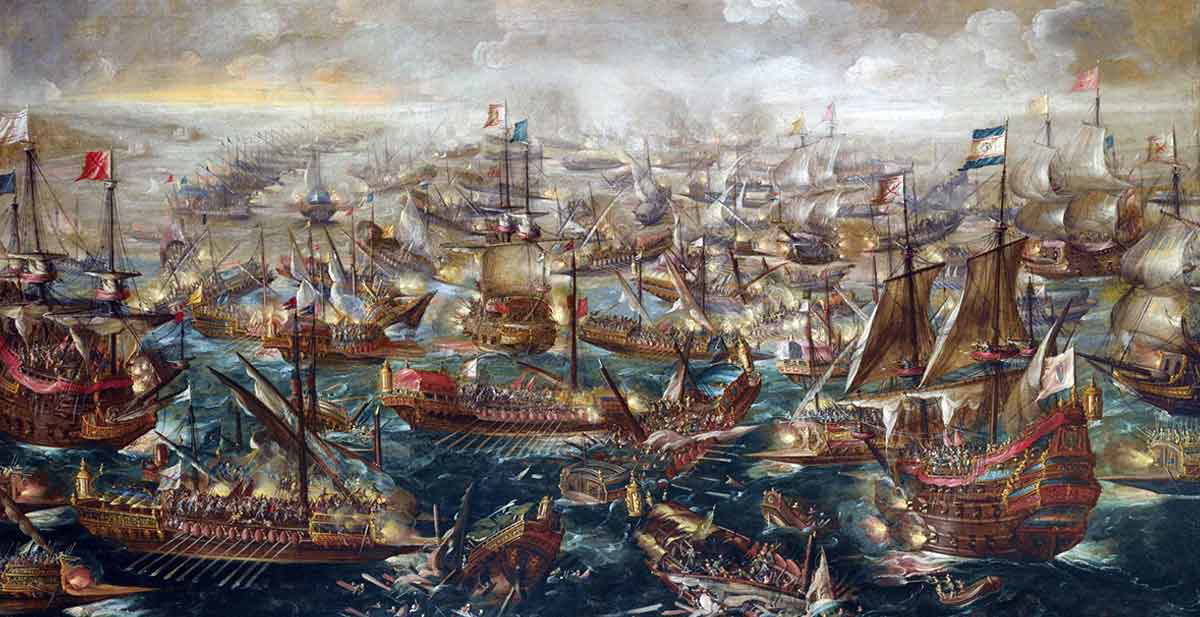
News of Lepanto spread across Europe, sparking celebrations comparable to those following the Siege of Malta. For the first time in over a century, the Ottomans had suffered a decisive naval defeat. Like Malta or the later victory at Vienna, Lepanto demonstrated that Ottoman expansion could be halted, and it shattered the long-standing perception of Turkish naval invincibility. This psychological shift was significant: Christian powers that had feared the empire now sensed that its advance could be resisted.
In strategic terms, however, the victory delivered limited short-term gains. The Ottomans retained Cyprus, the very territory the Holy League had hoped to liberate, and they rebuilt their fleet with astonishing speed in the months following the battle. Because galley warfare relied on abundant timber and manpower, ships themselves could be replaced quickly; what could not be easily restored was the experience of thousands of skilled sailors, archers, and marines lost at Lepanto. This loss of trained personnel was the true long-term blow to Ottoman naval strength. It is telling that Ochiali as the new commander of their fleet ordered 20,000 arquebuses for his marines in 1572.
Although the Ottomans continued to dominate the eastern Mediterranean, Lepanto marked the beginning of their decline as a blue-water power. Spain, Venice, and Genoa remained unchallenged in the western Mediterranean for decades, and the empire never again fielded a fleet of the same quality or cohesion. The battle endures less for its territorial impact than for its symbolic and cultural legacy. Cervantes declared it “The greatest day’s work in centuries.”