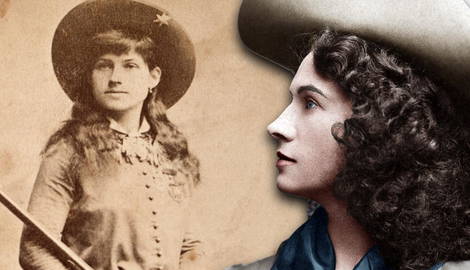
Annie Oakley first used firearms out of necessity, unaware that her skill would soon make her world-famous.
Traveling to the United States and Europe, Oakley was a star on the stage, proving not only that women could be as skilled as men in traditionally male-dominated activities but also that they could be better. Through her fame, Oakley impacted many and built a Wild West legacy that has stood the test of time.
Bare-Bones Beginnings
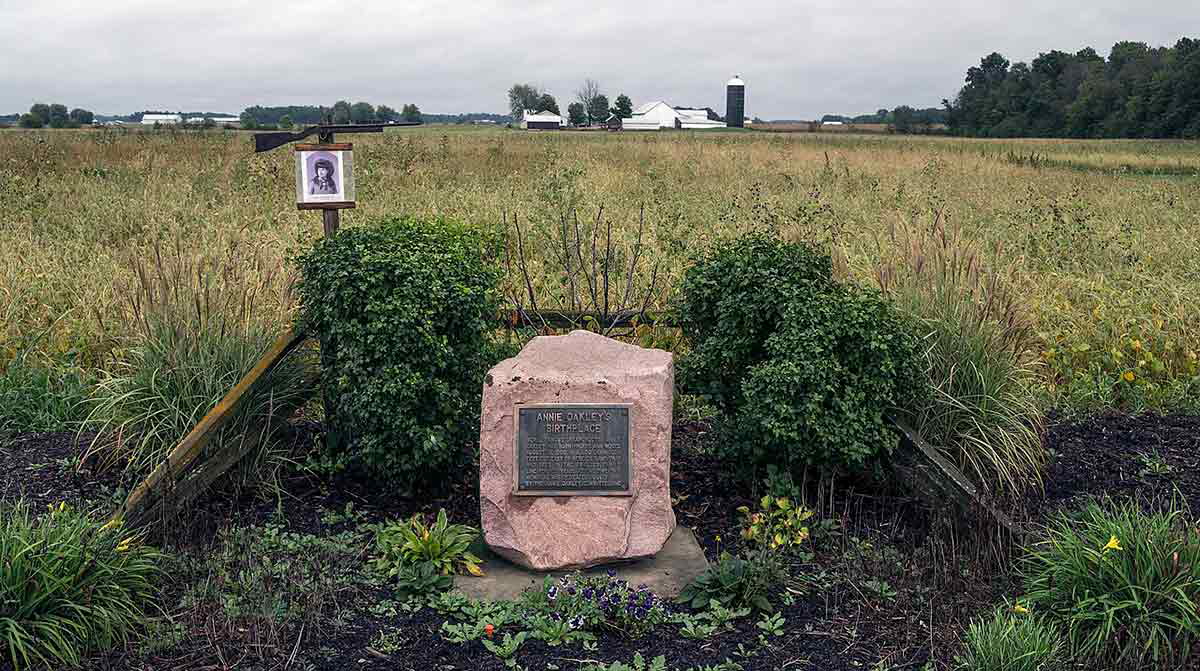
In August of 1860, Phoebe Ann Mosey entered the world. Jacob and Susan Mosey, of Darke County, Ohio, had six children in total, but the happy family would be short-lived. Phoebe, who went by “Annie,” was only six years old when her father died of pneumonia. Susan was left to raise Annie and her siblings alone and was soon remarried to Dan Brumbaugh. Like Jacob, Brumbaugh died suddenly, leaving Susan once again destitute, this time with a new baby. Annie was sent to live at the Darke County Infirmary, a combination poorhouse and asylum. At the infirmary, Annie lived with the superintendent, Samuel Crawford Edington, and his family.
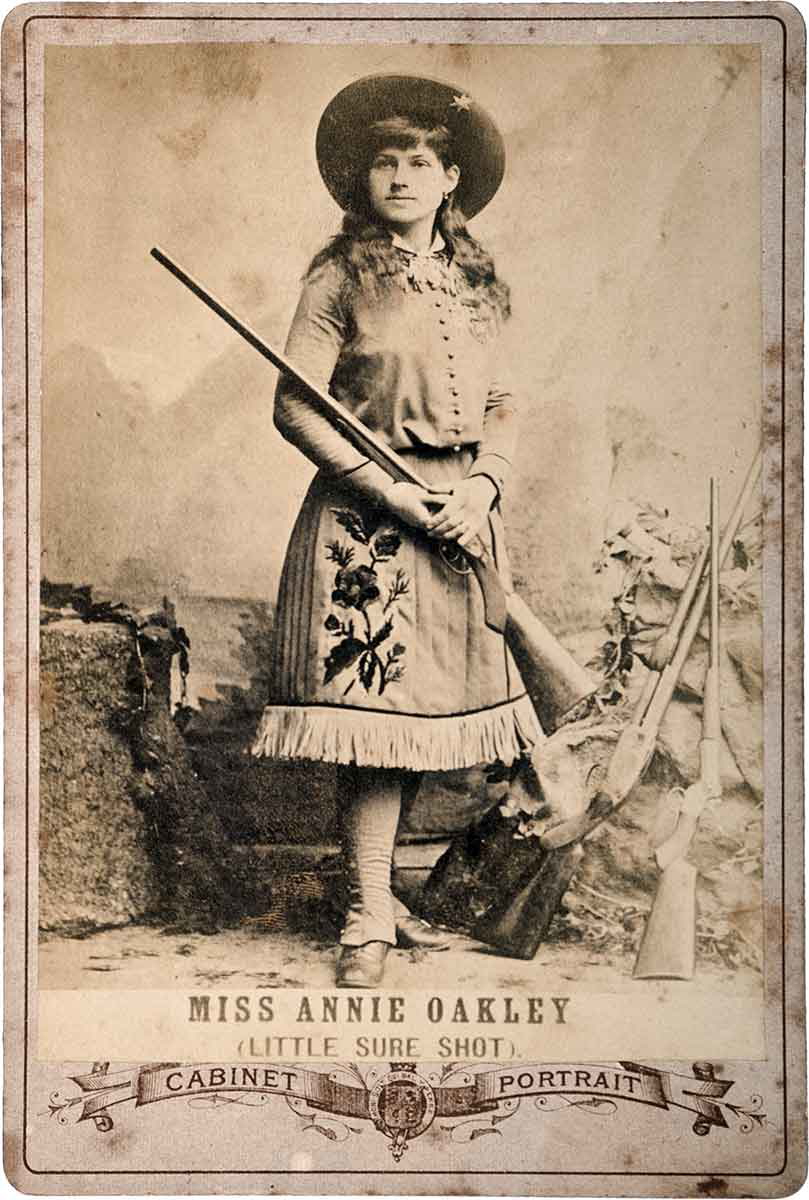
Annie was around eight or nine years old when she moved in with the Edingtons, and remained with them for about five years. She was tasked with working with the children at the Infirmary, mostly orphans. She aided with their care, learned how to sew, and received an education.
Annie briefly spent time in the care of an abusive family, whom she referred to later in her life as “the wolves,” but as a teen, she returned home to her family. By this time, her mother had remarried to her third husband, Joseph Shaw. Despite the union, money was still tight, and Annie used her father’s rifle to hunt small game. She sold this meat to the local grocery store, which often resold it to restaurants in Cincinnati, and used the money to support her family. Annie proved to be an exceptional markswoman and earned a steady income from her hunting. By age 15, she paid off her mother’s mortgage using her hunting income.
Child Crackshot
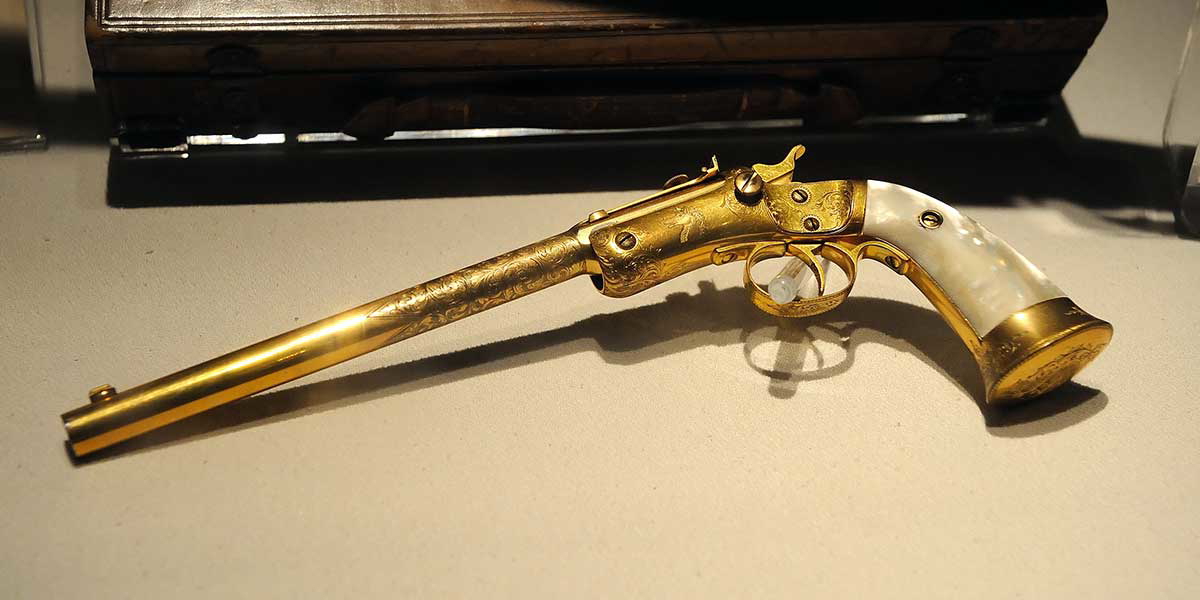
Not only was Annie helping her family, but her reputation was growing. A Cincinnati hotel owner named Jack Frost, who was a purveyor of Annie’s game, took note of her shooting ability. Frost invited her to come to the city to compete against renowned rifleman Frank Butler. Butler spent his time traveling the United States, entertaining crowds and challenging amateurs in shooting competitions.
At 15, Annie traveled to Cincinnati for a shooting contest with Butler. The goal of the match was to shoot 25 targets, and whoever hit the most was declared the winner. Annie hit all 25 of her marks, while Butler managed 24. Instead of lamenting his loss to a woman, Butler was entranced by Annie. The two immediately began a courtship and were wed the next year. Annie began traveling with Butler as he toured his way around the country, and she occasionally acted as his assistant during demonstrations. On May 1, 1882, Butler’s shooting partner was ill. Instead of canceling the show, Butler recruited his wife to act as his stage collaborator. A star was born.
Little Sure Shot
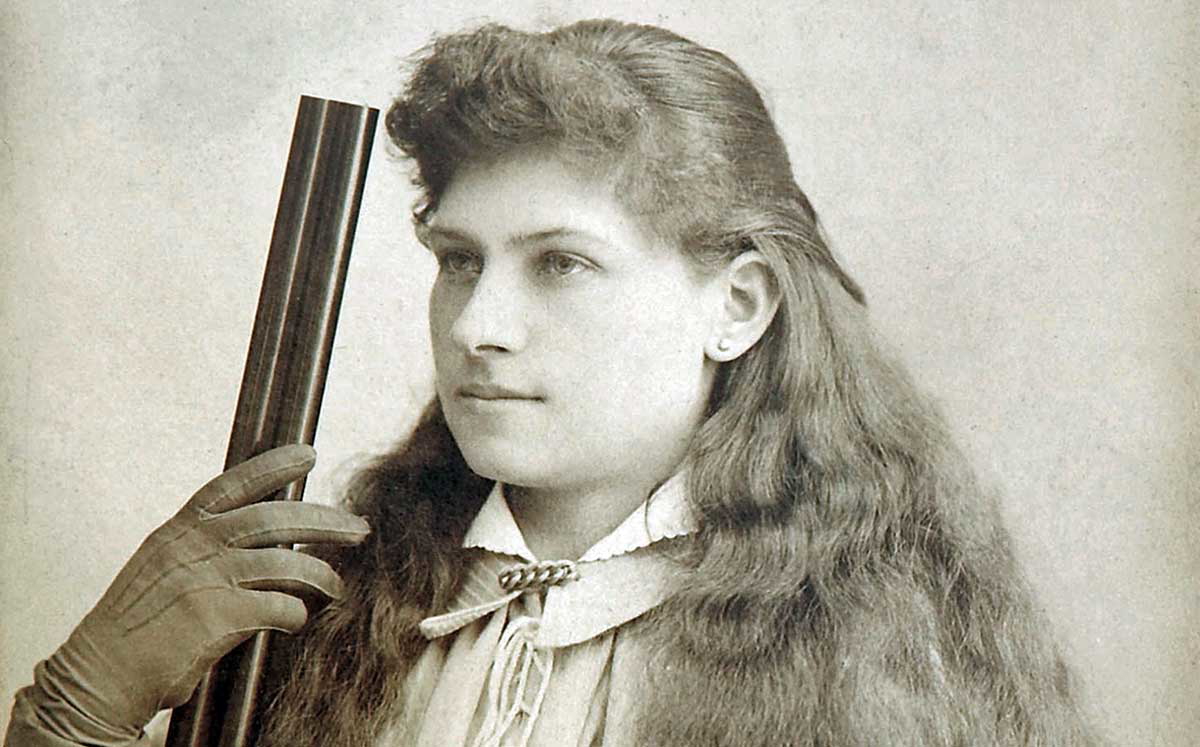
Annie wowed audiences in her first performance, so much so that she continued to perform with Butler rather than return to her offstage role as his quiet wife. The couple continued to travel, developing new acts. Annie adopted “Oakley” as her stage name, though offstage, she remained Mrs. Frank Butler. It has been postulated that the name came from the Oakley area of Cincinnati, where the couple first met. The couple’s shooting act often featured their dog, George, and delighted audiences of all ages.
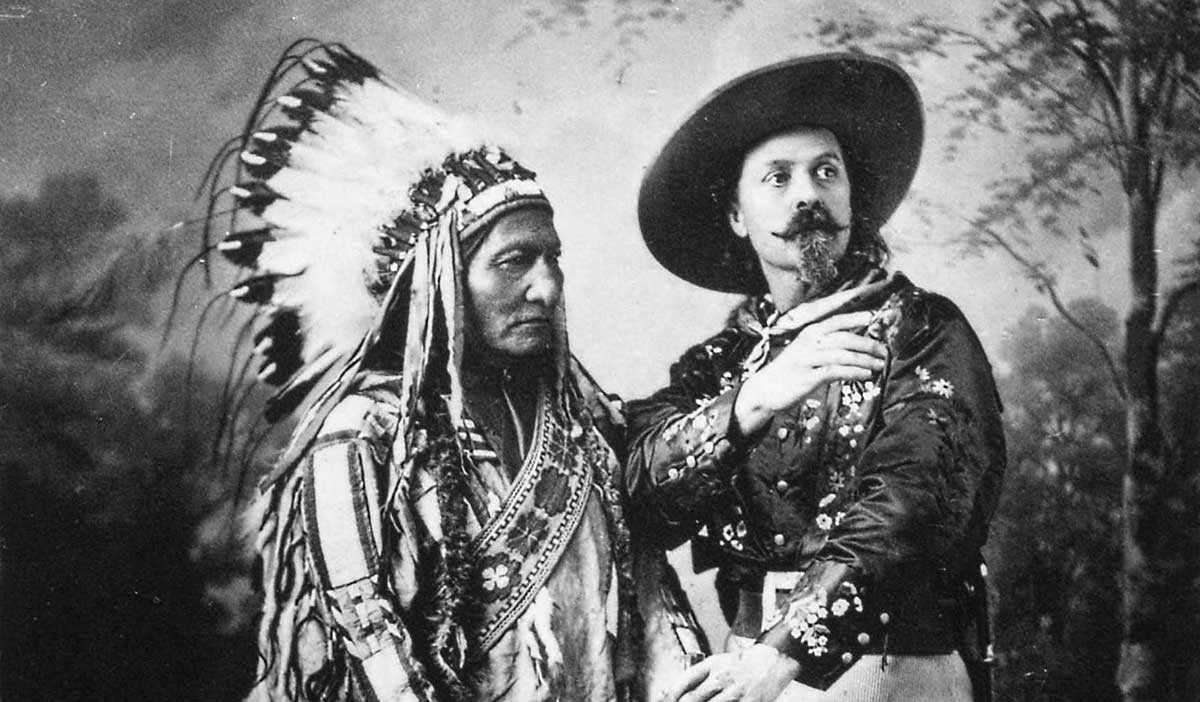
In an 1884 performance in St. Paul, Minnesota, Annie met and befriended Lakota leader Sitting Bull. Though Sitting Bull was still considered a prisoner at Fort Yates, he had traveled to the area for a public appearance and was excited to meet the young sharpshooter, paying to have his photograph taken with her. The pair became fast friends, and Sitting Bull gave her a new nickname, “Watanya Cicilla,” meaning “Little Sure Shot.” The friendship continued until Sitting Bull’s death, and the pair would even spend a year working together under Buffalo Bill Cody. Eventually, Sitting Bull came to see Annie as a surrogate daughter, gifting her a pair of moccasins that he had worn in the Battle of Little Bighorn.
Buffalo Bill’s Wild West Show
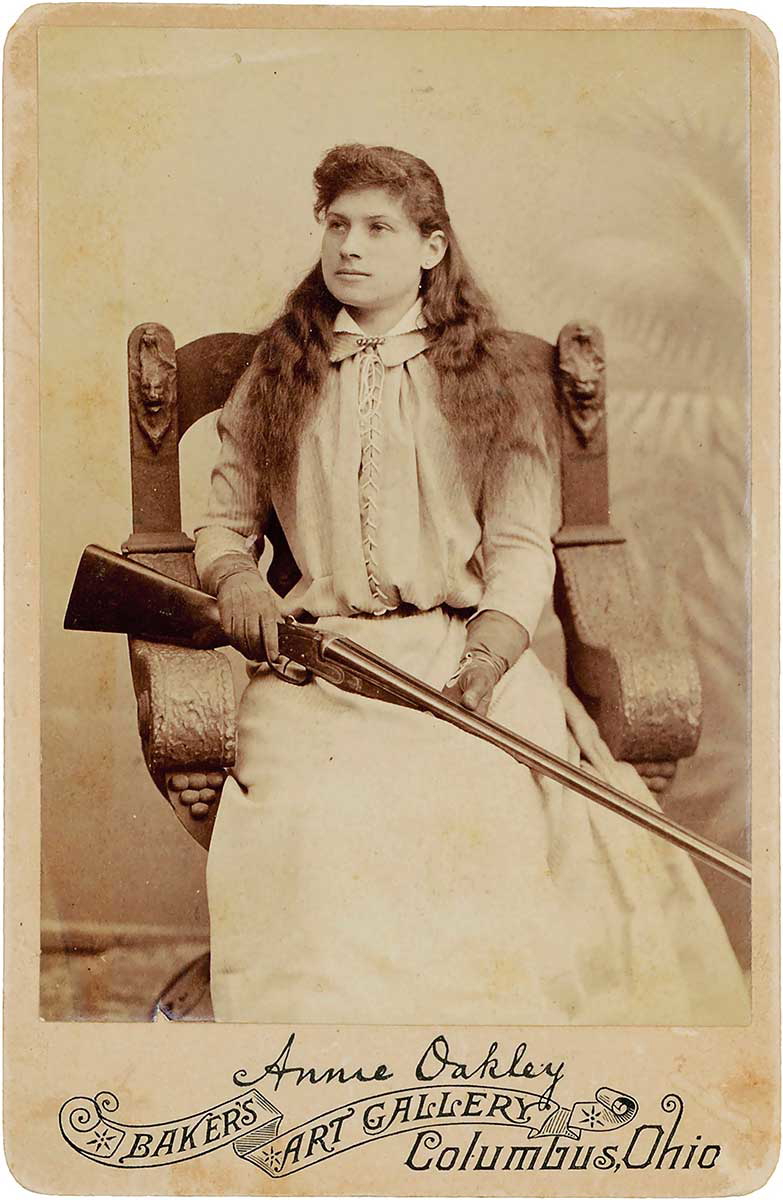
In 1884, the Butlers had a brief performative stay with the Sells Brothers Circus. After one season, in 1885, Butler and Annie joined Buffalo Bill’s Wild West Show, where they would perform for the next 17 years. For the first time, Annie was billed as the top performer rather than her husband. Butler took this in stride and happily went to task as his wife’s assistant and manager. Crowds around the United States were dazzled by Annie’s talents. She could split playing cards from the side, snuff out candles, and shoot the cork off a wine bottle without missing a beat. She could look into a mirror to shoot behind her back and blast objects out of the sky.
Annie was unique among other female variety show performers of the time, preferring to maintain a conservative wardrobe and designing her own modest costumes. Still, she endeared herself to the audience, blowing kisses and using theatrics to bolster her talent. Her career was further propelled into the history books when the Wild West Show traveled to England to perform for Queen Victoria at the American Exposition in 1887. The Queen called Annie a “very clever little girl” when they met, and Annie also impressed the British media.
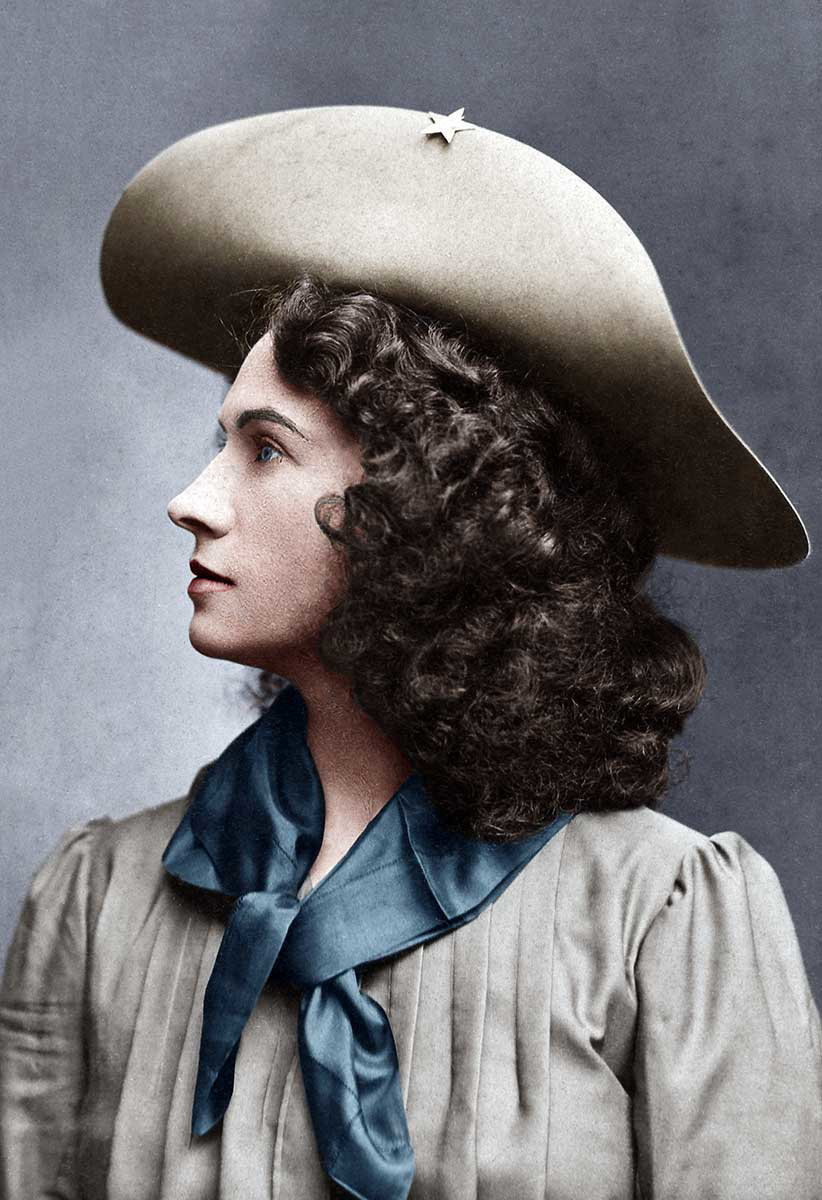
Annie and Frank briefly departed Buffalo Bill’s show as a result of a tense rivalry with fellow sharpshooter Lillian Smith. Smith was Annie’s first female rival in the world of sharpshooting, and she let her opponent know about it. Smith had a brusque personality and didn’t hesitate to brag, claiming that “Annie Oakley was done for.” Smith and Annie were foils to one another in so many ways. Smith was a flashy dresser who was known for shameless flirtation, while Oakley preferred to dress more conservatively. Despite the fact that Smith was an expert with a rifle, not Oakley’s preferred shotgun, the two could work together. Smith eventually left the Wild West Show, and Annie returned.
A Trailblazer for Women
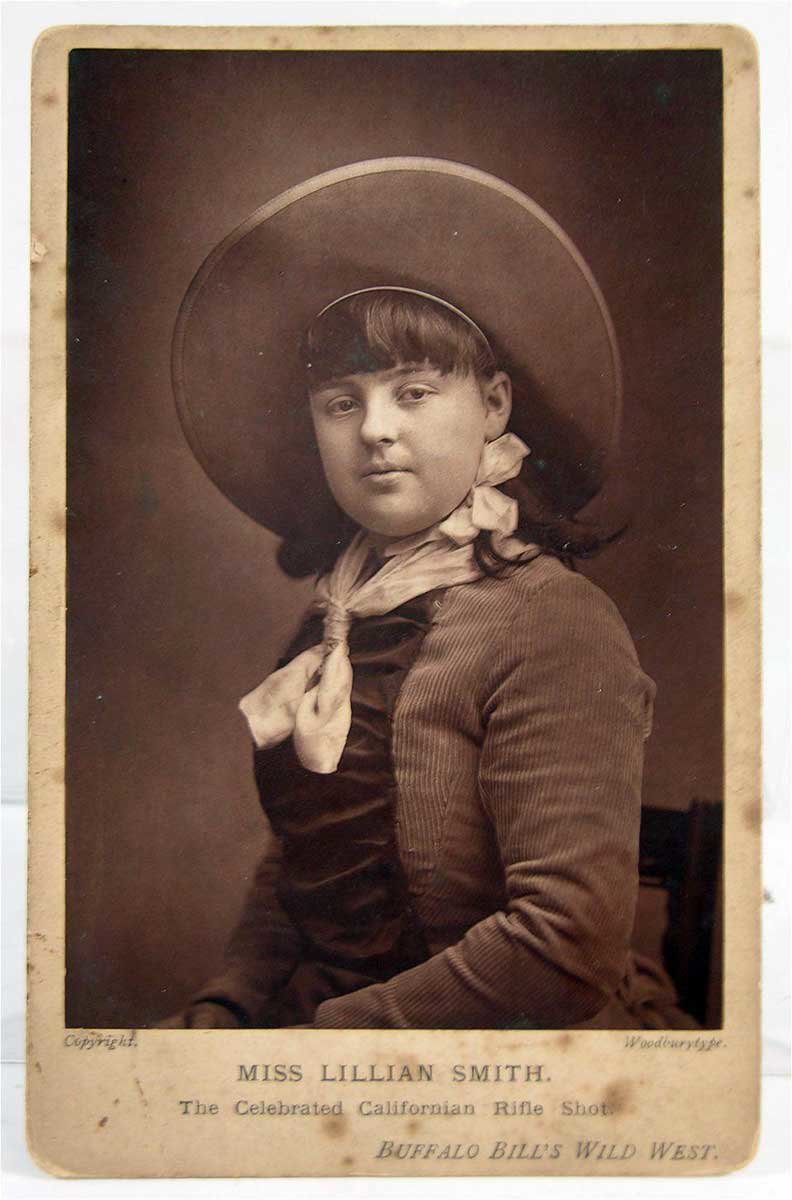
Annie Oakley was America’s first female superstar. Her fame was legendary not only at home but in Europe, bolstered by a triumphant return of the Wild West Show to the continent in 1889. Oakley became a role model for women of all ages, showing them that they could compete with and even perform better than men. She became the highest-paid performer of the Wild West Show besides Cody himself and was known for being frugal with her money. Her humble upbringing was ever-present in her mind, and she was once noted as saying that although she’d made a great deal of money, “I never believe in wasting a dollar of it.” She made extra money by competing in sharpshooting competitions when she wasn’t performing.
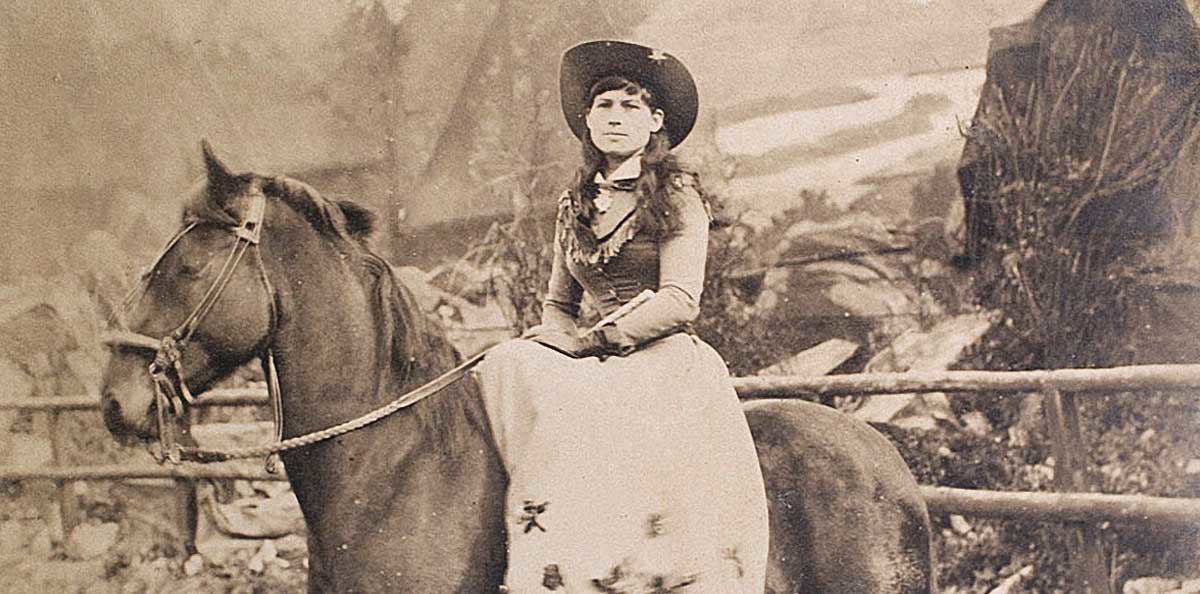
A train accident resulting in a back injury disrupted Oakley and Butler’s life in 1901. Annie’s injury compromised her ability to travel and perform as she once had, but she was nowhere near ready to cool her heels. Though she desired a quiet life, it was hard for Annie to stay out of the headlines. In 1903, William Randolph Hearst published a false claim stating that Annie was in jail as the result of a cocaine habit. Though the claim had no foundation in truth, Oakley was embarrassed and angry. She proceeded to sue multiple newspapers that had published the article, winning or settling 54 cases.
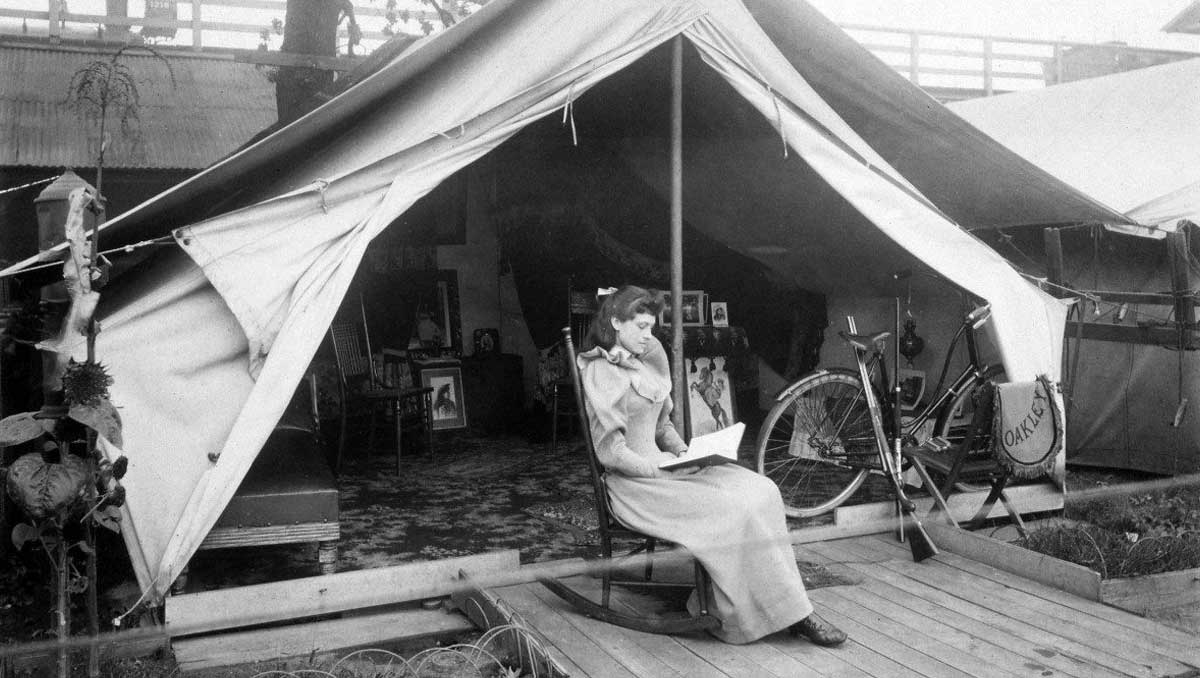
Annie briefly returned to the stage as a sharpshooter in 1913, after which she and her husband retired, spending time in Maryland and North Carolina, where they participated in charity events. Annie continued to hunt as she had in her youth and gave shooting lessons to other women. When World War I erupted, Annie offered to raise and train a regiment of female crackshots, but the government turned her down. She instead gave shooting demonstrations to raise money for the Red Cross.
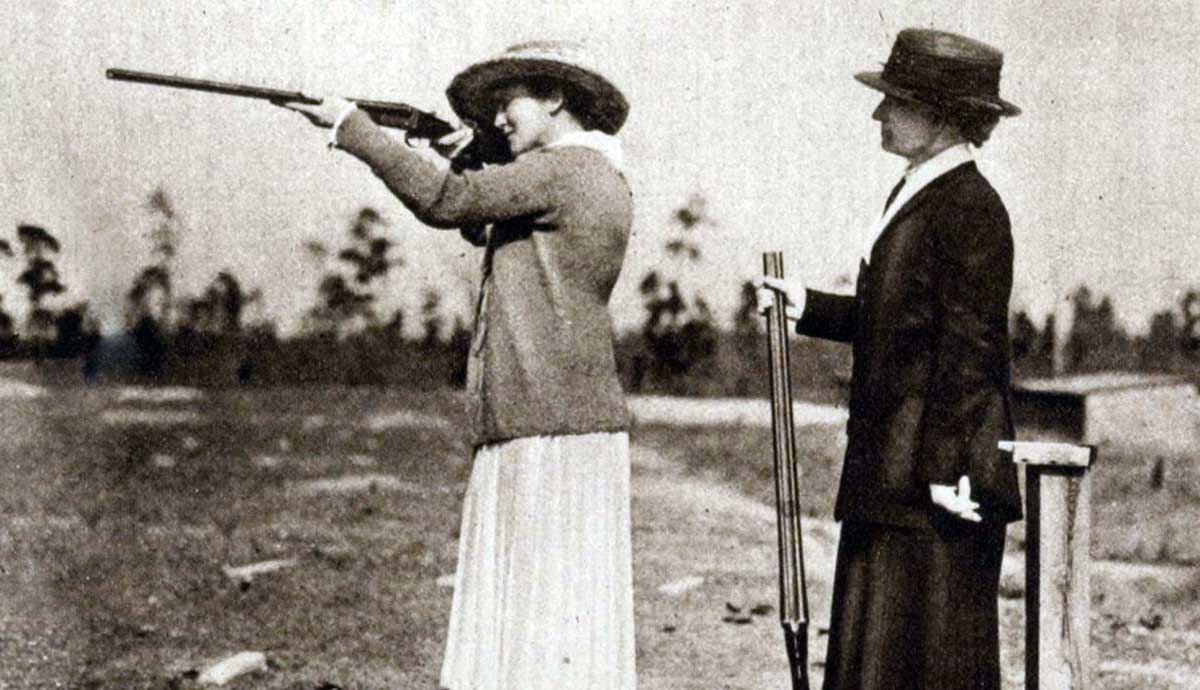
Annie Oakley passed away on November 3, 1926. Frank Butler, whom she had been married to for over 50 years, followed his wife to the grave just 18 days later. Oakley is remembered today in history books and popular culture. An Irving Berlin musical based on her life has run periodically since 1946, and film adaptations of her adventures punctuated the 20th century. More so, what Annie Oakley left behind was an idea that women have capabilities beyond the traditional ones that society confines them to. Oakley was a champion for anyone wishing to follow their talent and heart’s desire while remaining true to themselves in the pursuit.