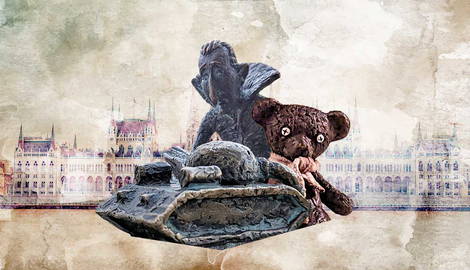
Mihály Kolodko, born in Uzhhorod, Ukraine, is a Ukrainian-Hungarian artist. Several things make Kolodko’s statues interesting. While the government doesn’t remove the statues, they are placed illegally, making Kolodko a guerilla artist. These statues often hide in plain sight. Some are so tiny that they are easy to miss, while others are placed in spots that one might never consider looking. Each statue has a meaning, whether sentimental, political, or cultural. While most of Kolodko’s statues are in Budapest, they can also be found in other cities and countries.
Dead Squirrel
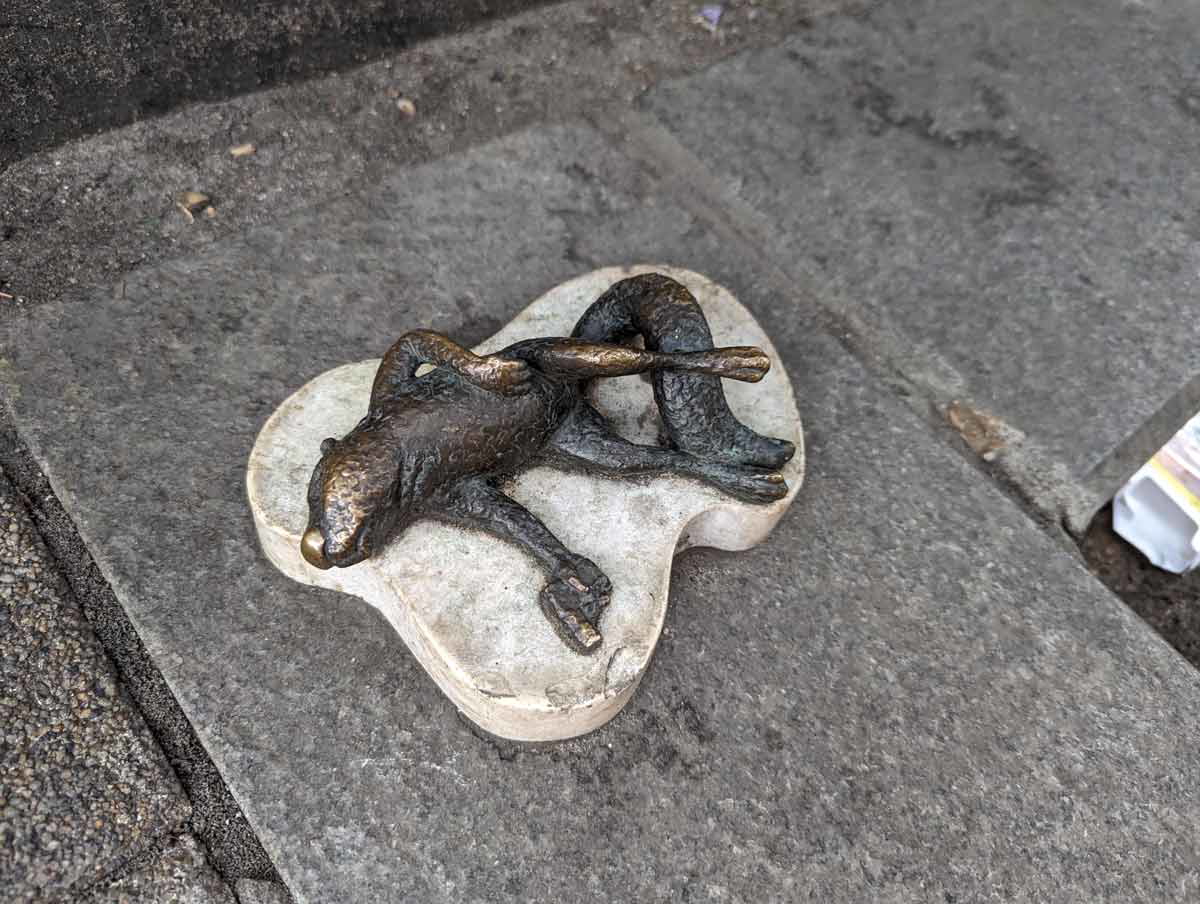
This statue, overshadowed by a life-size statue of Detective Columbo and his dog, is easy to miss. Columbo was an American television series that aired between 1968 and 1971. The show’s lead actor, Peter Falk, had Hungarian roots, and so the statue was placed on Falk Miksa Street as part of a 2014 district renovation. While these two statues might seem unrelated, the dead squirrel statue appears to depict a crime scene. The squirrel holds a gun in his hand. This leaves us with a mystery—did the squirrel shoot the gun, or was he a victim of murder? Perhaps Detective Columbo can solve the crime!
Location: Falk Miksa Street
Kermit the Frog
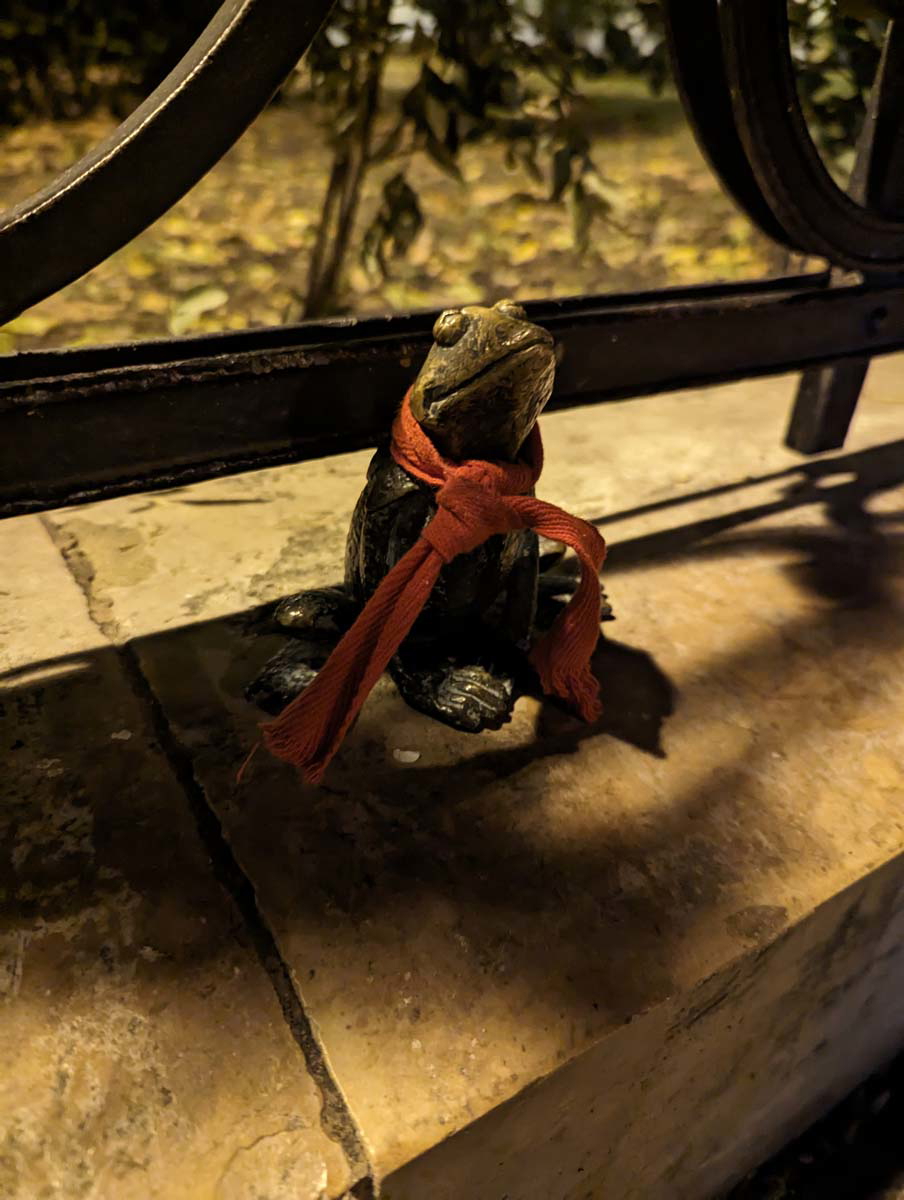
This statue commemorates the beloved Muppet Kermit the Frog. The statue sits in Szabadság Square, known in English as Liberty Square, but can be easily missed if you don’t know where to look. Kermit sits near the park’s café, next to a fence. In addition to recognizing Kermit the Frog, the statue is also a nod to frog legs, which became a delicacy in Hungary in the late 19th century. If you happen to spot Kermit in winter, you will often find him wearing homemade scarves placed there by residents.
Location: Szabadság Square
Balloon Dog With His Bone
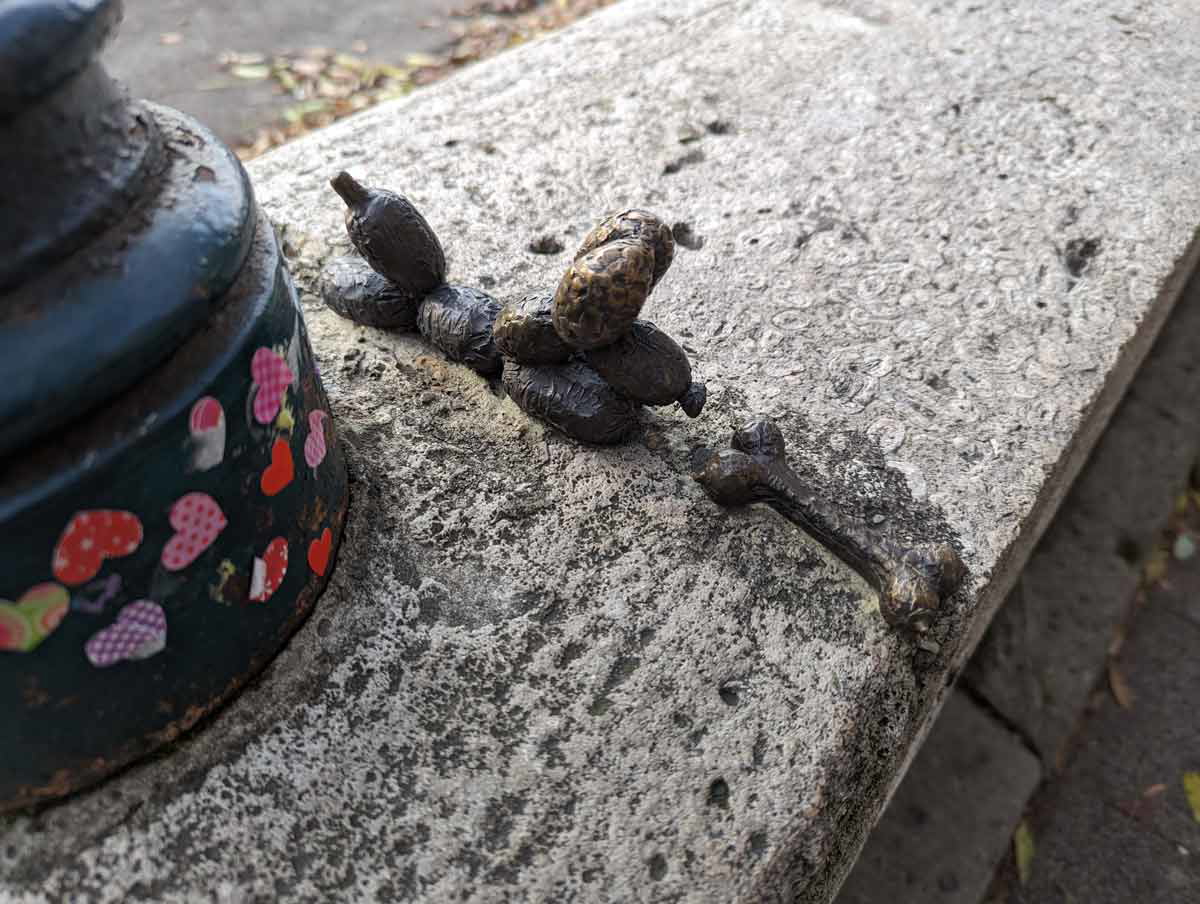
This mini statue, a balloon dog, can be found at the entrance to the Chain Bridge on the Pest side of Budapest. It is placed between the posts of an iron fence, outside of the Corso Restaurant. The statue pays tribute to American artist Jeff Koons, who is known for creating sculptures that depict everyday objects. His most famous statues are of balloon animals, which are created using stainless steel.
Location: Belgrád rkp. 26.
Főkukac
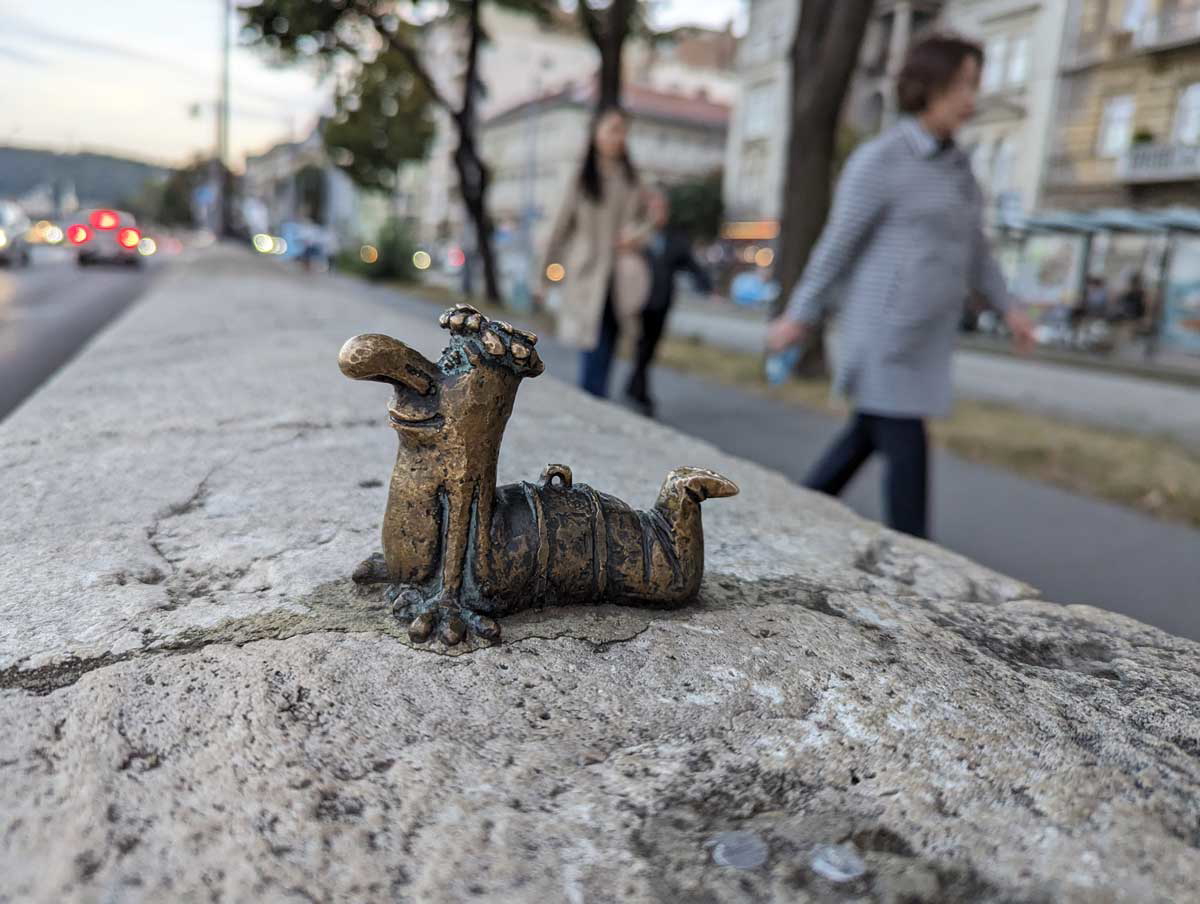
This statue offers a little bit of nostalgia to Hungarians, as it references a television show called A Nagy Ho-ho-ho Horgász (“The Big Ho-Ho Angler”), which aired between 1984 and 1990. The show is about a fisherman and his bait, a worm called Főkukac. This statue sits in a prime location, on the bank of the Danube River at Bem Quay 15.
Location: Bem rkp. 15
Tivadar Herzl
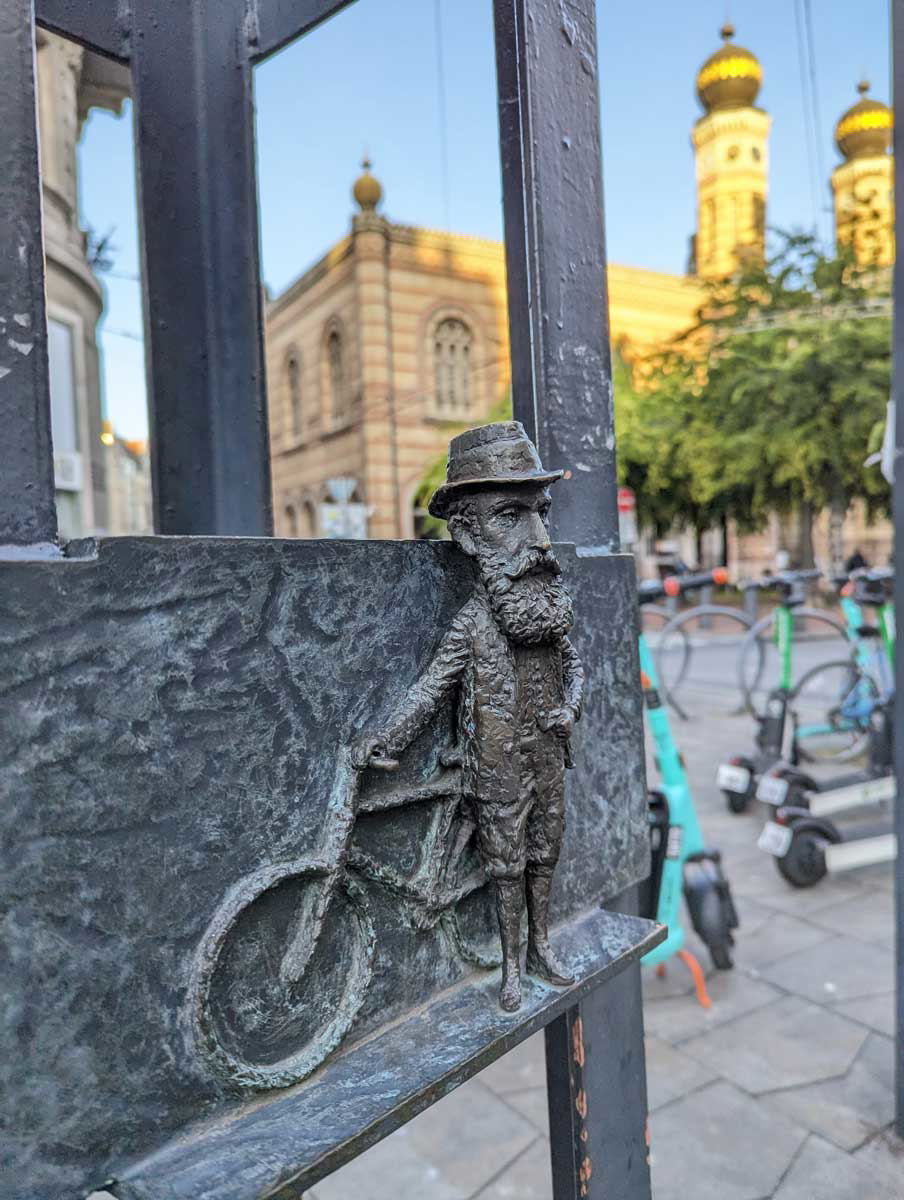
Placed near Budapest’s Dohány Street Synagogue, the second largest synagogue in the world, this statue depicts Tivadar Herzl (Theodore Herzl). Herzl was a Jewish Austrian-Hungarian journalist, political activist, and writer. He is best known as the father of modern Zionism. Herzl established the Zionist Organization and promoted Jewish immigration to Palestine. Though he passed away before Israel was founded, he is considered the father of the State of Israel. The statue depicts Herzl with his bike and is believed to be based on a photo taken of him in Austria. Near the statue, you can also see Herzl’s birth site, which has been converted into the Jewish Museum.
Location: Herzl Tivadar Square
Tiny Tank
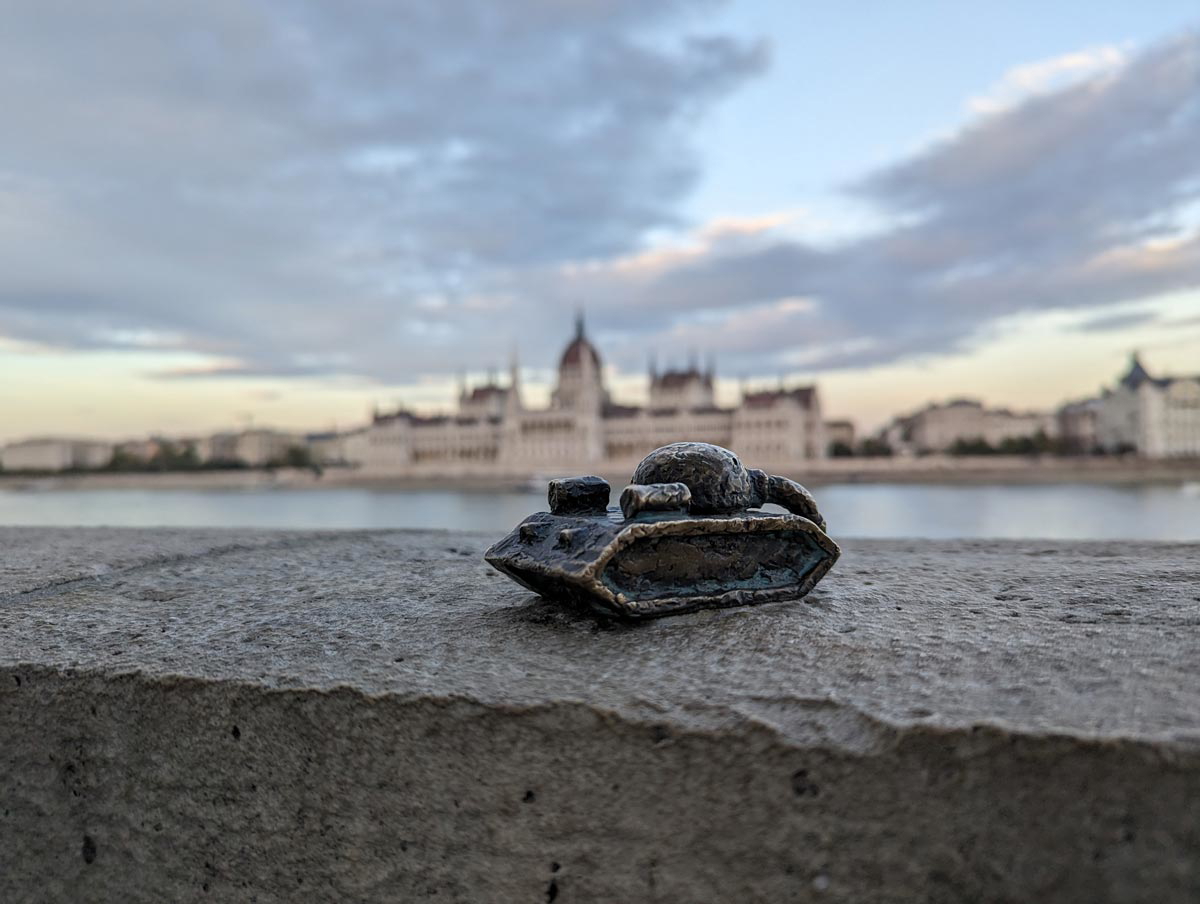
Not far from the Főkukac statue is the Tiny Tank, which also sits on the Danube Bank, directly across from the Hungarian Parliament. This statue, in contrast to Főkukac, offers a powerful message. It symbolizes the Hungarian Revolution of 1956, also known as the Hungarian Uprising. This event was marked by discontented revolutionaries attacking and eventually causing the collapse of the Soviet-backed communist government of Hungary. Etched on the site of the tank are the words “Ruszkik Haza!” which means “Russians go home!” in bold white lettering. The tank’s gun faces the Parliament, but its gun is pointed downward, signaling the end of the revolution.
Location: Bem rkp. 27
The Axe & Ushanka Returns
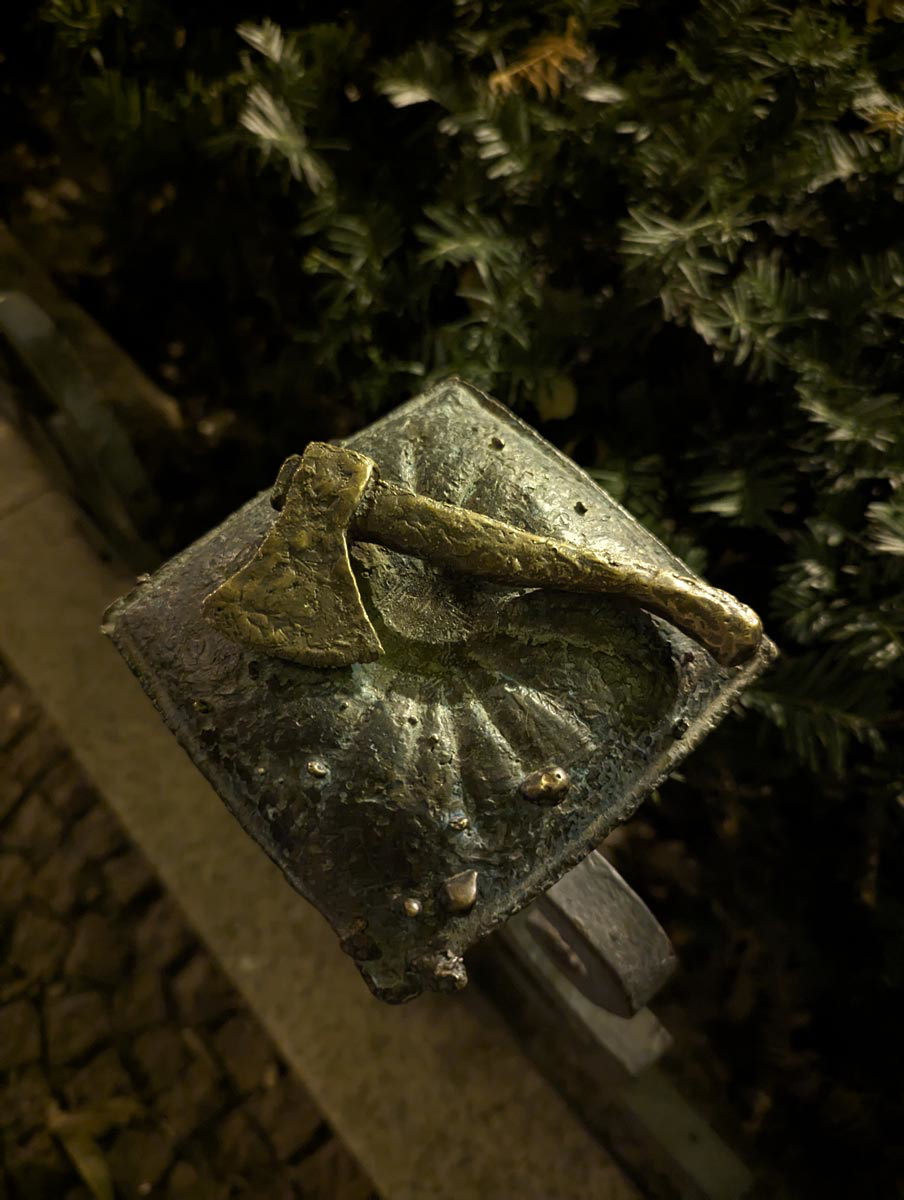
These two statues are connected in a rather interesting story. Initially, in Szabadság Square, there was a statue of an ushanka, a traditional Russian fur hat with ear coverings and a star on the front. This statue was placed by Kolodko as a critique of Russia’s influence in Hungarian politics. This was not well-received by one conservative member of the Hungarian Parliament. The politician filmed himself destroying the hat statue with an axe and then throwing it into the Danube River.
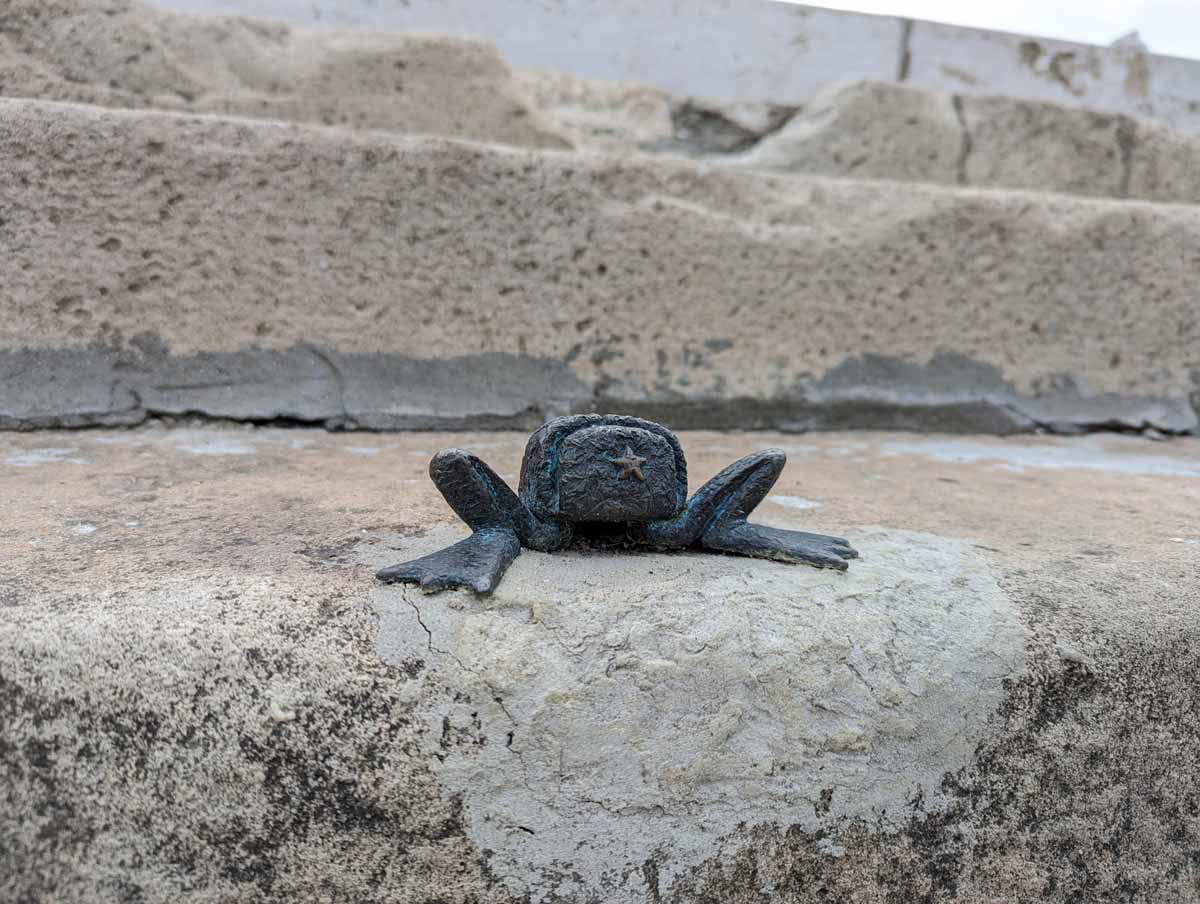
Luckily, though his art was destroyed, Kolodko has a sense of humor. In the place where the ushanka had been, he placed a statue of an axe. Later, he also created a new ushanka statue, but with a twist. The new ushanka statue, Ushanka Returns, now sits on the Danube River bank, in front of the Hungarian Parliament. It appears the same as the original statue in every way but with a pair of frog legs emerging from underneath it. This new statue implies that the original ushanka statue has come back to the surface (with the help of a frog!).
Location:
The Axe: Szabadság square 15.
Ushanka Returns: Id. Antall József rkp., 1055
Rubik’s Cube
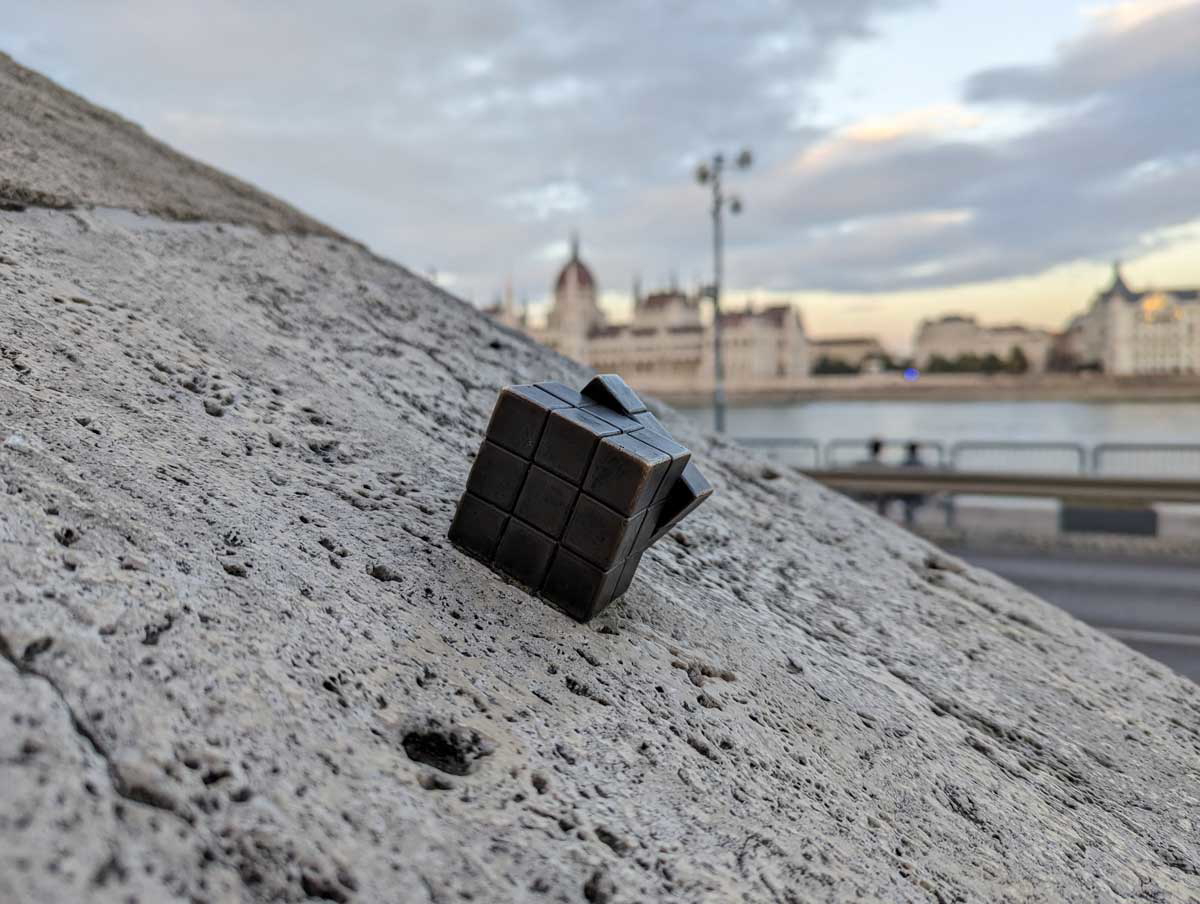
This statue depicting a Rubik’s cube can be found on the Danube River embankment near Batthyány Square, across the river from the Hungarian Parliament. It is very close to the Tiny Tank statue. This statue commemorates the Rubik’s cube, as this toy that is popular around the world was invented in Hungary by Ernő Rubik.
Location: Bem rkp.
Franz Liszt
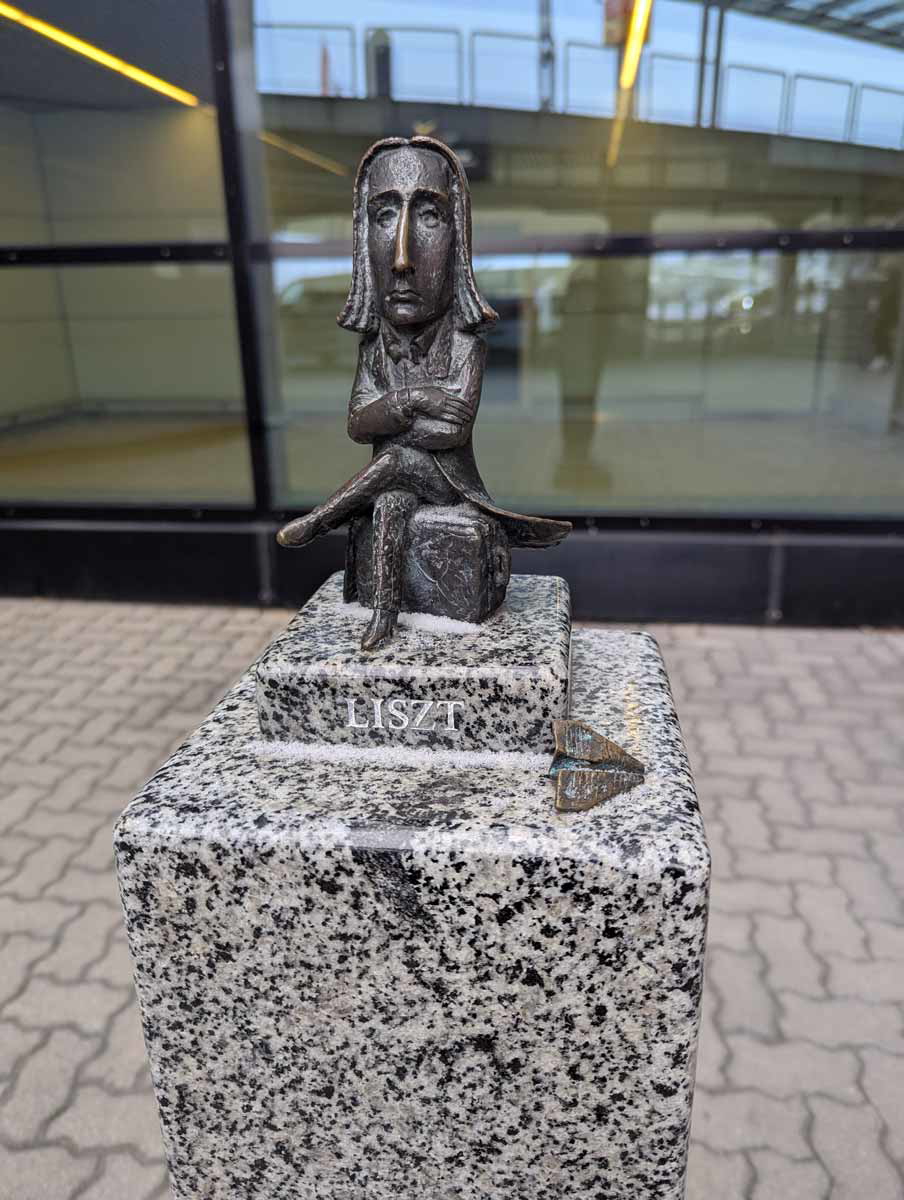
Liszt is a name that should be familiar to most people. This statue depicts world-famous Hungarian composer Franz Liszt. The statue was put up in 2011 on the day of Liszt’s 200th birthday in a very interesting place—the Liszt Ferenc International Airport. This airport is Budapest’s main airport, and the statue sits outside at the Terminal 2A bus stop. The statue depicts Liszt sitting on top of his suitcase, as he was known to be a world traveler. It is also especially fitting, as the airport was named in his honor.
Location: Liszt Ferenc International Airport
Rezső Seress
Rezső Seress was a Hungarian pianist and composer who survived World War II and the Nazi labor camps. Seress was employed as a trapeze artist in the circus and also worked in theater. After an injury, he taught himself to play the piano with one hand. He went on to compose many songs, with his most famous song being Szomorú Vasárnap, which translates to “Gloomy Sunday.” The song was written in 1933 and spoke about the despair caused by war. However, the poet László Jávor later wrote his own lyrics to the song. These lyrics talked about a protagonist who wished to end his life and became more popular than the original lyrics. The song was recorded by Pál Kalmár, a pop singer, in 1935.
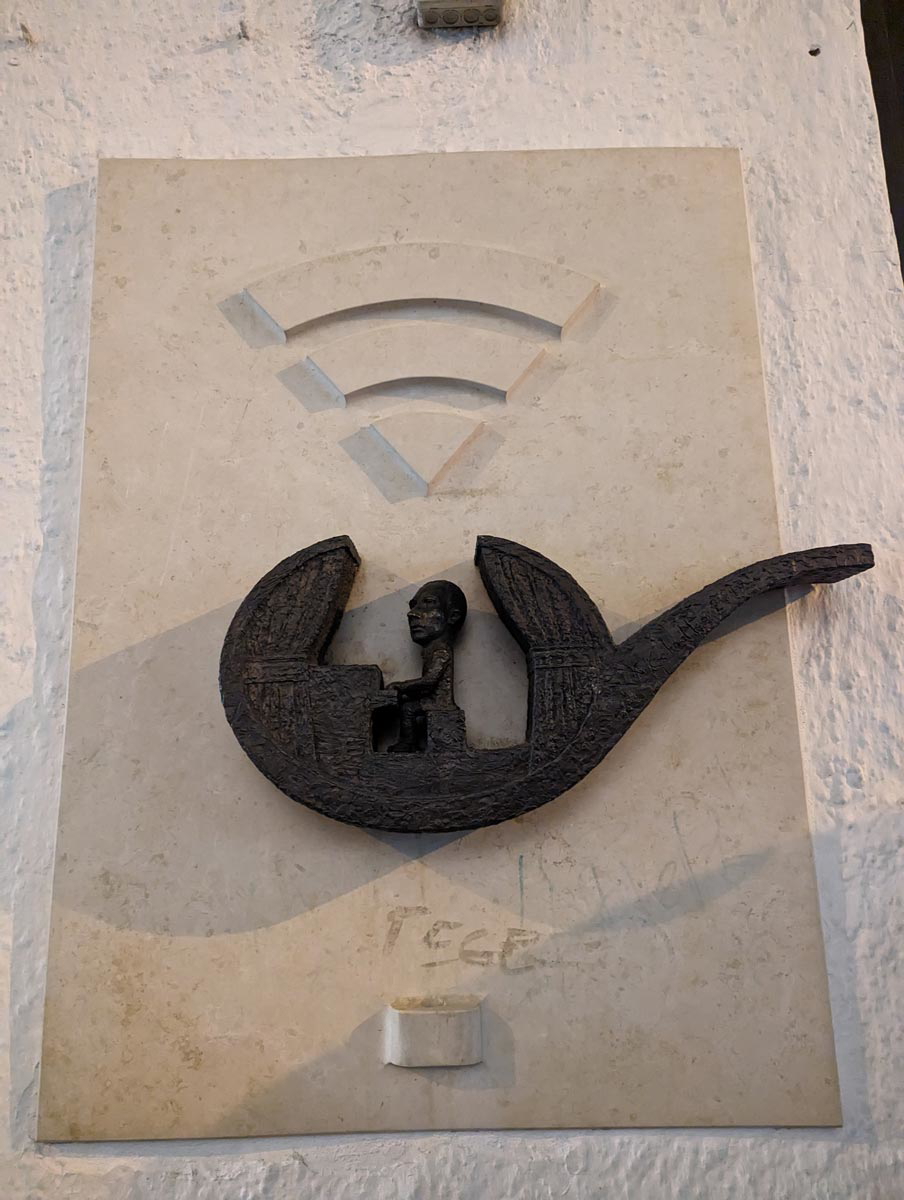
An urban legend that is particularly popular in Hungary states that many people have taken their own lives while listening to the song, earning it the title of the “Hungarian Suicide Song.” Seress himself suffered years of depression and ultimately ended his life in 1968. This statue depicts Seress at his piano outside of the former Kispipa bar, a venue in the Jewish quarter where Seress lived and worked during his life.
Location: Akácfa street 38.
The Diver
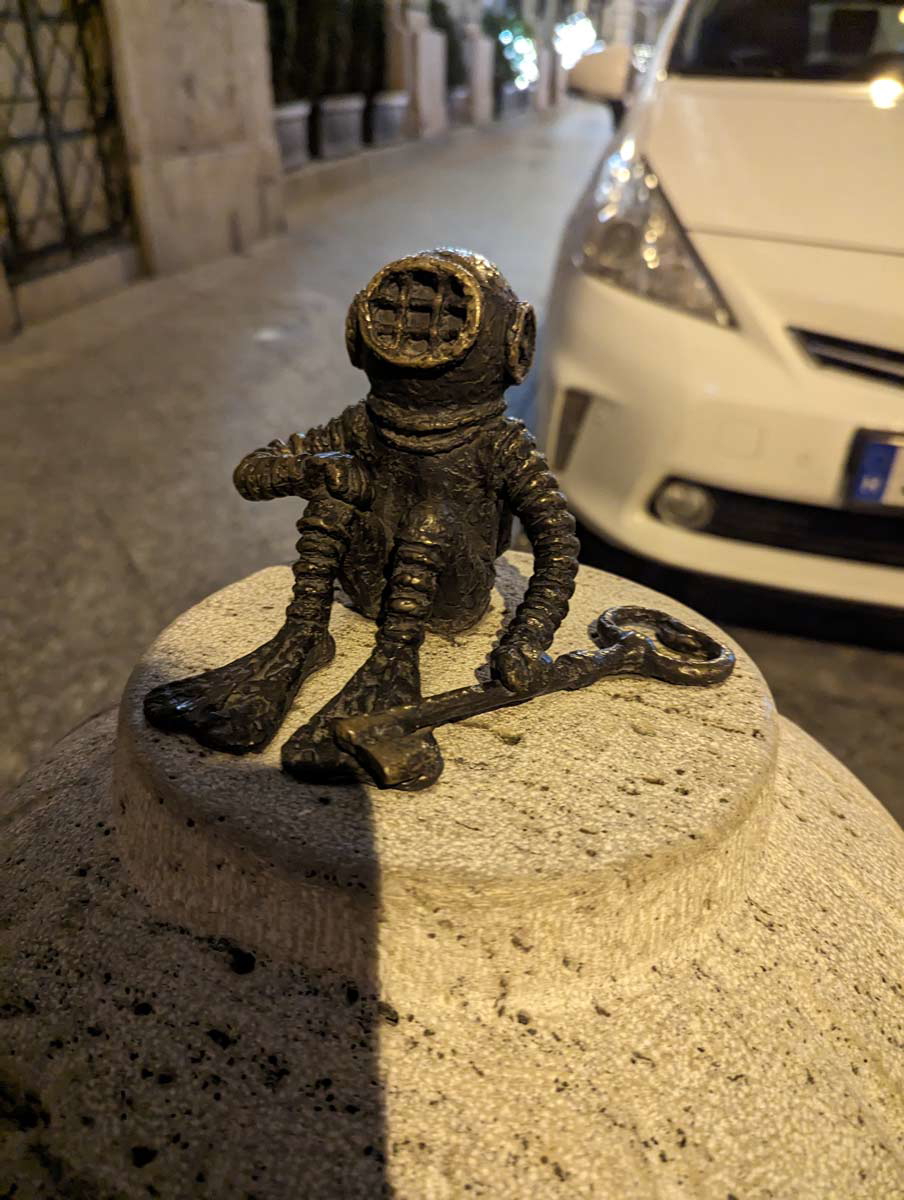
This statue of a scuba diver holding a key sits outside the famous New York Café. The café is on the ground floor of the New York Palace in Budapest’s 7th district. Both the palace and café opened in 1894, and the café was a hit thanks to its luxurious interior and size. The café was initially intended to attract wealthy and distinguished guests, but it soon became the most popular meeting place in Budapest and a literary café.
The café was home to numerous literary and artistic table societies. An anecdote at the time states that the Bohemians of Pest, led by Ferenc Molnár, a Hungarian writer, threw the keys to the café into the Danube River so that it would be open both day and night. Though this is only a legend, on the café’s 120th anniversary, in 2014, Molnár’s grandson threw the keys of the café into the Danube. This statue commemorates the legend, as the diver holds the key to the café in its hand.
Location: Ostváth street 53.
The Checkered-Eared Rabbit
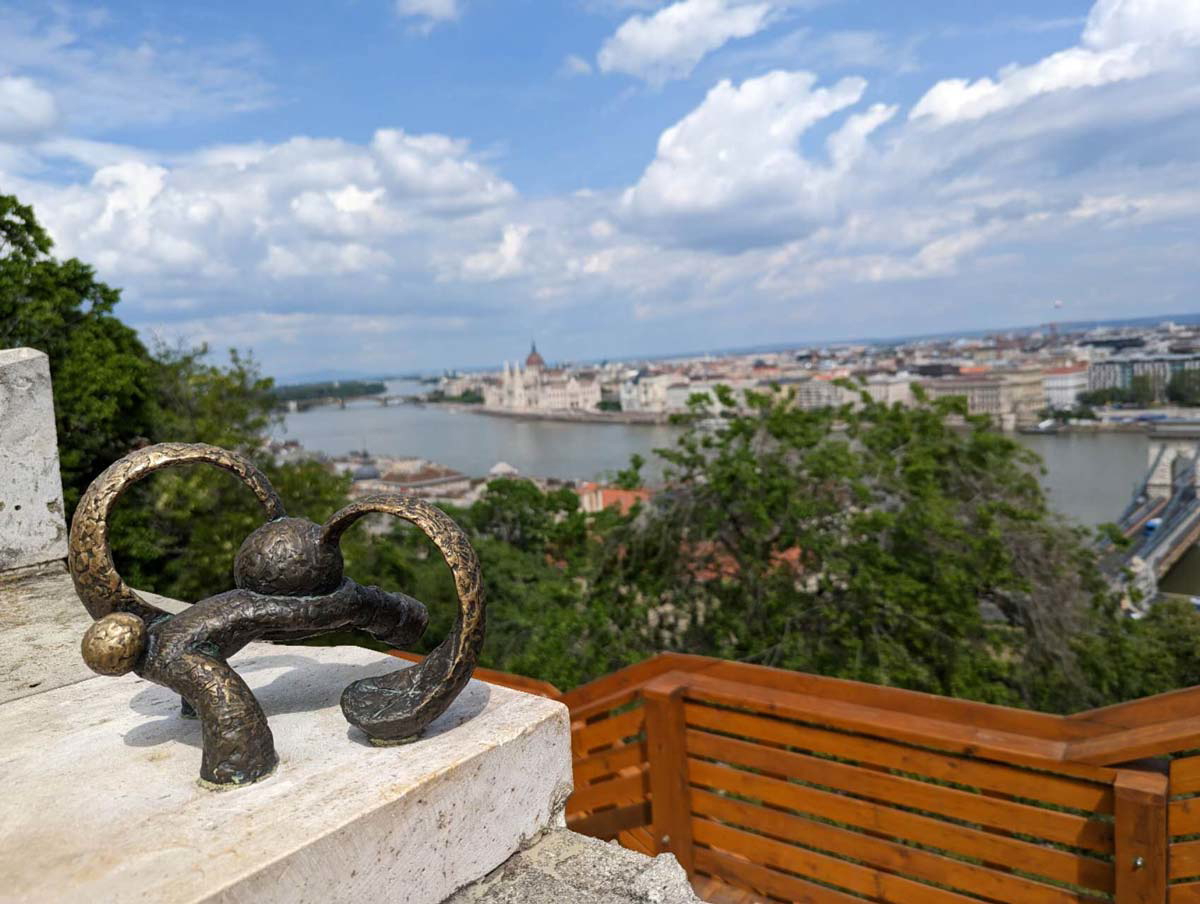
This statue is another nostalgic tribute to Hungarian TV and depicts the kockásfülű nyúl, or the checkered-eared rabbit. This statue is in a special place—at the top of the Castle Hill Funicular, at Buda Castle. The show that the statue references was written in the 1970s but later became popular in the United States after airing on Nickelodeon. The statue overlooks the Danube and is captured enjoying the view through a telescope.
Location: Szent György square
Mekk Elek
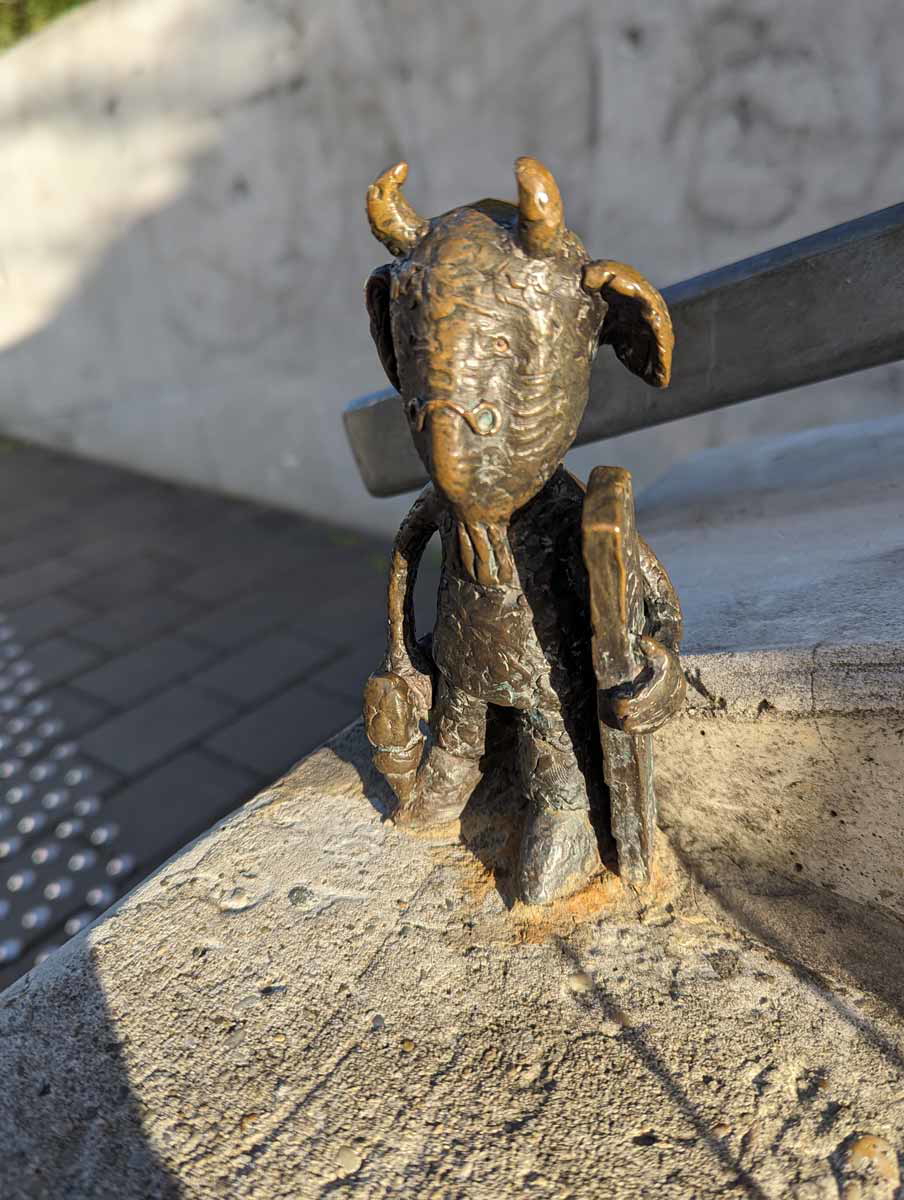
Like Főkukac, Mekk Elek is another nod to Hungarian television. This puppet show series, which aired from 1974 to 1975, starred a handyman goat named Mekk Elek. The character captured people’s hearts by trying all manner of tasks but succeeding in none before finding his calling as a tailor. Today, a statue of the character sits at the bottom of a set of stairs at Széll Kálmán Square.
Location: Széll Kálmán Square
Hannah Szenes
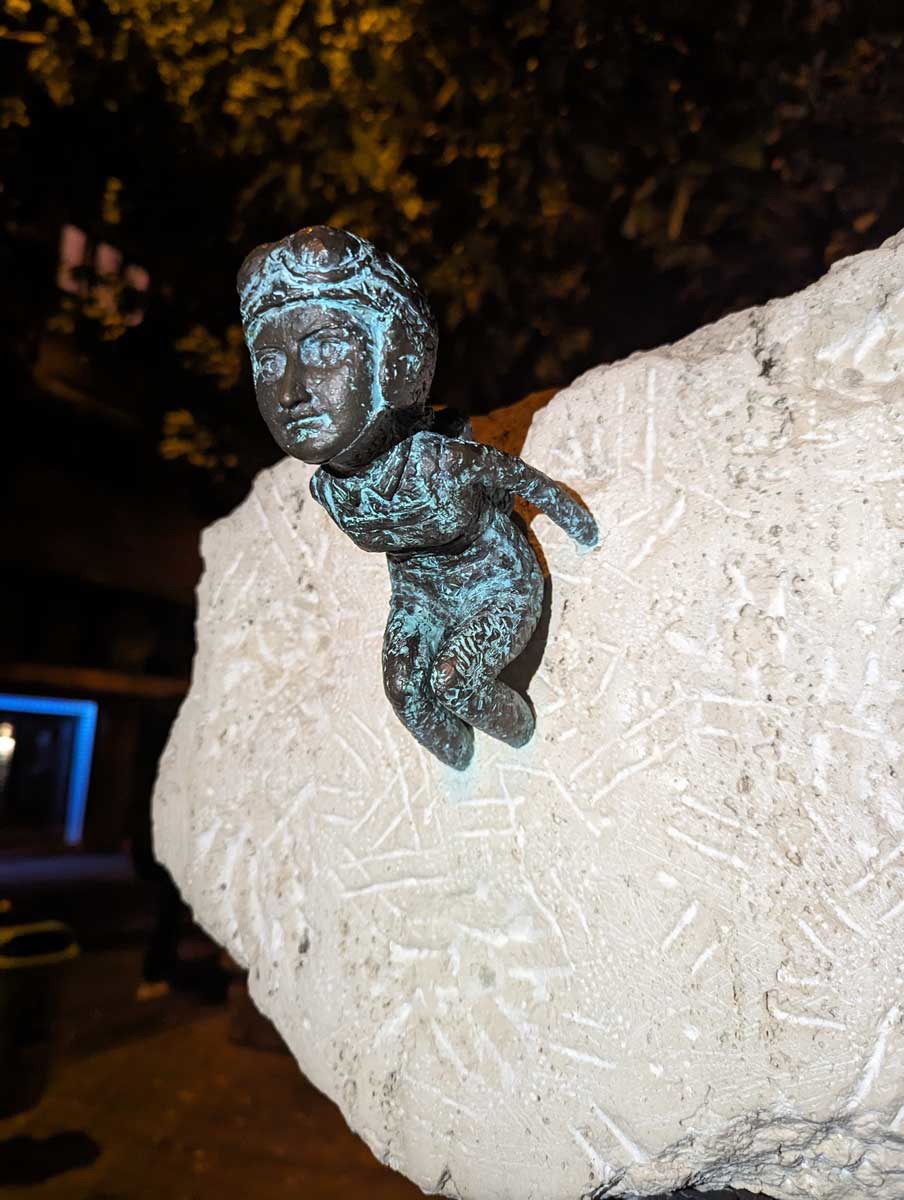
This statue is a tribute to Hannah Szenes, a Hungarian Jewish poet and war hero. Hannah was born in Budapest in 1921. In 1939, as the situation worsened for Hungarian Jews, she moved to Mandatory Palestine (modern-day Israel). In 1941, she joined a Haganah, a paramilitary organization. In 1943, she enlisted in the British Women’s Auxiliary Air Force and was recruited into the Special Operations Executive. In 1944, at age 23, Szenes volunteered to parachute behind enemy lines to help Jews and the Allied Forces. She and two colleagues parachuted into Yugoslavia on March 14, 1944, with plans to enter Hungary. After receiving news that Hungary had been occupied, the men called off the mission, but Szenes continued to the Hungarian border.
Szenes and the others were arrested at the border and taken to prison. She was interrogated and tortured but refused to give up any information. She was later tried for treason in October 1944 in Hungary, and on November 7, 1944, was executed by firing squad. Szenes was later exonerated.
Szenes is honored in this statue because, though she was safe from the Holocaust and Nazi activity, she opted to try to help others at the expense of her own life.
Location: Szenes Hannah Park
Lunar Rover
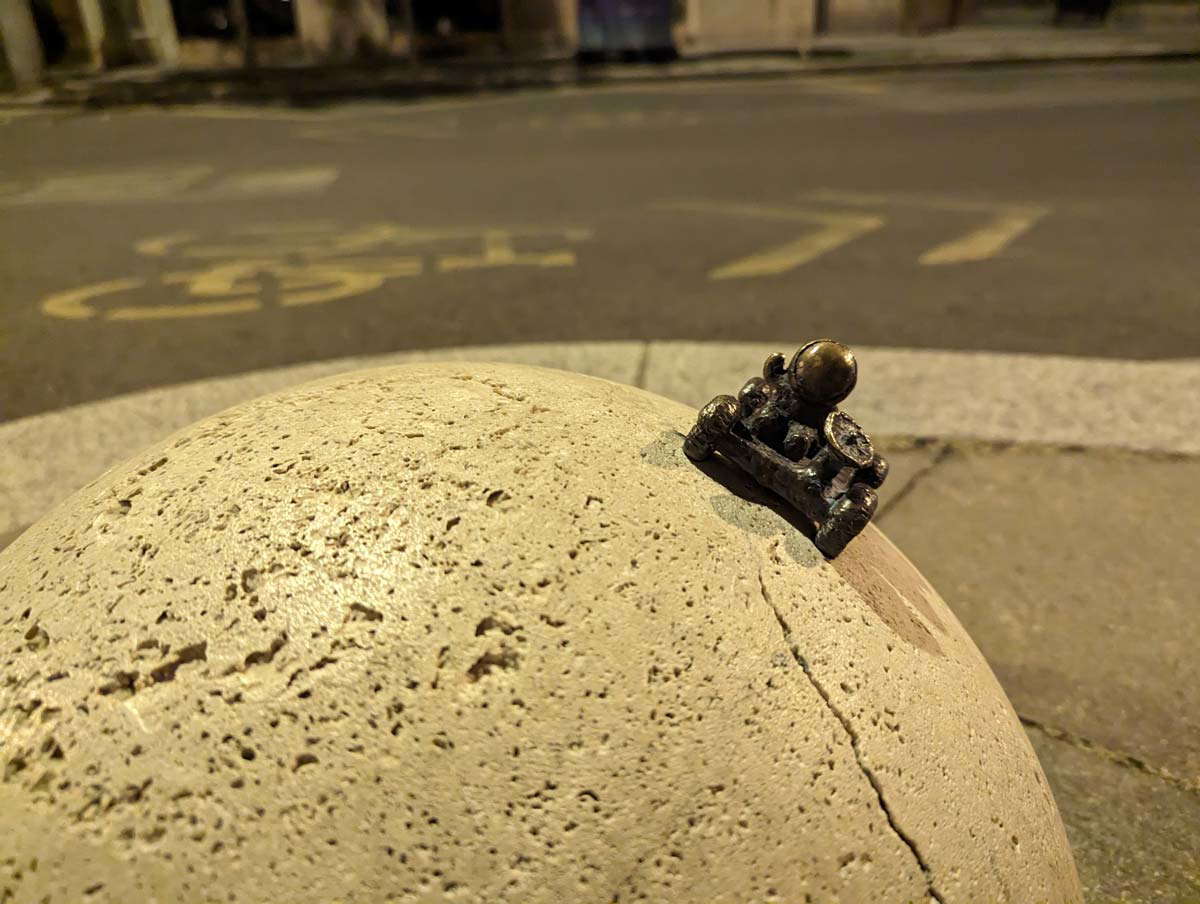
This statue, which depicts an astronaut in the Lunar Rover, is a tribute to Hungarian inventor Ferenc Pavlics. Pavlics left Hungary following the 1956 Revolution and moved to the United States, where he ended up working for NASA. Pavlics went on to invent the resilient but lightweight wheels that were used on the Lunar Rover for traversing the landscape of the Moon. Pavlics was honored by Nasa for this. This statue is found on Hold Street, which translates to “Moon Street” in English.
Location: Hold Street 12
Dracula
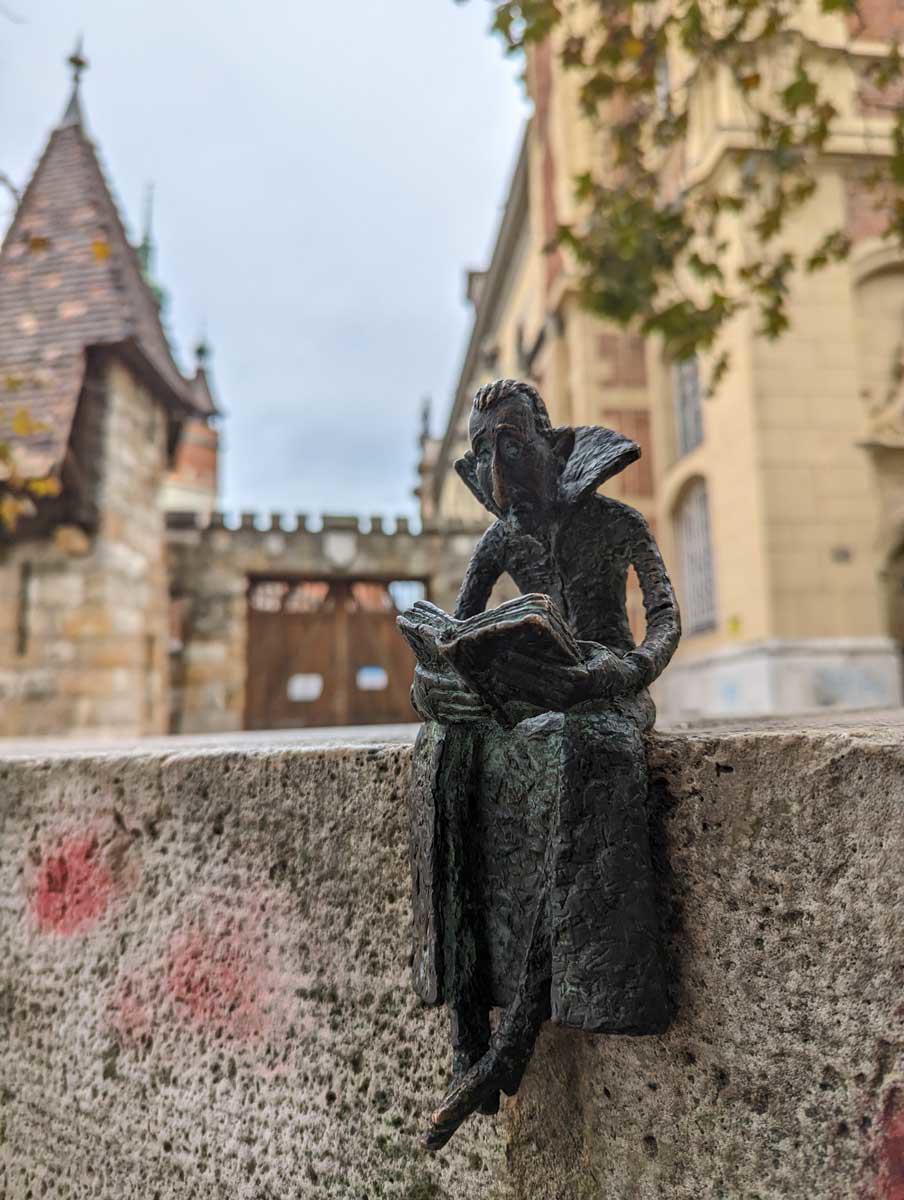
This statue of Dracula can be found in the City Park near Vajdahunyad Castle. The statue depicts Dracula as played by actor Béla Lugosi. Lugosi was born in Hungary but later became an American citizen and became famous for his iconic portrayal of Count Dracula in the classic 1931 film.
Location: Kós Károly stny. 1
Once Upon a Time in Buda
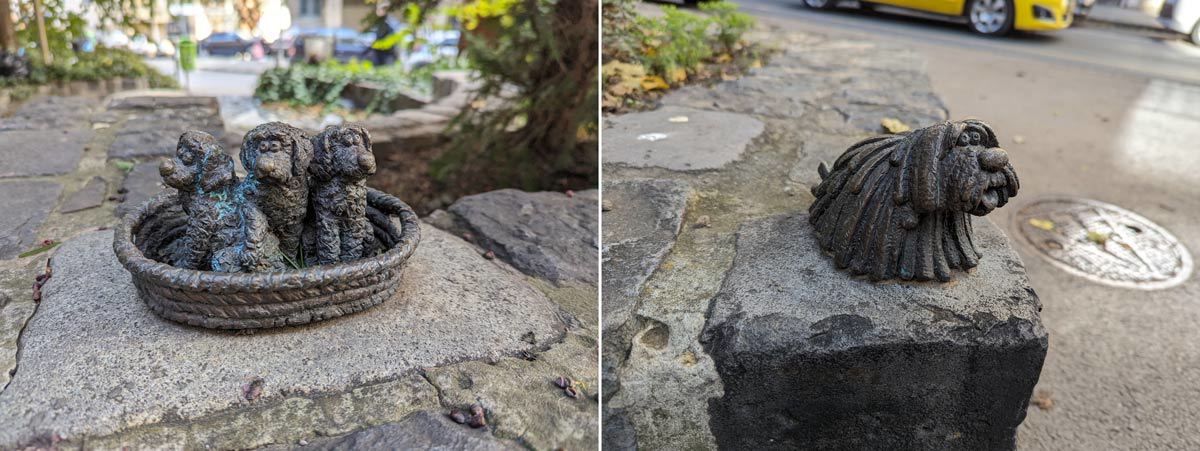
This is a collection of four statues of Hungarian dog breeds. They are inspired by a Hungarian folktale from the time of King Matthias in which the king helps a poor man become rich by advising him to buy dogs at a market.
Location: Batthyány Street 26, near Széna Square
Mr. Bean’s Teddy
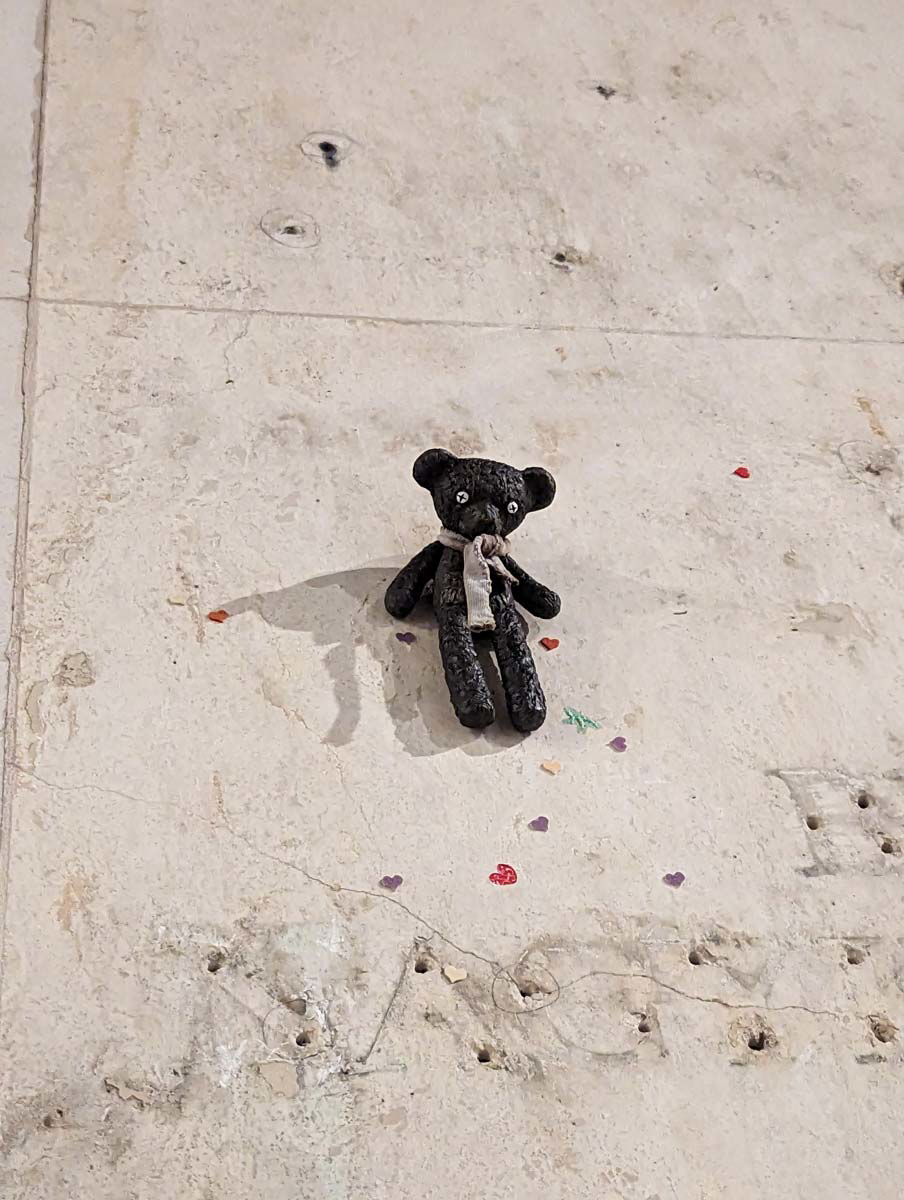
This statue of Mr. Bean’s teddy bear is attached to the wall of the former British Embassy. The embassy closed when the UK exited the European Union following Brexit.
Location: Harmincad utca 6.
Ratatouille
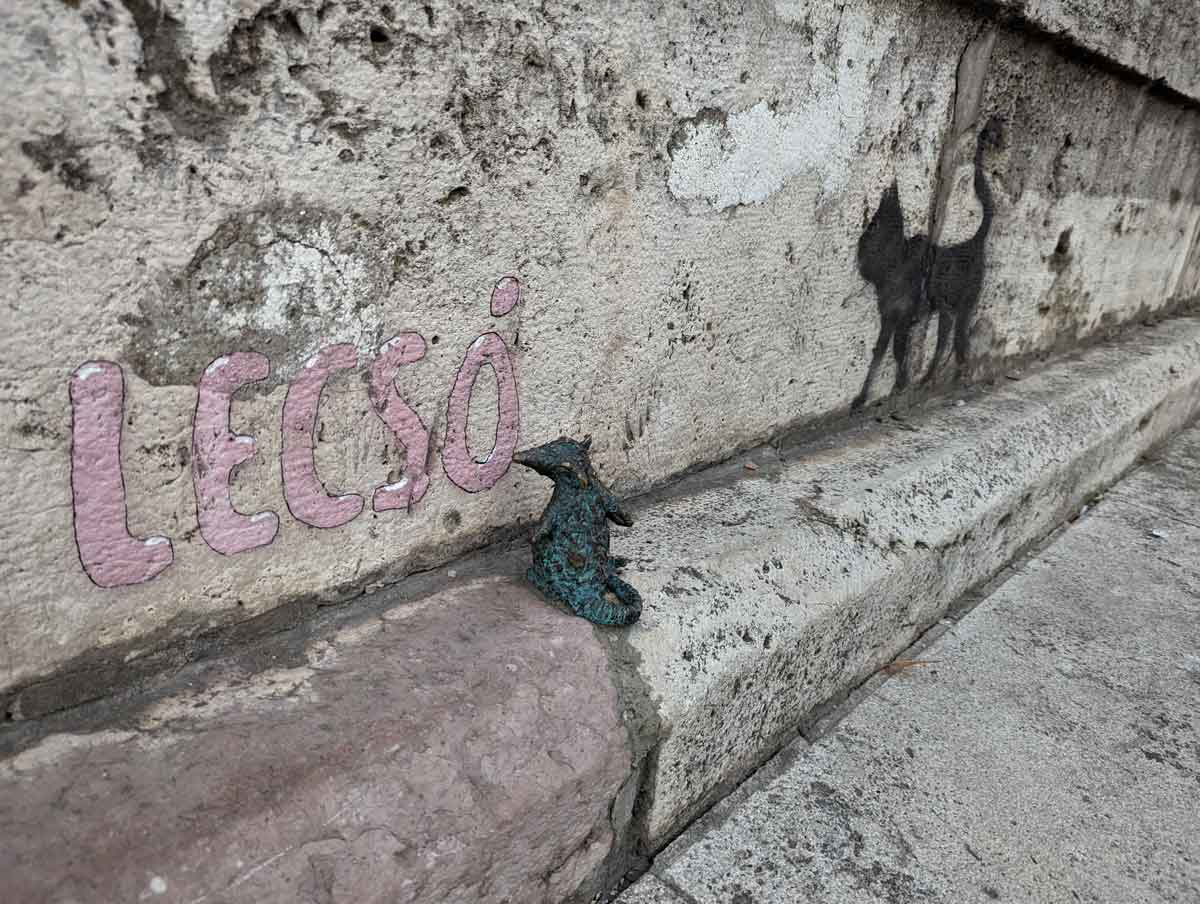
This rat, captured spraying graffiti on the wall, is inspired by the film Ratatouille. However, the rat is spray-painting the word “Lecso” on the wall, which is the name of a Hungarian dish that is very similar to ratatouille. The statue is also a nod to Banksy’s work.
Location: Döbrentei Square 8, near Elizabeth Bridge
Franz Joseph
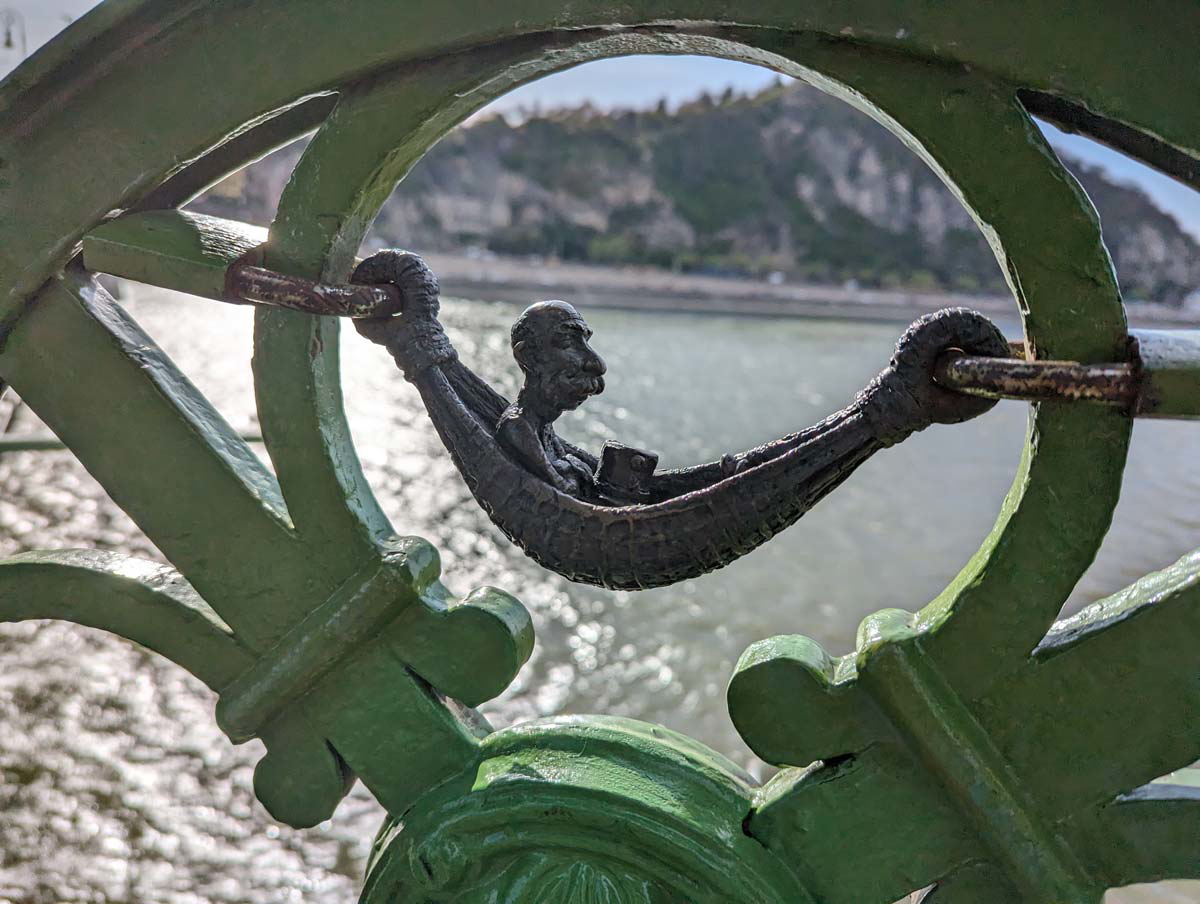
This statue, located on the Liberty Bridge, depicts the Austrian Emperor (and former King of Hungary) Franz Joseph. The location for this statue was chosen for a reason—the Liberty Bridge was formerly named after Franz Joseph, and the Emperor himself hammered the last rivet to complete construction. What makes this statue quirky is that Franz Joseph is lying in a hammock. Several years ago, the Liberty Bridge was closed to traffic, and the locals took advantage of this new public space. Many people hung hammocks from the bridge’s cables and relaxed there.
Location: Liberty Bridge