





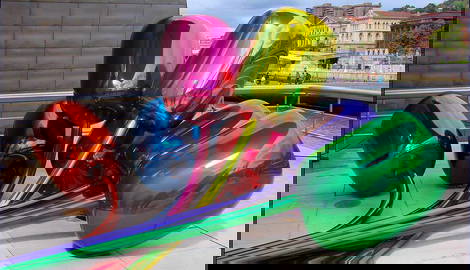
US-artist Jeff Koons single-handedly dismantled the boundary separating high fine art from commercial kitsch. Operating with the relentless precision of a Wall Street commodities broker, Koons transformed vacuum cleaners, porcelain trinkets, and inflatable toys into monuments of global desire. While supporters praise his profound commentary on consumer culture, detractors dismiss his mirror-polished sculptures as glorified merchandise. Decades after entering the international spotlight, Koons remains contemporary art’s most polarizing master, challenging how the world defines aesthetic genius and monetary value.
The Wall Street Origins of Contemporary Art’s Great Provocateur
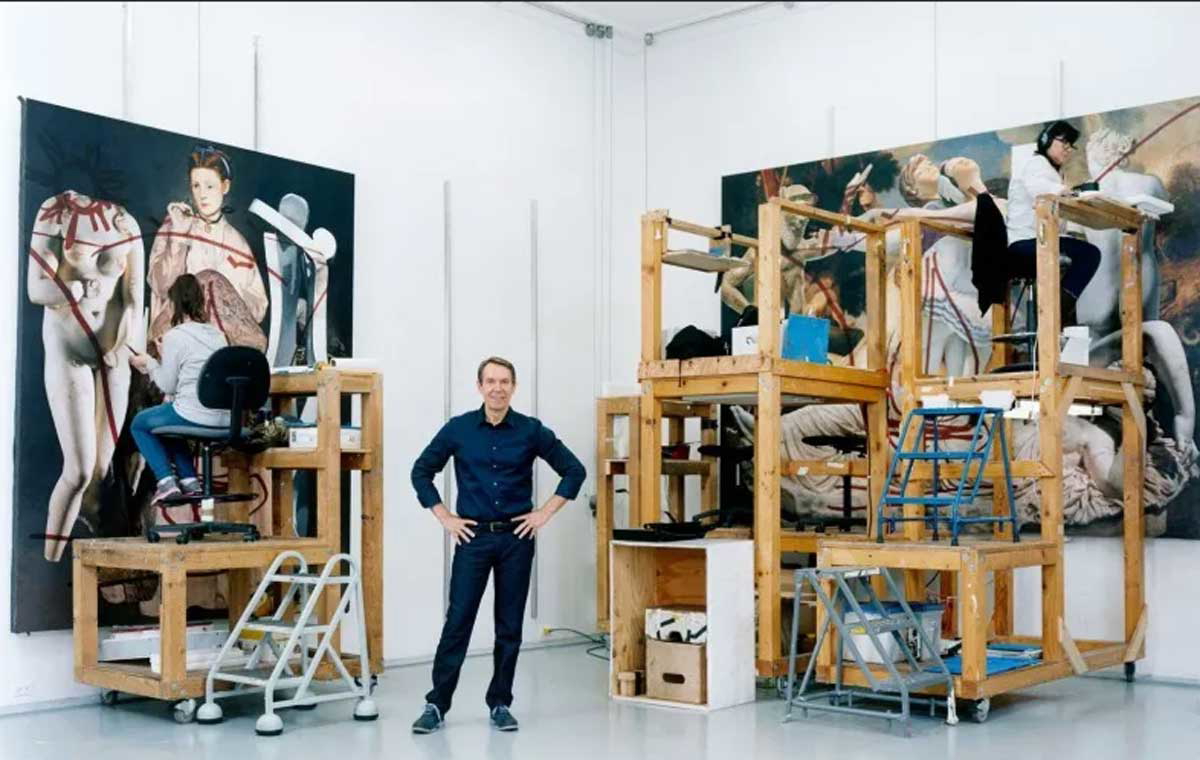
Jeff Koons was born in York, Pennsylvania in 1955. When he was a teenager, he was lucky enough to meet his artistic inspirations, including Salvador Dali around 1974. Taking his inspiration from a mix of pop art, ordinary objects, and iconography, Koons’ style is compared to that of Marcel Duchamp and Andy Warhol. However, Koons started his career on a different path from the usual “struggling artist.”
Koons earned his BFA from the Maryland Institute College of Art in Baltimore in 1976. After graduating, he became the studio assistant for pop artist Ed Paschke (also called Chicago’s Warhol). He then moved to NYC, where he started working at the membership desk at the MoMA. His next step in his career took him to the business side of the arts: he became a Wall Street commodities trader.
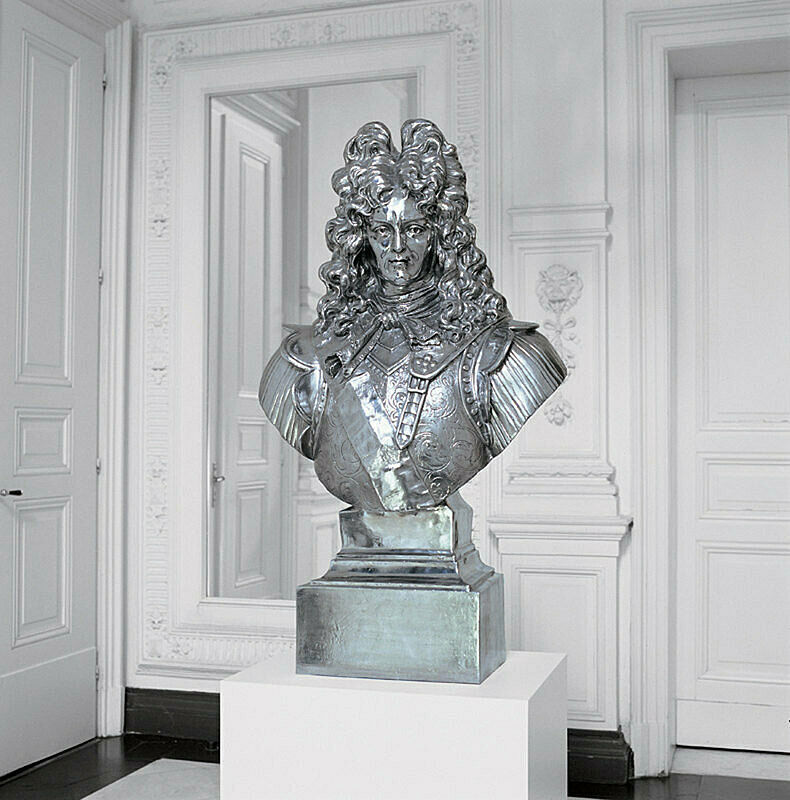
Working on Wall Street, he learned what it took for an artist not just to make great art, but also make money with it. He deduced that kitschy artifacts of pop icons could be styled together for sale. He used materials like metal, glass, and polyethylene. Some of his famous pieces are a bust of Louis XIV made of stainless steel, and a porcelain figure of Michael Jackson with Bubbles, his pet chimp. This style of framing famous icons using new media spoke to audiences.
Transforming Consumer Kitsch Into Multimillion Dollar Masterpieces
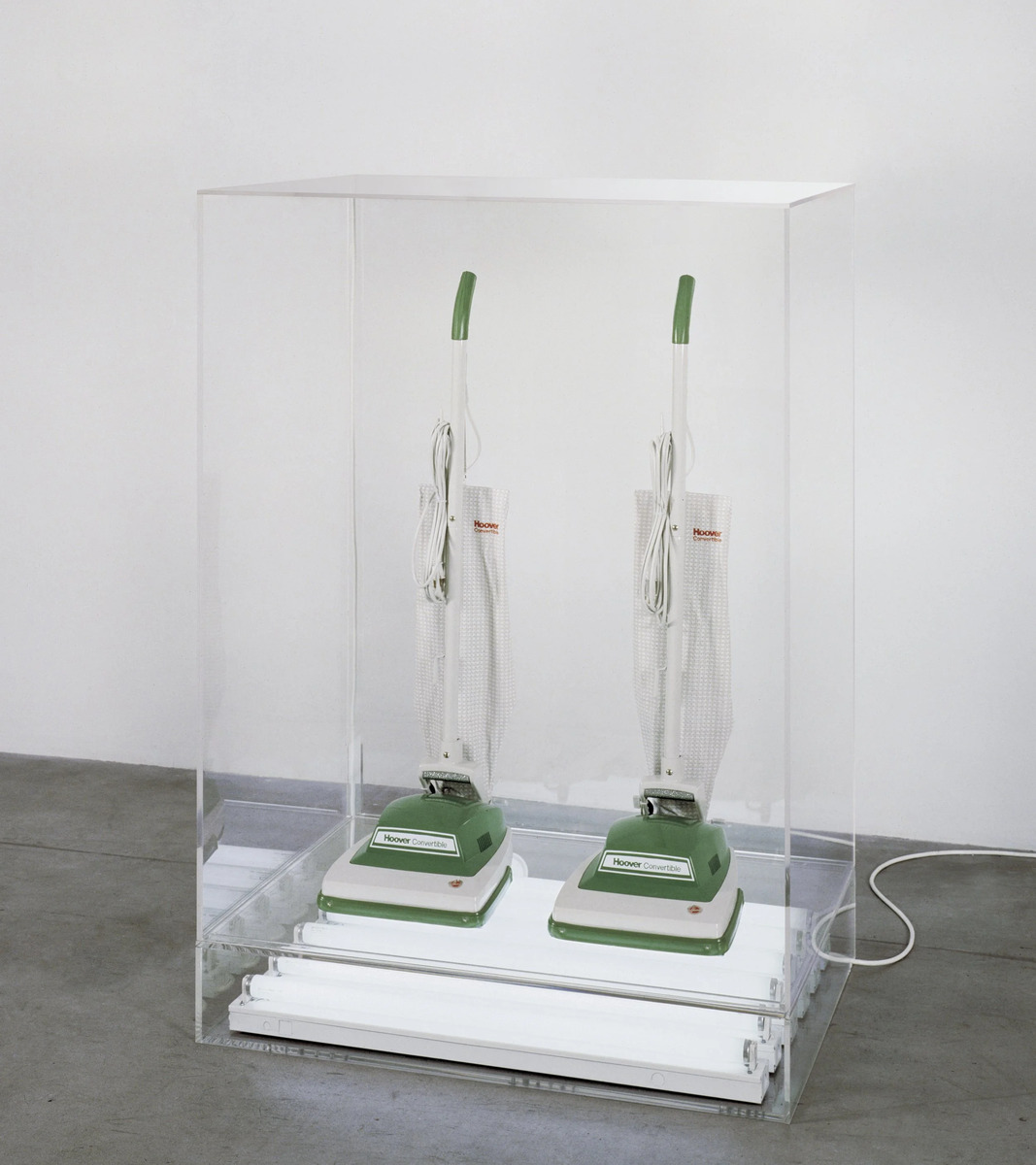
Koons officially launched his career in 1980 with his breakthrough solo installation series, “The New.” The work debuted in the windows of the New Museum in New York City, featuring brand-new, store-bought Hoover and Shelton vacuum cleaners and floor polishers encased in clear acrylic (Plexiglas) boxes and illuminated from below by harsh, glowing white fluorescent lights.
Vacuum cleaners are designed specifically to collect dirt, dust, and grime. By sealing them inside pristine glass cases before they could ever be turned on, Koons permanently froze them in a state of untouched “virginity” and “purity”. Koons famously noted that if one of the vacuum cleaners were ever actually turned on to suck up dirt, the artwork itself would be destroyed.
With these kinds of works, Koons stripped away artistic elitism by validating popular taste and consumer nostalgia.
The Record-Breaking Auction Legacy of Rabbit and Balloon Dog
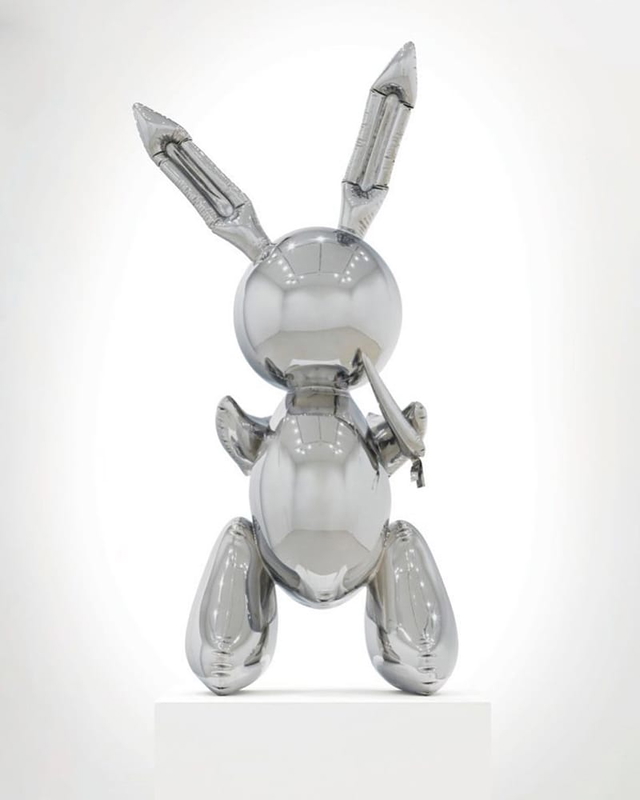
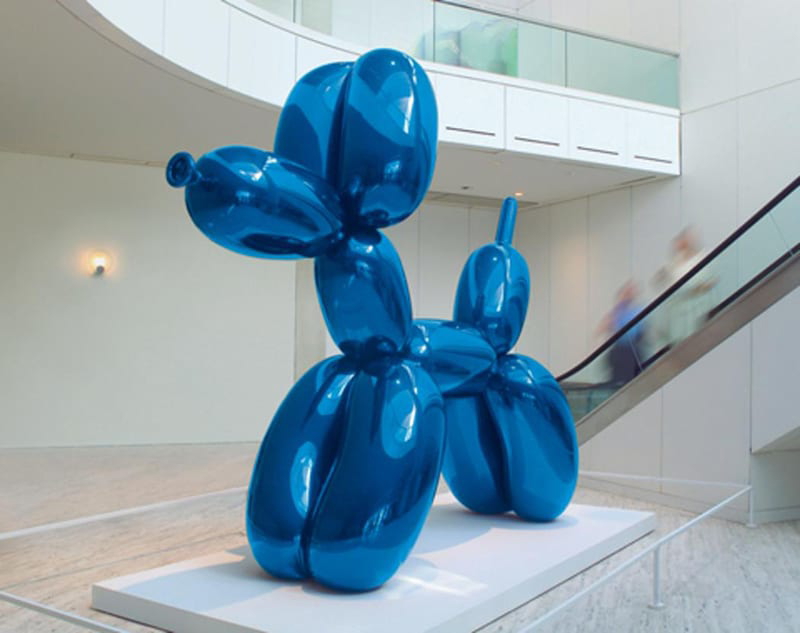
In 2013, Jeff Koons won the title of having the most expensive art ever sold from a living artist. His piece, “The Balloon Dog (Orange),” sold at a Christie’s auction for $58.4 million. He toppled this record again in 2019, selling another animal-themed piece, “Rabbit,” for $91 million. “Rabbit” is a 3-foot-tall stainless steel figure of a bunny with a reflective face that viewers could use as a mirror. It was estimated to sell for $50-70 million but shot up to $80 million within 10 minutes of going on auction. After all the auction fees were counted, the final sale price came to $91,075,000.
Sales of Koons’ Artworks
| Artwork | Auction Price (USD) | Sale Date |
| Rabbit (1986) | $91,075,000 | May 15, 2019 |
| Balloon Dog (Orange) (1994–2000) | $58,405,000 | November 12, 2013 |
| Jim Beam -J.B. Turner Train (1986) | $33,765,000 | May 13, 2014 |
| Tulips (1995–2004) | $33,682,500 | November 14, 2012 |
| Balloon Monkey (Orange) (2006–2013) | $25,925,000 | November 12, 2014 |
| Play-Doh (1994–2014) | $22,810,000 | May 17, 2018 |
The Many Contraversies Surrounding Jeff Koons
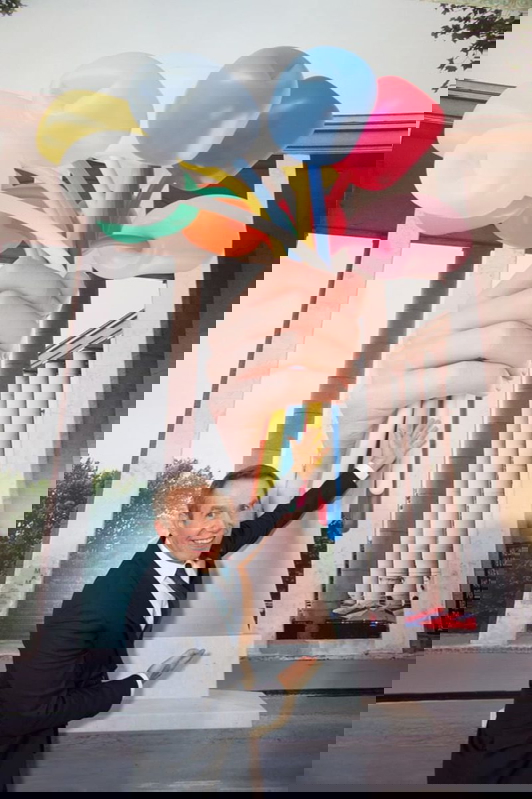
Jeff Koons hasn’t been successful without a share of criticism. In 2015, he created a 40-foot-tall high sculpture called “Bouquet of Tulips” for the city of Paris to honor the victims of the November terrorist attacks. His proposal was criticized by 25 French cultural figures including movie makers, artists, and politicians in an open letter to the French newspaper Libération. They listed financial misplanning as part of their concerns, and they argued that the piece was too opportunistic to truly value the lives lost in the tragic event.
He also ran into controversy the year before, when an art collector sued him through the international Gagosian Gallery for failing to deliver the art he bought. The collector had paid off part of the $13 million he signed to get four sculptures in exchange. The sculptures were originally scheduled to be completed on December 25, 2014. Later, the date was moved to September 2016, and then to August 2019. The collector canceled his order and filed a lawsuit by the time they announced the new 2019 deadline.
Fabrication and Industrial Scale in the Modern Artist Studio
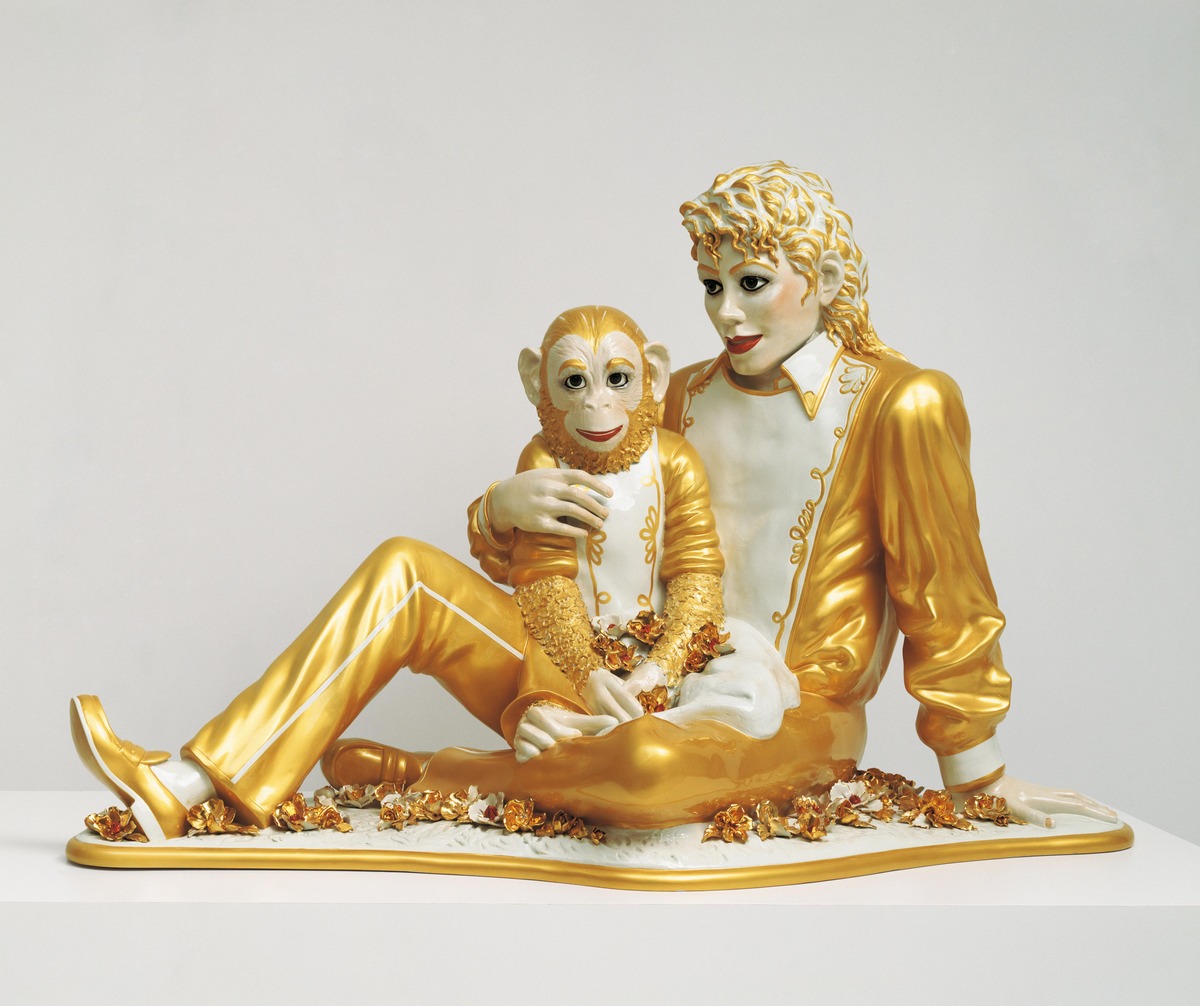
Another contraversy is that Koons does not make his art himself. Some of his early work like the figure of Michael and Bubbles were made by European workshops that Jeff Koons commissioned.
In fact, like a true businessman, he runs his art studio like a production office. Jeff Koons provides the ideas, and a workshop of his assistants are the ones who do the painting, building, polishing and crafting to materialize his vision. The workshop is very fast-paced and has gained a reputation for seeing its assistants frequently fired or quitting. Hyperallergic writer Kyle Petreycik has highlighted that the traditional artist-assistant relationship is one where you work one-on-one with each other to build connections and experience. If you work for Koons, you don’t get this experience; it’s closer to a factory environment.
Koons has shown no sign of planning to change this system. In 2015, he moved his studio to Hudson Yards, New York. During the process, he laid off many of his workers. In 2017, he downsized his painting department from 60 artists to 30. He is also not shy of using industrial, mechanical tools for creation. He owns a stone-cutting facility in Pennsylvania called Antiquity Stone, which he also uses to create his work.
Why Critics Disagree on the Value of Jeff Koons

Despite this, Jeff Koons has left his legacy in contemporary art history. He is often called a “post-pop” artist, grouping him in with other important names like Keith Haring and Britto. Many see his artwork as vibrant and modern. He combines bright, neon colors with fun, relatable objects like balloon animals to make kitschy art. To put it simply, his art is fun.
Koons has been compared to the famous Dadaist pioneer, Marcel Duchamp, who was famous for creating the iconic “Foundation” in 1917. Artsy writer Annette Lin has compared the two, noting that they both recontextualize ordinary objects as art. Through that, both artists ask viewers important questions about sexuality, class, and consumerism.
In an interview with TheDailyBeast’s Blake Gopnik, Koons has answered claims that he’s a cheap industrialist. Koons says he doesn’t aim to make culture cheaper, but instead to “accept things for what they are, as they are.”
Critical Debates Surrounding Jeff Koons
| Aesthetic Dimension | Supporting Viewpoint (Proponents) |
Critical Viewpoint (Detractors)
|
| Cultural Meaning | Elevates everyday consumer desire into a democratic celebration of mass culture. |
Commodifies fine art into hollow, ostentatious trophies for the ultra-wealthy.
|
| Craftsmanship | Achieves unprecedented technical perfection through industrial-grade fabrication. |
Relies entirely on assistants and fabricators without executing manual labor.
|
| Historical Legacy | Continues the readymade tradition established by Marcel Duchamp and Andy Warhol. |
Lacks genuine subversive intent, functioning primarily as high-yield market speculation.
|


