When we speak about the Celts, our thoughts often wander to folk tales of druids from the British Isles. However, few people know they traveled across Europe and settled in distant locations, such as present-day Portugal and Spain.
In this article, you will learn about the Celtic heritage of Portugal and where to find the most mesmerizing Celtic monuments.
Where Did the Celts Come From?
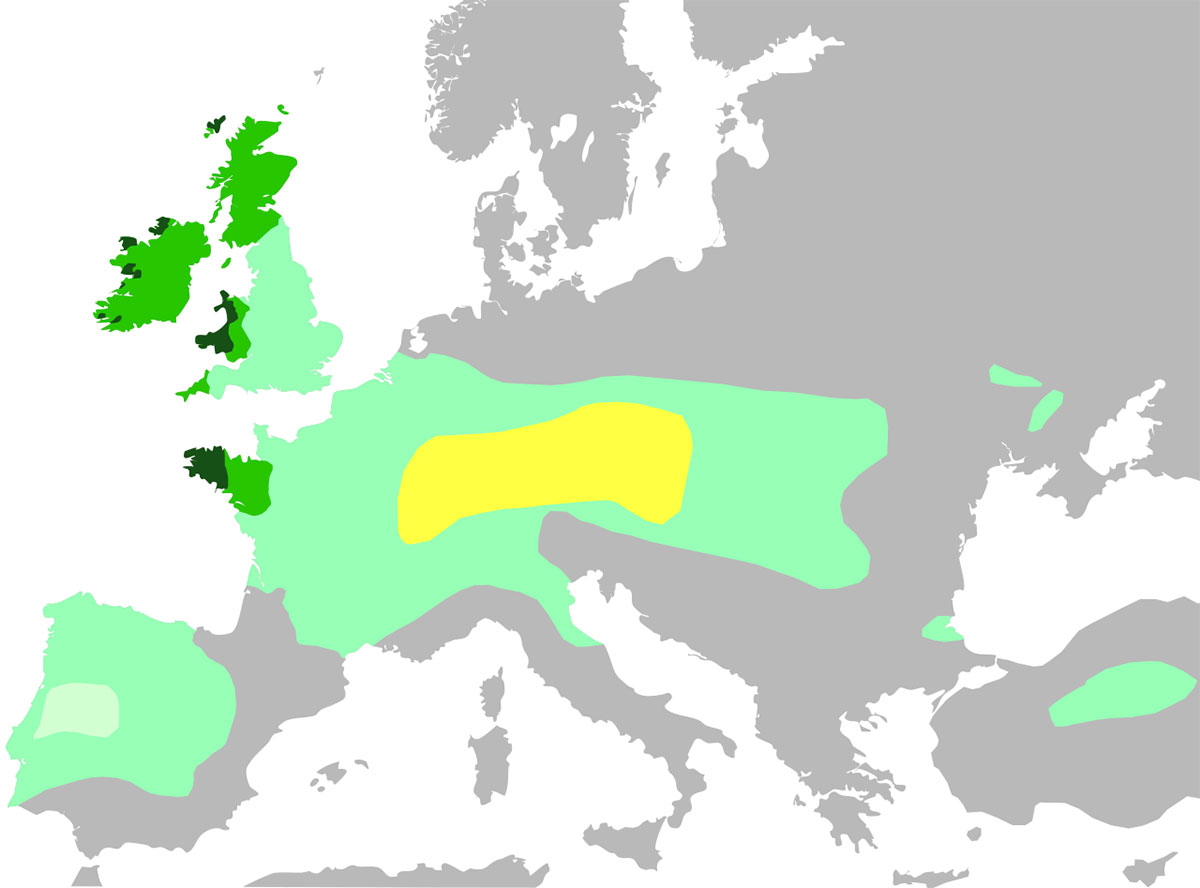
The Celts lived in Europe from the Bronze to the Iron Age (700 BCE to 400 CE) and occupied vast territories ranging from present-day Turkey to Portugal.
Historical evidence shows that the people we call the Celts included several tribes that never established a unified state. That is why some academics agree that the term “Celt” is an umbrella for all the people who used to speak Celtic languages and showed other similarities in art, religion, and funerary rituals.
However, the most widely accepted theory is that the Celts have their origins in Hallstatt.
Hallstatt is an archaeological site in Austria dating from the Bronze Age. Over the years, archaeological evidence has revealed Celtic settlements from the 8th to the 6th centuries BCE. Eventually, these people migrated and settled in western Austria, southern Germany, and France. During this period, tribes in Hallstatt enjoyed salt, iron, and copper deposits, allowing them to establish prosperous commercial trade with distant tribes. Trade, tribal alliances, and weddings also allowed the Hallstatt culture to spread across Europe.
The Celtic Arrival in the Iberian Peninsula
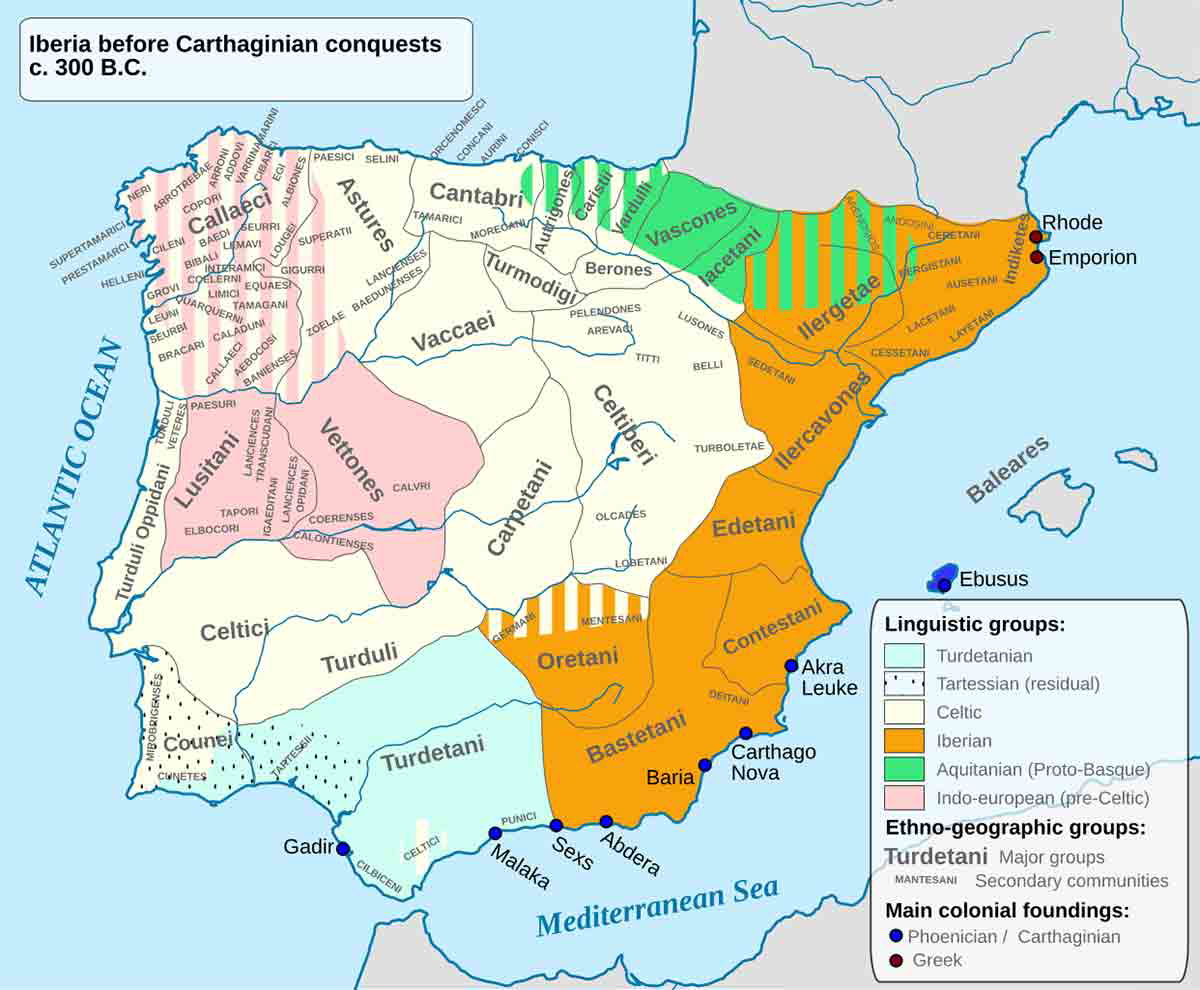
The first Celts arrived in the Iberian Peninsula between the 8th and 6th centuries BCE and settled in present-day North and Central Portugal and Spain.
Most academics believe that during this migration process, the Celts interacted with local tribes, such as the Iberians and the Lusitanians, resulting in the miscegenation of tribes and the development of the Celtiberian people. Evidence has led academics to think the Celts imposed their presence on the Iberian tribes, thus influencing each other culturally and resulting in a Celtiberian culture. Regardless of the nature of the Celts’ interaction with the Iberian people, archaeologists have found evidence of common elements between the Celtiberians and the Hallstatt culture.
One piece of evidence is the “castros,” fortified hillforts built to defend settlements, provide a natural defense system, and control the surrounding countryside. These fortifications were usually located near water, contoured the hills, and included stone ramparts, stockades, and ditches. However, the Celts also built water reservoirs that could be used during a siege. These settlements were often surrounded by several lines of loose stone walls.
Inside the hillfort were circular and, sometimes, rectangular buildings. These structures were made of local stone and had thatched roofs supported by wooden beams. The house floors were made of natural soil or boiled argyle.
Although the Celtic tribes in the Iberian Peninsula lived in a warlike atmosphere, most of these hillforts were only used as a refuge.
On the other hand, the “civitas” were larger fortified settlements permanently inhabited with a regular street layout, revealing a high level of social organization. The paved narrow streets are aligned with small and large residences beside workshops, revealing well-thought-out urban planning.
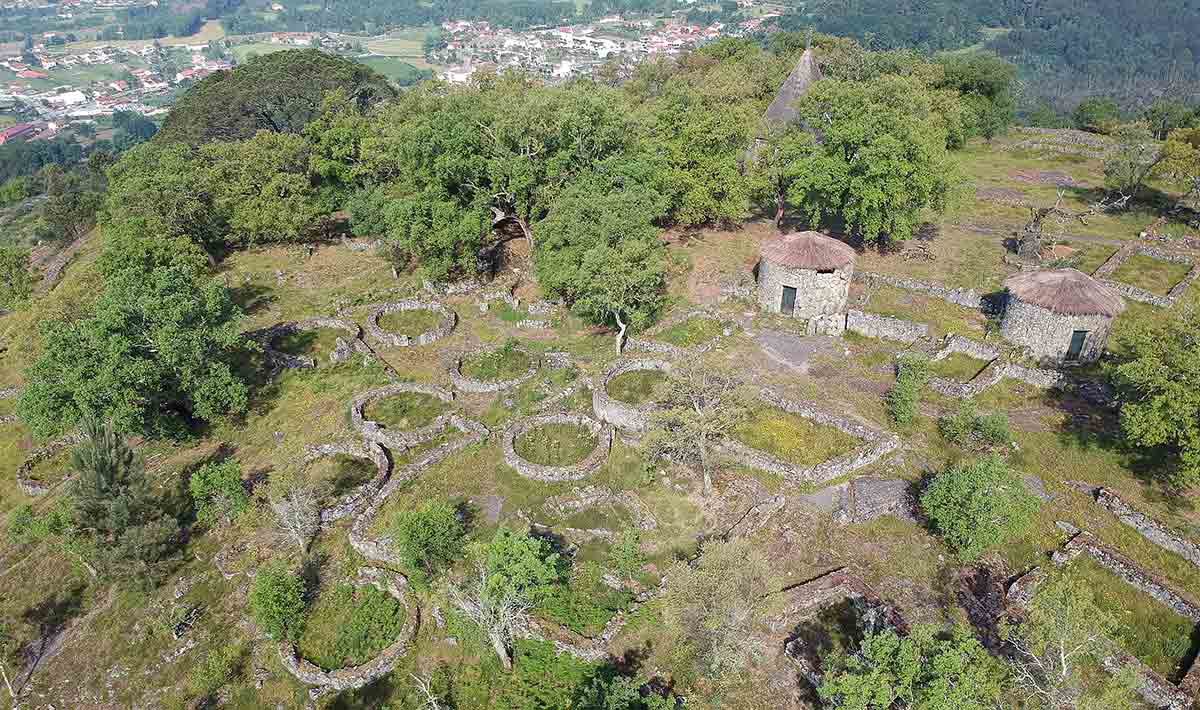
Some “civitas” had an interior, upper-walled space with a few buildings scholars call the acropolis. These oppida were surrounded by concentric moats and stone walls reinforced with towers. The doors of these oppida were monumental and often featured sculptures of warriors. The oppidium living areas were walled, with kitchens, sheds, barns, workshops, and rooms arranged around a paved inner courtyard equipped with fountains, drains, and wells.
Archaeological excavations in the North of Portugal reveal ceramics and metalwork showing influences from Greek, Italic, and Tartessian people. The pottery found has allowed archaeologists to understand the people’s daily life and how these artifacts were developed. These vessels were often decorated with concentric circles, double SS, and shield motifs.
Archaeologists have also retrieved metal artifacts, such as axes, sickles, spears, and daggers, that reveal the incredible expertise of Celtic blacksmiths. Among these objects are also fibulae, torques, and viriae.
When the Romans arrived in the Iberian Peninsula during the 2nd century BCE, these Celtic tribes were progressively Romanized. Over time, the “castros” were abandoned as people gathered in non-fortified settlements located in valleys.
The Celtic Legacy in Portugal
The Minho region is the best area to explore Portugal’s Celtic heritage. Although scholars have yet to determine the exact number, they believe there were over 4,000 Celtic settlements in this area. Below, you will find the best locations to discover Portugal’s Celtic past.
Citânia de Briteiros
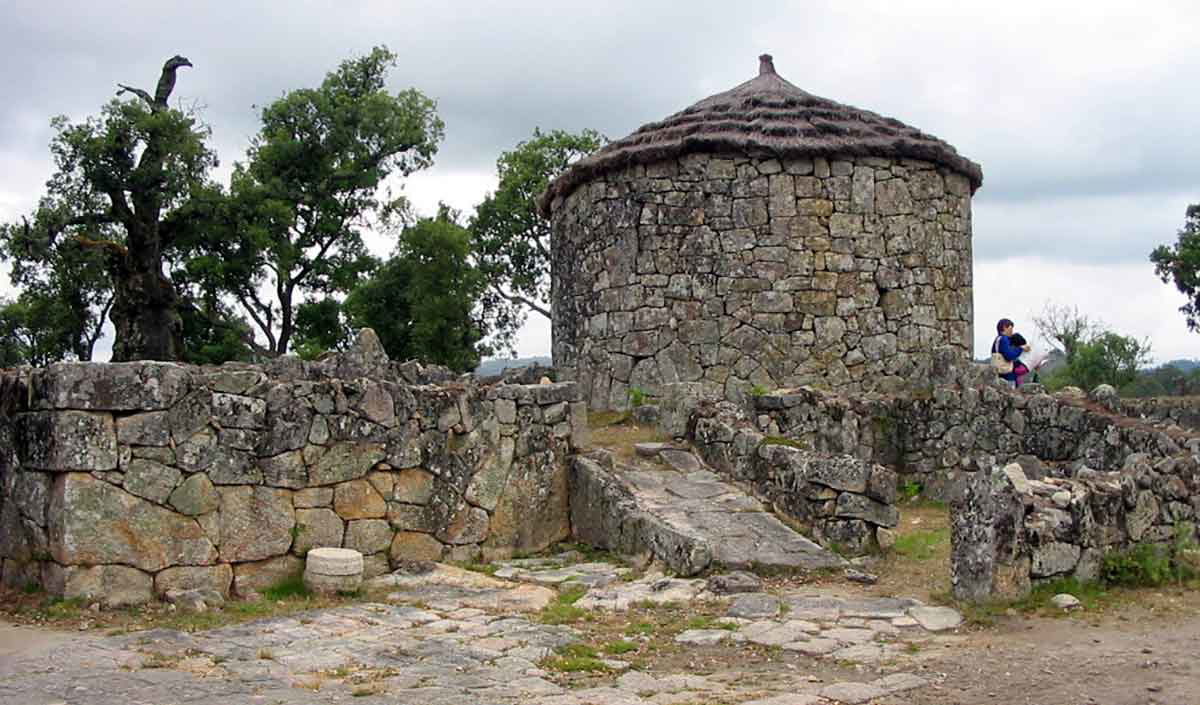
Citânia de Briteiros is a Celtic archaeological site from the Iron Age, located a few miles from Guimarães. Classified as a National Monument since 1910, Briteiros is one of the largest and most well-preserved fortified settlements in Portugal.
Why is this location so important? Besides being one of the largest hillforts in the Iberian Peninsula, it shows a complex urban layout with residential neighborhoods and public areas such as an acropolis and public baths.
Located at 336 meters (1,102 feet) of altitude and covering an area of 24 hectares, Citânia de Briteiros was built here to allow its inhabitants visual control of the surrounding area and easy access to the river.
At Citânia de Briteiros, the defensive walls were adjusted to the natural geography and adapted to the settlement’s growth. The Celts built four lines of walls supported by several ditches. The three main walls were concentric and converged to the north, while the inner wall surrounded the acropolis area. The fourth wall was located northeast of the hillfort to protect a more vulnerable area. As for its size, archaeologists believe these walls were two to three meters (six to ten feet) wide and about two meters tall (six to seven feet).
The acropolis was the settlement’s main area and included several residential buildings, public baths, and the “Casa do Conselho.” The streets form small clusters similar to modern-day city blocks.
The main street, which was the longest, ran from the southwest to the north, starting near the public baths and ending in the highest part of the town. From here ran several secondary streets, which separated the neighborhoods.
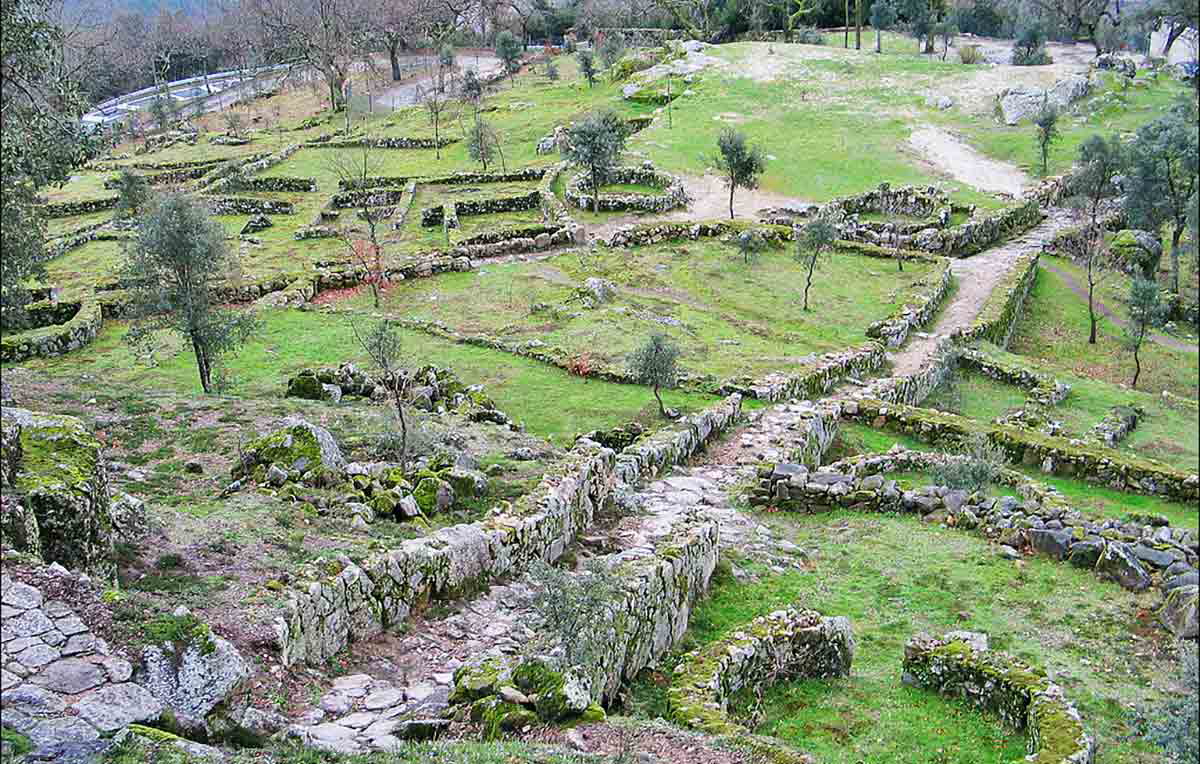
Most houses showed a circular floor plan and housed extended families. However, each family had a small complex of buildings with different functions surrounded by a wall. The rectangular buildings were used as warehouses to store tools and food. On the other hand, the residential buildings, found in the highest area of the acropolis, were inhabited by the wealthiest and most important families.
In the center of Citânia de Briteiros, archaeologists found an 11-meter (36 feet) diameter circular building with a stone bench inside. Due to its size and location, they identified it as the “Casa do Conselho,” a Celtic roundhouse where the elders would meet. Another theory suggests this was also the place where feasts took place.
The bathhouses are another important structure at Citânia de Briteiros. Outside the residential area were two bathhouses. The bathhouse to the southwest has been best preserved. Here, you can see the atrium, where the tanks, antechamber, and main chamber were located, as well as an oven. The eastern bathhouse was a relatively large building that included stables, warehouses, and workshops.
At Museu da Cultura Castreja, you can admire the impressive collection of pottery, glass, and metallic artifacts retrieved from Citânia de Briteiros.
Citânia de Sabroso
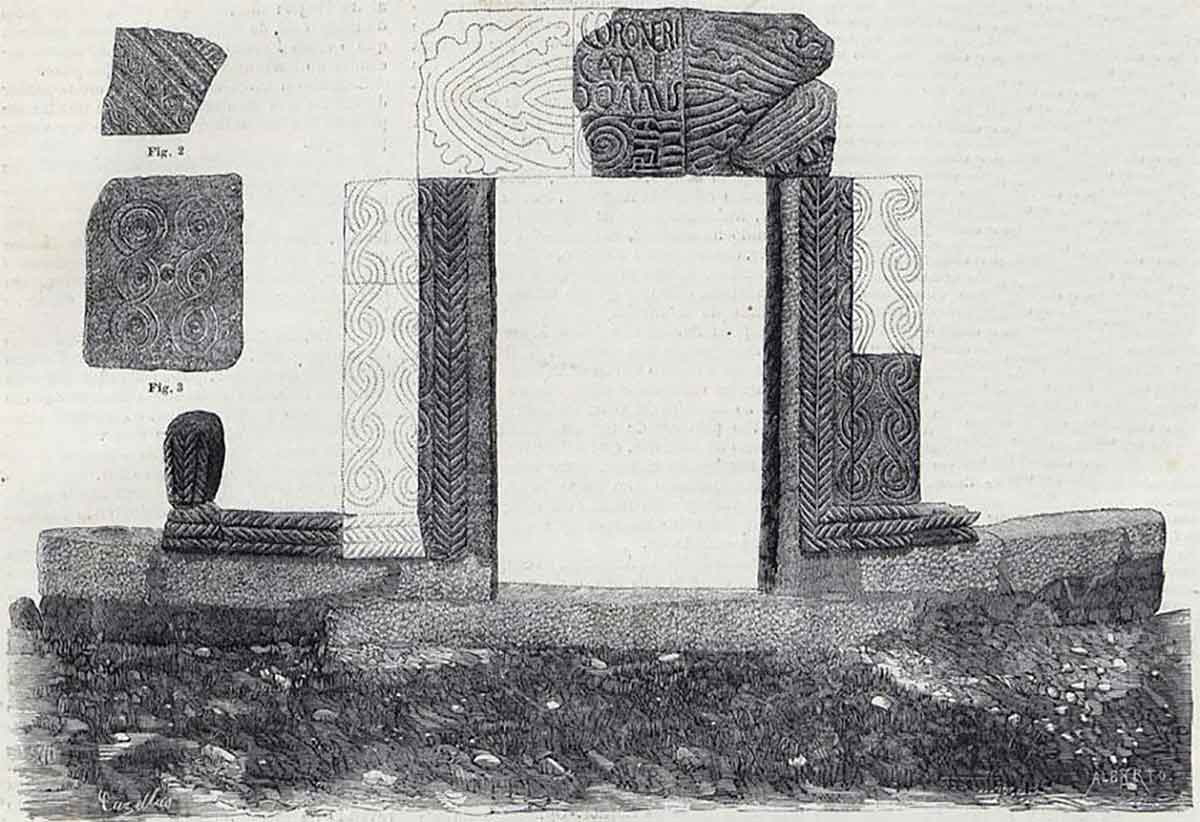
At a short distance from Citânia de Briteiros is another significant Celtic settlement: Citânia de Sabroso.
This archaeological site, classified as a National Monument, includes a group of around 39 circular and rectangular houses surrounded by walls. Due to their size, these walls are considered one of the most monumental pre-Roman complexes in Portugal’s northern region. It was inhabited during the second half of the first millennium BCE, during the Iron Age.
Located at 270 meters (885 feet) of altitude and covering an area of three hectares, Citânia de Sabroso enjoyed easy access to several streams and the surrounding plains. Archaeologists believe that due to its location and much smaller size than the Citânia de Briteiros, Sabroso’s may have served as an advanced outpost to Briteiros.
Considering the small and heavily fortified walls, some archaeologists suggest Sabroso might have been a settlement for the local elites or a religious site. This last hypothesis comes from the discovery of a boulder with a decorated cavity that might have been used as an altar.
At Citânia de Sabroso, archaeologists found two lines of sloped defensive granite walls in a polygonal shape. These four-meter-thick (13 feet) walls cover a perimeter of almost 400 meters (1,300 feet), reaching five meters (16 feet) high. Most of these walls have remained intact, except for a few sections demolished in the 20th century. To access the town, there were two gates, one to the north and the other to the south.
Inside the lines of walls, archaeologists found 39 residential buildings, most of them with a circular floor plan. The few rectangular-shaped houses were part of a different structure that included a cistern. However, contrary to the Briteiro’s urban layout, at Sabroso the streets followed an irregular design surrounding the houses.
Cividade de Terroso
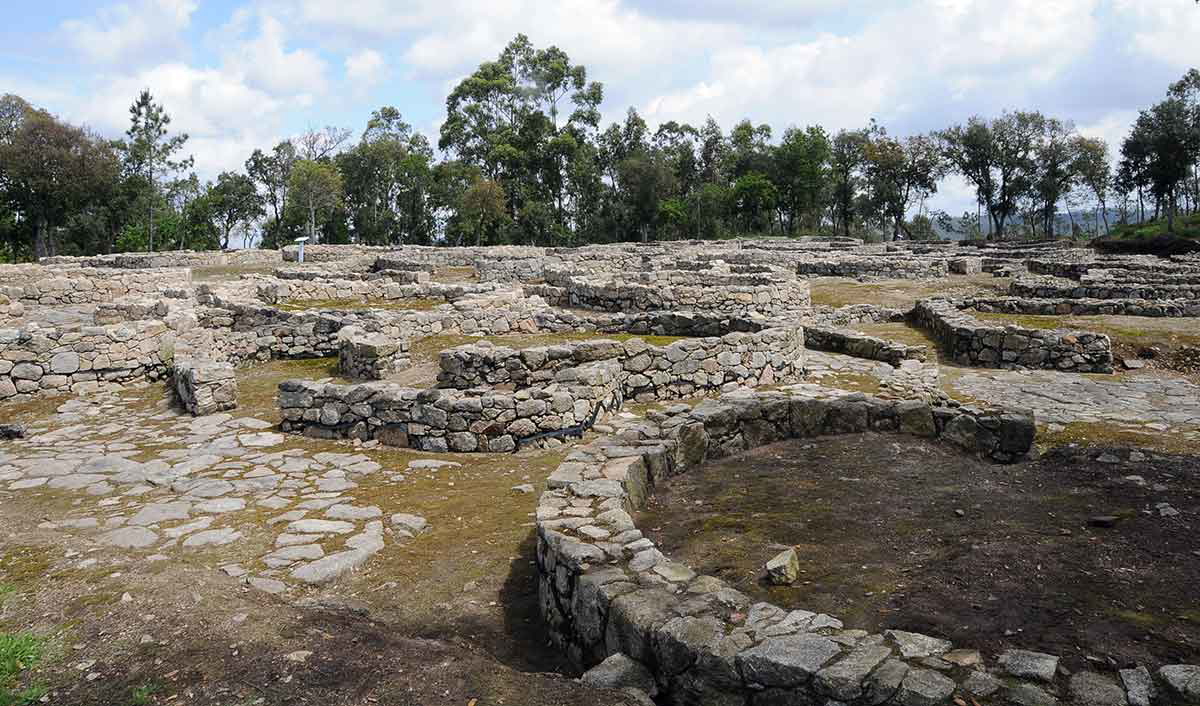
Cividade de Terroso was one of the most prosperous Celtic settlements in the Iberian Peninsula.
Located in Póvoa de Varzim, its closeness to the ocean allowed commercial trade with other Mediterranean people. During the Punic Wars, the Romans learned about the wealth of gold and tin at Cividade de Terroso. As a result, Decimus Junius Brutus Callaicus led a campaign to dominate the region, which destroyed Cividade. A few years later, the settlement was rebuilt and Romanized. Nevertheless, it is still possible to admire the settlement’s Celtic features.
Cividade de Terroso was built at 152 meters (498 feet) of altitude. This location was chosen to protect its inhabitants from enemy tribes. The result is a heavily fortified hillfort with three lines of walls surrounding the acropolis. The walls were built in different periods, according to the settlement’s growth. Builders used large stone blocks without mortar while following the hill’s geography. Cividade de Terroso went through several construction phases.
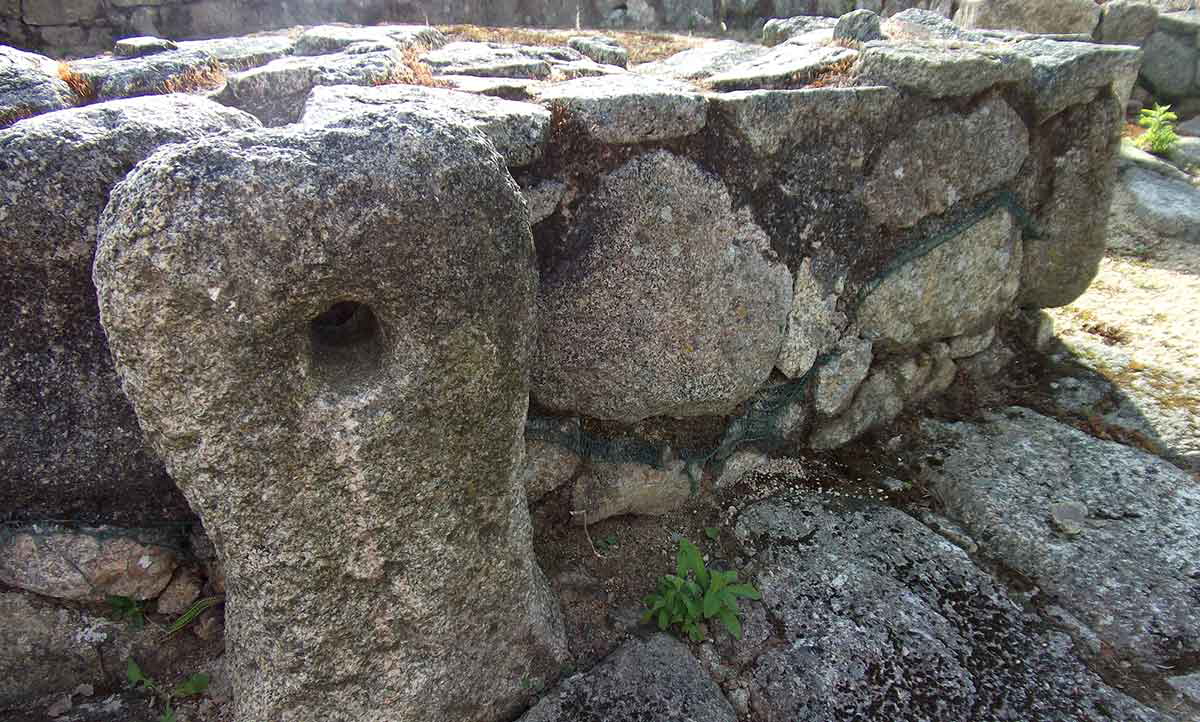
In its early beginnings, small dwellings were built from clay mixed with plants. The first stone constructions only appeared in the 5th century BCE, thanks to the Phoenicians, who brought a new construction technique using iron spikes to the Iberian Peninsula.
Most buildings from this period have a circular shape with a diameter between four and five meters (13 to 16 feet) and walls 30 to 40 centimeters (12 to 16 inches) thick. The granite stones were fractured or chipped and then positioned in two rows, with the smoother side facing the exterior and interior of the house. The space between the two stones was filled with smaller stones and gravel mortar, giving the walls a robust structure.
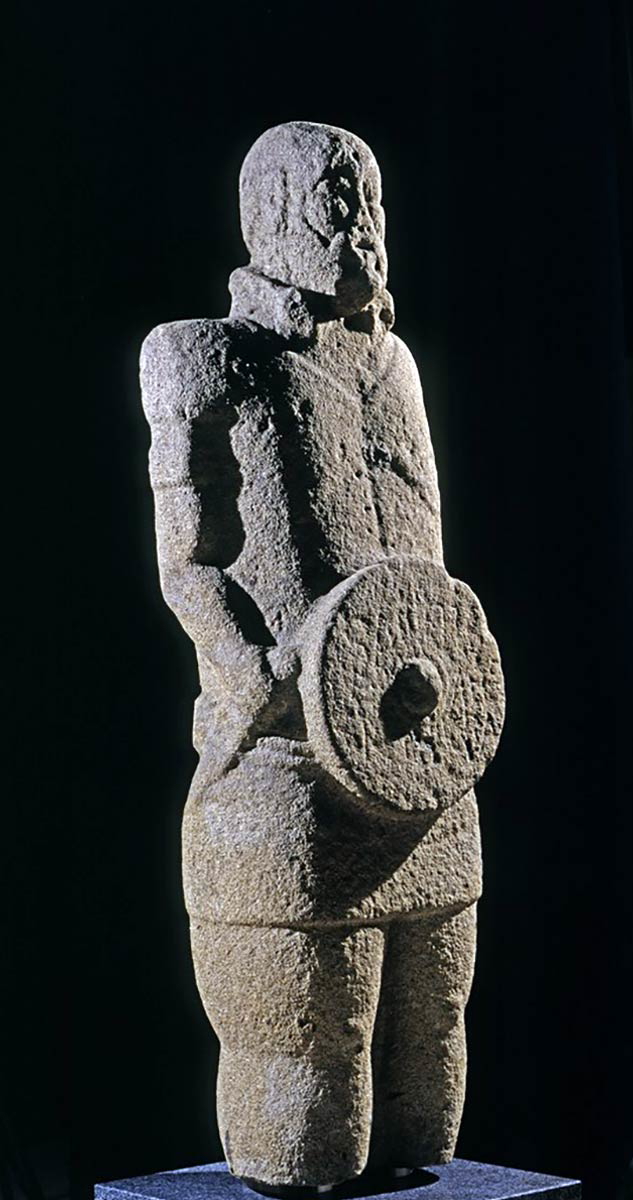
As the Romans conquered the Iberian Peninsula, Cividade entered its last construction phase. An urban reorganization changed the buildings’ shape and dimensions, resulting in new quadrangular houses with tegula roofs.
Inside the city walls, archaeologists found funerary enclosures, which are very rare in Celtic settlements in Portugal. Moreover, archaeological excavations found several houses with patios and two main streets. At its height, Cividade covered an area of twelve hectares.
The residential buildings were made of four or five circular rooms surrounded by a slabbed courtyard where the doors of the different rooms converged. These central courtyards played an important role in family life and were where daily family activities took place.
The buildings from the second construction phase, before the Roman Era, used thin clay or gravel. Some of these floors were decorated with rope printing, wavy designs, and circle printing, especially in the fireplaces. In the Roman-influenced phase, these floors became denser and thicker.
While visiting Cividade de Terroso, you should also explore the Núcleo Interpretativo to learn more about the archaeological findings. At Museu Municipal de Póvoa de Varzim, you will find an extensive collection of artifacts retrieved from several archaeological campaigns at Cividade de Terroso.Terroso.