

Can a school of thought like psychoanalysis account for the role of technology in the formation of the mind? While a variety of critiques have revealed the limits of psychoanalysis, this school of thought offers a way of thinking about the nature of desire in a modern world seemingly built upon our wants and consumption habits. French philosophers Deleuze and Guattari offer a critique of psychoanalysis that provides the foundations for understanding how our minds and desires are shaped in the digital era.
Desire in Psychoanalysis
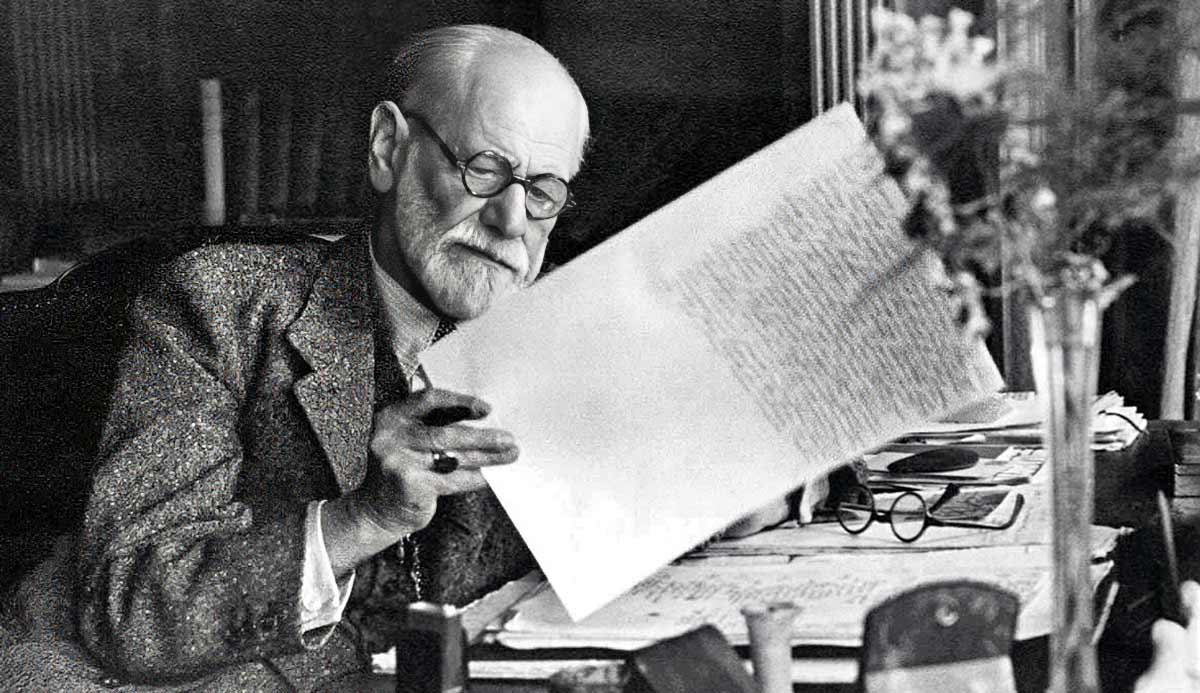
From its origins in the late 19th century, psychoanalysis has evolved into various schools of thought and theoretical branches that seek to understand the mind. Over the course of the 20th century, this proved to be a particularly heated field, especially as it had to come to reckon with the trauma and neuroses emerging from the various geopolitical conflicts of the century. As a science, psychoanalysis is attempting to develop a conscious medical approach to a mind that can suffer from largely unconscious neuroses that evade our language.
Central to this field is the work of Sigmund Freud, whose account of how the mind is driven by bodily energy would later resonate with theorists. Freud’s work shapes how psychoanalysis understands the mind, particularly with its emphasis upon desire as a central force for psychological development. For Freud, all the activities of the mind depend upon libidinal energy. This energy can be understood as the psychological, though not necessarily conscious, experience of a biological need to reproduce and maintain life. Desire, then, is a fundamental phenomenon of the mind.
However, this energy becomes entangled in the mind’s complexities as it develops and navigates the world into which we’re born. Not all energy is directed towards reproduction: the necessities of maintaining life, such as eating and labouring to provide safe living conditions, also require energy to be directed towards such activity. In this sense, libidinal energy is sublimated into other areas and activities. For Freud, at least, all the products of such labor, including the domain of culture and art, are the results of this fundamental libidinal energy.
Desire and Oedipus

Our desires, then, form and develop within a complex context of relations with others. Freud emphasized the family unit as the environment in which this formation takes place; in which the relations between child and parent within the family structure play an important role in shaping psychological development.
The development of the mind is entrenched in the family structure, specifically in the Oedipal triangle. Here, Freud draws upon the language of the Greek tragedy of Oedipus. In the general retelling of the story, the protagonist Oedipus unknowingly murders his own father and sleeps with his mother. This dramatic scenario is translated into a framework for understanding how our desires are shaped by our familial relations, forming a triangle with three points: the father, the mother, and the child as psychological subject.
The subject finds themselves in an intimate relationship with the mother as caregiver, but this relation is disrupted by the presence of the father. Since the father also takes up the time of the mother, the subject feels that they are in competition with him, and this tension manifests itself in the assertion of rules upon the child by the father.
For psychoanalysis, most of the various neuroses, psychological hangups, and mental strains of conscious experience have their origins within this triangular dynamic. Jacques Lacan, following Freud, will develop nuanced understandings of desire based fundamentally around lack, that is, the way in which our desire is always dependent upon our not having the things we want. In a social relation, this means that we form our desires through the lens of other people: we want what they want, and we want to have our desires acknowledged by them, but we can never really attain the very thing we desire precisely because we depend upon others in this situation.
A Philosophical Understanding of Desire

Psychoanalysis provided a nuanced framework and terminology for understanding the nature of desire in a more objective and scientific manner than before. Its terminology has proven useful even for theorists critical of the field, such as feminist and queer theorists who have sought to expose the limits of its understanding of desire. This language is also obviously useful for approaching desire as a social, rather than simply individual, phenomenon.
French philosophers Deleuze and Guattari aimed to understand desire through the lens of a specific problem: why do people actively desire their own repression within authoritarian regimes? This seems almost paradoxical: people may desire their own repression, including that of their desires. Traditionally, we would understand repressive political regimes as being forced upon people. What Deleuze and Guattari were trying to argue is that, to some degree, these regimes must be actively invested with desire by the people they subject. This means both that people can, to some degree, desire their own repression and that there is also a liberatory dimension to this, in which our desires can be reinvested elsewhere.
This is all in contrast to the psychoanalytic understanding of desire as emerging within an Oedipal context. Rather, desire is understood as the production of the real itself, being the very material from which an Oedipal triangle is made. As the production of the real, this means that desire takes on an ontological status rather than an isolated subjective experience; that is, desire is not simply something we experience but a larger ongoing process which underpins everything and in which we find ourselves caught up.
Machinic Desire

To understand desire as a productive process, Deleuze and Guattari developed the concept of desiring-machines. This can be seen as an attempt to combine Freud’s concern for desire with Karl Marx’s critiques of industrial capitalism. In other words, it’s the way to understand how capitalism uses the creativity of desire.
What do they mean by machine? For Deleuze and Guattari, a machine is a site that plays a productive role within a larger system of connections. Understanding the world as a continuous flow of matter, a machine extracts some part of this material and puts it to work within a larger assemblage. This means that the same thing can function as a different machine depending on the connections it makes. They give the example of the mouth, which can be understood as an eating-machine, a breathing-machine, or a talking-machine, depending on context. This blurs the boundary between the organic and the inorganic, as connections can be formed among various entities, including body parts, objects, and artworks.
If existence is inherently connective, then machines are always forming relations with other machines. As such, a machine is defined by where it breaks off from the rest of the world to form a closed system. These machines get caught up in certain operations and connections, and what ultimately defines them is the set of connections they do not form. Every machine, then, functions as both a continuity of a flow and a rupture in the flow of material related to another machine.
Such a constructive conception of desire is drastically different from seeing lack as the fundamental drive of our wants. It can be understood as a machinic desire, distinct from traditional concepts of eros, which characterizes desire as a connective and constructive force caught up in the production of new things.
Desire and the Self

This machinic understanding of desire leads us to reevaluate how we experience desire as individuals. For traditional psychoanalysis, we are individuals for whom the objects of our desire remain fundamentally beyond our grasp. Since our psychologies develop within the Oedipal triangle, our desires are permanently caught up in prohibitions and limits. This means desires must always remain somewhat unfulfilled, perpetually caught up in fantasies rather than the production of reality itself.
Desiring-machines enable us to understand how desire relates to the self in fundamentally different ways. We are products of these connective processes just as much as the rest of the world. This concept allows Deleuze and Guattari to invert the traditional account of desire as a longing for something we lack. Rather, our selves are actually the product of these desiring-machines and their various connections. This means that the self as a psychological subject is a product of these machinic connective processes and, as such, we do not necessarily lack anything specific. Desire is, rather, merely a continuation of these connective processes.
This means that psychological issues tend to hinge on the relationship between the productive nature of desiring-machines and the way in which this production emerges in a social environment. Rather than being fundamental for psychological development, the Oedipus complex depends upon the configuration of desiring-machines into particular connections, which ultimately constrain their productive nature. This entails directing the productive nature of desiring-machines toward specific objects in the world; in other words, the child has these complex feelings toward the mother and father only because their desire is oriented in this direction. As such, the self is a result of these connections between desiring-machines, but how these connections occur can be shaped by our social situation.
Desiring-Machines in the Digital Era
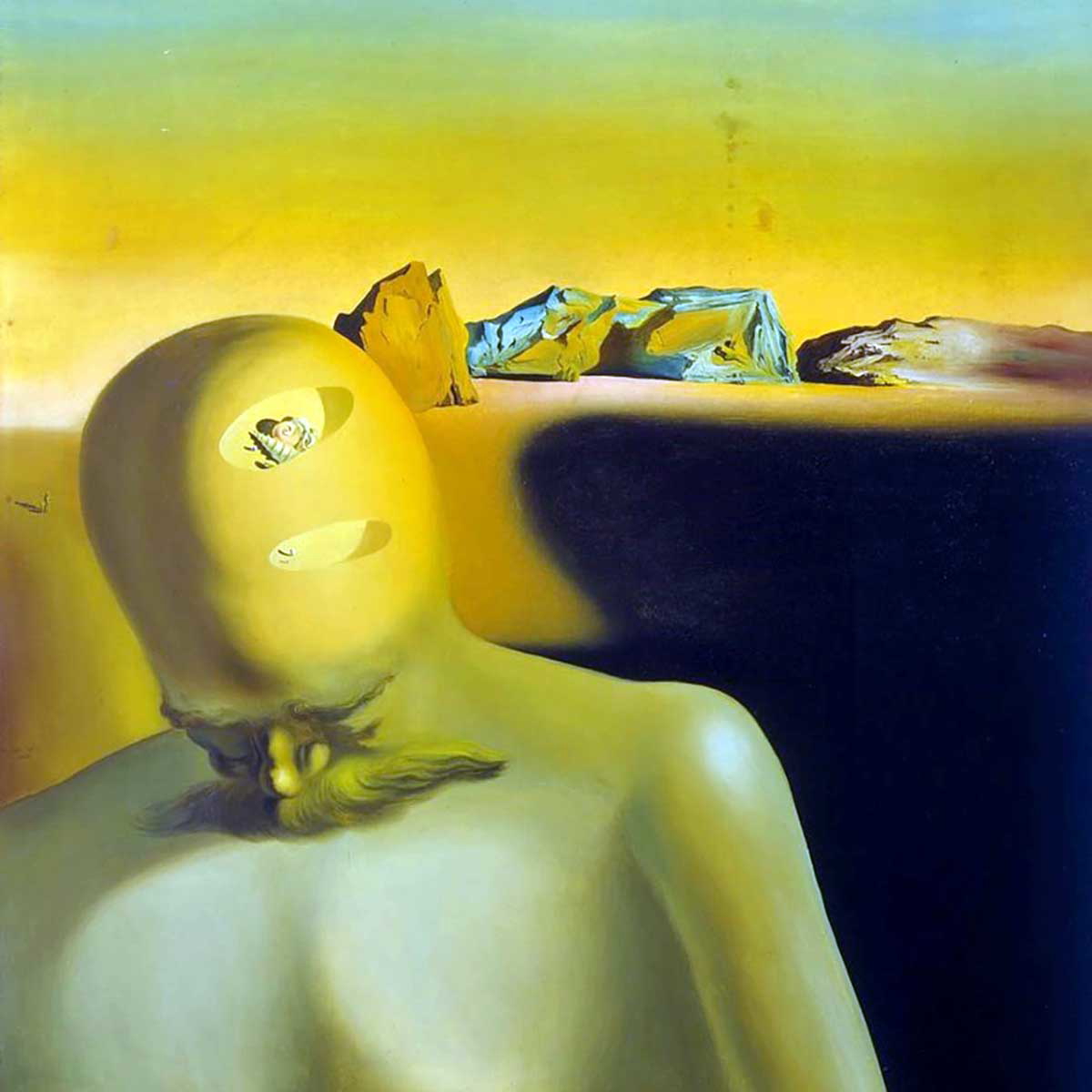
Deleuze and Guattari intended desiring-machines to be a single concept within a broader critique of contemporary capitalism, aiming to show how capitalist living shapes our minds and desires in ways that leave our wants perpetually unfulfilled. They intend to show how our desires remain shaped by our historical conditions, which fundamentally comes down to how these machines are allowed to connect with one another and what connections can be made.
Viewed from the early 21st century, this approach offers a particular way of understanding how desire operates in relation to the increasing presence of complex digital technologies in our everyday lives. By emphasising the machinic aspects of desire, Deleuze and Guattari have proved influential on posthuman modes of thinking about the world, as they emphasise a relational connection between the organic and the inorganic. As such, their approach offers a groundwork from which to consider our modern condition.
Through this emphasis upon desire, Deleuze and Guattari famously concluded that people desire their own repression because politics is not a question of ideology but of desire. People can be directed to desire their own repression according to determined social conditions. This mode of thinking about the world, now typically referred to as the libidinal approach to politics, was popular in the 70s and is experiencing a resurgence among those seeking to consider the possibility of different worlds within our current condition.
Thinkers such as Mark Fisher have drawn upon this libidinal approach to understand how we may desire things beyond the capitalist marketplace. These are attempts within the trends of contemporary critical theory to understand how we can understand ourselves as fundamentally entwined with contemporary capitalism while also desiring a world beyond it.