
The staff has been used as one of mankind’s oldest weapons for thousands of years, at least. It is one of the simplest tools possible, alongside knapped flint. Archaeological evidence has uncovered spear tips and similar accessories in locations around the world, but because staff weapons are made from organic materials like wood, finding a surviving specimen would be unlikely. It may not seem impressive at first glance, but the staff is a logical precursor to more advanced close-quarters weapons. We’re here to explore some of the oldest references to staff weapons, to discuss how they have been used, and how their designs have evolved from prehistory to the Medieval Period and beyond.
Effectiveness of the Staff
Part of the reason the staff is one of the oldest implements that mankind has used is that it is comparatively easy to find or make. A straight-enough length of wood or bone could be a walking stick, a makeshift brush-clearer, or a weapon against human or animal attackers. In areas where weapons were not allowed in later eras, it could be an innocuous walking stick.
As the staff evolved into a dedicated weapon, it was used as an anti-armor tool. Its purpose was to inflict blunt force trauma, which can be even more dangerous than cuts or puncture wounds. Even the sturdiest suit of plate harness could be vulnerable to the power imparted by a quarterstaff in full swing.
Because the staff has no sharp points or edges, it can be wielded with different grips, such as from the center or from the edges. The techniques that the staff enables can be adapted well to use a spear or similar polearm. There would likely be a slight need for retraining; for example, many staff thrusting maneuvers involve sliding the grip up through the fingers, which in armor with a poleaxe would risk overbalancing the wielder. Armor significantly raises the body’s center of gravity.
Prehistory
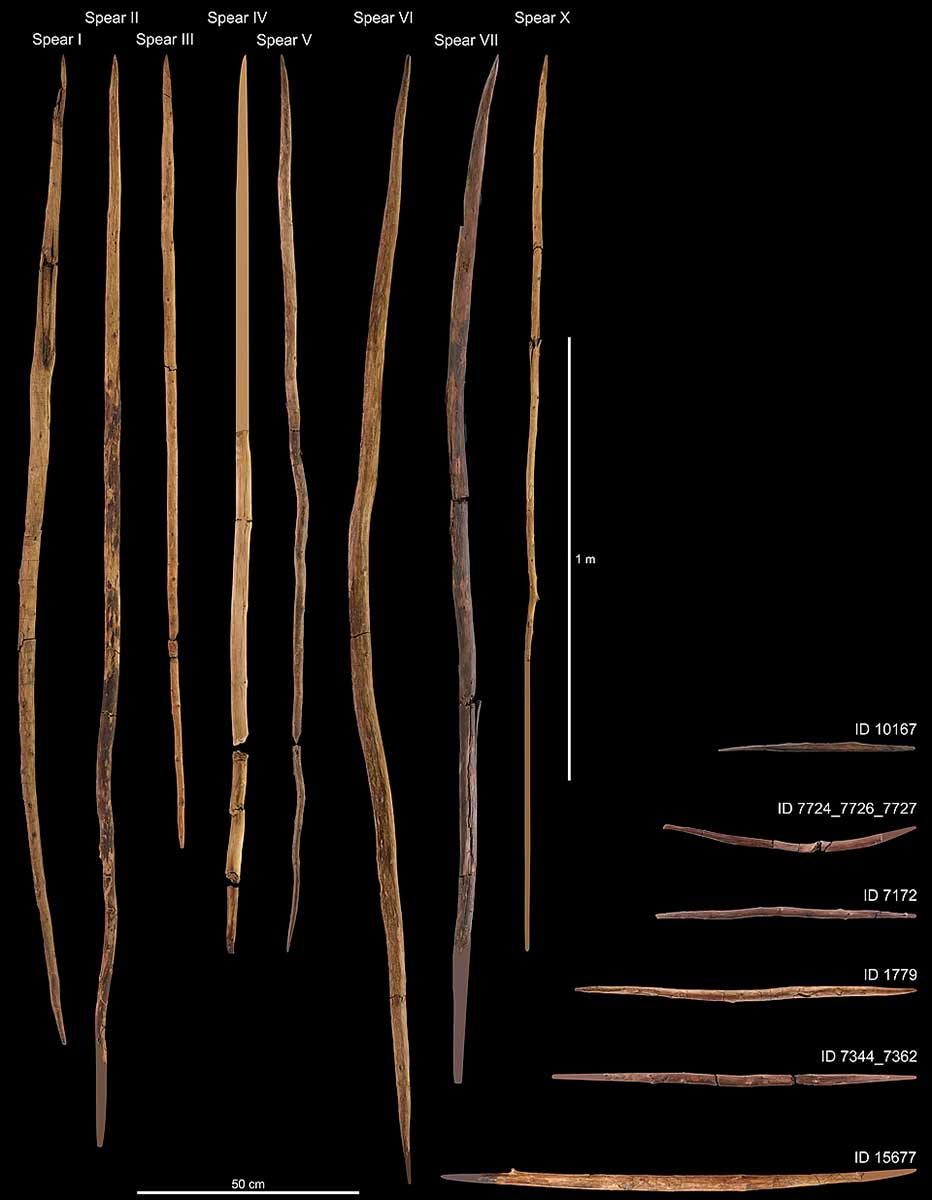
Staves would have mainly been made of organic materials. Even in ideal conditions, wood and bone eventually decompose, leaving little for archaeological study. The most notable exceptions are the set of spears found in Schöningen, Germany, in 1994. These spears, made from spruce and pine, are the oldest intact weapons that have been found. Amino acid dating of preserved material in the same geological strata puts the age at around 200,000 years.
One of the easiest ways to improve a close-quarters hand weapon is to give it extra range by affixing it to a pole. For example, the other readily available material used in primitive tools, stone, could be a crude spear tip. A larger rock could make it a hammer. Both of these options would increase the lethality of the weapon, which would have been useful when hunting game or fighting other humans.
The most current dating of the Schöningen spears places them during the period when Homo neanderthalis (the Neanderthals) were alive. The spears being so close together implies that their makers and wielders understood the necessity of working in groups and strategizing.
Staff Weapons in the Americas
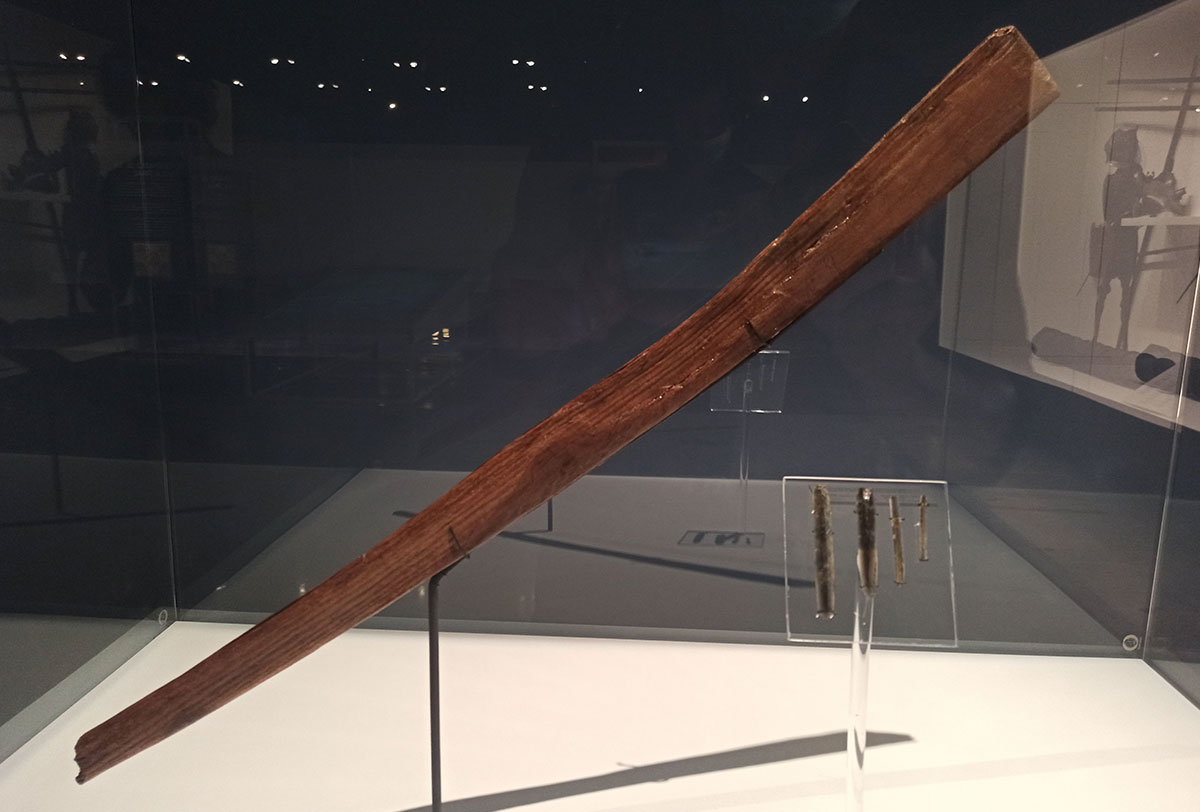
In 2018, a team of Texas-based archaeologists led by Michael Water discovered a cache of chert spearpoints on land owned by Debra Friedman. The artifacts were dated to around 15,000 years ago. The previously thought oldest group in post-Ice Age America belonged to the Clovis people, whose presence was dated to around 13,000 years ago.
The staff was not just a weapon; it also served a ceremonial purpose as a badge of authority, and possibly an aid in magical rituals. Staves used in Native American societies were often decorated with animal parts such as feathers, bones, and talons. Most likely purpose due to the belief that using every part of the animal is a way of honoring it by ensuring that no part is wasted.
The other base material used in Native American staff weapons was stone. It was easy to find and relatively easy to work with. One of the most common forms includes a stone portion shaped into a sphere and affixed to the end of the staff with rawhide.
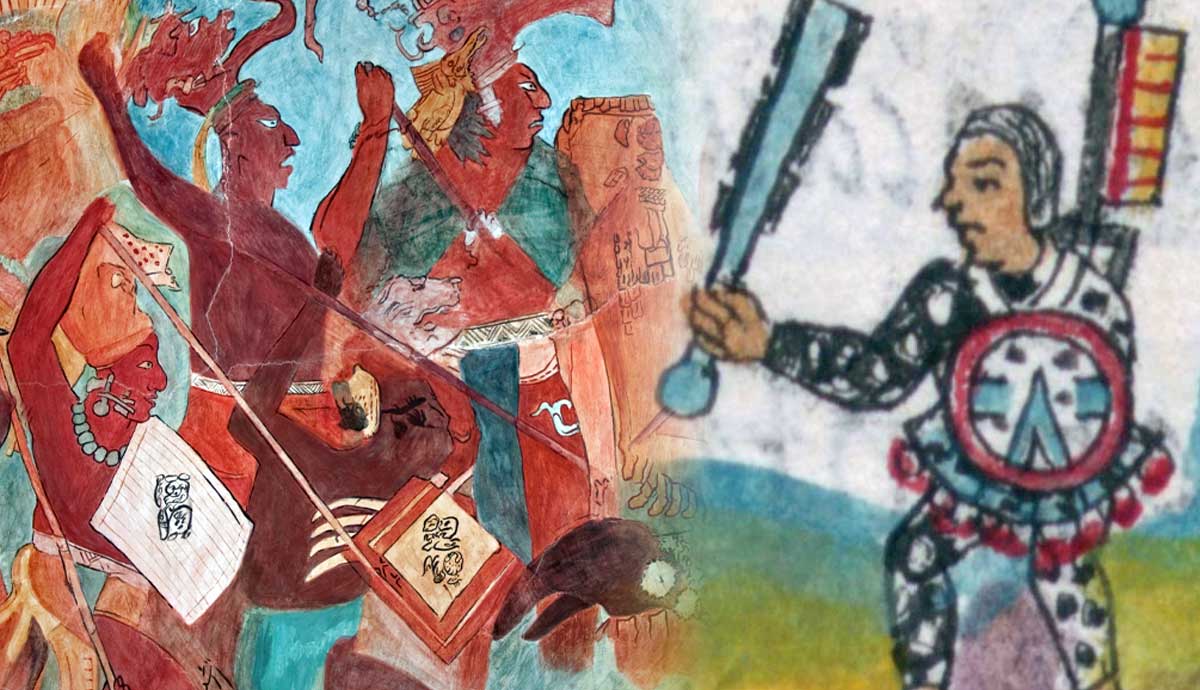
Moving further south to Central America, we can see similar weapons being used. One of the most frightening and deadly of them was the macahuitl, used by the Aztecs. The macahuitl was a flat club or staff weapon that had flakes of obsidian added to the edges, intended to break off on an enemy upon impact.
Staff Weapons of China
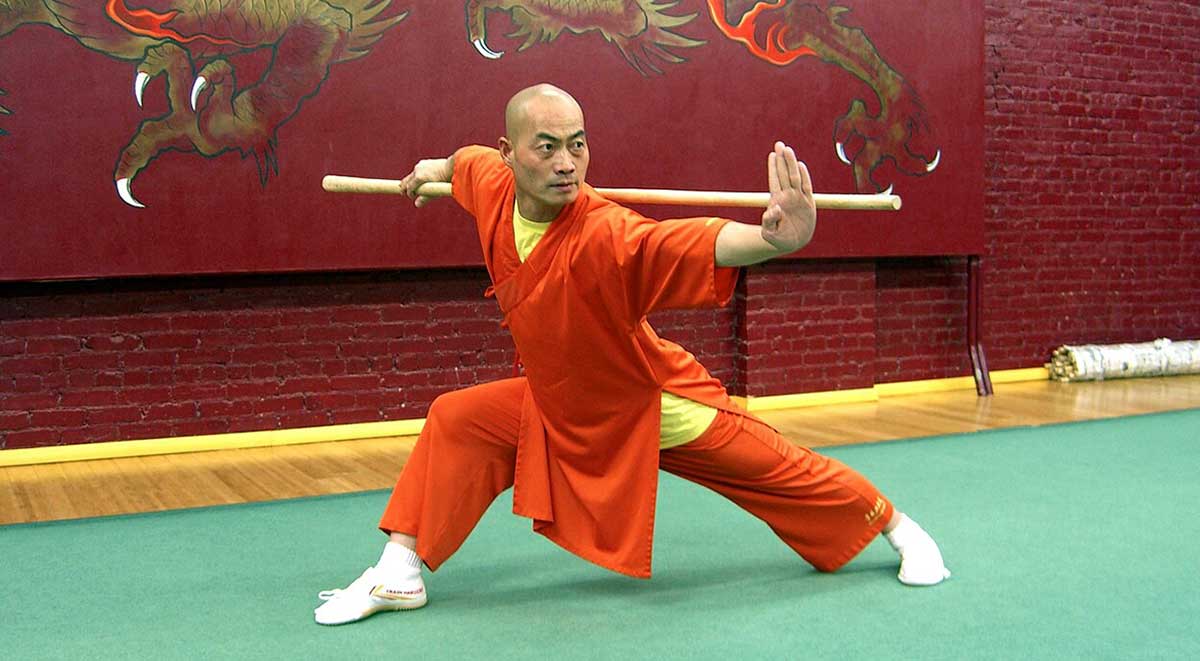
The use of staves in Chinese mythology goes back millennia. There is historical documentation of a conflict involving Shaolin monks in Baigu (Cypress Valley) in 621 AD, during which they would have used staves as their weapons. Buddhist beliefs prohibited the use of a blade because it was seen as a weapon and a way to take life, but the use of a staff as a tool or defensive weapon was acceptable.
In China, some of the most common woods used for staff weapons are oak and waxwood, the latter of which is extremely flexible and lightweight. If you’ve ever watched modern wushu staff exhibitions online, you will know how fast they can move through the air, almost too fast to see.
Surviving bronze spearheads, which are dated back to the Shang Dynasty in roughly the 13th century BC, indicate the early adoption of staff weapons in China, in the form of spears. The spear, the Shaolin staff, the jian, and dao swords are the four foundational weapons of Chinese martial arts. The commonly accepted point at which Chinese smiths learned to forge iron was the 8th century BC, by way of Scythian nomads.
Staff Weapons in Japan and Okinawa
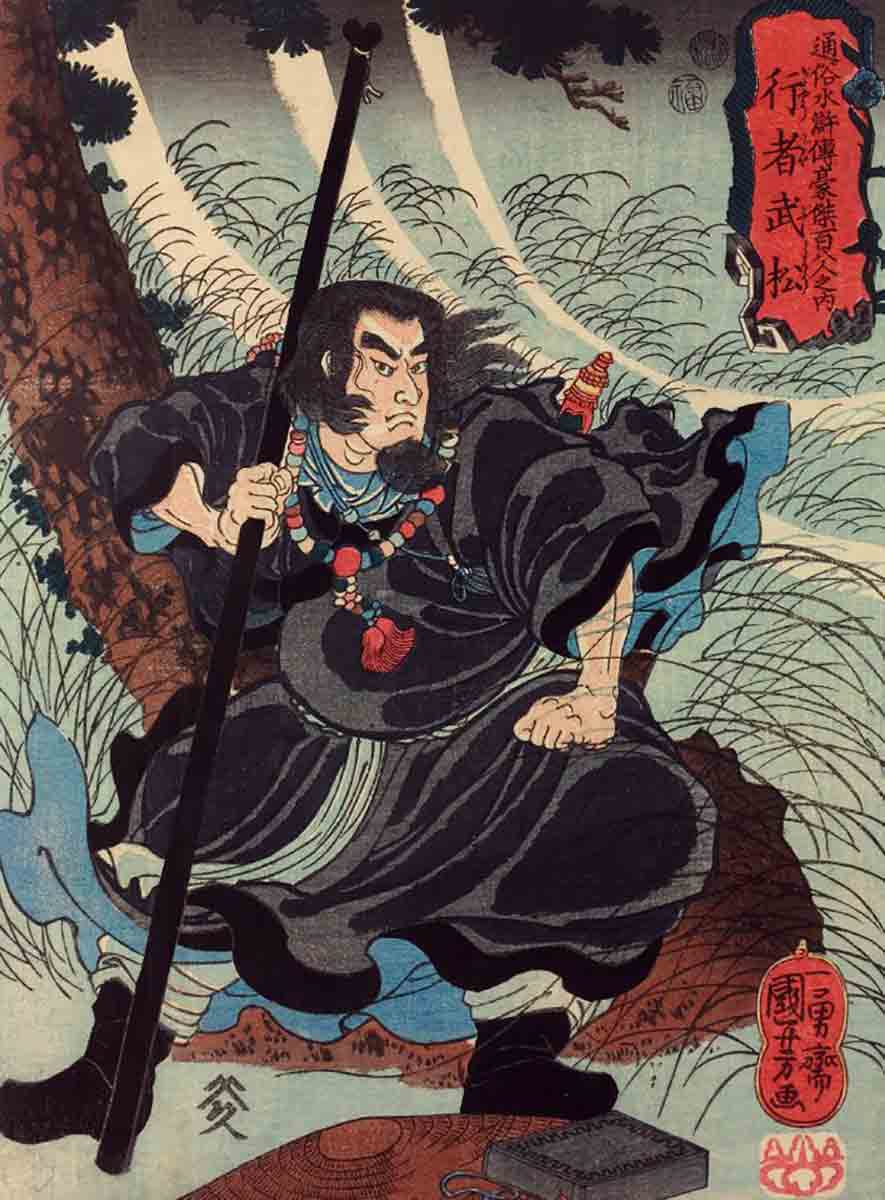
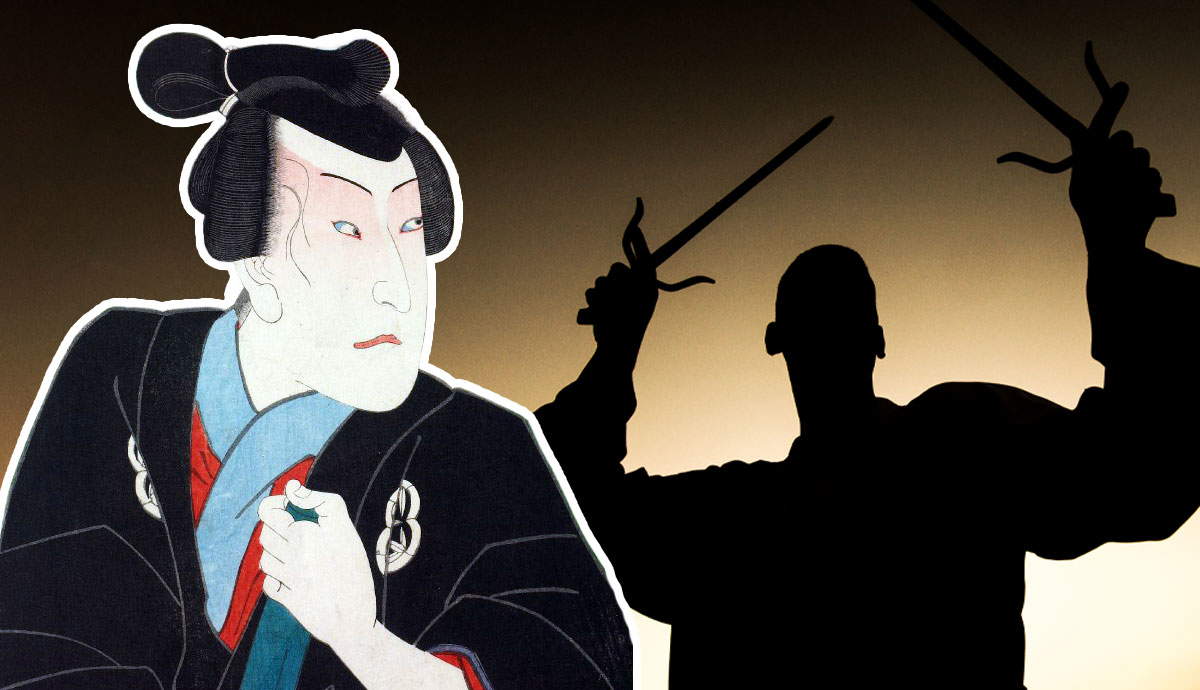
Starting in the 6th century AD, Chinese fashion, architecture, and other aspects of its culture began migrating to Japan through trade missions and traveling Buddhist missionaries. This included martial arts such as staff styles practiced by the Shaolin. However, the Japanese adapted them to their own needs, specifically the grip. Where many Chinese staff techniques have the staff gripped like a spear, Japanese styles frequently employ a centered grip.
The classic Shaolin waxwood staff comes in lengths between two and three meters (six to ten feet). As regards the staff, the Japanese shortened the length to two meters (six feet) roughly for the bo. A shorter version, the jo, was about a meter long. Most wooden staff weapons in Japan are made of white oak (shirogashi), red oak (akagashi), or aged hollow ironwood (sunuke). Some other species include ebony, paulownia, and beech.
Bamboo and rattan made light and flexible staves that were used for practice or training, while the hardwood varieties were common bases for more conventional battlefield weapons like the yari and naginata.
Staffs in Medieval Europe
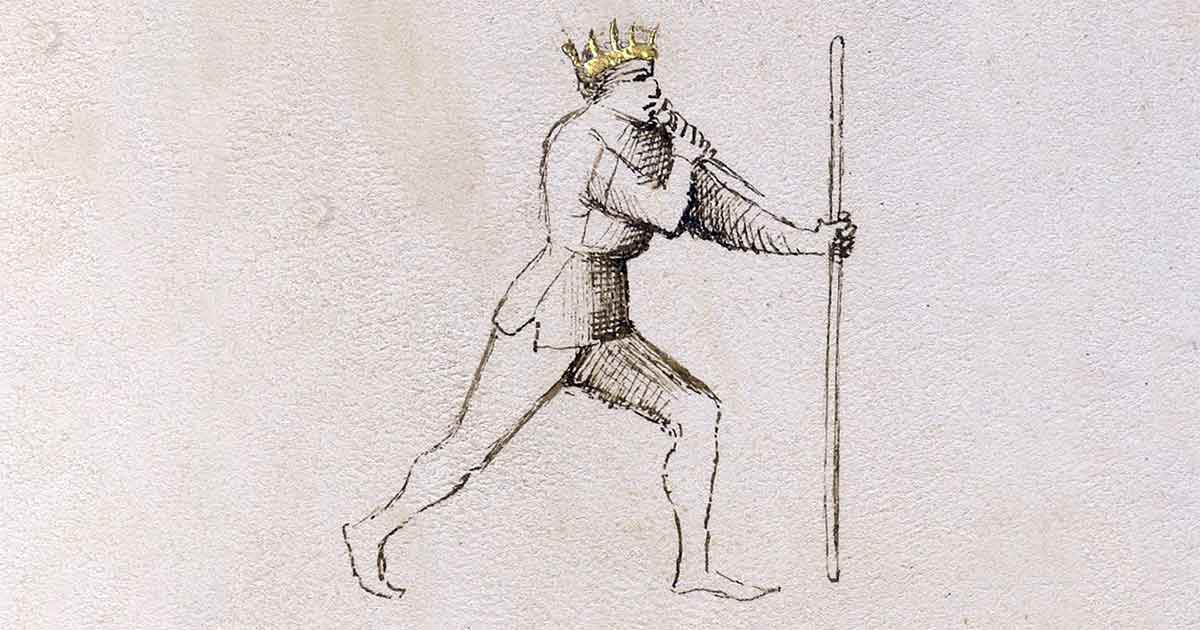
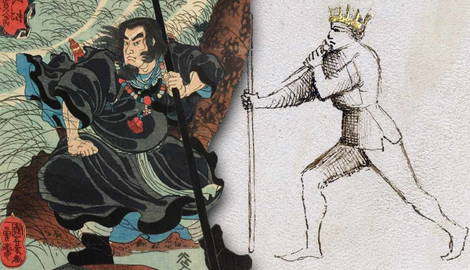
The staff also holds a venerated place in European weapons combat systems. Some of the earliest mentions of it come from fighting manuals written by weapon masters of the period. The earliest of these to have been recovered thus far is Fiore’s Flower of Battle from the early 1400s. From a literary/folklore standpoint, perhaps the most well-known use of the quarterstaff is the duel between Robin Hood and his right-hand man, Little John. It appears in the ballad Robin Hood and Little John, written in the late 17th century, and would possibly have been mentioned in the earlier oral recitals.
In England, the quarterstaff was for a time considered the national weapon. George Silver, in his Paradoxes of Defence and Brief Instructions on Paradoxes of Defence, spoke highly of the quarterstaff as a superior weapon to a sword in many cases. He claimed this for the reasons we’ve mentioned and due to a general dislike of the rapier, which was the prevalent sword at the time. There was also likely an element of nationalism.
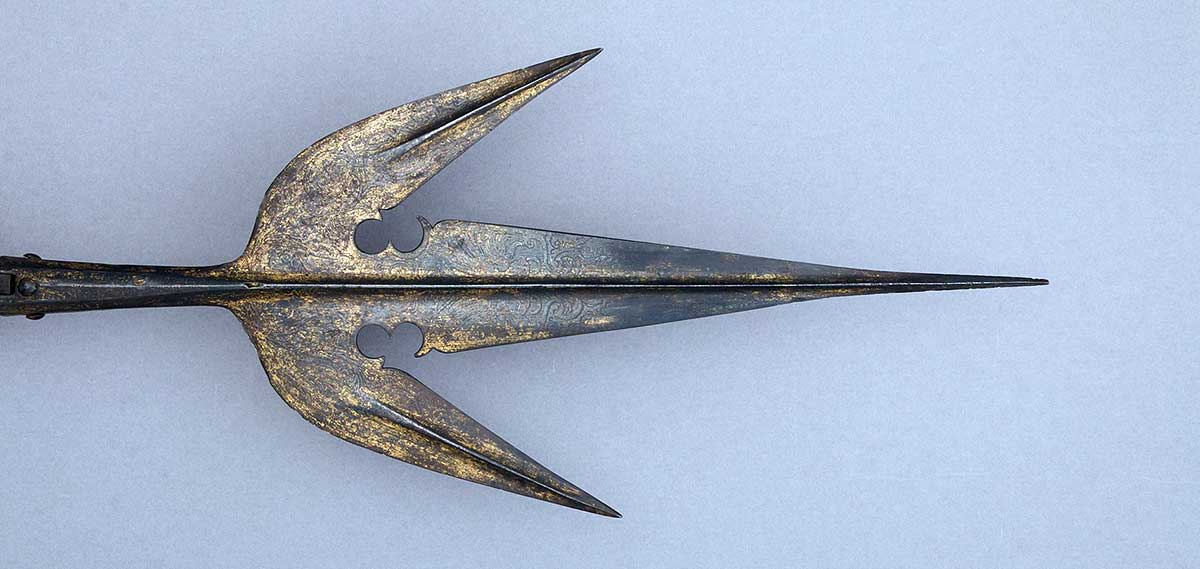
As in other military arsenals of the time, the staff could be and was adapted for combat. Weapons such as the English billhook, the pike, and spears all drew from and influenced the fighting system of the quarterstaff.
Variants and Adaptations
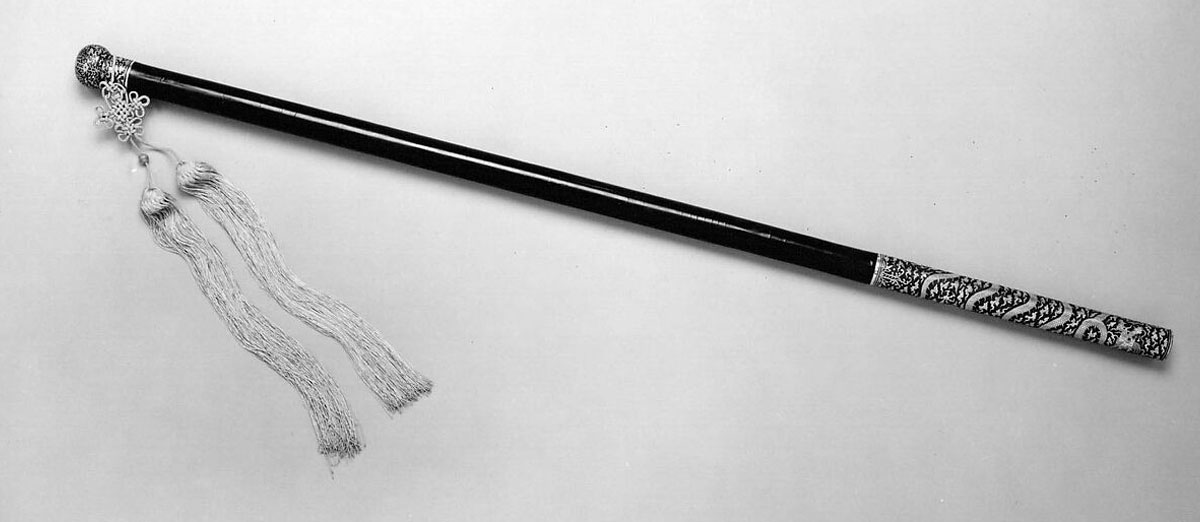
The simplest variety of the staff is a wooden stick, but as human technology developed, we began introducing other materials and designs. Wood can split at inopportune times, such as parrying another weapon. To lessen the chance of this happening, sometimes iron rings or similar could be added as reinforcement.
People practice with staves today in competitions, in traditional martial arts schools, or just by playing with a branch they have picked up in the woods, but there is obviously danger in training with wood because it does not flex. Fortunately, material science has progressed, allowing some training staves to be made out of synthetic materials like polypropylene. These are intended to mimic the feel and weight of wood without the attendant danger of splinters and breaking.
Some self-defense product companies have been known to market telescoping staves, able to compress to the length of a fist. Such products have the weakness of needing to have a hollow interior to accommodate the extending sections, and they are fragile.
The staff is humanity’s oldest weapon, based on the examples we’ve listed, and people still learn to use it for fitness, self-defense, and just for fun.