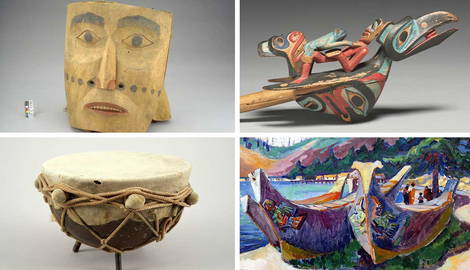
First Nation artifacts are more than museum pieces. Bought or (too often) stolen by non-Indigenous collectors, transformation masks, water drums, wampum belts, totem poles, jewelry, burial items, and clothing open a window into the culture and history of First Nations across North America. To the Indigenous communities that created them, they have always been and continue to be an integral part of their past, a historical record that helps them maintain, nourish, and reclaim their relationship with their traditional knowledge and their ancestors, outside the sphere of colonialism.
1. Transformation Masks
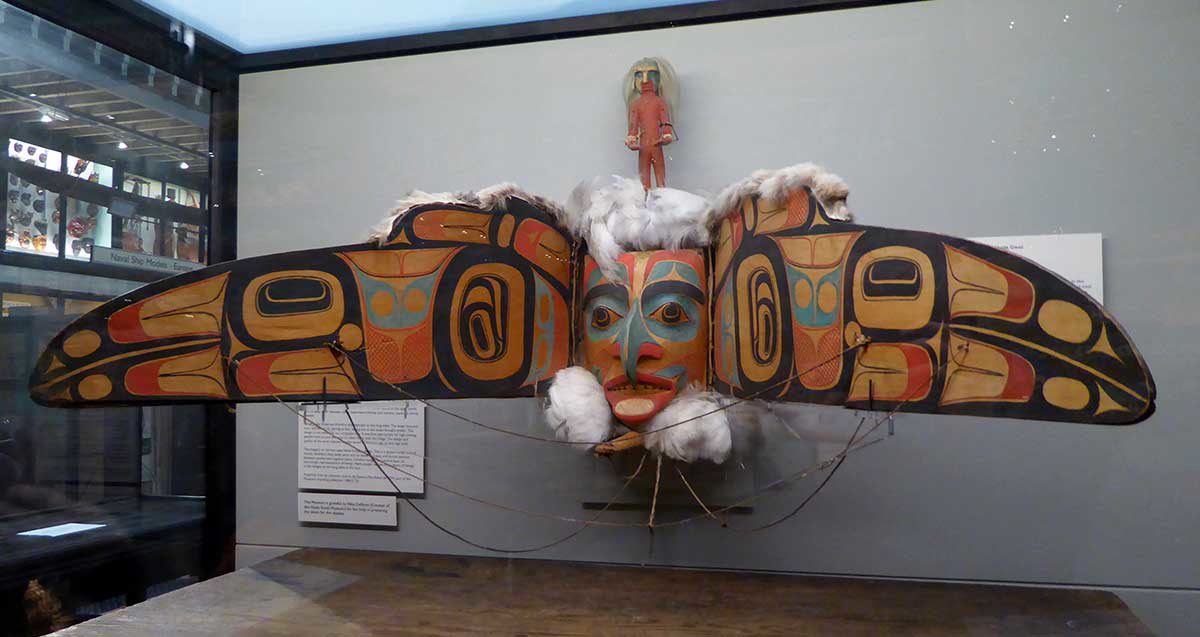
The Kwakwa̱ka̱ʼwakw, Nuxalk, Tlingit, Coast Salish, and Haida, the Custodians of the Northwest Coast in present-day Canada, were skilled artists and master carvers, as well as feared warriors, expert canoe builders, and sailors. During potlatches and winter dances, dancers and performers would wear complex and colorful transformation masks, on top of a cloak made of red cedar bark. Far from being museum pieces frozen in time, before being acquired by non-Indigenous collectors, transformation masks were performance objects meant to elicit a reaction in the viewer.
By pulling a string, the mask would open to reveal a carved human face hidden inside it. The Whale Transformation Mask, for instance, today at the Metropolitan Museum of Art, has cords that when pulled would animate the object, giving the impression that the animal was suddenly swimming away. The whale’s tail would start moving up and down, the dorsal fin would shake slightly, and its large mouth would pop open.
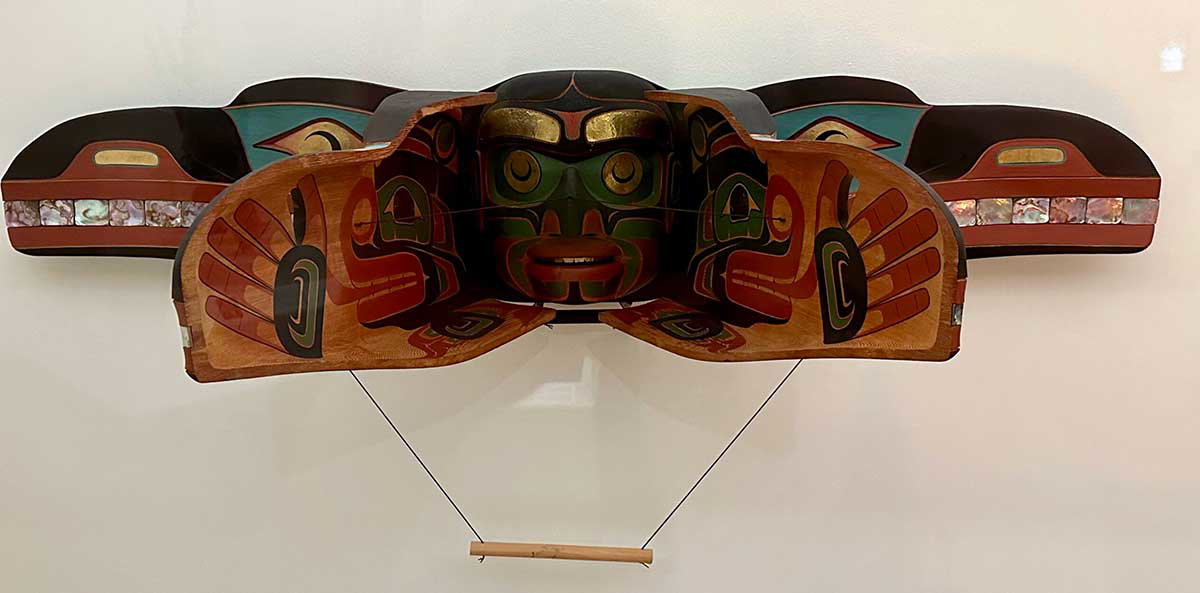
In the case of the famous Thunderbird Mask, today housed in the Brooklyn Museum, as soon as the dancer pulled the strings, the eagle’s face and beak would split open and expand to reveal an inner human face flanked on both sides by a red, black, and white double-headed snake called sisuitl. When worn during ceremonies, the mask had a red cedar ruff surrounding it. For spectators witnessing the bottom of the mask’s elongated beak pop open downward, the impression was probably that of a bird spreading its wings and about to fly away.
Transformation masks testify to the close relationship between Indigenous artists and the bountiful lands where they lived. Most masks, usually bilaterally symmetrical, were made of cedar wood and red cedar bark, common on the Northwest Coast and used to build houses and totem poles. They were painted red, blue, black, and green, with colors obtained from plants and minerals.
2. Instruments: Water Drums and Wooden Rattles
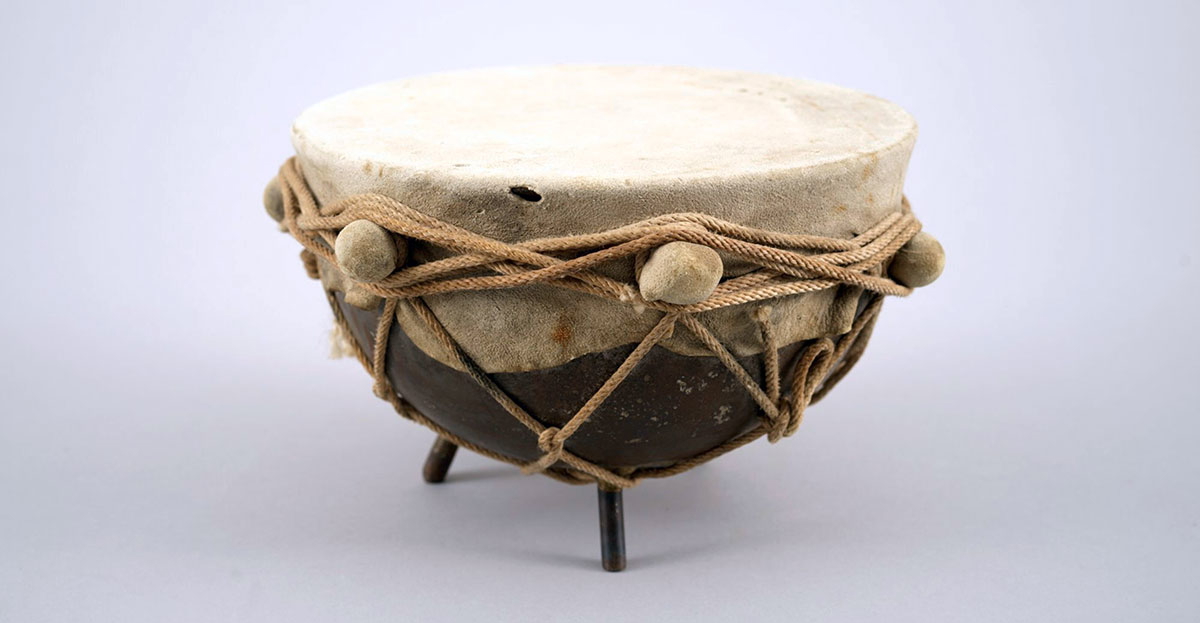
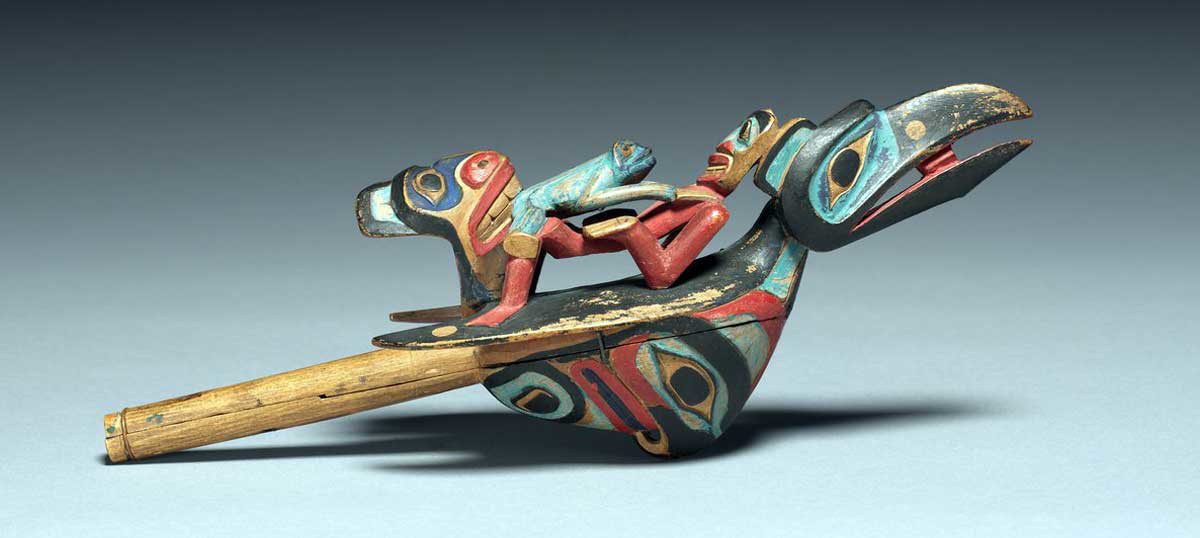
The syncopated rhythms and drumbeats created by water drums and wooden rattles resonated loudly during both potlatches and powwows, two of the most widely documented ceremonies among Indigenous peoples in North America, particularly in the Pacific Northwest. Communities held potlatch ceremonies to commemorate important events, such as victories, marriages, births, and deaths. These ceremonies involved several days of feasting, singing, and dancing, during which wealth was redistributed through a gift-giving ceremony.
The community’s chiefs and high-ranking individuals shared part of the goods they had accumulated over time, from canoes to firearms and blankets. Potlatches (from the Chinook word Patshatl, “to give”) have always been central to First Nations’ connection with their past and their future, though practices may vary among the different nations living on the Northwest Coast and the Dene people.
The musicians performing at the powwow are known as Drums (or Drum Groups), and they usually position themselves at the center of the powwow grounds. This allows the sound of their hand-made drums to resonate throughout the dance area, reaching as many people as possible. Typically, three or more drum groups take turns performing and singing the songs they have selected.
Each First Nation may have different singing styles, drumming patterns, dances, and types of drums. Among the Kwakwa̱ka̱ʼwakw, for instance, drums were often decorated with raven, wolf, and halibut designs. The Ojibwe regard their drums as living entities, spiritual messengers that connect the world of the living with the world of the spirits.
Drums, which are sometimes covered with blankets and cloth, are passed down from generation to generation and treated with great respect, following complex rituals and specific codes of conduct.
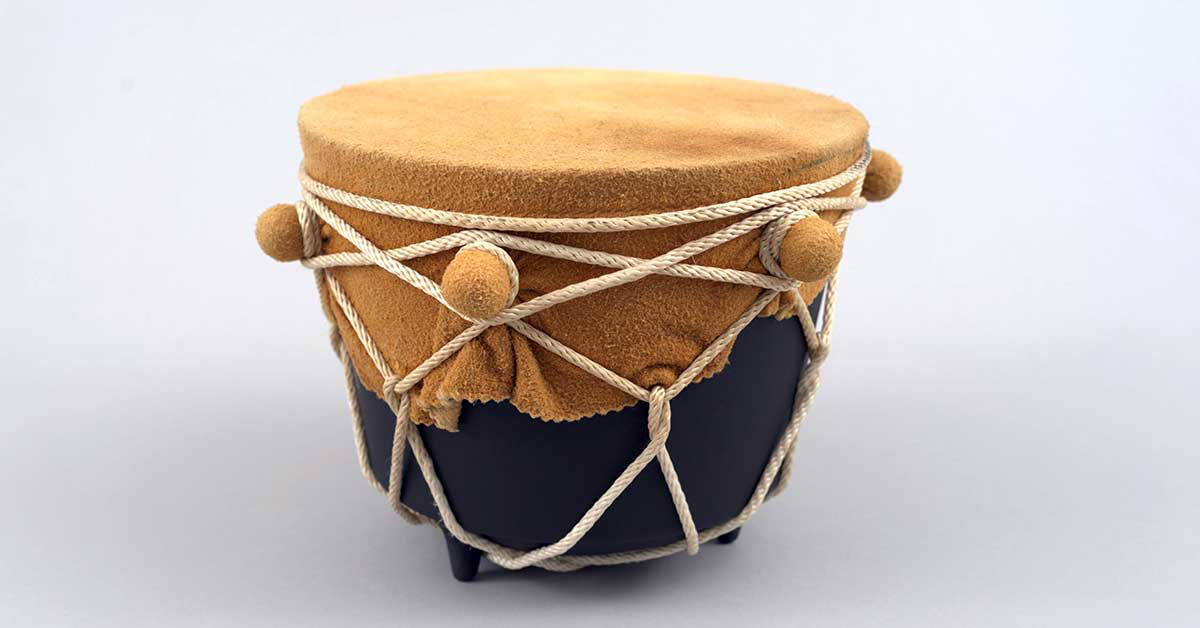
Among the Wendat-Huron of Wendake, in Québec, people believe that “the drum makes the sound of a heartbeat” and “represents the heartbeat of our Mother-Earth that all dancers honor in every dance.” Water drums, typical of the Wendat people, were usually made from birch wood, with the inside filled with water. Some drums were small, measuring about eight inches across so that the performer could hold them with one hand and tap them with a stick. These drums (ya’ndahkwa’) were used alongside rattles (yastawen’cha’), typically made from bark and turtle shells, with one singer setting the rhythm with their drum and the singer accompanying them with the rattles.
In 1884, as part of a campaign to erase Indigenous cultures and deprive them of their means to pass on their stories and traditions, the Canadian government banned the potlatch. Canadian authorities confiscated many of the ceremonial items used during the Potlatches, from water drums to transformation masks, from headdresses to costumes. The ban was not lifted until 1951. For seventy years, First Nations across the Canadian Northwest have continued to hold them in secret. Among these nations were the Kwakwa̱ka̱ʼwakw (pronounced kwok-wok-ya-wokw), also known as Kwakiutl, or “Kwak-wala-speaking peoples,” whose traditional territory stretches across northern Vancouver Island, including the Discovery Islands. Their language, the Kwak-wala (or Kwakiutl), is one of the seven languages of the Wakashan family.
On December 15, 1921, the Canadian police interrupted a large Potlatch in ʼMimkwa̱mlis (Memkumlis), also known as Village Island, in the Johnstone Strait region on the Northwest Coast of British Columbia. The Potlatch was hosted by Kwakwa̱ka̱ʼwakw Chief Dan Cranmer. Some 300 people were attending.
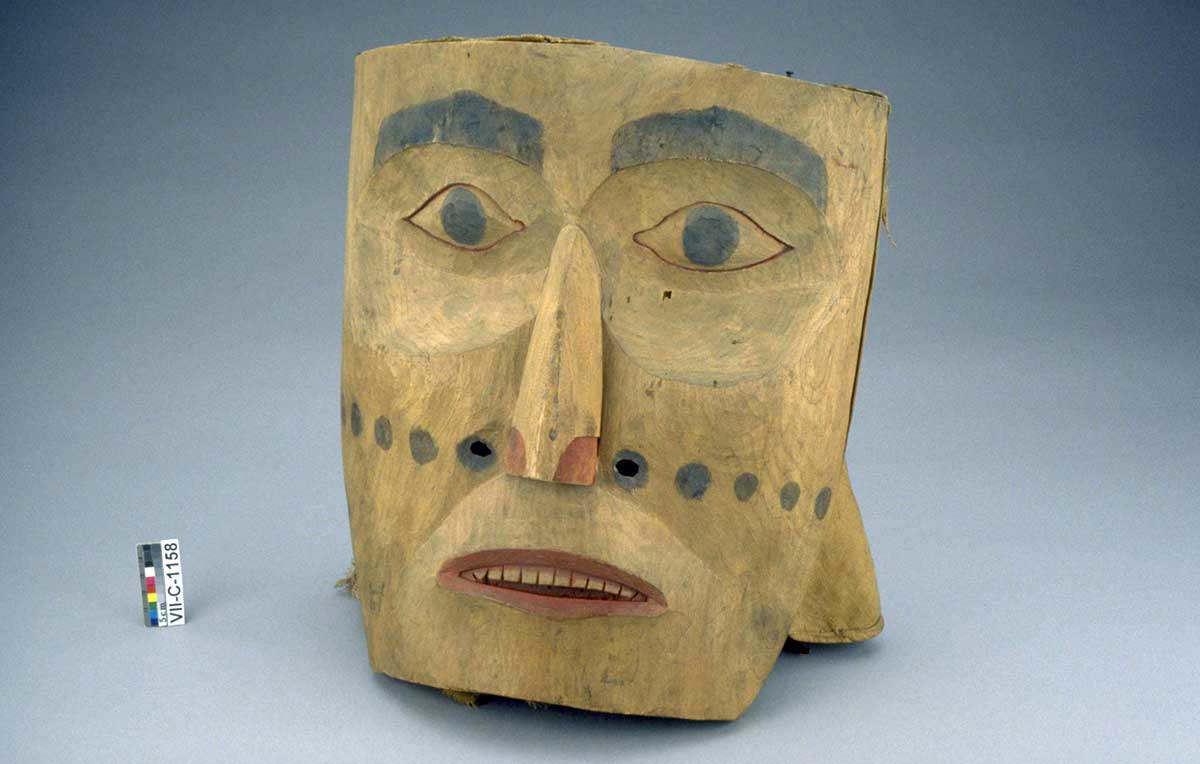
The police arrested and charged many of the participants. About 600 ceremonial objects were confiscated and subsequently sold to private collectors, eventually ending up in museums in Ottawa, Toronto, New York, and the United Kingdom, particularly in the British Museum.
Starting in the 1970s, some of the confiscated objects, including various ceremonial masks, have been returned to their rightful owners and are now housed at the U’mista Cultural Centre in British Columbia, an important cultural facility dedicated to ensuring the survival of Kwakwa̱ka̱ʼwakw culture.
As we read on the U’mista Cultural Centre website, “We dance to celebrate life, to show we are grateful for all our treasures. We must dance to show our history since our history is always passed on in songs and dances. It is very important to tell the stories in exactly the same way. We put our stories into songs and into dances so they will not change. They will be told the same way every time. We use theatre and impressive masks to tell our ancestor’s adventures so the people witnessing the dance will remember it.”
3. Wampum Belts
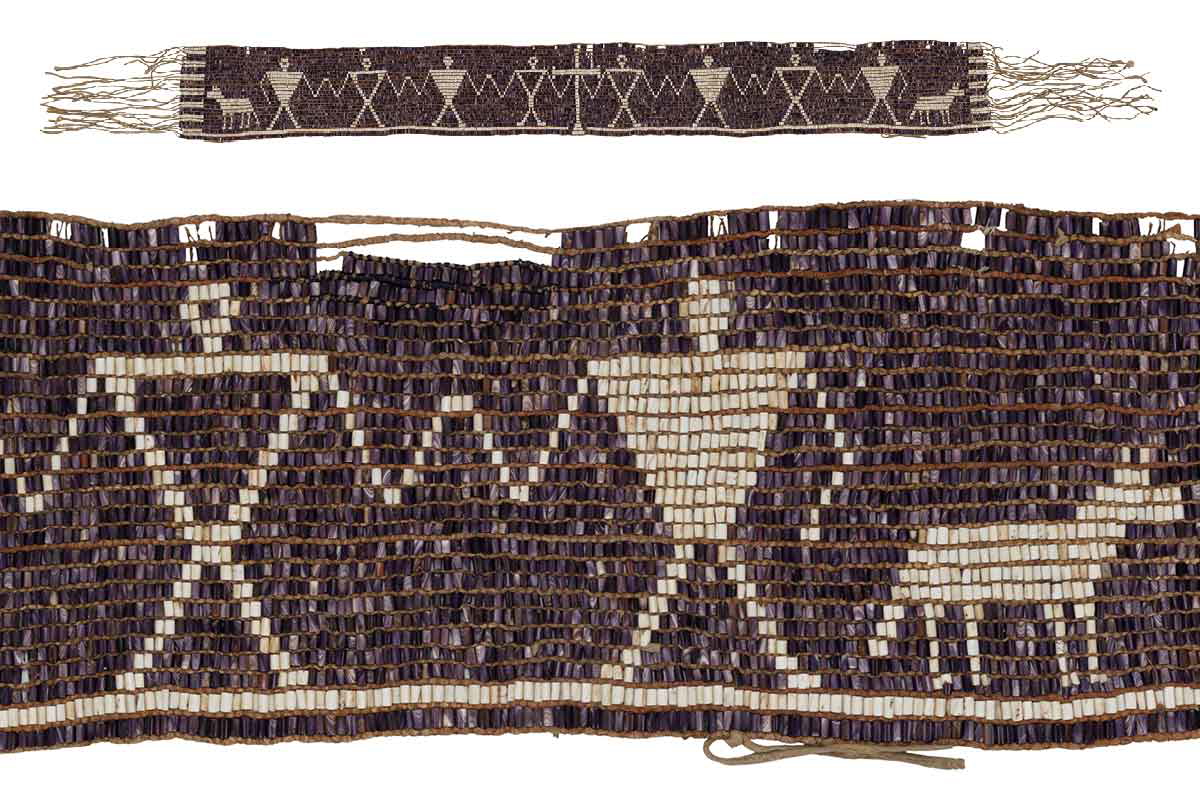
While potlatches were common among the First Nations of the Pacific Northwest, wampum (and wampum belts) were used primarily by nations in the Eastern Woodlands. This vast region stretches from the west of the Great Lakes to the Maritimes, including present-day Ontario, part of Québec, the Maritime provinces in the east, as well as Illinois and North Carolina in the United States. The term wampum is the shortened form of wampumpeag, which is the Narragansett word for “white strings of shell beads.”
Wampum are tubular beads made from coast seashells that First Nations in eastern and maritime Canada used to collect along the coast. Women were typically responsible for crafting wampum belts. Female artisans would pierce the shells with a wooden pump drill, roll them on a grinding stone to make them as smooth as possible, and finally thread or weave them onto strings made of sinew, fibers, milkweed bast, or deer hide.
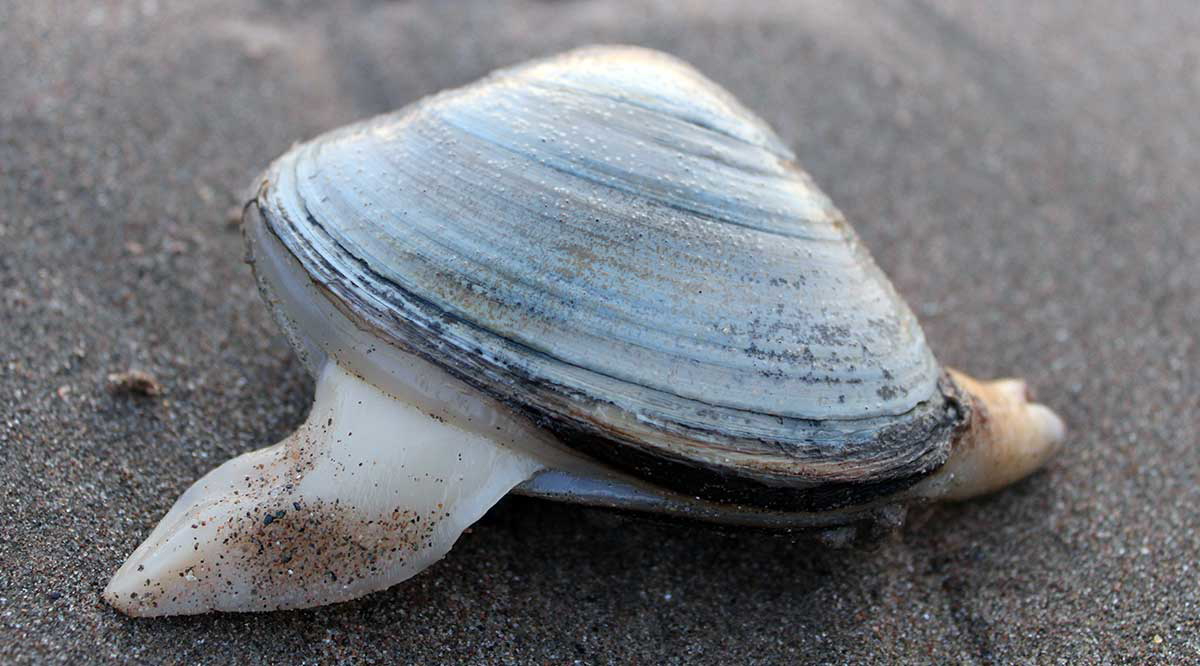
White wampum was crafted from the inner spiral of the North Atlantic channeled whelk shell, while the white and purple variety was manufactured from the quahog (also known as hard clam or Mercenaria mercenaria), a mollusk native to the eastern shores of North and Central America.
Among the people of the Haudenosaunee Confederacy, purple wampum was used for political matters, while white wampum signified a peace agreement. Coastal communities would then trade wampum beads with nations living in the interior, particularly those belonging to the Haudenosaunee, in exchange for corn, beans, squash, and furs.
Indigenous communities exchanged wampum belts on several occasions, such as to confirm or propose marriages, atone for murder or kidnapping, invite other nations to council meetings, and confirm the role and position of each clan (and chief) within a confederation, as is the case for the Haudenosaunee. Many communities appointed wampum keepers, individuals responsible for safeguarding the belts and passing on their historical significance to future generations.
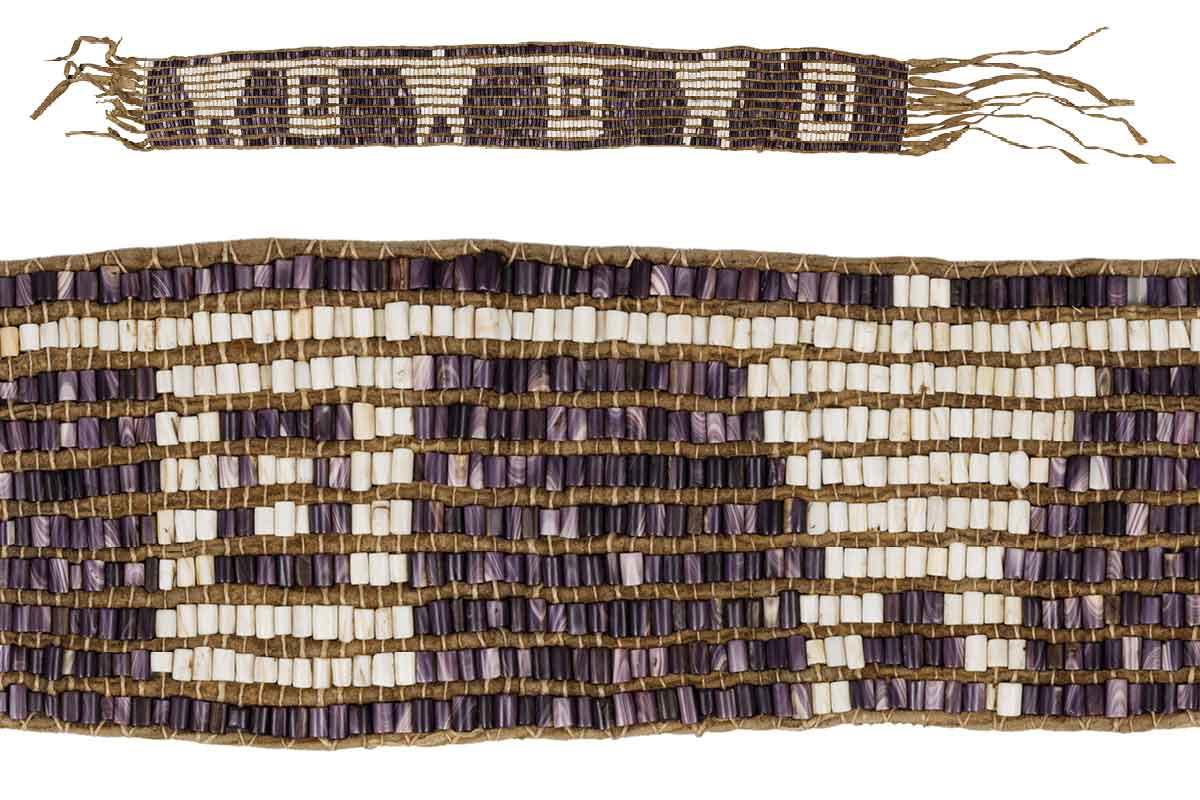
For example, the Onondaga, one of the six nations making up the Haudenosaunee (Iroquois) Confederacy, served as the Wampum Keepers. They were responsible for taking care of the belts and keeping the Confederacy’s wampum records. As we read on the Onondaga Nation website, the shell of the wampum “is thought of as a living record of the Haudenosaunee. The speaker puts the words of the agreement into the wampum as the strings or belts are woven together. Each speaker thereafter uses the wampum to remember the initial agreement and the history that has happened to date. To us, the belts are our living history.”
With the arrival of Europeans in the 18th century, wampum belts became crucial objects in treaty-making. From the Hiawatha Belt to the Mohawk Gaswéñdah (or Two Row Wampum Belt) and the 1794 George Washington Belt, the latter documenting the treaty and peace covenant between the Iroquois and George Washington, wampum belts continue to serve as a powerful reminder of cooperation among First Nations and between First Nations and European newcomers.
4. Canoes
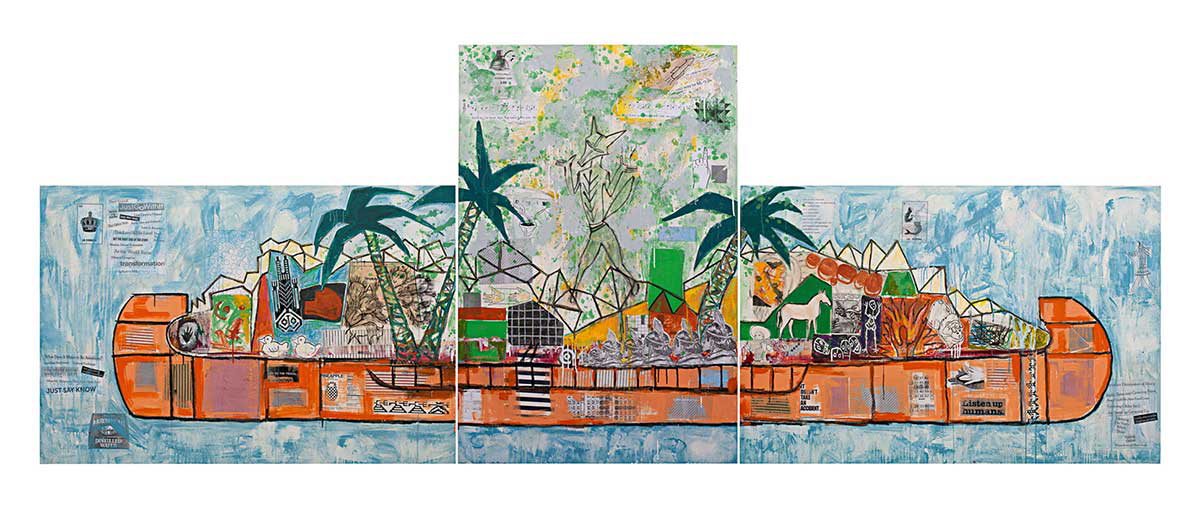
In the North American cultural landscape, canoes are “stolen” symbols. Long before the arrival of the British and the French, Indigenous peoples from across North America used canoes for travel, fishing, hunting, and trade. The lands of the Ojibwe, Odawa, Mississauga, Bodéwadmi, Wendat-Huron, and Tionontati-Petun in the Eastern Woodlands are crisscrossed by a vast network of shallow streams, rivulets, ponds, great lakes, and large rivers, such as the St. Lawrence.
The birchbark canoe was the perfect vessel for navigating inland Canada. Being smooth, waterproof, resistant, and easily available, birchbark was the ideal for creating light, and maneuverable, but also strong and durable canoes. Indigenous women were responsible for manufacturing the seams that served to tie together the canoe’s joints. The seams were usually made from spruce and white pine roots and then waterproofed with hot pine resin.
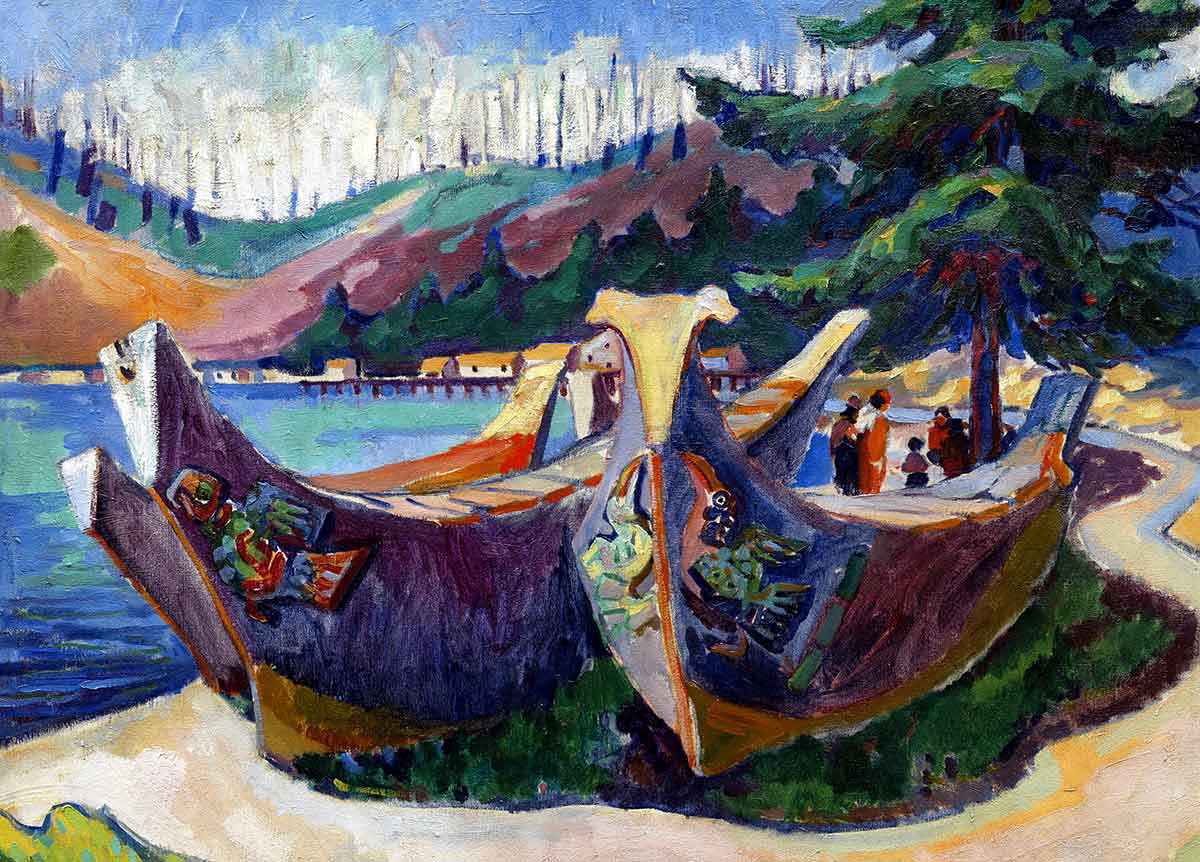
The canoe frames were typically made of cedar, which had previously been soaked in water to make it pliable enough to adhere to the shape of the vessel. Once crafted, the frames were painted and decorated. The British and the French quickly adopted birchbark canoes for use in the fur trade and to transport heavy loads through North America.
In the Pacific Northwest and the Plains, Indigenous groups typically used another type of canoe, the so-called dugout canoe. Dugout canoes, common among the Dakota—especially those living in the Minnesota River Valley—were made by hollowing out the trunks of red cedar, soft maple, cottonwood, and basswood trees. With the help of their assistants, master canoe makers carefully selected the right tree trunks, felled them, and stripped them of their branches, bark, and sapwood. The trunks were then cut, shaped, and hollowed out using controlled fires or modern tools such as pickaxes and chisels. Up to three canoes could be manufactured from one single tree, depending on the size of the trunk.
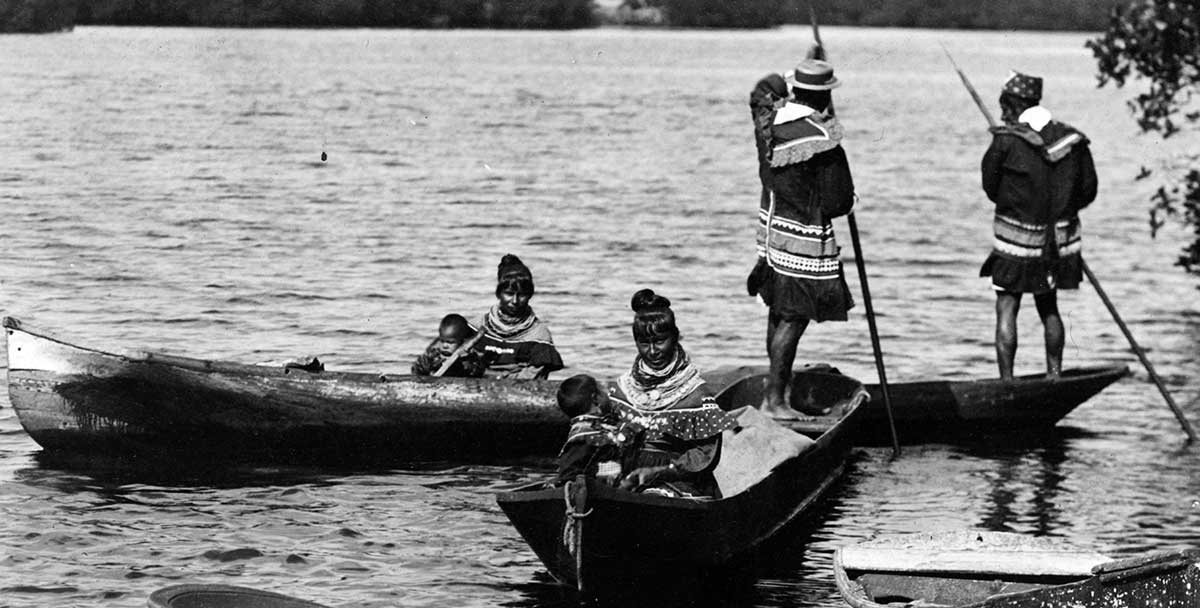
Among the Nuu-chah-nulth, the Custodians of western Vancouver Island, as well as the Quileute in present-day Washington and the Macah on the Olympic Peninsula, dugout canoes typically had a V shape, a relatively flat bottom, and a projecting prow, sculpted to resemble the snout of an animal—usually a dog or a deer. Between the animal’s ears was a groove to support harpoon shafts, which was essential during hunting expeditions. This design is known as the “West Coast Salish” style.
First Nations living further north along the coast or inland in present-day British Columbia, such as the Haida, Tlingit, Tsimshian, Kwakwa̱ka̱ʼwakw, Nuxalk, and Coast Salish, often decorated the canoe’s rounded bottom with colorful designs. The extended prows of these canoes usually featured an almost vertical cutwater, designed to deflect waves and facilitate smooth travel through the Pacific Ocean. This specific design is known as the “Northern Canoe” style.
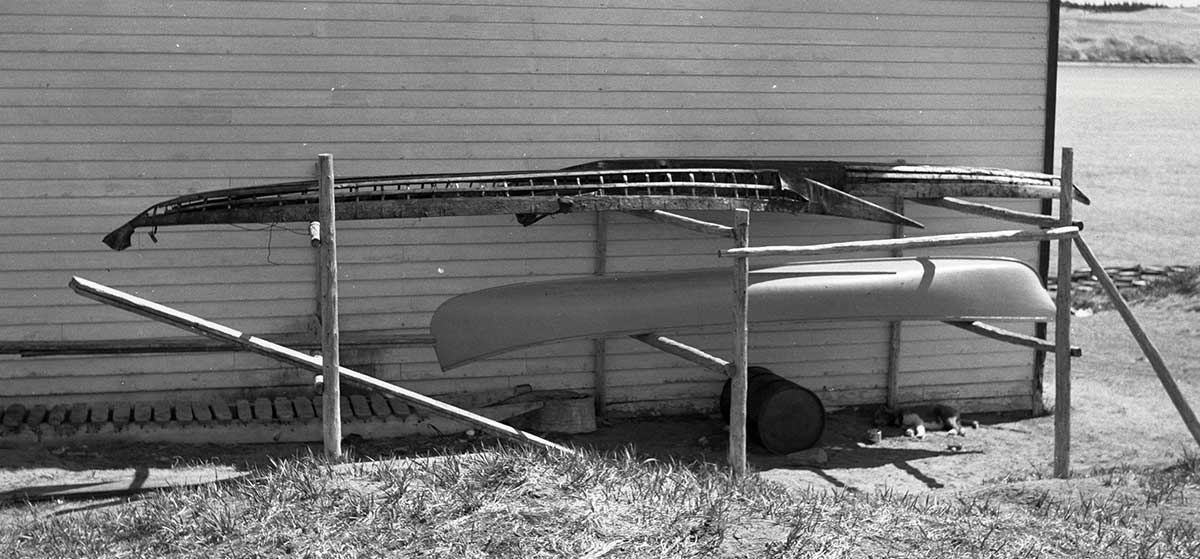
In Alaska and the Canadian Arctic, the Inuit have used yet another type of canoe, the so-called Aleut Sea Kayak, for at least 2,000 years. Way smaller than traditional canoes, these swift, and silent vessels could carry up to three people (though most held only one) and were primarily used for hunting polar bears, sea mammals, caribou, and waterfowl. The kayaks’ frames were typically covered with seal and caribou skins. The Inuit also used umiaks, larger vessels that could hold more than 20 people along with trading goods. Unlike kayaks, which had a covered deck with an opening for the kayaker’s upper body, umiaks were entirely open.
Today, Indigenous artists from present-day Canada and the United States are reclaiming canoes as symbols of their culture and examples of their exceptional carving skills. With their works, they remind the non-Indigenous population that transformation masks, wampum belts, kayaks, umiaks, and canoes should not merely be viewed as museum artifacts “frozen” in time, but as living examples of the unique relationship based on respect and custodianship that First Nations across North America had (and continue to have) with their lands.