
Gillian Rose, best known for her philosophical memoir Love’s Work (1995), was a philosopher specializing primarily in the work of G.W.F. Hegel and Theodor Adorno. One of the important threads running through her work, from Love’s Work to Dialectic of Nihilism (1984) to Mourning Becomes the Law (1996), is her critique of post-structuralist thought and its approach to metaphysics. Rose thinks philosophy’s attempts to escape traditional questions and methods are misguided and deeply flawed.
Gillian Rose’s Mourning Becomes the Law

Rose advocates for a philosophy willing to grapple with metaphysical problems rather than trying (and failing) to dodge or dissolve them. One result is her skepticism towards any suggestion that philosophy is a misguided or impossible practice.
The first and fifth chapters of Mourning Becomes the Law address the idea that the horrors of the twentieth century are a logical endpoint to reason. Rose attempts to salvage philosophical reason from its characterization as ‘instrumental reason’ and to demonstrate the necessity of philosophical reason, and above all metaphysics, to the domain of ethics proper. Rose declares:
I resist […] the super-eminence conferred on ‘the Holocaust’ as the logical outcome of Western metaphysical reason.
-Rose, Mourning Becomes the Law, 1996
For Rose, postmodernism’s effort to disavow and circumvent the use of reason leaves ethics adrift; she repeatedly refers to post-modernism as “despairing rationalism without reason.” Centering her critique on Foucault and Derrida, Rose attempts to demonstrate the failure of post-structuralist theory to generate meaningful alternatives to the methodologies they undermine and their consequent failure to produce better ethics than the ones they dismiss as unfortunately burdened with metaphysics.
Representation

Rose draws a parallel between the critique of philosophical reason and the critique of representation, whether political, artistic, or philosophical. For Rose, these critiques all rely on a false dichotomy between naïve faith in veridical representation and irony. Linking these critiques with postmodernism’s skepticism around metaphysics, Rose advances a “critique of that critique” and attempts to:
“…open up explorations of our mutual entanglements in power in a way which cannot be pursued when intellectual energy is devoted to the resistance to metaphysics, and, as a corollary, to one-dimensional conceptualisations of power.”
Rose begins the book with an analysis of the terms post-structuralist thought couches its critiques. She characterizes the post-structuralist position as an indictment of the values of Athens and a yearning for the ‘New Jerusalem.’ Athens represents the domain of reason and ethics produced by philosophical and political discourse; it is the figurative conference hall of the Western philosophical tradition.

Rose diagnoses an intense longing to do away with Athens in her intellectual and cultural moments. This ‘New Jerusalem,’ Rose insists, is both imaginary in its own right, having “been developed from a dangerously distorted and idealized presentation of Judaism as the sublime other of modernity” and championed in response to the false image of rationalist modernity. (Rose, Mourning Becomes the Law)
The New Jerusalem’s heterotopic character is lauded as an escape from Hellenistic reason and its dire telos. Rose describes at length the kinds of self-immolating tracts written by philosophers, sociologists, and architectural historians; in each case, the group identifies its discipline as casually entangled with the Holocaust and with the most violent excesses of technological modernity. In each case, otherness is embraced as a panacea, a corrective to the homogenization and purity latent in the discursive ideal of ancient Athens.
Adorno and Dialectic of Enlightenment

It is curious that Rose only once mentions Adorno and Horkheimer’s Dialectic of Enlightenment in passing. However, Rose’s inclusion of Adorno and Horkheimer (as a pair, pointedly) warrants further investigation. The text, or at least one popular reading, is a rhetorical weight upon Rose’s book, with her assessment of the abandonment of Athens as a philosophical and civil ideal hinging upon the notion that ‘enlightenment is domination.’
Dialectic of Enlightenment traces the development of ‘instrumental’ or ‘technological’ reason from the Enlightenment to the atrocities of the twentieth century. At first glance, this seems precisely the account Rose is trying to discredit. Adorno and Horkheimer frame twentieth-century fascism and its principles as substantially continuous with those of the Enlightenment—as a brutal expression of scientific reason. Crucially, they attempt to demonstrate that the horrors of the twentieth century and Nazism should not be treated as anomalous or strictly opposed to the liberating progress of enlightened (and enlightenment) thought but rather as intrinsic to that ‘progress’: as a far-reaching and necessary consequence of principles aimed at human advancement and mastery.
Further, the pair trace the tendency of rationalism to flow into regressive and destructive irrationalism back beyond the Enlightenment to Ancient Greece. However, the book focuses primarily on post-Enlightenment thought and the implacable march of technological development rather than on the tradition of contemplative reason that follows Greek philosophy. Adorno and Horkheimer ultimately illustrate Rose’s case well.
Their book, Rose says, oft-cited as a critique of Western rationalism, is an analysis of the tendency of a certain kind of narrow-minded, instrumental reason towards a destructive irrationality. Rose takes the slippage in reading Dialectic of Enlightenment as a critique of philosophical reason at large to be characteristic of post-structuralism’s haphazard conflation of reason and tyranny.
Dialectic of Nihilism
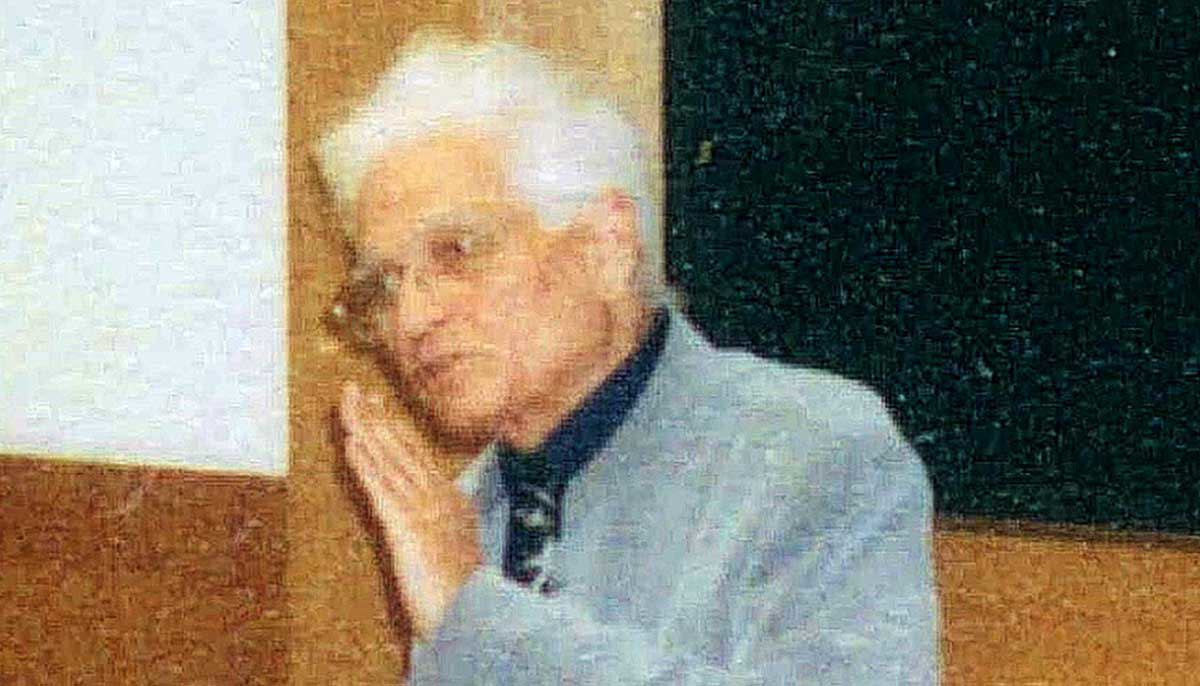
Rose’s attempts to salvage the Western philosophical tradition from the criticisms of poststructuralist thinkers are not limited to Mourning Becomes the Law. Her book Dialectic of Nihilism is a sustained defense of metaphysics against the case made for deconstruction. Rose is highly critical of Derrida and his legacy, a critique spanning several of her book-length works, as well as articles including ‘Of Derrida’s Spirit.’ Rose contends that poststructuralist attempts to distance themselves from metaphysics are at once evasions—rather than dissolutions—of knotty philosophical problems and self-defeating, unable to extricate themselves from the methods and presumptions they claim to undermine.
Ultimately, Rose follows this critique of Foucault and Derrida to an indictment of the nihilism she sees as proceeding from it. As Rose would have it, both Foucault and Derrida take their cues from a (mis)reading of Nietzsche. Both try to dissolve truth and reason, or to peel back their respective skins to reveal the contingency beneath. In Foucault’s case, this dissolution-revelation proceeds by anchoring knowledge to power and truth, thereby influencing the historical evolution and vicissitudes of power and coercion. In Rose’s telling, Derrida performs a similar maneuver concerning language. Pinning the ‘linguistic turn’ primarily on Derridean deconstruction, Rose argues that Derrida’s avowed interest in the surface of language—rather than its purported referents—fails to go anywhere near as far as he hopes it will.
Gillian Rose, Post-Structuralism, and Nietzsche
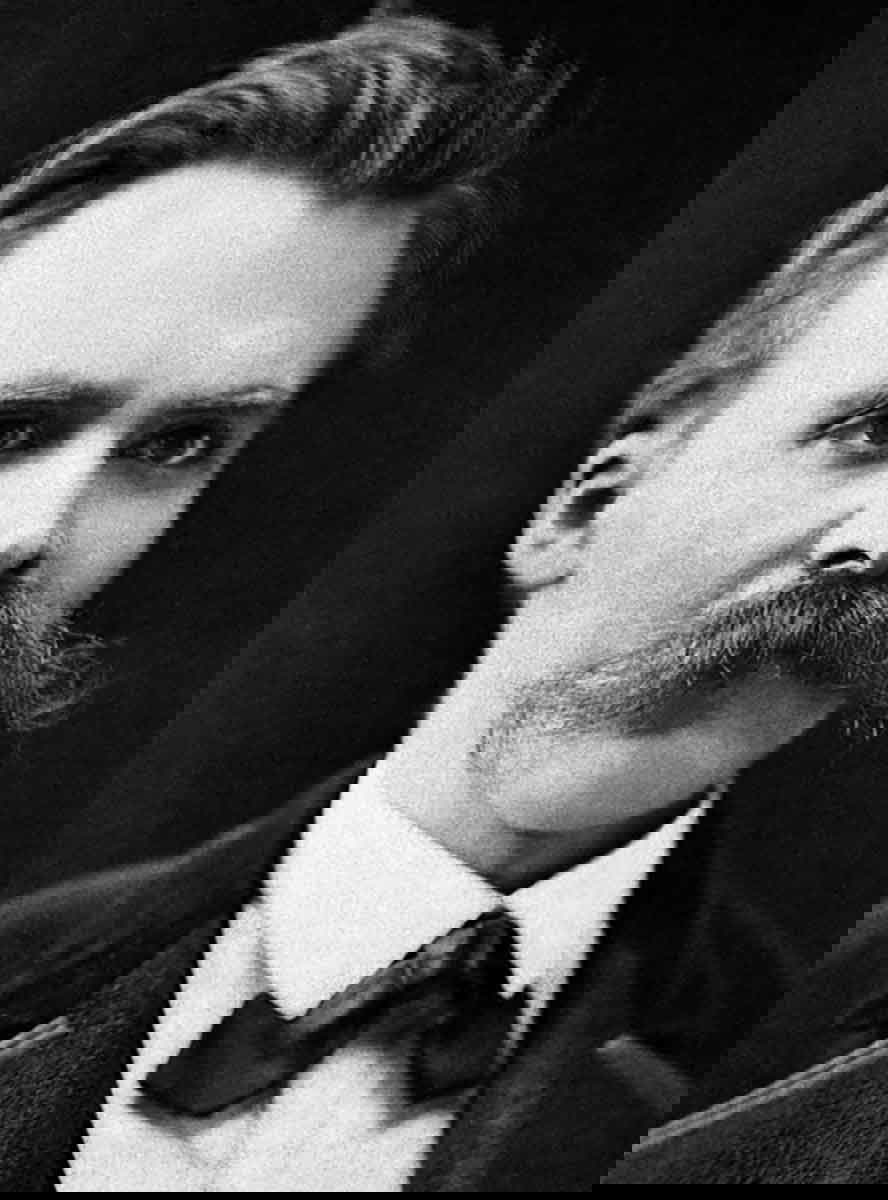
Nietzsche’s ‘On Truth and Lies in an Nonmoral Sense’ (1873), which Rose reads both Foucault and Derrida as drawing their relativist conclusions from, contains a famous passage in which truth is described as a “mobile army of metaphors.” For Rose, however, the error is in believing that identifying truth as such enables any kind of transcendence of, or departure from, the categories of truth and error.
Rose argues that the radical turn away from truth and towards language (Derrida) or power (Foucault) is not really a turn at all, that it misses what is crucial in Nietzsche’s essay, which is precisely that we forget the mobile army of metaphors that compose truth, even as we depend on them in our exchanges. In other words, in trying to move beyond truth and error, the post-structuralists end up looking less closely at the foundations of their truth claims than the most ardent metaphysician.
If the claim of post-structuralism is a radical break with metaphysics, Rose says, this break is both misguided and unsuccessful. It is misguided insofar as it tries to do away with our potential sources of meaning and is unsuccessful because while post-structuralism may well place those sources of meaning beyond reach, it fails to compensate for that loss by moving off the shaky ground of truth and reason, it establishes no firmer footing in its discussions of power or language and falls into the very traps it sets out to avoid. Above all, Rose suggests that post-structuralism fails to take seriously its own claims about the inscription of our ideas of truth and reason onto our means of expression and communication. It has the arrogance to think that it alone uses unmarked inst