The Grand Guignol opened its doors at the end of the 19th century as a sensationalist and dark theater focused on violence, horror, drama, and everything taboo. Over the decades, it became notorious for its naturalism and outstanding morbid inventiveness of both writers and actors. It became a space for thrill and collective therapy, which talked openly about repressed desires and deep urges. Read on to learn the history of The Grand Guignol, the notorious horror theater.
The Origins of the Grand Guignol
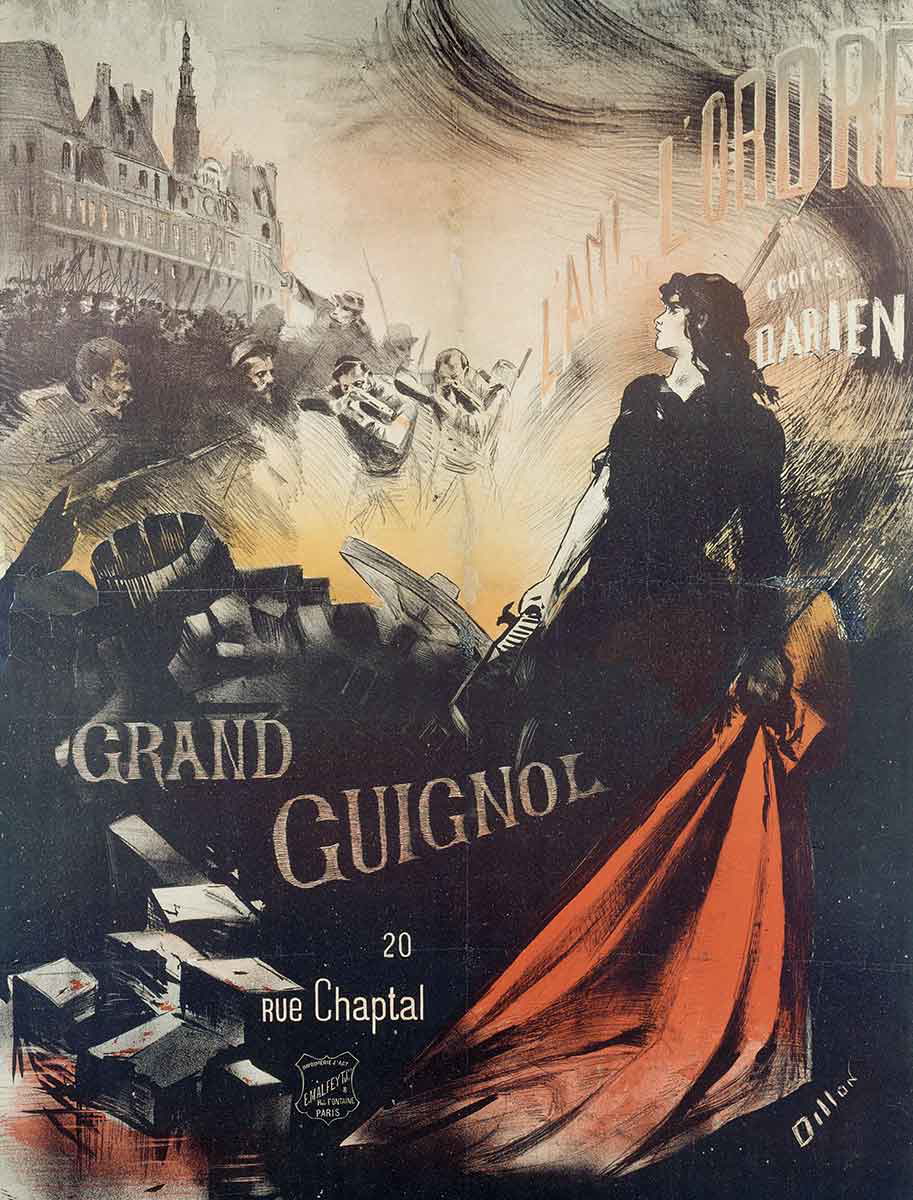
The Grand Guignol developed from the naturalist theater movement. Naturalism called for relatable and recognizable characters in realistic situations, setting theater as an observation point for the studies of human nature. In terms of narratives, naturalist plays usually focused on telling a simple story in a single setting within a short time span—for example, one dinner conversation or one heated argument. The Grand Guignol Theater opened its doors in 1897 and initially followed the same trend, although with notable plot twists intended to shock and highlight the depravity of human nature.

The theater’s founder, Oscar Metenier, was a former police secretary, well familiar with the realities of Parisian low-life. One of the most popular plays of Metenier’s time as the Grand Guignol leader told the story of a family concerned for their youngest daughter’s wellbeing. Showing up for dinner, the girl announces that she wants to stay with her family and contribute to the household, and for that reason, she is entering sex work like her older sister. Contrary to viewers’ expectations, the family cheers and celebrates the decision. Unlike in more moralist plays from other theaters, Metenier’s characters, like petty criminals or sex workers, did not receive punishment from a divine entity or an authority figure. They were simply left to be the living monuments to the system that gave birth to them, categorized as the symptoms of the disease rather than its causes.
Just a year later, Metenier sold the enterprise to engineer Max Maurey, a person similarly far removed from the entertainment industry. The exact reasons for Metenier’s passing on ownership remain unclear, yet we know for sure that the theater had already become a great success.
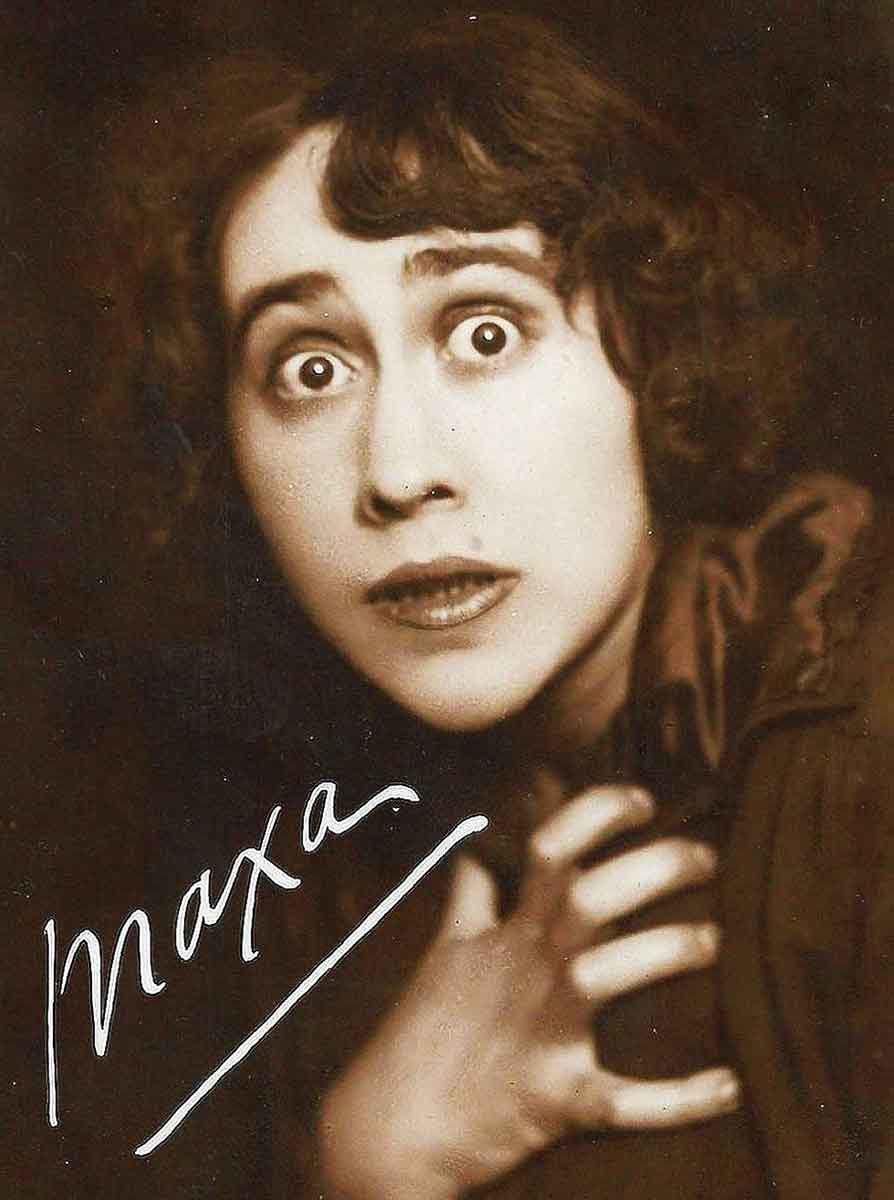
Still, it was Maurey who transformed The Grand Guignol into the cultural phenomenon known today, which explored deep fears, exploited them, and seemingly had no limitations to the violence and realism on stage. Maurey discovered the talents of Paula Maxa, the theater’s horror superstar, and, perhaps even more importantly, of Paul Ratineau, the special effects designer who came up with most of The Grand Guignol’s gory tricks.
Under Maurey’s guidance, the theater moved from naturalism to grotesque and was rebranded as The Theater of Horror. Acting became more dramatic and emotionally intense, and plots became significantly more violent and erotic. A typical Grand Guignol performance consisted of six one-act plays—usually two comedies and four dramas—alternating to enhance each other’s emotional effect. The final act was usually the most gory and horrific piece.

The playwright Andre de Lorde was the mastermind behind the most successful plays of The Grand Guignol. A refined intellectual with an unsettling obsession with death and suffering, de Lorde knew exactly how to make his audience tremble with fear and even lose consciousness. Almost every show, as reported, had at least two audience members fainting from terror.
The Grand Guignol had no monsters in the fantasy-horror sense of the word: no werewolves, no evil hybrids, and no supernatural beings. All perpetrators there were fully human, all driven to violence by trauma, neglect, or direct intention to harm. Still, there was no demonic possession or unseen evil forces at play—only human desire, greed, or cruelty. The theater curated a safe space for exploring violence and enjoying it while considering its essential unreality. It was both a space for expressing deeply repressed urges and a scene of large-scale public reflection. Conceptually, it was an heir to the centuries-long tradition of attending public executions for fun or cheering at gladiator fights.
The Grand Guignol Experience

The Grand Guignol experience started way earlier than the actual performance did. Located in the streets of Pigalle, a Paris neighborhood known for its bustling nightlife and flourishing adult businesses, in its prime years, the theater was well-adjusted to the area around it. From the dark streets filled with thieves, drunks, and sex workers, the spectator entered an abandoned chapel decorated by rather unsettling figures of weeping angels. They were weeping quite literally, as no one ever bothered to fix the leaking roof of the chapel. Before the opening of the Grand Guignol, the chapel was home to a blacksmith’s workshop, which added to the atmosphere of shabbiness and gloom.
The building’s religious roots have left its mark on the theater’s internal arrangements. Although decades have passed since the last church service, the smell of candles and incense was impossible to remove. Confessional booths were converted into private boxes for those who wanted more privacy during the shows for any reason. The space itself was so tiny that the actors reportedly could shake hands with people from the third row while on stage. With less than 300 seats, the Grand Guignol was the smallest venue in Paris and was constantly packed. It also formed a sort of subculture around itself with unwritten rules and groups of regulars for whom the administration always kept reserved the best seats.
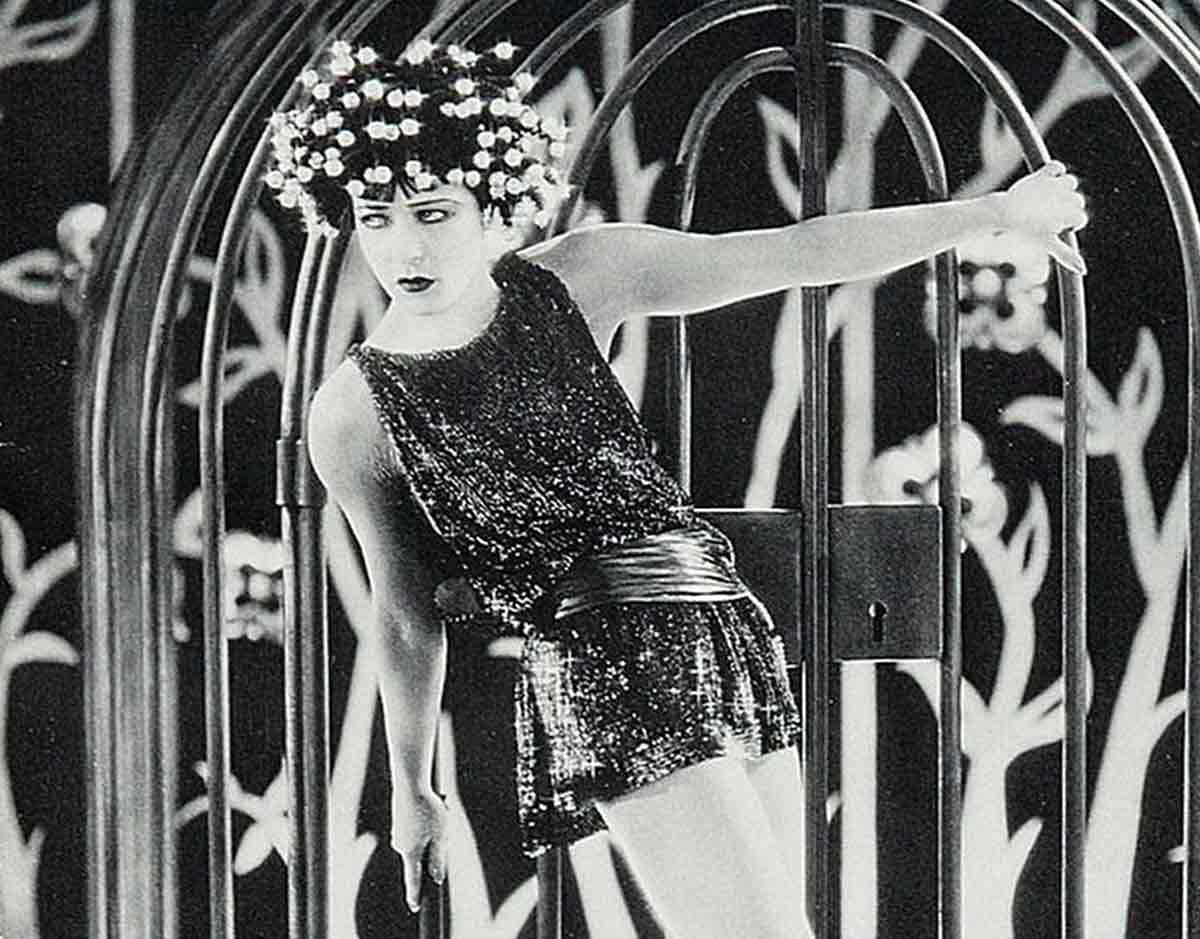
The Grand Guignol had a permanent cast of actors, writers, and designers who became celebrities of their own kind. One of them was Paula Maxa, the first actress specializing in horror performance. Her facial expressions and acting style became the golden standard of the horror genre, still referred to by upcoming stars. The Grand Guignol could afford some daring collaborations as well: in the 1920s, the legendary actor and director Alla Nazimova briefly starred in several of its plays.
The End of the Grand Guignol
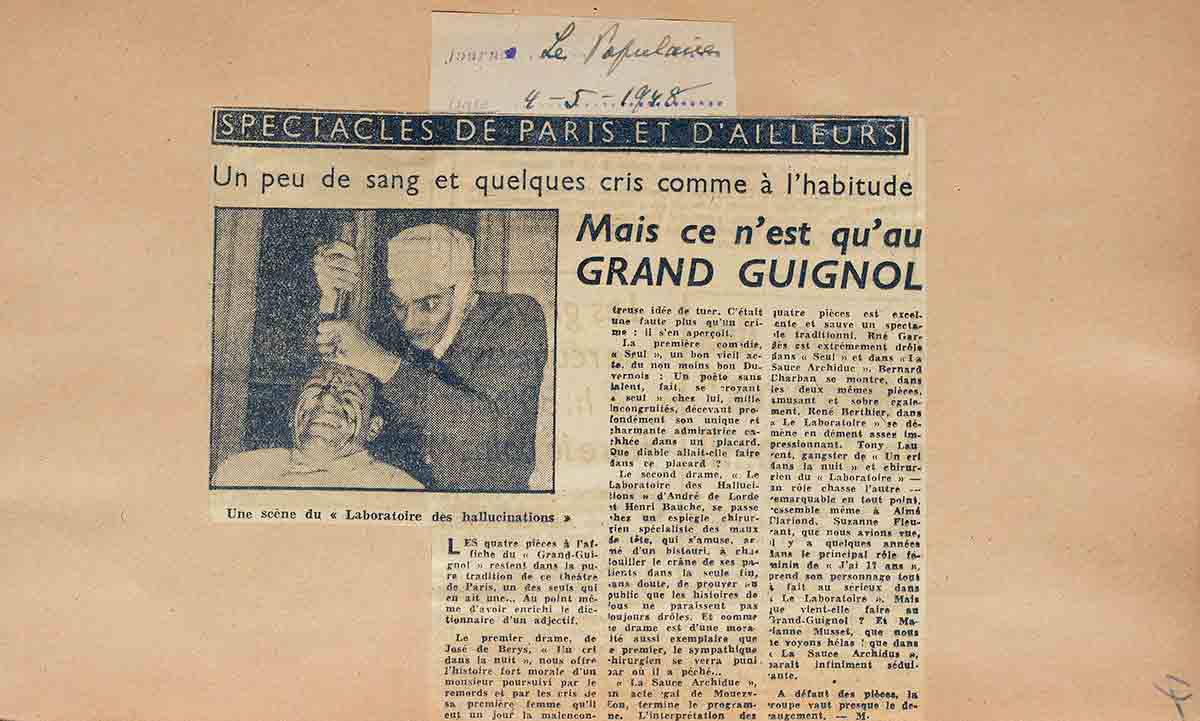
Several entrepreneurs tried to turn The Grand Guignol into an international cultural phenomenon, yet it remained a strictly Parisian thing. Rome, London, and New York productions were not well-received and did not meet an understanding public. The original Grand Guignol enjoyed immense success throughout the 1930s, but its prime days were over by the end of the decade. Some historians name another change of ownership as the principal reason for the decline. Still, the reality was much more simple and complicated at once. One of the reasons was the development of the cinema industry, including the horror films Cabinet of Dr. Caligari (adapted to a stage performance in the mid-1920s) and Nosferatu. Cinema became a new and more exciting attraction, partially replacing theater.

Another reason was the historical circumstances. Although World War I provided a surprising diversity to the onstage violence performed at the Grand Guignol, World War II essentially killed the place. Surprisingly the theater successfully functioned during the Nazi occupation. Although labeled as a degenerate form of art, it remained fairly popular among Nazi officers, Frenchmen under occupation, and, consequently, Allied Forces who came to liberate France. One of the frequent visitors and generous patrons to its shows at the time was, surprisingly, Hermann Goering, the Gestapo founder and the second most powerful man in Nazi Germany.
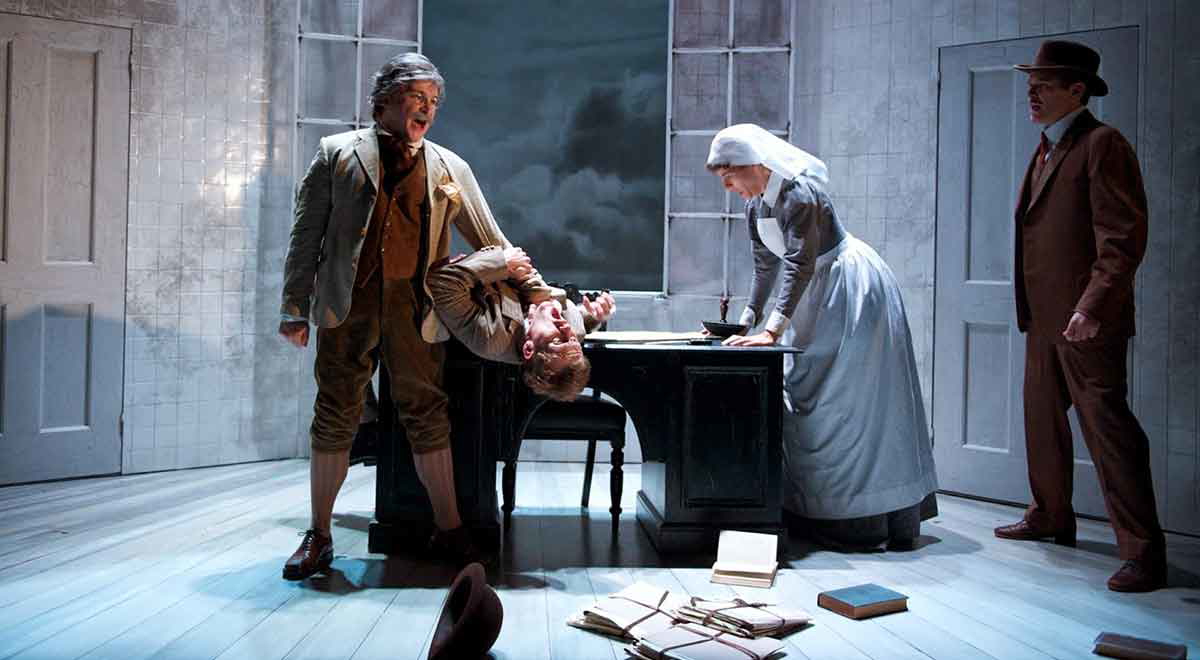
The world has changed, overgrowing its need for a little theater of violence and depravity. Writer Anais Nin noted that compared to reality, The Grand Guignol was laughable and infantile. The theater closed for good in 1962, with its last director, Charles Nonon, stating that they could not compete with Buchenwald. Still, the influence of The Grand Guignol remains powerful in the present-day horror genre. Apart from simply relishing in violence, The Grand Guignol brought to its audiences social commentary on the issues of politics, colonialism, religious prejudice, domestic violence, and other aspects. Over the years, groups of activists attempted to revive The Grand Guignol tradition, yet unfortunately, today, it appears as a mere nostalgic attraction.