
Almost two centuries after Alexander the Great’s death, Greek kings ruled vast swathes of northwest India, vying for control and influence among themselves and with the surrounding Indian principalities. Today, they are known as the Indo-Greeks to separate them from their Graeco-Bactrian counterparts in the north, in modern-day Afghanistan. From these endless conflicts, one king, Menander, rose as the most powerful and most well-known among them, so important that he even appears in a Buddhist sacred text, to which he gave his name, the Milindapanha—“The Questions of King Menander.”
The King and the Monk
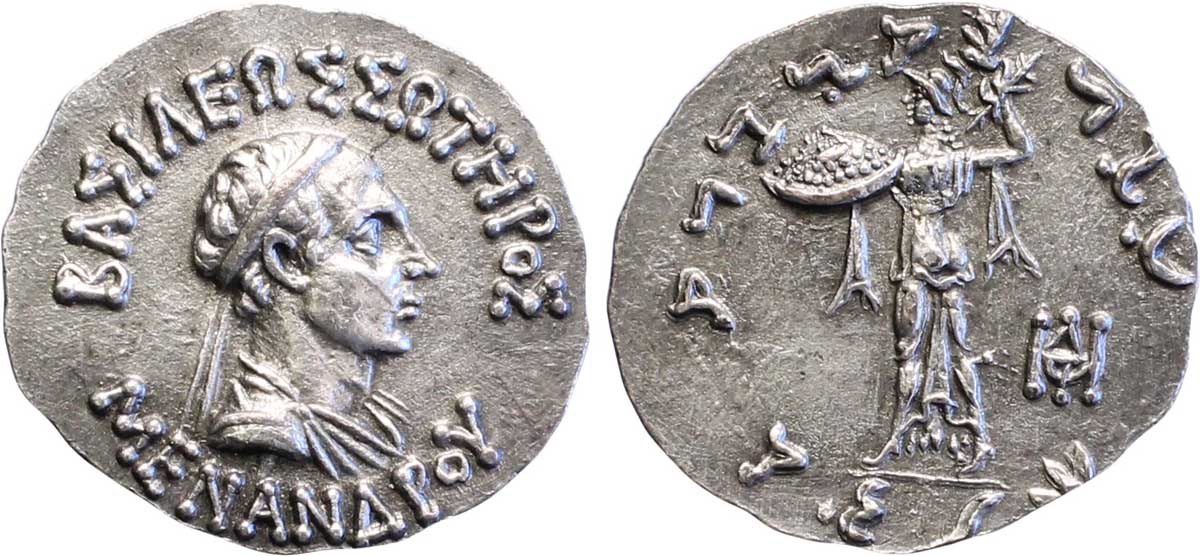
When it comes to the reigns of most Indo-Greek kings, we get our information from coins: a name, a profile, and little more. Menander’s name, however, reached Greek and Roman historians and geographers in the far west, such as Plutarch, Strabo, and Gnaeus Pompeius Trogus. Through them, we catch a glimpse of the power and influence of this king (reigned c. 165–130 BCE).
Strabo mentions that he subdued more tribes in India than even Alexander, going further than the great conqueror did (Strabo’s Geographica, XI, 1). Justin, quoting from Pompeius Trogus, refers to him as one of the “kings of India” (Prologue to Book XLI), a potential indication of the immensity of his realm.
In the meantime, Buddhism, a young religion at this point still, was gaining adherents across the subcontinent and beyond. Many monasteries were founded across the various realms, and traveling monks brought with them Buddha’s word. One of them, Nagasena, traveled to Sagala (modern-day Sialkot, Pakistan), the capital of Menander’s Indo-Greek empire, in “the country of the Yonakas” (the Pali rendition of “Ionians” to refer to the Greeks) (Book I, 2). His objective? Converting the great king to Buddhism.
A Dialogue Among Scholars
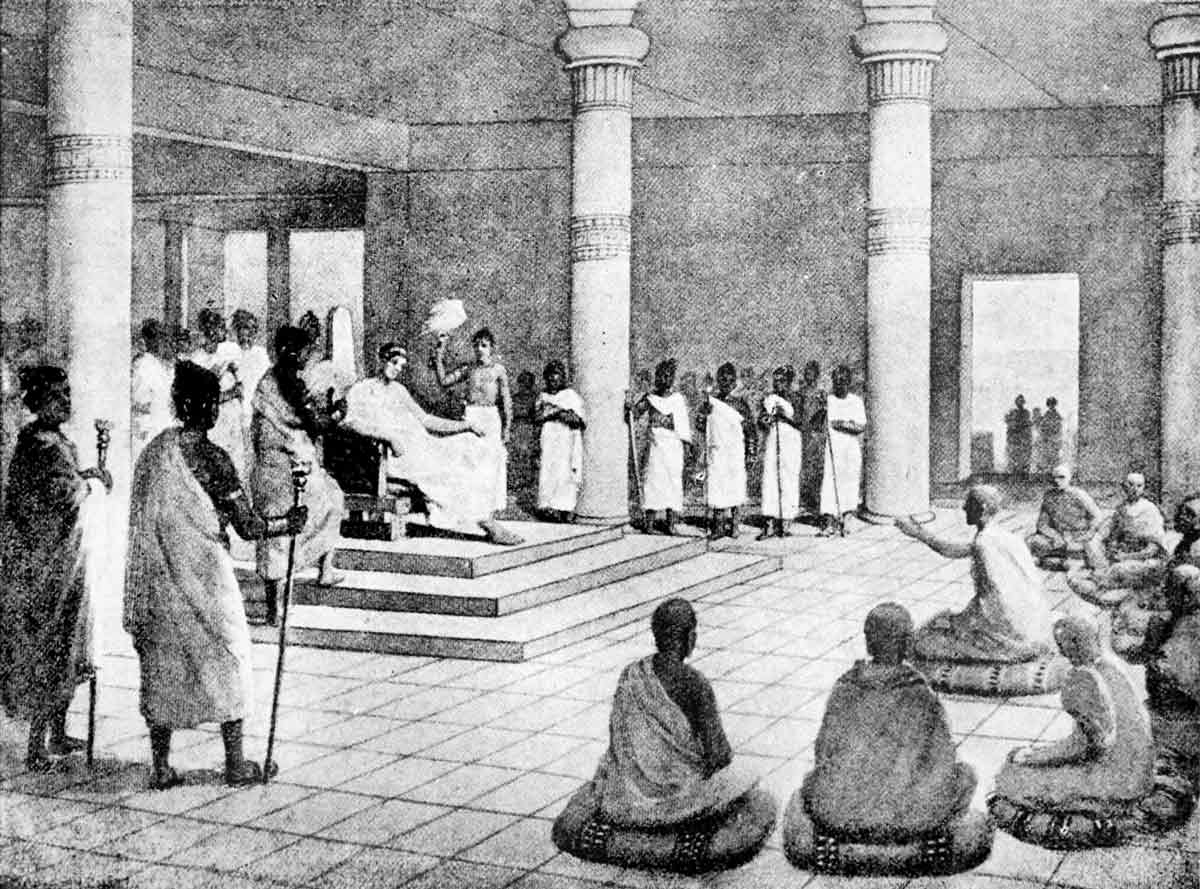
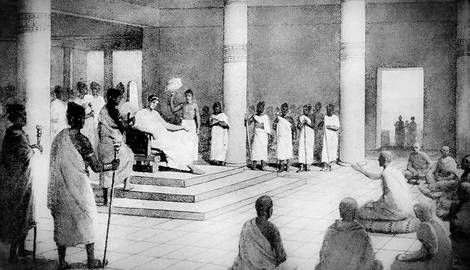
The monk was brought before Menander, whom he recognized as wise and righteous, a warrior-king but also a philosopher. Nagasena only agreed to speak with him on equal terms, as two scholars. With the Greek ruler having agreed, a dialogue began, centered around the pointed questions of King Menander, who aimed to test the integrity of the Buddhist religion, and the answers of the monk. The stakes were high indeed; if the king was satisfied, he would happily convert.
Through this back and forth between king and monk, we learn important details about the Indo-Greek kingdoms themselves, rendering the Milindapanha a valuable historical source in its own right. There is mention of a council of “five hundred Yonakas,” which might have been a body of Indo-Greek nobles advising the king, and frequent descriptions of Menander’s vast hosts of war elephants, chariots, spearmen, and cavalry (Book I, 10-11).
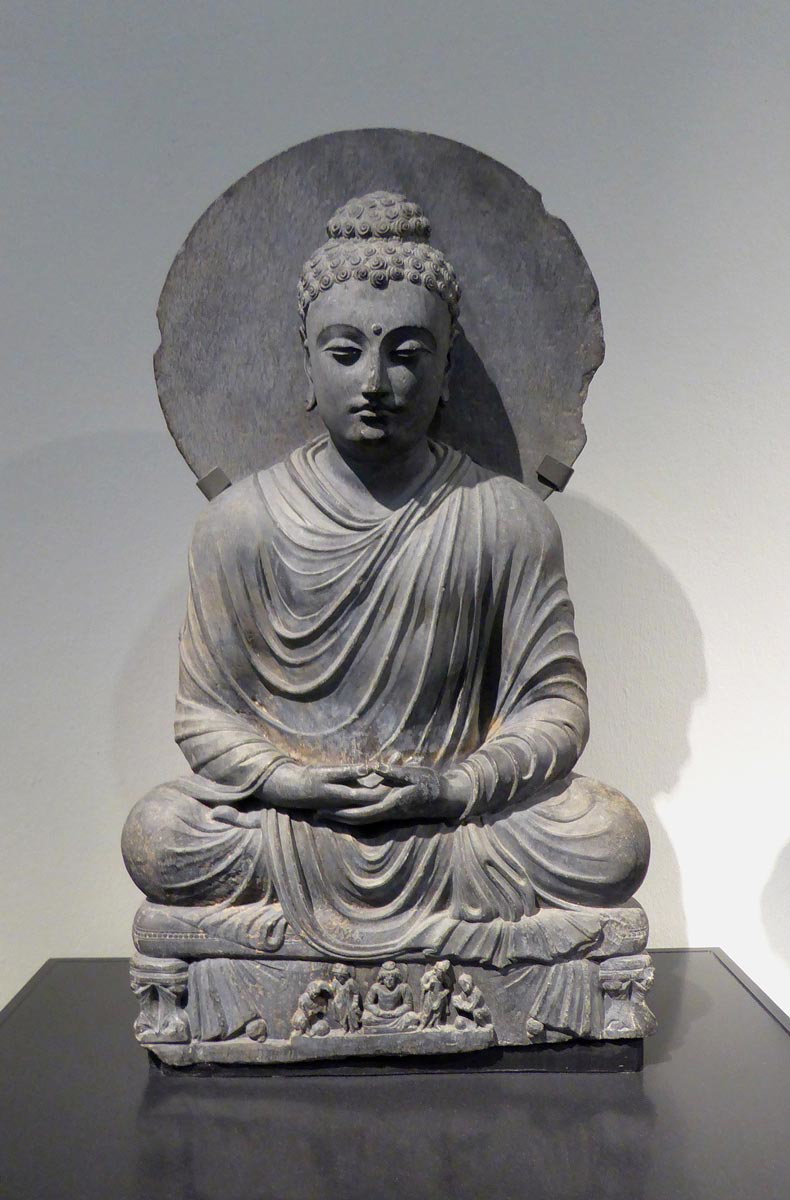
The king asked many questions. Some concerned the religion’s founder: if the Buddha had entered final Nirvana and passed on, what would be the point in revering someone who no longer existed? Nagasena answered that it was the Buddha’s virtues and teachings (the Dhamma) that still inspired people to live well, like the heat from a flame that had now gone out, but still warmed the world (Book IV, 1).
Others were on Buddhism’s central concepts, like karma and reincarnation: since a person changes over the course of their lifetime, could they be held responsible at the end of it as the same person who committed the errors in their youth? Nagasena compared life to the different stages of milk: curd, butter, and ghee, and answered that identity is the change, not a permanent thing, implying that one is judged by one’s actions all throughout their lives (Book II, 2. 1).
A Graeco-Buddhist King!
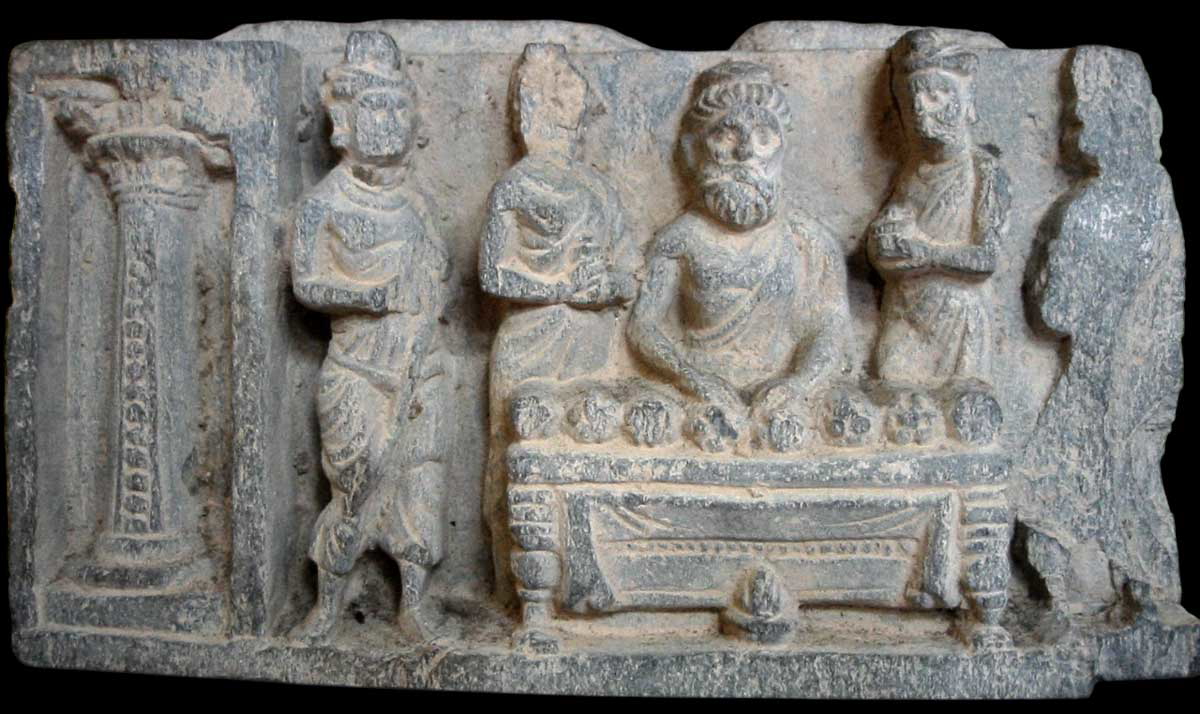
Nagasena answered question after question by the sharp-witted Menander. In the end, the king was satisfied: “The puzzles, worthy of a Buddha to solve, have you made clear […] May the venerable Nagasena accept me as […] a true convert from today onwards as long as life shall last!” (Book VII, 7, 21). Accordingly, King Menander built a monastery called “Milinda Vihara,” abdicated his kingdom and became a hermit!
The historical reality supports some of this account. King Menander had coins minted with Greek on one side and Pali on the other, with images of the Dharmachakra, the “wheel of the law,” and a central symbol of Buddhism, a clear endorsement of the religion in his domains.
Plutarch describes him upon his death, not as a hermit, but as a king on campaign. He mentions illness at a war-camp, and how the cities of his kingdom fought over his ashes, and finally relented to their being divided among them, raising monuments to house them in each city (Moralia, 821D-E). When the Buddha achieved Nirvana, his ashes were also divided among his followers and housed in newly-built stupas to avoid infighting, indicating that Menander’s subjects saw the king as a key figure of Buddhist worship and emulated the Buddha’s own example.
Bibliography:
Baums, S., “Greek or Indian? The Questions of Menander and onomastic patterns in early Gandhāra,” in Ray, H. P., (ed.), Buddhism and Gandhara, (London, 2017), pp. 33-46.
Halkias, G., “When the Greeks Converted the Buddha: Asymmetrical Transfers of Knowledge in Indo-Greek Cultures,” in Wick, P., Rabens, V. (eds.), Religions and Trade, (Leiden, 2014), pp. 65-115.
Rhys Davids, T. W. (trans.), The Questions of King Milinda: Parts I & II, The Sacred Books of the East, vol. XXXVI, (New York, 1890-1894).