The British aristocracy has been no stranger to spendthrifts and flamboyant flouters of convention over its centuries-long existence, but Henry Paget took these pursuits to new levels. The fifth Marquess of Anglesey was a lover of the theater, especially for the opportunities it afforded for donning outlandish gowns, and lived his life like a character from the stage. An upcoming film is set to tell Paget’s life story, from his short-lived marriage to his bankruptcy and the theft of his beloved jewels.
Who Was the Marquess of Anglesey?
Although the peerage has only featured a Marquess of Anglesey since 1815, the Paget family has been ennobled since the Tudor period. William Paget, first Baron Paget, rose to prominence in the court of Henry VIII as a privy councilor. After the execution of Thomas Cromwell, he became one of the most important statesmen in England. Paget assisted in drafting Henry’s will and was appointed to help rule when Edward VI, Henry’s son, came to the throne aged nine. Managing to navigate the turbulent political landscape, Paget eventually retired peacefully and was succeeded by other Baron Pagets until the seventh Baron became Earl of Uxbridge in 1714. A century later, one Henry Paget was made the first Marquess of Anglesey after his heroism in the Battle of Waterloo (in which he lost a leg and soon popularized a particular type of artificial leg nicknamed the Anglesey leg).
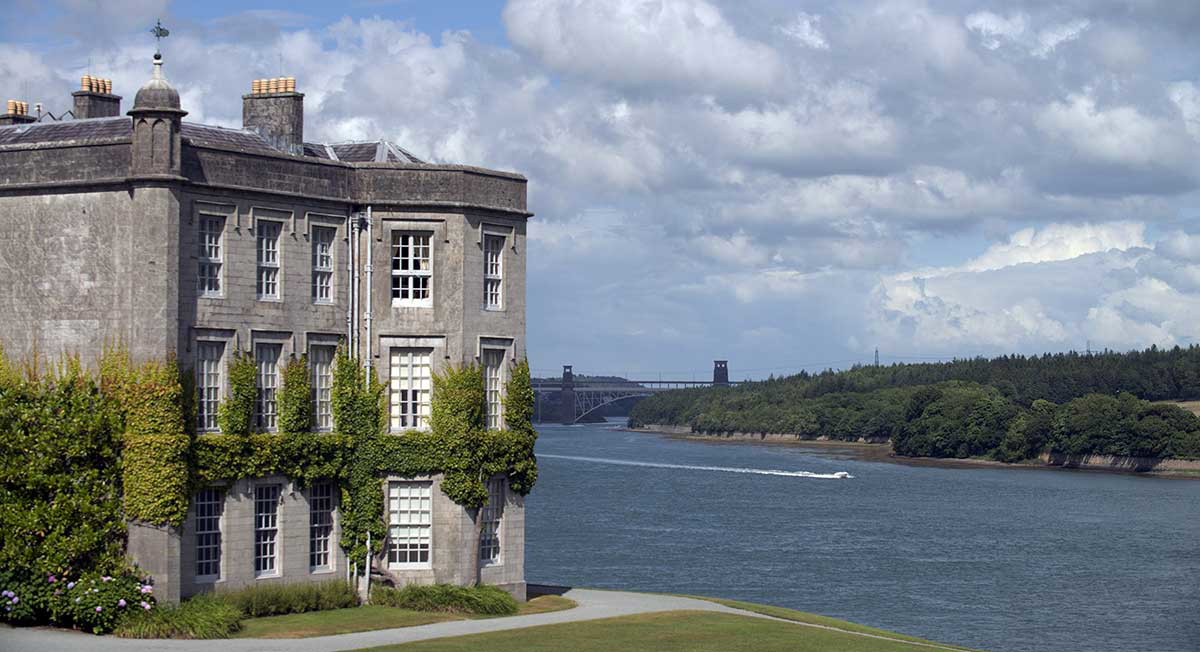
The Marquess of Anglesey had a country seat at Plas Newydd, near the Welsh village that boasts the longest town name in Europe: Llanfairpwllgywngyllgogerychwyrndrobwllllantysiliogogogoch. Although the house is now owned by the National Trust, the current Marquess—the eighth—grew up there. He is now an author who has written a book about the family’s Tudor founder.
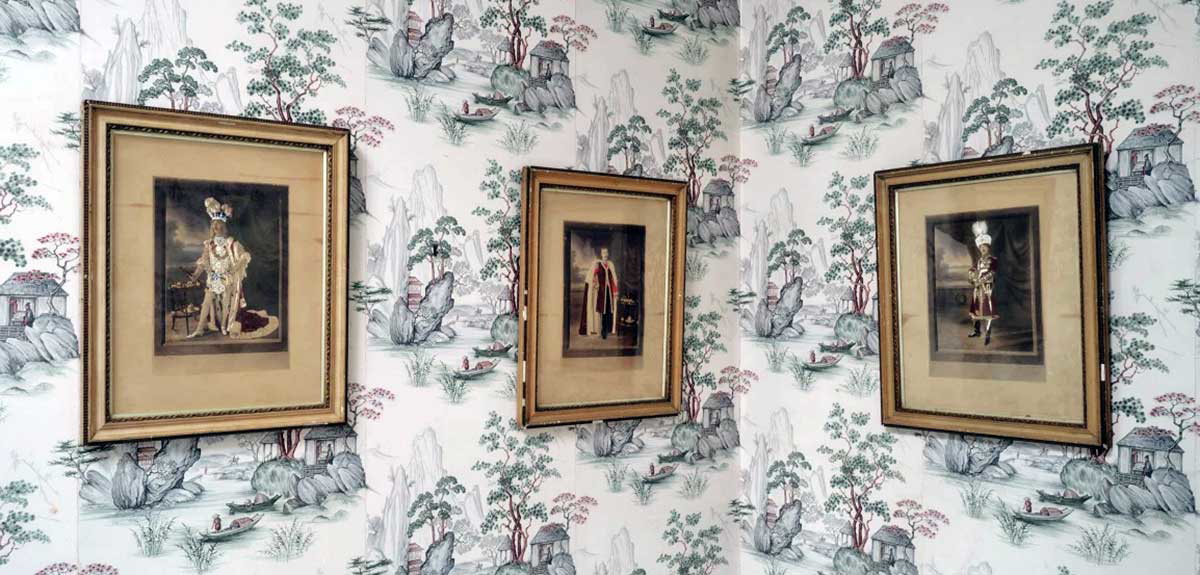
The present Marquess attests that photographs of his ancestor Henry, the fifth Marquess, known to him as ‘Mad Ux,’ still adorned Plas Newydd when he was growing up, but in other ways, the Pagets were reluctant to honor his part in the family’s story. Many of his documents were destroyed after Paget’s death in 1905, when he received largely critical, or at best pitying, obituaries.
The official records of the peerage in 1910 scathingly described his sole purpose in life as “giving a melancholy and unneeded illustration of the truth that a man with the finest prospects, may, by the wildest folly and extravagance, as Sir Thomas Browne says, ‘foully miscarry in the advantage of humanity, play away an uniterable life, and have lived in vain’” (Cokayne & Gibbs, 1910, p. 141).
What Were Paget’s Follies?
Born in Paris in 1875, Henry Cyril Paget, like many British aristocrats at the time, spent much of his youth on the Continent. For many back home, this alone sufficed to account for his eccentricities as an adult, which delighted and dismayed onlookers in equal measure.
His early years were peripatetic and unsettled, with his mother dying when he was only two. After his father’s remarriage to an American heiress, the family took up residence at the ancestral home, Plas Newydd, where he was (like many of his class) raised by his nanny in a fairly isolated upbringing, which left him with skills in painting and singing, and French, German, Russian, and Welsh. Somewhere along the way, he also acquired an expensive taste and a love of theatrical productions, both of which he would indulge when he became Marquess on his father’s death in 1898.
Now that he could have his own way, the twenty-four-year-old Paget gave free rein to his imagination, converting the chapel at Plas Newydd into a theater where he would stage performances for the locals. These were free to attend, with Paget seemingly doing everything for the love of the theater rather than with any view to raising his profile in the eyes of the public or filling the family coffers. Indeed, Paget’s antics had the opposite effect, as he lavished vast quantities of his inheritance (about £15 million per year in today’s money) on actors’ fees and ornate costumes.
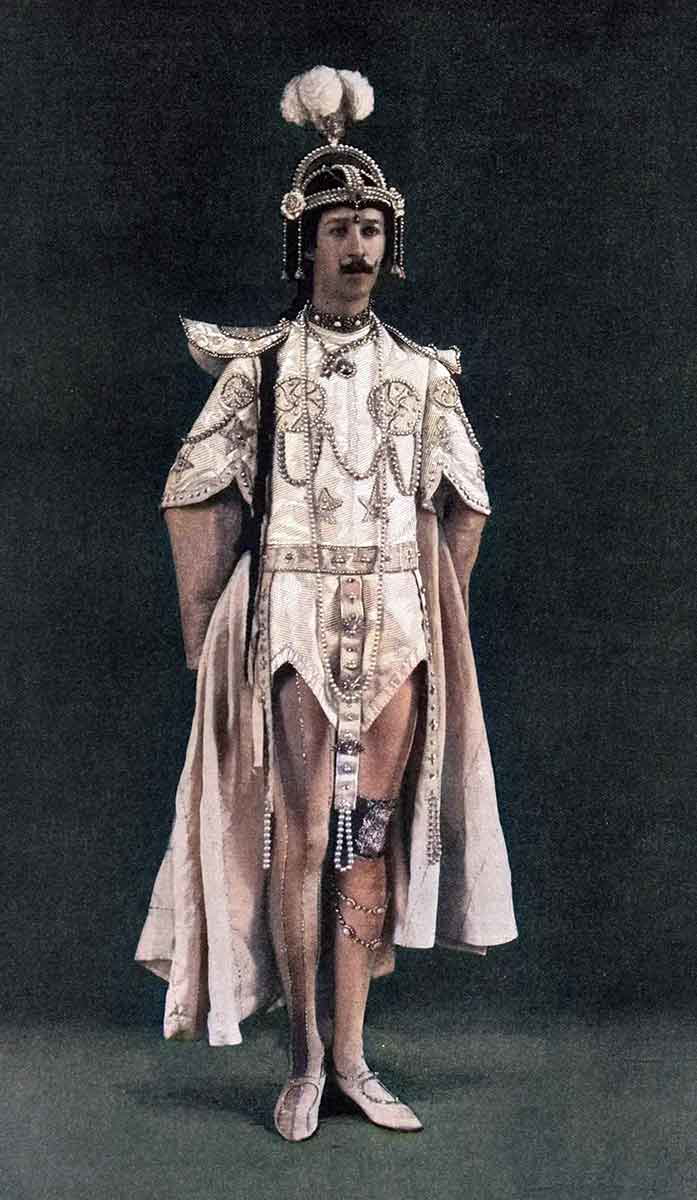
Often, Paget himself appeared in these plays or simply donned this extravagant apparel, including silk gowns and robes, in order to take photographs. An early enthusiast of the selfie, Paget appears (in the photographs of him which remain) in a variety of costumes, which suggest his stark difference from the ordinary British man, or even aristocrat, of the late 19th century.
Paget’s Life and Loves
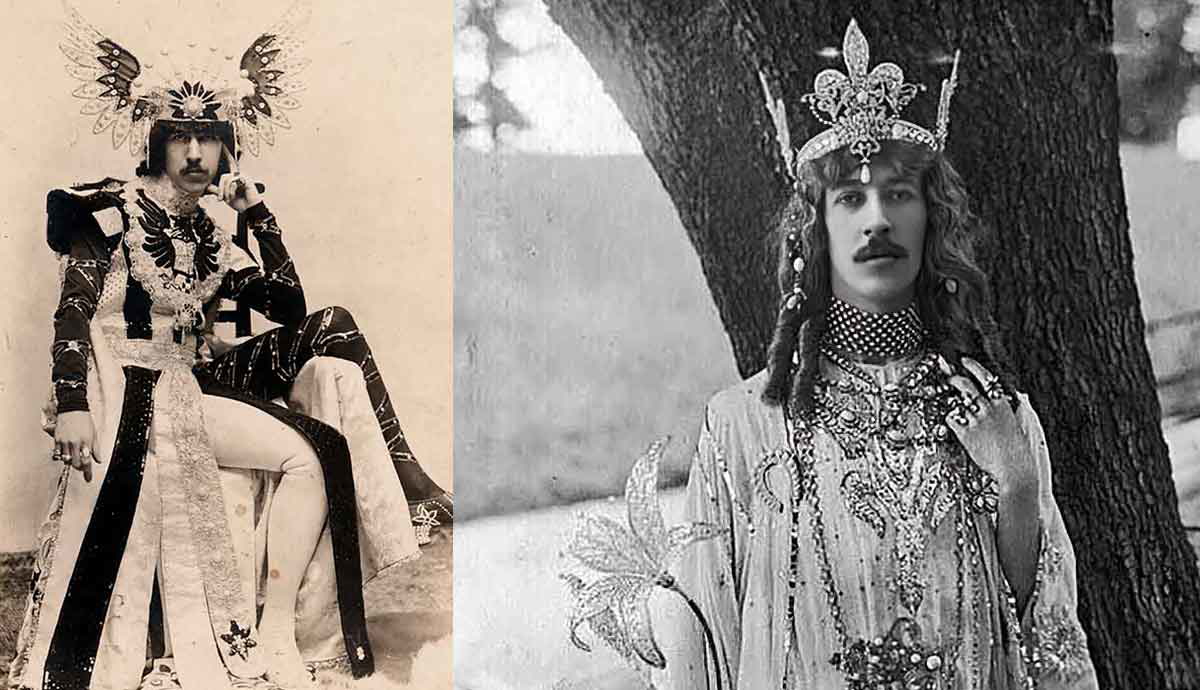
Through a modern lens, Paget might be categorized in certain ways based on his fondness for feminine costume, as well as his reclusive tendencies and the fact that he seems to have been most at home in the theater. In 1900, Paget played the part of Lord Goring—an insouciant, hedonistic aristocrat with a sharp tongue and a lazy demeanor—in Oscar Wilde‘s play An Ideal Husband.
Given that Wilde had been imprisoned for his homosexuality only five years earlier, becoming a pariah in the country that had once toasted his successes so rousingly, Paget’s willingness to perform in a Wilde play could be taken as tacit support. At the very least, it suggests he did not share in the general opprobrium directed at the playwright. Perhaps this is partly because Paget was no ideal husband himself.
Shortly before becoming Marquess, he married his cousin, Lilian Florence Maud Chetwynd, but the marriage was annulled within two years on the grounds of non-consummation. According to Chetwynd’s grandson, the writer and historian Christopher Sykes, Paget did not sleep with his wife but asked her to pose naked and draped, head to toe, in jewelry from his collection. However, because Paget was something of a black sheep in the family, and his papers were destroyed after his death, it is now difficult to make definitive judgments about his identity.
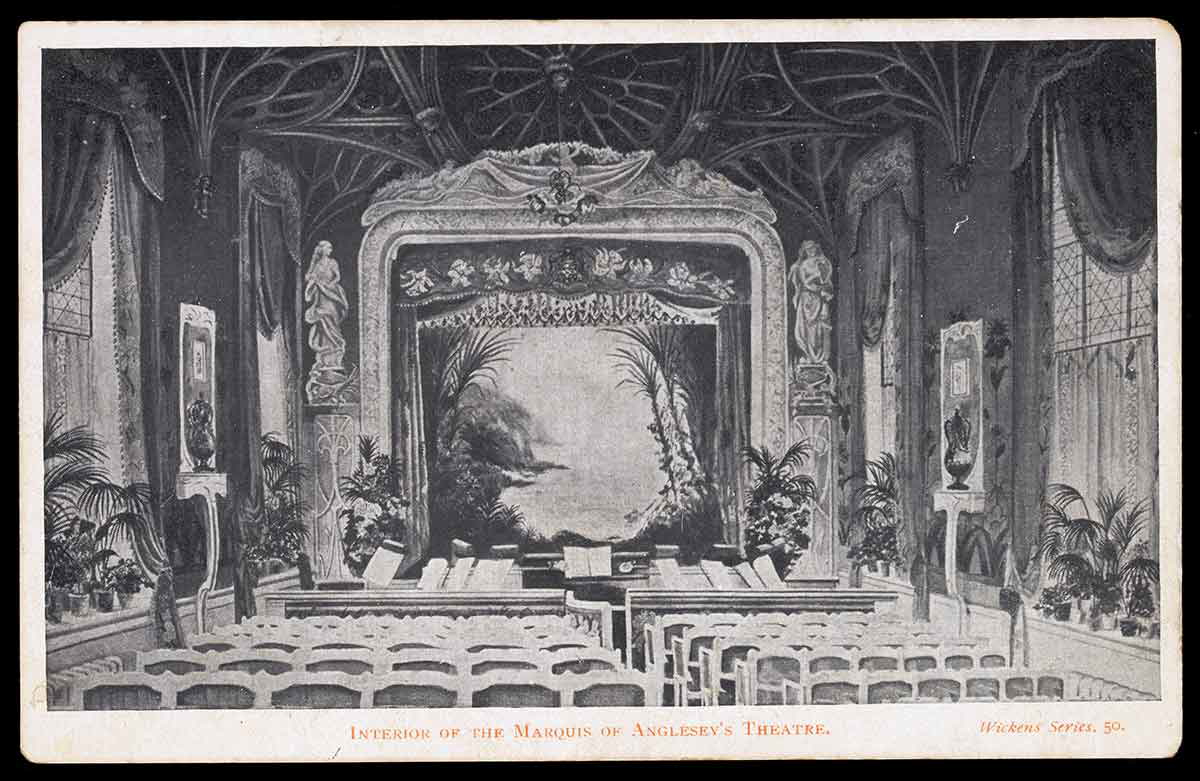
Paget’s real love seems to have been extravagance. Like many aristocrats before and after him, he delighted in having the means to indulge in hobbies and oddities that others might only imagine. There were dedicated pursuits: his Gaiety Theatre at Plas Newydd and the purchase of an acting troupe. On tour, this company traveled with its own orchestra and painstakingly crafted sets, including hand-painted scenery and furniture that featured exact replicas of items at Plas Newydd. Paget owned several cameras and a ‘mutoscope,’ which allowed the viewer to see multiple images in quick succession as if they were moving.
Then, there were the more frivolous things, such as his pet Pekingese dressed in pink ribbons and the exhaust pipe on his car, which was specially modified to spray perfume wherever it went. One of Paget’s favorite quirks earned him the nickname the Dancing Marquess: inspired by the ‘Butterfly Dance’ made popular by Loie Fuller, he would dress in layers of voluminous silk and entertain party guests by rotating his arms in a series of movements that made the silken sleeves look like fluttering butterfly wings.
Doyle and the Anglesey Jewels
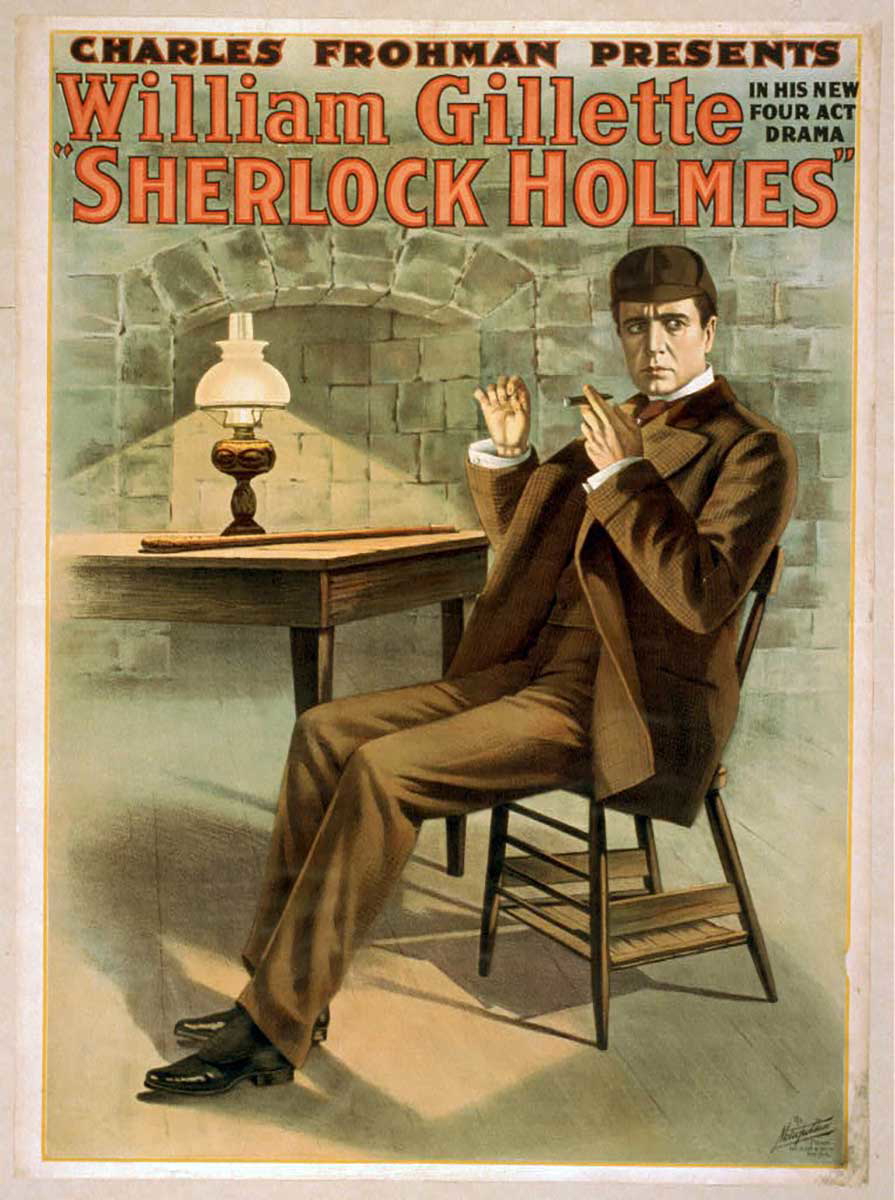
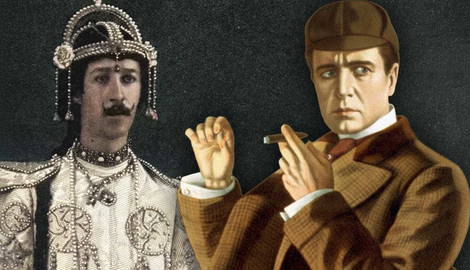
In September 1901, Paget attended the London premiere of Sherlock Holmes, a stage adaptation that amalgamated several detective stories by Arthur Conan Doyle. Some years earlier, Doyle had killed off Holmes and put aside the popular detective stories in favor of more serious fare. However, Holmes had been a lucrative franchise that Doyle was happy to revive with the help of actor and writer William Gillette (after Henry Irving and Herbert Beerbohm Tree, two of the Victorian period’s foremost actors, had declined).
The play features Holmes in his famous deerstalker hat, smoking his traditional pipe, and uttering the phrase “Elementary, my dear Watson” (which does not appear in Doyle’s original stories). Paget witnessed Gillette, as Holmes, solving mysteries such as the missing photograph in ‘A Scandal in Bohemia’ and crimes such as the murder in A Study in Scarlet. Little did Paget know, another crime was unfolding at his hotel.
Returning that evening, Paget found his hoard of jewelry—known as the Anglesey collection, then valued at £150,000, or over £11 million today—had been stolen. His valet, Julian Gault, was captured trying to escape to France: he had taken advantage of his master’s absence to steal the jewels, colluding with a French woman he identified only as “Mathilde.”
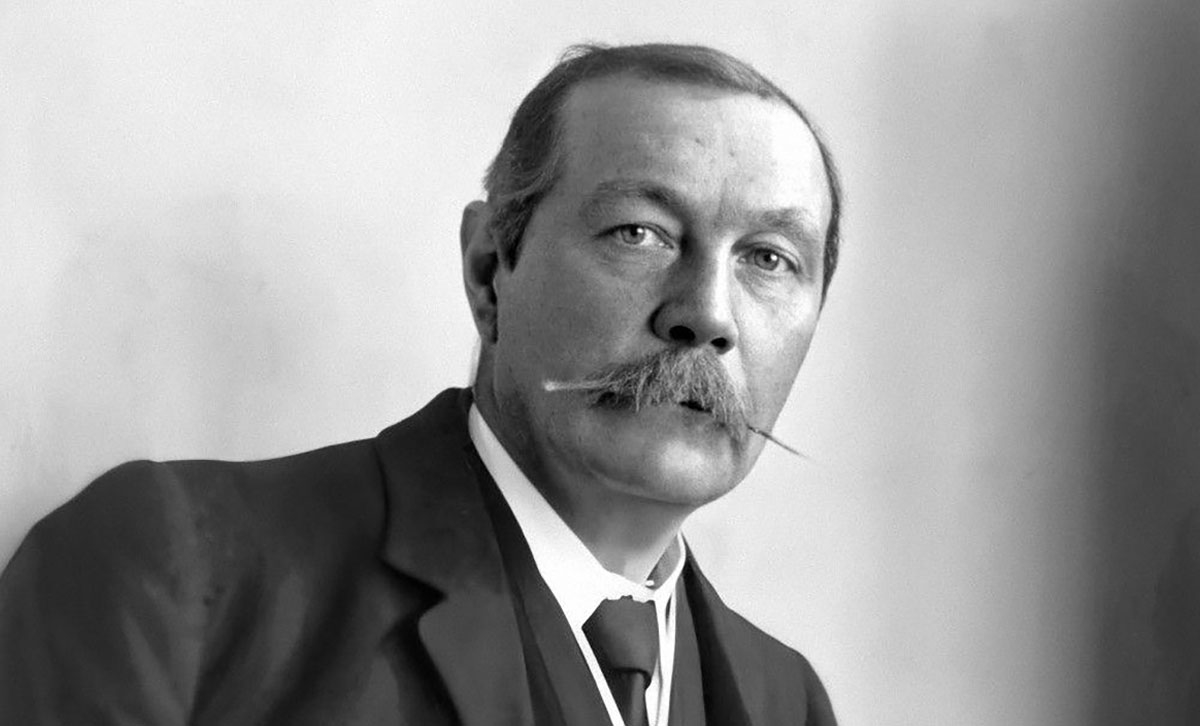
With the jewels themselves still missing, Paget turned to Doyle for help: whether because he associated the creator of Holmes with the night of the theft or because Doyle had begun to gain a reputation for amateur detective work himself. The author was no stranger to Scotland Yard and its workings, and this active interest in crime and justice had informed his stories. He now helped Paget bring Gault to trial and locate some of the jewels, which had been deposited across various locations in London.
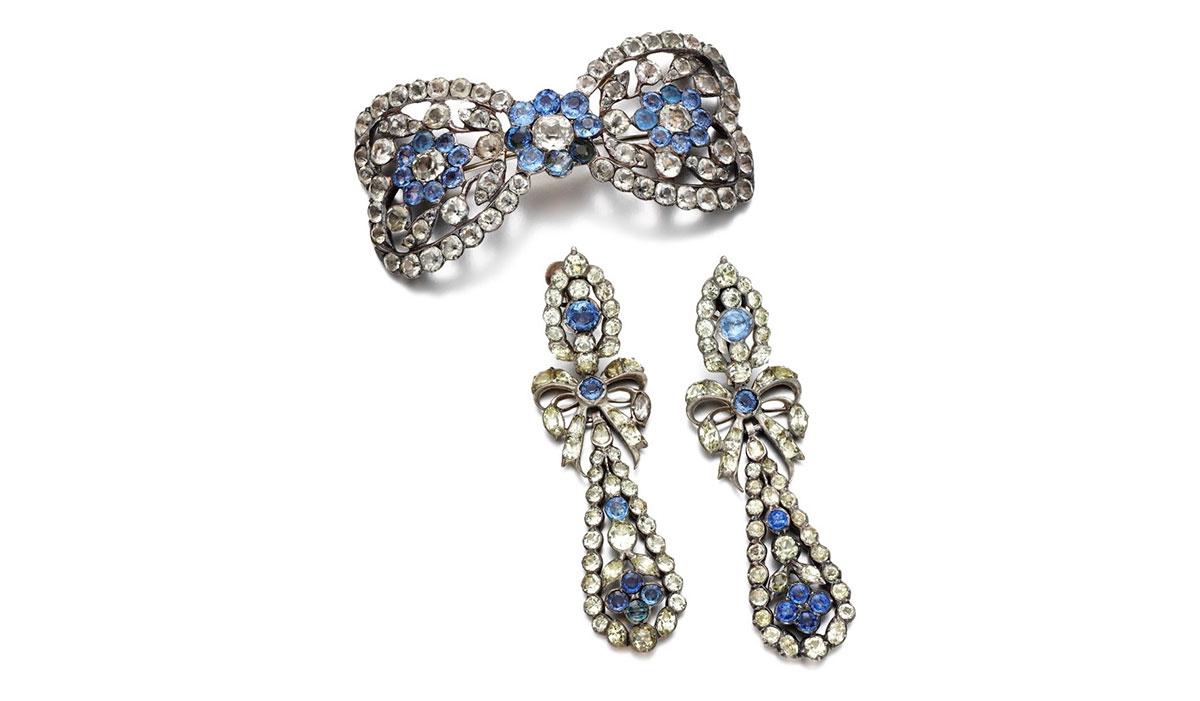
The Anglesey collection is still intact and owned by the eighth Marquess, including a demi-parure (a matching set of brooch and earrings) valued at £3,000, which experts think may have been worn by the fifth Marquess.
How Paget Spent the Rest of His Life
By 1904, Paget was living beyond his means. Despite his inheritance and the income from his estates, he had accrued debts of around £70 million in today’s money and was forced to declare bankruptcy. After selling off numerous trinkets, he retired to Brittany, and later the renowned haven of the super-rich, Monte Carlo, to subsist on a paltry income of just under £250,000 a year in today’s money.
In these much-reduced circumstances, he lamented to a Daily Mail reporter who had come to interview the fascinating Marquess: “I must apologise for not appearing before you in peacock-blue plush wearing a diamond and sapphire tiara, a turquoise dog-collar, ropes of pearls and slippers studded with Burma rubies; but I prefer, and always have preferred, Scotch tweed” (Gardner, 2007). Whether Paget really did prefer the more humble tweed get-up to his former dazzling attire is debatable: this was a man who knew that his reputation preceded him and that he must make polite excuses for appearing downtrodden. Never blessed with good health, Paget died in Monte Carlo in 1905, aged just 29, with his former wife by his side.
The ensuing auction of the remainder of Paget’s possessions was known as the Great Anglesey Sale and the Forty-Day Sale. Costumes, theatrical apparatus, jewelry, silk dressing gowns, fur coats, perfumes, hundreds of walking sticks, cars, boats, a parrot in a brass cage, hockey sticks, and shin pads: around 17,000 lots were sold at the auction.
The Marquess in Modern Times
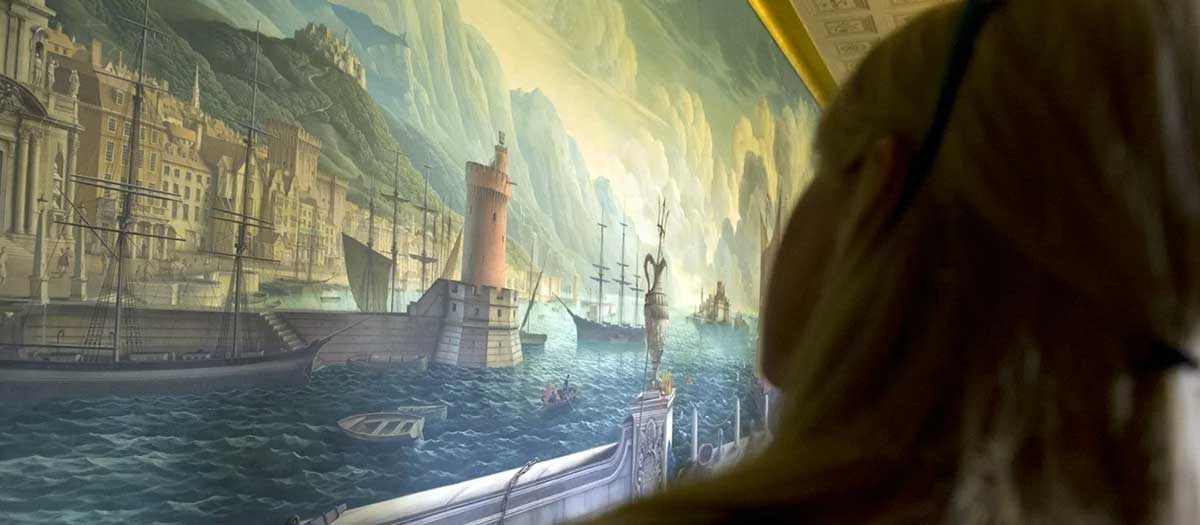
Henry Paget’s cousin inherited his title, becoming the sixth Marquess of Anglesey, and things changed at Plas Newydd: the Gaiety Theatre was re-converted into a chapel, and in 1936 the sixth Marquess commissioned the artist Rex Whistler to paint the huge 17.5-meter-wide mural which still adorns the dining room. Depicting an imaginary Welsh landscape complete with Roman architecture and the mountains of Snowdonia in the distance, it was never quite finished, with the painter being killed in the Second World War in 1944.
The Pagets have lived mainly at Plas Newydd since the fifth Marquess’s death, in part because his squandering of the family funds caused them to sell off their other properties, and the short-lived Dancing Marquess has been a shadowy figure ever since.
He has not gone entirely uncelebrated, though. In 2017, the musical How to Win Against History by Welsh composer Seiriol Davies, described as a “genderpunk Edwardian chamber comedy,” put Paget back on stage for the first time in over a century. In 2025, the biopic Madfabulous will bring Paget’s story to an even wider audience, seeing him as not merely (as the obituaries had run) irresponsible, profligate, and frivolous, but a proto-glam rocker and influencer, who was truly celebrated by his neighbors, tenants, and other locals for the productions he staged, and who had the courage to contravene expectations of the British aristocracy to live exactly as he wished.
Bibliography
Cokayne, G. E. & Gibbs, Vicary, eds. (1910). The Complete Peerage of England, Scotland, Ireland, Great Britain and the United Kingdom, extant, extinct or dormant. Vol. 1 (2nd ed.). London: St Catherine Press.
Costello, Peter (2006). Conan Doyle detective: true crimes investigated by the creator of Sherlock Holmes. New York: Caroll & Graf.
Gardner, Viv (2007). ‘Would you trust this man with your fortune?’ Guardian, https://www.theguardian.com/artanddesign/2007/oct/10/photography.theatre
Higham, Charles (1976). The adventures of Conan Doyle: the life of the creator of Sherlock Holmes. New York: W. W. Norton & Company.