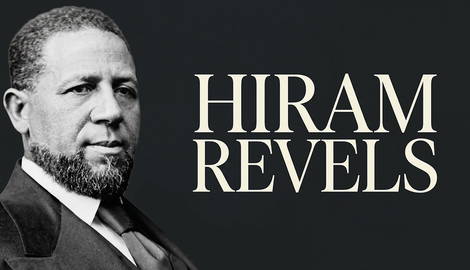

In 1870, Hiram Revels made history by becoming the first African American to serve in the United States Senate. Born free in a time and place where most Black people were still enslaved, Revels dedicated his life to service, leadership, and quiet resistance. A preacher, educator, and Civil War chaplain, Revels lived a full life. His triumphal election was a political milestone, a challenge to the old order, and a symbol of what Reconstruction could be.
Early Life: Prioritizing Education
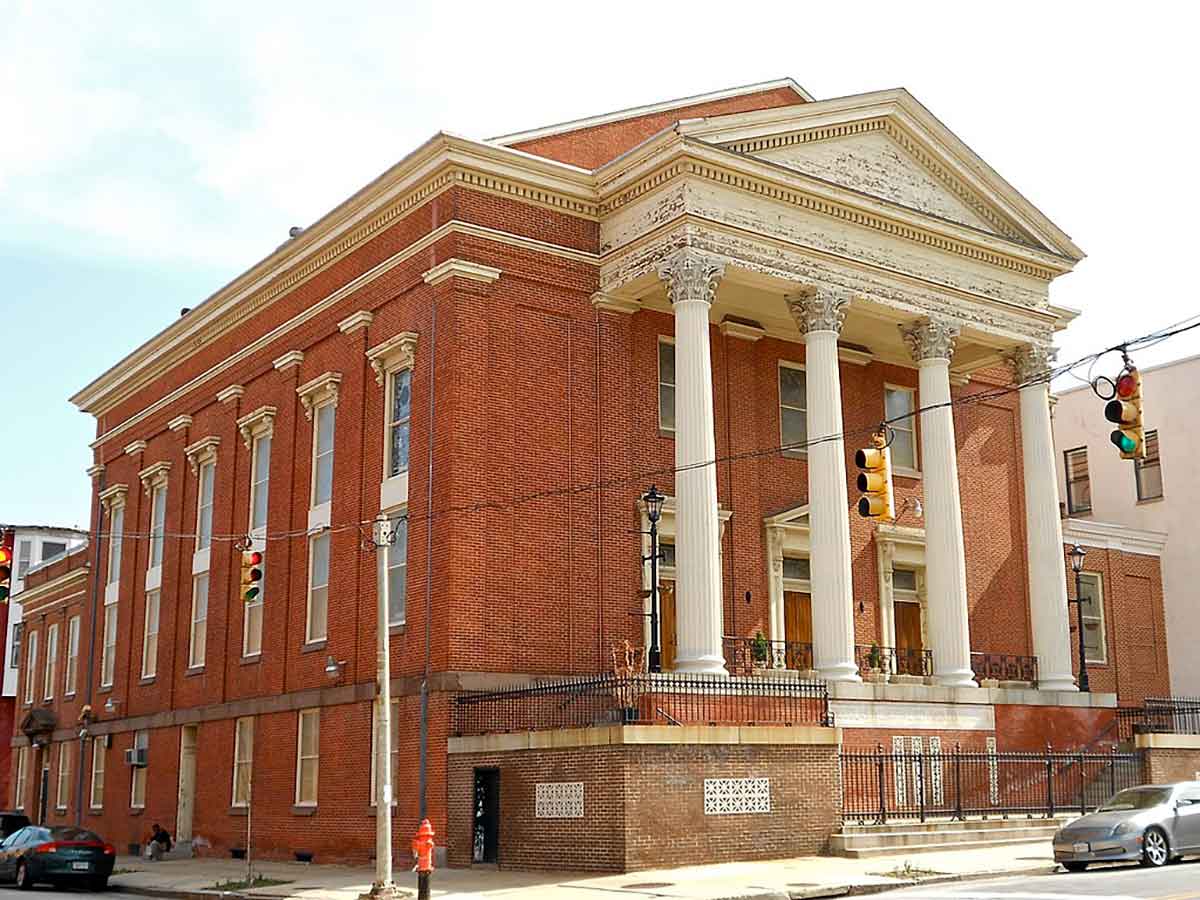
Hiram Rhodes Revels was born a free man in Fayetteville, North Carolina in 1827. His father was a Baptist preacher and a descendant of the Lumbee tribe, and his mother was of African descent. Though free, his family lived under the Southern laws designed to remind Black families of their “place” within the social hierarchy. The Antebellum South was dominated by the “slaveocracy,” individuals who owned 100 or more enslaved people. Below them were the Yeoman farmers, white citizens who primarily relied on subsistence agriculture for survival, likely owning one or more slaves. Free persons of color found themselves between enslaved peoples and poor whites.
Their freedom was limited, however, as they had no civil rights to protect them. From a young age, Revels understood education to be the greatest equalizer in a society full of inequality. He was apprenticed as a barber, one of the few trades open to free Black men, and used the money to gain a spiritual education. With funds acquired from his work as a barber and help from the African Methodist Episcopal Church, he traveled north to study theology, eventually attending seminaries in Indiana and Ohio.
In a time when Black literacy was actively suppressed in much of the country, Revels became an educated Black man, a direct rebuke of white supremacy’s core belief in Black inferiority and white superiority. Revels became an ordained minister in the African Methodist Episcopal Church in 1845. That same year, he began preaching across the Midwest and the South, often facing hostility and threats from white mobs. In 1854, just seven years before the start of the Civil War, he was imprisoned in Missouri for teaching the gospel to enslaved people. During the war, he served as a chaplain for a Black regiment in the Union Army and led recruitment efforts for United States Colored Troops Regiments in Missouri and Maryland. His most important work, however, came during the years following the war.
Political Career
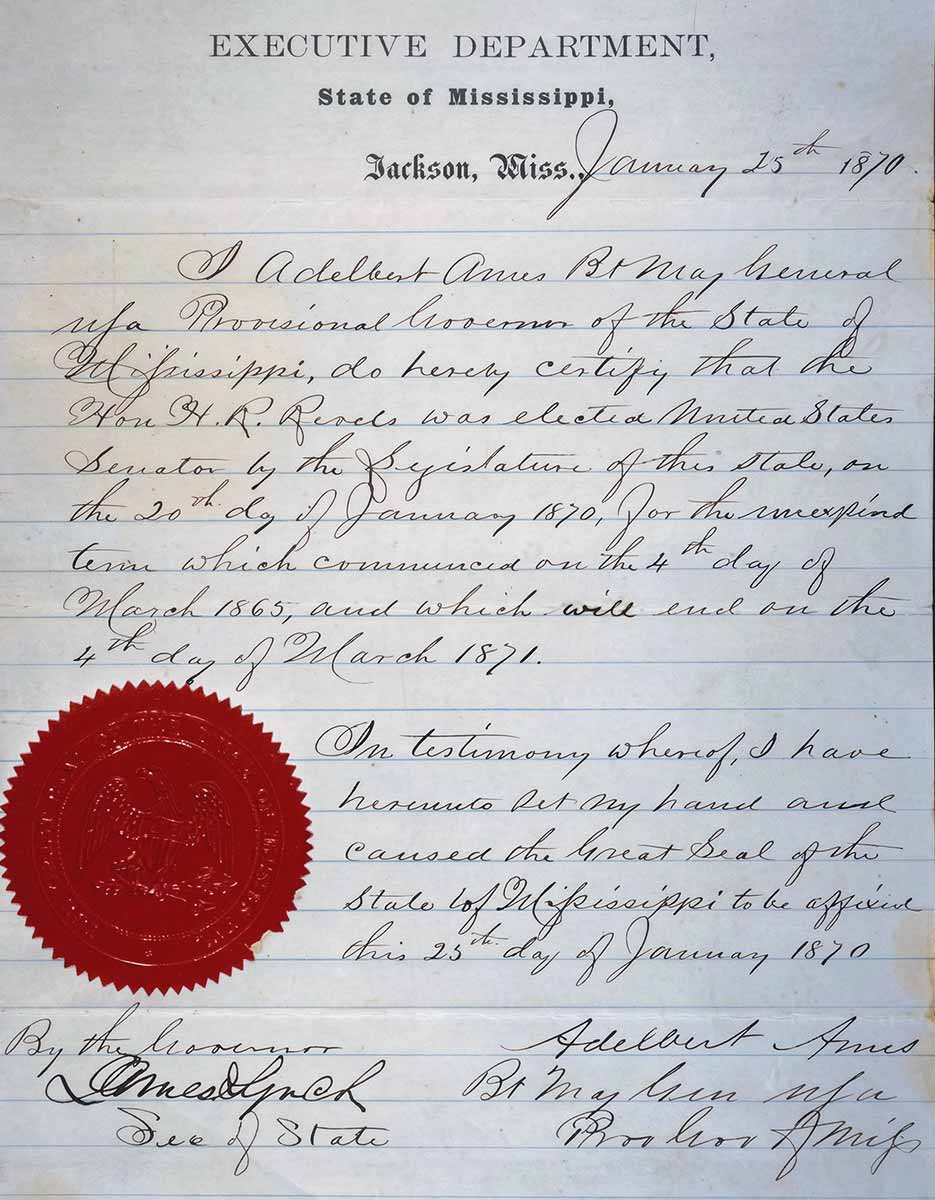
After the conclusion of the Civil War, Revels moved to Mississippi and began working to organize schools and churches for newly freed African Americans, an endeavor known as Freedman Schools. He quickly gained a reputation for being fair, articulate, and principled. That reputation opened doors, and in 1869, he was elected to the Mississippi State Senate. Then, in 1870, the unimaginable happened: Mississippi, the second state to secede from the Union at the start of the Civil War, selected Hiram Revels to fill a vacant U.S. Senate seat. The irony was impossible to ignore. Nine years prior, Jefferson Davis, the former and only President of the Confederacy, vacated the seat now held by Revels. A Black man had won the seat once occupied by the man who led the fight to keep Black people enslaved.
When Revels arrived in Washington, some senators tried to block him, arguing that he hadn’t been a U.S. citizen for nine years as required by law. Their argument was based on the claim that Black people hadn’t been citizens before the passage of the 14th Amendment. In fact, prior to the amendment’s adoption, Black individuals were counted as 3/5 of a person, solely for the purposes of representation in the U.S. House. But the challenge failed. Revels was sworn in on February 25, 1870.
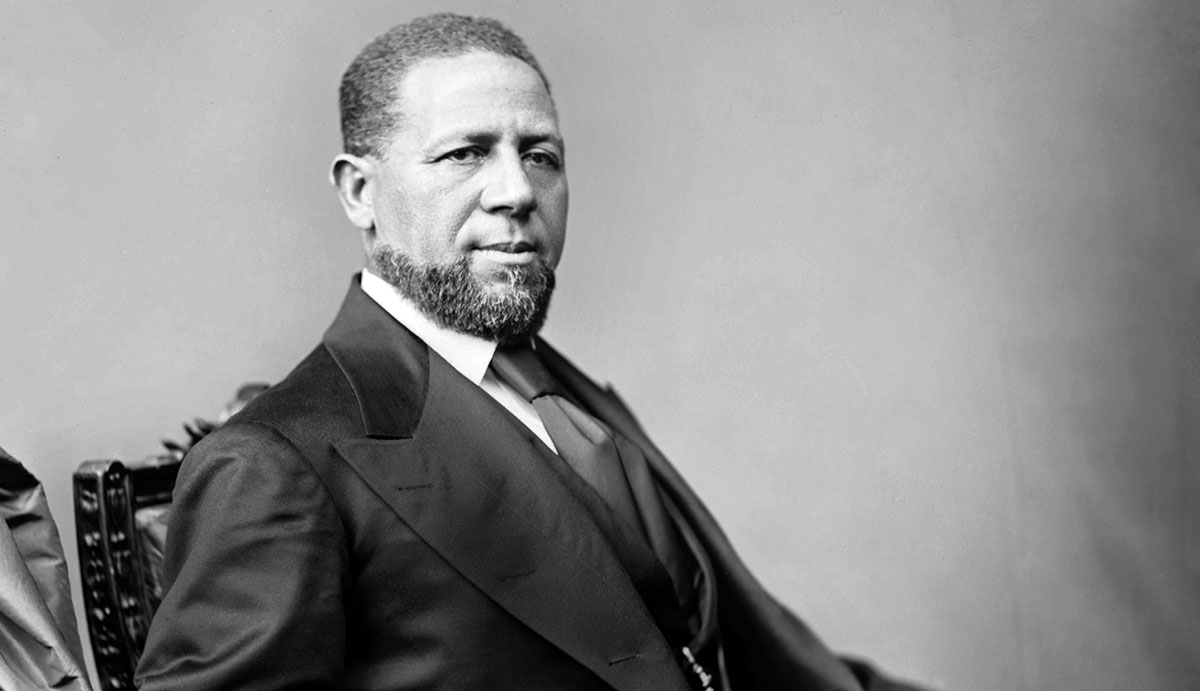
While in the Senate, he never abused the power of his office. He wasn’t trying to start fights or dominate headlines. Instead, he focused on education, desegregation, and reconciliation at a time when the country was extremely divided. He urged moderation and civility, even in the face of injustice. Some radicals thought he was too soft. But Revels understood that unifying the nation was the paramount goal of the era and could only be accomplished through gentler political means.
A Champion of Reconciliation
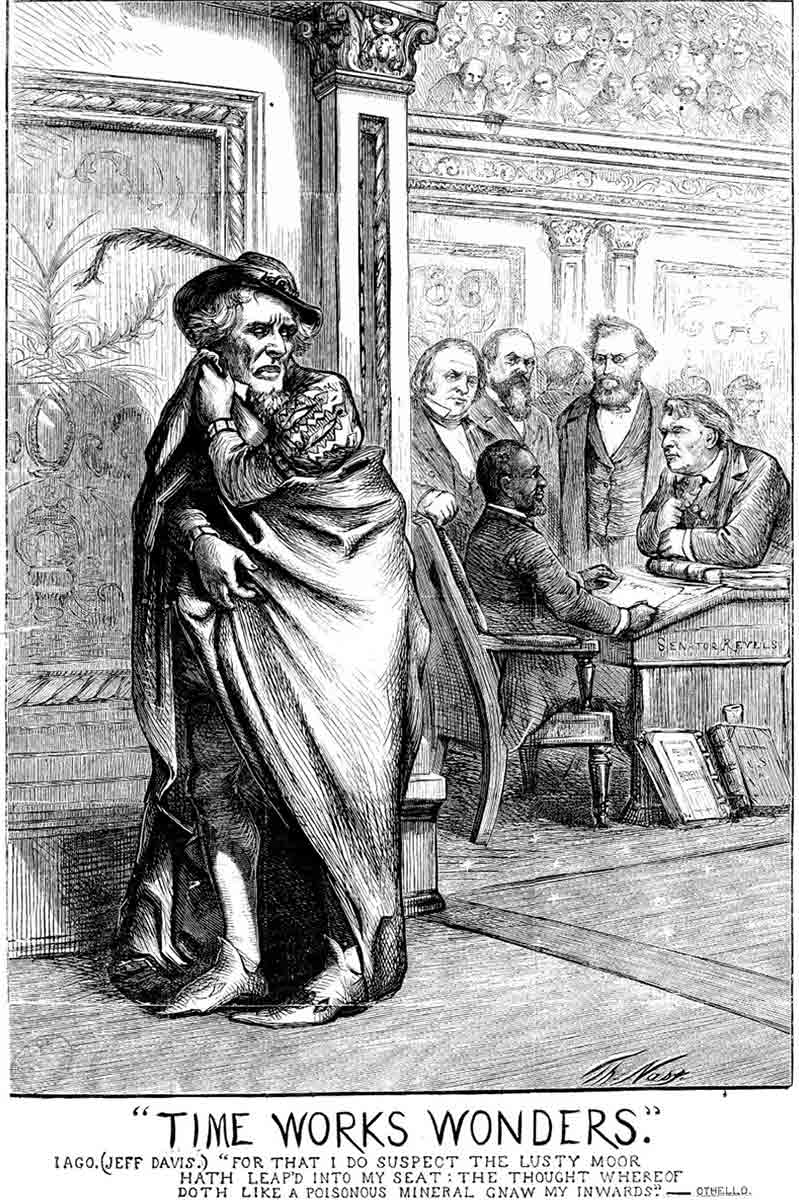
What made Hiram Revels stand out wasn’t just that he was the first Black U.S. Senator, it was that he refused to let bitterness and resentment shape his politics. While others in his position may have used the platform to attack former Confederates or demand vengeance, Revels took a different path. In a view shared by Abraham Lincoln before his assassination, he believed the country didn’t need more division, it needed healing. Revels advocated for restoring rights to ex-Confederates who showed a willingness to change, even when that stance put him at odds with more radical voices in the Republican Party. To Revels, reconciliation wasn’t surrender. He understood that the long game required building coalitions with former Confederates, especially to combat the growing Ku Klux Klan.
That didn’t mean he was soft on injustice. He remained firm in his defense of Black civil rights and education, but he also believed that moving forward meant finding ways to bring people together. In a time defined by anger and retribution, Revels preached forgiveness and progress. That commitment to unity, even when it wasn’t popular, showed a level of courage most of his critics never matched.
Life After Politics
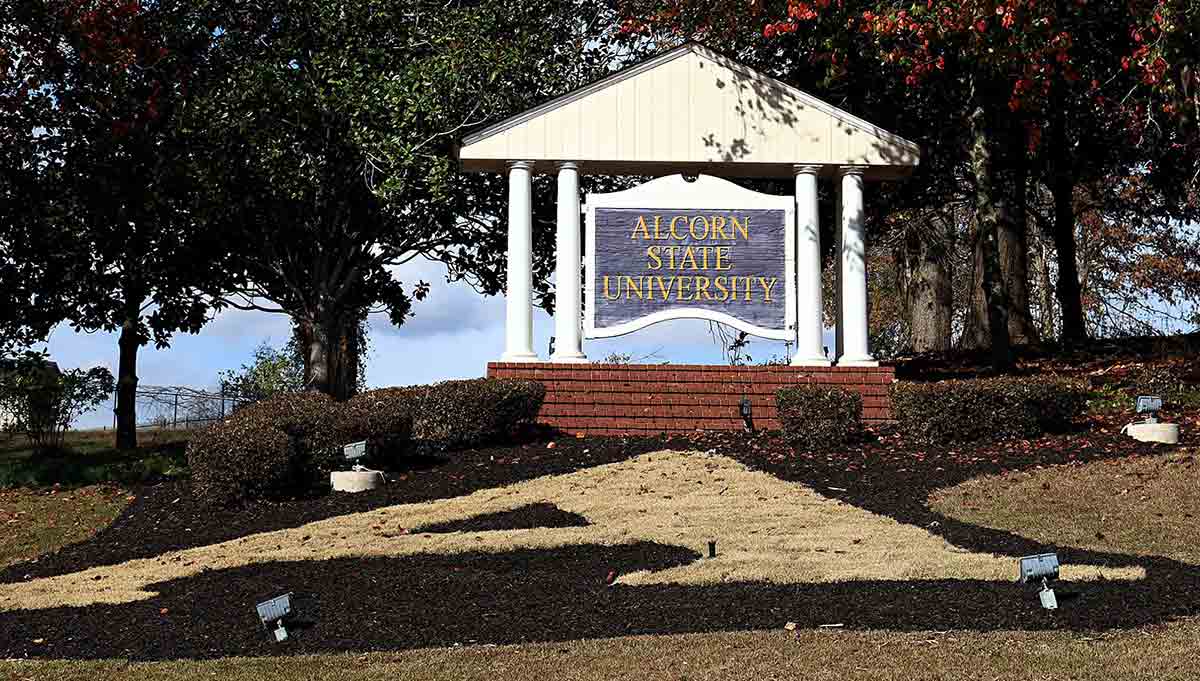
Revels only served one year as a Senator. He chose not to run for reelection, preferring to return to Mississippi and continue his work in education and the church. In 1871, he became president of Alcorn University, the first land-grant institution for African Americans in the country. At Alcorn, he emphasized discipline and character; values he believed were essential to securing real freedom. He taught young Black men that freedom wasn’t just the absence of chains, it was the ability to read, lead, and lift others. Education was the only reality that could not be taken away by segregationists.
Revels also stayed involved in public affairs. He opposed corruption within the Reconstruction governments, even when it meant breaking ranks with other Black leaders. He criticized politicians, Black and white, who he believed were exploiting freedmen rather than empowering them. In 1875, during the height of racial violence in Mississippi by the KKK, Revels wrote a public letter warning that the Republican Party’s corruption was giving white supremacists an excuse to reassert control.
It was a risky move, and it cost him politically, but Revels didn’t care about popularity. He cared about progress. Even as the Reconstruction era collapsed around him, coming to an official end in 1877 following the Presidential election of Republican Rutherford B. Hayes and the Compromise of 1877, he continued pushing for justice through education and community leadership. He eventually returned to the ministry, continuing to preach and serve until his death in 1901.
Legacy: Disciplined Leadership
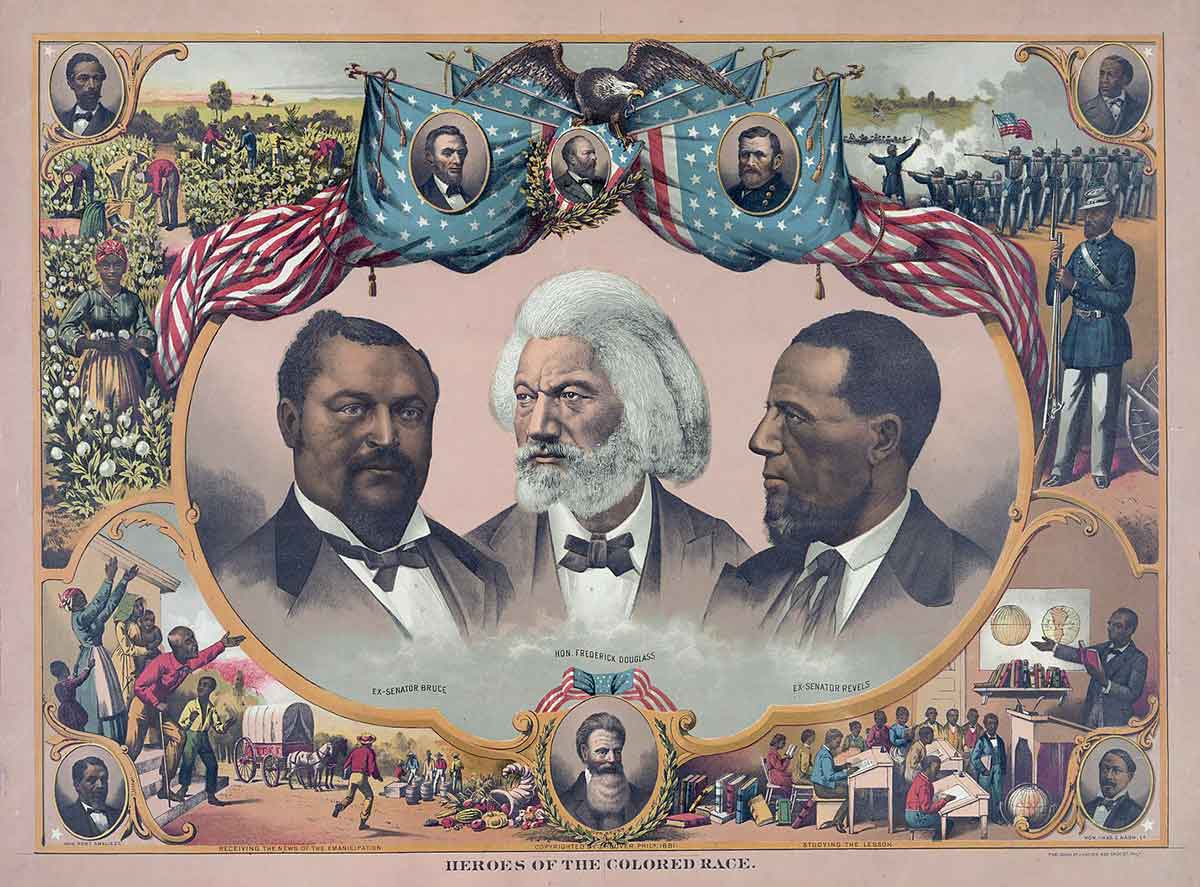
Hiram Revels is often overshadowed by other Civil Rights leaders. He never led a march or gave a famous speech. But what he did was just as powerful. He walked into the United States Senate as a free Black man and claimed a seat that had once belonged to slavery’s champion. That act alone sent a message to the country that the old order was not unshakable.
Revels proved that African Americans could govern, legislate, and lead with dignity and discipline, flying in the face of arguments from pro slavery and later segregationist politicians. His emphasis on education, moderation, and moral leadership would echo in the lives of future Black leaders, from Booker T. Washington to Barack Obama. While his tenure in office was brief, his example lasted generations. In a time when freedom was fragile, Hiram Revels embodied what it looked like to stand tall without shouting, to fight without fists, and to believe in a better nation even when the nation didn’t believe in you.