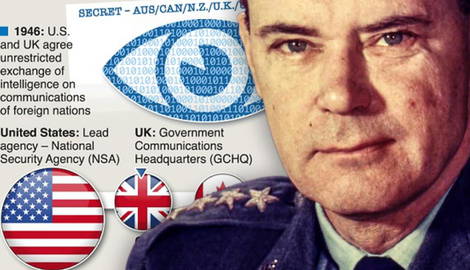

The sharing of intelligence between Anglophone countries during WWII was a major contributor to Allied victory in the war. Wartime success gave birth to a major international intelligence-sharing venture known as the Five Eyes. To this day, the parties to the Five Eyes Alliance work closely together to gather and share intelligence on hostile nations and terror networks.
WWII Origins
During the Second World War, the Allies relied heavily on intelligence collected through intercepts and on-the-ground sources. Sharing this intelligence was a crucial component of the Allied war effort. America and Britain started working on sharing intelligence briefs even before the Pearl Harbor attacks in December 1941. As the war progressed, intelligence sharing was expanded.
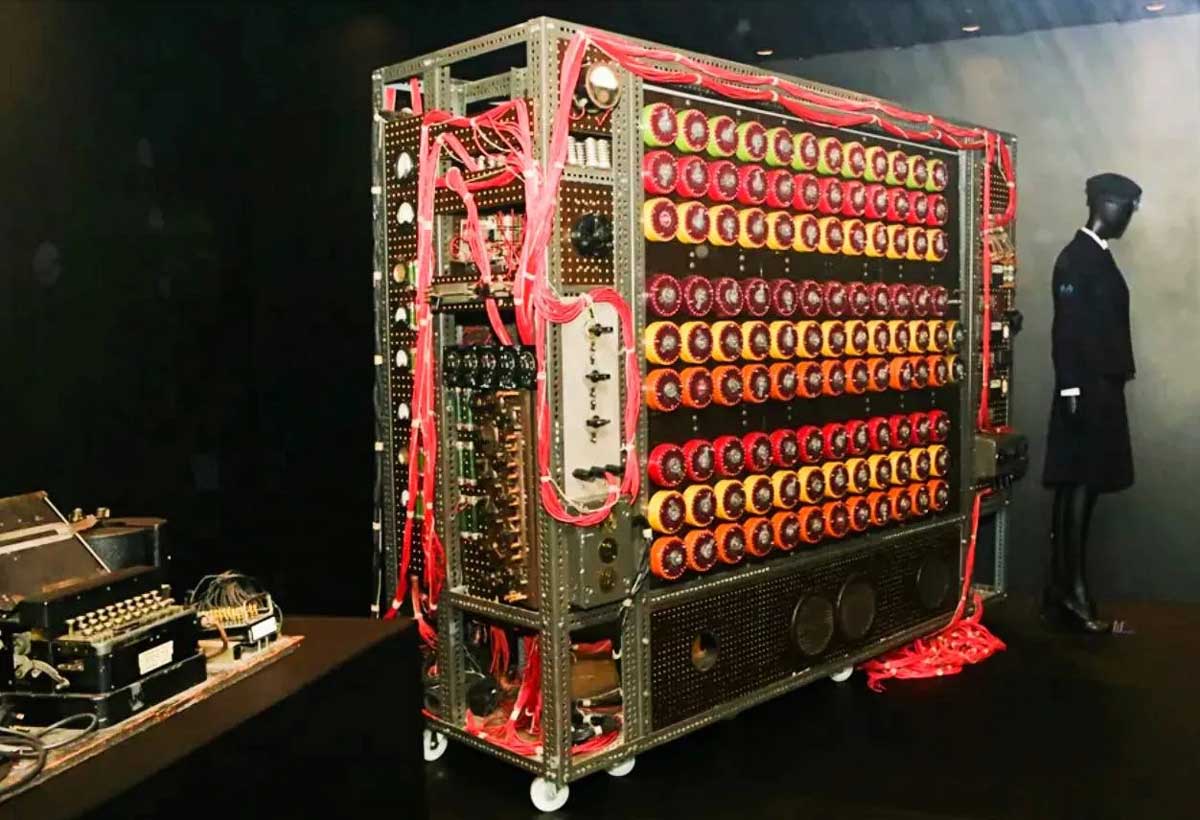
On February 8, 1941, four American signals intelligence officers arrived in the UK as part of the Sinkov Mission. They had a joint mission with British intelligence personnel at Bletchley Park to discuss German intercepts. This kind of cooperation increased when the Americans formally entered the war after Pearl Harbor. The Americans wanted to learn more about the German Enigma machine while the British wanted American help in cracking Japanese transmissions. Throughout the war, over 100 Americans worked with their British colleagues at Bletchley Park to uncover Axis transmissions. This work culminated in the BRUSA Agreement in 1943, which formally established an Anglo-American intelligence-sharing alliance.
Other Allied nations developed ties with American intelligence throughout the war. Australia and New Zealand had networks of spies throughout the Pacific. The Americans were pleased to work with them to gain more insight into Japanese activity. In 1942, the Central Bureau and Fleet Radio Unit Melbourne, or FRUMEL, were established to coordinate Western Allied intelligence sharing in Australia. Radio intercepts were a priority, but intelligence gathered from resistance movements was shared too. Cooperation like this increased as the war continued, setting the stage for a permanent intelligence alliance between Anglosphere countries.
The Creation of the Alliance
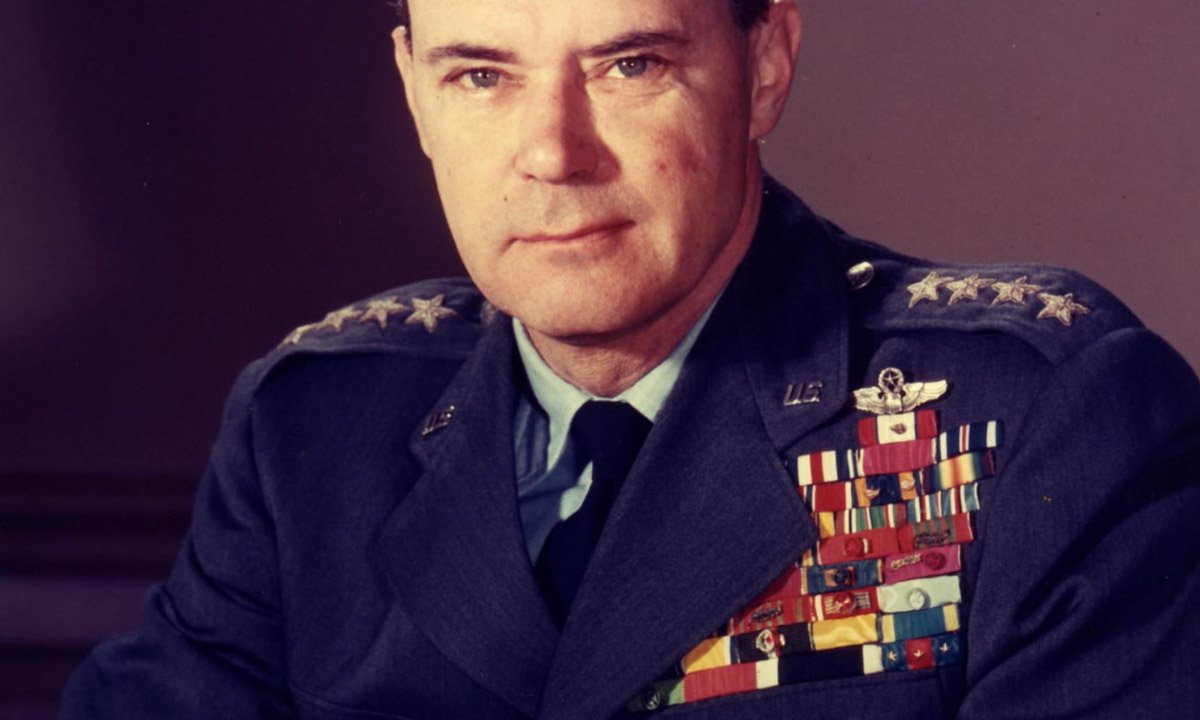
The Allied victory strengthened the idea that joint intelligence sharing was crucial for the Western Alliance. As the Western world started to create alliances like NATO or SEATO during the Cold War, intelligence chiefs worked behind the scenes to maintain wartime cooperation. In 1946, American General Hoyt Vandenberg of the Army-Navy Communication Intelligence Board and British Colonel Patrick Marr-Johnson of the UK’s Signals Intelligence Board signed the UKUSA Agreement. This treaty ensured that BRUSA continued to operate in peacetime.
The UKUSA Agreement became the main treaty behind the Five Eyes Alliance. The details of the treaty were kept from the public at the time of its signing. Only in 2010 did the terms of the deal become open to the public. Initially, GCHQ (Government Communications Headquarters, UK) and the NSA (National Security Agency, USA) were the main agencies involved in the deal. Its terms were almost the same as the BRUSA Agreement: focusing on intelligence sharing and joint analysis.
In 1948, Canada became a signatory to UKUSA owing to its close ties to American and British intelligence. This was followed by Norway signing on in 1952, Denmark in 1954, West Germany in 1955, and Australia and New Zealand in 1956. All of these countries were Western democracies, but the agreement ended up being just between the Anglosphere countries. Norway, Denmark, and West Germany became privy to joint intelligence sharing and collection through NATO instead. This led to the development of the term Five Eyes.
The Five Eyes During the Cold War
As the intelligence contest between the West and the Communist bloc ramped up, the Five Eyes member states worked together to identify possible communist spies and jointly infiltrate enemy governments. The downsizing of SIGINT (signals intelligence) teams in the aftermath of the Second World War was reversed when it became clear that the West needed to decode Eastern bloc intercepts. Despite mistrust between American and British intelligence officials over developments in the Middle East, the relationship between Anglosphere intelligence agencies strengthened in the face of the Soviet threat.
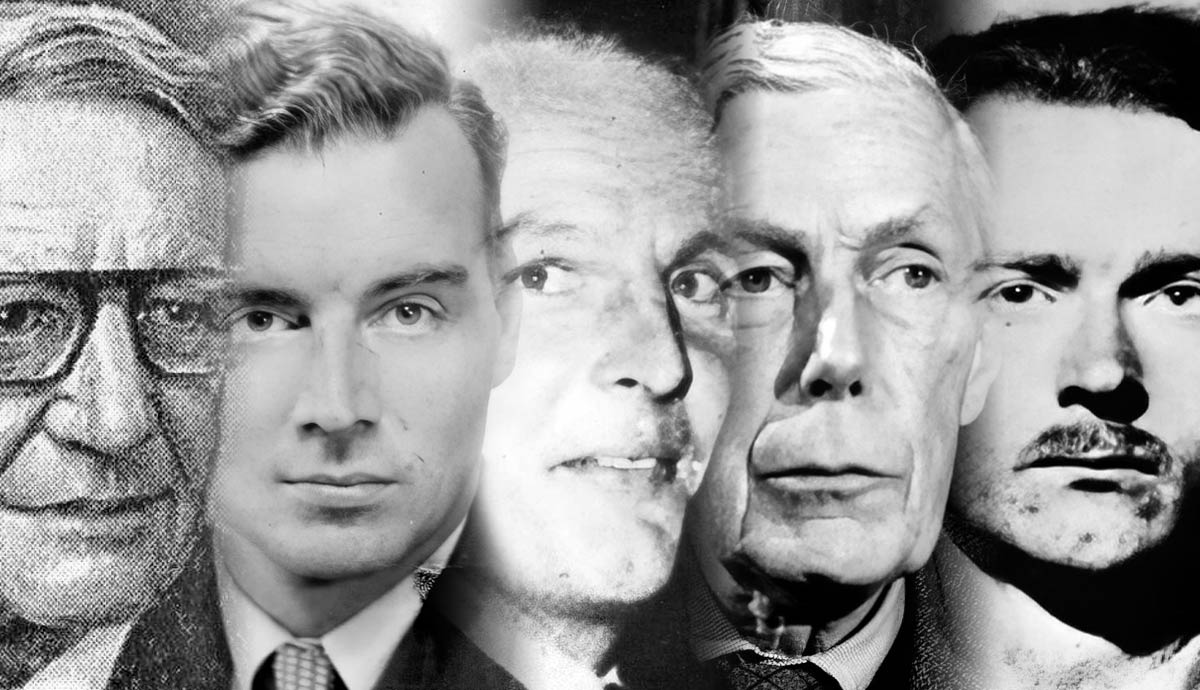
In addition to working on decryption of signals, the Five Eyes alliance members worked to identify double agents within their own agencies. Britain had several Soviet double agents working in its intelligence community known as the Cambridge Five. These men had passed on important intelligence to the Soviet KGB until uncovered. One of them, Anthony Blunt, was identified when the CIA interrogated a man he knew who told them Blunt was a Soviet spy. Notwithstanding the effectiveness of Five Eyes intelligence services, double agents were a serious threat.
Alliance member agencies also coordinated when providing intelligence during wars or managing sources during a crisis. When America, Australia, and New Zealand fought in the Vietnam War, they jointly shared intelligence on the activities of the National Vietnamese Army and the Viet Cong. This included hunting down enemy arms caches and tracking Soviet and Chinese assistance to North Vietnam. Even though Britain was not a participant in the war, it did share intelligence it gathered from its station in Hanoi.
Organization of the Alliance
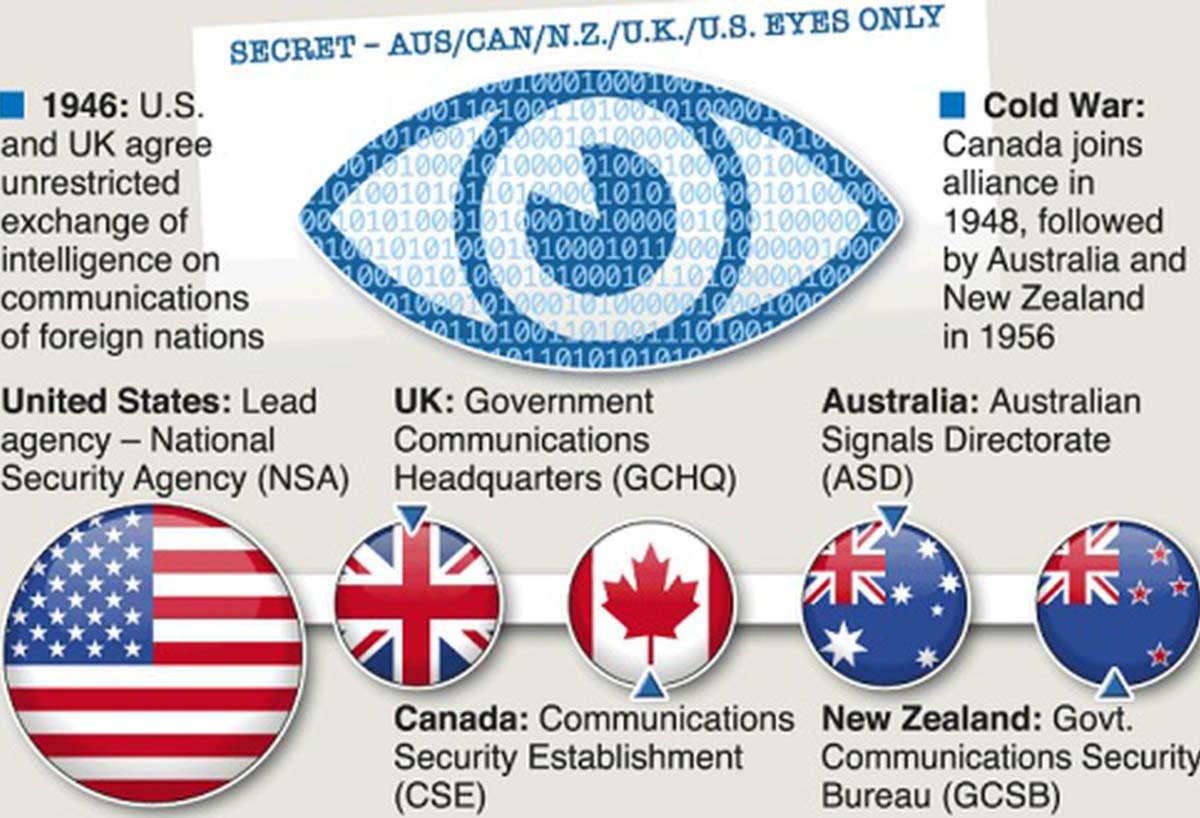
After all five member states joined the alliance, they sought to integrate their agencies into the alliance structure. That meant setting up liaison branches, holding interagency meetings, and coordinating crisis responses. Three types of intelligence relationships developed with the Five Eyes alliance: foreign (civilian and military), domestic, and signals. The SIGINT relationship was crucial for decoding hostile transmissions and identifying terror plots online. NSA, GCHQ, CSE (Communications Security Establishment Canada), ASD (Australian Signals Directorate), and GCSB (Government Communications Security Bureau, New Zealand) are the SIGINT agencies in Five Eyes.
The CIA, MI6, CSIS (Canadian Security Intelligence Service), ASIS (Australian Secret Intelligence Service), and NZSIS (New Zealand Security Intelligence Service) are the civilian foreign intelligence agencies that are in the Five Eyes relationship. They have jointly managed sources, shared information gleaned from HUMINT, and identified common threats. For instance, the CIA and MI6 worked together during the Cuban Missile Crisis to identify Soviet intentions by jointly managing a Soviet double agent named Colonel Oleg Penkovsky.
Their work dovetailed with military intelligence agencies, which focused mainly on military matters and the deployment of hostile forces. All five countries fought in Afghanistan and shared military intelligence on the Taliban’s activity. The military intelligence agencies in Five Eyes consist of DNI (Directorate of National Intelligence, USA), DI (Defence Intelligence, UK), CFINTCOM (Canadian Forces Intelligence Command), the DIO (Defence Intelligence Organisation, Australia), and the DDIS (Directorate of Defence Intelligence and Security, New Zealand).
Lastly, the domestic intelligence agencies of each member nation coordinate on counterterrorism, counterespionage, and antigang measures. Criminal syndicates operating across member states are targeted by internal government agencies working together. After 9/11 in 2001 and the creation of ISIS’s caliphate in 2014, joint intelligence sharing on terrorism became a priority. The agencies in this relationship consist of the FBI, MI5, RCMP (Royal Canadian Mounted Police), ASIO (Australian Security Intelligence Organisation), and NZSIS.
Five Eyes Alliance Controversies
During the Cold War and the Global War on Terror, the activities of the intelligence agencies of Five Eyes member states were scrutinized. Many of these agencies were engaged in controversial behavior that caused political scandals affecting every member state. Some of these scandals included unlawful electronic surveillance, meddling in other countries’ elections, and practicing unlawful interrogation techniques.
In 1973, Chilean President Salvador Allende was ousted by the military in a coup backed by the United States. British and Australian intelligence also provided support to the coup plotters. Elsewhere, Five Eyes agencies helped plot coups against leaders not considered supportive of the struggle against communism. In 1961, the Americans and British worked together to assassinate Patrice Lumumba, the leader of the Democratic Republic of the Congo, because he was considered too close to the Soviets. Much of this activity came to light in the 1970s with the Church Committee’s investigations into CIA and FBI misconduct.
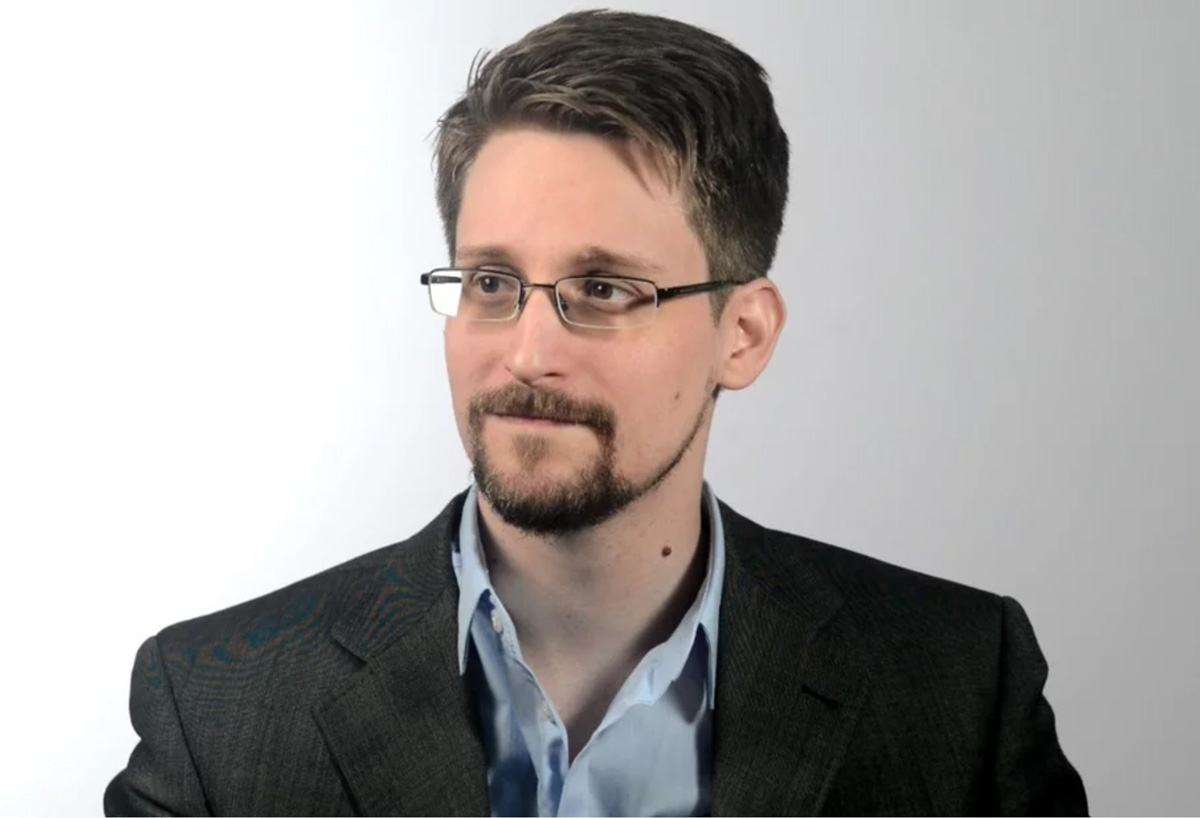
In the War on Terror, the need for SIGINT to prevent terror attacks led to the creation of mass surveillance programs like PRISM. In 2013, NSA contractor Edward Snowden leaked documents revealing the extent that the US government was spying on its own citizens and the citizens of other countries. Snowden’s leaks revealed that the Five Eyes member states colluded on this program. Additionally, the alliance surveilled UN officials in the leadup to the Iraq War in order to create pressure on UN member states to support actions against Iraq. These actions cast a pall over the alliance.
Potential Expansion
The effectiveness of the agencies in the Five Eyes Alliance has been noted around the world. This has led to debates over whether or not new member states should be invited into the alliance. Despite the close ties between Five Eyes members and other governments, the Five Eyes grouping remains an Anglosphere project. With China and Russia continuing to be a threat to the Western world, members of the Five Eyes have debated whether to expand its membership.
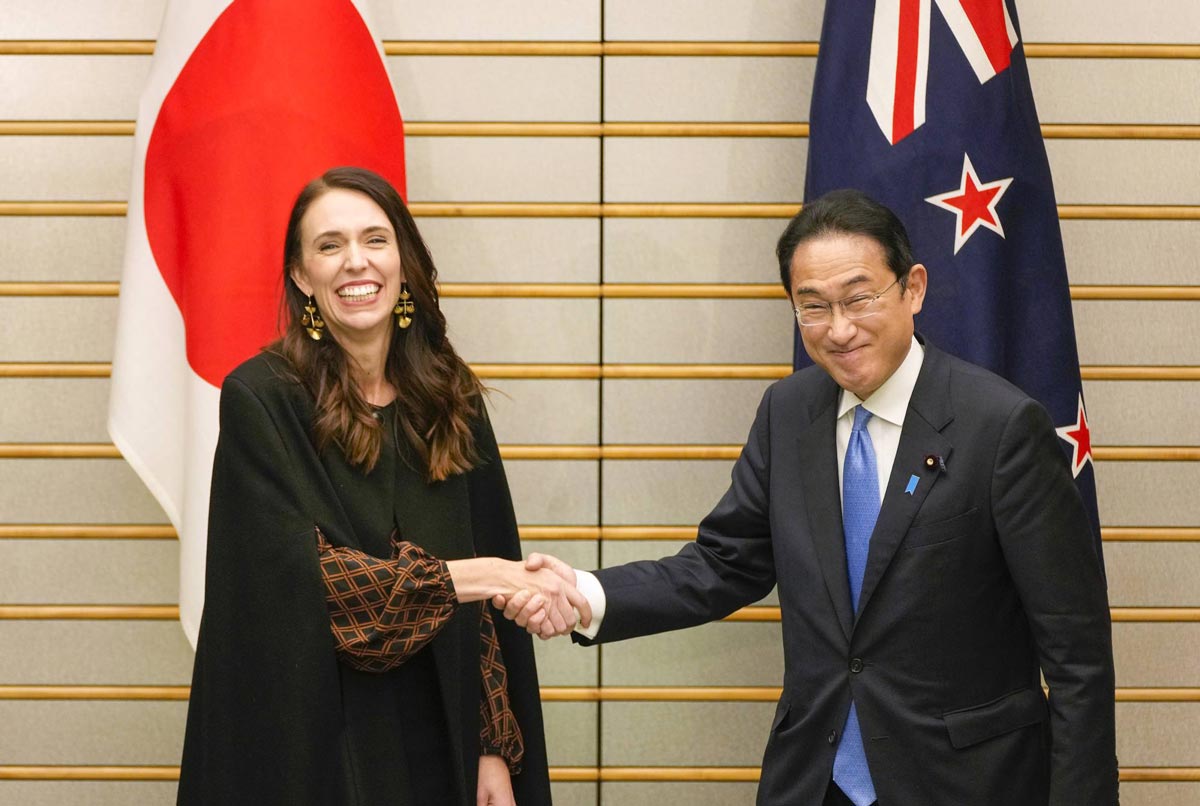
The increased concern in Australia and the US over China’s behavior has led to a push for Japan to join the Five Eyes. If Japan ever became accepted, it would be the first Asian state to be in the alliance. However, because Japan is already a treaty ally of the United States, it is privy to information collected by the United States. This means that the country would not need to be a Five Eyes member to be a party to American intelligence sharing. South Korea has faced a similar dilemma about whether it needs to join the alliance.
In Europe, NATO’s coordination regarding terror threats and Russia means that most member states are part of a joint intelligence collection effort. When Russia was preparing its invasion of Ukraine in 2022, NATO members shared information that identified Russia’s plans and order of battle. While France, Germany, and the Nordic states have offered to join, they never have, in part because they do not need to. Debates about whether the alliance can or should expand are likely to continue into the future.