
In 1980, David Lynch brought the story of Joseph Merrick to public attention in his film The Elephant Man, which took many liberties, including changing the titular character’s name to “John.” Nevertheless, it achieved widespread critical acclaim for its focus on humanity and compassion in the face of prejudice.
This dynamic was certainly true in the life of Joseph Merrick, but his story was far more complex than could possibly be told in 123 minutes.
From childhood tragedy to freakshows and medical curiosities that amused and baffled Victorian England, Joseph Merrick endures as a symbol of resilience and dignity.
Early Life of Joseph Merrick
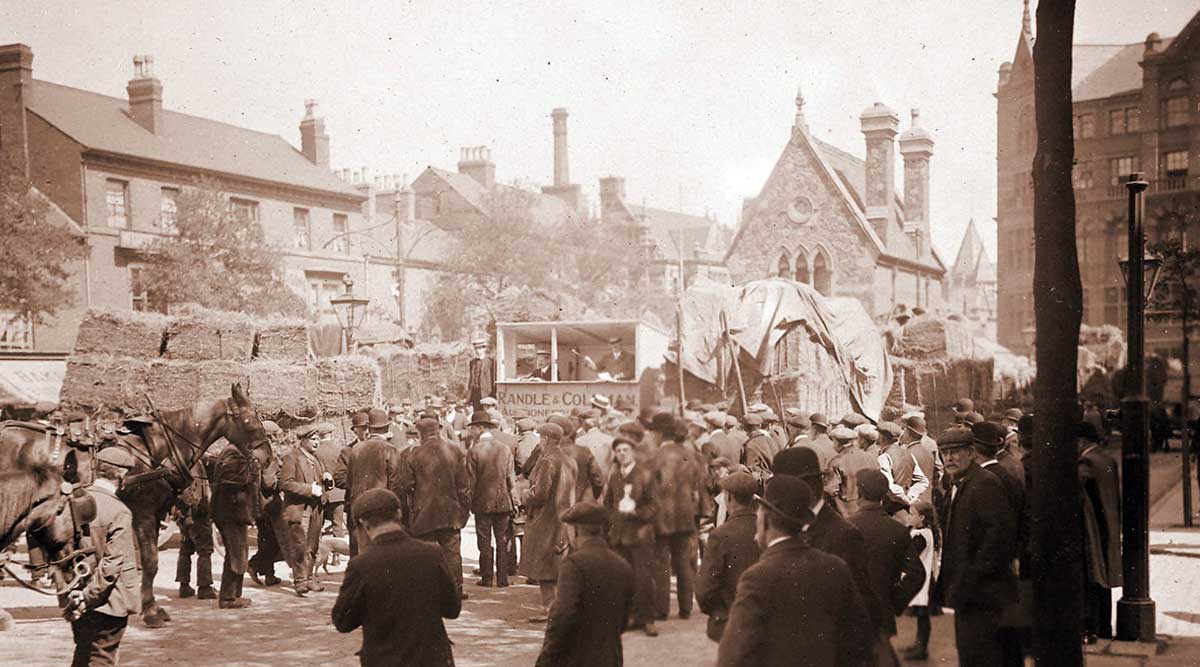
When he was born on August 5, 1862, in Leicester, England, Joseph Carey Merrick seemed like a normal infant, with no sign of the deformities that would plague him as the years passed. From a working-class background, Joseph was named after his father, Joseph Rockley Merrick, and given the middle name Carey by his mother, Mary Jane. He had two siblings: a brother, William, who died from scarlet fever at the age of four in 1870, and a sister, Marion, who also suffered from physical disabilities and died at the age of 23 in 1891.
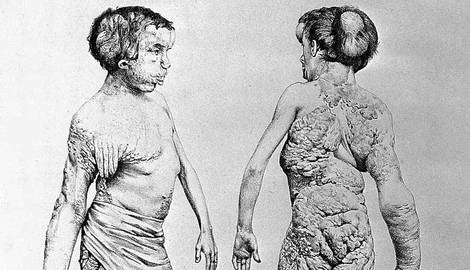
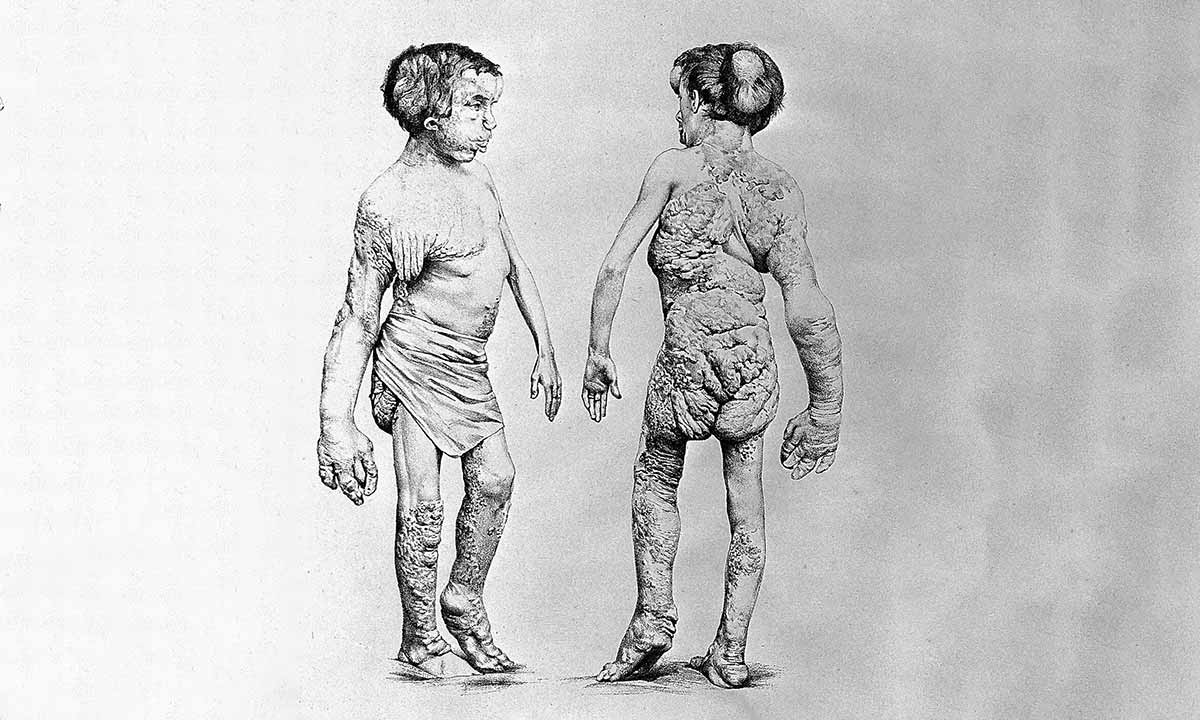
At the age of five, Joseph started to display the first signs of his condition, likely a rare genetic disorder later identified as Proteus syndrome, which causes excessive tissue growth, including skin and bone. At the time, this condition had yet to be diagnosed and was only discussed in journals in the 1970s and named in 1983.
As he grew older, the syndrome took its toll. The circumference of his head eventually increased to around three feet, and spongy growths appeared, rendering him incapable of normal human expression and impeding his ability to speak. His right arm ballooned up and ended in a fin-like hand, while his lower body fared no better until he was only able to walk with the help of a stick.
Despite his growing deformities, Merrick attended a local school. In 1873, when he was 10 years old, his mother died from a bout of bronchial pneumonia. This tragedy, naturally, hit Merrick hard, and he later described it as the biggest sadness in his life. His father remarried, and Merrick received little compassion from either his father or his stepmother.
His father owned a haberdashery and acquired a peddler’s license for his son, but Merrick’s speech was so impaired that people struggled to understand him. In public, he was feared, and one day, his father beat him for not earning enough money.
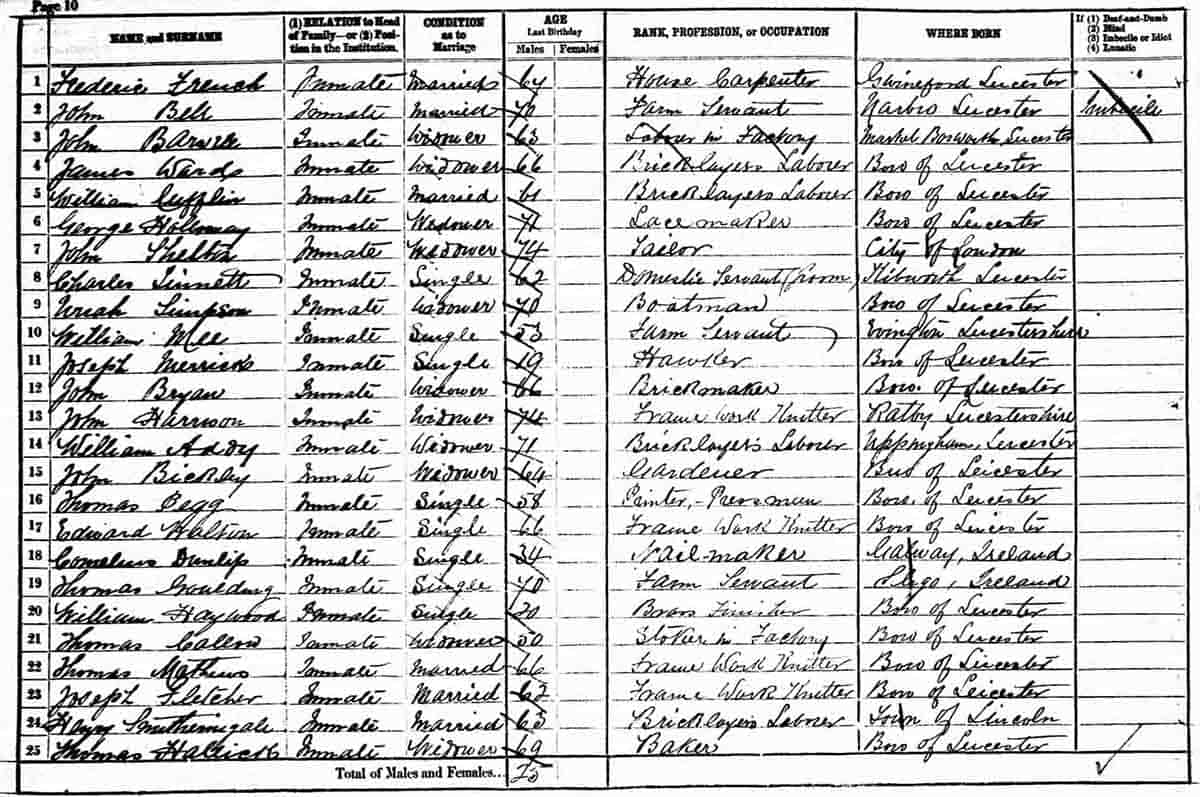
He went to live with his uncle, but financial hardships made things considerably difficult. At the age of 17, he became a resident at the Leicester Union Workhouse, but found life there to be extremely challenging. While there in 1882, he underwent corrective surgery on his mouth to remove a large bony protrusion, which made speech almost impossible. He abhorred this workhouse life, but there was, however, no other dignified means of supporting himself. His only other option was to embrace his deformities and exhibit himself as part of a freak show.
Becoming the Elephant Man
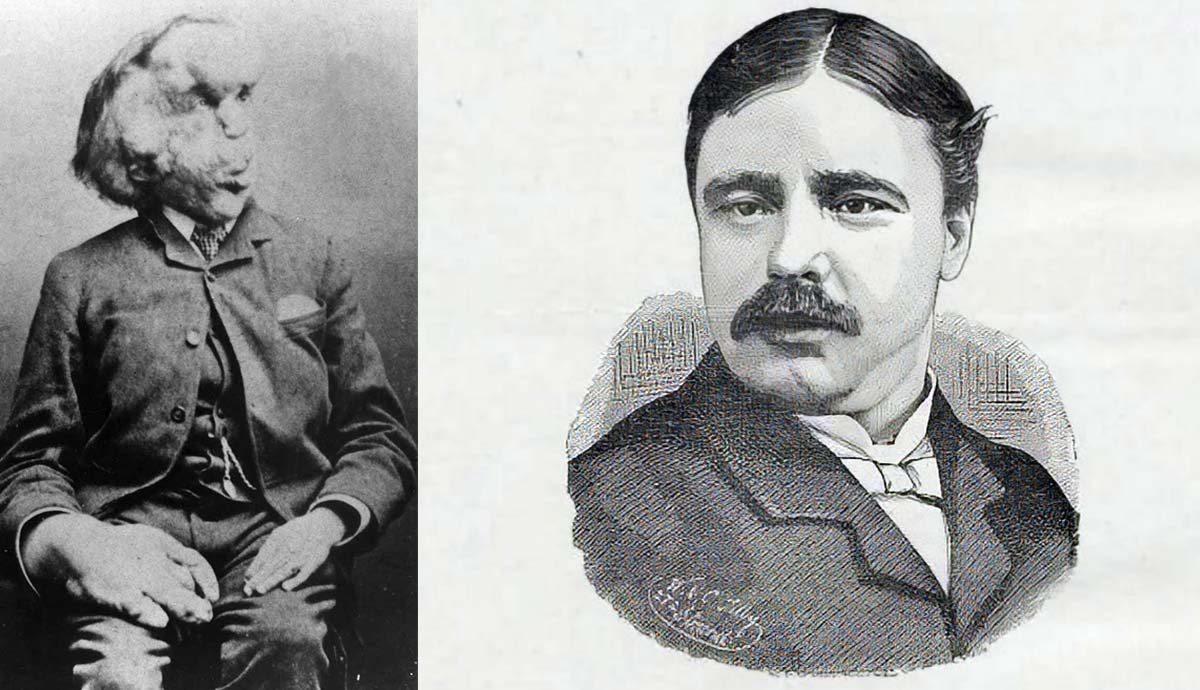
Merrick wrote to Sam Torr, a music hall comedian and local celebrity, and suggested he exhibit him to the public. Torr accepted Merrick’s offer, and in 1884, at the age of 22, Merrick was joined by three other managers who formed a syndicate with Torr: J Ellis, George Hitchcock, and ‘Professor’ Sam Roper. They promoted Merrick as “the Elephant Man – Half a Man and Half an Elephant.” Merrick toured Leicester, Nottingham, and London before signing on with Tom Norman, an East London shop owner who displayed oddities and curiosities. Despite the dynamic of exploitation, Norman treated Merrick with respect and split the profits 50/50, also taking care of food and lodging expenses. This was a far cry from the abusive drunkard depicted in the Lynch film.
Merrick stayed in the back of the shop, and Norman gathered audiences outside and led them in, describing Merrick as someone who was “not here to frighten you but to enlighten you!” This was a small but noticeable attempt to preserve some semblance of Merrick’s dignity.
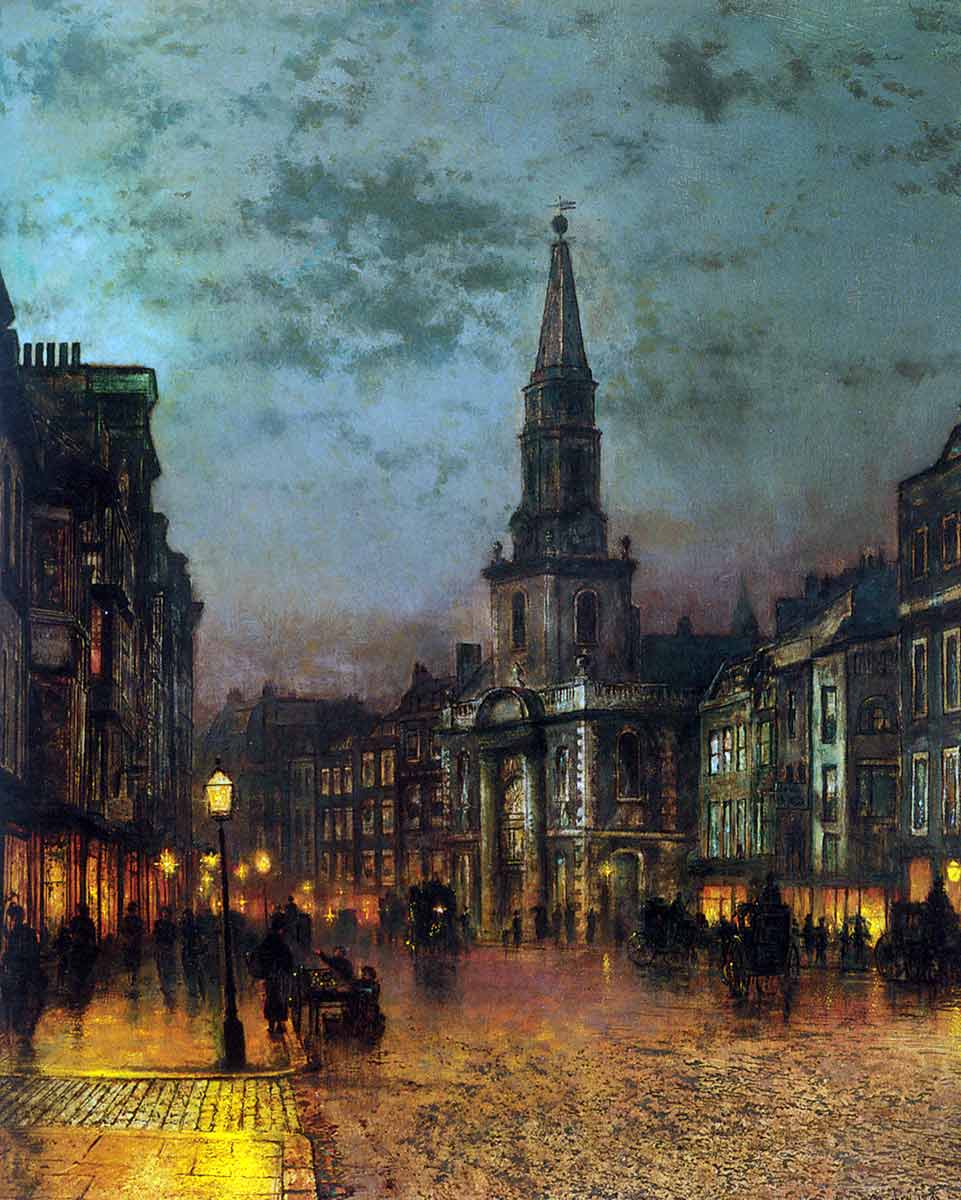
Norman’s shop was conveniently located opposite London Hospital, where Merrick would spend much of his life not only as a patient, but also as a curiosity within the medical community. One day, before Norman’s shop opened, Doctor Frederick Treves stopped by and asked Merrick if he could come to the hospital for an examination. This was followed by a flurry of medical interest as Treves presented his patient to the medical fraternity. Merrick decided he did not want to continue these examinations, stating that he was “stripped naked and felt like an animal in a cattle market.”
Fame and Misfortune
Joseph Merrick continued his work as a freak show oddity, but Victorian society was changing, and there was concern that such spectacles were indecent. With this and the distaste for large, unruly crowds that gathered, police began to take action against such events. Norman’s shop was shut down around the end of 1884, and Merrick went on tour, crossing the Channel, hoping to gain attention on the continent.
His new manager (a man possibly known as “Ferrari”), however, robbed him of his savings and abandoned him in Brussels. Penniless and desperate, Merrick made his way to Ostend, hoping to board a ferry to Dover, but was refused. He then traveled to Antwerp and obtained passage on a ship bound for Essex. After landing in England, he returned to London.
Destitute on the streets of London, Merrick asked passersby for help, but his speech was incomprehensible due to his condition, and he drew crowds of onlookers. Eventually, a policeman helped him. The only identifying item on his person was Dr. Treves’ card.
Treves came to fetch Merrick and took him back to London Hospital, where a room was prepared for him in the hospital’s attic. Merrick’s condition had deteriorated, and Treves discovered that his patient also had a heart condition. He estimated that Merrick would only live a few more years at most. Unfortunately, London Hospital was not equipped to accept the permanent residence of “incurables,” and other hospitals refused to take Merrick. A solution had to be found.
The chairman of the hospital committee, Francis Carr Gomm, appealed to the public through The Times, asking if anyone was willing to offer Merrick a place to stay, and the response was overwhelming. Donations poured in, and the hospital was able to build a permanent space for Merrick, affording him considerable comfort. Two rooms in the basement were renovated to accommodate Merrick’s needs, including access to a private courtyard.
Hospital Life
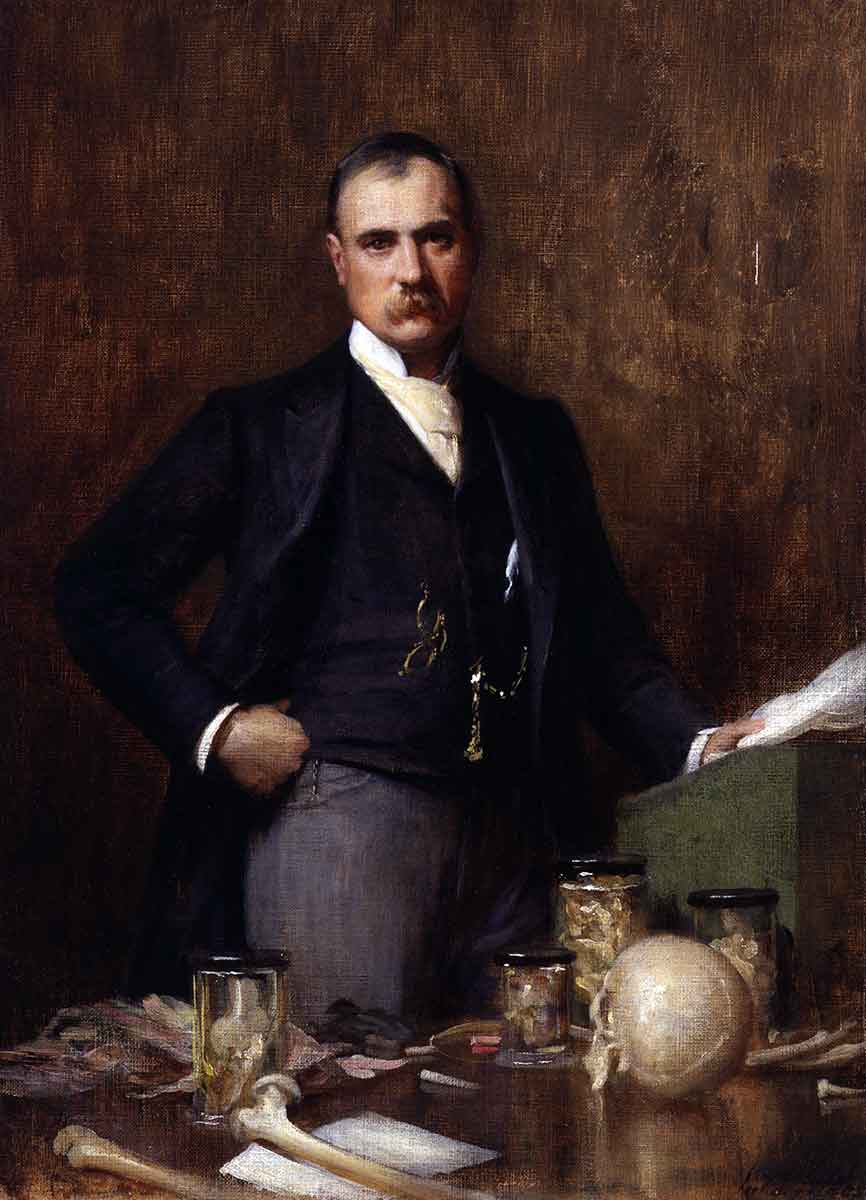
With Merrick being examined and visited by a slew of visitors, his former manager, Tom Norman, argued that Merrick must have felt like “he were a prisoner living on charity.” While this may have been painfully true, the reality was that Merrick could no longer work and was dependent on the hospital. And while the attention may have been difficult at times, there seems to have been a genuine interest from the public, largely driven by compassion.
England’s wealthy elite took a special interest in Merrick, and he was even visited by Princess Alexandra of Wales. With the help of his supporters, financial and otherwise, Merrick realized opportunities to fulfill long-held desires. He visited the theater and took vacations in the countryside. When he went outside, he covered himself in a cape so as not to draw attention.
Treves noted Merrick’s intelligence and described him as gentle and affectionate, ennobled by his struggles, and free from cynicism and resentment.
Nevertheless, Treves was also patronizing towards Merrick, referring to him as a “primitive creature” in his memoirs. Treves’ role was one of Victorian paternalism, viewing Merrick as an object of pity rather than as an equal. Despite this obvious anachronistic dynamic, Treves did show unusual compassion and care for Merrick, affording him the opportunity to live a comfortable life far beyond what could have been expected otherwise. Much of his time, he spent reading and building models of buildings, the latter demanding a great deal of patience and a surprising amount of dexterity.
The Death and Legacy of Joseph Merrick
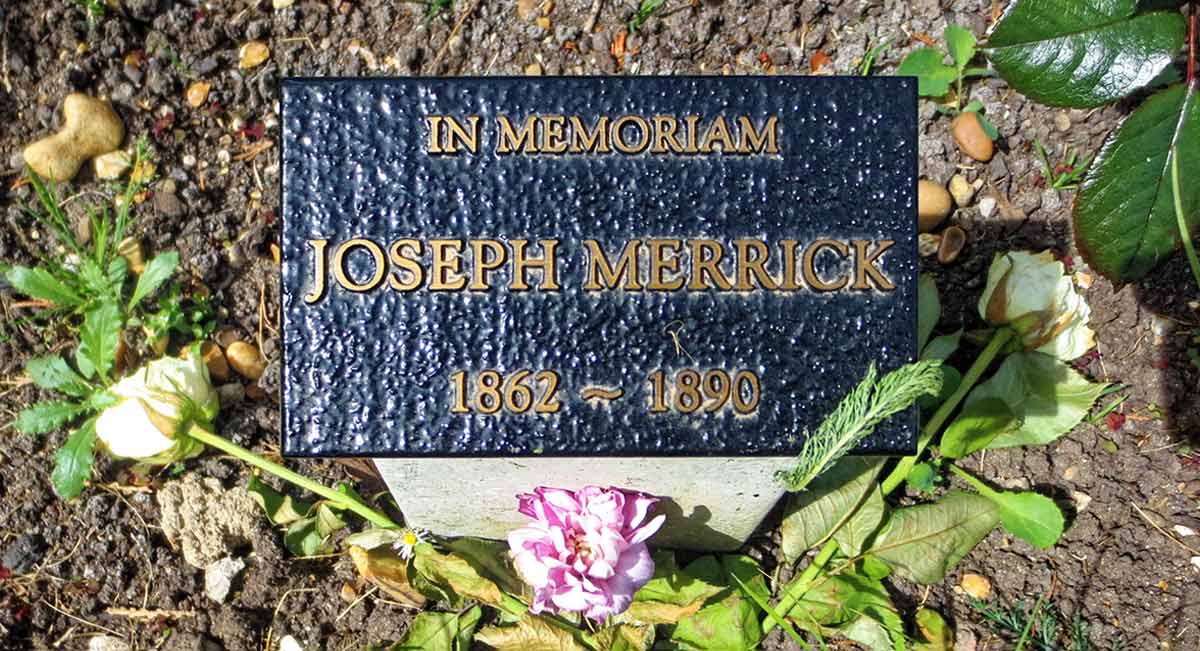
In the last years of his life, Merrick’s condition took its toll. He spent much of his time in bed, with little energy. On April 11, 1890, his body was found by one of Treves’ house surgeons. His neck was dislocated. Treves performed an autopsy and ruled the death an accident, although there are theories that Merrick was murdered. He was just 27 at the time.
Much of what is known of Merrick today comes from The Elephant Man and Other Reminiscences, the memoirs of Frederick Treves, in which Treves refers to Joseph Merrick as “John.” Quite why this is remains a mystery, as it is certain that Treves would have known Merrick’s actual name! “John” was retained for Lynch’s film.
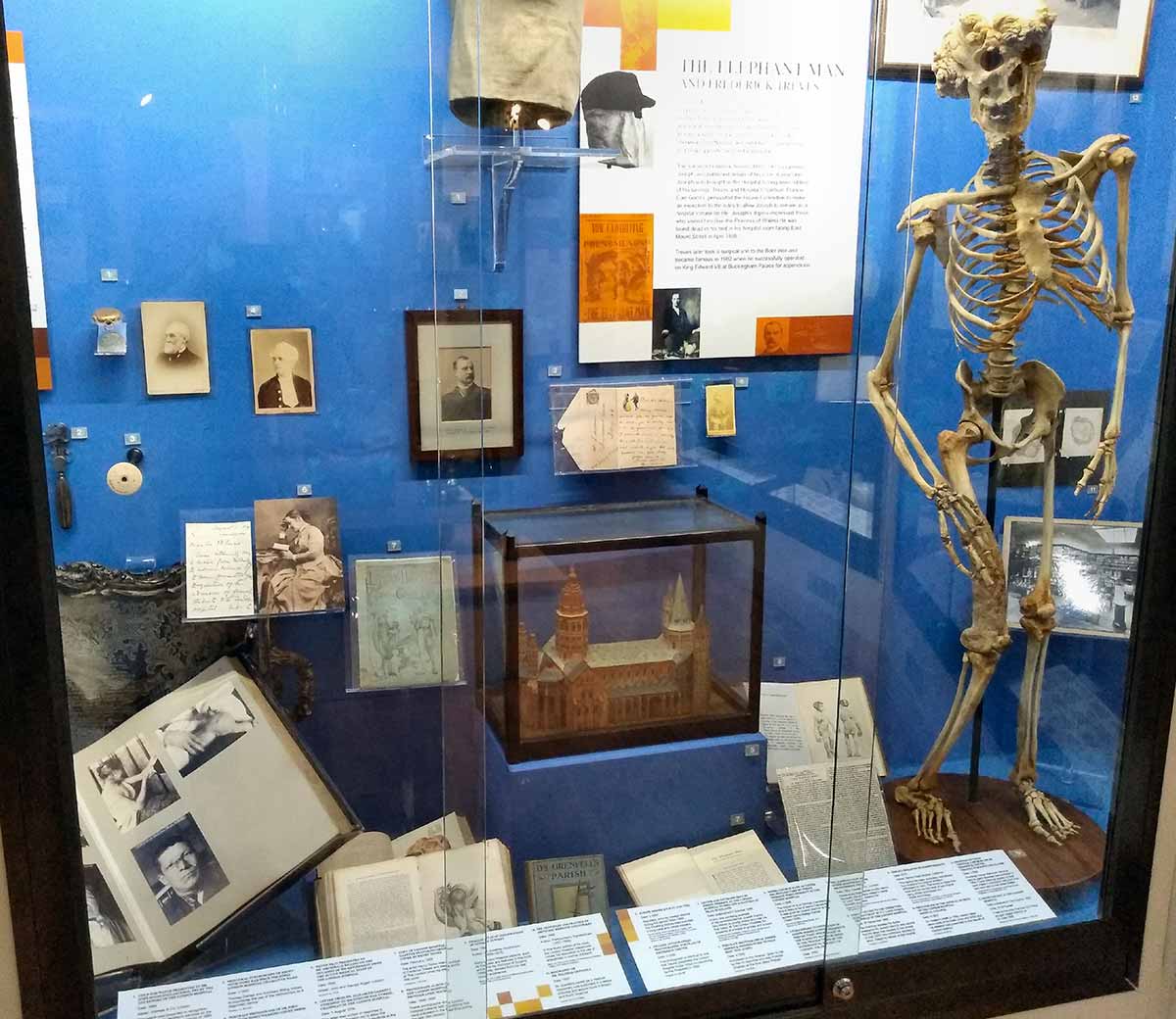
Joseph Merrick’s story is a window into Victorian attitudes to disfigurement and deformity. It is also the story of a real human being with hopes, dreams, and fears. Despite his gentle grace and his calm demeanor, and his final years living with a certain degree of care and compassion, Merrick’s tale was a sad one, full of mistrust, deception, and suffering.
His legacy is a reminder of the human and the humanity behind every face.