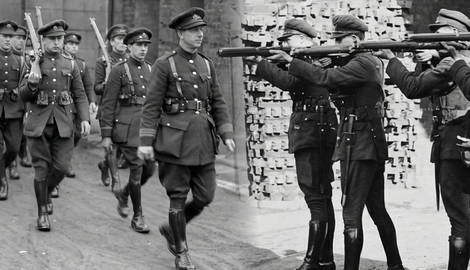

The Irish War of Independence (1919–1921) and the Irish Civil War (1922–1923) are often confused because they occurred only months apart and involved many of the same figures. Yet, they were fundamentally different conflicts. One was a struggle for national liberation against British rule; the other was an internal Irish dispute over how independence should be achieved and what form the new state should take. This article explains how to tell these wars apart by examining their causes, combatants, aims, and the long-term consequences for modern Ireland.
Different Causes: Independence vs. the Treaty Split
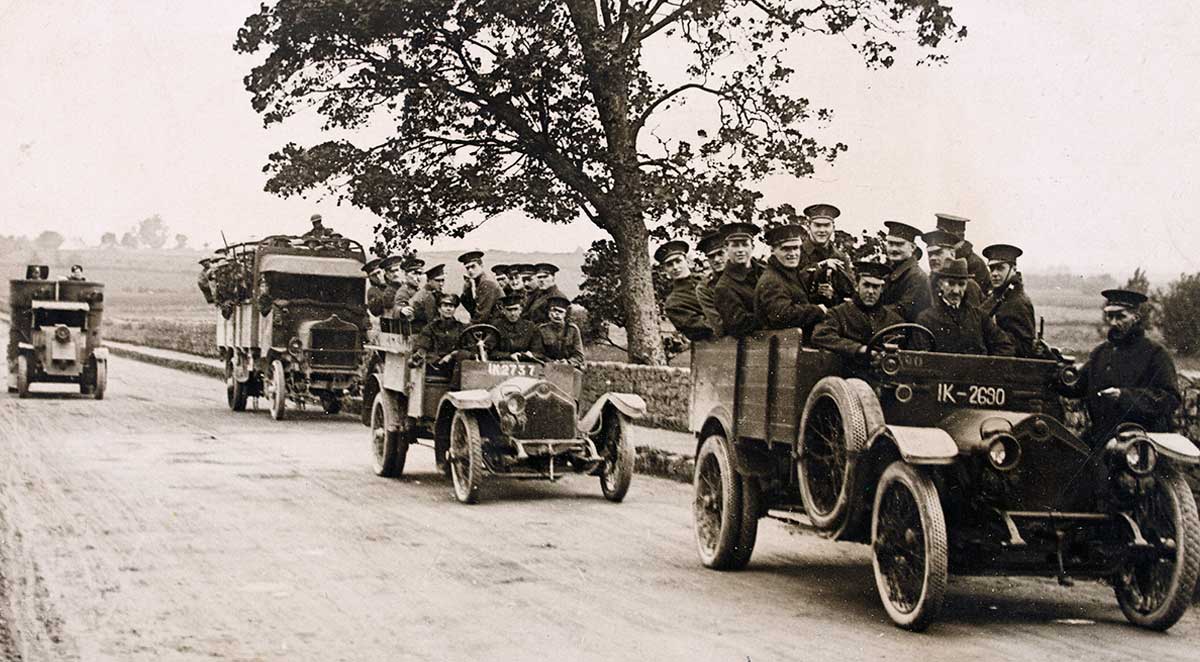
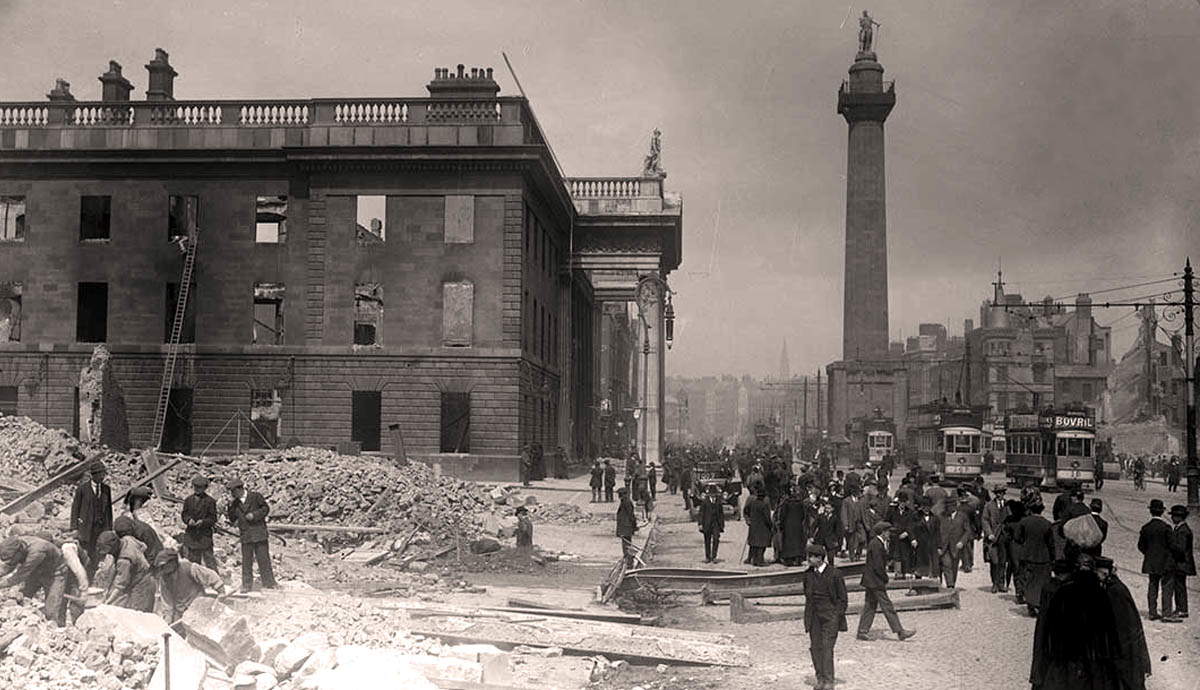
The War of Independence followed on from the unsuccessful Easter Rising in 1916. While the Rising had little support from the Irish population, the British crackdown hardened public opinion against British rule. Subsequent events such as the Conscription Crisis helped Sinn Féin, an Irish nationalist party, to a landslide victory in the 1918 general election. Establishing their own parliament, Dáil Éireann, they declared independence while the Irish Republican Army (IRA) fought a guerrilla campaign across the island.
The Civil War was triggered by division amongst Irish revolutionaries over the Anglo-Irish Treaty. This treaty ended the War of Independence and granted a limited form of independence for 26 of Ireland’s 32 counties through the creation of the Irish Free State. This granted it Dominion status similar to Australia, Canada, New Zealand, and South Africa. While many saw it as a stepping stone to ultimate independence, others were incensed by the oath of allegiance to the British Crown and that six counties would remain part of the United Kingdom.
Increased tensions and military standoffs between the two factions resulted in the Battle of Dublin on June 28, 1922. The Free State bombarded anti-Treaty forces in the Four Courts with artillery before sending in troops to storm the building. A week of street battles followed as the government forces sought to consolidate control in the capital.
Different Sides: IRA vs. Crown Forces, Then Irish vs. Irish
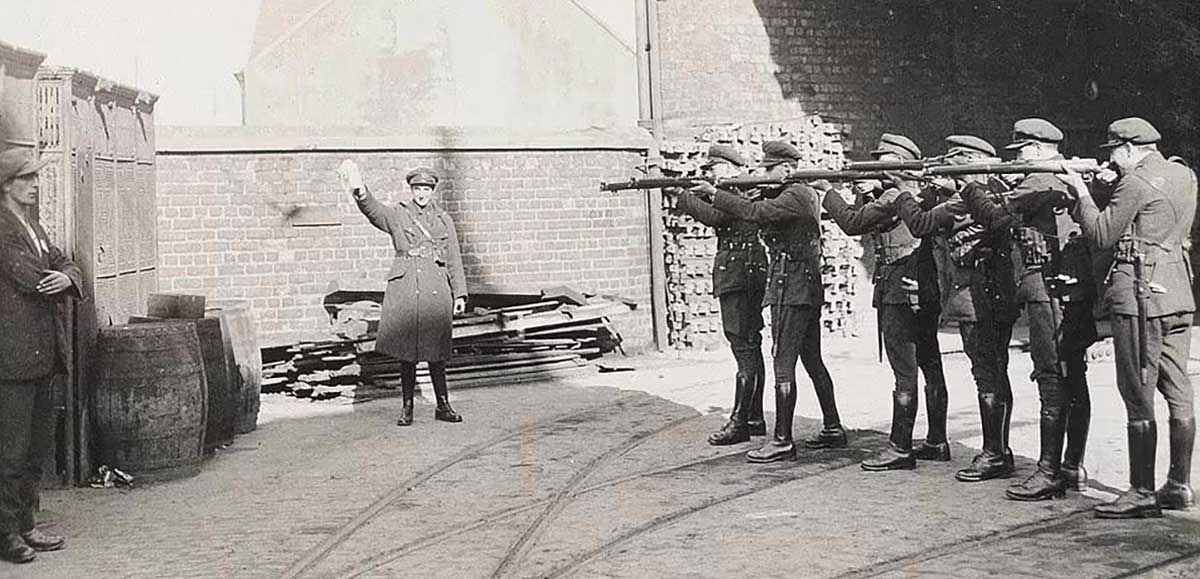
The War of Independence was fought from 1919 to 1921. The primary combatants were the IRA versus the British security forces. These initially consisted of the Royal Irish Constabulary (RIC), an armed gendarmerie, supported by the British Army. Later the RIC were reinforced by recruits from Britain, the notorious Black and Tans. A separate paramilitary division, the Auxiliaries, was also formed. The war was largely a low intensity conflict. The IRA fought a guerrilla campaign based on ambushes, raids, and assassinations while the Crown forces resorted to increasingly brutal methods to pacify the island.
The main combatants in the Civil War were the pro-Treaty National Army of the newly formed Free State vs the anti-Treaty IRA who rejected the legitimacy of the new government. Many had fought alongside each other months earlier and were now bitter enemies. The National Army rapidly expanded, receiving weapons from Britain while the anti-Treaty forces stagnated. It was a mix of ex-IRA, new volunteers, and veterans of the First World War.
While the War of Independence had its fair share of atrocities, the Civil War is remembered for being far more bitter. Reprisal killings became commonplace by both sides. The tail end of the war saw numerous mass executions throughout the island. Brutality became the norm and the personal relationships of numerous individuals in the war made it all the more tragic. County Kerry in particular witnessed several mass killings of IRA prisoners at Ballyseedy, Countess Bridge, and Bahaghs.
Different Outcomes and Long-Term Impact
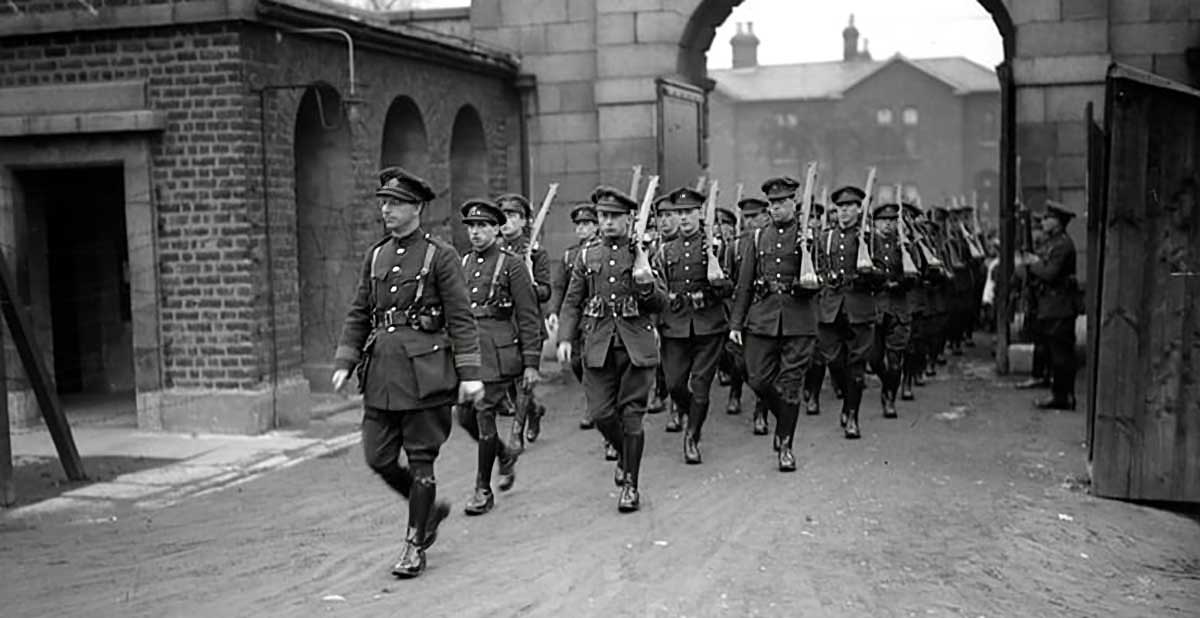
The War of Independence resulted in self-government for the majority of Ireland. The Irish Free State became a dominion of the British empire but was allowed to govern its own affairs. The island was partitioned with six counties of Ulster becoming Northern Ireland, remaining within the United Kingdom. The Irish Free State would ultimately become the independent Republic of Ireland while Northern Ireland remains part of the UK today.
The Civil War consolidated the Free State and ended the anti-Treaty forces as a threat to the legitimacy of the state. Resistance against the Free State was mostly extinguished by 1923, though small-scale violence persisted well into the 1920s. The violent struggle poisoned Irish politics for decades afterward with the two major political parties today, Fianna Fáil and Fine Gael, directly descended from anti-Treaty and pro-Treaty factions of the Civil War respectively.
In the long term, the partition of the island would result in far more conflict. It left a Catholic minority population in Northern Ireland at the mercy of a Protestant sectarian government. The resulting decades of misrule would culminate in agitation for civil rights and the beginning of The Troubles, the scars of which are still visible today.