Alentejo is the largest region in Portugal. It stretches from the Tagus River in the North to the Algarve in the South. Besides Évora, the region’s largest and most visited city, there are charming historical villages you can’t miss.
1. Monsaraz
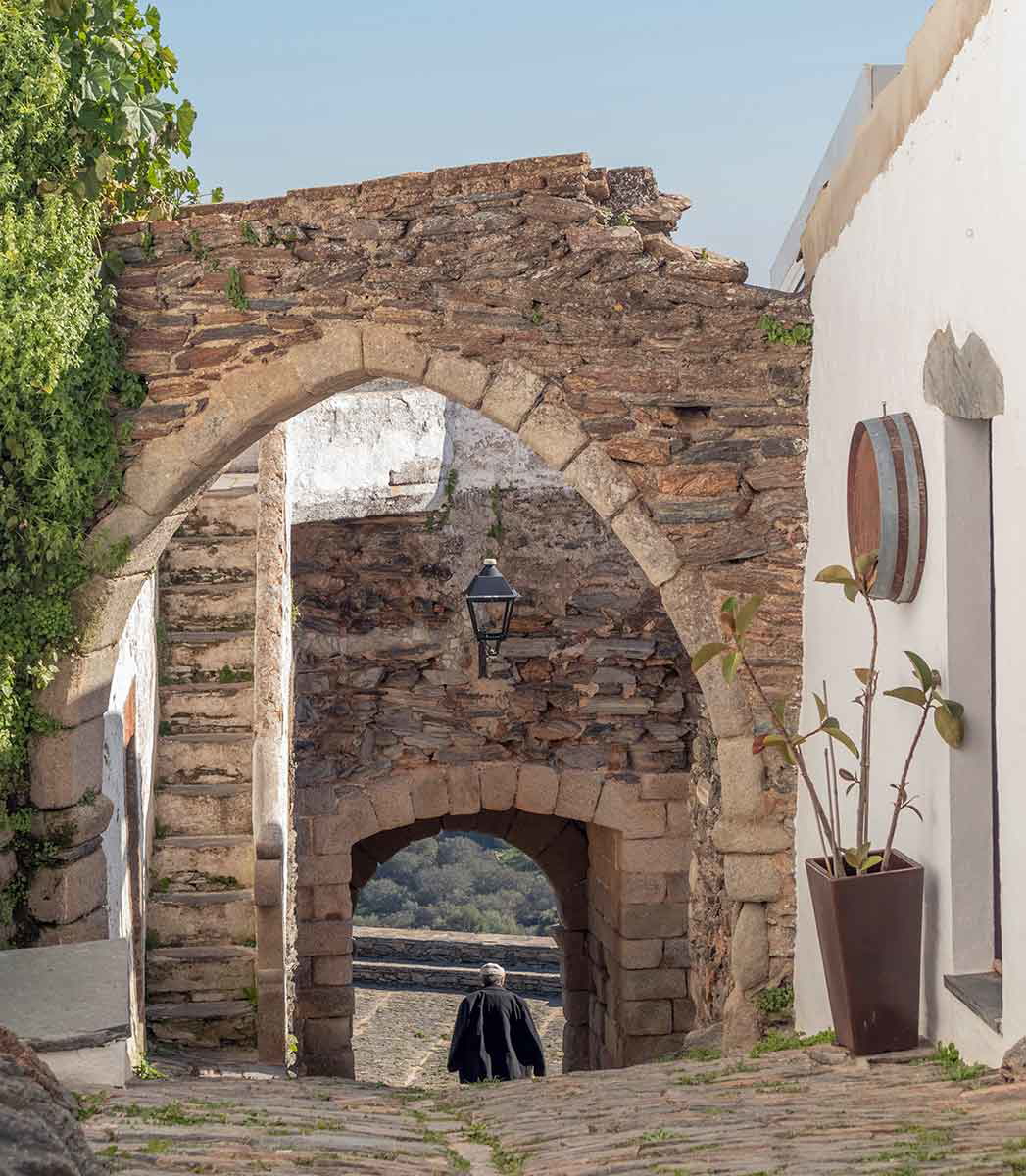
While searching for Monsaraz on a map, you may come across Reguengos de Monsaraz, a completely different location. While Reguengos de Monsaraz is a city and the municipality capital, Monsaraz is a tiny medieval village that has kept its unique features throughout the centuries.
Located on a hilltop overlooking the Alqueva reservoir, the largest artificial lake in Europe, and overlooking the Spanish border, Monsaraz is a fascinating site.
Scholars believe Monsaraz’s origins date back to a prehistoric hillfort that was successively occupied by Romans, Visigoths, and Muslims. Due to its privileged location, Monsaraz was highly disputed between the Moors and the Christians. The village shifted between the two armies until King Sancho II, with the assistance of the Knights Templar, finally captured it in 1232.
King Afonso III granted Monsaraz a charter in 1276 to repopulate and help defend the village. Shortly after, the construction of the Romanic Igreja Matriz de Santa Maria da Lagoa began. The beautiful church you see today is a much later construction, dated from the 16th century. It was inspired by the Renaissance and was built to bury all the people who died due to the Black Plague.
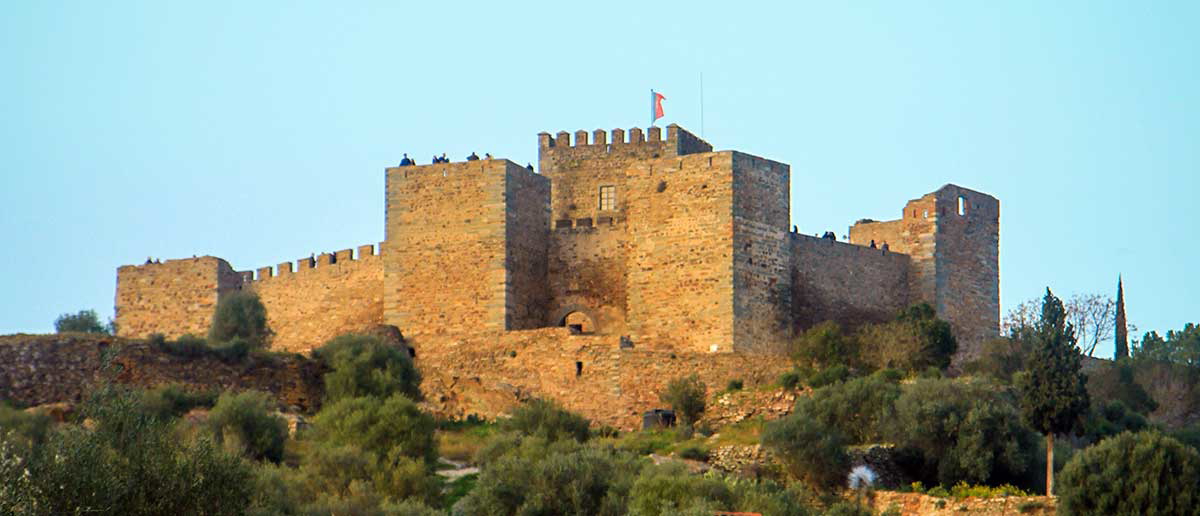
The Keep and City Walls, which you can visit today, were built in the 14th century. Explore the four city gates and admire its impressive architecture.
While wandering Monsaraz streets, you might feel nothing has changed. The white-washed houses contrast with the narrow labyrinthine cobbled streets and schist walls around the village. Rua Direita, which is Monsaraz’s main street, will take you through the church and into the castle.
In Monsaraz, you can also visit the Museu do Fresco, the Casa da Inquisição, an interactive center of Jewish history, and the ruins of Ermida de São Bento, a 16th-century hermitage.
2. Marvão
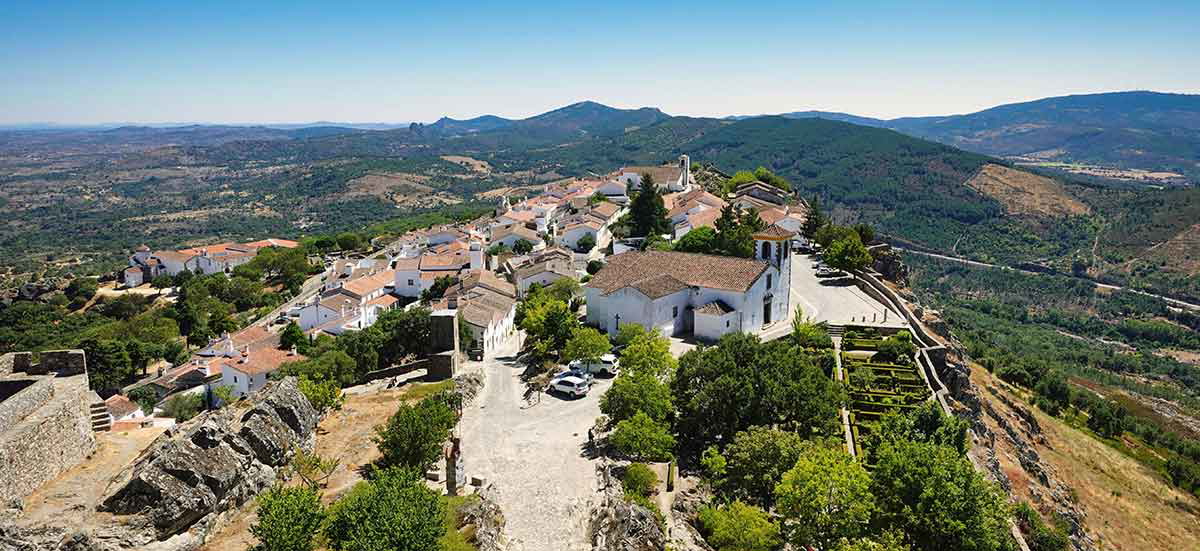
Near the Spanish border, at 860 meters (2,800 feet) of altitude, is Marvão, a stunning historical village in the heart of Serra de São Mamede Natural Park in Alentejo. Geographically, Marvão is a natural strategic defense point, with very steep slopes to the north, south, and west, with access on foot only from the east, where the settlement developed.
There is little information about Marvão’s early inhabitants. Yet, historians believe this beautiful village began as a prehistoric hillfort. During the Roman Empire, Marvão was an important location on the road connecting Norba Cesarina (Cáceres, Spain) to Scalábis (Santarém, Portugal). Today, you can still find traces of this period in the ruins of the Roman city of Ammaia.
In the 9th century, Ibn Maruane, a Sufi military and religious leader in Al-Andalus, rebelled against the Umayyad emir of Córdoba and sought refuge in the inexpugnable hills of Marvão. During his time here, he founded the village and built a fortress.
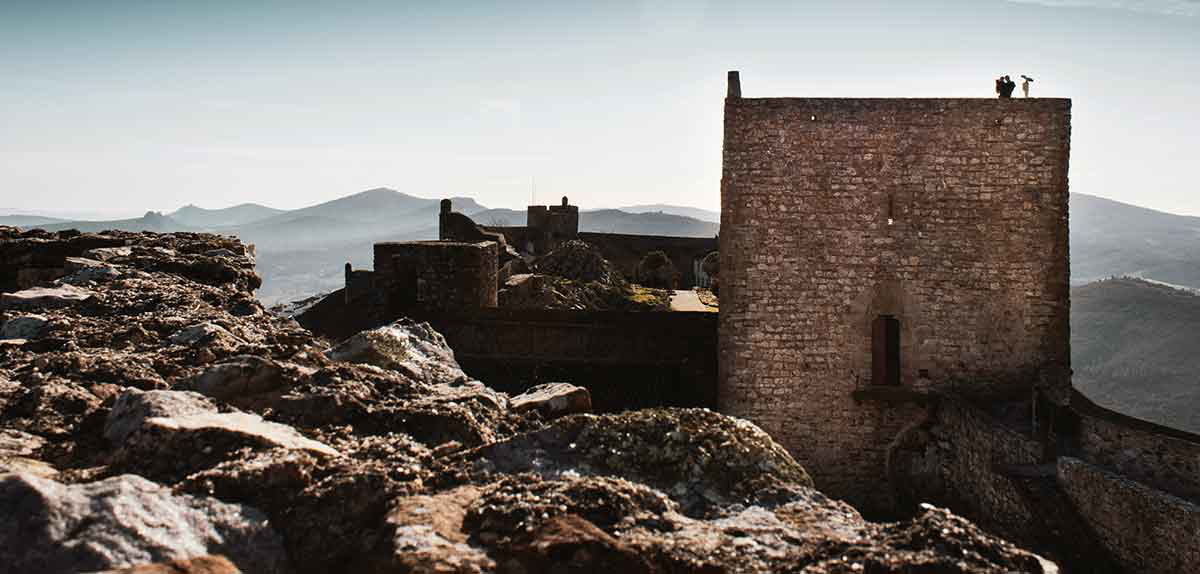
King Afonso Henriques, Portugal’s first king, conquered Marvão in the 12th century, yet, the Moors soon reconquered it. It was only in the 13th century that Christian armies finally recaptured this fortified village. In 1226, King Sancho II granted Marvão a charter to establish an advanced sentinel and defend the kingdom against Castile’s frequent attacks.
Over the following centuries, the castle and the city walls were enlarged and fortified and a new keep was built. Marvão became a strategic military location in defending the Portuguese borders.
To explore this mesmerizing village, take the Portas de Rodão gate, Marvão’s main entrance. While wandering the streets, you will be stunned to find how this village was kept. The narrow-cobbled streets and white-washed houses are some of the architectural features inherited from the Moors. You will also find local traditional architecture including Gothic arches and Manueline details.
Take some time to visit the stone pillory, the Santa Maria church, which was converted into the municipal museum in 1987, and the São Tiago and Espirito Santo churches.
3. Estremoz
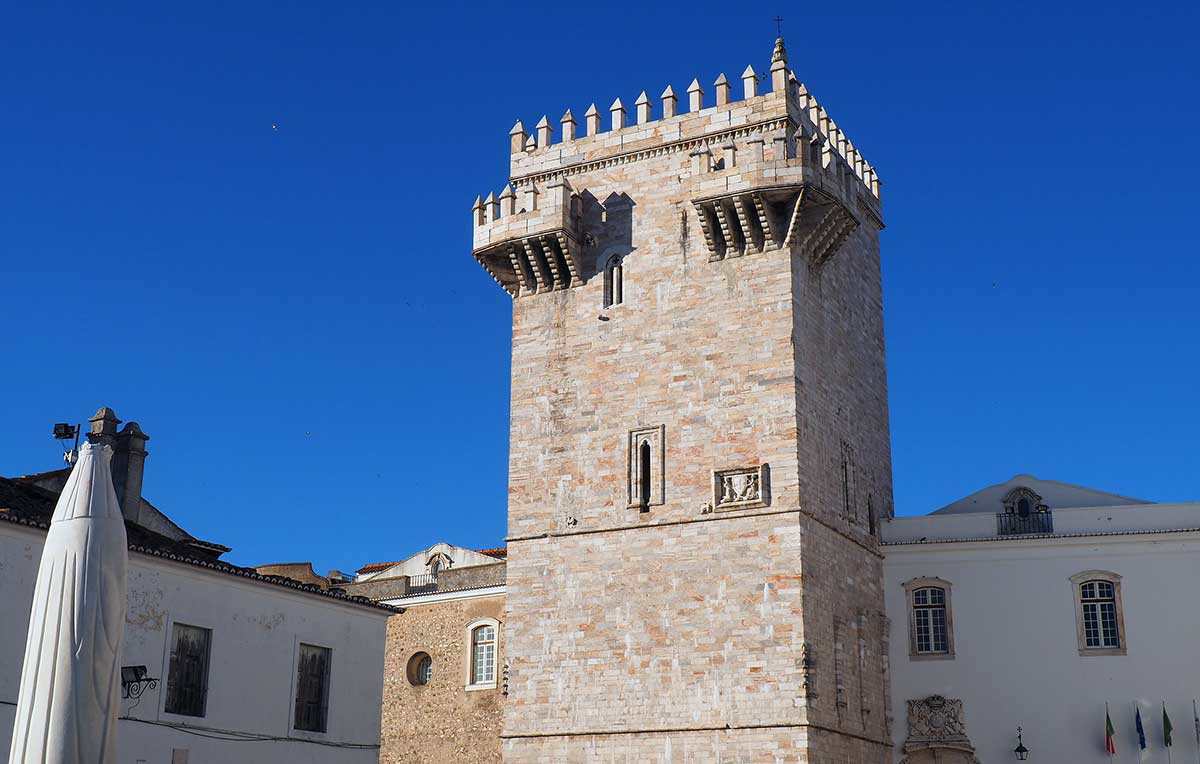
Estremoz is a stunning historical city famous for its marble since the Roman occupation. In the Middle Ages, when the Reconquista armies arrived, Estremoz was a small Moorish settlement.
King Afonso III granted it a charter in 1258, which helped the village’s development. A few years later, Estremoz witnessed the betrothal negotiations of King Dinis and Queen Santa Isabel. This was always one of the Queen’s favorite locations.
In 1336, at 65 years old, Queen Santa Isabel perished while trying to avoid war between her son King Afonso IV and Castille King Afonso XI. Estremoz was also the deathbed of King Pedro I, the king who was part of the most tragic love story in Portuguese history.
When King Fernando I died without leaving any heirs, Castile King João I tried to invade Portugal several times. One of the battles was the famous Batalha dos Atoleiros, near Estremoz, which the Castilians lost. This battle was decisive for the Portuguese to guarantee its independence.
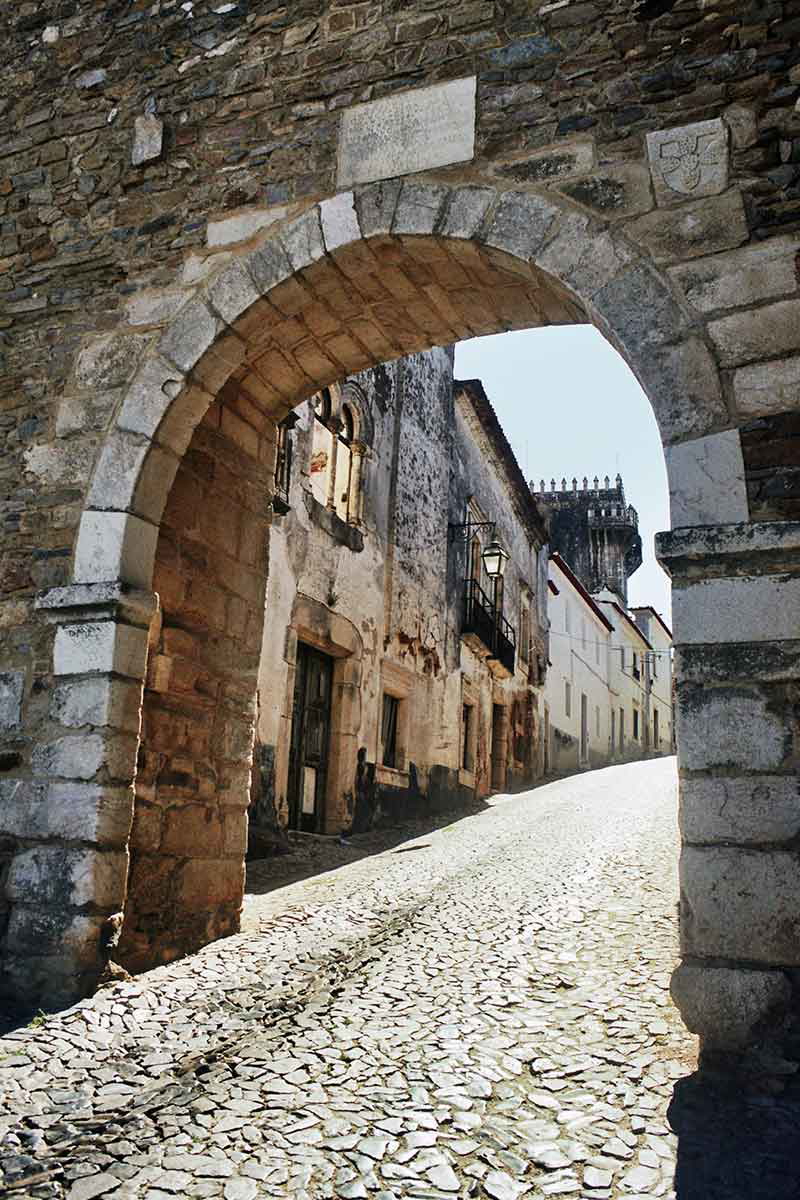
To learn more about Estremoz’s history, just wander the old town streets, and admire the local architecture and the city’s landmarks.
At Castelo de Estremoz, you can find the Torre de Menagem, a 27-meter (88 feet) all-white marble keep, dating from the 13th century. It also goes by the name the “Tower of the Three Crowns” since it was built during three different reigns. Besides admiring a breathtaking view of Estremoz city and its surroundings, you can also visit the 16th-century Santa Maria church, the medieval Paços do Concelho, dated from the 14th century, the Nosso Senhor dos Inocentes chapel and a statue of Queen Santa Isabel.
Take some time to admire the Porta do Sol, one of the medieval city gates, or visit the Torres da Couraça. While wandering the streets, you can also visit the Municipal Museum and the stone pillory, and contemplate the beautiful façade of Igreja de Nossa Senhora da Conceição dos Congregados.
4. Vila Viçosa
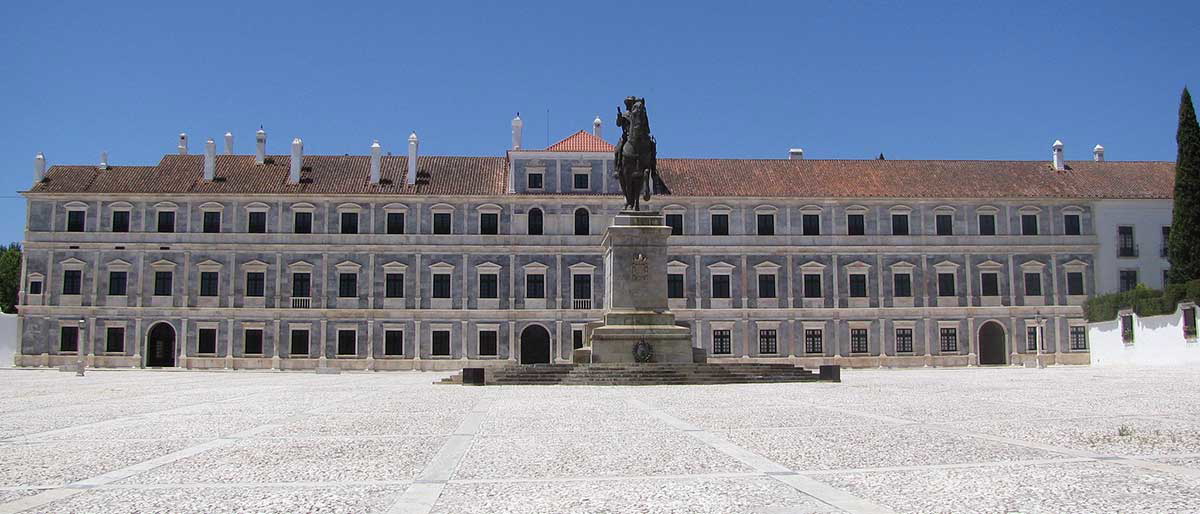
Vila Viçosa is a charming little village with an incredible past. As in other locations in Portugal, the Romans and the Moors settled here. However, during the Middle Ages, Vila Viçosa became one of the Portuguese Royals’ favorite places.
After the Reconquista, in 1270, King Afonso III granted Vila Viçosa a charter establishing the small hamlet as a formal village. As Vila Viçosa’s population grew, King Dinis ordered the construction of a castle in the 14th century.
During the succession crisis between 1383 and 1385, when King Fernando I died without male heirs, Vasco Porcalho, the Order of Avis commander betrayed the crown, captured Vila Viçosa’s castle, and handed it over to Castille.
The population fled, and a year later, Vasco Porcalho and his host abandoned the castle after the Portuguese victory in the Battle of Aljubarrota. As a result, the village and its castle belonged to the Dukes of Braganza, a powerful noble house. In 1502, the Paço Ducal de Vila Viçosa was built, and the village became the seat of the Duchy of Bragança.
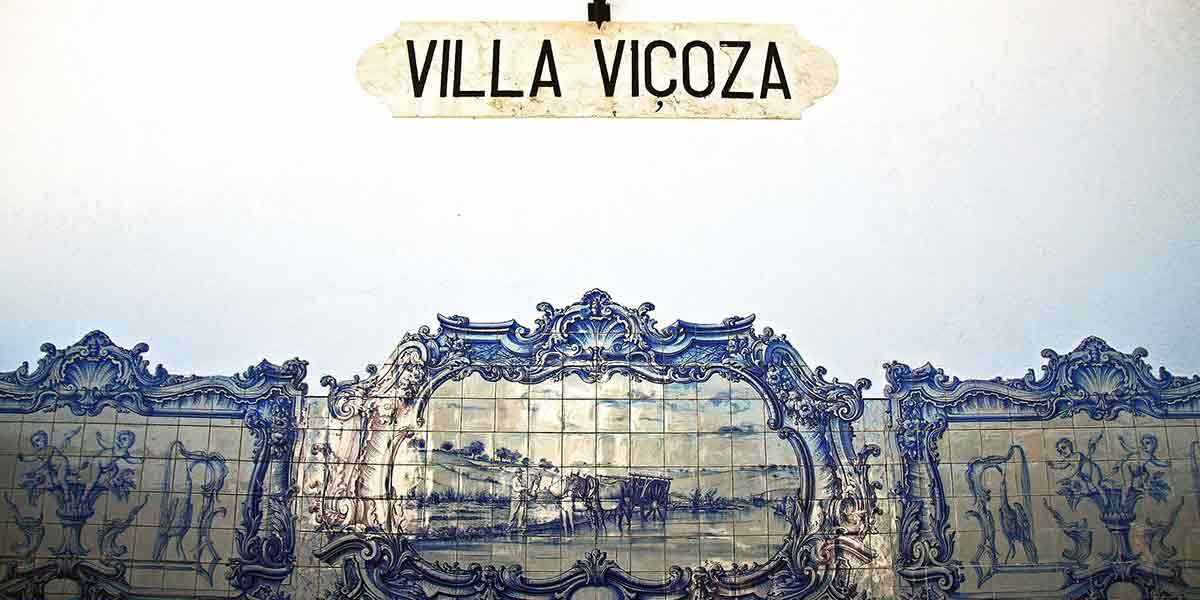
During Spanish rule in Portugal (1580-1640), Vila Viçosa was the largest seat of the duchy court in the Iberian Peninsula. However, with the Restoration of Independence on December 1, 1640, the village lost its relevance and became the royals’ summer residence.
Over the following centuries, Vila Viçosa was devastated by the infamous 1755 earthquake and was raided and sacked by the French armies during the Napoleonic invasion in the 19th century. In the early 20th century, Vila Viçosa’s charm declined once again. When Portugal became a republic in 1910, republicans did everything they could to erase all traces of the Portuguese monarchy.
Nevertheless, you can still admire the mesmerizing Palácio de Vila Viçosa. Besides its impressive architecture and decorative elements, there is a vast collection of works of art, furniture, and tapestries.
Inside the medieval city walls, you can explore Castelo de Vila Viçosa, the Nossa Senhora da Conceição Sanctuary, the stone pillory, the Roman ruins, and the archaeology museum. At a short distance, you can visit the Praça da República Square and São Bartolomeu Church.
5. Mértola
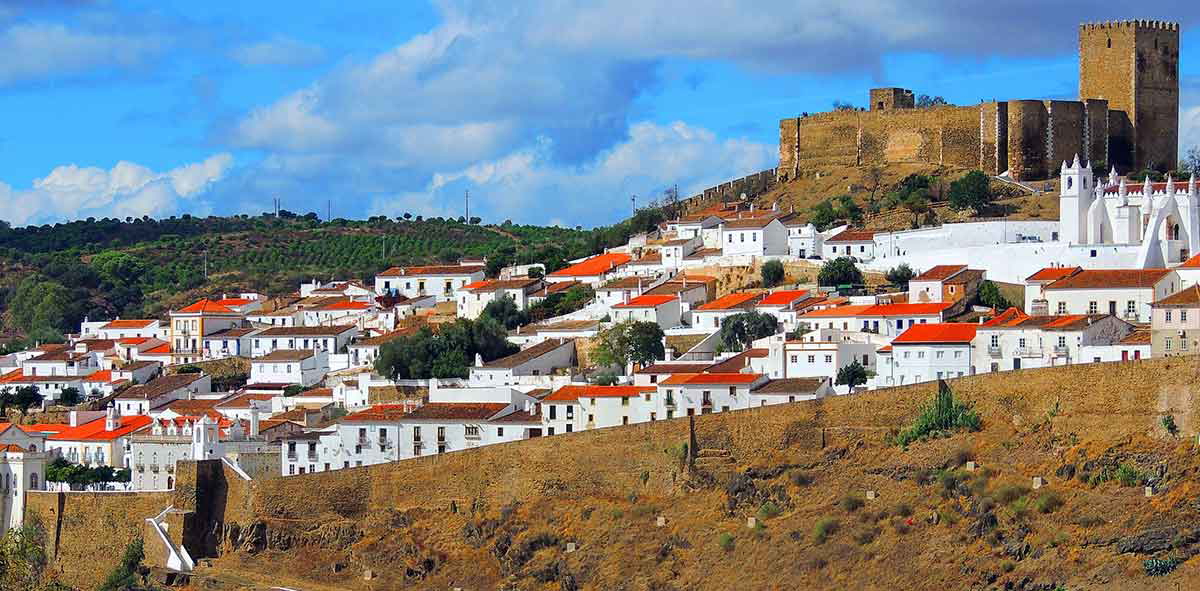
Mértola is a quiet village beside the Guadiana River in Southern Alentejo, known as a village museum.
The village’s origins can be traced to the Neolithic. The Phoenicians and Carthaginians established here and developed a fluvial commercial port. The Romans dubbed it Mirtylis Iulia, and after centuries of occupation, left a cryptoporticus, the Torre de Couraça, and a road system.
Next came the Visigoths, and Mirtylis Iulia became Mertill. From this period, you can observe columns and pilasters displayed at the castle’s keep. In the 8th century, the Moors arrived and changed the village name to Martullah.
Regardless of what people called Mértola over the centuries, it has always been a desirable location due to its navigable river, abundance of natural resources, and safety. In fact, during the Moorish occupation, Mértola’s fluvial port became so important the city became the Taifa of Mértola, a small but independent Islamic emirate.
Around the village, you can find traces of the Moorish presence and Islamic influences in the street layout and architecture. Several excavation campaigns have revealed what daily life was like under the Moorish rule. You can admire the artifacts retrieved at the Islamic Art Center of Mértola Museum.
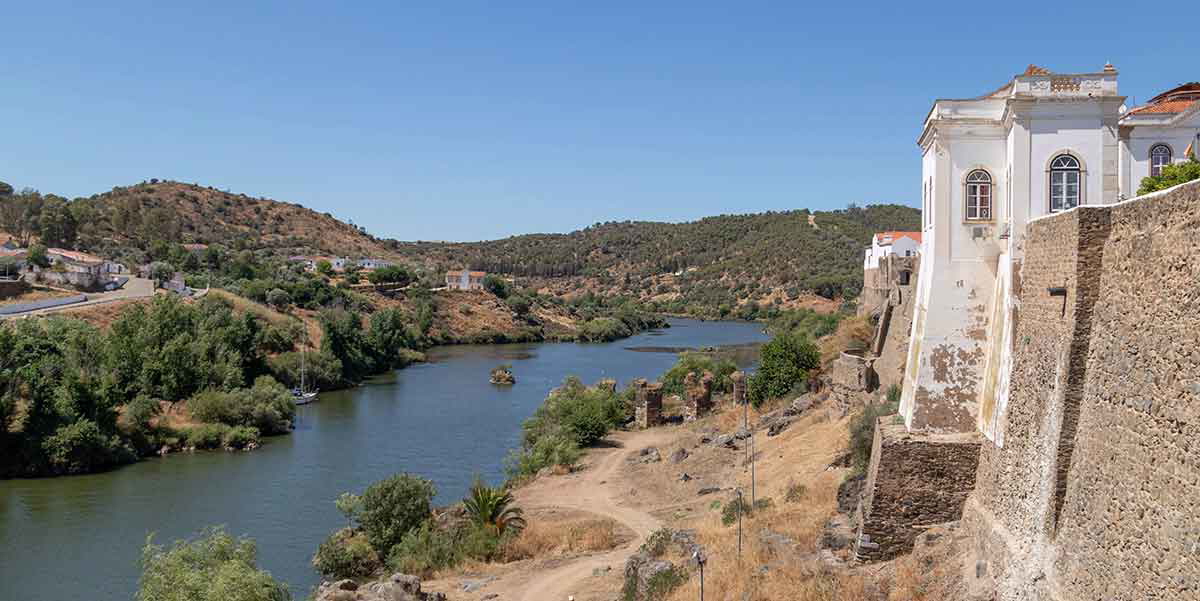
Christian armies captured Mértola in 1238 under the orders of King Sancho II and Paio Peres Correio, the commander of the Santiago Order. Some Islamic buildings were repurposed. One of them was the church, which used to be a mosque. If you look closely, you will find several features traditionally found in mosques all over the Islamic world.
In the 16th century, Mértola received its charter from King Manuel I. In the centuries that followed, Mértola was the main port exporting cereals to the Portuguese settlements in Northern Africa.
To better comprehend the incredibly rich history of this tiny village, visit Mértola’s castle, the Igreja Matriz church, the ruins of Ponte de Mértola, the Campo Arqueológico de Mértola, the village museum, and the Roman House.
6. Elvas
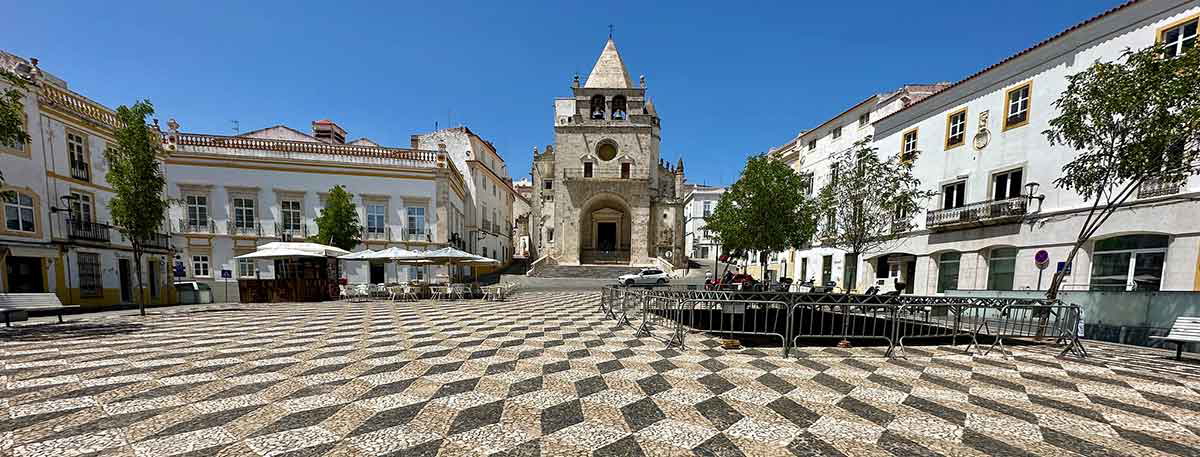
Elvas is the third largest city in Alentejo and a UNESCO World Heritage Site. Despite its remarkable past, not many people know that Elvas has the largest complex of bastioned fortifications in the world.
Around Elvas’s municipality are traces of human occupation dating back to the Chalcolithic. However, the city’s first inhabitants were the Goths and the Celts.
In the 1st century CE, the Romans founded Elvas and built a small castle to control the trade routes between Pax Augusta (Badajoz, Spain), Emerita Augusta (Mérida, Spain), Ebura (Évora, Portugal), and Olissipo (Lisbon). You can witness the Roman influence and presence in Elvas through their villas, necropolises, and other artifacts retrieved from several archaeological campaigns. Although the Visigoths also settled in Elvas, they left few traces of their presence.
In 714, the Moorish conquered Elvas and named it Al-Bash. In the 11th century, it was a significant settlement in the Taifa of Batalywas (Badajoz, Spain) due to its strategic location next to the ancient Roman road system connecting al-Qasr (Alcácer do Sal, Portugal), Chantirein (Santarém, Portugal) and Ushbûna (Lisbon) to Batalyaws. With the city’s growth came new and fortified city walls to protect the growing population.
Between the 12th and 13th centuries, Christian kings made several attempts to capture Elvas. They finally reached their goal in 1229, under the rule of King Sancho II, who granted Elvas its first charter. The second came in the 15th century at the hand of King Manuel I who elevated Elvas to a city.
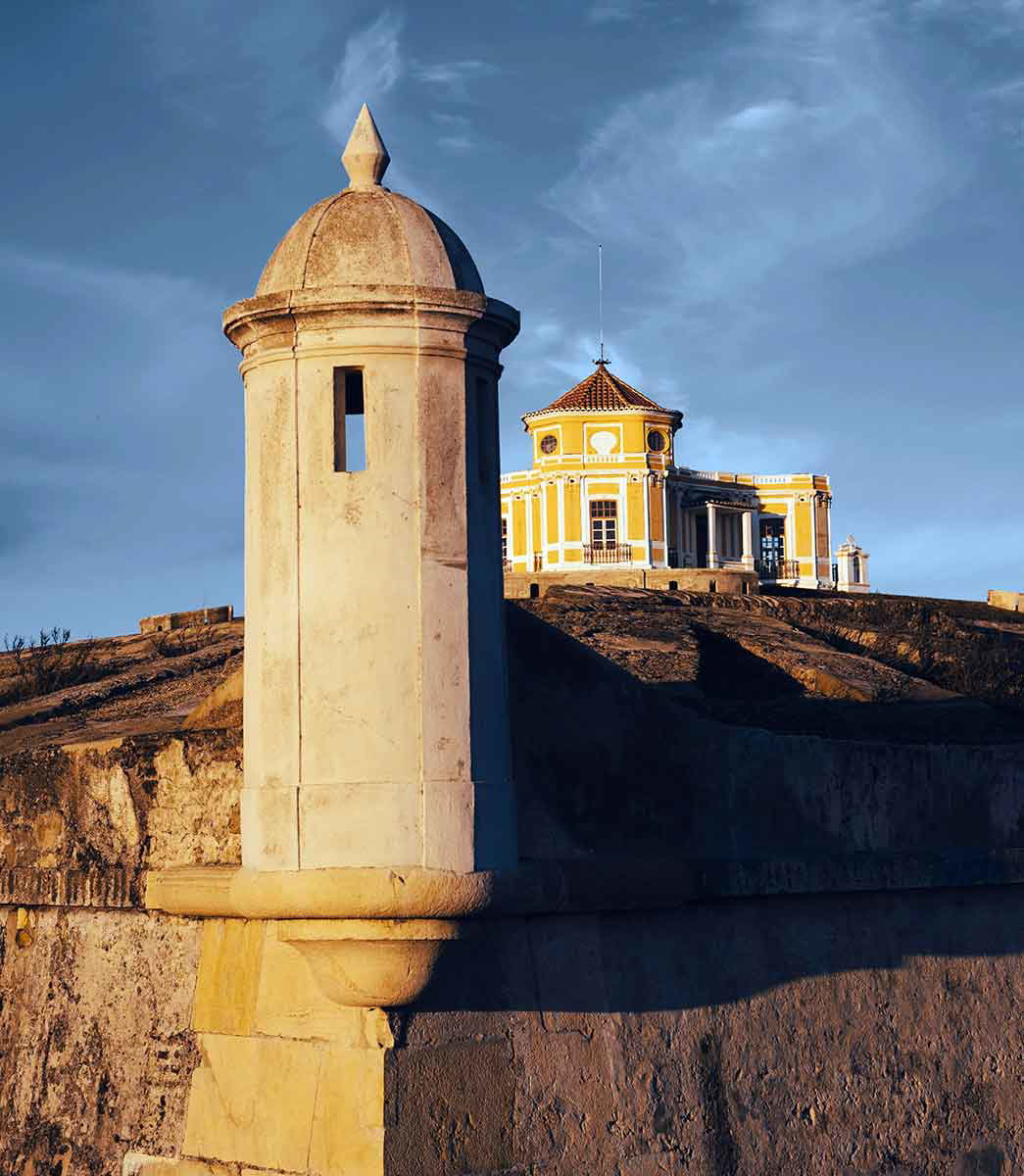
In the 14th century, the city defense system was reinforced. The Moorish city walls and castle were improved, and a new wall was built. This proved to be the best decision, considering the Castilians tried to capture Elvas, which withstood a 25-day siege. This was enough time to keep Lisbon safe until the arrival of the English allies. Even though King Fernando I and King João I of Castille met beside their armies and allies, the battle never happened, and they agreed to sign the Elvas Treaty.
In the 16th century, Elvas was key in restoring Portugal’s independence. After King João IV’s proclamation, Elvas became the largest city-fortress ever seen with new fortifications, barracks, the Military Hospital and Convent of São João de Deus, and the Fort of Santa Luzia, among several other buildings.
Fortunately, the Portuguese won the Restoration War and secured the kingdom’s independence. Over the following centuries, Elvas faced other battles against the Spanish and the French. As a result, the city was often rebuilt to strengthen its defensive system.
Today, you can visit several locations that have witnessed these key historical moments. Explore Praça da República and visit the Old Elvas Cathedral, currently known as Igreja de Nossa Senhora da Assunção. Wander the streets and admire the Islamic “alcáçova” and the Moorish influences in the local architecture. Here, you will find traces of the first city wall the Moors built.
Take some time to visit Elvas Castle and its city walls, and the star-shaped Graça Fortress or the Santa Luzia Fortress. The Amoreira Aqueduct is another iconic Elvas landmark you cannot miss.