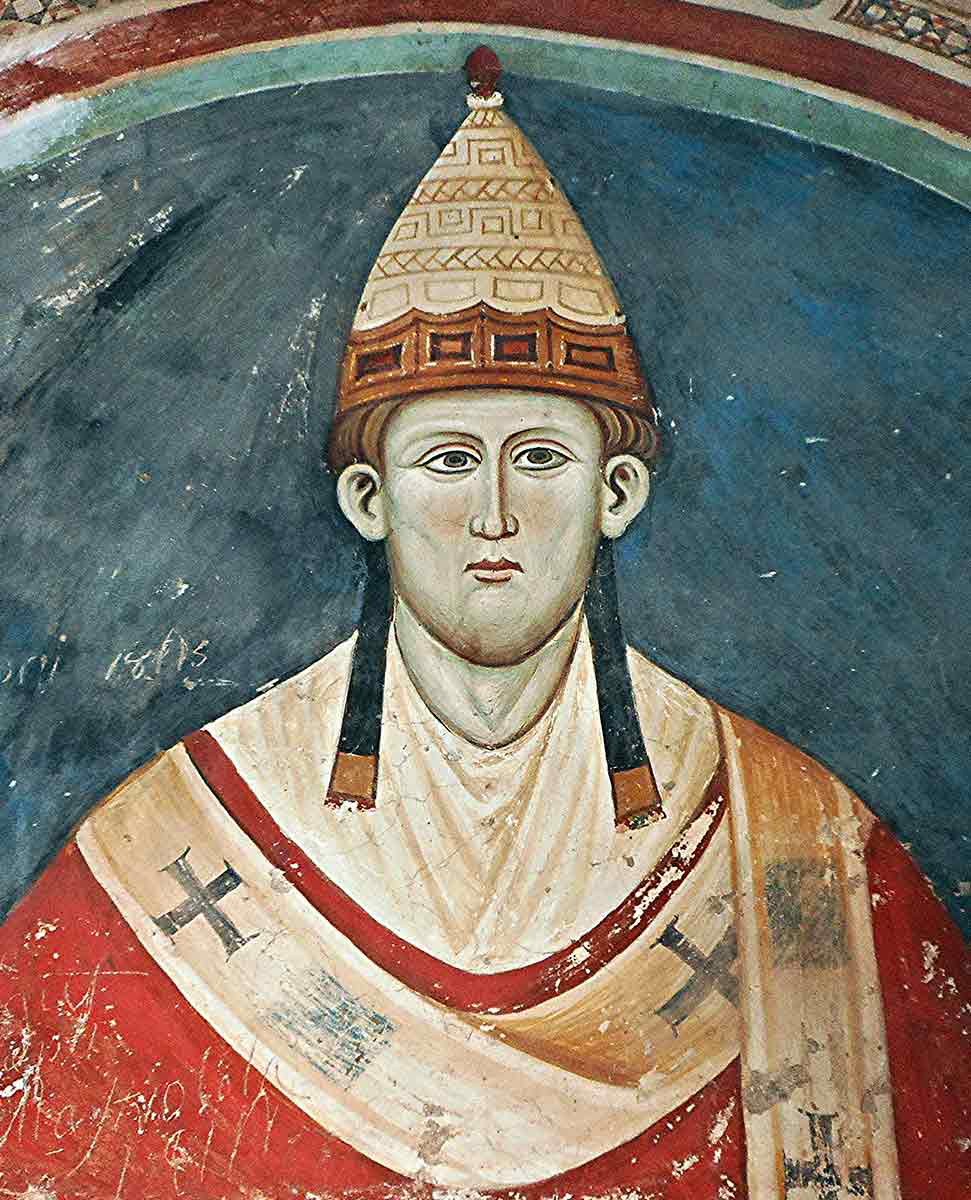
The changes in the status of the Papacy over time can be tracked through the evolution of the distinctive headgear that the Popes wore. Beginning as a simple cap, it grew over time into a grand tiara with multiple crowns to symbolize the pope’s mastery of the secular as well as the ecclesiastical realms. Amid upheavals and changes to long-held traditions in the modern period, the tiara was retired in favor of simpler symbols. Its rise and fall tell the story of the Papacy.
Origins
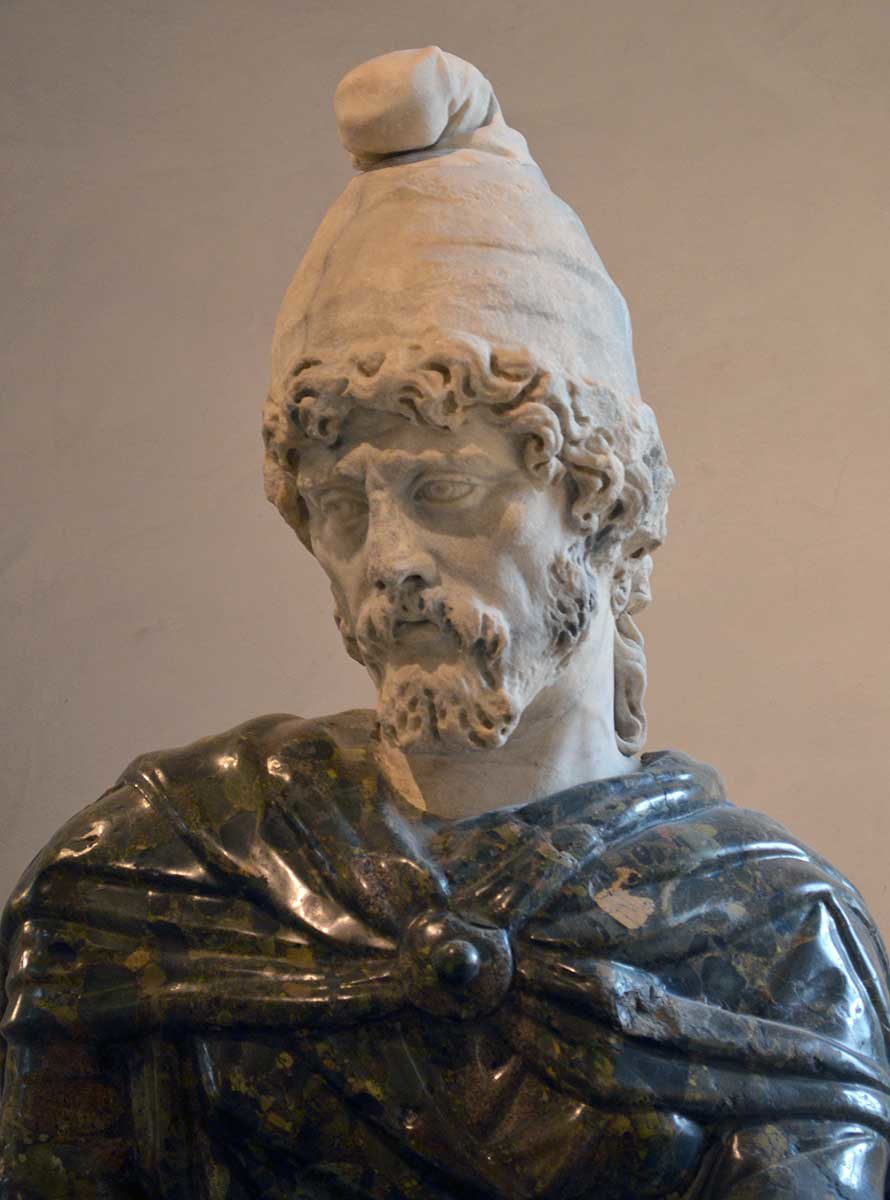
The bishops of Rome did not have distinctive headgear that set them apart from other bishops for the first several centuries of the church’s existence. Like other clergy in the early Christian period, they wore either a simple skullcap or a Phrygian cap, a tall hat originating in the east of the Roman Empire but adopted over time throughout the western half as well.
By the 8th century, that traditional Greco-Roman style evolved into a shorter hat that fit tighter around the head. This new style was known by several names, but most commonly went by the name camelaucum. It was typically associated with the Byzantine Empire, where it was worn by court officials. The close association with Byzantine style is not surprising at this point in history. The doctrine of Papal Supremacy was still several centuries away, and while the bishop of Rome held a great amount of prestige, they still relied on the East for military protection and political legitimacy.
The First Crown
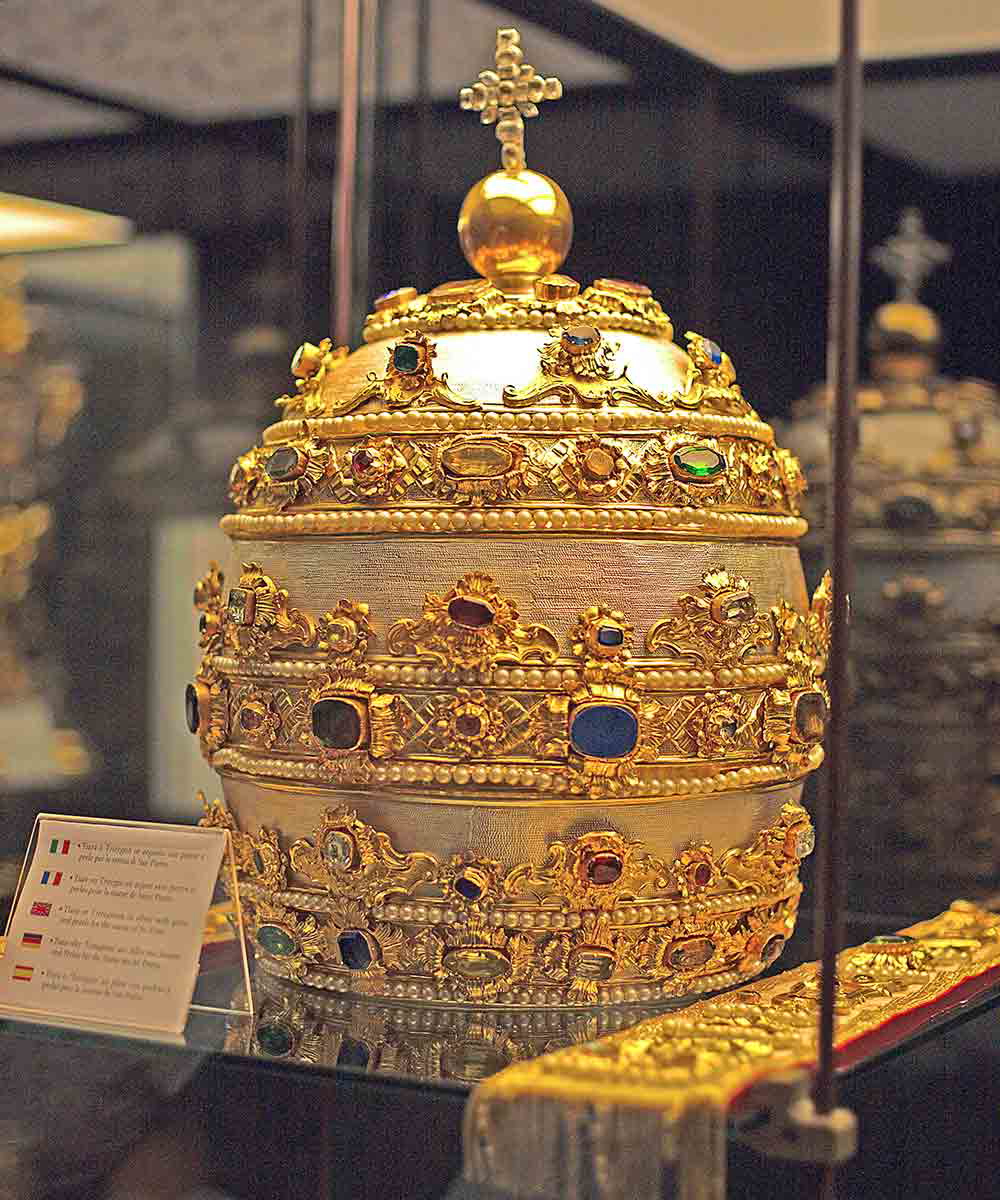
From 754, the Popes were secular lords as well as spiritual leaders. Pepin the Short, the father of Charlemagne, donated the lands around Rome to the direct rule of the pope. The Donation of Pepin, as it came to be known, was a major turning point in papal history and likely contributed to the cultural shift that saw the next major evolution in papal headgear and ceremony.
A gold circlet was added around the base of the camelaucum, which grew more conical in shape. This was the inauguration of the regnum (crown in Latin). Based on images from coinage, it was likely added in the late 9th or early 10th century, but there are no records of exactly which pope introduced it and when. This single crown symbolized the pope’s newfound temporal authority over the papal states.
The Second Crown
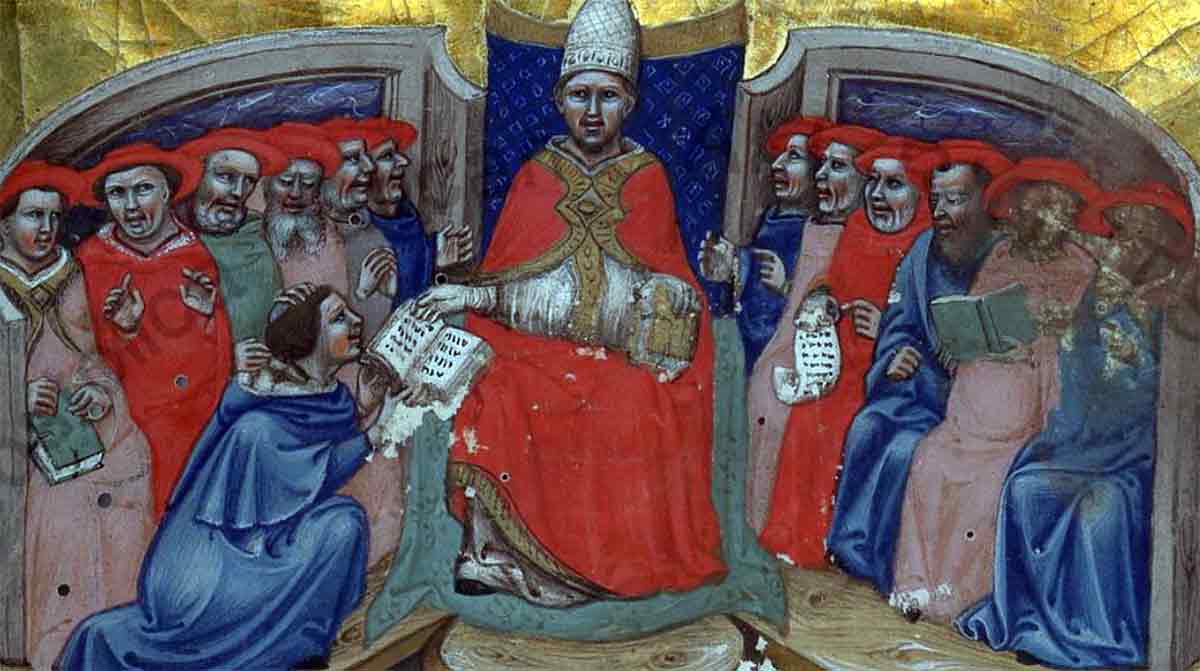
Pope Boniface VIII introduced a second crown, along with generally making the base of the crowns rest on ones that were larger and more easily visible from a crowd. There is some debate over what exactly the second crown was supposed to symbolize. It most likely was meant to be a symbol of the pope’s secular and spiritual power. One crown as ruler of the Papal States, and one crown as the lord of the church.
There is a possibility that the second crown was added to bring the pope in line with the Holy Roman Emperor, who was awarded two crowns. However, Boniface VIII was also locked in a bitter conflict with Philip IV of France over papal authority, so this second crown could also have served as a declaration of papal supremacy over the French monarch.
The Third Crown
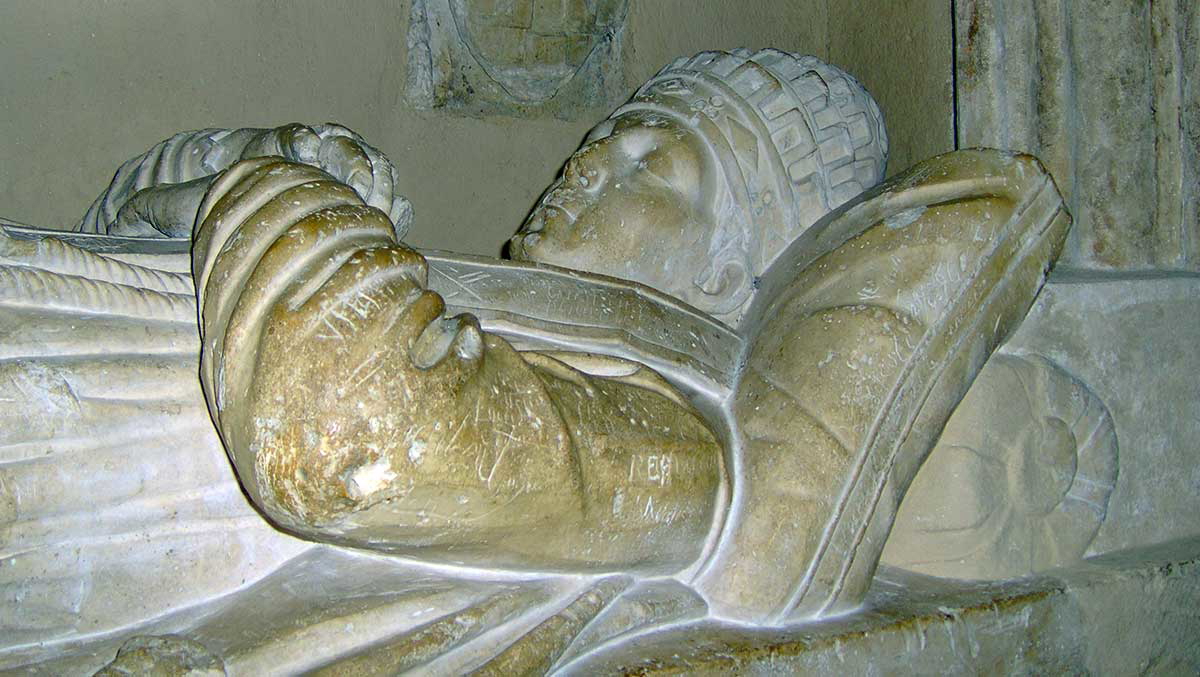
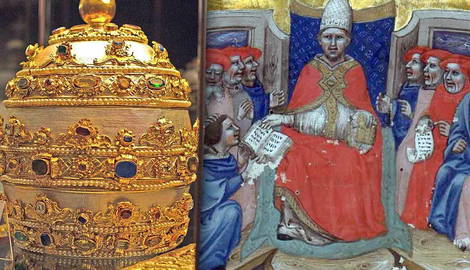
The duoregnum remained for about a century before Pope Benedict XII transformed the tiara yet again in the 1330s by adding a third crown during the Avignon Period. This final crown gave the tiara its famous shape, and it remained in that form up until the 20th century.
With the third crown, the whole piece was officially known as the triregnum, but the term tiara was also used. The addition of the third crown was seemingly more about showing papal dominance and splendor than about the symbolism. This is because there was, and still is, a debate about what each of the three crowns symbolizes.
It could be representative of the Pope’s authority over the church militant, penitent, and triumphant. It could also be a symbol of the Pope’s role as teacher, pastor, and ruler. A third option is that it is a representation of the Trinity’s rule over the world. However, another interpretation is that the crowns represented the Pope’s authority over kings, bishops, and all other secular rulers.
The ambiguity of the symbolism may have been intentional, allowing the tiara to mean different things to different audiences.
Coronation Ceremony
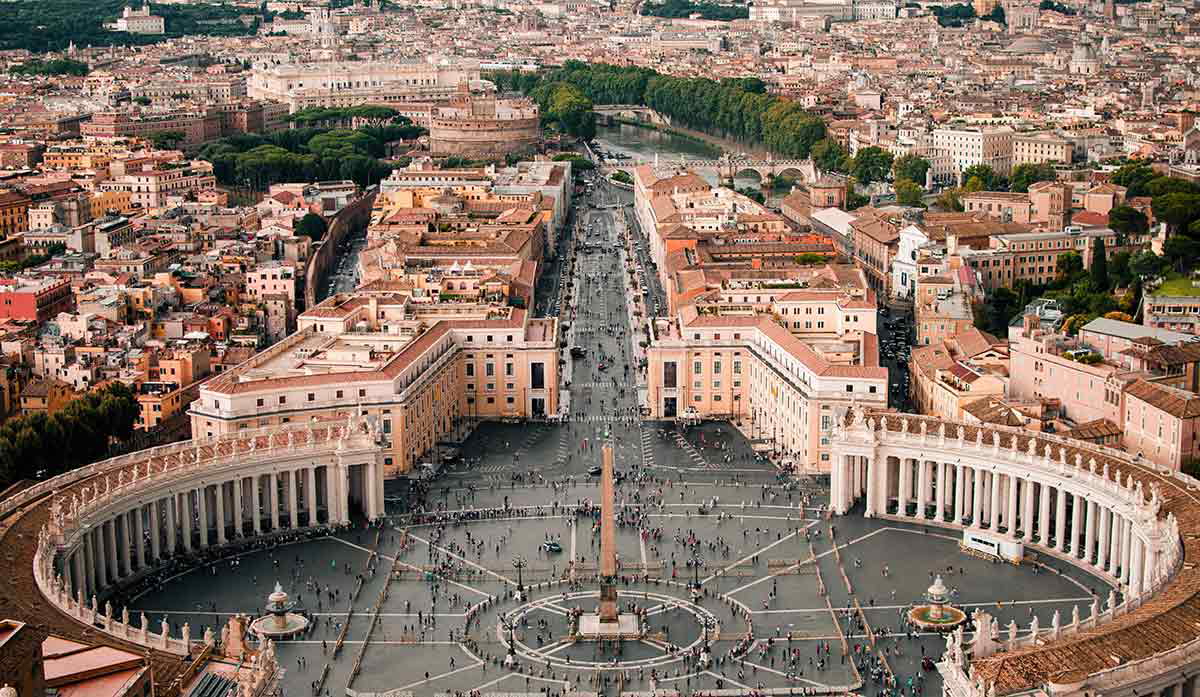
Like the evolution of the tiara that was placed on the pope’s head, the ceremony surrounding that event also became grander and more regal over time.
Investiture was the ceremony by which a bishop took possession of a diocese. As the Pope is the bishop of Rome, for Late Antiquity and much of the Early Medieval Period, he was simply invested at the Lateran basilica.
After the introduction of the regnum, the Pope needed to undergo a coronation ritual in addition to the investiture ceremony. After being invested at the Lateran basilica and thus taking possession of the See of Rome, the Pope would then be crowned the next Sunday at St Peter’s Basilica.
The coronation ceremony included a ritual that developed at some point in the Early Medieval Period, where a priest would come up to the seated Pope with a long cane covered in flax on one side. The flax would be ignited and, as the fire burned it to ash, the priest would intone “Pater Sancte, sic transit gloria mundi” (“Holy Father, thus passes the glory of the world”). This would be repeated three times as a reminder to the pontiff that all men, even the Vicar of Christ, will die.
Interestingly, a similar ceremony was also performed for the Holy Roman emperors. During their coronation, at the height of their pageantry and glory, a group of stonemasons would solemnly approach the emperor with a variety of stones in different colors and textures. They would then say, “Most Magnificent Prince, from which stone do you want us to make your tomb?”
During the coronation itself, the senior cardinal deacon would hold the tiara high above the pope’s head so the assembled crowd could see it, then slowly lower it onto the pope’s head while proclaiming in Latin, “Receive the tiara adorned with three crowns and know that you are the Father of Princes and King of Kings, Vicar on Earth of Our Savior Jesus Christ, to whom is honor and glory through the ages.”
After the coronation, there was a procession through Rome from St. Peter’s to the Lateran Basilica. In this procession, the Pope was carried on the Sede Gestatoria, a portable throne that was carried through the streets to raise the Pope above the crowd, allowing him to be seen by more people. It was essentially a pre-modern version of the current pope-mobile.
When the Papacy returned to Rome after the Avignon Period, the preeminence of the coronation increased. Gregory XI switched the order of events, placing the papal coronation at St Peter’s before the investiture at the Lateran, in a way fully placing the pope’s role as monarch and sovereign above the ecclesiastical roots of the position.
Retirement
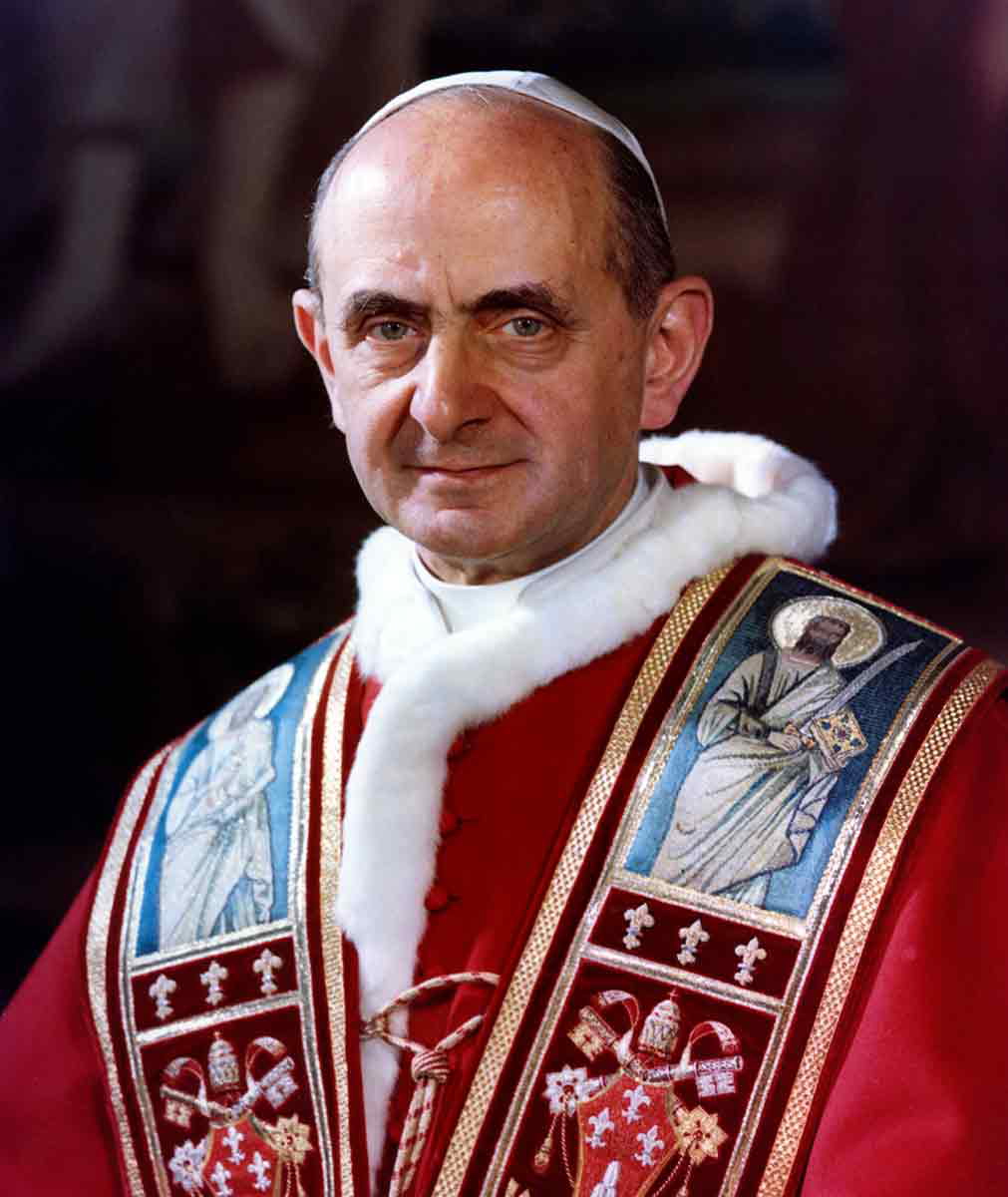
The extravagant final form of the tiara remained in use until the middle of the 20th century. The coronation ceremony would evolve in what rituals were performed, and the level of extravagance, but the tiara itself remained as a potent symbol of the Papacy. In fact, several coronations in the 20th century were filmed, so it is possible to see a glimpse of that ancient rite.
During the Second Vatican Council, which sought to modernize certain aspects of the catholic church, Pope Paul VI made a shocking declaration. On November 13, 1964, at the conclusion of a mass in St Peter’s Basilica with 2,000 bishops in attendance, Paul solemnly laid his tiara on the altar of St. Peter’s Basilica and renounced its use. The tiara was donated, and its value was given to the poor.
Paul VI’s tiara is now on display in the crypt of the Basilica of the National Shrine of the Immaculate Conception in Washington, D.C.
After that day, the tiara remained a relic of the past. While it was not required that subsequent popes continue to eschew the tiara, the times and the image of the church had changed. Paul’s successor, John Paul I, was not crowned with the tiara, and John Paul II also chose to forego that ceremony. On the subject, John Paul II said, “This is not the time to return to a ceremony and an object considered, wrongly, to be a symbol of the temporal power of the Popes.”
With the retirement of the tiara, the coronation ceremony also faded away. Instead, popes in the modern era are only inaugurated into the office rather than crowned in glory.
Post-Retirement
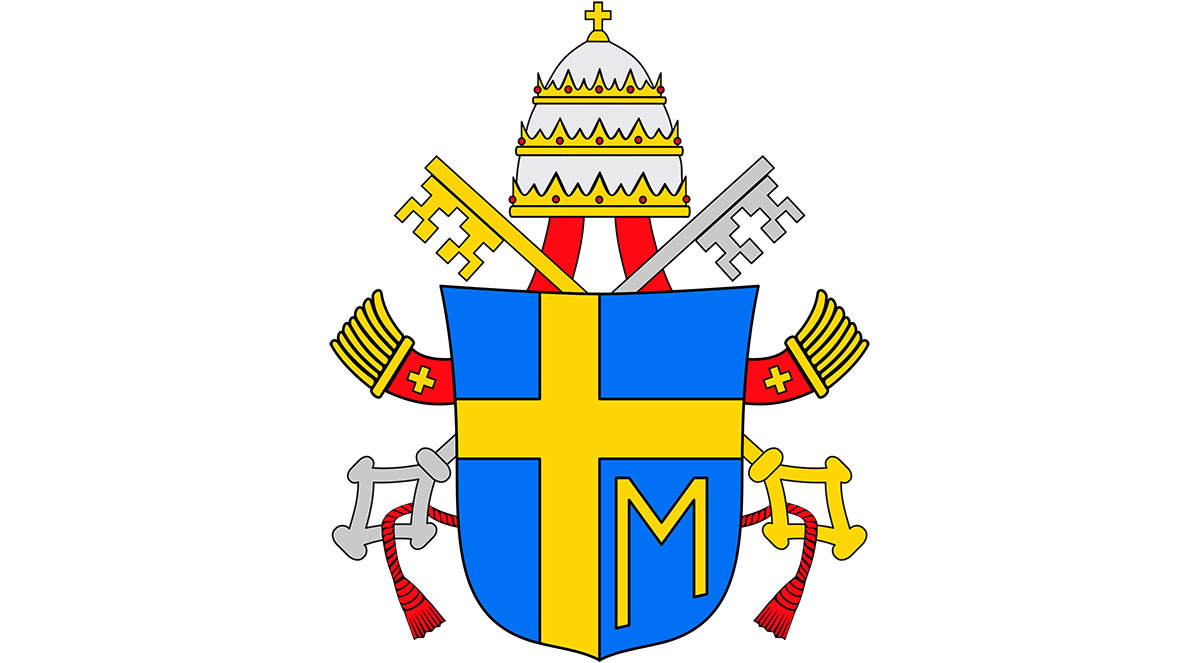
The triregnum remained on the crests of John Paul I and John Paul II, but upon Benedict XVI’s election to the Papacy, he had his coat of arms feature only a simple bishop’s miter.
Vatican II caused consternation in many traditionalist Catholic communities. It led to a rise in fringe “sedevacantist” or “conclavist” groups that claimed that every pope since Vatican II has been illegitimate and, as such, the throne of Peter is currently vacant. The term comes from the Latin “sede vacante,” meaning “the seat is vacant.” It is the official name for the period after a pope dies or resigns before a valid successor is chosen by a conclave.
Some of these groups will go so far as to elect their own antipopes, and these self-styled popes will often mark their distinctness from what they see as the pretender in Rome by embracing the traditional tiara. For these antipopes, although the word is a bit misused in this case, as these figures do not have the broad base of support to split the Church as traditional antipopes did in previous centuries, the use of the tiara represents their claim to be the embodiment of the true Catholic tradition.
Sic Transit Gloria Mundi
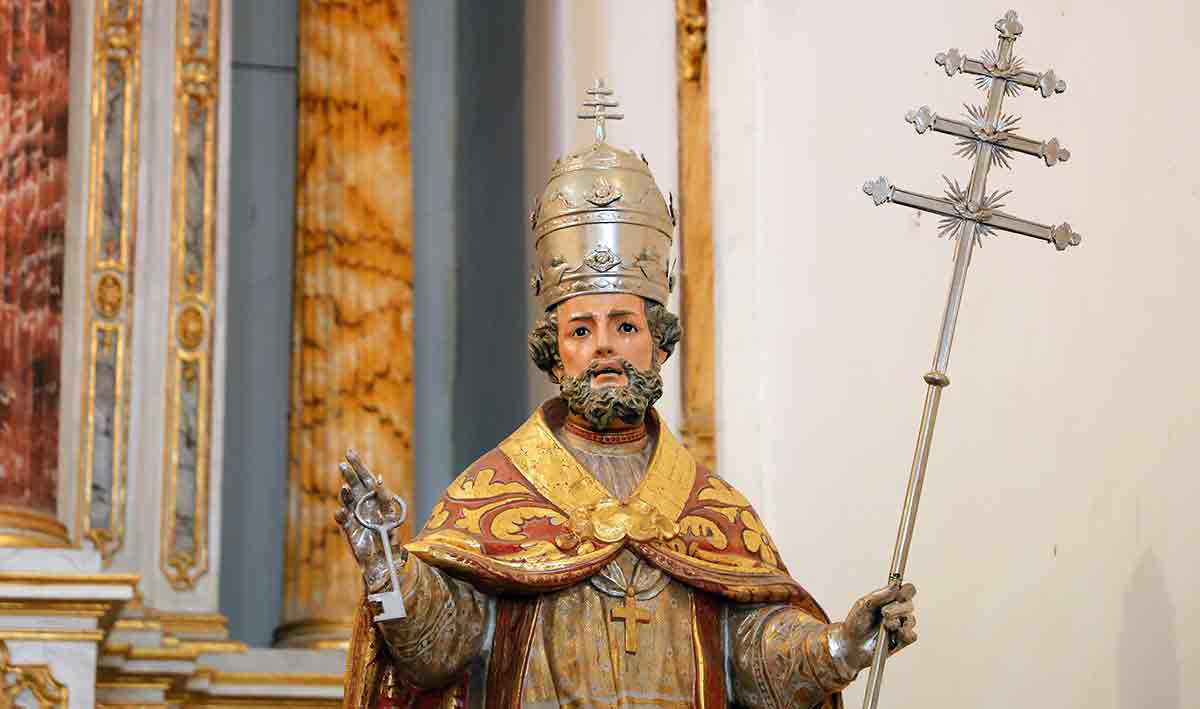
Today, about 22 papal tiaras still exist in collections in the Vatican, exhibited in museums, or on display in chapels. The magnificent golden, jewel-encrusted crowns, which once proclaimed papal dominance over kings and emperors, are now display pieces. As the popes were warned during their coronation ceremony, earthly glory does indeed pass away.
There is one tiara, however, that remains in use. Every year on June 29, the feast of Saints Peter and Paul, a tiara is placed on the head of a statue of St. Peter in the Vatican in recognition of his role as the first pope. This single remaining use serves as a bridge between the past and the present, honoring tradition while acknowledging that the age of the papal crown has passed.