Most people have heard of the Salem Witch Trials that occurred in colonial Massachusetts between February 1962 and May 1693. It is infamous as a period of mass hysteria during which many people tragically lost their lives. Elderly widows and others living on the fringes of society were accused by scared adolescent girls, and opportunistic community members targeted wealthy neighbors. But how many people actually died as a result of the Salem Witch Trials? Read on to discover the scale and the trials, and learn about the lives of the victims, including why they were targeted.
How Many People Died in the Salem Witch Trials?

More than 200 people were accused over the course of the Salem Witch Trials, which mostly happened in Salem Village, today known as Danvers, but also other nearby Puritan settlements, including Andover and Topsfield. Of the 200 accused, 30 were found guilty, but only 20 people were formally executed, 19 by hanging and one by torture. At least another five victims died in disease-ridden jails awaiting trial or release. However, countless more lives were ruined as even after being accused ruined reputations and left people living as outcasts under constant suspicion.
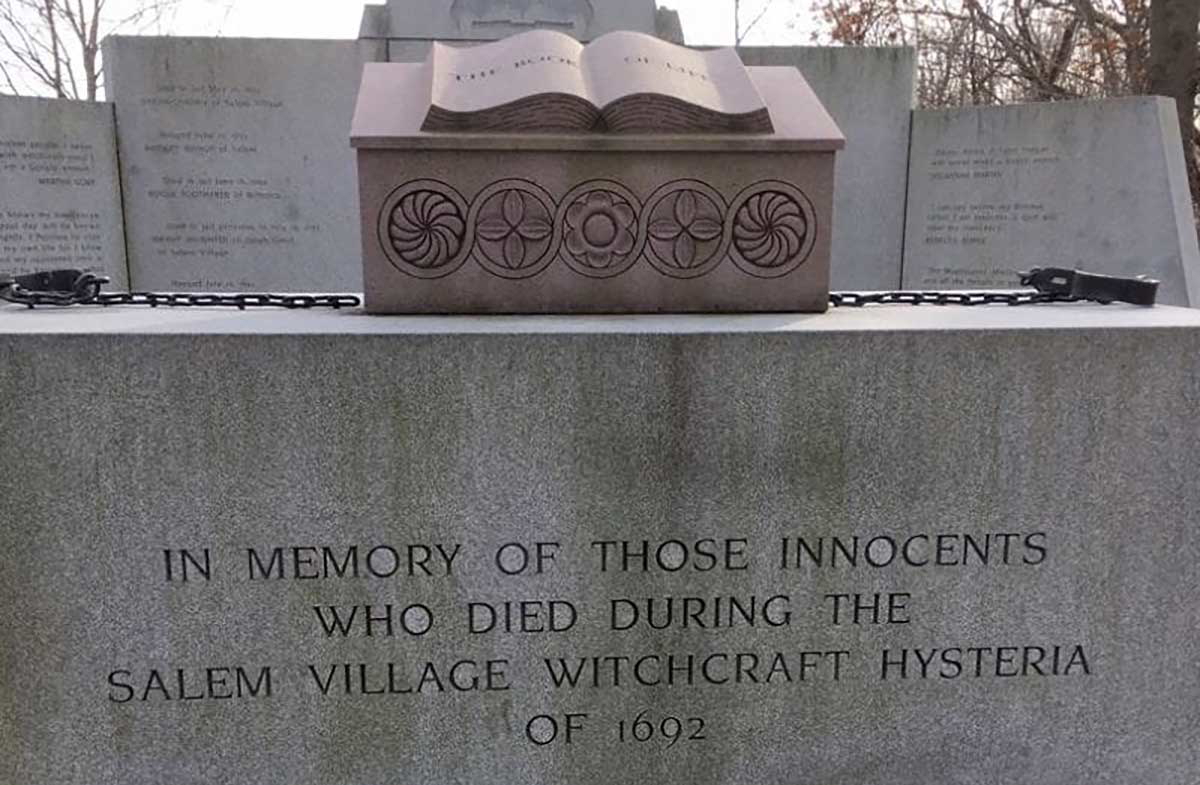
Below is a list of the 25 people who were executed or died in jail during the Salem Witch Trials:
- Sarah Osborne – died in prison May 10, 1692
- Bridget Bishop – executed June 10, 1692, by hanging
- Roger Toothaker – died in jail June 16, 1692
- Sarah Good – executed July 19, 1692, by hanging
- Rebecca Nurse – executed July 19, 1692, by hanging
- Elizabeth Howe – executed July 19, 1692, by hanging
- Susannah Martin – executed July 19, 1692, by hanging
- Sarah Wildes – executed July 19, 1692, by hanging
- Rev. George Burroughs – executed August 19, 1692, by hanging
- George Jacobs Sr. – executed August 19, 1692, by hanging
- Martha Carrier – executed August 19, 1692, by hanging
- John Proctor – executed August 19, 1692, by hanging
- John Willard – executed August 19, 1692, by hanging
- Giles Corey – executed September 19, 1692, by being pressed to death
- Martha Corey – executed September 22, 1692, by hanging
- Mary Eastey – executed September 22, 1692, by hanging
- Mary Parker – executed September 22, 1692, by hanging
- Alice Parker – executed September 22, 1692, by hanging
- Ann Pudeator – executed September 22, 1692, by hanging
- Wilmot Redd – executed September 22, by hanging
- Margaret Scott – executed September 22, 1692, by hanging
- Samuel Wardwell Sr. – executed September 22, 1692, by hanging
- Rebecca Addington Chamberlain – died in prison September 26, 1692
- Ann Foster – died in jail December 3, 1692
- Lydia Dustin – died in jail March 10, 1693
Victim #1 Bridget Bishop
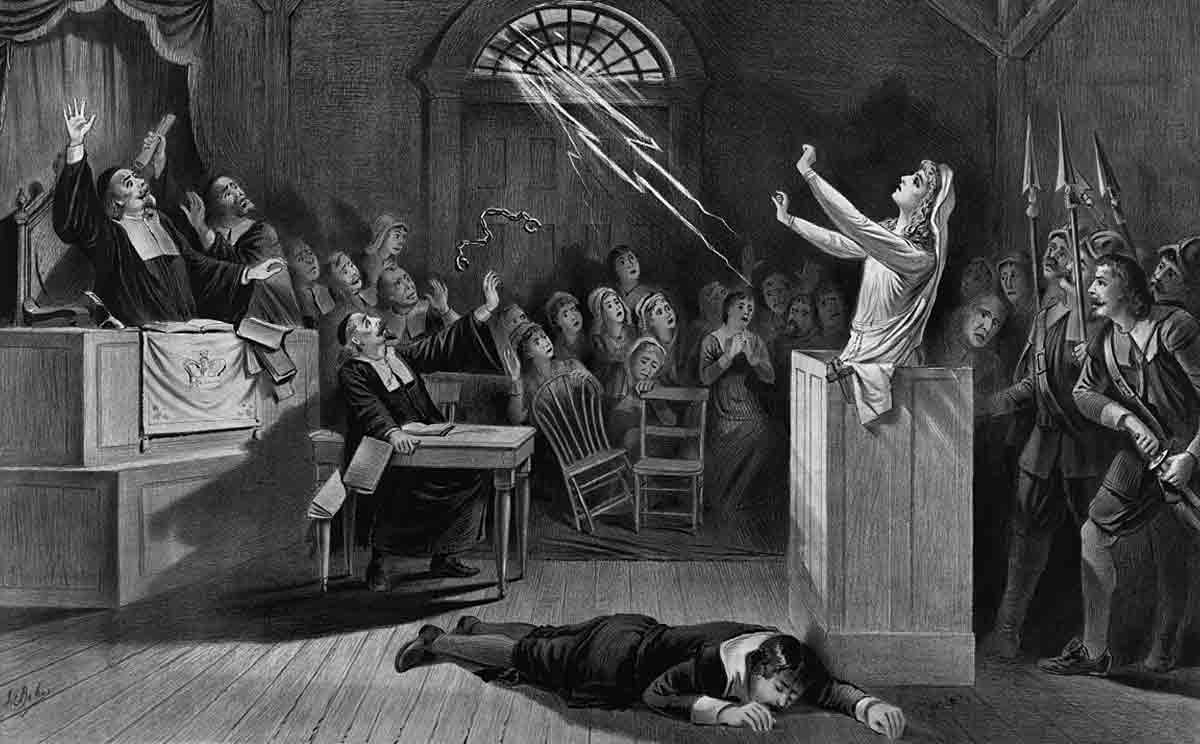
Bridget Bishop, born Bridget Playfer in Norwich, England, was the first person to be executed as part of the Salem Witch Trials on June 10, 1692. She married her first husband, Sam Wassalbe, in 1660, but both he and their infant child were dead shortly after Bridget arrived in Massachusetts in 1666. Bridget married a wealthy widower, Thomas Oliver, also from Norwich, and the pair moved to a property in Salem with vast orchards. The marriage was reportedly an unhappy one, with neighbors saying that they argued constantly and that Bridget was often covered in bruises. Thomas died in 1679, and Bridget remained in the house alone until 1685, when she married her third and final husband, Edward Bishop.
Bridget had already been accused of witchcraft back in 1680. Popular opinion in Salem was that Bridget had caused the deaths of her first two husbands. In 1685, neighbors accused her of afflicting local children, while men working on the Bishop home reported seeing Bridget as a specter, and they found poppets on the property. Poppets were small, doll-like figures crafted to symbolize a particular individual and used in various spells and rituals.
Accounts of Bridget’s witchcraft spiraled. She was supposedly seen with imps and flying over her orchard at night. In 1692, she was arrested for heresy. Damning evidence against her manifested in a witch’s mark, and the 60-year-old Bridget was led to the gallows.
Victim #2 Sarah Good
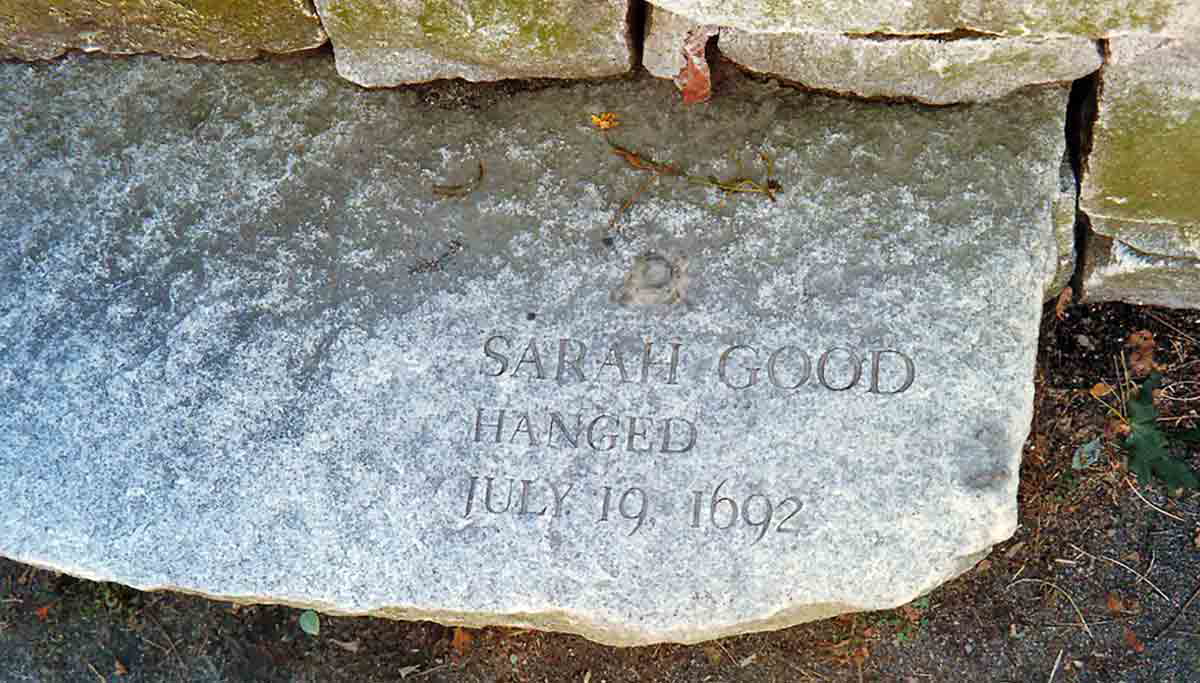
Bridget may have been the first executed, but she was not the first accused, that was Sarah Good. Born into a fairly prosperous family that owned an inn, but by the time her parents died, legal issues meant Sarah inherited nothing. She married an indentured servant named Daniel Poole, who died by 1686, leaving Sarah to pay his significant debts. She then married William Good, a poor laborer, and the couple and their children were destitute, renting rooms in Salem or living on the streets.
On February 29, 1692, the first arrest warrants in the Salem Witch Trials were issued for Sarah Good, Sarah Osborne, and Tituba, accused of harming Betty Parris and Abigail Williams through witchcraft. As the trials progressed, more people came forward with claims, especially against Good. She was chosen as the first to testify, probably deliberately, as she was considered a local inconvenience. Even her six-year-old daughter, Dorcas, was coerced into testifying against her. Additionally, while William did not outright call her a witch, he testified she was close to becoming one, possibly to protect himself from allegations.
Sarah Good was sentenced to death, but received a temporary reprieve until after childbirth. Dorcas was also accused and imprisoned for over seven months, causing lasting psychological trauma. Good’s infant died in prison, knowing nothing but the walls and bars of a jail cell. Sarah Good was executed shortly thereafter on July 19, 1692.
Victim #3 Sarah Osborne
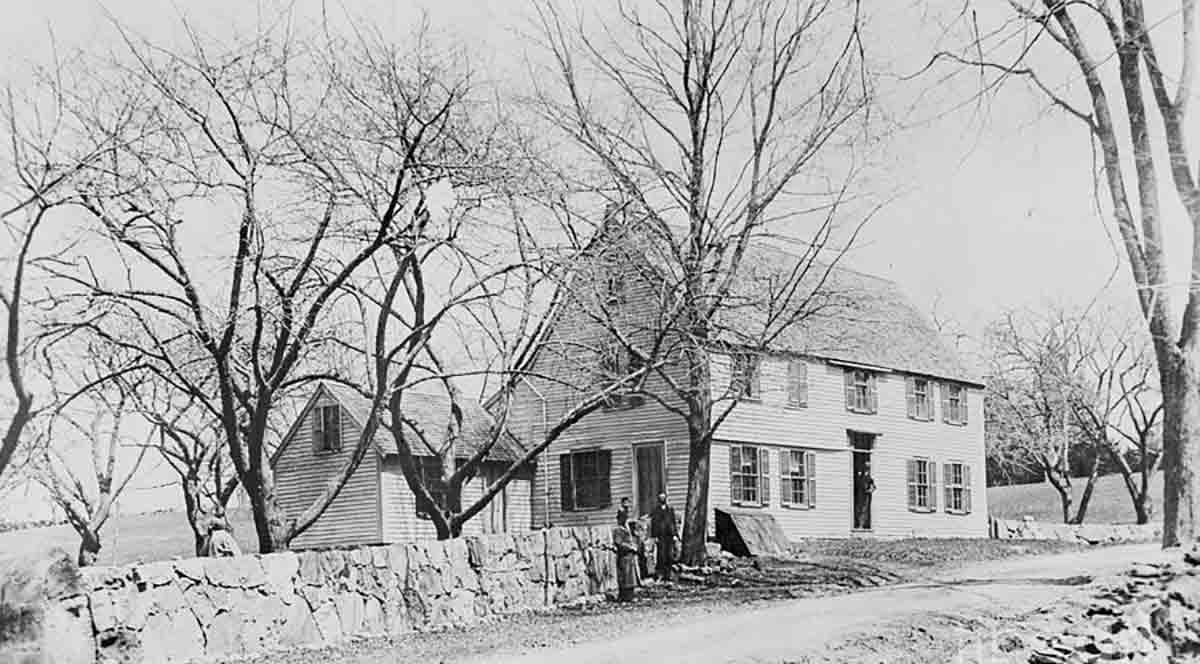
Sarah Osborne was accused along with Sarah Good and Tituba. She was another social outcast. Her first husband, Robert Prince, was a notable pillar of the Salem community with close ties to the Putnam family. The pair had three children before he died in 1672. Following his death, Sarah hired an indentured servant named Alexander Osborne, who had immigrated from Ireland. She later married him and continued to live in the affluent Prince family home, despite her late husband’s wish that the property pass to their sons. This, combined with poor mental health, made Sarah unpopular. By the time she was accused, she had failed to attend church for the best part of three years.
The four accusers claimed that Sarah Osborne’s specter tormented them by pinching, pricking, and urging them to sign the devil’s book. During her examination, Osborne denied the accusations, stating she was more likely bewitched than a witch. She described a dream or vision of a black figure resembling a Native American attacking her, reflecting widespread fears of Native violence among 17th-century New Englanders.
Osborne, along with Sarah Good and Tituba, was imprisoned pending trial. Transferred to Boston jail on March 7, she was shackled after continued claims of supernatural torment. Osborne died in custody on May 10, 1692, becoming the first fatality of the Salem WItch Trials, as confirmed by the jailer’s records. Tituba, an enslaved Native American, was questioned but never tried, probably due to her cooperation. The case against her was dismissed in May 1693.
Victim #4 Rebecca Nurse
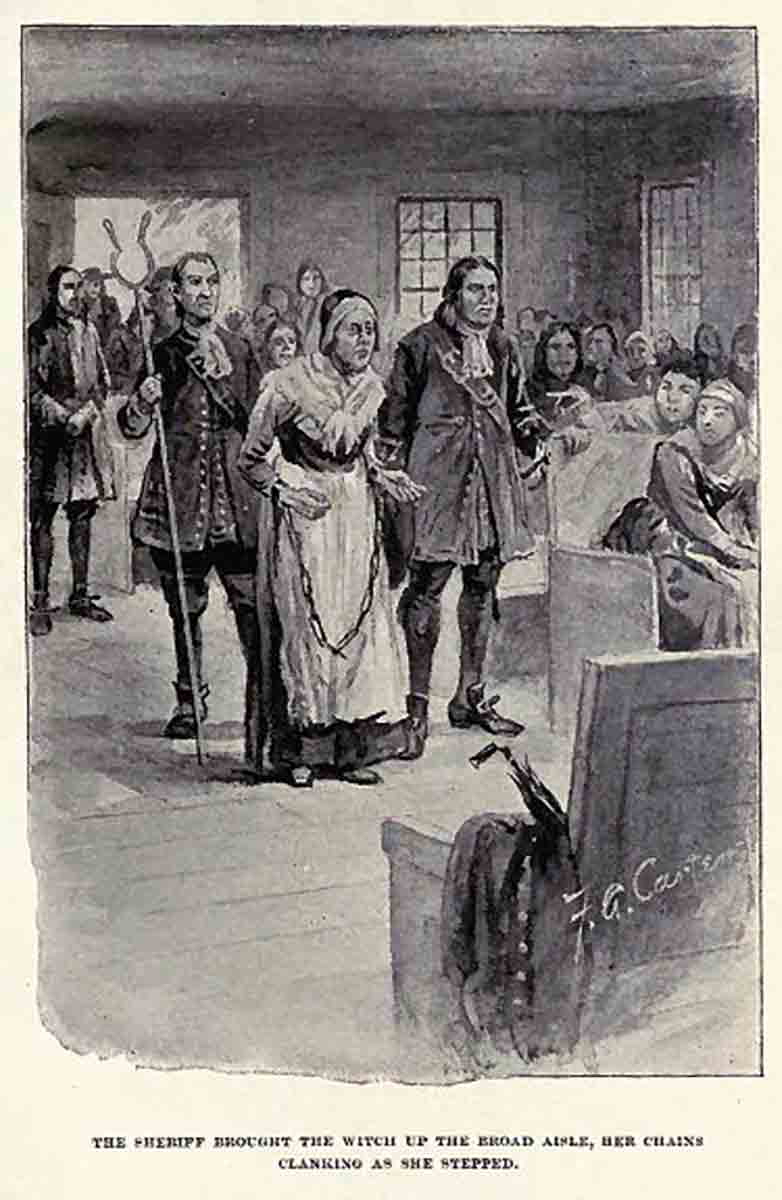
Far from being a social outcast, 71-year-old Rebecca Nurse was a devout member of the local church. Due to old age and frailty, Rebecca had been housebound for some time before four prominent men from the community arrived at her home to inform her of the accusations made against her.
Rebecca was born in 1621 in Great Yarmouth, England, and immigrated with her family as a child. In 1644, she married Francis Nurse and had nine children. Francis made wooden household goods, earning a comfortable living. The couple was also highly respected, with Francis appointed constable and often called upon to settle disputes. Rebecca was renowned for her devout religious nature, so the accusations came as a surprise.
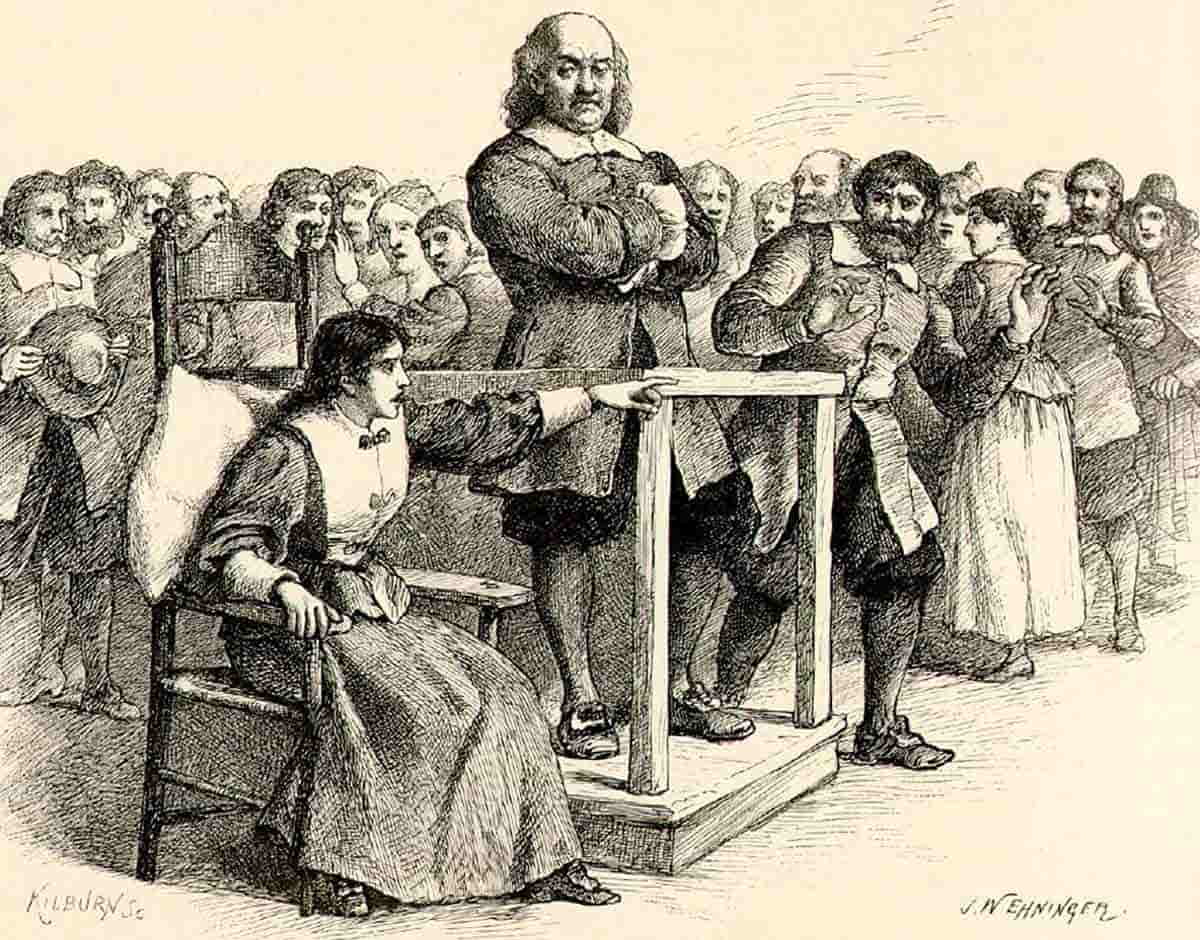
Confined to bed due to illness, Rebecca Nurse expressed sympathy for the afflicted and voiced her belief that some of the accused were likely innocent. In mid-March, Ann Putnam Jr. claimed she saw the specter of an old woman in her grandmother’s chair, later identifying it as Rebecca Nurse with encouragement from others in the Putnam household.

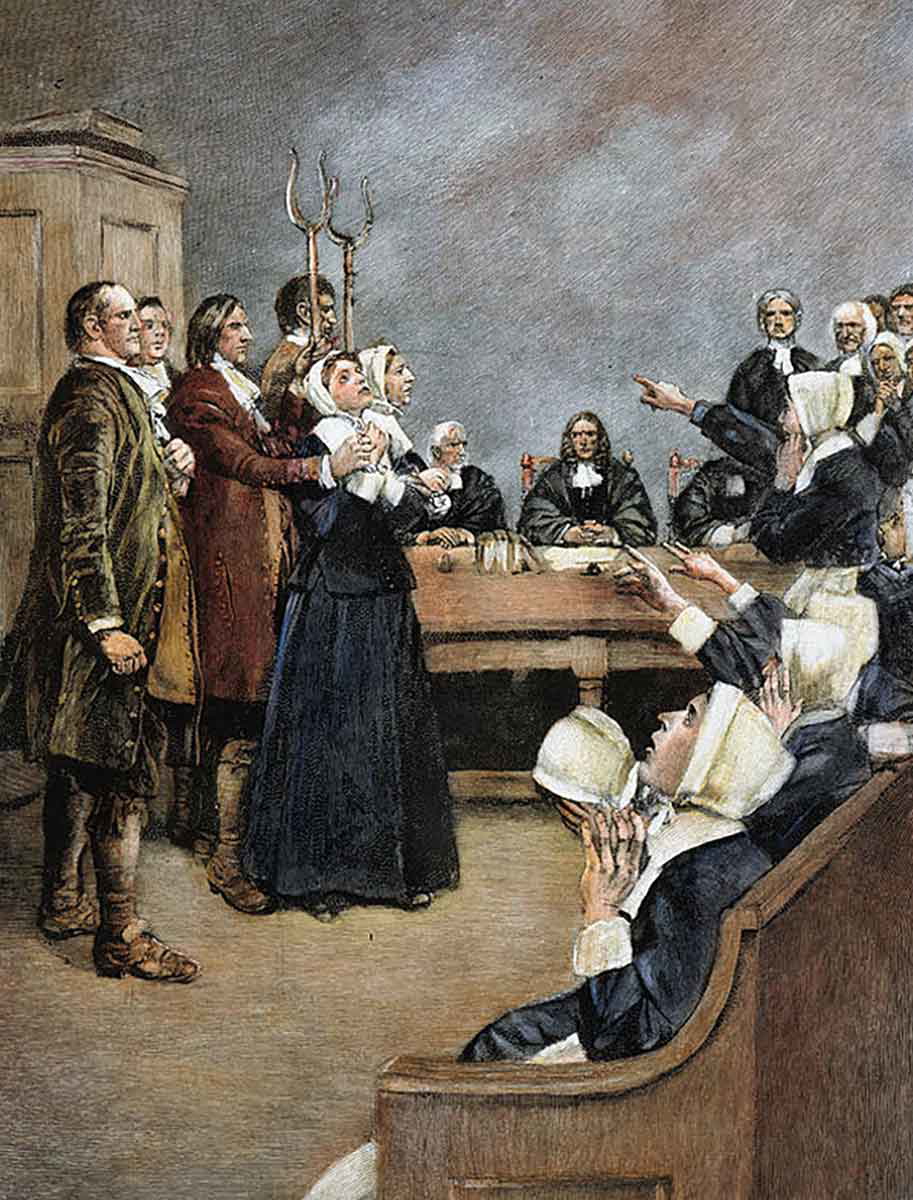
Abigail Williams and Ann Putnam Sr. also reported torment by Nurse’s specter. During a visit to the Putnam home, former minister Deodat Lawson observed Ann Putnam Sr. appear to struggle against the unseen specter. On March 24, during Nurse’s examination at the Salem Village meetinghouse, several accusers, including the Putnams, displayed convulsions and accused Nurse’s ghost of tormenting them. They claimed to see the Devil whispering in her ear and to see bird-like familiars in the room. Ann Putnam Sr. was struck mute and paralyzed after shouting at Nurse and had to be carried out by her husband.
Rebecca was then examined. A witch’s mark was found, and she was sent to trial. Rebecca’s daughter saw one of her mother’s accusers prick herself with needles, posturing an ailment, but this evidence was not admitted. Rebecca was initially declared innocent, but through a miscommunication, likely due to her difficulty hearing and overall ill health, the decision was swiftly overturned. Rebecca was hanged on July 19th, 1692. Her family collected her body and had her buried in an unmarked grave on the family property, as she could not be buried on consecrated grounds.
Victim #5 Mary Eastey
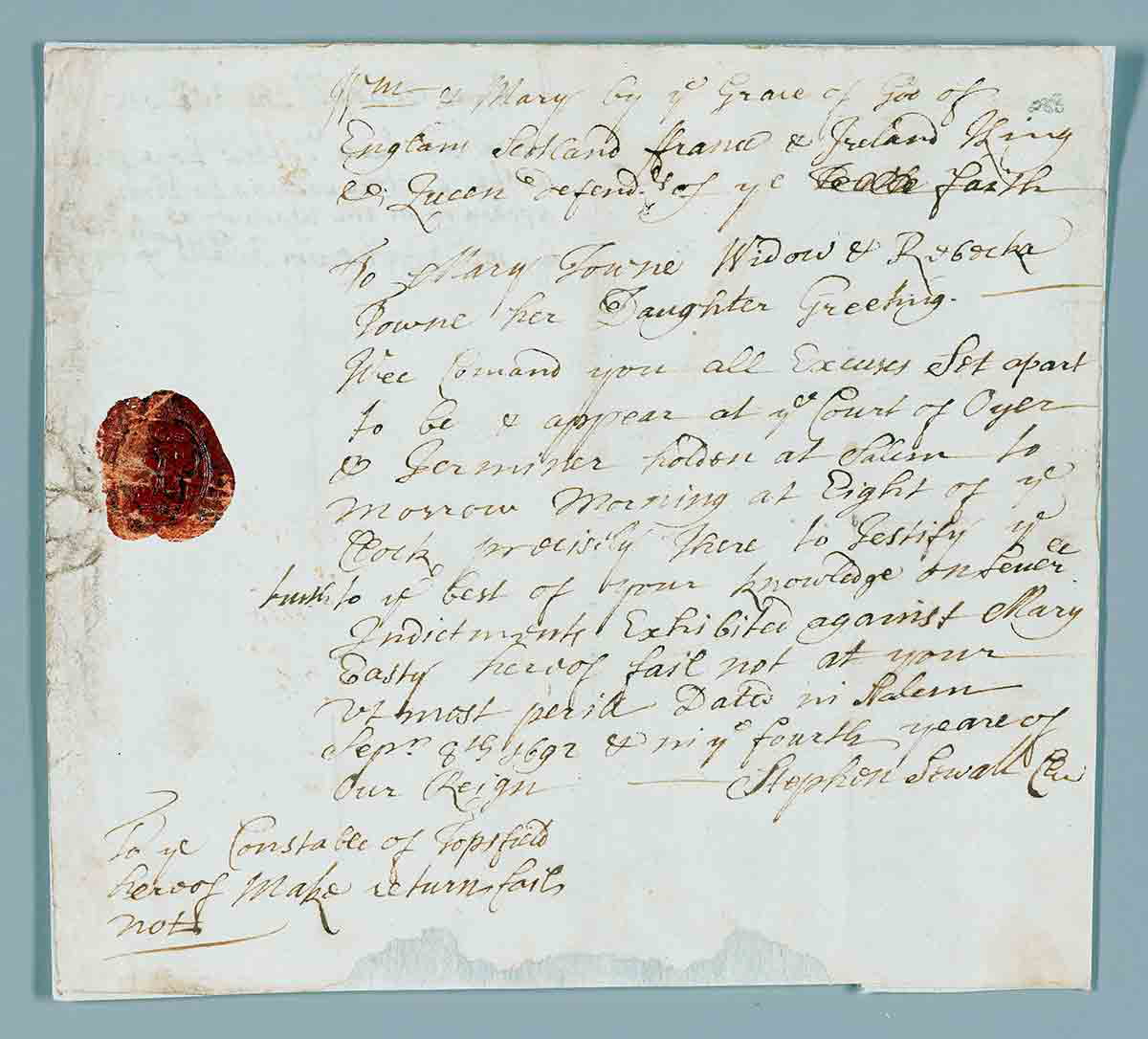
Rebecca’s sister Mary Eastey was also accused, with Mercy Lewis and others imitating her physical gestures as proof of her control over them. Eastey reportedly defended herself so elegantly that one of the magistrates questioned the girls whether they were sure it was Eastey who afflicted them and she was temporarily released. But after two months, Mercy Lewis renewed her claims and she was arrested again and hanged on September 22.
Victim #6 Elizabeth Howe
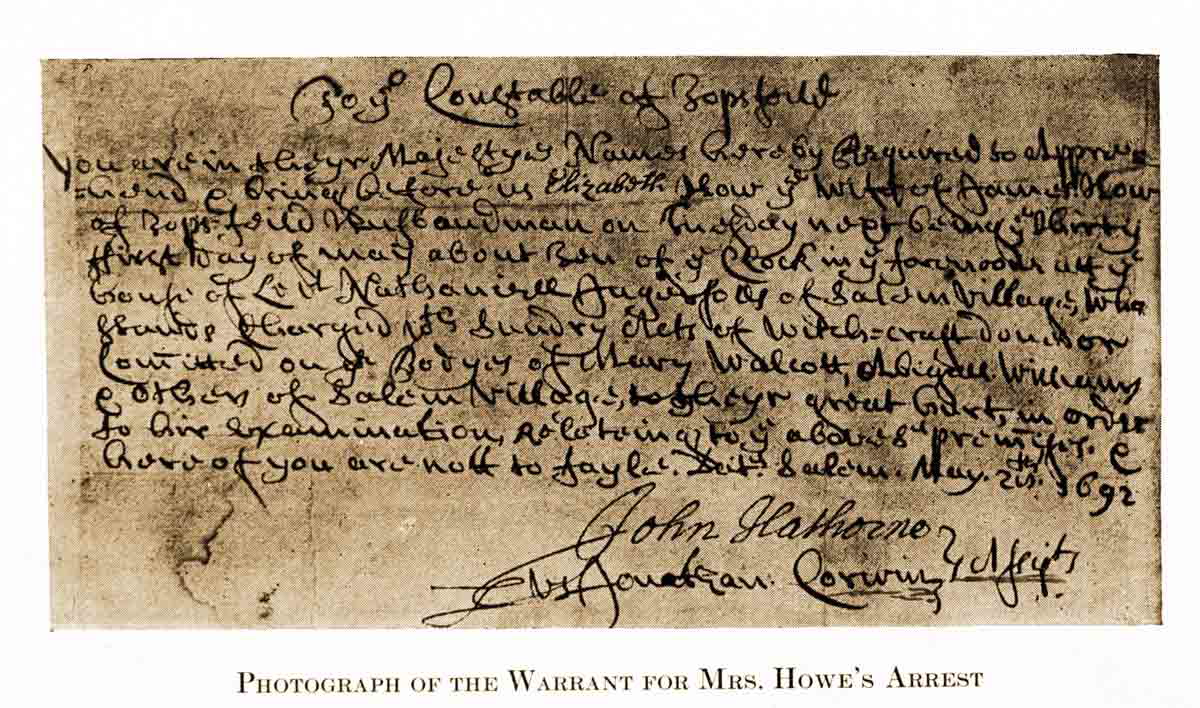
Also executed on July 19th was Elizabeth Howe, born Elizabeth Jackson in Yorkshire in 1637. The Jackson family made the journey across the Atlantic when Elizabeth was just three. She married James Howe in 1658, and the couple had six children together in Topsfield, Massachusetts, another Puritan settlement.
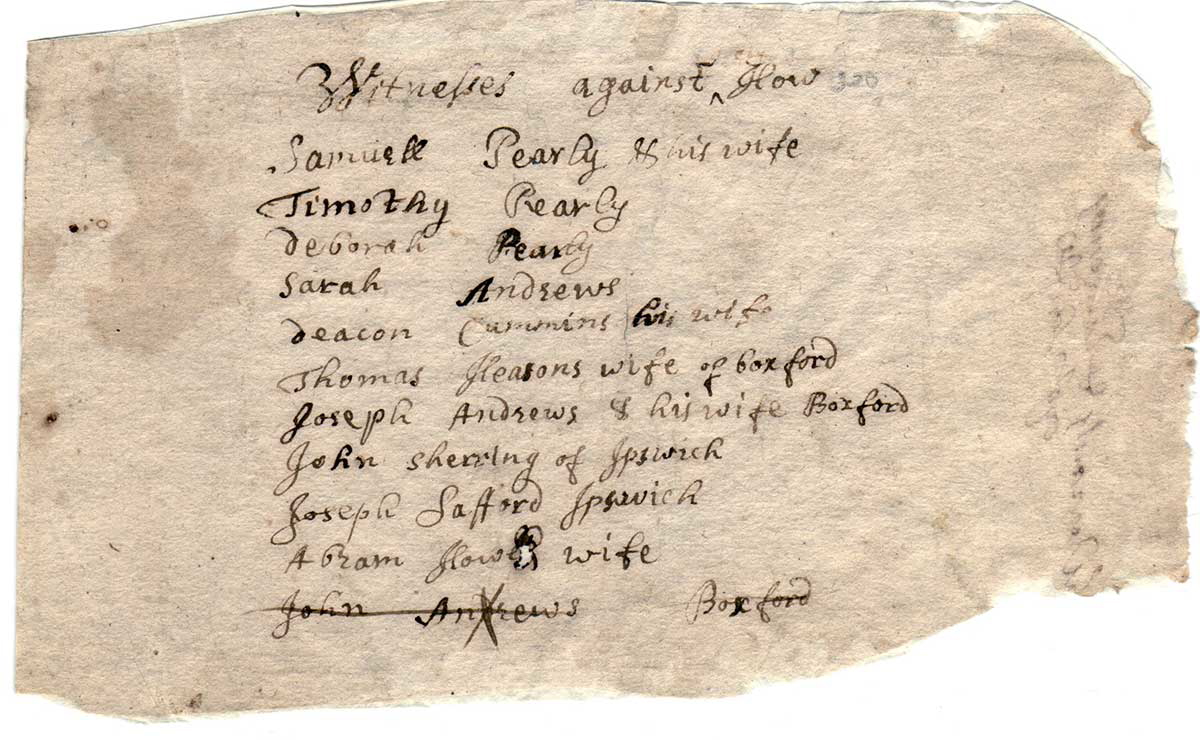
Elizabeth’s husband went blind early, leaving Elizabeth to assume control of the house and farm, a position considered unfitting for a Puritan woman. The family had a longstanding feud with their neighbors, and Elizabeth became a source of local gossip. This led to accusations of witchcraft, mainly from her discontented neighbors, Samuel and Ruth Perley. Their daughter blamed Elizabeth for her regular fits, and the local minister confirmed that Hannah Perley was under some sort of dark, supernatural affliction. Eventually, the frail Hannah passed away, and the Perleys were adamant that Elizabeth Howe was responsible.
The settlement of Topsfield was also in a bitter quarrel over land with Salem, as the latter community claimed the residents of Topsfield inhabited territory that belonged to them. Amid the disputes, Topsfield appointed several men, including Elizabeth’s son John Howe, to request the relevant documentation from Salem’s leading family, the Putnams, who were unable to produce deeds for the property in question. The Perley family seized the opportunity to renew their attack on Elizabeth Howe through Salem’s ongoing witch trials.
On May 29, 1692, Elizabeth was arrested by the Topsfield constable on charges of performing witchcraft against the inhabitants of Salem. That same day, Abigail and Deliverance Hobbs, as well as Sarah Wildes, were all taken into custody; all individuals in conflict with the Putnams.
James Howe supported his wife and visited her in prison on a regular basis. Samuel Perley testified against her in the Salem court, explaining that shortly after he denied Elizabeth’s request for church membership, his cow inexplicably went mad and drowned itself in a pond. Elizabeth’s brother-in-law, John Howe, claimed that after encouraging her to confess, an offer she refused, his healthy pig died suddenly, and his hand went numb after cutting off the animal’s ear, leading him to suspect Elizabeth. Some historians suggest John’s allegations may have been driven by self-interest. Elizabeth and James had no sons; therefore, he may have anticipated inheriting their estate. Others defended Elizabeth, but it was not enough.
As Elizabeth declared her innocence in court, two of her accusers dropped to the floor in dramatic fits, and 57-year-old Elizabeth was found guilty. She was hanged along with four others on the 19th of July.
Victim #7 Susannah Martin
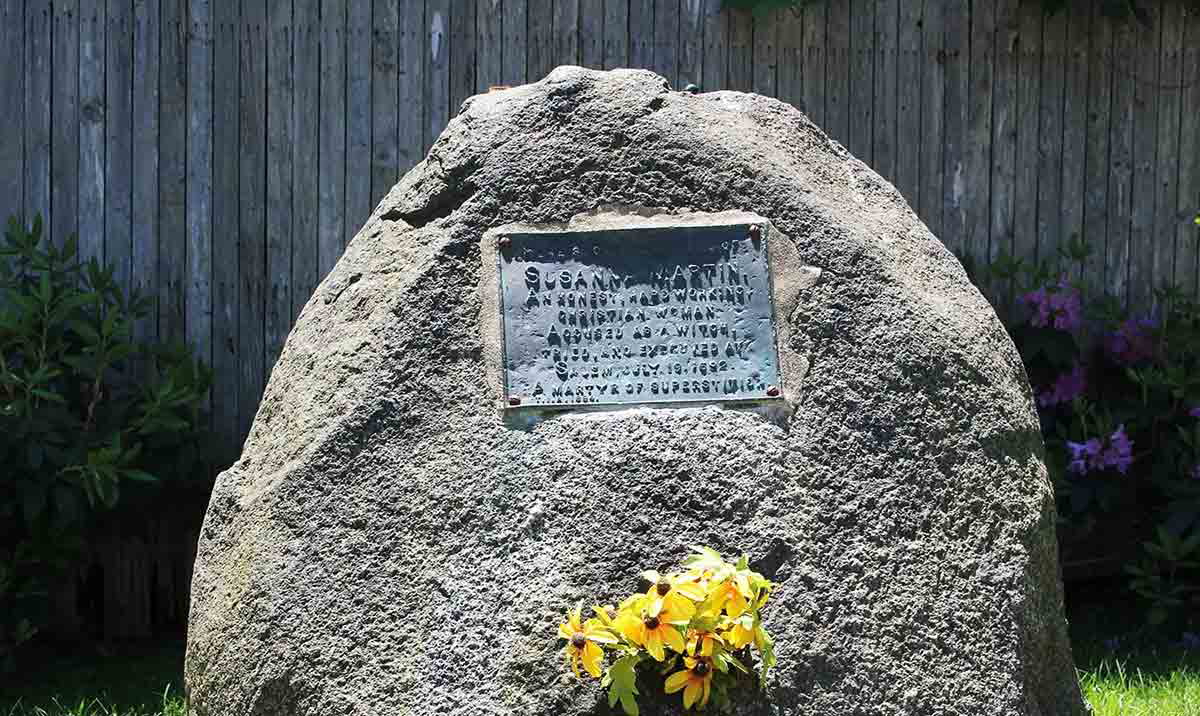
Susannah Martin was born in England in 1621 and migrated to Massachusetts in 1639 when she was 18 years old. In 1646, she married a blacksmith called George Martin, with whom she had eight children. In 1669, Susannah was accused of witchcraft, but the charges were dropped, and her husband sued William Sargent Jr. for slander. When George died in 1686, Susannah was left a poor widow without protection.
In 1692, Susannah was among the women accused, specifically by Joseph and Jarvis Ring, who claimed that she attempted to recruit them to witchcraft. John Allen also claimed that she bewitched his oxen and drove them into a river where they drowned.
During her examination, Susannah was able to quote from the Bible freely, which witches were said to be incapable of doing, but Cotton Mather dismissed this defence. She was forced to submit to a physical examination for a witch’s tit to give milk to familiars. While none was found, it was claimed that she woke with breasts full of milk that were slack by the evening, as if the milk had been given to someone or something. Considered a clear sign of guilt, she was executed by hanging on July 19, 1692.
Victim #8 Sarah Wildes
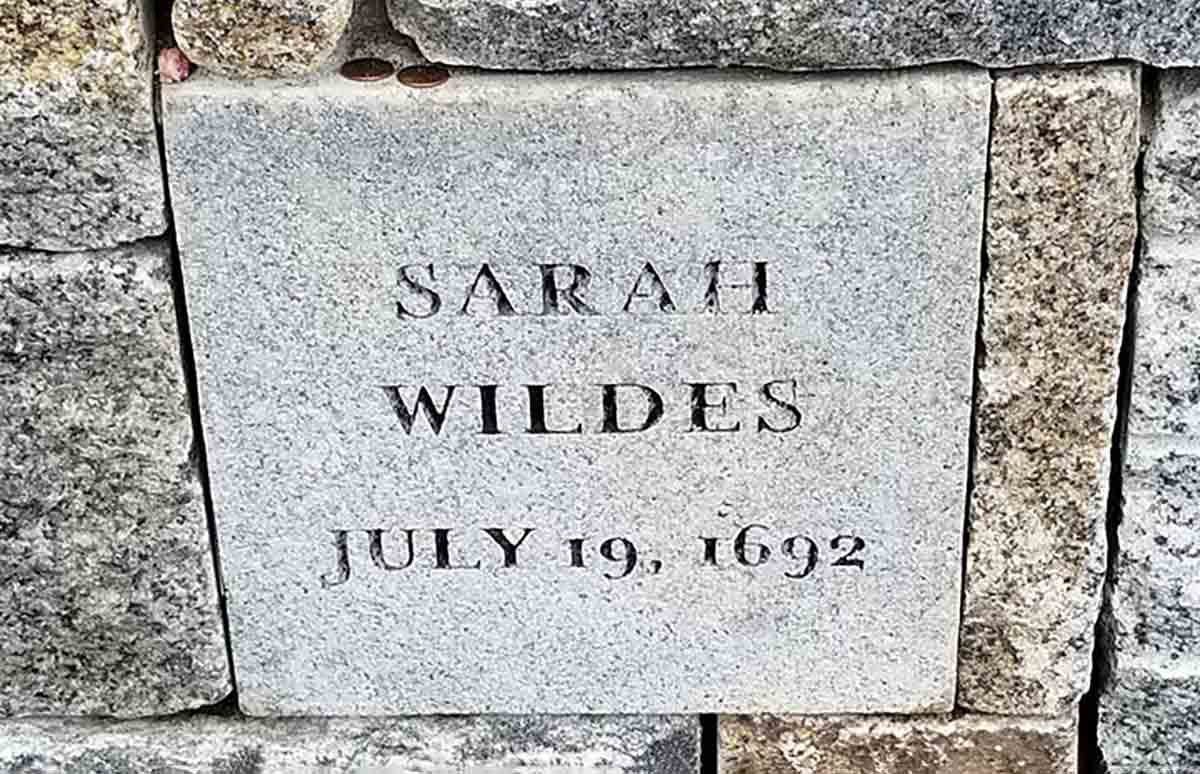
Sarah Wildes was also executed on July 19, 1692. Born in Chipping Norton, England, in 1627, she migrated to Massachusetts with her family as a child, where she married John Wildes, a widower with eight children, and had another son, Ephraim. He became an influential member of the community, serving as treasurer and constable. Nevertheless, Sarah had a reputation for non-conformity in the Puritan community, described as “glamorous,” whipped for fornication, and charged with wearing a silk scarf. She also earned the ire of the Gould family for marrying John Wiles shortly after the death of his first wife, their daughter.
Sarah was arrested on April 21, 1692, along with other family members, including her stepdaughter Sarah Wildes Bishop, her son-in-law, Edward Bishop, and six others, who were suspected of afflicting Ann Putnam Jr., Mercy Lewis, and Mary Walcott. Others made further accusations of spectral torture against Sarah during her trial. While Ephriam tried to highlight that many of the accusations were motivated by personal vendettas, Sarah was convicted and hanged.
When spectral evidence was banned, Sarah Wildes was among the condemned exonerated by the Massachusetts General Court in 1710, and her family was awarded 14 pounds as restitution.
Victim #9 George Jacobs Sr.
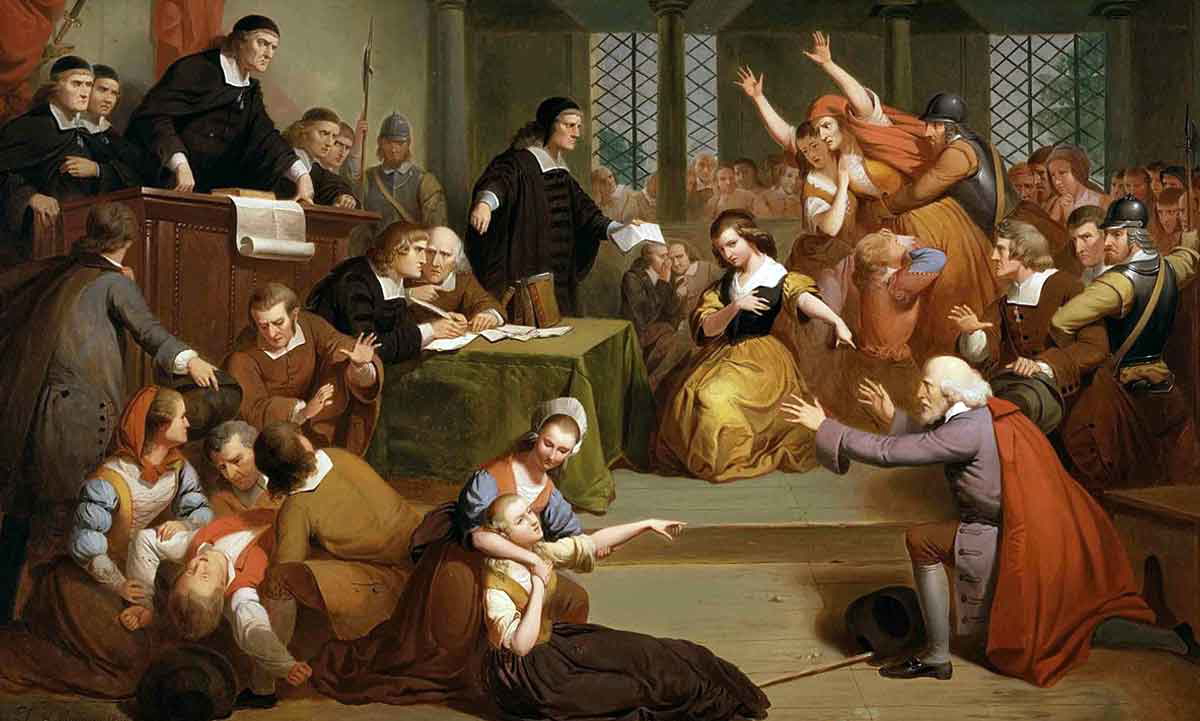
Most of the people accused of witchcraft in Salem were women, but that changed with George Jacobs. George married his second wife in 1692, and they resided on a family farm in Salem with their granddaughter, Margaret, and a 20-year-old servant, Sarah Churchill. When Sarah started to suffer from convulsions, the rumor spread that her employer had “beaten the devil out of her” with his walking sticks. The judges suspected Sarah was a witch and threatened her with imprisonment. During her examination on May 9 at the Salem meetinghouse, Churchill confessed, likely out of fear, to making a pact with the devil and accused Jacobs Sr., his son George Jr., and the granddaughter Margaret of witchcraft.
These suspicions were reinforced by spectral evidence reported by other servants. Mercy Lewis claimed his apparition beat her with sticks, Mary Warren reported seeing his specter strike Churchill, and Mary Walcott alleged a similar assault. George Sr. and his granddaughter were arrested. Meanwhile, Sarah Churchill confessed her accusations were fake to Sarah Ingersoll, but Ingersoll’s testimony was forbidden in court. Under pressure, Margaret Jacobs confessed and swore her grandfather was involved in witchcraft. The pair was transported to the Boston jail. While Margaret retracted her accusations, George Jacobs was found guilty after Sarah Churchill gave evidence against him. He was hanged with four others on 19 August 1692. His body was recovered and buried on the family property.
Victim #10 Reverend George Burroughs
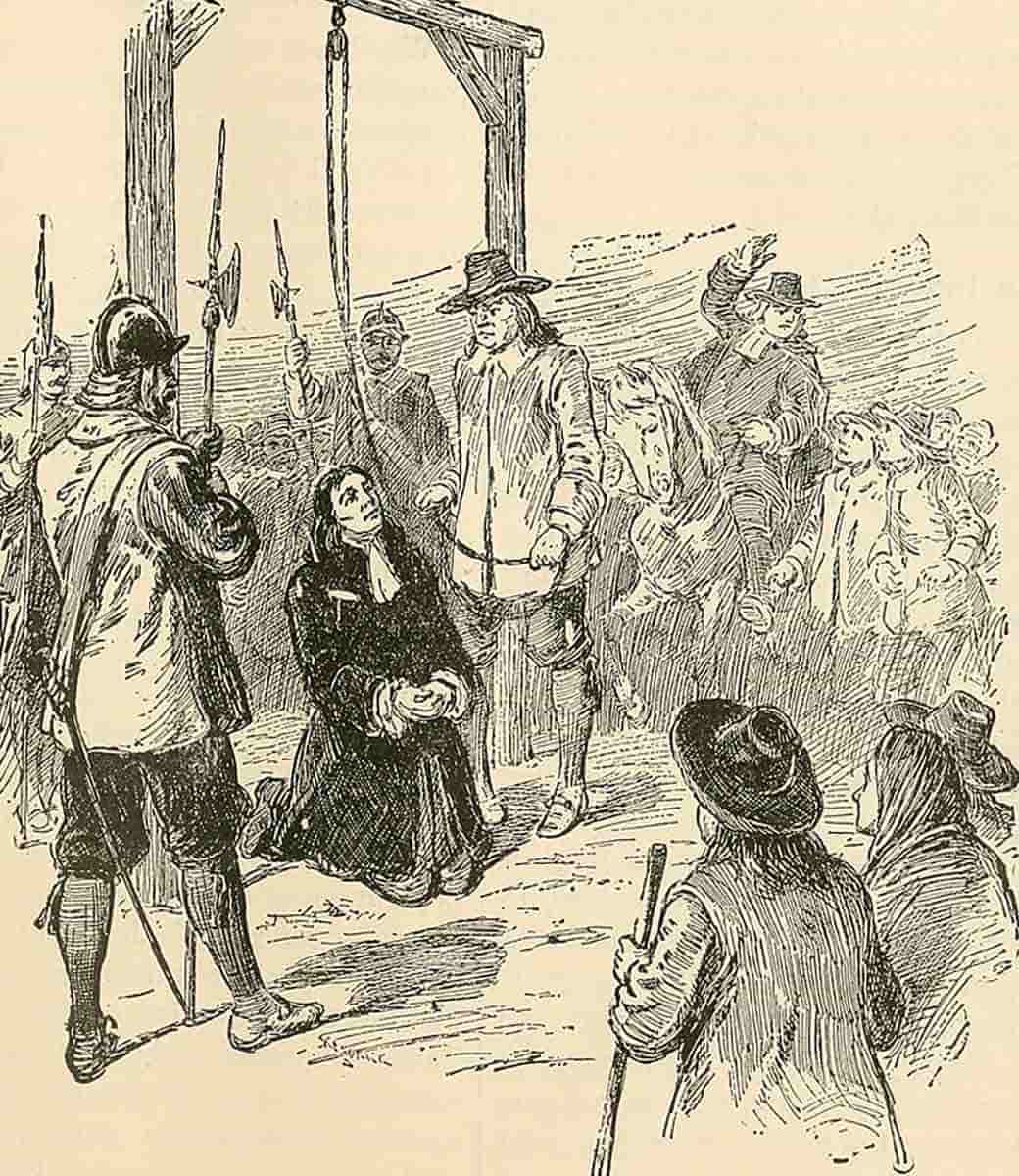
George Jacobs Snr. was the first man executed in the Salem witch trials alongside the Reverend George Burroughs, who was hanged on the same date. He was arrested on May 4, 1692, based on accusations by some personal enemies and the fact that he did not baptise his children or attend communion. During his examination, he reportedly showed signs of inhuman strength, such as lifting a musket by inserting his finger into the barrel. While standing on the ladder waiting to be hanged, he successfully recited the Lord’s Prayer, something that was considered impossible for a witch to do.
Victims #11 John Proctor & #12-13 Alice & Mary Parker
Another man who met an ill-fated end on August 19, 1692, was John Proctor. Born in Suffolk, England in 1630/1, on March 11, 1635, the Proctor family set sail for America, arriving in Ipswich, Massachusetts. John married his first wife, Martha Giddens, in 1653 and had four children. Martha died in childbirth in 1659, and John married Elizabeth Thorndyke in 1662. John and Elizabeth had seven children, but she too died prematurely in 1672.
When John married his third wife, Elizabeth Bassett, in 1674, he resided on a 700-acre Salem homestead that included a farm and a tavern. It is unknown how Elizabeth Bassett ended up in Salem, but it could have been to escape an uneasy reputation in her hometown of Lynn, Massachusetts, where her grandmother was accused of sorcery. The pair had seven children, and their sons worked the farm while Elizabeth and the daughters ran the tavern. Known for his logical outlook, John largely discredited the increasingly common accusations of witchcraft in New England.
Proctor was drawn into the witch trials in 1692 when his wife was among those accused by Ann Putnam. Many have suggested that the Putnams were jealous of the Proctors’ success. It is also thought that Mary Warren, the Proctor’s 20-year-old servant, encouraged the accusations made against Elizabeth Proctor. Mary Warren’s family once lived near Salem Harbor. Years earlier, her neighbor Alice Parker angrily confronted Mary’s father for refusing to help her harvest while her husband was out at sea. Shortly afterward, Mary’s mother died, and her sister became deaf and mute. Mary, who was orphaned and resorted to servitude, accused Ann Parker of causing these events by witchcraft. John Proctor tried to keep Mary Warren away from the trials, using physical punishment, but she began attending examinations in late March.
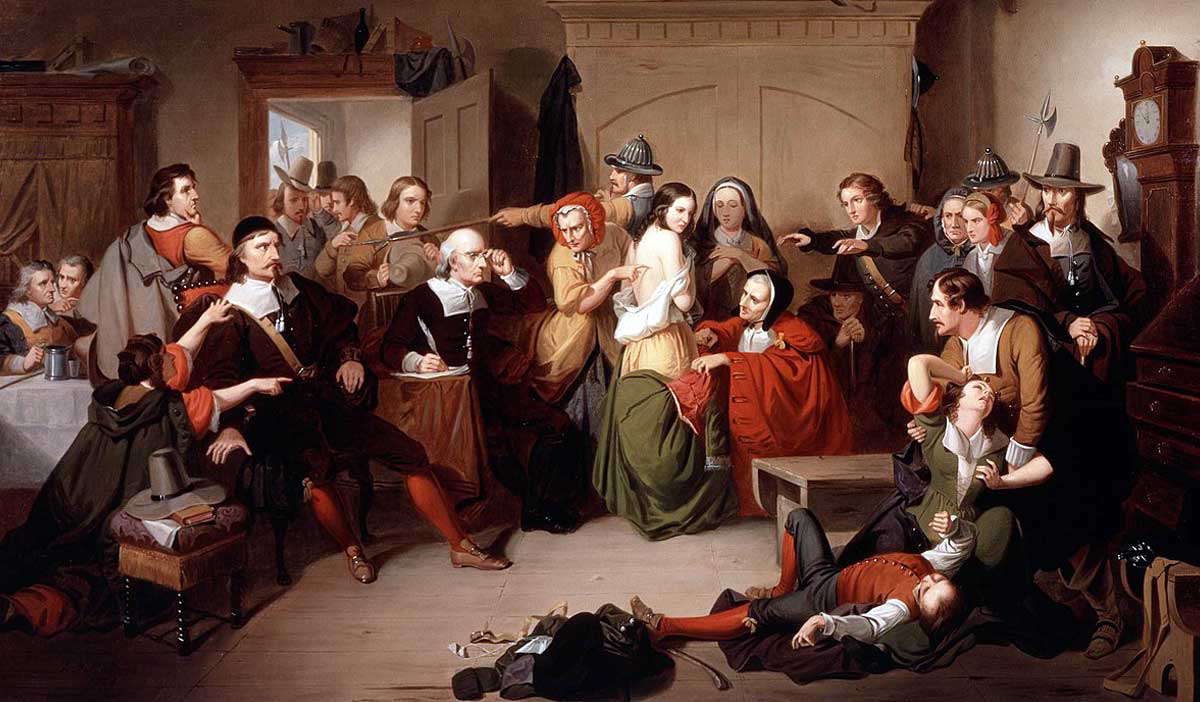
Elizabeth Proctor was arrested on April 10, 1692, and examined the following day in Salem Town, accompanied by her husband. During the examination, several of the afflicted accused her of witchcraft. Despite Elizabeth’s denials, the afflicted displayed dramatic physical symptoms in her presence. The hearing, attended by prominent officials, concluded with accusations also levied against John Proctor, who had previously said that the afflicted should be beaten to restore their senses. Both John and Elizabeth were committed to the Boston jail to await trial, and their property was seized to offset jail costs. Robert Calef later recorded that the sheriff confiscated or destroyed nearly all household goods, livestock, and provisions, leaving their children destitute.
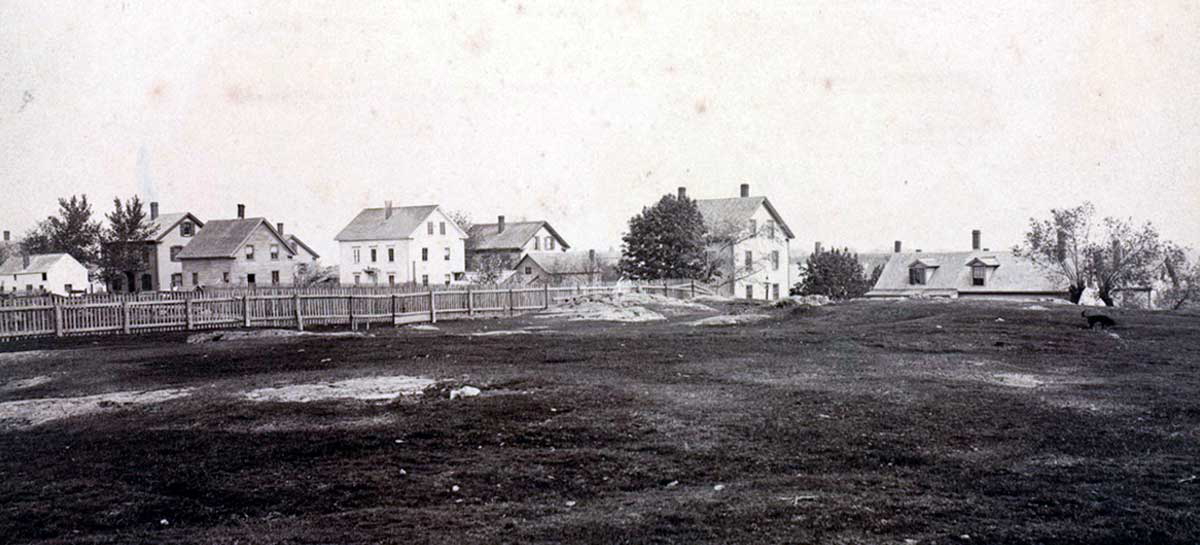
Mary Warren shifted roles from accuser to accused and was jailed on April 18. By April 20, she had formally accused both John and Elizabeth Proctor of witchcraft, and three of the Proctor children were also named. Other residents of Salem also came forward to accuse the Proctors, and the couple was convicted on August 2, 1692. John was hanged 17 days later, while a pregnant Elizabeth persisted in jail until she was released to marry again to a man named Daniel Richards. Mary Warren also escaped execution, but Alice Parker was executed on September 22 at Gallows Hill along with Mary Parker, a 55-year-old widow.
Victims #14-15 Giles & Martha Corey
Giles Corey was another of the six men executed during the Salem Witch Trials, but he had a particularly brutal end. Born in Northamptonshire, England, in 1611, it is unknown when he arrived in New England with his first wife, Martha. He quickly accrued a criminal record full of petty theft and negligent behavior, such as sleeping on the job. Martha died, leaving Giles and the couple’s four daughters.
Giles married Mary Bright in 1664 and, despite his past, managed a prosperous farm until he was accused of murdering indentured servant Jacob Goodall in 1676 for stealing apples by delivering a brutal beating. Giles eventually took Jacob to the doctor ten days later, and he died as a result of his injuries. Giles was found guilty of using unreasonable force and fined. Moderately unscathed by his legal issues, Giles continued to run his farm until his wife passed away and he remarried in 1690 to a woman named Martha. Just two years later, both husband and wife would be accused of witchcraft.
When the first three women were accused of witchcraft in February 1692, Giles attended their examination against his wife’s wishes, suggesting an underlying discord in their marriage. Martha’s refusal to attend and anger at her husband raised suspicion against her. On March 12, rumors began to circulate of her supernatural activities, and she was charged and arrested a week later. Initially, Giles bought into the idea and detailed peculiar events that happened in their home. On April 18, Giles was also accused and arrested. He denied all charges during his examination, but was held for trial.
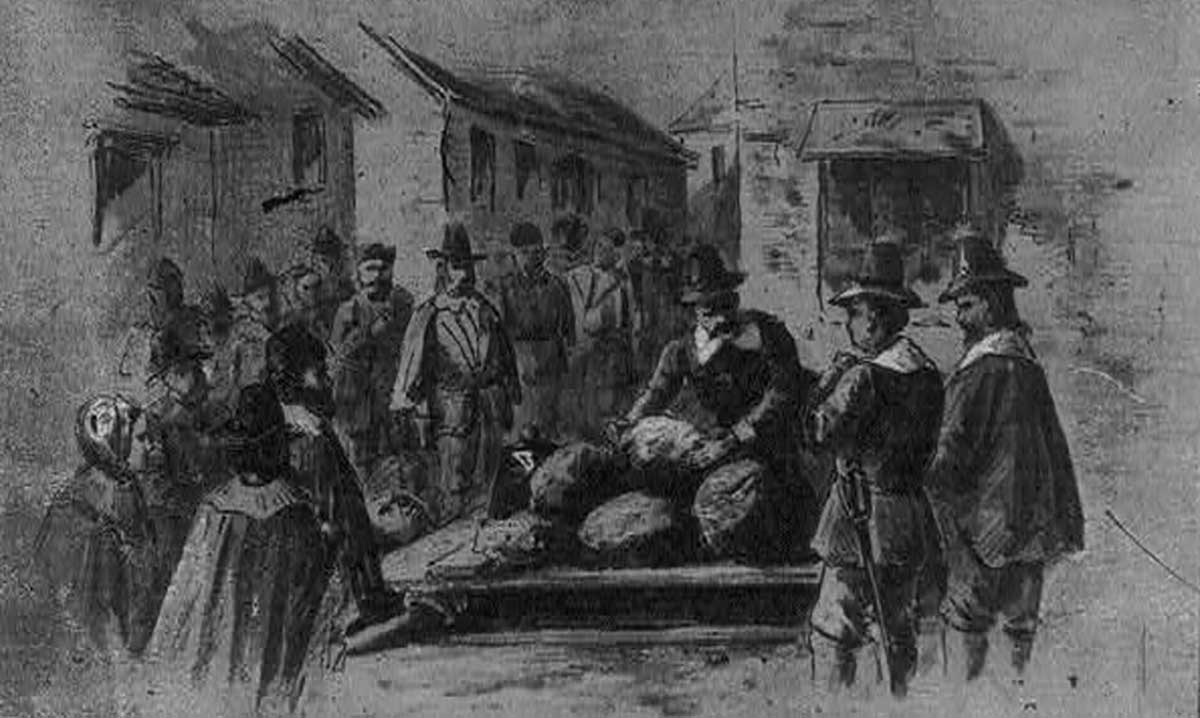
The mute Giles refused to enter a formal plea because he was distrustful of the court’s fairness. Consequently, he was subjected to peine forte et dure, a form of torture using heavy stones to force a response. Despite efforts by his friend Thomas Gardner to persuade him, Giles remained silent. His torment began on September 19th and lasted a few hours. The elderly Giles was laid on the ground, and gradually more rocks and boulders were piled on top of him until he was crushed. The legend surrounding the Salem Witch Trials dictates that the 81-year-old’s last words were the haunting phrase “more weight.” Martha was also hanged a few days later on September 22nd, which was the last day of executions as part of the trials.
Victim #16 Ann Pudeator
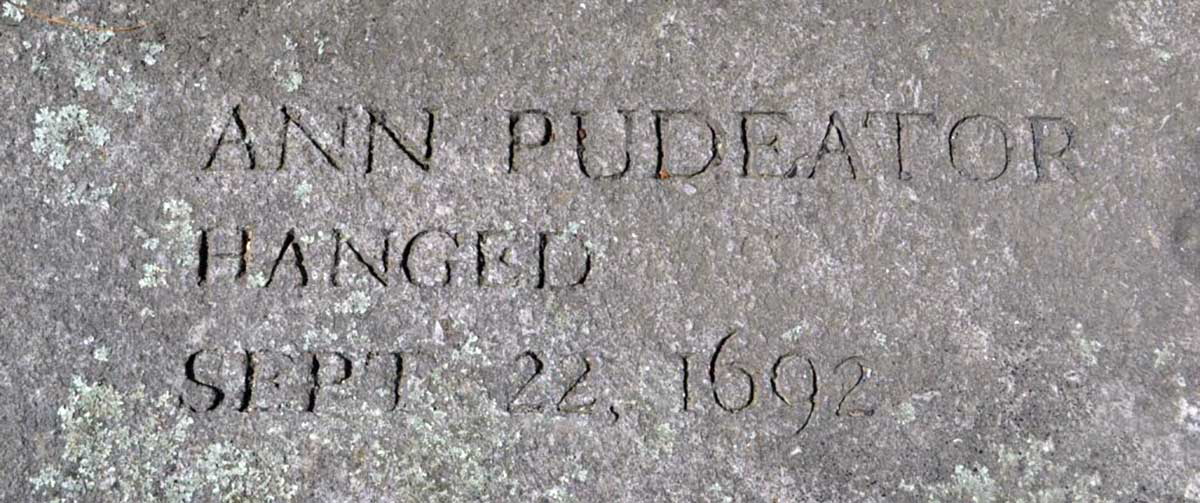
The accusations made against 70-year-old widow Ann Pudeator again began with Mary Warren, who, by May of 1692. Ann was born around 1621 and went on to marry Thomas Greenslett. Together, they had five children while living in Falmouth, Maine, before moving to Salem. Thomas died in 1674, and Ann took a job nursing Isabel Pudeator, the alcoholic wife of the prosperous blacksmith Jacob Pudeator. Despite her alcoholism, Isabel’s death in 1676 surprised local residents. Jacob and Ann were suspected and called to the courts in 1680, but there was no evidence against them. Rumors grew when Jacob married Ann, 20 years his junior, the same year. Jacob died two years later, leaving Ann a wealthy woman. She continued to work as a midwife and nurse, making her a prime target for witchcraft accusations.
On May 12, 1692, Mary Warren declared that Ann had murdered both her husbands, attempted to bewitch Mary to afflict young girls in Salem, and endeavored to cast an enchantment on the horses taking the accused to jail. Ann Pudeator was arrested at her home the very same day. The elderly widow was held in Boston Jail until trial in September. Constable Jeremiah Neal and Simon Pickworth testified that Ann had something to do with the death of their wives. One of Ann’s sons, Thomas Greenslett Jr., testified on behalf of his mother but was ultimately unsuccessful. Ann Pudeator was executed on September 22, 1692.
Victims #17 Margaret Scott & #18 Wilmott Red
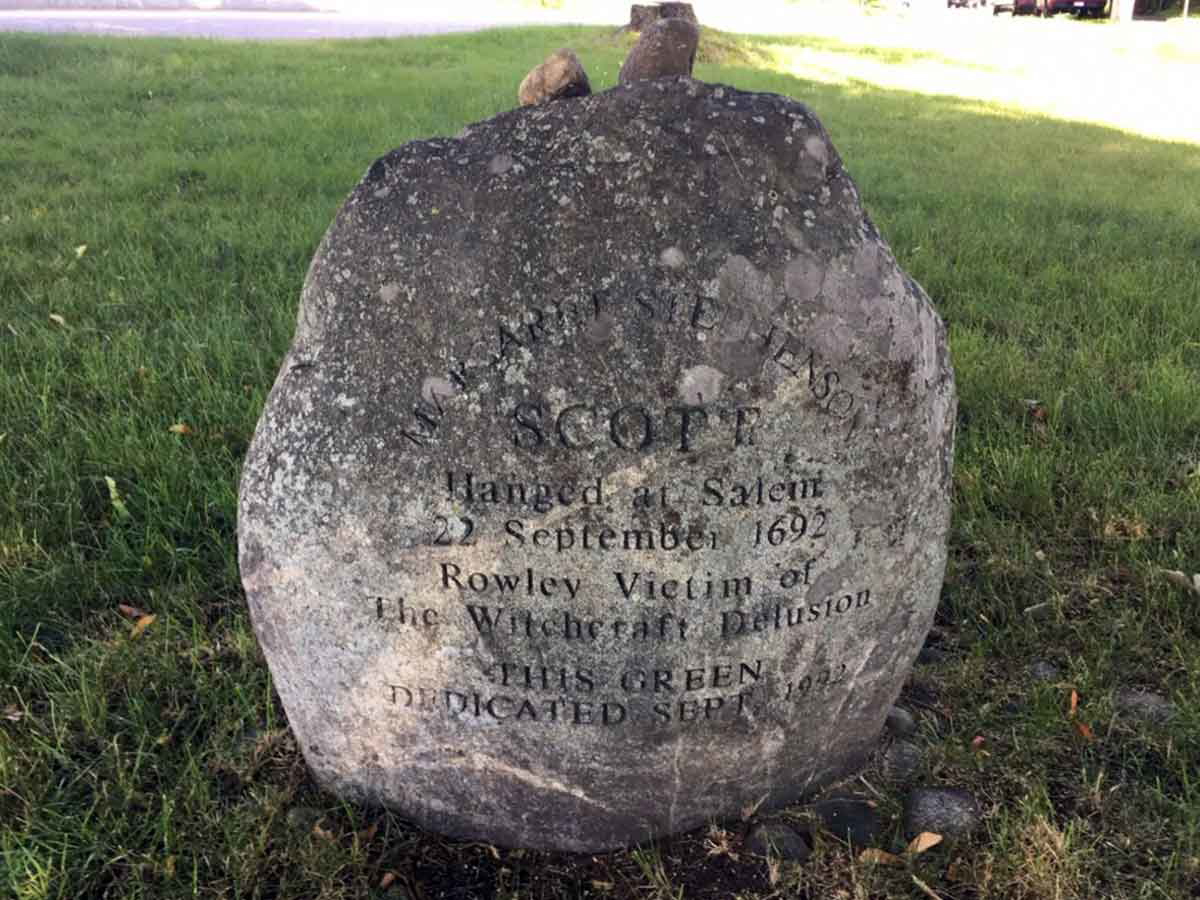
Margaret Scott, born Margaret Stephenson in Somerset, England, in 1616, moved to New England with her parents and married Benjamin Scott in 1642. Both from poor backgrounds. He was probably an indentured servant until 1664 when documents declare him a “freeman.” Along with his new status, Benjamin was granted land in the town of Riley, 16 miles from Salem. Shortly after that, he was convicted of theft and forced to pay a fine. Consequently, when he died in 1671, he left Margaret penniless and forced into begging, which prevented her from remarrying.
In 1692, she was living in solitude on a small estate when her influential neighbor, Frances Wicom, accused her of causing her torment. She claimed that she first saw an apparition of Margaret in April, and that the attacks continued throughout the summer. In July, another neighbor, 19-year-old Mary Daniel, who worked as a servant for the village reverend, accused Margaret. She said that the ghost had pricked the soles of her feet, knocked her from her chair, and attacked her with other physical abuse. A week later, the 77-year-old Margaret was arrested.
Other servants of Salem, namely Mary Warren and Elizabeth Jackson, corroborated Mary Daniel’s story. The Nelson family of Rowley appeared at Margaret’s trial and accused her of killing their cows through supernatural means after a dispute. Despite relatively few testimonies against her, after two days, Margaret Scott was sentenced to death.
Historians point to the lack of evidence against Margaret and also Wilmot Redd, a woman of equally little means and a short temper from a neighboring settlement, as evidence of rushed attempts to convict women considered a local nuisance. Both women were executed on September 22, 1692.
Victim #19 Samuel Wardwell
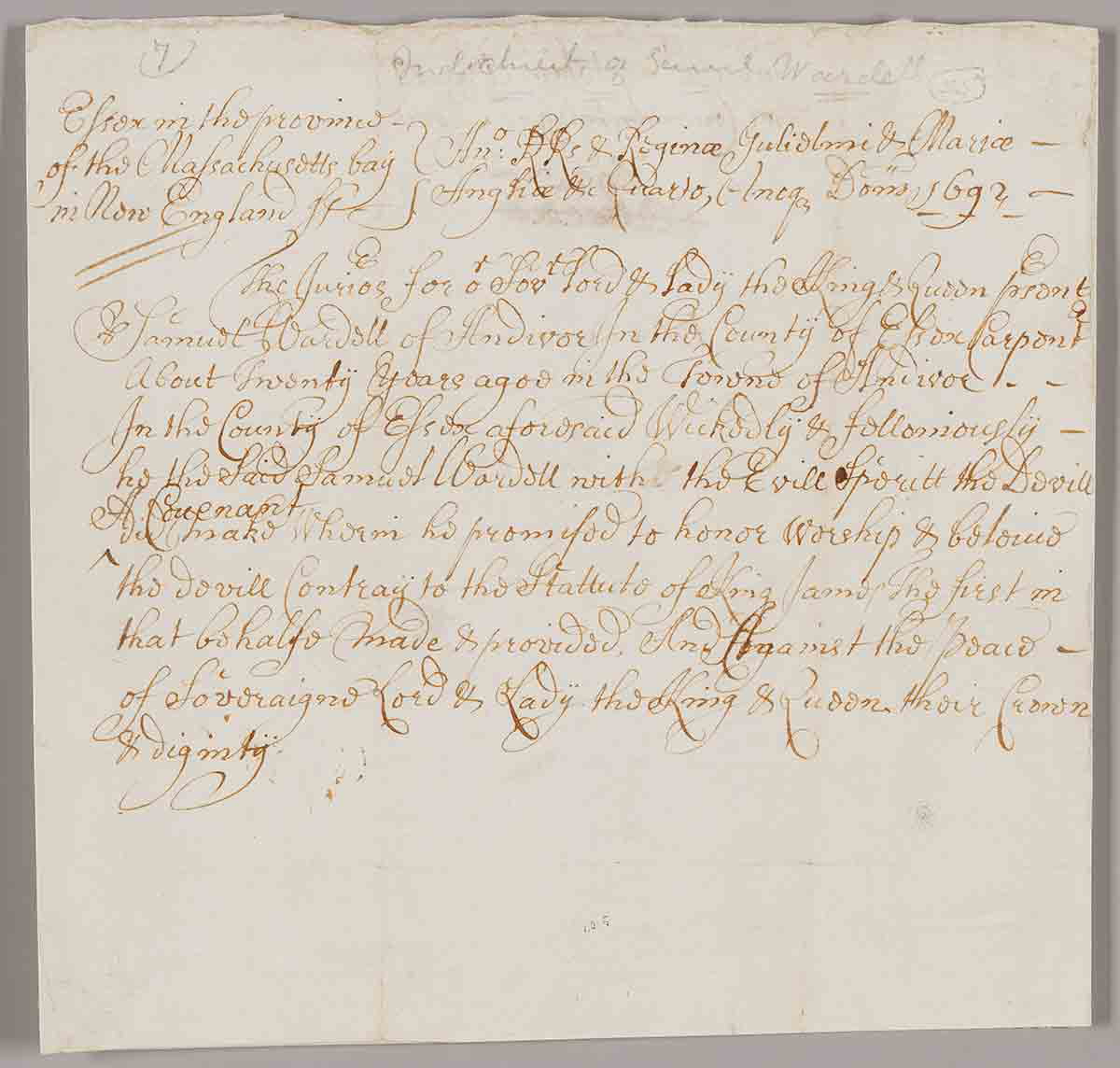
The 49-year-old Samuel Wardwell was executed on the same day, September 22, 1692, arrested alongside his wife Sarah and daughter Mercy for suspicion of witchcraft. His wife had inherited an 88-acre estate from her previous husband, and the law surrounding witchcraft accusations meant that the accused lost civil, inheritance, and property rights. All three confessed under interrogation, and Samuel was executed. Sarah and Mercy were later reprieved and released.
Victims #20 Ann Foster & #21 Rebecca Addington Chamberlain
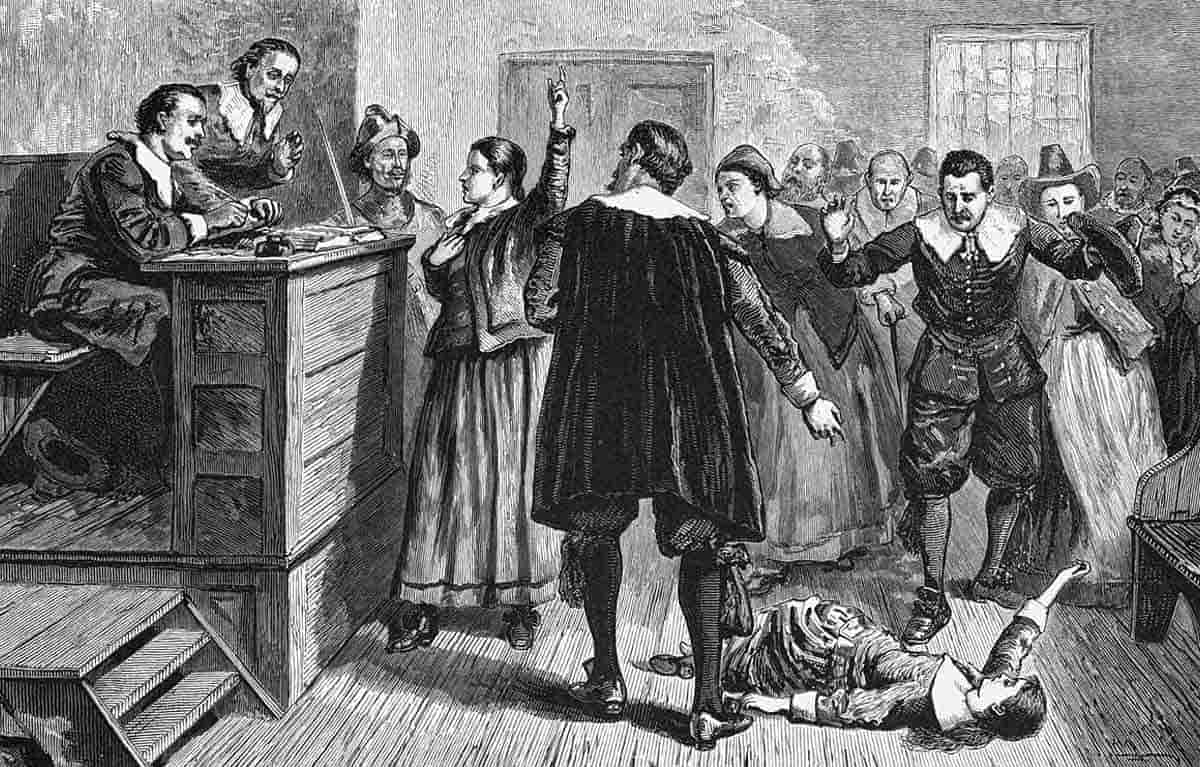
The Constable of Andover, John Ballad, had already arrested a local woman for practicing sorcery when his brother Joseph suspected his wife was being afflicted by witchcraft. To verify his suspicions, he invited two girls, Ann Putnam Jr. and Mary Walcott from Salem, to inspect the symptoms of his wife, Elizabeth. The two girls, having famously experienced the indisposition themselves, certified that Elizabeth was indeed suffering at the hands of a witch. They accused a local widow named Ann Foster. Ann Putnam also proposed that Ann Foster’s daughter, Mary Lacey, and her granddaughter, Mary Lacey Jr., were also witches.
Ann Foster was arrested and questioned. She confessed to being a witch and disclosed that she had been made a witch by Martha Carrier, the first woman from Andover to be accused, who was already in jail. Ann revealed that the devil had appeared to her on three separate occasions and that there were a total of 305 witches in the area. Mary Lacey, 40, and Mary Lacey Jr., 18, were arrested and also admitted that they were witches.
Ann Foster was sentenced to death on September 17, and she was due to be hanged on September 22, but for unknown reasons, she was not among the executed. The court was dissolved due to the banning of “spectral evidence,” and Ann was due to be retried in early 1693. However, after five months in squalid conditions, she died in jail on December 3rd, 1692. Both her daughter and granddaughter were eventually released.
Rebecca Addington Chamberlain also died in jail slightly earlier, on September 26, 1692, though few details survive about her arrest, trial, and accusations.
Victims #22 Martha Carrier & #23 John Willard
Martha Allen was born in Massachusetts in 1650 and was seven months pregnant with her eldest child when she married Thomas Carrier in 1674. While living in Andover, she was accused in May 1692 by the “Salem Girls,” including Mary Walcott and Ann Putnam Jr. The girls visited Andover and accused her of leading a 300-strong witch army and using her occult powers to murder and afflict people to become the “Queen of Hell.” She denied the charges but was arrested on May 28 along with her sister, Mary, and brother-in-law, Robert Toothaker. Her young children were sent to prison with her in the hope it would encourage her to confess.
When Martha went to trial, many neighbors were summoned to air grievances. Several other accused women also claimed that it was Martha who had led them to witchcraft. During the trial, the Salem Girls screamed that they could see the ghosts of thirteen smallpox victims around Martha. Even her 18-year-old son and seven-year-old daughter claimed that their mother had made them witches, but John Proctor wrote to the governor that this was while tortured in prison. Martha’s trial was fully transcribed by Cotton Mather, who considered it the strongest case for the validity of spectral evidence.
Martha refused to plead guilty for a lighter sentence, perhaps because the people of Andover did not truly believe that the trial would result in execution. But she was convicted on August 5 and put to death with five others on August 19. Her body was later dragged to a nearby common grave where she was buried alongside John Willard, executed on the same day. He was a Salem constable who began to doubt the accusations of the Salem Girls and refused to make any more arrests. In retaliation, Ann Putnam Jr. and others accused him of witchcraft and murdering 13 citizens.
Victim #24 Lydia Dustin
Lydia Dustin was another unfortunate victim who died in prison rather than by hanging. She was married to Josiah Dustin, a wealthy landowner who died in 1671, leaving some of his estate to Lydia. Ann Putnam Jr., Mary Walcott, and Mercy Lewis accused her of afflicting them with witchcraft, and she was arrested in April of 1692; later, two of her daughters were also arrested. The three went on trial in January 1693 after spectral evidence had been banned. Consequently, they were found not guilty, but to leave jail, they had to pay a fee. After years of being an imprisoned widow, Lydia had no money and died behind bars on March 10, 1693.
Victims #25 Roger Toothaker
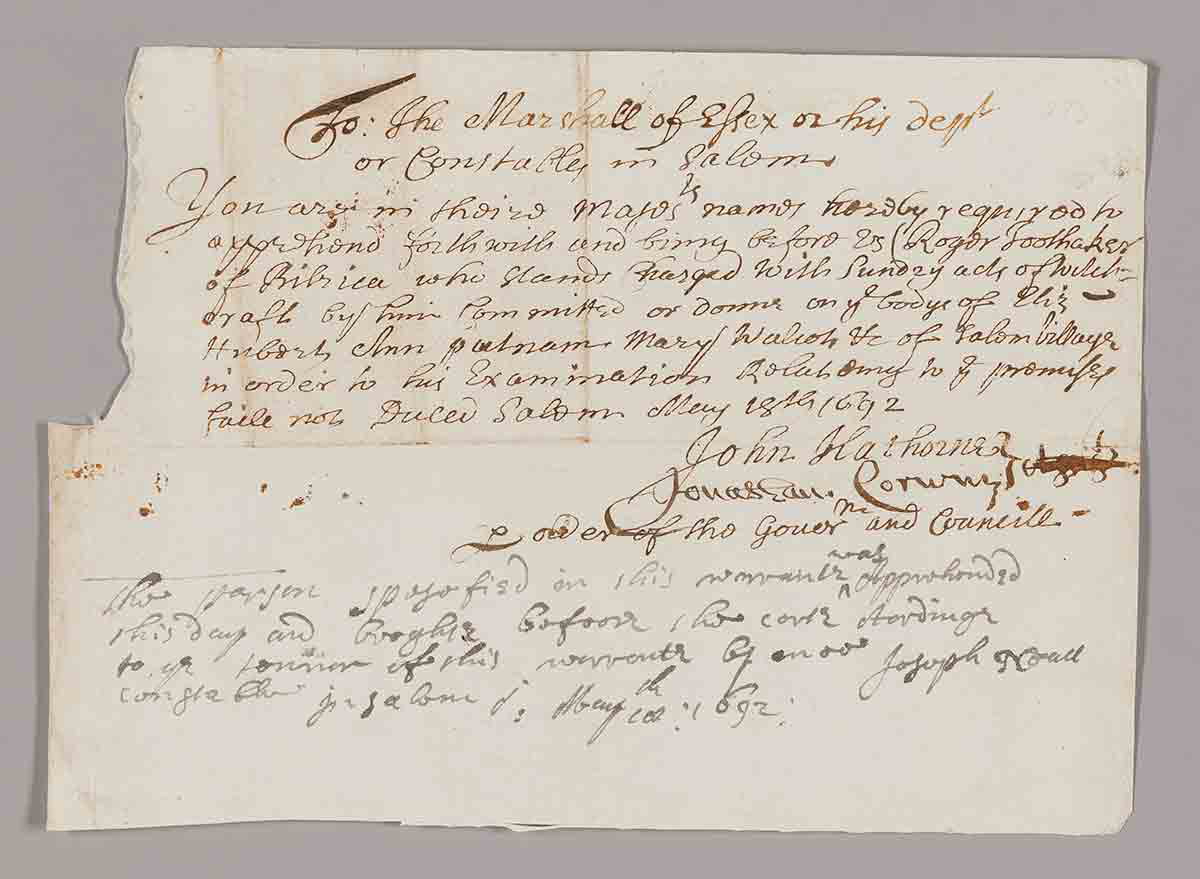
Roger Toothaker also died in jail early during the trials on June 16, 1692. Born in London, England, in 1634, he made the journey across the Atlantic before his first birthday. His father died shortly after their arrival, and his mother, Margaret, married Ralph Hill, one of the first settlers of the newly established town of Billerica in 1653. Roger married a woman from Andover called Mary Allen in 1660, and the pair had eight children.
Billerica was located on the volatile Native American frontier, causing Mary distress. This was compounded when a local drunk broke into the home and assaulted Mary Toothaker. Meanwhile, her husband was rarely around, and by 1683, he seems to have deserted his family. Despite no evidence of training, Roger emerged as a physician in Salem, boasting about his natural healing and counter-witchcraft practices. Roger also claimed to have taught his skills to his eldest daughter, Martha, who was able to kill a witch while still an adolescent.
Roger’s bragging brought too much attention, and Roger, his wife, Mary, and their daughter, Margaret, were arrested in May 1692. Roger died in jail on June 16, 1692. Mary was held well into 1693 and confessed to covenanting with the devil to protect herself from the natives and other dangers in the remote location of Billerica. Nevertheless, she was found not guilty on February 1, 1693, and had the funds to secure her release. Margaret was never tried.
The End of the Witch Trials

When spectral evidence was banned in 1693, it became much harder to convict, and the trials concluded by May of that year. In 1706, a then 27-year-old Ann Putnam Jr., a central player in many accusations, apologized for her involvement in the witch trials. She declared she was deceived by the devil, and thus many of those killed were likely innocent. She appears to have been largely forgiven by the community, with even family members of the executed acknowledging the sincerity of her public confessions.
Historians suggest that Ann’s frequent, all-encompassing bodily performances at a young age probably weakened her constitution and caused her premature death. She was sickly from the end of her trials until her death at the age of 36, potentially making her another victim of the hysteria.