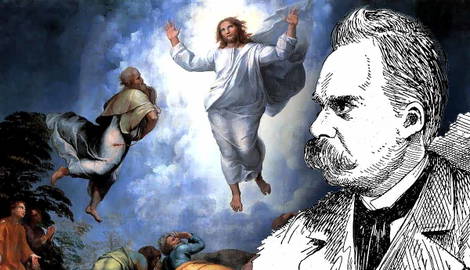

For Nietzsche, the greatest achievement for a human being was to become a “yes-sayer” to life. And, therefore, the highest praise he could bestow upon an individual would be an acknowledgment that they say yes to life. Nietzsche says of Raphael, with reference to his masterpiece the Transfiguration, that the Italian Renaissance painter “said yes, and did yes.” However, Nietzsche also believed that Christianity was the ultimate force of nay-saying. It is strange then that a painting of Christ’s transfiguration so inspired him.
Raphael’s Famous Painting
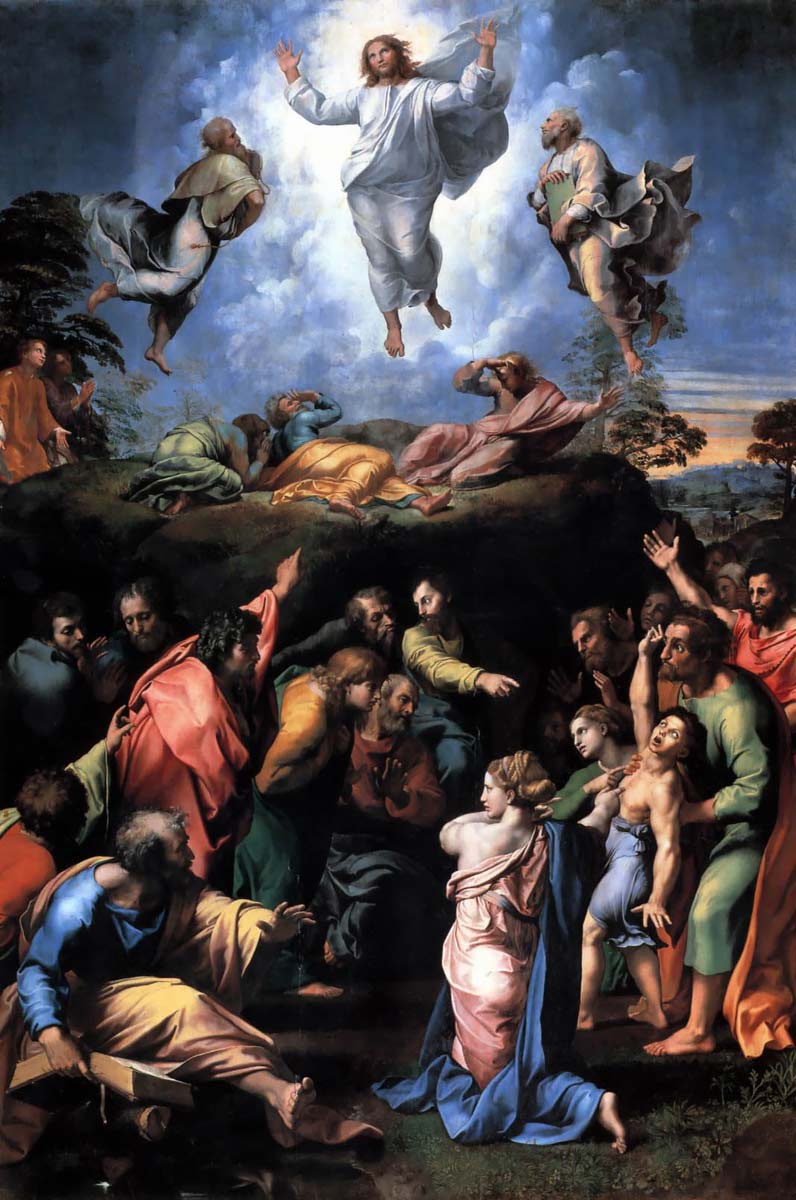
Raphael was commissioned to paint the Transfiguration in 1517 by Cardinal Giulio de Medici, who would later become Pope Clement VII in 1523. It was to be an altarpiece for a cathedral in the southern French town of Narbonne, where Medici held the office of archbishop.
Raphael died in 1520 before the completion of the Transfiguration. Speculation and conjecture were rife on how much of the final painting was actually done by Raphael and how much was completed by his assistants. However, during a cleaning of the painting in the 1970s, it was discovered that only some of the figures on the lower left-hand side of the work were finished by studio assistants; the rest was all Raphael’s own work.
Medici elected not to send the Transfiguration to France but decided instead to place it in the church of San Pietro in Montorio, Rome. It stayed there until 1797, when Napoleon, on campaign in Italy, took the painting back to Paris. Napoleon greatly admired Raphael, considering him the greatest artist in the world and his Transfiguration the greatest work of art. This is significant as Napoleon was Nietzsche’s most respected political figure. In his texts, he mentions the former French emperor approximately 150 times, frequently invoking him as a symbol of immense human will, though his ultimate philosophical assessment of Napoleon remained deeply complex and ambivalent.
Twilight of the Idols
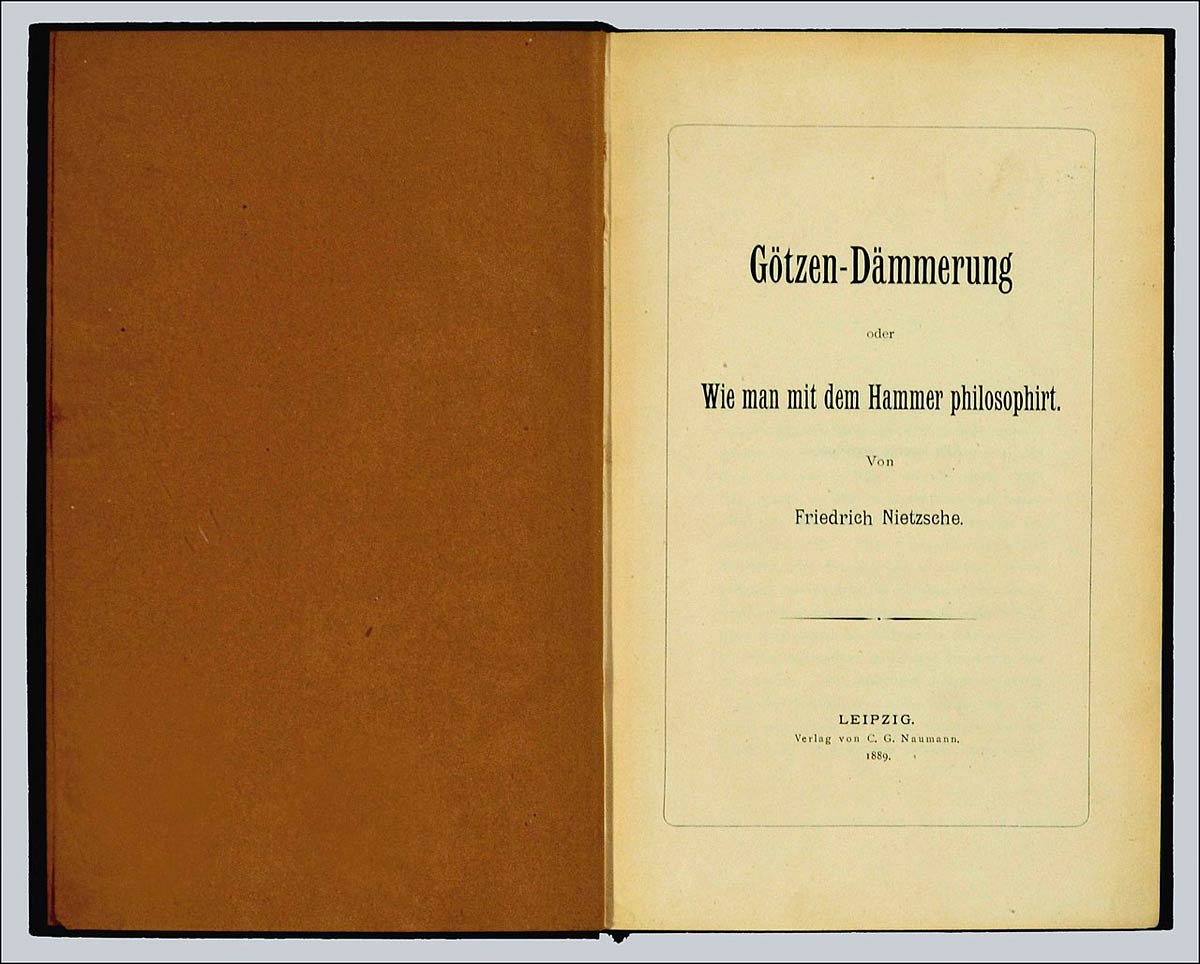
Twilight of the Idols, or How to Philosophize with a Hammer, was published in 1889. That same year, Nietzsche suffered a mental collapse from which he never recovered.
The chapter we are concerned with here is “Skirmishes of an Untimely Man.” Section eight of “Skirmishes” does not reference Raphael directly but rather introduces an approach to life that Nietzsche explicitly associates with the artist. He calls the section “Towards a psychology of the artist.”
Nietzsche begins by claiming intoxication is a prerequisite for art. He is not just referring to drink and drugs but to intoxications of all kinds. Some of the things he lists include sexual excitement, any strong emotions, the performance of great skill, and intoxication brought on by the climate. What all these forms of intoxication have in common is that they are experienced, he says, as “a feeling of fullness and increasing strength.”
This feeling of fullness leads artists to idealize things. This is a process, Nietzsche says, whereby the artist imposes themselves upon things, forcing out of them their main features while weeding out all that is small and inconsequential.
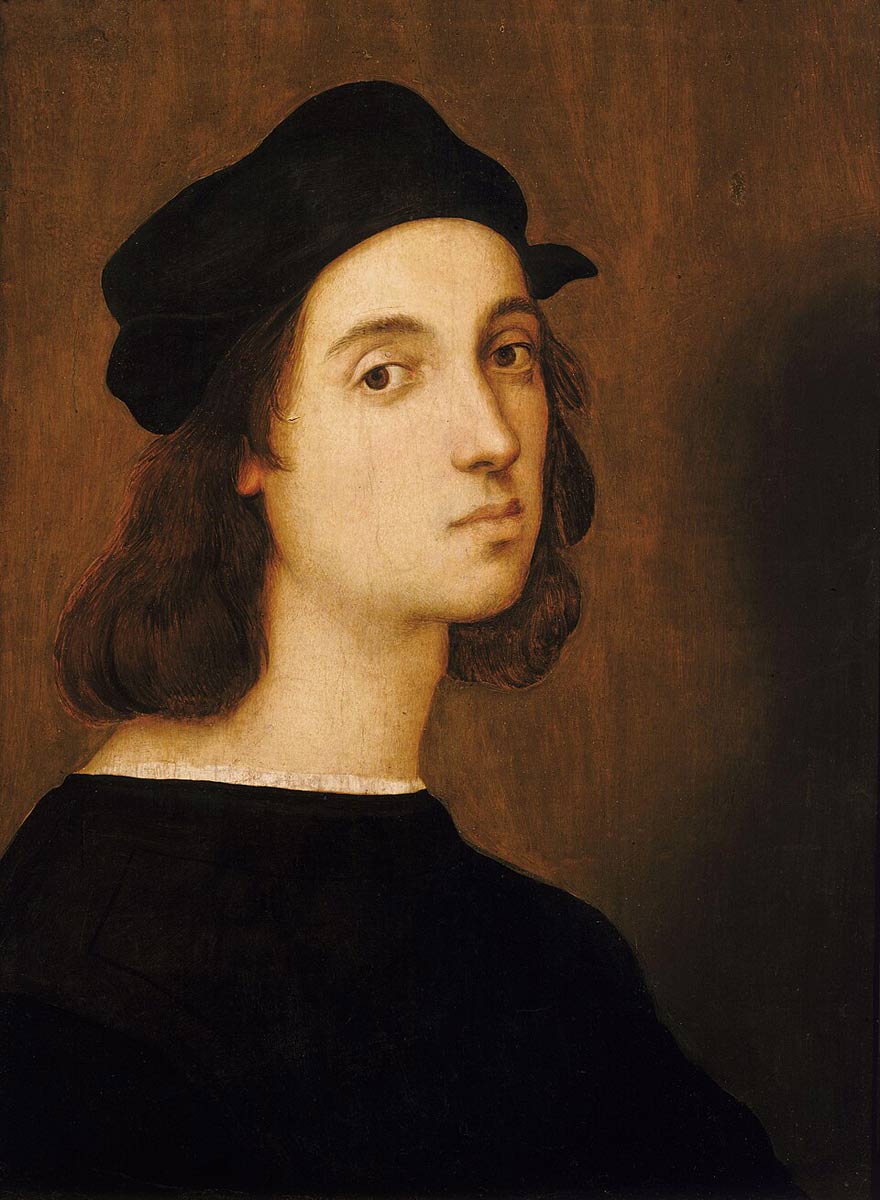
In section nine, Nietzsche goes on to talk about artists who achieve this state. For him, these are the only genuine artists. There are people claiming to make art that are even hailed as artists, but for Nietzsche, only those imbued with the type of intoxication he spoke of in section eight are the real deal. He goes on to make a rather odd statement that there have been no Christian artists. To which he adds:
“Don’t try to be clever and throw Raphael or some homeopathic nineteenth-century Christian at me as a counter-example: Raphael said yes, Raphael did yes, which means that Raphael was no Christian…”
Saying Yes to Life
Throughout Nietzsche’s works, we witness his struggle to be what he calls a “yes-sayer” to life. In Gay Science 276, for example, he says: “all in all and on the whole: someday I wish to be only a Yes-sayer!” Historical figures that Nietzsche admires are all yes-sayers.
In Twilight of the Idols “Skirmishes” 49, Goethe, probably Nietzsche’s favorite writer and author of The Sorrows of Young Werther, is said to have said “yes to all.” It is interesting to note that Napoleon, the second-most-cited historical figure in Nietzsche’s works, also loved The Sorrows of Young Werther, taking a copy with him on his campaigns.
Napoleon was also responsible for a great deal of death. Nietzsche has no problem with “yes-sayers” saying no to things that endanger the affirmation of life. Consider the following from the preface of his Will to Power:
“I teach that one must say ‘no’ to everything that weakens and exhausts. I teach that one must say ‘yes’ to everything that strengthens, promotes the accumulation of power, and [increases] pride.”
Nietzsche admires those who say yes to all things, which includes saying no to anything that opposes “yes-saying.”
The Birth of Tragedy
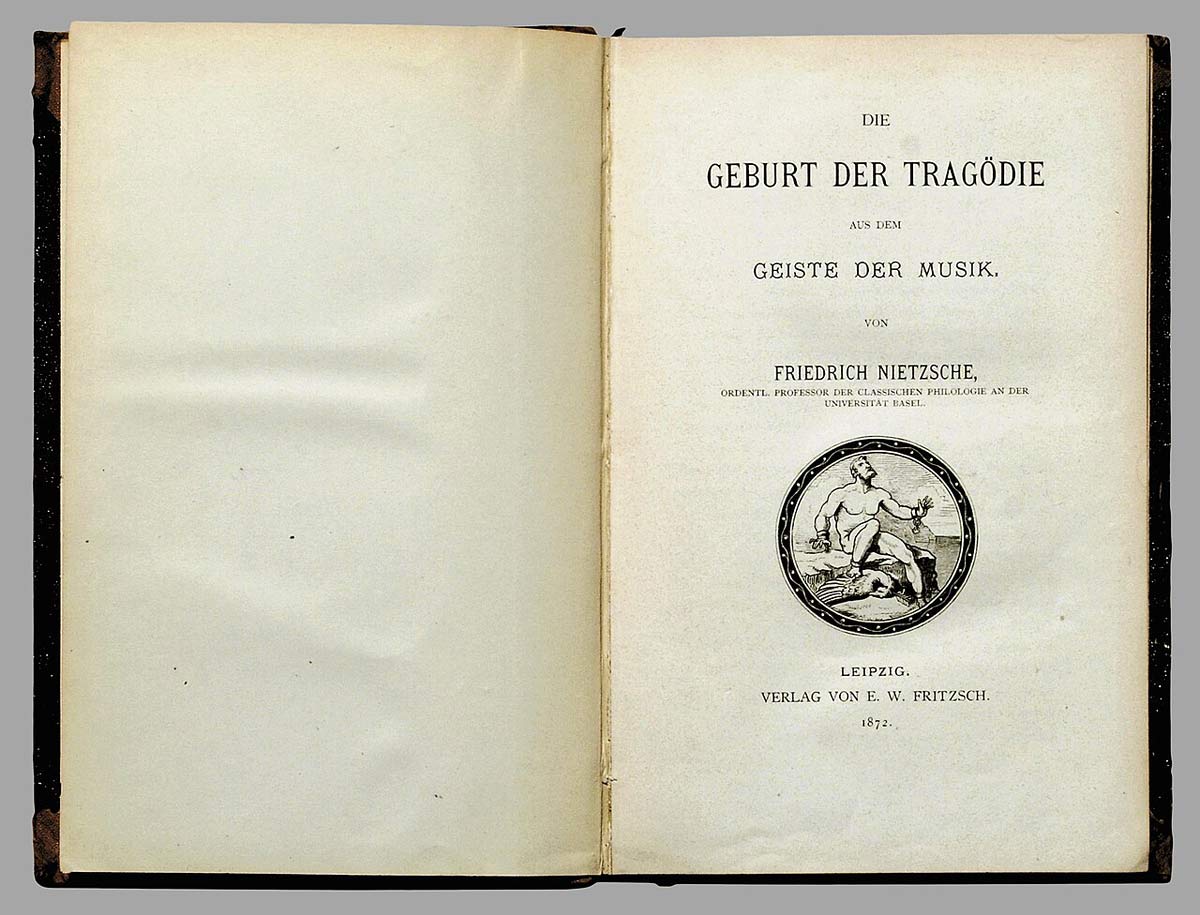
The Birth of Tragedy Out of the Spirit of Music was first published in 1872. The work was born out of two lectures Nietzsche delivered on Greek drama. Here’s what Nietzsche has to say about Raphael and the Transfiguration in this work.
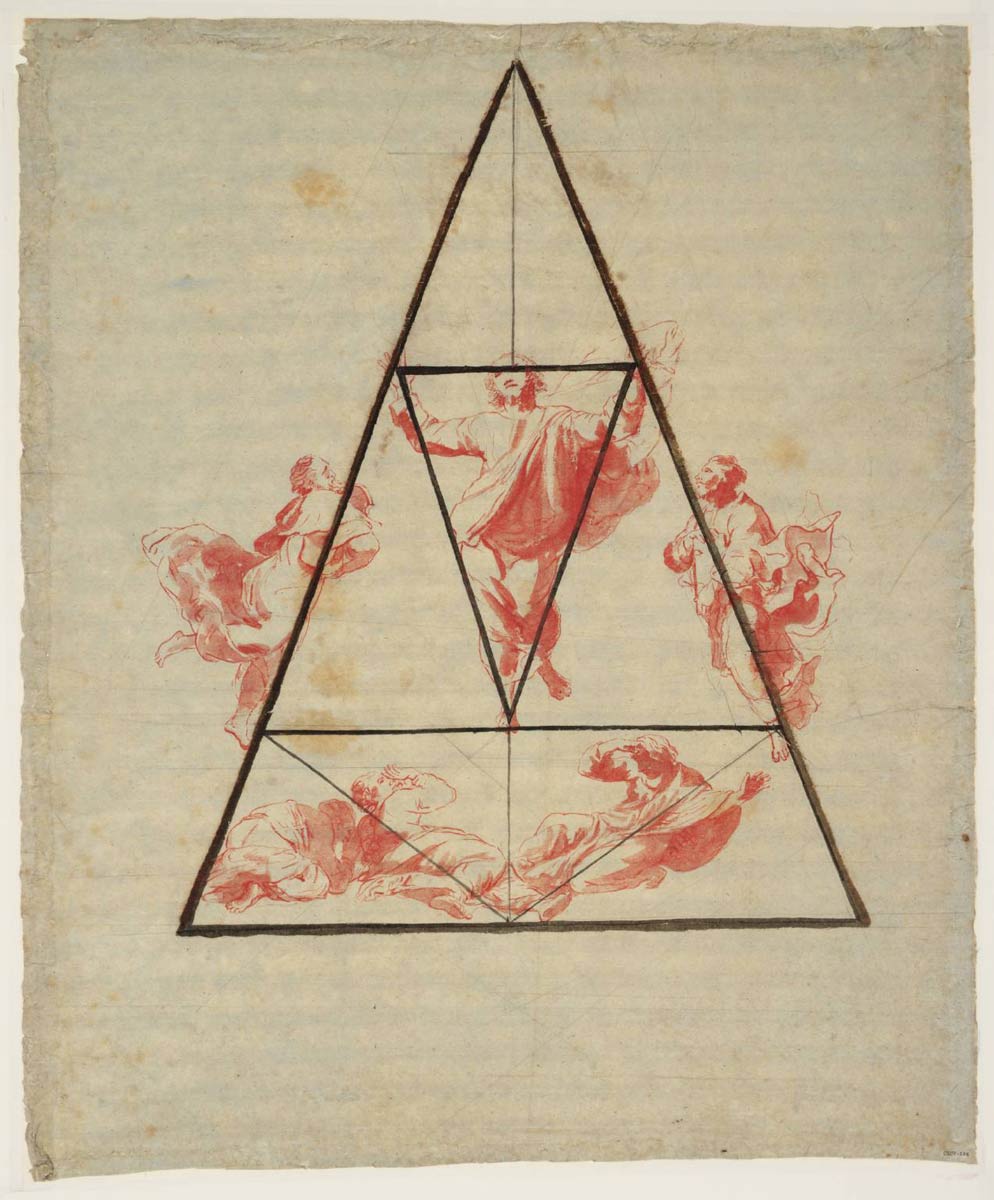
“In his Transfiguration, the lower half with the possessed boy, his despairing bearers, and the helplessly fearful disciples, shows us the reflection of the eternal original suffering, of the sole ground of the world: ‘appearance’ here is the reflection of the eternal contradiction, of the father of things. Now, out of this appearance rises, like the scent of ambrosia, a new vision-like world of appearance, which remains invisible to those caught in the first world of appearance—a brilliant hovering in purest bliss and painless contemplation through beaming, wide-open eyes. Here we have before our eyes, rendered in the highest symbolism of art, that Apollonian world of beauty and its substratum, the horrific wisdom of Silenus, and we understand their reciprocal necessity intuitively.”
When Nietzsche talks of the Apollonian, he is, of course, referring to the Greek god Apollo. For him, “Apollonian” captures the idea of certain qualities this god was supposed to possess. Nietzsche is thinking of such things as calmness, cheerfulness, reason, and logical thinking.
Nietzsche contrasts the Apollonian spirit with the Dionysian. What exactly Nietzsche means by the Dionysian is complex and evolved greatly over time; however, we can understand the “Dionysian” as capturing the traits associated with the god Dionysus. These include intoxication, impulse, and emotion.
Nietzsche believed that Greek tragedies were imbued with both the Apollonian and the Dionysian. These two drives exert themselves against each other and together help the artist create works of profound beauty.
Let us put all this together, with reference to Raphael’s Transfiguration.
Nietzsche’s Reception of Raphael’s Transfiguration
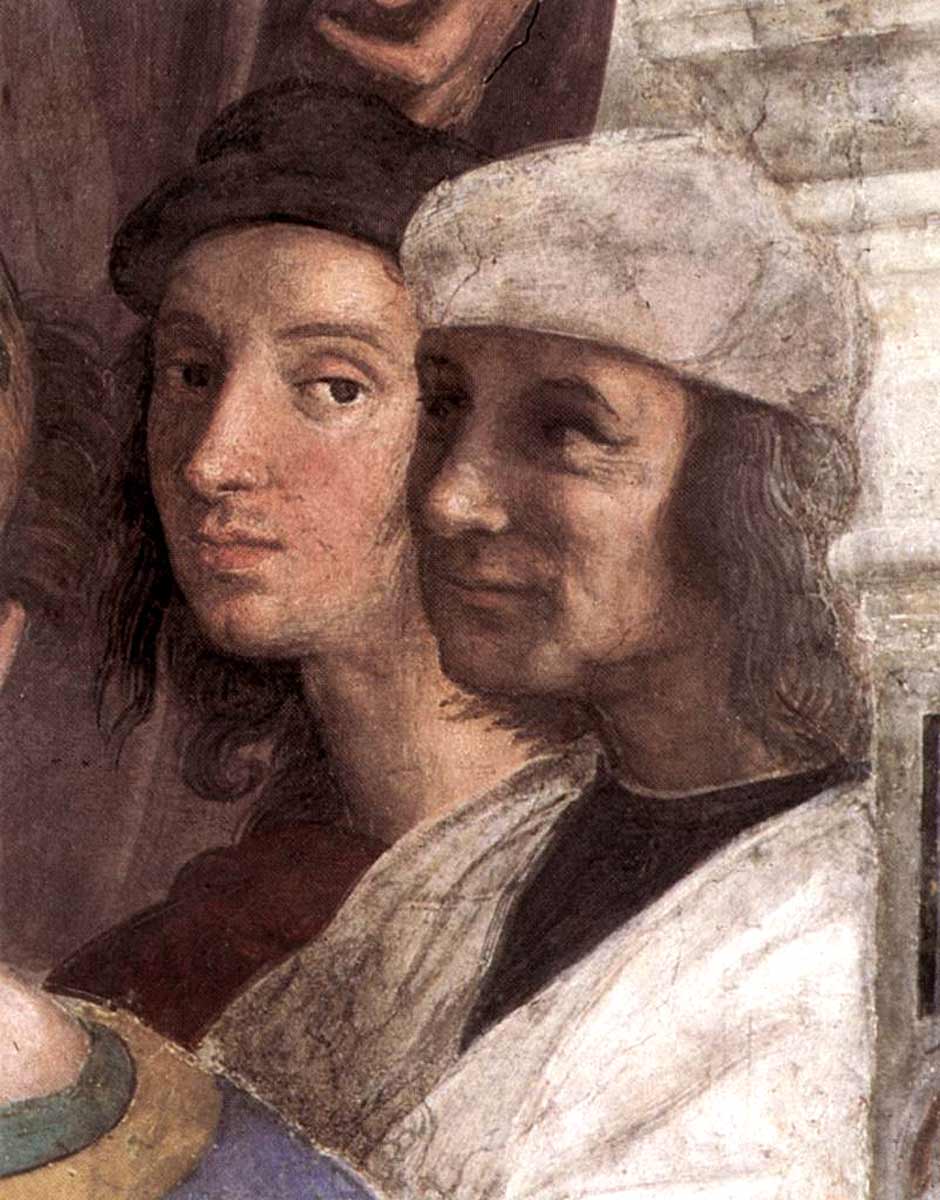
Nietzsche took great inspiration from Raphael’s Transfiguration. He must have felt a profound sense of beauty (as he understood it) on viewing the painting. Beauty for him, we remember, is not found in the world but given by human beings.
Something about beauty he also believed was that “people find beauty in everything that throws their image back at them.” (Twilight of the Idols, “Skirmishes” 19). What Nietzsche must have seen in Raphael’s work was, in some way, himself. And indeed, he saw the affirmation of his own idea of the struggle between the Apollonian and Dionysian.
We saw that Nietzsche considered Raphael a true artist and that, for Nietzsche, intoxication is an essential prerequisite of art. He believed that Raphael had a driving passion to use his artistic power to reveal the main features of life while paring away that which is small and inconsequential. To Nietzsche, this is what makes Raphael a yes-sayer to life.
His Transfiguration is then a giant yes to life for all who can see, to see. Raphael, through his work, counters the terrible nay-saying wisdom of Silenus.
What then of Nietzsche’s curious statement, mentioned above, that Raphael could not be a Christian (because Christians cannot create art)? Nietzsche believed art must say yes to life, but that Christianity as a religion was thoroughly nay-saying with regard to life. Like most of Nietzsche’s views, his position on Christianity is complex and nuanced.
His comments on Raphael and Christianity are useful for giving us a better idea of his esteem for the artist and his work. For Nietzsche, to be a yes-sayer to life is the highest achievement, and to call someone a yes-sayer the highest praise.