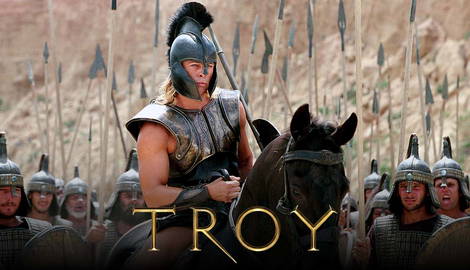
The 2004 epic Troy starring Brad Pitt, Eric Bana, and Orlando Bloom presents part of the epic tale of the siege of Troy (as presented in Homer’s Iliad and Odyssey) in a dramatized form, and the production of the film took some historical liberties to make the movie. These historical liberties are known as anachronisms – placing something into the story that historically does not belong to the time period in which the story takes place. The events of the siege of Troy would have happened sometime around 1180-1200 BC, during the Mycenean Era of the Bronze Age.
Coins on the Eyes of the Dead for the “Toll”
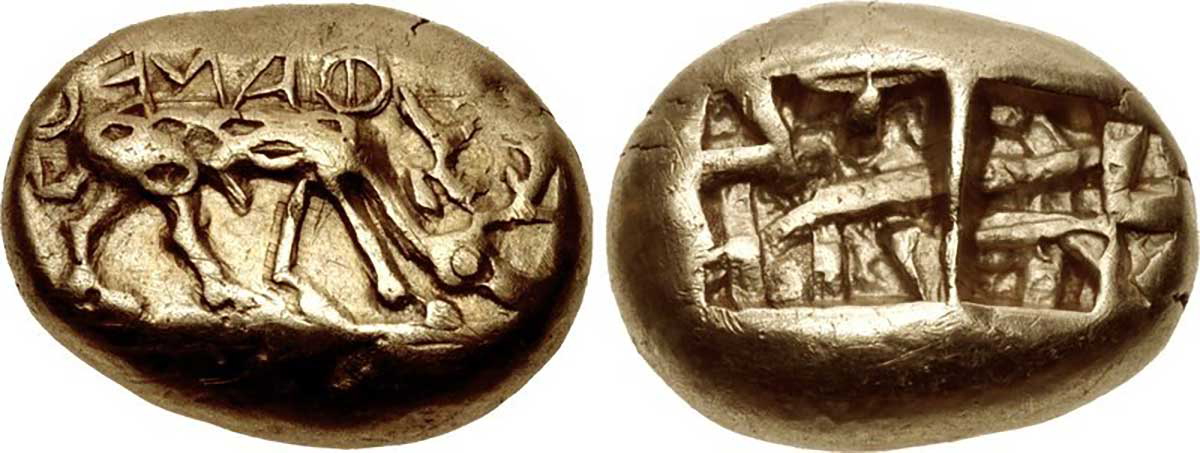
Not only did the ancient Greeks not put coins on the eyes of the dead (they were placed in the mouth), they did not even have coins! The earliest known coins are the Phanes coins from the mid-600s BC, discovered in the ruins of the temple of Artemis at Ephesus.
Other early coins were from Lydia, a kingdom in what is now Turkey. In the 600s BC, Lydians produced a coin made of a natural gold-silver alloy known as electrum. While we do not know whether or not these were the earliest coins made, it is unlikely that coins were produced much earlier than this period, over five centuries after the events at Troy.
Iron Weapons and Armor
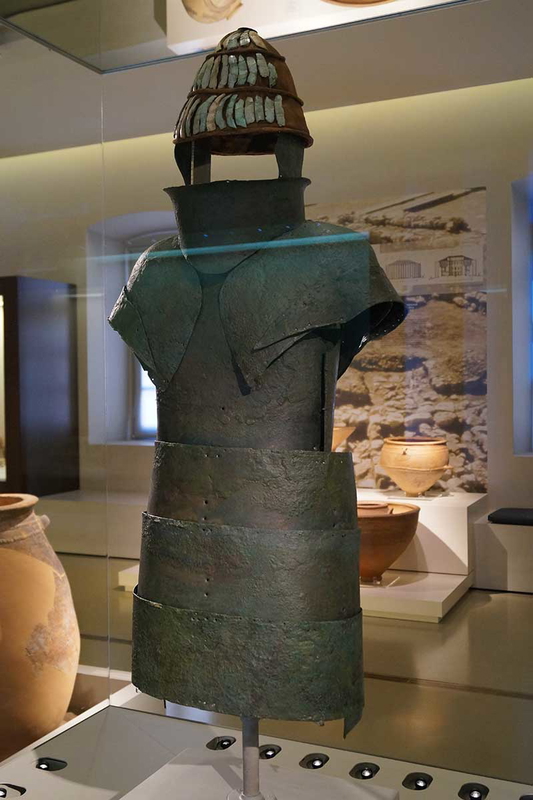
The iron weapons wielded by the warriors in the movie were unlikely to have been used at the siege of Troy. While the events of the move happened near the end of the Bronze Age, Iron was still rare in its usage in weaponry, particularly among the common soldiers. Iron requires higher temperatures than copper and tin (which, when combined, produces bronze) to smelt, and iron ore was still not yet as common as copper and tin. Homer’s Iliad even shows how iron was a prize in the funeral games for Patroclus:
“”For the funeral games he brought out prizes from the ships – cauldrons and tripods, horses, mules and fine head of cattle, grey iron and well girdled women”.” – Iliad Book 23.
The style of weapons and armor in the movie were also several hundred years out of date. Much of the movie used armor and weapons from the Classical period of the 400s BC instead of Bronze-Age era weapons and armor. The crested helmets and large shields particularly were not in use at the time of Troy.
Horses in Combat During the Trojan War
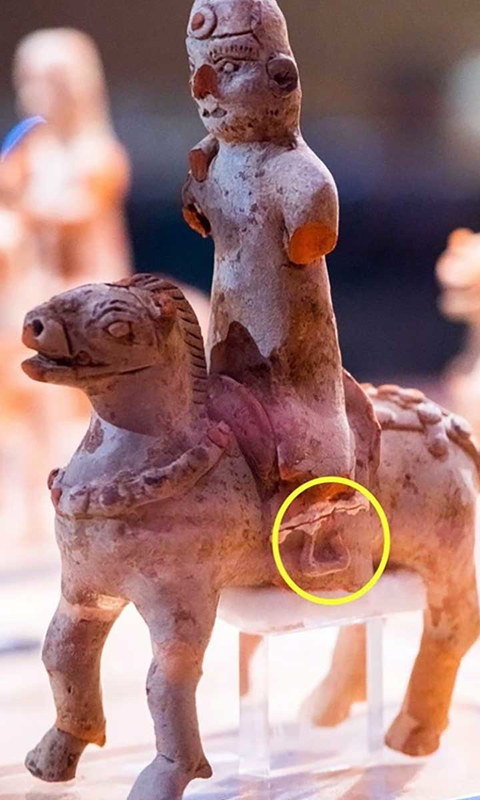
Were horses actually used in combat during the Trojan War? Yes, but not in the way commonly portrayed, because of one invention that was 600 years or more out of date – the stirrup. Saddles for horses were a relatively new invention by the time of the Trojan War, as horses were used primarily to pull chariots, not for riding. The stirrup, invented in Asia probably no earlier than 500 BC (and even then was a toe stirrup), did not even arrive in Europe until maybe 500 CE, almost 1000 years after the events of the Trojan War. The earliest stirrups were also not used for riding, but likely for just mounting onto the horse. Stirrup usage as a combat advantage, allowing a rider more stability on a horse, developed even later.