The Irish Potato Famine, or Great Famine, began in 1845 with the first failure of potato crops in Ireland. It raged until 1852 and changed Ireland’s demographics forever. Around three million Irish men, women, and children either succumbed to starvation or disease or left Ireland altogether. Most emigrants did not return home.
The Great Famine (An Gorta Mór in Irish) fundamentally reshaped Irish history. It was a period of rampant food insecurity, disease outbreaks, societal collapse, and governmental mismanagement. But what exactly made An Gorta Mór so deadly?
1. Phytophthora Infestans
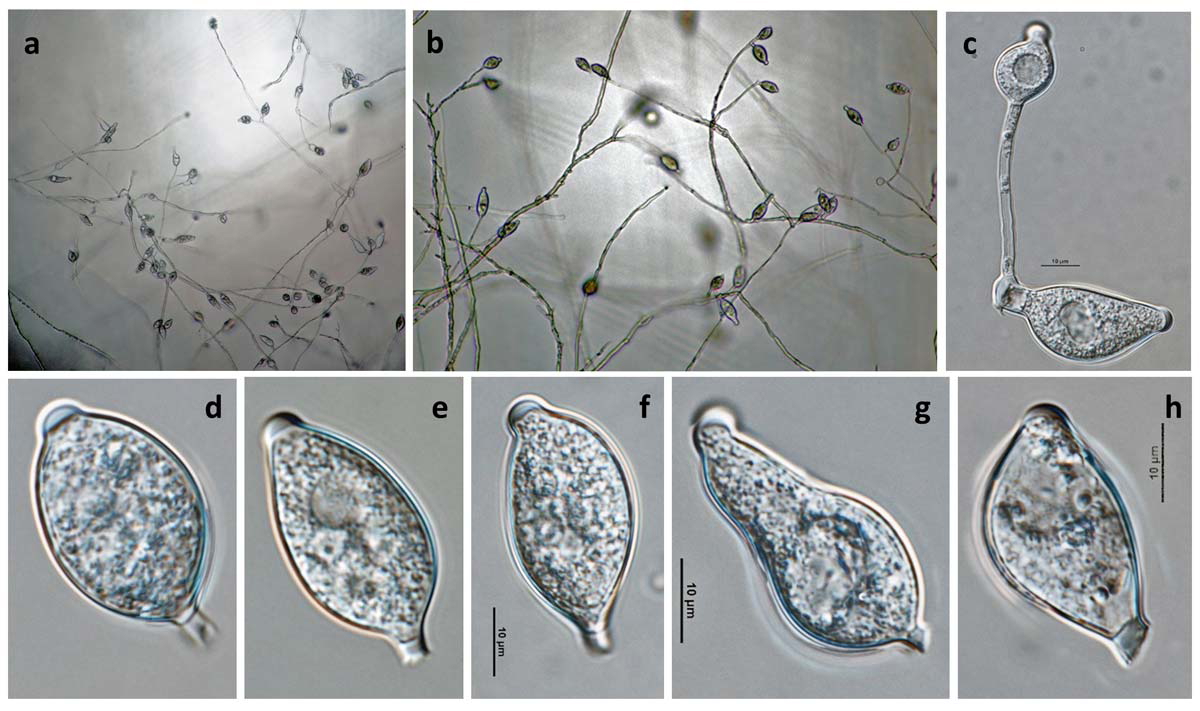
The initial culprit for the Great Irish Famine was an invasive microorganism, now known as Phytophthora infestans. It came to Ireland by accident; shipments of potatoes from the United States to Europe carried the pathogen.
Phytophthora infestans is an interesting microorganism. It is an oomycete—a water mold that propagates via spores, much like fungi do. It tends to thrive in moist environments, and its spores spread through the air or in water. Infected leaves can spread the spores to other potato plants. Historians once believed the causative agent of the Great Irish Famine actually was a fungus, until modern genetic testing revealed otherwise.
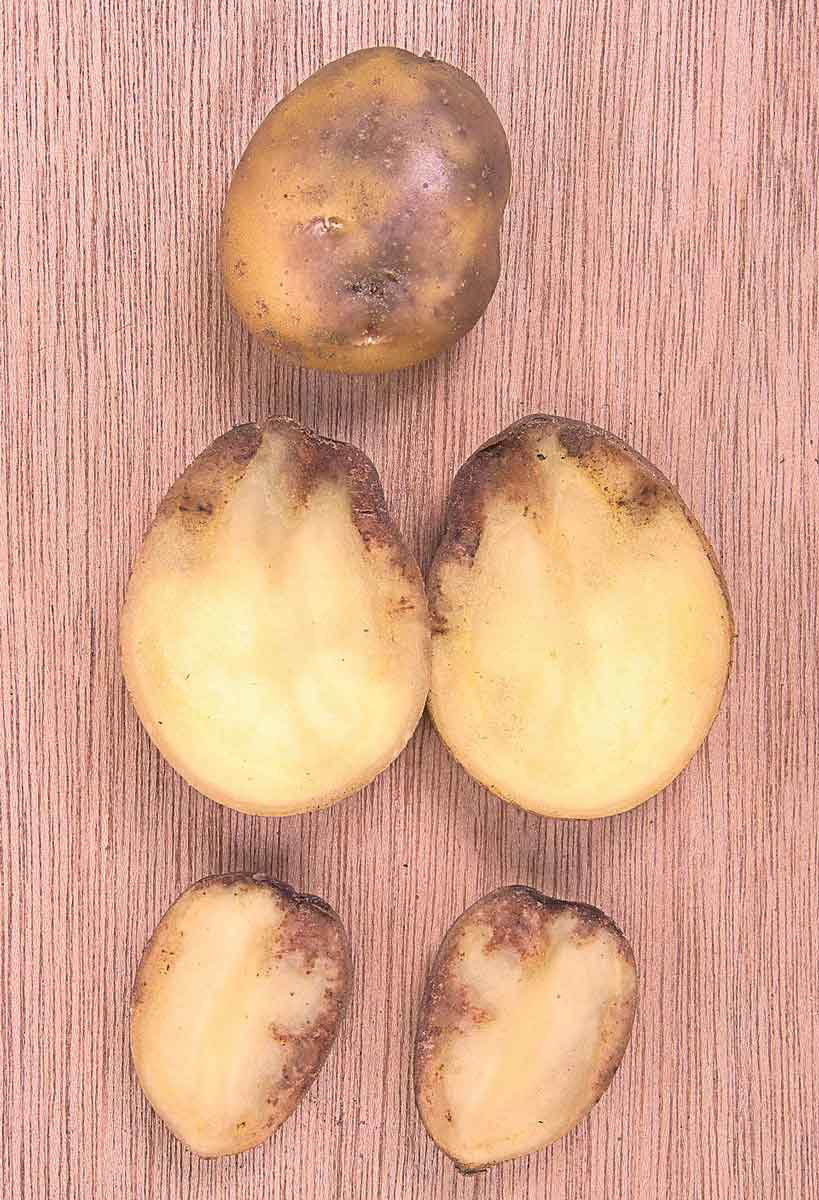
Late blight is the plant disease directly caused by Phytophthora infestans. Once the spores from the water mold infiltrate the soil, they eat away at the potatoes’ roots. The leaves of the potato plants develop brownish blotches and shrivel up. The tubers decay in the ground. Secondary pathogens, such as bacteria, can quickly invade the compromised tissues and speed up the plants’ death.
Ireland, with its wet, oceanic climate and a population that was reliant on a potato-heavy diet, would face a catastrophe. But does Phytophthora infestans on its own explain why the Great Irish Famine exploded out of control? Not quite. Late blight had an unwitting partner: the Irish potato crops themselves.
2. Ireland’s Potato Monoculture
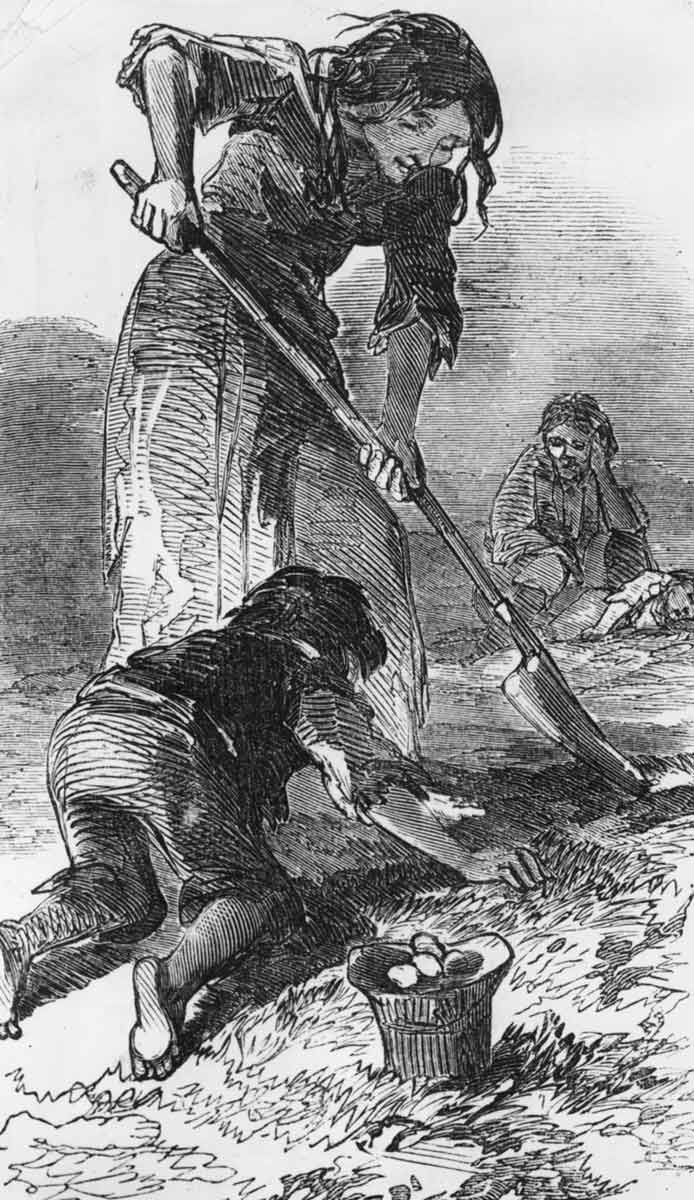
What made Ireland’s potato crops so vulnerable to Phytophthora infestans? They were definitely unfamiliar with this pathogen, but an even more important reason lies in potato agriculture itself.
Planting potatoes is relatively simple compared to other vegetables. A single cutting of a potato can be planted in the ground easily and mature into a full potato plant. This was the most common method of sowing Irish potato crops in 1845. Yet, there was a huge downside to this method: if the new potatoes all came from cuttings of a single common ancestor, they would be genetically identical. When a population of any organism lacks genetic diversity, it is more susceptible to a disease outbreak.
Had the Irish grown many varieties of potatoes in similar quantities, they possibly could have mitigated the rot that was to come. But in 1845, a variety called the Lumper was the dominant potato in Ireland. It was resilient, but it lacked sufficient genetic variation. The Irish potato crop of the 1840s was a monoculture. This primed it for significant damage in the event of an outbreak.
So, the Great Irish Famine originated as an ecological crisis. An ecological disaster can do immense damage on its own. However, human-made structures can either function to minimize the damage or exacerbate it. The social structure of 19th-century Ireland did the latter. Once people started starving, social structures made the famine difficult to stop.
3. The Irish Social Structure
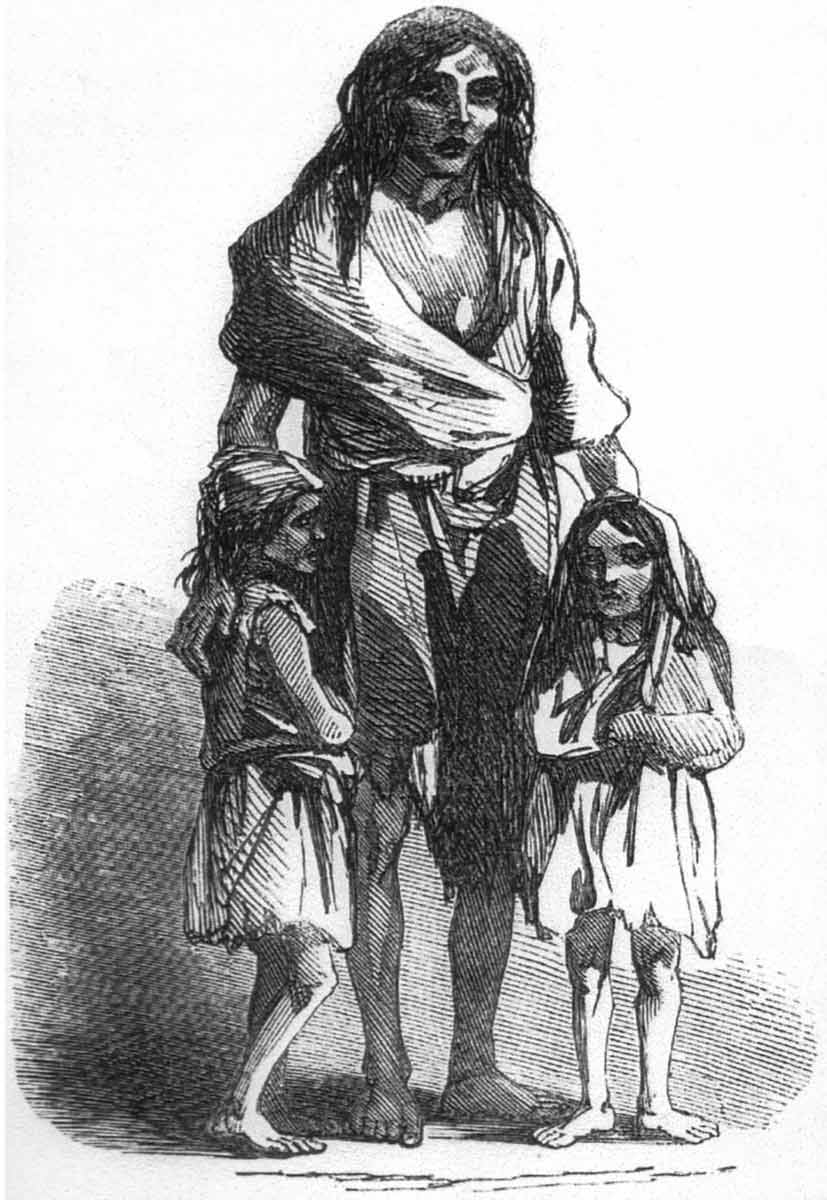
Compared to quickly industrializing Britain, Ireland in the early 19th century was mostly agricultural. Elite British observers claimed this agrarian lifestyle was evidence of an unchanging, deficient Irish character (Scanlan, 2025). But Ireland’s population was very much undergoing dramatic changes before the Great Famine. Compared to the start of the 18th century, the Irish population had nearly tripled by 1841. However, British authorities still treated Ireland as a colonial possession.
Most Irish people lived and worked as local farmers under landlords. The crops they grew were both for personal sustenance and for export back to Britain. The landlords themselves were a diverse group. The most elite landlords came from English Protestant backgrounds and lived separately from their Irish Catholic tenants. Under the landlords in the social hierarchy were middlemen, who directly oversaw the tenant farmers. Some middlemen in the 19th century developed reputations for exploitation.
When the Great Famine flared, it wasn’t just Ireland’s tenant farmers who were put in a tight spot. The landlords were as well. Many landlords were faced with the dilemma of either caring for their starving tenants—and risking loss of income—or evicting them. Starting in 1847, the responsibility for famine relief fell on local leaders and private organizations. The worst years of the Great Irish Famine were exacerbated by the policies of successive British governments.
4. British Government Policies
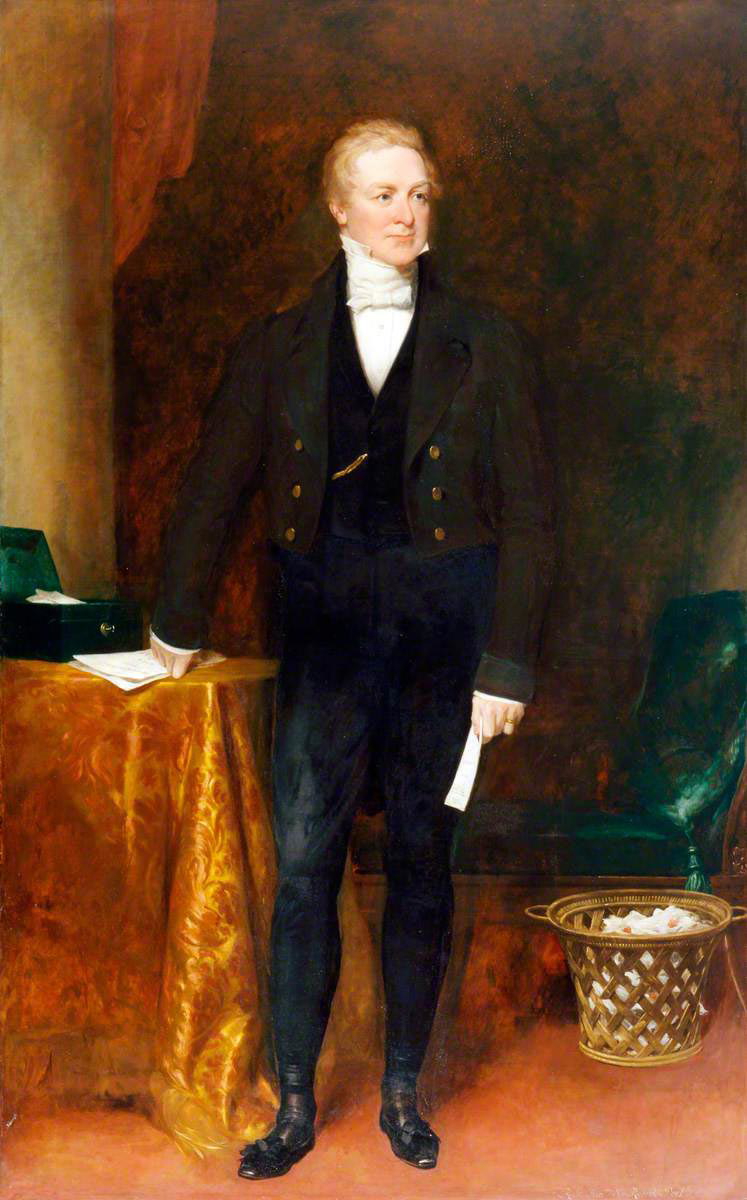
Does culpability for the Great Irish Famine ultimately fall on the British government? That argument can definitely be made. British policies, especially under Prime Minister John Russell, exacerbated the severity of the crisis.
Robert Peel was the United Kingdom’s prime minister when the Great Famine began in 1845. Peel’s primary concerns with the crisis were about the British Empire as a whole, but he was disturbed by reports of mass hunger in Ireland. So, he covertly directed the purchase of £100,000 of corn from North America for the Irish. His cabinet seems to have been kept in the dark about this purchase.
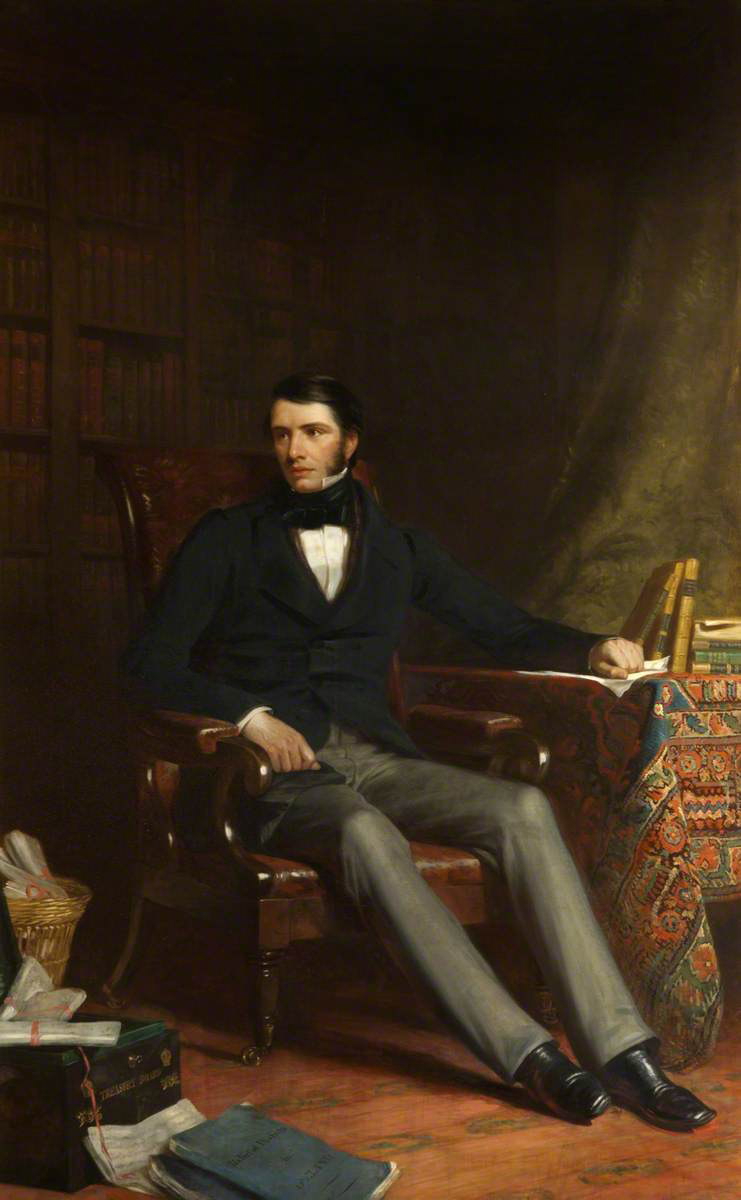
Factionalism in Parliament led to Peel’s replacement in June 1846 by Whig leader John Russell. Russell’s approach to famine relief was much more localized than Peel’s. That isn’t to say his government did nothing in Ireland—he actually spent far more money on relief efforts than Peel had (Scanlan, 2025). However, Russell and his allies did not believe state funds would improve the lives of the Irish poor. Instead, they worried that providing Ireland with emergency food would eventually cause the Irish to become too dependent on government aid.
One of Russell’s ministers, Charles Trevelyan, was especially vocal. As Minister of the Treasury, he oversaw early relief efforts. Trevelyan staunchly believed in a market capitalist approach to stemming the Great Irish Famine. He refused multiple times to order direct relief from London. As the Famine raged, Ireland continued exporting goods such as grains, in order to boost the United Kingdom’s coffers.
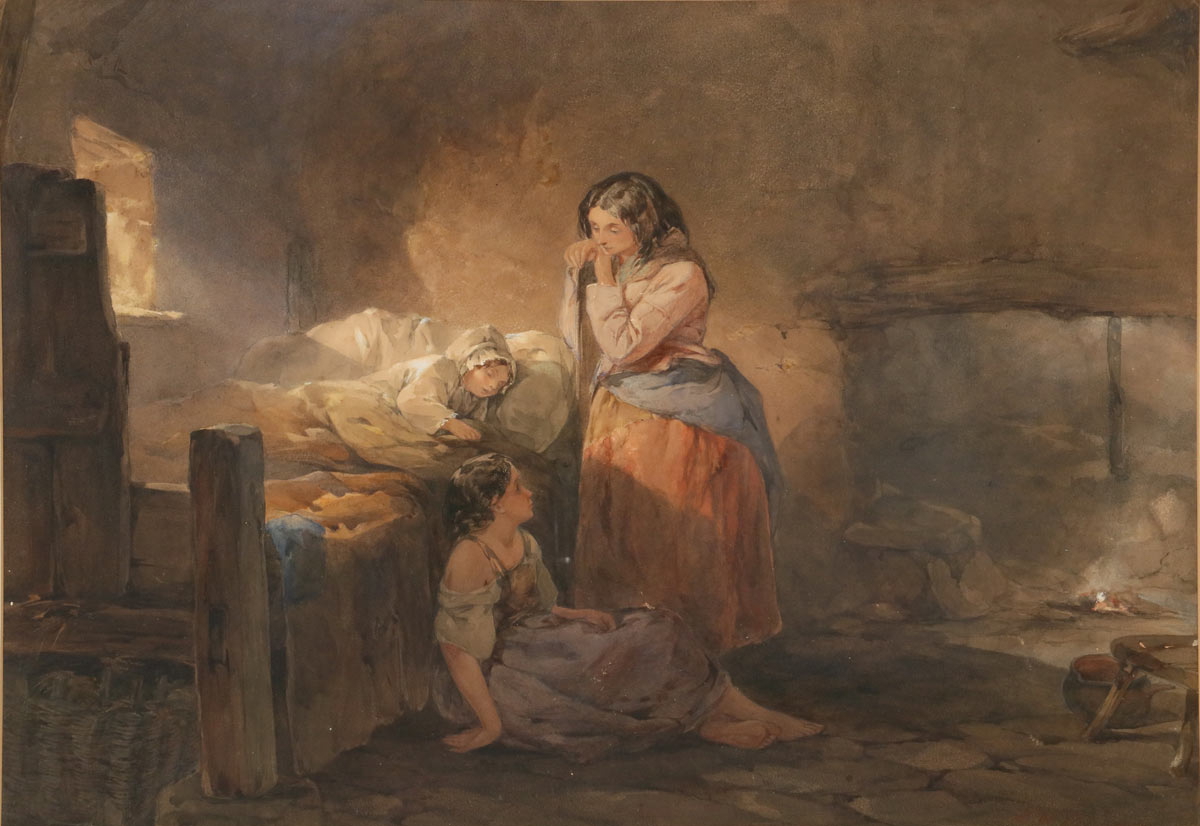
The burden of paying for government aid fell on Irish landlords and their tenants. The British government did set up soup kitchens across Ireland, but canceled that program after October 1847—unfortunately, the worst year of the Great Irish Famine. After a relative lull, the blight returned and wiped out the potato crops once again. More landlords evicted their tenants to save money. In the workhouses set up by the British, conditions worsened for the Irish poor. Those Irish families who could afford to emigrate faced a stark choice between leaving the island or wasting away in silence.
What Kind of Disaster Was the Great Irish Famine?
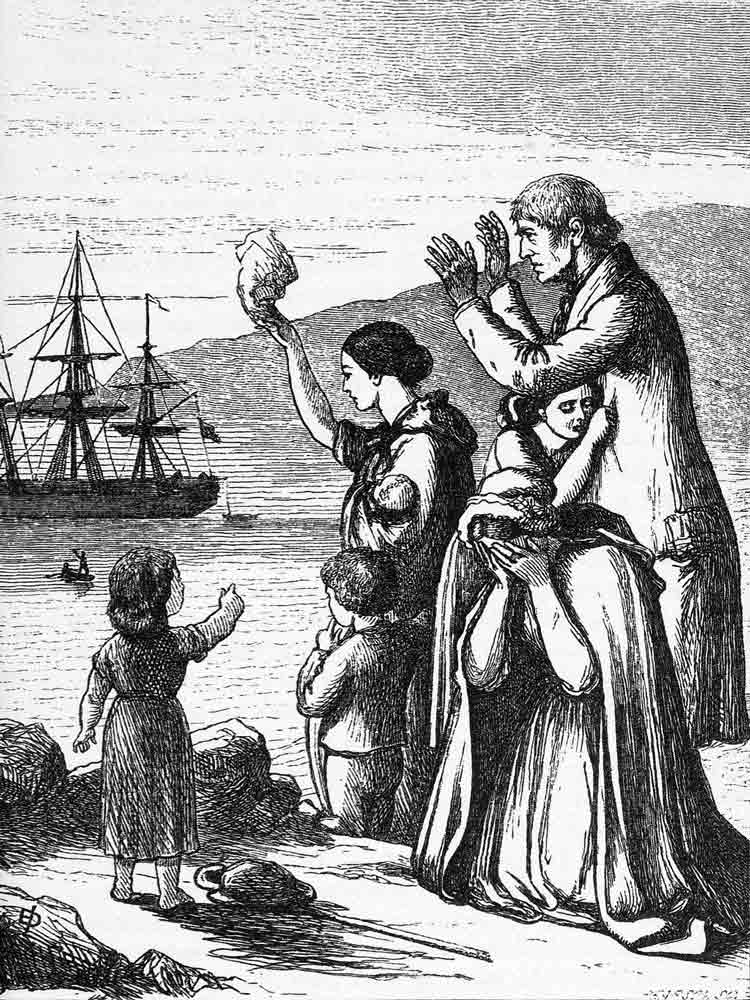
The Great Irish Famine was both an ecological disaster and a political one. A pathogenic microorganism, Phytophthora infestans, was the immediate cause. It decimated potato crops across Ireland, fueled by the potatoes’ limited genetic diversity and the Irish people’s overwhelming dependence on them. But the structure of 19th-century Irish society and British government policies truly caused the crisis to explode. Widespread poverty, imperial rule, and the British government’s emphasis on market solutions above all else meant that more people died of starvation. And once the workhouses opened, starving Irishmen and women were in extremely close proximity. Diseases like dysentery and typhus spread quickly.
The result of this chaos was the Great Irish Famine we now record in our history books. Lasting seven years, it emptied Ireland of three million people via death or emigration. No other crisis has shaped modern Ireland so profoundly.
Bibliography/Further Reading
Crowley, John, William J. Smyth, and Mike Murphy, eds. Atlas of the Great Irish Famine. Washington Square: New York University Press, 2012.
Scanlan, Padraig X. Rot: An Imperial History of the Irish Famine. New York: Basic Books, 2025.