Karl Jenkins (b. 1944) shot to fame with Adiemus, which features a melting pot of Celtic, African, New Age, and world music elements. The Armed Man: A Mass for Peace advocates for world peace through a powerful anti-war message. Palladio drew inspiration from mathematics and architecture. Karl Jenkins blends his Welsh musical roots with contemporary writing in Tros Y Garreg, offering a unique concerto for two harps. Cantata Memoria commemorates the fiftieth anniversary of the Aberfan disaster with grace, honoring the victims. Finally, Eloise is an opera for children based on a classic fairytale.
Understanding Karl Jenkins in 6 Compositions
Trying to place Sir Karl Jenkins in a single category is nearly impossible. There are so many influences present in his music that it might be best to describe him as a world citizen with a classical heart. Perhaps the most noteworthy aspect of his music is his “cross-genre” composition, Adiemus—in Japan it is “healing music” while in Germany they refer to it as “pop music.” In the following five works, you will be taken on a rollercoaster of emotions, ideas, musical influences, and genre-defying compositions.
1. Adiemus
Karl Jenkins’s album, Adiemus: Songs of Sanctuary, propelled the composer to international fame. It is his first album and gives a glimpse of the future soundscape listeners would be drawn into. It is almost impossible to describe the album. It is a melting pot of Celtic influences mixed with African drums and rhythms. There is also a New Age slant in some tracks, classical forms and methods, and world music influences.
The titular song, Adiemus, has been used in countless film soundtracks and television commercials. Delta Airlines also used the title track for a television commercial, advertising campaigns, and pre-departure videos on Delta flights. It is interesting to note that Karl Jenkins spent some time in the advertising industry. It is fair to say he knows a lot about capturing an audience’s attention through effective soundtracks and advertising!
Adiemus is sung in a made-up language and combines classical and world music elements that create a haunting effect. The words, or vocalizations, provided by Miriam Stockley and Mary Carewe become another musical instrument in their own right. Thus, the “lyrics” (without any intrinsic meaning) become music. The result is a wall of sound, combining a full classical orchestra with multiple dubs of Stockley and Carewe’s vocals in parallel as a giant choir.
2. The Armed Man: A Mass for Peace
Guernica, by Pablo Picasso, 1937. Source: Museo Reina Sofia, Madrid
| Original French | English Translation |
| “L’homme armé doit on douter. On a fait partout crier, Que chacun se viengne armer D’un haubregon de fer. L’homme armé doit on douter.” | “The armed man should be feared. Everywhere it has been proclaimed, That each man shall arm himself With a coat of iron mail. The armed man should be feared.” |
The above lyrics by an anonymous medieval poet may be simple, but they carry a strong message: be vigilant at all times and be prepared to fight.
War is as old as humanity itself. Artists have portrayed its horrors for the world to see, and composers like Beethoven give an almost shot-by-shot portrayal of the Battle of Vittoria.
Yet, the sanctity of human life never renders war a justifiable method to settle disputes. Jenkins’s The Armed Man: A Mass for Peace is a call to humanity to set aside their differences and seek out peace. It is also the composer’s most performed work, which earned him fifth place in the Classic FM Hall of Fame in 2015, and in 2023, he was named the most popular living composer in Classic FM’s Ultimate Hall of Fame. Quite an achievement for a living composer!
Jenkins borrows from the form of the Medieval mass and uses the Kyrie, Sanctus, and Benedictus to construct a narrative about the atrocities of war and calls for worldwide peace. Overall, The Armed Man starts with the call to take up arms (l’homme armé), followed by a prayer (Call to Prayer) begging for divine mercy (Kyrie). Save Me from Bloody Men, Hymn Before Action, Charge!, Angry Flames, and Torches portray the horrors of war. The aftermath (Agnus Dei, Now the Guns have Stopped) precedes a prayer of blessing (Benedictus) that is heard for the peacemakers, and when peace reigns (Better is Peace), the anti-war message is driven home. The work was commissioned by the Royal Armouries and premiered at the Royal Albert Hall in 2000.
The Sanctus, with the video of violence in the background on big screens, is almost a twisted glorification. Instead of glorifying the divine, humans glorify war and violence—they worship the gods of war. The incessant drums play a march-like rhythm akin to men marching off to war. The following section, Hymn Before Action (at 26:10), uses the text of Rudyard Kipling’s eponymous poem. While the poem is set in a military context, it meditates acceptance, courage, and self-awareness when faced with a difficult situation. The text deals with finding the strength within yourself when faced with difficult decisions and the wisdom to make the right decision for the common good.
The Benedictus is one of the most iconic sections of this mass. In its simplicity, Jenkins creates a soundscape unlike any other through the violoncello’s devastatingly high-pitched solo. When you listen carefully, you will hear that it is also the opening melody of the choir’s entrance with the word “Benedictus.” In the traditional mass setting, the Benedictus is a song of praise for the Divine’s enduring faithfulness to his promises while also expressing praise and thanksgiving for the goodness and mercy bestowed upon humanity.
3. Palladio
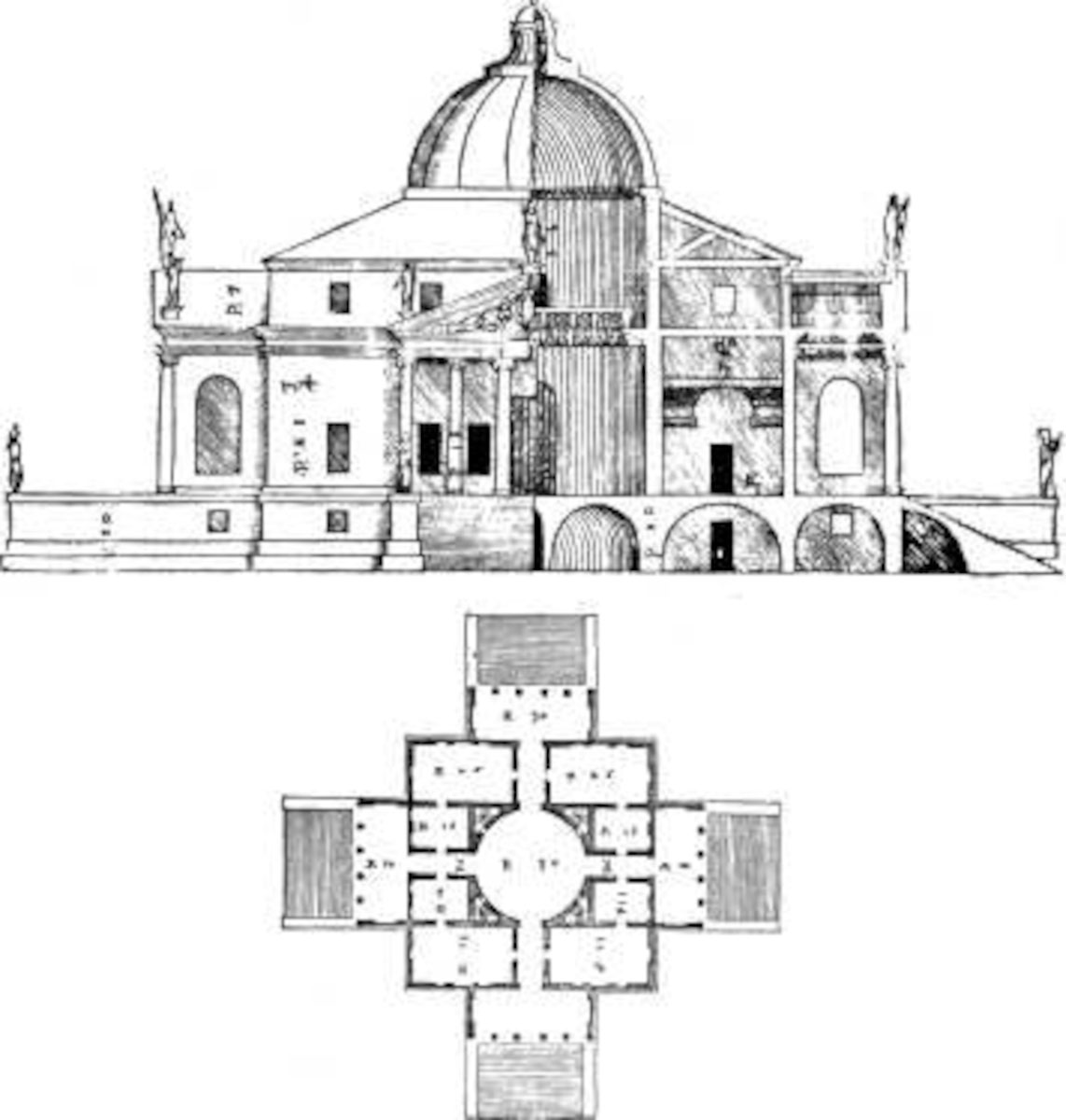
According to Karl Jenkins, Palladio draws inspiration from the Renaissance architect Andrea Palladio, and it is also a homage to him. In his day, Palladio was a celebrated architect who designed and built numerous churches and villas for wealthy families. The architect is celebrated for using harmony, order, and symmetry. Two hallmarks of Palladio’s buildings are the mathematical harmony of the proportions and his reliance on classical elements from ancient Roman models, especially Vitruvius.
The work is written in a Baroque form, namely a concerto grosso. Instead of the solo concerto where the orchestra accompanies a soloist, there is a small group of musicians playing the solo parts (concertino). The rest of the orchestra provides the accompaniment (ripieno).
In the first movement, marked Allegretto (at 00:16), the violoncellos and double basses lay the “foundation” on which the higher strings (violins and violas) build their dramatic lines. During the second movement, marked Largo (at 04:06), Jenkins follows the model set by his predecessors with a quiet middle movement. It brings a welcome respite from the drama found in the first movement. A soloist from each of the first and second violin sections plays the solo parts while the rest of the string orchestra forms the ripieno. The last movement, Vivace (at 10:29), sounds like a lively perpetual motion machine with constant movement and conversation between the different groups of instruments.
4. Tros y Garreg (Across the Stone)
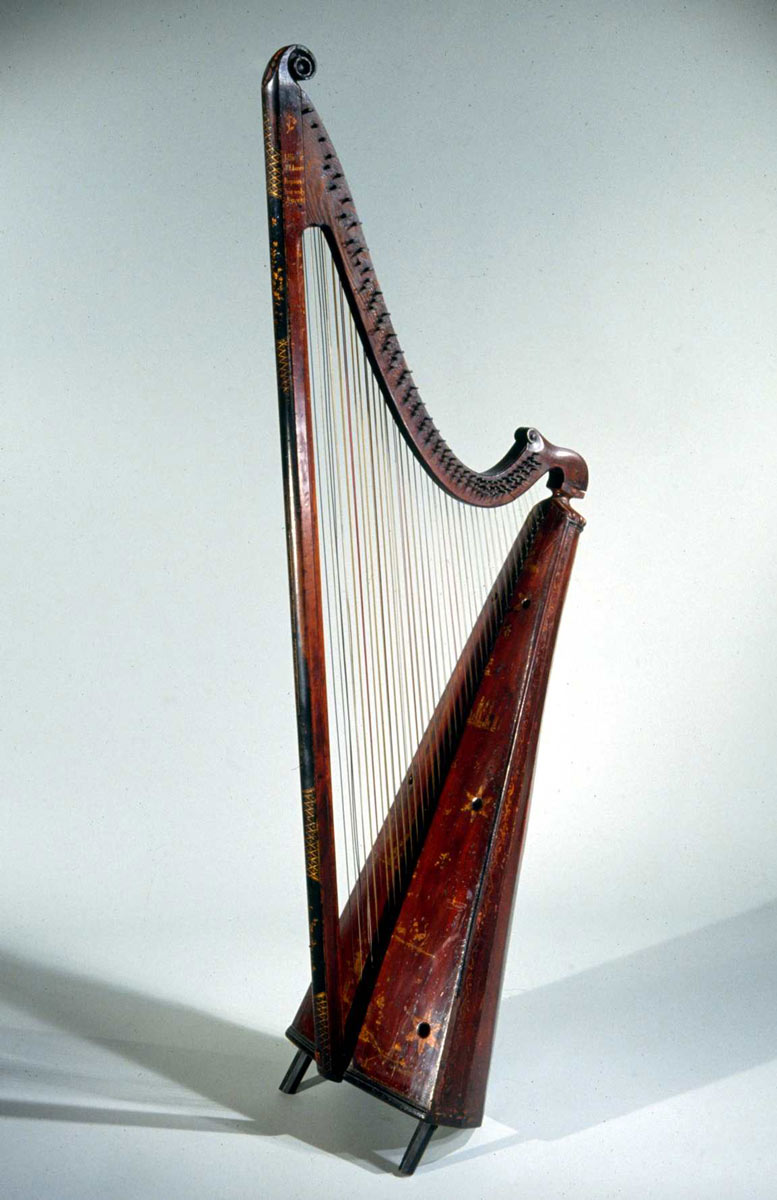
| Tros y Garreg (Welsh Lyrics) | Over the Stone (English Translation by Richard B Gillion, 2008) |
| “Tros y gareg gamfa gu, Eto’n hoyw ac yn hy’, Fy anwylaf Loerwen lanaf, Dôf i’th weled yn dy dy. Heb un anaf, clais na chlwyf, Ar fy ffordd o’r rhyfel rwyf; Cyfod babell ar y lôn, Gwahodd yno wreng a ôn, Gorfoleddus wlad sydd weddus Pan ddaw Rhys i Ynys Môn. Cafodd gormes farwol glwy, Tudur yw ein brenin mwy, Ffôl yw ceisio, neu ddyfeisio Brenin arall meddent hwy. Loerwen Lân fy aelwyd gu, Ar fy nhaith rwyf i fy nhy; Cwyd y Ddraig ar Graig-y-don, Deffro delyn Cymru lon, Gwyr y cennin, medd y brenin, Gariodd iddo’r goron hon.” | “Over the stone with fond step, Still gay and bold, My dearest purest Loerwen, I come to see thee in thy house. Without any injury, bruise, or wound, On my way from the war I am; I am pitching a tent on the lane, Inviting there whoever may be, A jubilant land that is suitable When Rhys comes to Anglesey. Oppression received a mortal wound, Tudor is our mighty king, It is foolish for them to attempt Or plan for another king. Pure Loerwen thy dear homestead, I am on my journey to my house; The dragon was raised on the sea-rock, Wales’ joyous harp awoke, Men of the leek, the king’s own, Carried to him this crown.” |
Karl Jenkins’s Harp Concerto showcases his love for his native Wales while combining his ability to compose accessible music in a classical idiom with world music influences. In this work, two harps take center stage, offering listeners an exhibition of the harp’s versatility.
Jenkins drew upon Celtic Welsh melodies, especially in the fourth movement, Tros y Garreg (Over the Stone or Crossing the Stone). The text is attributed to the Welsh poet John Ceiriog Hughes and captures a warrior’s sentiments after returning home. He contemplates all the stone must have seen throughout its life—battles lost and won, love and hatred—and yet it never speaks of those things.
In this movement, the orchestra plays a traditional Welsh melody while the harps weave their improvisation around the original melody. During the coronation of King Charles and Queen Consort Camilla in 2023, this work was featured to show the king’s longstanding and heartfelt relationship with Wales. But the connection to the newly crowned king and Jenkins also stretches back further; while still Prince of Wales, Charles commissioned a harp concerto from Jenkins, and Tros y Garreg was one of the movements.
5. Cantata Memoria for the Children
Karl Jenkins composed Cantata Memoria to commemorate the fiftieth anniversary of the Aberfan mining disaster. On October 21, 1966, the village of Aberfan in South Wales saw a catastrophe that claimed the lives of 116 children and 28 adults. A landslide of coal waste engulfed the village and the Pantglas Junior School which stood directly in the path of the coal slide. The event left an indelible scar on the community and the nation.
But in true Karl Jenkins style, it is not all doom and gloom nor is it a documentary telling of the story of the coal slide. It is a dedication to those who lost their lives and those who had to carry on with their lives after the disaster.
There are two distinct sections to the work, lasting around 20 and 35 minutes, respectively. The multilingual text features English, Welsh, and four texts from the Requiem Mass sung in Latin. Additionally, there are words (“eg”) that are also equivalent to why and light in Dutch, English, German, Latin, Spanish, Swedish, and Welsh. The aim of this is to give the work a specific local feeling but also a universal one.
Musically, apart from the texts taken from the Latin Requiem Mass, there are also quotations from John Rutter’s All Things Bright and Beautiful, an excerpt from Alban Berg’s Violin Concerto, and a Welsh nursery rhyme. The Welsh love song, Myfanwy, can also be heard on the euphonium. The rescuers sang this song while digging for the victims.
The first part (starting at 6:18) deals with the intense tragedy and immediate aftermath of the coal slide. However, it is not a blow-by-blow retelling of the disaster but like a pendulum swinging among numerous points that are now part of the disaster’s legacy and memory. During the second part, the works move away from darkness toward the light. The memories and celebration of childhood feature prominently in the second part. With the final movement, Lux Eterna (eternal light), the celesta and bells are used prominently to symbolize the light that has overcome the darkness.
Jenkins and librettist Mererid Hopwood approached the subject matter and work, commissioned by S4C, a Welsh TV broadcast company, with sensitivity. Together they created a poignant ode not only to the victims of Aberfan but also to children worldwide who are caught in disasters.
6. Eloise
Lady Carol Barratt wrote the libretto for Karl Jenkins’s children’s opera, based on the fairy tale by Hans Christian Andersen.
After the King and Queen christened their daughter Eloise, the witch Volhek reminded them of their payment for an old promise: once they have a daughter, their sons will be taken away. Thus, Volhek turns them into ducks, and her band of Drogmires takes them away.
Eloise grows up and discovers her poor brothers’ fate and sets out to break the spell. Throughout her trials and tribulations and Volhek stealing Eloise’s voice, Eloise focuses on completing the task of weaving shirts from thistledown. She summons magical spinners to create special shirts for the ducks, and with her magical spoon, she summons three helpful men to help her succeed.
Eloise finally breaks the spell and drives wicked Volhek and the Drogmires away when the royal household arrives, and the princes are freed. Eloise’s favorite helpful man, whom she conjures again, promises to stay by her side forever.
What Inspires Karl Jenkins’s Music?
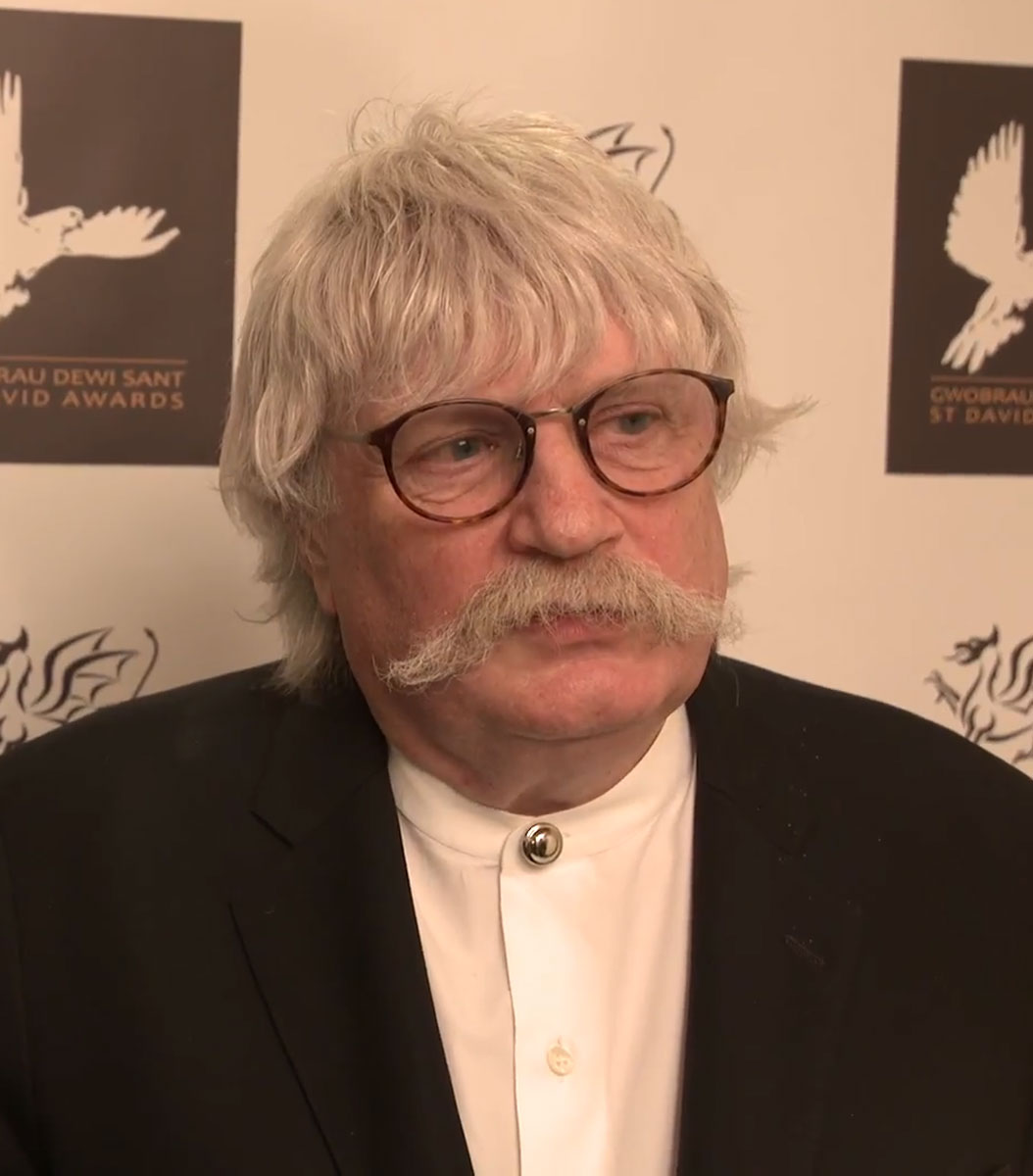
Karl Jenkins had a thorough training in the classical tradition with studies in harmony, counterpoint, and orchestration at the University of Cardiff and the Royal Academy of Music in London. So, the basic foundation is solid, but he does not sit and wait around for inspiration to strike or a muse to visit him. He incorporates his academic training with the mathematical harmony and order found in Renaissance architecture.
While some might call it inspiration, he prefers the term intuition and says he needs to write some music every day. In his own words: “I follow my nose—I don’t have a formula or a plan ahead.”
You may have noticed a wide variety of percussion in the works above, and for good reason. Jenkins started his professional music career as a jazz musician. Rather than using percussion instruments, especially drums, as a rhythmic element in his music as is the classical tradition, it holds a musical role therein as with jazz and rock music. He draws inspiration and ideas from ethnic percussion, especially South American rhythms and jazz percussion, to enrich his music.