What does it mean to know something? It’s a question that feels simple until you really think about it. Is knowledge just having the right facts, relying on things others told you, or believing with your own eyes and common sense? Epistemology is pushing us to rethink how we understand truth, the nature of belief, and the limits of human understanding. Sometimes the result can be anticlimactic, when skepticism, the view through which philosophers express their doubt that we know anything at all, enters the scene. In this article, we’ll explore five books that have defined the field: two historical classics that laid the groundwork and three contemporary works that challenge and expand our thinking.
| Work & Author | Era / Publication | Core Epistemological Contribution |
| Theaetetus (Plato) | c. 369 BC | Explores knowledge as perception, true belief, or “true belief with an account,” ultimately ending in a state of puzzlement (aporia). |
| Meditations on First Philosophy (René Descartes) | 1641 | Establishes foundationalism through a “method of doubt,” identifying the Cogito (“I think, therefore I am”) as the only indubitable truth. |
| Virtues of the Mind (Linda Zagzebski) | 1996 | Introduces “Virtue Epistemology,” shifting the focus from the nature of beliefs to the intellectual character and virtues (e.g., open-mindedness) of the person. |
| The Case for Contextualism (Keith DeRose) | 2009 | Argues that the requirements for “knowledge” are not fixed but vary depending on the conversational context and the stakes involved. |
| Extended Rationality (Annalisa Coliva) | 2015 | Proposes “Hinge Epistemology,” where certain unjustified beliefs act as the necessary “scaffolding” or hinges for any rational inquiry to take place. |
1. Plato, Theaetetus (c. 369 BC)
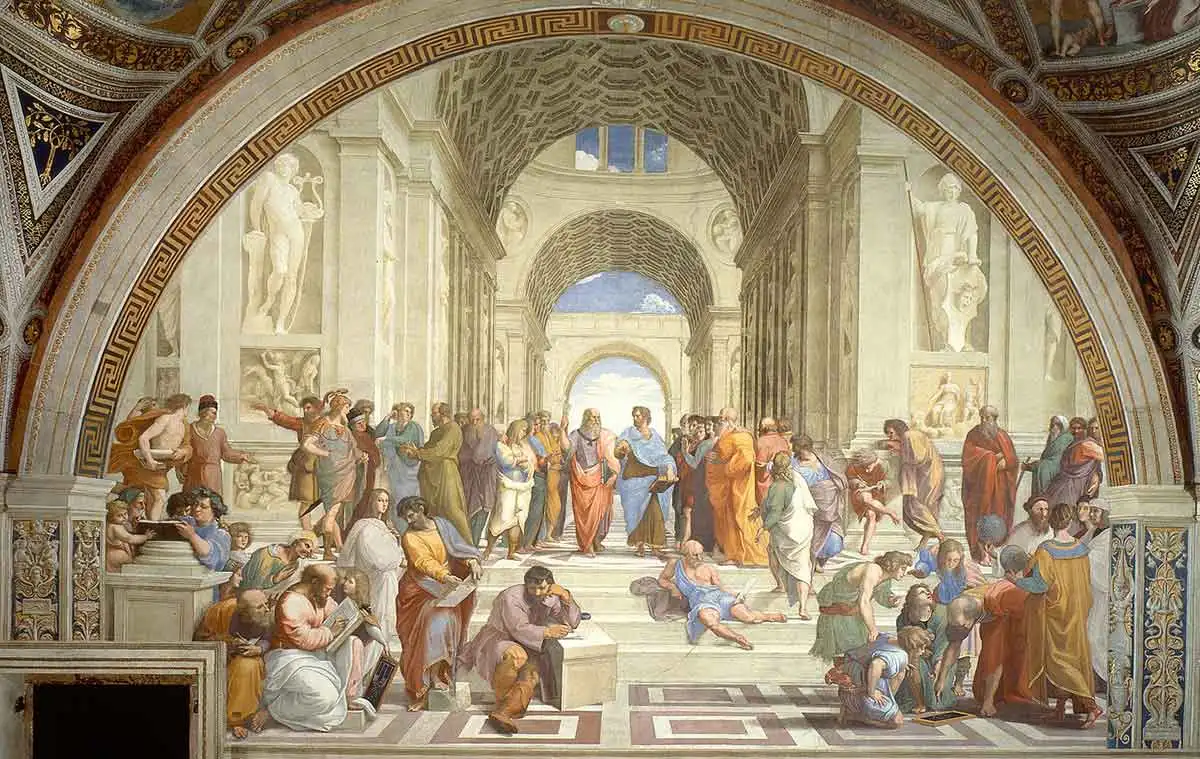
Let’s start at the beginning, which in the case of epistemology means, of course, Ancient Greece. Plato’s Theaetetus is one of the earliest and most important works in epistemology. Written as a dialogue between Socrates and a young mathematician named Theaetetus, the book explores the question, “What is knowledge?” Theaetetus offers three definitions: knowledge is perception, knowledge is true belief, and knowledge is true belief with an account (or justification; logos in Ancient Greek). Socrates, in his characteristic dialectical style, dismantles each definition. Thus, if knowledge is perception, then truth becomes subjective, varying from person to person. Socrates critiques this view, arguing that it undermines the possibility of objective knowledge and rational discourse.
Similarly, Socrates challenges the view that knowledge is simply true belief by pointing out that one can hold a true belief by accident (e.g., by guessing correctly) without truly knowing it. It seems that additional justification is needed. Nonetheless, the dialogue ends in an aporia, a state of puzzlement, with Socrates and Theaetetus admitting that they have not found a satisfactory definition of knowledge.
Theaetetus is more than a historical relic in philosophy. It’s a living text that continues to inspire debates about the nature of justification. One of the most dramatic shifts in contemporary epistemology occurred when Edmund Gettier challenged the definition of knowledge as a justified, true belief, thereby bringing Plato’s dialogue back to our attention.
Hence, if you want to understand where epistemology began, this is the place to start.
2. René Descartes, Meditations on First Philosophy (1641)
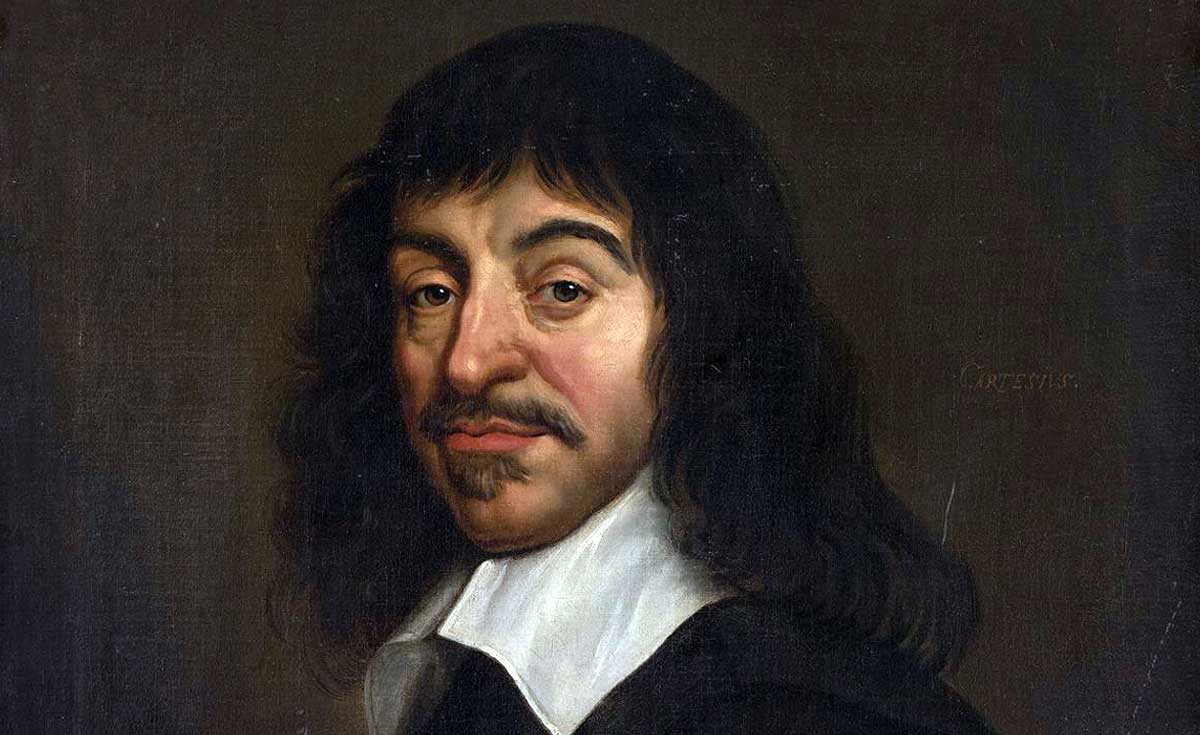
Fast forward to the 17th century, and we encounter René Descartes, the father of modern philosophy. His book Meditations on First Philosophy is a cornerstone of epistemology, introducing a revolutionary new approach to understanding knowledge that aligns with the birth of modern science. Descartes begins with a method of doubt, questioning everything he believed so far in order to find a firm foundation of certainty. His famous declaration, “Cogito, ergo sum” (“I think, therefore I am”), becomes the bedrock of his epistemology: even if everything else is uncertain, the fact that he is thinking proves his existence, and this amounts to the foundational belief that can’t be doubted.
Descartes’ Meditations is a masterclass in skepticism and served as an inspiration for foundationalism in contemporary epistemology. Descartes introduced radical skepticism in the form of the Evil Demon, an all-powerful, deceptive being that manipulates his perceptions and thoughts, casting doubt on the reliability of all sensory experiences and even mathematical truths; everything except the Cogito. In this way, he gave a new twist to ancient skepticism.
On the other hand, foundationalism is an orthodox position in epistemology, whose proponents claim that there are basic beliefs, which serve as the starting points of knowledge and are often considered self-evident, incorrigible, or directly justified by experience. In a similar vein, Descartes argues that knowledge must be built on indubitable truths, such as the Cogito, and he uses this approach to prove the existence of God and the reliability of clear and distinct perceptions.
While his conclusions have been debated and often criticized as too reliant on the notion of a Christian God, Descartes’ work shifts the focus from external reality and the definitions of knowledge to the Self, or cognizing subject, who holds myriad beliefs.
If you want to understand how we moved from ancient to modern thinking about knowledge, grab a copy of Meditations.
3. Linda Zagzebski, Virtues of the Mind: An Inquiry into the Nature of Virtue and the Ethical Foundations of Knowledge (1996)
Now let’s jump to the late 20th century, where epistemology undergoes a dramatic shift with the rise of virtue epistemology. Linda Zagzebski’s Virtues of the Mind is one of the most important works in this field. Zagzebski argues that epistemology should focus not just on beliefs and justification but on the intellectual virtues of the cognizing subject. Intellectual virtues are traits such as open-mindedness, intellectual humility, intellectual courage, intellectual perseverance, and intellectual honesty. In other words, knowledge arises from individuals who have mastered their intellectual character, much like integrity or righteousness arises from those who have vindicated their moral character.
Zagzebski’s approach is groundbreaking precisely because it bridges the gap between epistemology and normative ethics, specifically Aristotle’s virtue ethics. For Zagzebski, the virtues are not just cognitive skills but also involve moral and motivational components, reflecting the subject’s commitment to truth and intellectual excellence.
For example, an open-minded person is more likely to consider evidence fairly because she is motivated to question her own beliefs, genuinely listen to others, and strive to transcend her biases and prejudices to be a better person. Virtues can be acquired, as Zagzebski conceives them as dispositions and abilities, although they must be acted upon, or actualized, in order to become our second nature.
Virtues of the Mind has had a profound impact on contemporary epistemology, inspiring a wave of research into the role of character traits in knowledge acquisition. It’s a refreshing departure from orthodox approaches, offering a more holistic and human-centered view of epistemology.
If you’re interested in how character building and knowledge intersect, this book is a must-read.
4. Keith DeRose, The Case for Contextualism: Knowledge, Skepticism, and Context (2009)

Keith DeRose’s The Case for Contextualism is a seminal work in epistemology that defends contextualism, the view that the truth conditions of knowledge claims depend on the context in which they are made. DeRose argues that the standards for what counts as “knowledge” vary across conversational contexts. For example, in everyday situations, saying “I know that Starbucks is open on Saturday” might be true, but in a high-stakes context (e.g., needing to infuse yourself with caffeine in order to send an essay or final paper), the same claim might require stronger evidence to count as knowledge.
DeRose’s contextualism addresses skepticism by showing that skeptical arguments often rely on raising the standards for knowledge to an unrealistic level. In ordinary contexts, we can legitimately claim to know many things, even if those claims wouldn’t hold up under the extreme scrutiny of skeptical scenarios. This approach preserves the intuitive plausibility of everyday knowledge while acknowledging the force of skeptical challenges.
DeRose supports his view with detailed analyses of linguistic data, thought experiments, and responses to objections. He also engages with rival theories, such as invariantism (which holds that knowledge standards are fixed) and subject-sensitive invariantism (which ties standards to the subject’s practical stakes).
DeRose’s work has been highly influential, and if you are up to the task of grappling with cutting-edge epistemological arguments and problems, check ASAP whether your library has a copy of this book.
5. Annalisa Coliva, Extended Rationality: A Hinge Epistemology (2015)
Annalisa Coliva’s Extended Rationality: A Hinge Epistemology is a pivotal work in contemporary epistemology, offering a defense of a framework inspired by Ludwig Wittgenstein’s On Certainty. Coliva argues that certain foundational beliefs, or “hinges,” are not justified in the traditional sense but are instead necessary for any rational inquiry or justification to occur. These hinges, such as “The world exists” or “I have two hands,” form the bedrock of our epistemic practices, providing the framework within which knowledge claims make sense.
Coliva’s central thesis is that rationality is extended, meaning it relies on these non-justified yet indispensable hinge commitments. She distinguishes between empirical propositions (which can be justified) and hinge propositions (which function as the scaffolding for justification). This approach addresses radical skepticism by showing that skepticism itself relies on hinges, thereby undermining its own coherence.
Coliva also raises criticisms of key historical figures in epistemology, such as the British analytic philosopher G.E. Moore and the German philosopher Immanuel Kant. Additionally, she expresses her discontent with orthodox positions in contemporary epistemology, namely, foundationalism and coherentism. Thus, she argues that hinge epistemology avoids the pitfalls of both foundationalism (which seeks indubitable starting points for obtaining knowledge) and coherentism (which relies on mutual support among beliefs to create the corpus of knowledge), offering a third way that emphasizes the practical and contextual nature of rationality.
If interested in an overarching work in epistemology, covering the authority figures but also introducing novel concepts, don’t skip Coliva’s book.